


TLDR
Summary
The advertising landscape is currently undergoing a massive shift as traditional "media buying hacks" are replaced by an era defined by creative volume and artificial intelligence. Nathan Prio argues that the historical advantage of technical arbitrage—putting a dollar in and manipulating the platform for a return—is eroding because platforms like Meta and Google have simplified their systems to favor automated, high-velocity creative testing. This shift has created a "trust recession," where consumers are bombarded by low-cost, AI-generated content, making human connection and brand affinity the only sustainable competitive advantages. For brands to survive, they must navigate the "trust stack" of certainty, credibility, and connection, while embracing a high-frequency organic content strategy that fuels their paid funnels.
Highlights
- The 1% Ad Rule: Most ads fail; statistically, 4% of a brand's ads typically generate 64% of their total revenue.
- Creative Volume as Strategy: For every $1,000 in monthly ad spend, brands should aim to launch at least one new ad to maintain variety and prevent audience fatigue.
- The Trust Stack: Building a modern brand requires three pillars: Certainty (consistent promise fulfillment), Credibility (borrowed authority or unique positioning), and Connection (human presence and community).
- The AI Split: The market is bifurcating into two directions: "All AI," where manufacturers use one-click tools to bypass middlemen, and "All Human," where founders leverage personal branding and in-person activations.
- The Halo Effect: Large established brands often see better ad metrics (lower CPMs, higher conversion) not just because of better ads, but because their brand "halo" props up the entire funnel.
- High-Frequency Organic: Nathan advocates for extreme posting volumes—8 to 12 times a day on Instagram—to create rapid data feedback loops and build trust through "novelty" that paid ads alone cannot achieve.
- Andromeda and Diversity: Meta's current algorithm (Andromeda) scans the creative content to find the audience rather than relying on manual targeting, making creative diversity essential for scaling.
- Blue Ocean Repositioning: Success often comes from "repackaging" existing products into new forms or platforms where competition is low, such as moving technical YouTube-style content to Instagram.
Transcript
00:00:00
The ads that you used to see on your feed in 2019 don't stand the test of time. As a collective, people are getting substantially better at marketing and substantially better at ad creation over time. The algorithms have been dialed in to know how to extract every little bit of dopamine out of you so that not only do you keep watching, but that you actually get pushed into that conversion. So, creative volume is a big one. People are like, "How many ads do I need for specific spend?"
00:00:26
There's a really simple answer and then there's a really complicated answer. Simple one is for every $1,000 a month in ad spend good to have one ad. Why is that the sweet spot? 99% of ads in market aren't good. And so 1% are and they end up spending hundreds of thousands of dollars. Why do those ads do well and then everything else doesn't work? To be able to improve my ability to make better ads is do content. You made how many reels a day? >> 8 to 12. >> This is what happens when you get an ads
00:00:53
guy making content. >> Do not dilute the brand. guys 18 to 22 and then moms that are 50 to 60. It's like those two people are not going to resonate with the same thing. And these large brands that we've worked with and they almost think how do we alienate everyone else? Like we don't want these people to like us. If Andromeda is identifying your target market based on what you put in the system, does that mean that taste is still relevant? >> This is honestly the hardest question
00:01:18
I've ever been asked. >> Yes. >> Did you come up with this? Who came up with this? If I was to start a brand right now, it would be This episode is brought to you by Wix Studio. Here at the Agency podcast, we're building a community and we would love for you guys to be a part of it. So, we would love to hear from you. What are you enjoying the most? What would you like to see more of? And what do you think might be missing? Drop a comment. Make sure you subscribe. And now, on
00:01:45
with the show. Nathan Prio, welcome to the Agency Podcast. Thank you for having me. Advertising and media buying used to be a lot easier optically. We're now working overtime for a fraction of the returns. What do you think's happened? >> Well, I think that Facebook, Google, all of these ad platforms, the incentive is that they want to make it as easy as possible for people to get in, spend money, achieve a result, right? And so there's almost this move towards a one-click world. And I think a oneclick
00:02:19
world >> where you click one button and then the ads are created, the ads are served, you set your cost per result and then you get a return. I think that's where Zuckerberg wants to move it. I think that's where all the platforms want to get it to and that's why all the platforms have simplified over time. And so you see now more than ever that 0 to5 million businesses are all running their own ads, right? They're getting help through coaches and then they're running it themselves rather than outsourcing to
00:02:47
agencies. And so the question becomes like when does that stop? How long does that go for? And is there a point in which you are literally just clicking one button? Ads get created. You don't need a creative agency. You don't need a performance marketing agency. It all goes into the account it serves and then you get a return. Look, I don't think that's where it's going to go. But that's where at least the narrative is pushing. And I think a lot of people are trying to juggle it at the moment and
00:03:12
try to figure out what is the next thing so that we can prepare for it accordingly. If you were to look at the current state of advertising with your head and both your heart, do you have a different opinion on where advertising and marketing is going between your head and your heart? >> I would say that in my heart I think that consumers will always be attracted towards brands and particularly wanting connection and affinity to something. And so when you think about like clothing is the best example of it,
00:03:40
which is that people buy clothing not because of where it's produced or how it's cut or what it looks like. At the end of the day, people want association with the brand. >> And when you say association, can you give an example of what you mean exactly? >> Yeah. So I think 247 and represents a good example, which is that it's an international brand. They've gone zero to one 200 million now. And it's because people that run, people that are in run clubs, people that want those
00:04:07
associations, they could wear Nike, they could wear Adidas, but they choose to wear 247 and represent because of the community and connections that they've built through marketing, through associations with influencers, through George Heaton's personal brand. It's all of those components that layer up to the decision that people make a purchase with that business. >> I want to make a key distinction here because you've worked in a lot of startup brands. You've worked in the 1
00:04:33
to 5 million space and now you've recently rebuilt your entire portfolio to be north of 5 mil to more established enterprisesized fashion label brands. What's the key distinction that you've noticed between starting up and then having made it? >> When we used to work with 0 to5 million brands, I thought that performance marketing was everything. So, I thought that it was just a game of arbitrage and business was just arbitrage, which is you put $1 into the platforms and you try to get as many dollars out as
00:05:03
possible and then you just scale that to the point of diminishing returns and then that's that's the whole game. And it's like how far down the diminishing curve, >> right, >> graph can we go? >> So, how much money can I get out of the wall? >> Correct. >> I put a dollar in, $2 comes out. I put $2 in, four comes out. >> Yeah. >> They're playing that game versus the brand game. >> 100%. And I wasn't a believer in brand. Like two years ago, if we were sitting
00:05:25
here right now having this podcast, I would have said, "No, it's just performance market your way to 200 mil." And now I realize that with all the large retailers, all the large brands that we work with, and we work with a lot above 50 mil, you look at their ad accounts and then you look at a fashion brand that's doing $4 million and you go, "Wait a second. how is the one that's 20x the size got better conversion rates got better cost per clicks got better CPM every core metric
00:05:51
in paid media is better and you go but the the ads yeah they're a little bit better they're a little bit better resourced but what's the difference between the two and it's that one has a halo effect of this brand that's propping up all of the metrics that make the entire funnel look better and that's why they on that diminishing return graph it doesn't diminish they can continue pushing spend and they can end up spending way more and getting way more out of paid media because that omni
00:06:18
channel effect of brand holds them up. >> Now, if you look at a brand like 247, what what would you put that down to if all of their optics are better because of the halo effect of the brand? Um, how has they how have they used community to do that? With the AI world, I think it becomes especially important to build human connection in some capacity because it's really everyone diluting content down with the sameness. And so when you look at particularly brands who are using AI content, which is fine, but
00:06:53
eventually it all regresses to the mean. So all of the AI output looks very similar. It all comes to the same kind of message. You can tell the second you're listening to an ad that ah this was scripted with chatri. You know it it's there because it all sounds the same. It all has the same inflection throughout the sentence. And so what 247 did well is that they build community and connection through sponsoring all the run clubs. Right? So a good example is that our office in Melbourne. I was
00:07:20
trying to get into the office one day and then there's a 247 run club in Melbourne at the front of my office and I'm like how is this I didn't even I didn't even know they were in Australia like what's going on and it's hundreds and hundreds of people running around the block in Cremon and I'm like oh okay that's that's something like there's some kind of connection being built there at a local level to all of these people and they're showing up and so
00:07:43
it's the in-person activations it's the building a community it's them building associations through core influence influencers and people with pull in the industry that I think buys people into the brand. >> And do you think what perpetuates that community is the ability for the community to grow itself? For example, with Hy Rocks, people show up and they perform and then they compete. They make friends, then their friends have a great time, then they bring their friends friends and then the community it
00:08:13
evolves and it grows. I see a brand like 247 doing that as well where the community itself can recruit and grow itself and then they just tend to buy the product around that. Yeah, 100%. It's like in software where I think it's called the K squared. If you want a software to do really well, you need it to perpetuate itself. And so when someone has the software, they tell four friends and then those friends tell four friends. And then that's where you get an exponential takeoff in SAS. And
00:08:40
that's what everyone's trying to get and that's what people will sell and pitch decks for investors etc. And the same thing applies into definitely branding at a consumer level which is that if you're in a run club and four people are bought in everyone's now going like what two like why is that on the back of everyone's singlets? What are they wearing? And then more people continue to buy into the brand and they look into it and it self-perpetuates. So, how does someone then create a strategy for
00:09:07
themselves to create a self-perpetuating brand if they're in the sub 5 million category? They want to build a great fashion brand or a product brand. Where should you start if you want to go K squ on your product or your service? I think this is where we start to tie into building trust in this AI era, which is that with the introduction of content being democratized. It's really easy to make a high volume of content now because you can just pump out AI slop. Okay? You can just make as many images
00:09:39
as you want, as many videos as you want, but you need some kind of differentiation and you need the ability to actually build trust in the consumer that you're real. Because I do think that give it maybe one more year, maybe two more years, and I think UGC AI, so userenerated content, AI, people filming with their phones saying, hey, I love this product or I love this brand. I think that the AI output will get so good that it will be indistinguishable from real UG. And so then you ask the question, okay, when you can't tell the
00:10:08
difference between an AI ad and a real ad, then what makes you purchase? How do you build trust? Because UGC is one of the best methods for building trust in ads, right? You get a real person saying real stuff hopefully about your brand. And through that, you build trust that you can actually trust that the product's going to do what it says it does. But if it's all fake, then how do you build trust? And I think that then ends up coming down to building community and making associations
00:10:39
with people that are real. And so I've got a theory for the future which is that there's big brands like HOS H A US in the US. There's Comfort. These are multiund million dollar um online direct to consumer fashion brands right now that are doing really well off affiliates. And so they're using affiliate networks to make as much UGC as possible, pumping it through Tik Tok shop. People go off-site as well to the actual do website and they're printing off of it. And one of the benefits, one
00:11:08
of the arbitragees there is that people used to pay $100,000 to a famous influencer and get okay results, but now you can pay hundreds of thousands of people clips on purchase and they can make the content for you and it's a self-fulfilling cycle. I think that whole model breaks because why do we need 100,000 different creators when I can just click a couple buttons and then I get 100,000 videos out of AIUGC. So I think we actually revert back to where personal brands have more value associated to them because when you pay
00:11:40
for a personal brand and have that within the content and have that within let's say the face of the business then it inherently builds trust because you know that person is real. You know what that person stands for. You know what kind of content they put out and so you trust the association being drawn and therefore inherently the brand is borrowing the trust from that influencer. But at the moment, it's really just a volume creative arbitrage game where everyone's going, "Let's how
00:12:05
much content can we possibly put into the platforms?" Because Zuckerberg says, "Put as much creative velocity as you can so it can reach different audiences." And so, everyone's capitalizing on that until we get to the point where it's like, well, now everyone can do that because it's been democratized to zero. So if you think about the concept that you talk about the trust recession that we're in, meaning that it feels like we're now moving into a marketing system
00:12:31
where we're going to be bombarded with volume of lowcost, highly creative content. And with that being the main bulk of content that we're going to see on the internet, people are going to experience a trust recession. Can you describe what you mean by that? why it's going to happen and how this is going to implicate brands that are moving into the new era of marketing. I think it's everything that we've spoken about in terms of the introduction of AI content. And so, right now, I'll give you I'll
00:13:01
give you a very specific story that I think you'll like, which is that I had a brand book into my calendar two weeks ago and they book in and I hop on the call and I have no context about who this person is, what they do. I just know they're in America and I'm like, "All right, I'll hop on the call and I hope I can say this publicly." Um, and they they say, "Oh, yeah. I I started my business four to five months ago." And I go, "Ah, that's not a good start because
00:13:25
we only work with enterprise level businesses." So, I'm like, "Well, this can't be a big business." And then I go, "All right, well, how much are you spending right now on Facebook?" And they go, "Oh, $40,000." And I go, "Okay, USD. Okay, there might be an okay size. It might be workable." And I'm continuing down this conversation and I go, "So, what's the commercial goals over the next 90 days?" And he goes, "Yeah, so we want to get from about 40
00:13:48
to $100,000 a day in spend." >> And I go, "Wait." And I'm just like pretending. I'm like, "Yeah, yeah, that's 100,000 a day." And he goes, "Yeah, we're spending $40,000 a day." And I go, "The business is five months old." And he goes, "Yeah." And I go, "What are you scaling off?" Like I won't give away the brand and the industry, but like where's the content coming from to even fuel that kind of growth because this must be
00:14:12
one of the fastest consumer brands in the world and it's real cuz I've seen the numbers. And he goes, "Oh yeah, it's all AI UGC." And I go, "Right." So one of arguably the fastest consumer brands online right now growing in 5 months. They're about to hit a $300 million revenue run, right? >> Jesus. In five months. No one even knows about who this is. Like I've never heard anyone talk about that. I'm I'm like >> that's crazy. >> I'm talk I'm talking to one of the
00:14:42
fastest growing brands in the world. What? And he goes, >> "Yeah, it's all just fake." Like all the content is just Yeah. We just say the product's good and then it's at an older demographic and because the older demo can't really tell it's AI. It resonates better and then it works. And I'm like, well, at what point can everyone just click that button? >> Like, what stops? Because the barrier of entry there is very low. >> Now, there's complexity in the fact that
00:15:10
scaling that much goods that quickly in inventory is a whole another story, and there's some ways he got around that, but as long as you can get around that, anyone can just click the button of make me 500 pieces of UGC. And I said, how are you scripting it? He goes, oh, >> you're saying that like this is an emerging playbook that you're going to see scale quickly. That's a that's a pure example of the fact that people can oneclick their way or I'm saying one click, but the point is is that he's
00:15:38
using a bunch of UGC that's AI and a bunch of AI images to be able to create this perception of a business, pump it through the platforms and get a result. And so the question becomes, how long is that going to last? And is this the future? >> Okay, like tell me what you think. How long do you think this will last? And is this the future? >> There's there's two different directions that I think the whole market splits into right now. I think we sit in the middle which the middle ground is you
00:16:07
can put a bit of you uh AI creative in you can put a bit of authentic stuff in and it kind of works in the future. I think you go one direction or the other. I think it either goes all the way to AI only and for the sake of any like brand owner or anyone in the market, you want to hope that doesn't happen because if that does happen then all of these people that own brands in Australia, in the US, anywhere, you're really just a middleman to the manufacturer. And so why doesn't the manufacturer
00:16:40
one click their way straight to the consumer? Oh, and so, >> so you're saying the middleman will soon be obsolete. >> Correct. Like that example I just gave, if that is a manufacturer, which it might be, right? That's why they don't have an inventory issue, then they can just one-click their way straight to high volume of creative straight to the consumer and scale. And so that's not a world that I really want to happen. I think it will happen. I think brands will consolidate there. And then I think
00:17:08
the rest of brands will consolidate over here, which is having a really high degree of human connection and leaning in as hard as they possibly can so that people buy from them because of them rather than buying because they're getting shield thousands of pieces of creative and the product looks kind of cool. If you want to grow your agency, you need more than just a website builder. You need Rick Studio, the all-in-one platform that's built to help you scale. Design smarter in a hyperflexible, responsive editor,
00:17:41
cherry-picking whatever clients need from pre-built UI elements and templates. Deliver robust backends with built-in e-commerce solutions for every industry, letting self-maintaining infrastructure just run itself. Stop reinventing the wheel with every project and instead create a sharable design system with reusable assets, apps, and components. Clients growing too fast, no sweat. Wix Studio AI powered CMS lets you turn a single layout into hundreds of additional dynamic pages. It's true. More clients no longer has to mean more
00:18:16
chaos. Wix Studio gives you one centralized view of every project and makes real-time collaborations seamless. Do your agency's best work at scale. Build your next project on Wix Studio. Interesting. I I've seen some of this happening already through Teimu, through Amazon where the factories and suppliers in Vietnam and in China are using AI to create their own brands to compete with the very middlemen that they're supplying to, which means that it's going to erode the middle potentially of
00:18:52
opportunity. >> Yes. I think that if you're a brand right now, what you want to be thinking about is moving in one of those two directions. >> All human or all AI. Y >> okay. Now, if we're to move in either of those directions, what does all human look like and what does all AI look like? >> All AI is you want to become very good at creating diverse content using the current tools that are available. And that's actually very easy to do. And so it really like the AI route really just
00:19:22
comes down to good internal systems and understanding the tools. It's it's not rocket science. Honestly, one person can do it do it pretty well. We have AI video editors in house that can crank out Facebook long form video ads completely AI end to end and it's great and it performs incredibly well and we're doing it for multiple brands as we speak. Um so that's kind of the one end you want to position yourself there. You want to get good at it. The other end in really building human connection comes
00:19:50
down to creating trust through the three pillar framework. credibility, certainty, and connection. >> Can we unpack each of these so that the viewer at home can really understand what they are, why they exist, and how they can use them? >> Starting with certainty. Certainty is building feedback loops of promises and then fulfilling on the promise. And so a really good lesson in e-commerce or consumer that I think most people don't get when they just work in consumer is thinking through B2B sales cycles and
00:20:27
then applying that to a consumer lens. I'll give you an example here and this this will tie in which is that when you are in a B2B sales cycle which might go for two to six weeks long. What you were doing is continuing to drive an increase in certainty in the buyer by creating promises and then fulfilling the promise as quickly as possible. And you're creating those cycles. And so you hop on a call and you might say, "Right off this call, I'm going to send you a summary." And then within 10 minutes,
00:20:55
you send the summary. And then you say, "Within 48 hours, you'll get an audit." And within 48 hours, you get an audit. And then I say, "The audit will be good." And the audit's good. And then on the next call, I say, "I'll give you value." And then I give you value. And so there's these promises and fulfillments being made and you want to make as many of them as quickly as possible so that when you get to the final ask where you're like, "Hey, by
00:21:13
the way, we will get these results and this is the cost." They go, "Well, everything they've promised previously has come true, so this must also >> come true." >> Yeah. So you've had so many good experiences, so many green flags that you're like, "Well, this has got to be another green one." >> Correct. >> Yeah. >> And then people don't think through that in ecom or consumer because the sales cycle is much faster. And so you need to
00:21:36
make promises and fulfill on promises >> in seconds >> very quickly. Very quickly. And so >> what might that look like in ecom? Just real quick. >> Yeah. So there's there's a lot of different components in the ad. You can generate promises and then fulfill on the landing page. And so landing page continuity by itself is a massive one. And anyone that's uh scaling CPG specifically, so consumer package goods on ecom is normally very good at this because this is required. One of the
00:22:04
things in consumer packaged goods is you can reorientate a product's purpose in a lot of different ways. And so for example, if you have a supplement, you can take any supplement, right? A greens powder, you can say the greens powder is for cognition and then you can say it's for gut health and then you can say it's for X, Y, and Z. So there's a lot of different ways that you can position the product. And so having continuity when you hit the landing page is really important for fulfilling promises there.
00:22:31
Because one thing that and I used to make this mistake two three years ago when working with supplement brands is that we would say hey this supplement let's say collagen is really good for nail growth. That's an example. And then they hit the landing page and it's collagen, skin health, nail health, this, that, the other, and just 35 benefits. And you go, "Oh, well, I was sold on a twominute video on Facebook that said all of these details and educated me about how nail health connects us into collagen and
00:23:03
that you have to have collagen to fix this problem." And then I hit the landing page and I'm like, was I lied to? >> Yeah. because you've got all this other information that you need to now process which then might create friction to buying it even though the nail thing appears again. You're like, I'm going to learn all this other stuff as well. >> Yeah. This there's consistency in messaging that's required. >> Is this why we're seeing so many big
00:23:26
brands do hundreds of landing pages attached to hundreds of different ads versus one landing page attached to hundreds of ads? >> Yeah. And it's one of the reasons why uh CPG is one of the best spaces in in consumer online. So you're making a very specific distinctive message land for a particular problem that a consumer has. Then as they go through the conveyor belt to buy the product, everything synchronizes with that one promise. >> Correct. >> Okay. >> And so I think that's actually the most
00:23:52
important pillar right now when it comes to building certainty >> more than anything. >> More than anything. >> And just some questions around certainty. Why does that create higher trust by having this sequence play out that rapidly? Yeah. Well, I thought the the B2B sales example is a really good example there, which is that if you create promises and you fulfill them and you do it quick and it's free to do, which is even better, then you can create an increase uh chance of
00:24:24
conversion. This also becomes like unbelievably important to retention. And it's arguably the basis of people returning to a brand and buying again, which is that why do you go back and buy the same shampoo that you bought last week? It's because the shampoo said it would be good for XY Z reason and then you used it and it was. And so they made a promise upon purchase and then they fulfilled the promise and so you went back. And so one of the most important components of retaining customers is
00:24:50
continuing to make promises through the actual delivery of the product and then it actually fulfilling. And that's why some brands will do a product launch or will do a new category launch and it performs unbelievably well and others it flops. It's because well the first thing that you were selling to your whole customer base, everyone went, "Ah, it's it's not that good." >> I would liken this to everyone's friendship circle. We all have that one friend who can't keep their word, who
00:25:13
makes a ton of promises and never fulfills them. And then we have that other friend who always does what they say they're going to do. >> We always trust that friend more than the friend who continuously lets us down. >> It's the same type of relationship with a brand. >> I agree. And I think like to switch gears into a completely other industry, this applies into the courses space. Okay. And so >> coaches selling courses >> 100%. So like uh the info space is if
00:25:39
you are normally most courses aren't very good. Now there are some that are great and I've bought a lot of courses. Um but if you are served a course that isn't good or you're served a coaching program or you're served a service and then it doesn't fulfill the promise and you don't actually get something that's high quality, then people don't repeat and then buy again. And I think that uh Hormosi's book launch is a really good example of that, which is that he did
00:26:02
$103 million on that third book launch. And the reason why he did $103 million, other than there being a good subset of 10 reasons, one of the primary ones was his first book was so good. And then his second book was great at distilling complex sales ideas into how to get leads. And so then his third one, there was an instilled just understanding that this will be good. like I bought it without even thinking because I'm like, well, if it's anything like the first two, it's going to definitely be worth
00:26:28
it. And so, it's through continuing to deliver on those promises that builds certainty in that the purchase will be worth it. And so, people are more likely to make the purchase. >> What are some other things that people can do to build certainty into their advertising, their content, and their brand? >> There are tactical things that you can do in ecom. So, there's risk reversals, so 30-day money back guarantees. There's things like that. Um I think this is where offer curation becomes really
00:26:56
important. Now offer curation in for example fashion isn't very applicable. So this is where we start to dial into specific categories. But if you can create an offer that has a high perception of fulfilling whatever the pain point is that you have whatever problem agitation is happening within the ads. That is how you drive higher certainty that the product will actually fulfill that particular painoint that you have. >> Okay. Okay, now that covers off certainty. Uh, what would you like to do
00:27:25
next? Connection or credibility? >> Let's do credibility. >> Okay, let's do credibility. >> Credibility is a really hard one when you're a startup brand because how do you have credibility, right? No one's >> you have none. >> You have none, right? No one's purchased from you. Um, so you can borrow credibility. And one of the easiest ways to borrow it is from influencers, from brands, from making associations. Now, arguably that's also really hard, right?
00:27:52
If you have no capital, how do I go and get David Beckham to frontend my brand so that I can take IM8, his supplements brand, to like 200 million ARR, right? That's a good example of that product had no credibility, but then they borrowed David Beckham's credibility and then they pulled in some scientific studies and then suddenly they have some of the best credibility in the CPG space at the moment. So there is the ability to borrow number one, but hard to do. You need capital. If you're a startup,
00:28:20
it's tough. Well, so number two is you could just go and create AI videos saying that the product is good. You could just slap five stars on the creatives and there's your credibility. But I think that that's going to democratize down to zero. Because if anyone can just create ads that say, "Yeah, we've got five stars. Yeah, people like the products." then I don't think that it's actually a good value proposition. Like I think there's I think most people are bad marketers.
00:28:49
Most people are bad advertisers because they think a lot of core value propositions that exist within the market actually matter. >> Like can you give me examples of what some of those things might be? >> Like for example, do you care about um 30-day money back, free shipping, or any of these things materially? That's >> N. >> Exactly. Right. >> Almost none personally. >> Exactly. And so it's like um even if you see five stars and there's 100 five
00:29:14
stars on the product, >> probably fake >> right now. You might look through the reviews and you might actually get an understanding that okay, they they might they feel a bit organic. Okay, this could be true and it might slightly wet you up. But a lot of these things are accessible to everyone and everyone does them. It's just like the iconic trust badges back in the day when you used to go to the checkout and you'd scroll down and it' be like and I used to do this when I was drop shipping like seven
00:29:35
years ago and you just have trusted by Shopify or trusted by whatever trusted by a Amex and Mastercard. It's like you know anyone can take that PNG and just put it down the bottom. It like it it's meaningless because everyone can do it. And so when you're thinking about building credibility, you more so need to think about differentiation of what the credibility is going to be. And then you can really double down just on one thing. So you don't need 20 different value propositions to build rapport and
00:30:04
say that hey I am credible. Like if you can just do one thing but it builds some kind of association that allows you to borrow credibility or at least props up the product that you have then that is how you stand out. And so considering that we're like on the topic of CPG, an example of not borrowing but creating some kind of lever of credibility would be to have a value proposition that makes you stand out from everyone else. So this is really like the concept of whites space. We're talking really
00:30:36
theoretical here, but we'll get into application, which is and I I really like this idea and Blue Ocean Strategy is one of my favorite books that I've read in business. And the idea is that you can be in red oceans or blue oceans. And red oceans is everyone's fighting for the same people because they're selling the same stuff and every everyone gets pulled down to cost price and so no one makes money. And then you have blue oceans which is no one's selling over here. It's great. You can
00:31:00
price as high as you want because you have no competition. And then when people hear that they think, well, okay, so blue ocean must be some new thing in the future, right? Like an AI app or what's the next thing going to be? And it's like, no, no, no, not at all. Like I would argue our agency I would argue your agency arguably is in a blue ocean because we've taken a service that already exists that's already in the market. There's hundreds of them but we have repositioned in a way that
00:31:28
differentiates us from everyone else. So when you see the price of us verse someone else you don't even compare it because it's not the same thing. Now underlying 60% of the work might be similar. the core base might be similar, but we've repositioned oursel into a white space that doesn't exist. And so in CPG, can you find an area within this product set that hasn't been capitalized on? And so an example is Grun, who is at I think 300 million AR in the US. They're 2 and a half years old. And what
00:32:00
did they do? So they sell a greens gummy. Okay. What does AG1 do? Cuz they went from 0 to 150 mil a while back. They sell a greens powder. So they kind of sell the same thing, but Grun's just repackaged it into a form that wasn't being delivered within the market. And so everyone would say, "Don't launch a greens. Don't launch a greens company." That's crazy because it's so saturated. Everyone's trying to do it. But it's like, yes, but no one's doing it in the
00:32:29
gummy form. So how can we reposition credibility into a place that it hasn't been seen before? And so what kind of associations can we make for like let's give a a random example which is the run clubs. Have people not been sponsoring run clubs? Have people not been going into that space very heavily? Well then Hyrox comes in and they find that middle ground of all the hybrid athletes that want to run and then also um lift weights and they found a very perfect position which was whites space sitting
00:32:59
right between them. And then all of these brands have been able to now jump on that train and position themselves in this hybrid athlete kind of space >> because and it's it's built credibility because they've been able to make associations in a space that hasn't existed. >> So are you saying that there's credibility that's built when you can become a oneofone concept that exists in a blue ocean instead of a red one? >> Yes. I also think that you can rethink the traditional sense of
00:33:26
reviews, uh, UGC content, etc., and think about how we can reposition those credibility markers into a unique space that hasn't been seen before. And so, I would argue that a good example of this in the agency space in Australia would arguably be this podcast. Right? Because how do you build credibility on the creative agency aside from the work within it, but then also showcase that you are incredible at personal branding, right? So you could get some clients, have some fivestar reviews, etc. Or you could just
00:34:07
demonstrate it right next to it. And so it's the same thing with founder brands. They very much so live whatever the product or whatever the value proposition is. And so if you are in the like health and supplement space and you are unbelievably healthy and you're kind of building up your own little personal brand, that doesn't even have to be big, 10, 15, 20,000 followers. It could be a small following, but you in itself can be the credibility of the brand. And so you see this as to why founder story ads
00:34:34
work so well. It's like why does putting the founder on camera and getting him to walk around and just talk about like how he started the business, why does that resonate with people? And it resonates because the founder is building credibility through the story of how they actually started the brand. They're not up there saying, "Yeah, we have five star reviews. Yeah, my uh all my friends love the product." They're like, "No, this is how I got here. It's an interesting story. Come along with me.
00:34:59
Here's the problems I had. Here's how we solve them." And then through that, you're building up credibility that underlies the business from borrowing from something that's actually a little bit unique. outside of the scope of like let's just put some fivestar reviews on Google, let's put some five star reviews on Facebook and let's just say that we're a credible business. >> So let's unpack connection and then maybe we could talk about how they all
00:35:21
intersect. >> Cool. connection I think is the most important of the three by a long mile because I think that you can be okay on uncertainty, okay on credibility, but then if you can really drive connection to the consumer through human presence, through um having unique brand positioning within market that resonates with the target demographic that you want. Um I think that is how you really cut through. And to be like completely honest, as we've moved from 0 to5 million brands to 5 million to 800 million plus, um the
00:36:01
real big change for me has been, oh, okay, these people build connection and not only do they resonate very tightly with their target demographic, but a lot of people hate them as well. And so they're not trying to appeal to everyone. They know who they're serving. I'm like, "Oh, but there's this massive age demographic that you're not hitting right now." They're like, "No, no, no, no, no. We don't we don't care about them. This is who we are, and we want to
00:36:27
be as ingrained as possible in this community and this type of person." And then we just want to drive purchase frequency up on that target demographic. And if we ever want to hit a different target demo, we make another brand. Like we do not dilute the brand by going and trying to build connection with teenage guys 18 to 22 and then moms that are 50 to 60. It's like those two people are not going to resonate with the same thing. They're not going to resonate with the same brand. They're not going
00:36:53
to wear the same clothes. They're not going to want to have the same lunchbox when they go to work, right? It's two very very different audiences. And these large brands that we've worked with and had the privilege of um even doing consulting work with, they know that and they triple down and they almost think, how do we alienate everyone else? Like we don't want these people to like us. We only want these people to like us and we want to make them raving fans. >> I want to land on this point for a
00:37:17
moment cuz so many people I talk to are terrified of alienating anyone. They're concerned that if they build a wall around their target demographic that people outside that barrier are going to hate them and create problems for their brand. >> Yeah. Well, I think it is I think it is a easy mindset to fall in when you underestimate the total addressable market. And I think that this is a this is a massive issue that I used to have and it's something that I try to train out of the team too. And it might be
00:37:49
something that you've even um fallen into, which is that you think that the total addressable market isn't that big. It's almost a scarcity mindset where you're like, "Ah, can we really do like 10 million on clothes to this target demographic in Australia?" Like it's a small dem there's not many people. And it's like you would be blown away by what the biggest leader in that category is doing in the market. And then if you're like, "Okay, 100 million, 200 million, that's not
00:38:16
impressive to me." It's like, okay, cool. Now, just take it to the US. It's like, now we're talking billions. And so, I think that this, oh, I'm going to alienate certain people comes from the fact of they have a specific growth target they want to achieve. And they think that if they alienate an audience that it will alienate their ability to actually scale, but the TAM is way bigger than you think it is. And like you can go to a very, very small specific niche and crush and do tens and
00:38:43
tens of millions if not hundreds of millions on that demo. Why do you think that connection is the ultimate lever to conversion? Why is this so important that people nail this third C? Well, >> I think it's more important than ever now because of the flood of AI, because of the trust recession, right? People look at their phones and they're scrolling ads and I guarantee in about 6 to 12 months time, you're going to be scrolling and going, I don't know what's real. Like, of these ads that I'm
00:39:10
seeing, I don't know if this is real or if that is real. And so at that point it becomes, okay, when I'm walking down the street and there's a retail store next to me, like, well, I know that's real and I know this brand is actually building some kind of connection. Um, and so I actually, funny enough, I think that having a presence in retail is actually going to become more important as effectively like AI slop goes up when it comes to AI ad creation. I think that in-person activations and events becomes
00:39:43
more important because I think people really do want to buy from humans and I think they really do want to feel affinity to people. Um, we see this in our own inerson events that we do. We purposely do them because a lot of the work that we do is remote. I imagine it's probably the same is for you. And people do actually want to see you in person and want to shake your hand and want to actually meet other clients and get in a room and learn things together. And doing that in the ecom space hasn't
00:40:13
been native to people, I don't think, because for like there's probably large retail people watching this going, "What is this guy talking about? We've had retail stores forever. We've done bunch of pop-ups and activations. We do influencer stuff all the time. Like, we've been doing this." And it's like, "Yeah, you have, but the direct to consumer pure play ecom people haven't." like they have been sit at home in an office shipping product from factory to
00:40:37
3PL to person and they've never actually gone out and met a customer. And so I think that getting in front of people and pulling people together is actually what will drive differentiation in the market. And I think that's the key word when everyone is creating products, creating content, creating value propositions, creating landing pages that are all just an aggregate of AI or it's at least right now it's all AI heavily assisted. Every landing page copy, every video like it's all very
00:41:10
assisted. And so then it's how do we step out and be different? Because people are attracted to different. The hard thing that most people don't want to do ends up becoming the next best strategy. For example, retail was prominent. When e-commerce was new, most people didn't want to go out of their way to make an ecom store and then run ads. And that was the odd new difficult thing people had to do. And then the few people who got in there early made a lot of money. Now, we've just gone through
00:41:41
an era where most founders don't want to make personal brand content, but the few who did, despite it being hard, that got out first and did it made all the money. What What do you think that next era is of that hard thing that no one wants to do? >> I still think that content organic is massively underrated. I still think it's massively underrated. And I kind of had this epiphany recently in like literally the last 60 70 days, which is that because I'm an ads guy, because it's all we've done for so long,
00:42:14
um, our client acquisition has come through ads and referrals, etc. And then I've always been putting out YouTube content for a couple years, but I then went on to Instagram and started posting on Instagram. And uh pretty quickly reach started going up and super high quality reach cuz the algorithm will only push your content to people that actually care about it. And then very quickly I went, wait a second, the amount of views I'm getting per month on Instagram organic is the equivalent to
00:42:41
about 75 to $80,000 a month in ad spend. And so I'm like, wait a second, why don't I just take our ad spend and reallocate it to a media and organic team and then if I could just double view output of high quality views, obviously, then I'd be at like $150,000 in ad spend a month of just organic. And so I still I still do think that organic is a great channel. I think that it's underrated. I think I'm talking to the guy that knows it, but um I think there's so many things within it that
00:43:14
allows for high degrees of leverage. I think arguably it actually might become more important because of the AI creative just flooding the algorithm that it does give you a point of differentiation and actually shows that there's a face behind the brand. It's why I think that uh brand story content will still work and will still continue to work for a few years into the future. I hope um because there's no better way to show human connection than hey here's the actual guy that's behind this
00:43:46
business and here's what he's trying to do and here's the mission and here's the values that they hold like do you want to buy into that or you could also buy a similar product but it's from this AI slot machine that might just be getting one click from a manufacturer like where do you want to put your money and I find myself personally a lot of the time putting my money behind very similar products. Like I have two options and I go I'm not going to go for A. I'm actually going to go for B because I
00:44:12
really like that guy. Like I I watch a lot of his content. I'm like I may as well if I'm going to buy um electrolyte sachets cuz I run a lot. Like yeah, I could buy it from like this brand I've never heard of that's cheap or I could buy it from that guy and I really like him so I'm going to go there. >> Do you think that personal branding is the ultimate shortcut to building connection with an audience that then converts? Yeah, 100%. Like I think um >> I think there is an amount of frequency
00:44:39
that you need to serve to a user before they make a purchasing decision >> and this is the case in ads and so Meta put out this uh report I think it was like 5 years ago and they said that the probability of purchase declines to almost zero if someone sees the same creative more than twice. And so if I show you an ad and you go, "Okay." And then I show you the ad again, you go, "Okay." And if I show you it a third time, you're not you're not going to purchase if I just keep showing you it.
00:45:06
I need to give you something novel. And I think organic content is a great way to show novel new pieces of creative at very high frequency to audiences. Um, a good example of this is that I post 8 to 12 times a day on Instagram. And if you follow me, you'll probably see maybe three or four because it will just select the ones that it thinks are most relevant to you and serve them up. And that's a really good way in my opinion because we have obviously a very long B2B sales cycle at getting as many
00:45:33
impressions as possible as quickly as possible. So that if you click follow on me, you will probably consume 20 reels that are 2 minutes long within a oneweek period and you've just consumed 40 minutes of content. You're like, "Okay, I I actually really want to talk to this guy." And like before I said that we have a meeting tomorrow um with a big retailer that was off Instagram. >> Yeah. >> Yeah. Yeah, I hear this all the time that there's no good leads on Instagram.
00:45:59
I got Culture Kings as a lead on Instagram through a DM. Like some of our biggest clients to date, Nutrition Warehouse, MadMax, all came through >> Instagram reels. Now, you said something interesting. You made how many reels a day? >> 8 to 8 to 12. >> How do you make 8 to 12 reels a day? That's crazy. >> Yeah, I know it's a lot. In the in the last uh in the last 50 days, I think I've posted 500 times. >> Wow. >> Yeah. >> Is this with a team? Is this just you?
00:46:30
How are you doing this? >> Uh it's me and a couple video editors. That's >> a couple. How many is a couple? >> Five. >> You have five video editors for your Instagram. >> Yeah, cuz you you figure out pretty quick when you go to volume that their bottleneck is editors. >> Yeah. True. >> Yeah. Um so I got five editors just so they can surge edit when I batch the content. >> Surge edit. >> Yes. Well, so it's like I sit down. Surprisingly, you you think about it and
00:46:55
you're like, 10 reels a day sounds like a lot. >> That sounds like a a diabolical amount of reels, dude. Yeah. Um I I probably batch it all within 3 to four hours a week. >> Okay. >> Um and so the nice thing is I tested a bunch of formats at the start trying to see what works. I found that split screen worked very well. So, I set it up. I sit there, camera in front of me, I click record, and then I just get served either 20 ideas or 20 things to react to, and I react to them or I start
00:47:27
drawing and like explaining concepts, and then I've got a big 40-minute file, go straight to the editors, they chop through all the reels, and then a VA puts it live into a scheduling. >> So, what are your team prepping for you to make this amount of content? Are you writing all the ideas yourself? >> I'm writing all the ideas. So, you're writing all the ideas. How long does it take you to write all the ideas? >> I do it throughout the day. And I I think this is one of the like if I have
00:47:53
one piece of advice for high volume organic, it's that if you do a lot in a day, you have infinite content. And an example is this podcast right now. I will will end the podcast and I will at least at least have 20 to 30 reels from this podcast just in ideas because I can just think back to it and I can go what did what did Dane ask me? I hit that was really good reel. That was really good reel. That was really good reel. And then I for example tomorrow that retailer meeting I told you about. I'll walk out
00:48:23
of that with at least 10 reels because they will have a bunch of questions for me. They'll have a bunch of objections. They'll say this is why I'm wrong. and they'll probably challenge my thinking and I'll go that was a really good way to reframe that idea and I think that will do well based on what I >> So you're you're looking for these moments and you are you jotting them down on a notepad like how do you keep them? >> Yeah, I'll jot them down in notes on my
00:48:46
phone. Um or sometimes on a bad week I'll sit down with no ideas and I'll just pull up my calendar and I'll look through my calendar and what I did in that week and I'll think back and go like what were the key takeaways? Okay. >> From that like that moment in the wake. >> So then you turn the camera on and you ask yourself the question. Then you try to answer it under two minutes. >> Yep. >> And then you just do these back to back. >> Y >> send a file to your five video editors.
00:49:10
>> Yeah. >> Sick. Okay. Any other tips on how someone listening to this who might not have five editors but might like to do this process for themselves? >> Yeah, definitely. Um so I think that you need to start by testing a bunch of different formats to figure out number one what actually hits, what works well. Uh but then number two like what do you enjoy the most? And then when you find the format you figure out how can I uh do this format in a high volume. So how do I set up the conditions? This podcast
00:49:39
is a really good example of that. Like um you can theoretically you could come and do five podcasts a day because you come in sit down and everything is always here. >> Yeah. >> To a degree. And so you don't need to go and put the chairs here and everything. You're just you can just shoot. And so that's the setup that I have for that specific format that I like. And so if yours is um if yours is green screen videos or whatever it might be, it's as simple as figure out how you can set up
00:50:05
the environment to which you can sit there and then you can just batch out 10 and then you've got if you're posting one day a week now you've got 10 days worth of content. Um, and then very quickly once you get good at batching, you find out that wait a second, I can actually I can do a lot more volume than I thought I could because I could do one of these sessions every three to four days and now well okay that means I could post three to four times a day and then that is where I think you get a lot
00:50:28
of return and I a lot of people told me to not do high frequency posting. I don't know. I want to hear what your opinion is on it as well, but a lot of people said, "No, no, no. You're going to get unfollows. People won't like it." But I'm telling you, the algorithm loves high frequency posting because it goes and when you post multiple times very quickly, it doesn't serve it to your existing audience because it knows that they're going to get annoyed. And so, it
00:50:51
goes and pushes it to cold. And if it doesn't perform, it doesn't perform. And then you get so quick feedback loops that like I'm getting 10 feedback loops a day. So every day I'm like I can go, "Oh, that was good. That was bad. That was good. That was bad. Okay, process. Never do that again. Only do that." >> Yeah. So you would uh be able to accomplish in a week what someone might accomplish in two months of data. >> Yeah. And I I sat down with uh someone the other day and he he's probably
00:51:20
watching this so apologies for adding you. Um but he was like, "Yeah, we've been trying to crack Instagram and I just we just can't get it to work. We're stuck at five, six, 700 followers uh views. Sorry. And I'm like, "Well, how many times are you posting?" And he's like, "One." And I'm like, "Right, I'm posting 10." Like, in the last week, I've posted 70 reels and you've posted five cuz you're not posting weekends either. And
00:51:46
so, the amount of just data that I can look at and go, "Okay, that was a winner. That was a winner. That was a winner. Let's redo them again and again and again." >> This is what happens when you get an ads guy making content. H you're just like I'm going to AB test daily and the more the better. It's such a great perspective. I like it. I think it's a great idea. I'm I'm all for like testing things and trying stuff and I think yeah I was having a debate with
00:52:12
someone the other day and it's that look we were in an era where you know once upon a time on social media volume was important. You could post a ton of times a day didn't have to be good content and then it you would just get data feedback loops and then you could improve and grow your page. But then it became about curation, feed curation, good quality content. Um, I think we're now in a space where it needs to be high volume and highly valuable. Like you got to find a way to do both. I want to come
00:52:39
back to the stack a little bit because I think this could relate to the stack as well, the trust stack. How should someone think about the stack? Connection, certainty, and credibility. Would you say that most brands try to skip straight to connection and conversion and forget the other two? like where do you see people going wrong with not nailing how they can use the trust stack? One of the reasons why we're sitting here and this is the core concept of the conversation is that this is a very pivotal inflection point in
00:53:07
which the next few years this has to be done right because if you don't build trust with the consumer and you are just diluted into everyone just putting ads onto the platforms using AI then that's where we kind of get into a position where why would people purchase from you and you're just going to start to dwindle. When it comes to where people get it wrong, I think it actually is very diverse brand to brand. I think that some people will underweight one point and then overweight others. I
00:53:37
still think that if you're going to choose one, if you're going to walk away from this conversation and be like, "Okay, I just need to just need to do one thing," it would be the connection piece. It would be what can I do actively over the course of my marketing calendar that's going to build a connection with the target demographic in some way. How can I show up in places that they'll be? How can I build associations with things that they like? And then how can I either build some
00:54:04
kind of community around it or how can I integrate into existing communities or borrow associations from influencers in the space? You said earlier that most people aren't good marketers and most people aren't good advertisers. Do you have a frame of thinking that people could adopt to at least begin their journey at being okay at marketing and advertising? >> A crash course in marketing. >> Yeah, let's do that. >> Okay. Um, so I put out so much content on uh ad breakdowns specifically because
00:54:40
I find it really interesting that 99% of ads in market aren't good and so 1% are and they end up spending hundreds of thousands of dollars and so it's what makes the hundreds of thousands of dollars in ad spend ads unique from the rest of the pool. Pareto's principle always applies into ads that are launched in accounts. Pareto's principle, >> which is that 20% of the ads will hold 80% of spend. >> Okay? >> And then where it gets crazier is that the 20% in that 20%. Will hold 80% of
00:55:10
the spend. And so you end up in a position, and we see this in all the models that we generate for clients, because we do this for every single client, is that 4% of the ads that they create will hold about 64% of total spend ever in the entire business. And so when you look at um 8 figure consumer businesses in Australia, I almost guarantee if you speak to any of them say, "Is there just two or three ads that have held the entire business up for the last four years?" And they'll all be scary to think about.
00:55:38
>> Yeah. And they'll all be like, "Yeah, yeah, there was only two or three ads and we've never been able to crack another creative." And so I find it super interesting. I mean, okay, why do those ads do well? >> And then everything else doesn't. And then when you can start to draw associations between all the high performers and the low performers, I think that's when you can start to learn um script writing, marketing, and ad creation and become quite good at it.
00:56:01
There's obviously so many components that we could dive into like what makes a good static ad versus what makes a good video ad. Um how do I become a good at marketing through influencers versus how do I become good at advertising through Meta and Google as different channels? I think the one piece of advice if you think you're a bad advertiser or a bad marketer is to focus on one particular domain and then one particular channel within that domain. So as an example you could have a very
00:56:28
very successful business and go to 510 million actually I know brands doing 20 $30 million a year um off just Google ads and so it's like that's not we're not even really talking about Google as a channel we're just kind of talking about creative and building trust etc. But when when we say good marketer, good advertiser, you can become very good at Google and and easily do 30 to 40 million in the US market on a product. Um, and that technically would make you a good good advertiser. Or you could go
00:56:57
down the meta route and become very very good at creative on meta and then that also could make you a good advertiser and you can very easily go to 10 20 30 million as well. The end of the day, you are still playing the arbitrage business. you are still trying to advertise a product and get money out the other side. And if you aren't doing all of the things that we've spoken about in this video and building that um presence of the brand through connection, through credibility, through certainty, and you're just kind of
00:57:25
pumping money into Google, getting money out from a customer, and then hoping to continue to do that forever. I think that that will just continue to erode as you scale. And I also think that with the the implementation of like this AI one-click world where Google ads might just be click one button, launch a campaign for me, here's the budget, here's the target, off you go. >> It's a risky it's I think it's a risky skill and a ris risky business to be in and I would want to be diversifying out
00:57:52
into how do I actually build a a business that holds holds the test of time. I want to better understand perhaps the different eras that we've just gone through because it feels like there's been a lot of rapid fire evolutions of advertising in let's just say the last 15 years. Okay, so let's say we go back to 2016. What would grow a brand in 2016 that is different to how you would grow a brand right now? >> That's a great question. Um, in 2016 it was get good at Facebook ads, get good
00:58:27
at Google ads arguably, and then uh run them well and get an insane ROI because they were very underweighted as to how well they actually performed and then you could go up to being quite a large business. I think that actually brand and connection was less important then because the arbitrage machine was better and so you could that diminishing returns curve wasn't as aggressive because there wasn't as much competition. Like this is the one thing that you hear in in all the marketing folk and all of the advertising is that
00:59:00
every year it gets more expensive. Every year it's more expensive to run ads. And it is true. Like there's obviously the inflationary effect of just money going up, but there's also the fact that every year there are more brands. Like if you look at how many active businesses there are in Australia, it's like up and to the right. And it's because the barrier to entry of creating a business has been declining over the last hundred years. And so like when my dad started his business, it was much harder to start a
00:59:27
business then than it is now, particularly with the democratization of knowledge. And so when I think about the fact that he had to start a business 45 years ago, I'm like, what? But you didn't even have a hormone book. How'd you get leads? What were you learning off? >> You had the yellow pages. >> I was like, did you you didn't have YouTube? Like what were you doing? And he was like, yeah, I was just out there trying to sell stuff >> and I was that even mean?
00:59:50
>> Yeah. I was I was just like learning on my feet. And I was like, right, I don't I don't even know how that would be possible. But now I think because there's such access to information and there's such uh low barrier to entry in so many business models that it's very easy for competition to flood into these markets particularly on meta-pend particularly on Google spend that makes it much more expensive and so we're in a different competitive era like I I think about even back to 2019 when I uh was
01:00:17
drop shipping hard back in the days and it was it wasn't that hard to just put a really average Facebook ad up and just printed a 3.5 to four return on ad spend. It was like I'm a I'm a genius. It's like I I figured something out and it's like well no it was just so much cheaper then because there was so much less competition and people weren't very good. And so I think as a collective people are getting substantially better at marketing and substantially better at ad creation over time. And so the ads
01:00:51
that you used to see on your feed in 2019 don't stand the test of time compared to now against the ads that you're getting served now. It's like the algorithms have been dialed in and the marketers and the uh editors have been dialed in to know how to extract every little bit of dopamine out of you so that not only do you keep watching but that you actually get pushed into that conversion. So, if you were to think about entering the market right now and someone were listening to this and saying to
01:01:20
themselves, well, I don't know where to start. It's all overwhelming. Would you say that they should push into Meta, they should push into Google, or they should push into organic? I still think Meta is the best targeting platform that exists by a long mile. Um, I think YouTube is good, but there's a minimum budget requirement to actually get it to work because the algorithm just isn't as good. So you need more throughput of spend. Um I think that if I was to start a brand right now, it would be a
01:01:48
combination of organic and paid uh paid meta specifically. The reason being is that they interplay incredibly well. And so your ability to generate good organic content, the skills transfer very well into paid and vice versa. Um, I would actually say one of the best things I've done to be able to improve my ability to make better ads is do content because I've become better at engaging people, making better hooks, holding people through videos, understanding where people drop off, and then all of those
01:02:19
skills translate into ads. You just then need to learn how to actually sell someone something. I'm a strong believer that organic props up paid and paid props up organic. And so, as an example, when I started going very high volume on my own Instagram, our paid funnel improved by about 3 to 4x almost overnight. And I was shocked. I was like, I I should have been doing this the whole time. And it's because the organic is serving in the same slots that the paid is serving to the same user. And so, they're getting these
01:02:48
organic interactions where you're educating or you're pulling people through a story or you have some kind of touch point with them. And then they're obviously getting the call to actions in the ads that's reinforcing the actual service or product that's being provided that then pulls that person through the journey a lot faster. And so if I didn't have paid running and I was just organic, I think it works, but I think people aren't going to get pulled through the funnel fast enough and so
01:03:12
it's going to be a very slow burn. The paid kind of puts the fire under it and it pulls people through a lot faster. And you see this with influencer brands. Like influencer brands technically don't need to run paid, but they do because it just creates faster conversions and gets people through the consumer journey quicker. >> If you were to unpack exactly how someone could begin that journey today, what would you tell them to do? >> I'm going to give a shout out which is
01:03:34
uh Ramen. CEO on Instagram, have you ever seen him? >> No. >> So good. He and a bunch of others. This is I actually think this is kind of a little bit of an arbitrage opportunity right now. >> Just for the listeners, how do you spell that so they can look it up? R-n. CEO. >> Okay. >> Ramen CEO. He is great. And he's great because he's making founder content about the behind the scenes of creating this ramen high protein business. And he is so good at making content that each
01:04:03
video does well. And then it compounds into every time he buys inventory, he then sells the fact that, hey, we're going to sell out in like 24 hours, so get on the wait list and buy. And then he sells out the whole drop. And then it's the hyping up phase of trying to get people to try my ramen and going around and all of these different story arcs and part one, part two, part three. And it's kind of building this little universe around the product. You see that with the Kinso guys as well, which
01:04:30
is kind of it's not ecom, it's obviously SAS, but they've done an incredible job at building this sphere of content around the product that sits in the middle. And I think that really if you get good at making content behind the scenes and it's the cost is so low because it's just time like it's just your time that you're investing and you're generating a skill that has such massive upside and then it translates into paid. And so I brought up the Ramen CEO because he's kind of at this
01:04:57
inflection point now where he's got enough momentum, he's done enough revenue just off getting really good at organic and posting about this product that has a bit of differentiation in the market that now he starts to flow a bit of paid behind that. He's got the cash flow to support it. He can operate at a bad return out of the gates. Doesn't need to be good because it's not going to burn a hole in the entire business. and then he can start to learn paid, get it to a two, three, four return on ad
01:05:24
spend, and then that's where the business really takes off. And so it's kind of can we get good at content first, which is a byproduct is going to mean we're going to be good at ads. And then can we start to draw that skill into paid once we have some cash flow through the business? >> Okay. Now, just to make sure that u we're making this palatable, would you say that that's boosting a piece of content or actually running a ads account behind your social profile and then putting money toward your content
01:05:48
that way? Yeah, I I would I would avoid running your direct organic pieces of content as paid. I would generally add some kind of call to action to the organic piece and then run it in the paid manager separately. So, I wouldn't boost posts. I would let the algorithm decide how much reach that particular post is going to get. And then that's also going to give you quick feedback on what kind of angles, what kind of positioning, what kind of demonstration of the product is actually resonating with people organically.
01:06:19
>> So you would take your highest performing piece of organic content and then actually run that as an entire ad on its own. >> Yeah. >> Yeah. >> Yeah. >> What's the difference between doing that and boosting a piece of content? >> If you boost a piece of content, depending on what the campaign structure looks like, it'll normally push out to people that engage on the platform rather than people that convert. >> Oh. through the platform. >> Okay.
01:06:42
>> So, the algorithms are entirely different. >> Correct. Yeah, it's it's two very different mechanisms within the ads manager. >> Yeah, that's a really good point. Do you have other good points as to how to also run money behind a personal brand? Like as to how much you should spend every day, how many ads you should push out? Like any other metrics you look for? >> Yeah, definitely. So, in terms of so creative volume is a big one at the moment. People are like, "How many ads
01:07:08
do I need for specific spend?" Um, there's a really simple answer and then there's a really complicated answer. >> We'll do simple then complex. >> Simple one is for every $1,000 a month in ad spend, good to have one ad. And so if you're spending $10,000 a month, good to have 10 ads in the account, ideally 10 new ads per month because they're going to fatigue and fall out and so you're replenishing them. >> Why Why is that a good amount? Why is that the sweet spot? It gives you enough
01:07:34
volume to be able to have uh to be able to be spinning the wheel and testing, but it's not too much volume that you start to sacrifice statistical relevancy on not letting actual ads spend. And so an issue with like an early stage account and an early stage brand is that you might hear the rhetoric in market probably from me saying creative velocity is all that matters. Like you need so much volume and like I do believe that. But then you go in and you've got like a $10,000 a month ad budget, which in the big scheme of
01:08:05
things is not a lot compared to big players. Um, and you're like, "Oh, Nathan said I should launch 400 ads. Let's launch 400 ads." And it's like, "Well, at a $10,000 budget, those ads are getting almost no spend." And so, how do you actually know what's working? How do you start to gain statistical relevance and being able to go, "Okay, this ad spent $4. Did it work? I don't know." Um, so that's where it's like pull your volume down a little bit,
01:08:30
focus a little bit more on quality, um, and then also gain some more improved data signals so that you can iterate accordingly. Complicated answer is that you want to understand what the actual revenue target is that you're trying to get to and then you want to back propagate from there in terms of mathing it out. And so the way that you math it out is you figure out what is the average spend of a creative, what is the average spend of an ad, then what's the average hit rate? And then from there,
01:09:00
if you know your average ROI, you can back into the number. And so if we have this particular revenue target and then our average ad spends a few thousand, then we go, okay, well, we need to spend this amount, therefore we need this amount of creative per month. And that's how we forecast creative velocity for all our large eight nine figure retailers. And obviously you could do that across a calendar month. And then it allows you to better resource too. And I think that's something that people
01:09:23
don't think about enough when they think about forecasting in direct to consumer is they just forecast budgets and revenue but they don't forecast creative velocity requirements. And I think that's really important and particularly yourselves as a creative agency. Um you would even know that like when you should you have a consistent amount of content throughout the entire calendar year despite revenue doing that on November and June probably not. Um, but people don't think through that as a
01:09:51
problem and so people definitely underweight on creative volume during peak periods. >> Now you define Meta and Google as having two fundamentally opposing psychological intents. How do these two platforms contrast? >> Yeah, I think that Meta inherently sits higher funnel and Google sits bottom of funnel. I don't think it's necessarily true all of the time, but it is 90% of the time, which is that if someone's going to Google and searching for buy white t-shirt XL, they have super high
01:10:25
intent to buy a white t-shirt in XL and they're just trying to find they're just trying to find someone who's selling it. Um, on Meta, it's an interruption based platform, right? So, I might not have intent to buy a new white tea right now, but if a really good ad pops up and tries to convince me, then it's a different story. So is it that when I'm on Meta, Instagram or Facebook, my intention is not to buy. I'm trying to get entertained. I want serotonin and dopamine. Whereas if I'm going to
01:10:53
Google, I'm usually trying to find something. >> Yeah, definitely. >> Okay. So, if these are the two different intentions, does that mean they require two entirely different playbooks >> to a degree? And that's why most people aren't good at both platforms. And it's also why agencies normally silo into one platform as well. >> Okay. Should someone try to do two instead of the one? >> Yes, because consumers will pathway across them a lot of the time.
01:11:18
>> What do you mean? >> So, you will see a Facebook ad about X and then you'll normally want to do some research to be like, okay, is is this a real brand? What are the reviews like? Can I trust them? So, where do you go? You go straight to Google and you search for them and you start scrolling around trying to find reviews. And if you don't have presence there, particularly if you don't have presence of reviews or credibility signals, then you're going to lose the conversion.
01:11:43
>> So you can get more out of your ad budget on Meta if you have a good Google game. >> Definitely. >> Okay. >> Yeah. >> And that's cuz they're looking for the credibility piece. >> Yeah. >> Yeah. >> Yeah. >> Okay. Is there anything else in the stack that we can use like this to start to get the most out of it? >> Out of which platform? >> The trust stack between Meta and Google working together. Yeah. So when you look at the trust stack,
01:12:11
there's going to be different levers that exist across both platforms. And so when you have credibility, you're probably actually going to lean a little bit harder into Google there because that's where you are not only just on site on the.com going to have reviews and extensions all attached to the create to the ad that serves, but you're also going to have offsite credibility signals. And so you would like know pretty well that when you search for a product, you might just throw Reddit at
01:12:39
the end because you're like like let's see if there's a Reddit forum on this brand. Like are they legit? Um Reddit is a really good place to show up as a brand with positive intent signals. You like you'd be surprised how this was a drop shipping hack back in the days. People used to just create fake Reddit forums about how good their products were and how good their brands were because it would improve conversion rates so much that it was worth the minimal amount of effort to do so. And
01:13:04
so having that positive intent across the entire SER, not just the ad section, >> the entire SER, >> so the organic rankings that appear, >> okay? >> So not just the paid, but as you scroll down and you get all those organic review websites, making sure that they're clean and they're holding credibility signals. Um otherwise you will you will lose conversions. There's been so many brands that we've worked with who um have been of the exact opinion that we're talking about, which
01:13:29
is like Facebook is top of funnel. That's where we're going to get customers. That's where the scale is. Google ah people are just people are going to go to Google and they're gonna click on us and then we launch on Google and it makes a massive difference out of the gates not only because there is genuine new customer acquisition available there like people are searching for cold key terms that you can scoop up and get them um but also just having better visibility into credibility signals on the branded
01:13:55
related keywords and other longtail keywords is really important. Now, how does trust building differ on meta versus on Google? >> I think that meta is a much better opportunity to uh build connection. There's a lot of mechanical reasons as to why this is the case and it depends how how deep we want to get into the technicals here. Um something that is really prevalent right now and it's arguably I'm arguably going to call it a hack and that might change in about six months, but that's partnership ads. So,
01:14:28
when you run creative through your own company page and influencer, um, performs unbelievably well. A very easy way to just grab a credibility signal because you're pulling off, uh, from an influencer and making that association. And then you can take it one step further and you can actually just detach your handle and it's just running through the influencers page. And there's some really good creatives that do this. Um, that immediately feels organic to the platform. it pulls you in. You can't do that kind of stuff on
01:14:59
Google. Like how do you build human connection on Google as a platform because it's very transactional and so it becomes very important when people actually click and they end up on the landing page. Like that is where a lot of the selling is done. People significantly underweight how important landing pages are off the back of Google. People don't do for example landing page testing very much at all. Like I almost never see it. And so it's the number one recommendation I put forward in most audits that we do. He's
01:15:27
like, "Hey, on Google, everyone's kind of saying the same stuff. You have your ad. You've got the ability to put a headline and a description. Have you ever read a description of a Google listing?" >> Me personally, never. >> No. Neither have I. Yeah. So, that's kind of gone. Like, what's the point in that? And then you've got your headline. And your headline, you've got like four or five words to sell someone why they should click. And really, you just want
01:15:49
to be you just want to be relevant to what they search for. Yeah. Like you want to be it's it's like what we talked about before. You create a promise and you fulfill on the promise. So it's like I put something into Google. I want that exact thing spat back out at me. And so where's the differentiation? It's kind of like Google is the future AI era of meta where everything's kind of the same. It's very hard to stand out on the platform. And so where you really want to stand out is once people click
01:16:17
and then they end up on the lander. That's where you can differentiate from competitors. And that's where you can really sell people. >> I want to understand something a little deeper here. You've got a lot of experience with Andromeda, how it thinks, how it behaves. When people think about Facebook and meta ads, a lot of people from my experience don't fully understand how intelligent the AI is when it comes to the algorithm. Could you give us a crash course into how you think about Andromeda, how it behaves,
01:16:45
and how we can better identify how we can use it for creative? >> Some context on Andromeda is that Meta rolled this update out about 6 to 8 months ago. It was a large change in the back end in terms of the hardware that they were using to um change the algorithm. One of the big the only thing that you really need to understand without getting into the nitty-gritty details of it is that back in the day if anyone was running Facebook ads two three years ago you would go into Facebook you choose an audience and then
01:17:13
you'd load the creative in and you'd go I want to target people that are interested in pets and here's my ads and now it works in reverse and so that was a very flawed model because you're saying that we were perfectly able to understand that these creatives would resonate with that audience Exactly. >> So, Andromeda or previous algorithm used to rely on your ability to know what creative would fit the target that you selected. >> Exactly. Okay. >> And now Meta's effectively gone, "Wait a
01:17:44
second, we could just scan the creative, understand the creative, and then we can serve it to the right audience." >> So, almost like uh it no longer trusts you to know what you're doing. >> Yeah. Exactly. >> It just looks at the work and says, "It's a fit over here. We'll decide for you." >> Yeah. And I think the the key here is that it can be very very specific in who it's going to push the creative to. And so when you're thinking about uh
01:18:09
creative, both the creation and the introduction into the ad account is that you want to be thinking about I'm going to put this creative in here and it's going to go out and it's going to find an audience pool that's going to resonate with the ad. And if we just put a bunch of ads in the account that are all very similar and they're all going to resonate with a very particular audience pool, we're going to drive frequency up, which means we're going to just end up serving all of our ads to
01:18:35
the exact same people and we're not going to be able to actually grow. And so this is why the big second buzzword next to Andromeda is diversity, creative diversity. It's because if all your ads look the same, feel the same, talk to the same person, have the same message, and are very specific, it's the algorithm is going to pick that up and go, "Oh, we're just targeting these 2,000 people over here, and that's it." And so then when you try to scale, the account never scales no matter how much
01:19:01
ads you put in. And so you want to make sure that there's diversity within the creative so that it resonates with different audiences. And we're not necessarily saying like you need to resonate with every person in Australia and you need to go outside your particular ICP. It's just saying that some people prefer videos over images. Some people prefer uh watching UGC over watching professional shoots. So there's all these different ad formats and then presentation of the product and then
01:19:29
value propositions and then how we're storytelling through. Building out separate concepts is going to allow for a better ability to scale drive down frequency and then actually um let Meta do what it's good at. >> Okay. Now, if Andromeda is identifying your target market based on what you put in the system, assuming it's diverse, like you just said, in that case, does that mean that taste is still relevant? >> This is honestly the hardest question I've ever been asked.
01:19:56
>> Yes. >> Did you come up with this? Who came up with it? >> Yeah, we try to crack everyone in every episode. So, if you're listening to this right now, uh, inside joke, we try to crack every guest, and you're hard not to crack, my dude. Um, yeah. I think what I'm thinking of here is like I just think it's such a weird concept that we're handing over agency of creative over to an algorithm that's dictating for us what it thinks is good. And I totally understand because if you think
01:20:23
about it, you're you're working for meta and your objective is how do we get eyeballs on the platform, stuck on the platform and continuing to consume content? Well, the content we put in front of them must be based on what we know will keep them engaged. So, doom scrolling is becoming worse because the platforms are getting better at engaging what we want to continue to look at. And if that includes ads, the last thing Meta wants is to have us jump off the platform because we've seen an ad. So, I
01:20:52
understand the need to have something like Andromeda driving for us because if you left it up to the majority of people, like you said, most people suck at advertising and they suck at marketing. So, it's forcing you to be good in that system. How do you then still have taste to make sure when you're feeding something to Andromeda, it's gonna connect with people in a human way? >> I think that taste constantly changes, right? So I think the I think taste evolves over time and you kind of see
01:21:24
this in music right which is that the taste of music what's mainstream continues to roll over and what was kind of underground what wasn't mainstream kind of rises up because it becomes cool and then everyone likes it and then it kind of rolls into the next thing. I think that this also applies at a consumer level. Um, but then also a founder level within brands, which is that the question I would have is that when there is new taste that is developed within the market, is that being developed by the consumer or is
01:21:59
that being developed by the founder? And it probably existed in the consumer. The desire was there. It's just that then the founder connected to it and actually made it prevalent. >> I think there are universal principles that people like. I think fundamentally humans haven't really radically changed in the last let's say century. uh but the nature by which people show up and express creative and language with humans constantly needs to feel like it's changing because I think
01:22:33
people get tired of repetition. We get tired of doing the same thing. Um, if we're living in an era where you can press one button and it's going to create infinite content and it's UGC and it's reviews and it's all of this material that you're creating and fabricating, wherein is the the line of ethics? So, if you're faking UGC and you're faking reviews and you're mass creating messaging, then none of it is real. It's all a fugazi. So, at what point will the market whiplash and say, "We're
01:23:12
tired of this. We want something human." >> Yeah, I think the taste piece is interesting. There's this concept by Eugene Schwarz. I'm going to butcher it a little bit, but it's that you cannot create market fit. You cannot create demand. You were just appealing to underlying human desires. >> And so, the underlying desires always existed. We're just trying to figure out a way to package something to appeal to them. >> So, how can people better identify blue
01:23:40
oceans where clients are not being serviced? How can you crawl through the web and find these gaps? >> Yeah, I think a better place to start than me is to read Blue Ocean Strategy. >> Just read the book. >> Read the book. >> Yeah, >> you'll be good. I've been pumping content on YouTube for a very long time, about two years, three years, and it's a bit of a skill issue. I could be doing a better job, but it hasn't hit incredibly well. It does okay. It's not it's
01:24:09
nothing crazy. I've taken effectively the same concept, the same content, the same talking style. Everything's very very similar, and I've just put it on Instagram, and it's performed maybe 50 to 100x better. It's like, what was that? Well, it was actually that a whites space existed on Instagram. People weren't making highly technical paid media content on that platform. And so then when I just went and served it onto the platform, it just worked because it was like, ah, this kind of
01:24:37
stuff doesn't exist here. It exists on YouTube and a little bit exists on LinkedIn and that's kind of it. And so it was a white space that I kind of fell into. And so you're not necessarily needing to innovate on any on everything. You just need one pivot >> that allows you to then find that blue ocean. >> Now, let's say a competitor steals your hooks. They scan your ads. They look at what you're doing for yourself and they say to themselves, "Let's just copy
01:25:05
these guys." But something they can't steal that you've talked about is your ecosystem supporting the hook. What makes a ecosystem completely impossible to clone? A lot of people run my ads word for word and they probably don't perform as well. And in fact, we see this in clients as well, which is that people copy our clients ads almost word for word. And I guarantee they don't perform as well. And it's because the ad in itself is one single touch point that exists in a much larger customer journey
01:25:40
that actually draws that person through to a conversion. And so I like to always reference into B2B marketing because it's easier to understand because it's a much longer sales cycle and then you can obviously just compress it into ecom. Um, but in B2B marketing, it's like if you're uh going to chat to me or chat to you or chat to anyone, it generally means you had to have built enough trust through multiple different touch points to actually get through and make the conversion. And one ad, if you were me
01:26:08
on an ad saying, "Hey, we're incredible. Book an audit. Here's why. It's like that's going to convert a very small percentage of the market. There are going to be people that resonate with that, but it's very small. They have to be very high intent. They have to be in market right now. Um, and it's not going to scale very well and it's not going to perform as well as we probably want it to. But then that exact same ad and you put it in the ecosystem of all of the
01:26:33
organic content that sits around it. You put it in uh with the context of all of the brands that this person might work with. And then you put it in context of uh maybe they've been using our resources for a long time because we put out a lot of free content and lead magnets. It's then through all of that that then that touch point that says hey you should take this action. It seems to perform so well and it seems to be driving a lot of impact into the business but it's actually everything
01:27:04
else and then that's the final touch point or that's a part of the consumer journey that's actually causing the conversion. I want to unpack some nuance here because a lot of people get confused about advertising, marketing, and branding, and they're they're embedded together, but they're different functions. I'd like to understand how you look at the three and how they interact together. So, I think it goes back to the way that my thinking's evolved over time, which is that I used
01:27:31
to believe that advertising is all that matters and that advertising is end to end. And because I think in a specific context it is I think that you can get the first touch point and convert someone purely through advertising and that's it. Now do I think it's scalable? Ah I don't know like I don't think that you can scale up just direct response marketing and that's the entire business model and no brand actually sits around it. And for context, like the reason why I come from that perspective, and I
01:28:01
think a lot of people would probably resonate with this in in ecom, is that when I started, I was literally just trying to find uh product opportunities that exist within short time periods that I could capitalize on. I'll give you I'll give you an example, which is that I used to sell patio heaters. And you're like, >> patio? Yeah. So these big like $700 patio heaters that >> like the outdoor things you would have at a restaurant. Yeah. >> At a restaurant. Exactly. and you go
01:28:27
like why were you selling them like how were you marketing etc. I wasn't. It was just CO in the US and all the restaurants had to push people outside and so there was a patio heater shortage in the country and I thought good time to sell patio heaters. Yeah. >> And so and I kept doing that. So I was like, "Oh, it's Christmas time. People probably buy like telescopes for their kids at this time. So what if I just try to sell some telescopes and it just cranks?" And I'm like, "Okay." My
01:28:55
perception of business was you just need to find opportunities that exist and then who cares about brand? Who cares about selling the product? I'm just going to meet you with what you need at that point in time. >> So that's raw advertising. >> Yeah. >> Here's a problem. I can solve it. Add to cut. >> Exactly. And there's a consistency between all of those brands that I had. And notice that they're not here today. Right. They all died very quickly because they were opportunities that I
01:29:23
capitalized on and then they dissipated and no one even remembers who I am. And I imagine there's probably like 5,000 patio haters out there across the US and everyone's like, "Who was this brand? I don't even know who I bought this from." Um, and it's because I don't think the branding component existed. Now, do I think I could have built some kind of brand or associations around those products? Probably. Like, probably. But there's so much I would have had to have
01:29:46
done. Like it's not as simple as oh the telescopes just build a brand around them. It's like it's like when you give uh simple instructions to someone who is not who doesn't have a deep expertise in the thing. And so when you're saying something to someone, you're really saying do 5,000 things, but you're saying it in one sentence. You're like just build a brand. >> You're like how? >> Yeah. You're like what does that mean? Oh, >> where do I start?
01:30:12
>> Do this and this and this and this and this and make sure you have this and make sure you have this. And so, um, I think the actual skill set of building a brand is just as complicated and sits aside from the skill set of marketing that a lot of people will over prioritize into one. And so, I think that's where you find like branding people and then you find marketers. And I would say transparently, I'm probably way more on the like advertiser marketing side, like just put a dollar in, get three out. Um,
01:30:46
and then we're probably sitting here and you're like, "Oh, well, I'm more on the brand side." Um, and I think it's where like these two minds come together that you create a really good outcome. >> How do you identify that they're equal parts? And do you find that you have to nudge them either way? They're too creative, I got to get them to be more commercial. Or they're too commercial, I got to get them to be more creative. >> Interesting. there's normally always two
01:31:08
separate people with the two different driving uh forces. And so like I I could roll through so many large uh businesses that we work with, but there's normally always someone who's ridiculously commercially orientated. Um which probably resonates better with me and if I'm going to talk to that brand, I'm probably going to try to talk to them because they're probably going to we're going to talk the same language. And then there's someone who's very much so more branding. And I fully admit that
01:31:35
that's like a little bit more out of my wheelhouse and I'm more performance driven. Um, and they're kind of holding the brand and the picture together, curating the associations being made in market. Um, curating their brand identity as well. And it's really the duality of those people that causes really good outcomes. I think I don't think you could be one or the other or else you you limit your ceiling. What happens when you're too creative or vice versa, too commercial?
01:32:05
>> I think when you're too creative, you don't make money and you just yell. I don't I think you just uh you start raising capital and then you spend it too quick. Um and then I think too commercial is exactly what I spoke about before, which is that you're really playing a dollars in dollars out game and there's only so far you can take that before you have to build some kind of meaningful brand that lifts all the core metrics in the business. Okay. Now, if we are thinking about commercial
01:32:33
versus creative, do you find that when someone is equal parts both that they're better than either or? I've yet to see someone that has a 50/50 split across performance and creative. I think you're always lenient towards one, but it's not to say that you can't be good at both. And it's also not to say that let's say let's say you were theoretically 8020 split 80 performance 20 brand you don't have to be bad at brand like you could be good you could have an understanding
01:33:03
of it you could communicate with the team um but you're very performance driven and obviously your expertise sit there and I think those are the best type of people and to be honest like the the biggest founders that I've spoken with um are very acknowledging and self-aware of their deficit in the other and therefore try to upskill themselves as much as possible but then also delegate decision-m to that relevant party. If we're thinking about trust and marketing and branding and how all of
01:33:34
this stuff works together, you build trust by having massive pre-existing content libraries that immediately validate claims so that postclick people believe in what they're purchasing. So, how do you make sure you're able to create enough volume to get Andromeda and these platforms to recognize and to work? >> Yeah. So, there's there's a lot of different frameworks that you can use here. What what we use internally is what's called a concept. And so, how we define a concept is the intersection of
01:34:06
an angle, offer, and persona. Let's say that we're speaking to women age between 40 to 60. That's the persona. Then the angle might be arthritis in your wrists and then the offer might be an arthritis cream that's 20% off right now. The nice thing about breaking out creative in that way is that you can then take one of those three aspects and you can change it and you have an entirely new concept that you can design creative around. Now this is where it gets like a little bit more
01:34:43
interesting which is that this was always the framework that we used internally to ideulate on creative. So we would come up with as many offers as we can as many angles as we can as many personas as we can and then you mix and match them and you have hundreds of different concepts. But then the question becomes how does creative format play into it? Because if that exact example that I just gave you, that's one concept, it's one ad, but can't we make like a carousel and then a static and then a video and then a piece
01:35:15
of UGC and then a professionally shot? So we can make all of these different types of content and they are different ads and will treat them differently. And so there kind of now is this fourth bucket which is format too. If you rotate the format, you'll reach different audiences and Meta will treat it differently. Interesting. I find this is this is fascinating. Okay. Now, when it comes to the volume of things you could create while doing this, how much does having good taste play an effect as to what you
01:35:45
choose to run ads on? I think this is where founders are much better than me when they're more creative orientated, which is that like we can go and put 600 different concept variations together with formats and we can brief that in. But then I really think a founder that understands the brand and the taste of the brand very specifically, I think they are the ones who then put up the gates and say these 300 get through, these 400 don't. because these are on brand and I believe resonate with our
01:36:18
exact target demographic and the taste that we're going for and these 400 don't. And I honestly think it's hard to kind of outsource that. You can outsource that in a like more larger capacity, but I think when you get down to the nitty-gritty details of like exact ads that are going into the account, I think that the actual core team within the business has a better understanding of that than we actually do. And so our job more so is like, hey, here's the volume and then you put up
01:36:46
the barrier and just we'll see what flows on top. >> Okay. Yeah. And you test it out and you see what does and doesn't land. >> Yeah. Exactly. >> Okay. Now, if you're saying that uh when it comes to creative volume, we're moving up and to the right and then when we're thinking about barrier to entry, we're work we're working down to the right. Uh, if that's the case and we're bombarding people with all this volume of material, >> I would suspect the consumer is going to
01:37:14
disconnect and not pay attention to almost anything. >> What's your take on what's going to happen next when this starts to become a marketing problem? This is kind of the alarm bells that I'm trying to raise in this podcast, which is that this is the reality of the future. in the next one to two years trust will continue to go down as volume of content increases and let's call it volume of AI slop creative increases um and so then it is how how do you differentiate and it's I still
01:37:47
will come back to the two pillars being it is taste because I don't think AI replicates taste very well I think it all reverts back to the mean and then number two is building connection. And I think with those two things, you stand out. But to be like completely honest, I think in the next 2 to 3 years, I think a lot of people will make a lot of money off this short arbitrage opportunity where they can just crank a ton of creative as we talked about in the example before. >> Okay. Now, let's say I want to do that
01:38:23
over the next two to three years. I want to run a ton of ads. I want to create a ton of volume. What AI platforms should I use? what software what are some tools I can use to do this >> nice we we use one software can't remember what it's called there's tons of them which it aggregates all of the AI video models into one so rather than you going to like Gemini and using the Gemini V3 you just use one software and then you can pick which model you want to use and you've got all 20 models and
01:38:53
you can get pretty good intuition very quickly at what models are good for what um so get yourself onto one of those softwares and then pretty quickly. You want to get an idea of how to prompt decently well. Now, like you don't need to become a prompt engineer. Like, it's nothing it's nothing crazy. Just create an image that's going to be relevant and then turn that into a video and tell it what to do. Like, it's it's not it's not rocket science, which is the issue is
01:39:18
that it's not rocket science. And so, the barrier to entry is low. Um, from there I would recommend that you do have a dedicated video editor, at least in current state, because in current state, you can't one prompt your way to an ad. You can one prompt your way to a nice 5 to second clip. And then you normally need to roll them five to six seconds at a time. And so if you're looking at about 30 to 45 seconds an ad, you need someone who's going to prompt through that and stitch them together. Um, it's
01:39:45
fairly intuitive. From there, you've then got all of the AI statics. And so, >> so before we continue, so you're saying that, uh, I can use these AI platforms to create video ads, and they typically do them in 5-second components. >> Then you still need a video editor to download all those 5-second ads, stitch them into one 45 second ad, >> um, and then do that in a way that has continuity and flow and good creative. >> Yeah, exactly. Yeah. like you can you can oneshot a piece of UGC as a 45se
01:40:17
secondond ad. Um the issue is that there's not going to be any movement and it's obvious that it's AI. So if you hold on an AI clip with someone in it for too long it's the uncanny valley. Okay. People like go there's something there's something wrong here. And depending on who your target demo is, people catch it less. The reality, as it's always been for a very long time, the older the target demo, the less likely they're going to be able to figure out that it's
01:40:43
AI or not. Like, it just is what it is. So, we're using AI ads the most on our clients that have older target demographics. >> So, like north of 50, you're kind of screwed. Yeah. >> Yes. Yeah. You're screwed. And you wouldn't believe the amount that like my dad and my mom send me AI videos thinking it's real. And I'm like, this isn't real. >> My mom sucks at it. She sends me all these videos and I'm like, "Mom, this is clearly AI." She's like, "No, it's not."
01:41:05
I'm like, "You can tell. He's got eight fingers." Exactly. And you're like, well, you're definitely getting oneshotted by an AI ad. Like, this isn't this isn't a good position to be in. Um, and I think just as the quality increases, that skepticism, like age barrier goes down and down until eventually me and you are sending each other videos and we're like, "Look at this." And we're like, "Oh, it might not be real. I don't know."
01:41:28
>> Yeah. Um, okay. So brands used to rely on algorithmic hacks, but algorithms now heavily penalize inauthenticity. Why did the algorithm turn against the manufactured polish? >> This is interesting. I think there's two questions in there which take us in two very different directions. I think the first question is like the algorithm hacks and media buying used to be a very big thing 3 four years ago and I would argue that us as an agency and myself I wouldn't call myself a media buyer
01:42:02
anymore because I'm not in there duplicating adsets like I used to be ages ago trying to find all these hacks and everything like that and that I think that's just a progress of the platforms towards simplicity right the platforms want to make it much easier for people to be able to go in they don't want people like me to have an arbit arbitrage in the platform because I figured out some hack than setting that I can use to be able to beat everyone else. And so they're trying to wind that out of the platforms which
01:42:27
they're doing effectively. So they used to like particularly when I back in 2018 2019 when I was drop shipping it was all just media buying hacks. It was like you set adsets at $1 and you spend 200 of them and then that would suddenly get you better performance than having one. And Facebook's like we don't want kids figuring this stuff out. Fix it. And so they've slowly consolidated the platform down into where those like little arbitrage opportunities don't exist anymore. That's kind of the one part of
01:42:53
the question. The second part is they're not preferring the polish. I think this is interesting. in large retail specifically. Um I was on a phone call this morning with quite a large retailer and they I gave them the advice that we shouldn't work together because they need to get more organic feeling content before we can do anything because we're going to hop in and we're going to give them creative direction and they're not even going to be able to execute on it because they
01:43:19
don't have the resourcing. And so I said, "Look, definitely don't spend money on us. Spend money on creative first. Figure that out either an in-house hire or an agency. here's some options. Um, and get that sorted because all these large retail businesses, what have they been doing for 30 years? It's they get a new product drop and then they have a a setting like this but with a white background and then a few um talent and then they just shoot and then that's the that's all their content.
01:43:47
It's just shoots. And it's like that's good, but in today's like day that's one out of 40 pieces of content that you need. Like you need a lot more diversity that's actually going to cut through. I think this is one of the core components of advertising evolving over time, which is that you you number one, you need to meet the platforms where they are, which is that Facebook and Instagram, as we said before, people are on them for entertainment. They're not on them to
01:44:09
see ads. And in fact, the ads are served in a way that it doesn't feel like an ad. So, it's a very different experience to YouTube or even uh like digital TV. Now, when you have Netflix and stuff up, if you get served an ad there, you know it's an ad because it breaks the experience. It says it's an ad. Then there's a skip button and you're like, "I got to watch this ad." But on Facebook, you don't have that experience. You don't go, "Oh, I have to
01:44:35
watch this ad." You get drawn into it without even knowing. You're consuming the piece of content. And so, you need to meet the platform and the consumer in the mind space that they're at. and putting a professional photo shoot on the feed, unless I'm really high intent and I'm like, "Yeah, I want shoes right now." Um, and I want these types of shoes and it pops up, I'm not gonna buy. And so, they need to be met in a format that makes sense. And that's why I still
01:45:01
think getting really good at organic is a killer strategy for paid because if you know how to make really good organic content and you can repurpose that into paid media, like it's just going to do very well because you're going to hold, you're going to retain, you're going to resonate with this right audience, and then ultimately you're going to pull them through to convert. When you're thinking about the taste of making good organic, what have you seen some of your clients do that works really well from a
01:45:25
taste perspective on how to make good stuff to then deploy through advertising? I think I'll give you one very specific example that ties into being able to build credibility quite well and then also meeting the platforms in a content type that they like. Now, it's not going to be super accessible to a lot of people, but it's a good example which is that instore video tryons, >> okay, >> a really good definition of great ad content. And why? Number one, it's organic to the platform because you're
01:45:58
like, "Oh, here's some new clothes that I'm going to try on." And you're like, "I don't consume that type of content, but I know a lot of people do, right?" Um, and so number one, feels organic. It's Tik Tok kind of content, but then number two, immediately authority and credibility is being built because it's a store. Like, okay, there's there's an actual retail presence here. >> And this isn't something from a factory overseas. This is a physical brand.
01:46:20
>> Correct. And this works incredibly well, too. So this is a little hack is this works very well when you launch into the US. You take Australian retail creative if you walking around the store and trying things on and you launch it in the US because then the US market goes oh they have retail stores. >> You don't you don't in the US market >> they assume >> but they assume, right? So you're you're drawing the credibility from uh the environment that you're in and you're
01:46:46
translating it over there. So that's like that's a really good example of where you're making an ad that's organic to the platform. It's something that people would post. It's not just like and I think this is a good way to think through um shooting and formats is would you post this organically? So if you're making a decision on a piece of ad material and you just simply ask yourself the question, would I post this organically? And the answer is no, then it's probably not a good ad. It's the
01:47:15
It's either a bad ad or it has to sit bottom of funnel. >> That's a good point. >> Yeah. Yeah. Because you can have very obvious like here's here's our product, here's the value props, but that's only going to scale to warm audiences. >> Okay. Well, then how would you define what is worthy of being posted as organic if you had to give it some structure around good organic looks and sounds like this? Good organic hooks the user. So the start of the video and I I can't talk about good
01:47:46
organic without talking about the hook because it's literally 80 to 90% of the work that needs to be done to actually get something to perform well. And so you need to get an understanding of how to create good hooks, how to pull people into the first 3 seconds before just swiping away. Number two is it then needs to retain and educate. There's this concept which I do in all my organic content which I really like is um opening a curiosity gap or opening a story loop and so you open with
01:48:16
something that people are like ah >> yeah I don't know about that and then you educate through and then you close the loop towards the end >> and so it pulls people through retaining the video >> and then that's like kind of the core concepts of organic. Now, there's there's so much other and like you can make a 20our course on organic content, but really if you can hook someone in and then you can retain them through by opening a curiosity loop then and they come away feeling either
01:48:42
educated or fulfilled with the piece of content they watch. They don't feel like, oh, why did I watch that? Um, I think that's the job of organic. I think you're doing 80 to 90% of the heavy lifting there. >> No, well said. It's it's been fun watching you unpack how you think about content from from a truly ads perspective. And I like it cuz so many people make content without the commercial brain. And I think what you're teaching is so powerful. And for those listening today, I I've hope
01:49:06
you've taken notes cuz I'm excited to implement some of the stuff you've talked about, if not all of it today. Um, I'd like to understand as someone who's built a company like the one you've built and taking monumental action with making organic content themselves, you strike me as the kind of guy who's got high agency. When you think about what gives you agency, what what does taking massive agency mean to you? >> I think it comes down to two core values, which is speed,
01:49:38
but then I also think it's extreme ownership. >> Oh, I like that. >> Speed and extreme ownership. >> Yeah. So, taking absolute accountability for everything within your locus of control. And if you do that, I think that, and this is going to sound like hyperbolic, but I think you can bend the world around you because if everything is in your control, then you have full control and you have agency to be able to move things in the direction that you want. Where does that come from for you?
01:50:08
Why why are you taking so much agency over your own life? I think about fulfillment a lot which is like what is what's the point in working so hard right and when you achieve goals you don't feel fulfilled from them and then when you think about goals and think about the work you're also not fulfilled but I think all the fulfillment actually comes from the work itself but more specifically doing the work at a level of excellence that you're proud of And so when you apply yourself to
01:50:45
something and it could be as rudimentary as literally cleaning the kitchen, why do some people clean their house and they go, "I'm really I'm really happy with that. I had a good day. I cleaned the house. Everything's in shape. I'm really happy." Like why? Well, they're not happy because they did a bad job. They're happy because at the end of the day, they looked around and they went, "Wow, I'm actually proud of what I did there because I really organized
01:51:07
everything. I applied myself 100%. I didn't leave a bunch of stuff on the floor, leave dust. I did it all properly. And because of that, I'm content and I'm happy. And I think that the application towards excellence, the only way to do that is to have high agency. Fantastic answer. And I think that it's been epic watching how you unpack things, how you tackle problems, and how you and your team have been able to create such an epic, I guess, system around how to help your clients take high agency and run
01:51:37
epic ads and make great content. Nathan, it's been an absolute pleasure to sit here and unpack this with you today and um this has been a ton of fun. I I thank you for being here and yeah, we hope to have you back sometime. >> Yeah, thank you. Thank you for having me.
Recommended Episodes
Check out our teams most highly recommended episodes.
Let's Keep Connected
Work With Me

Enquire With Dain’s Team
Enquire For Speaking
Let's Get You Branded
Apply to be a guest
Dive into insights from industry leaders and experts.

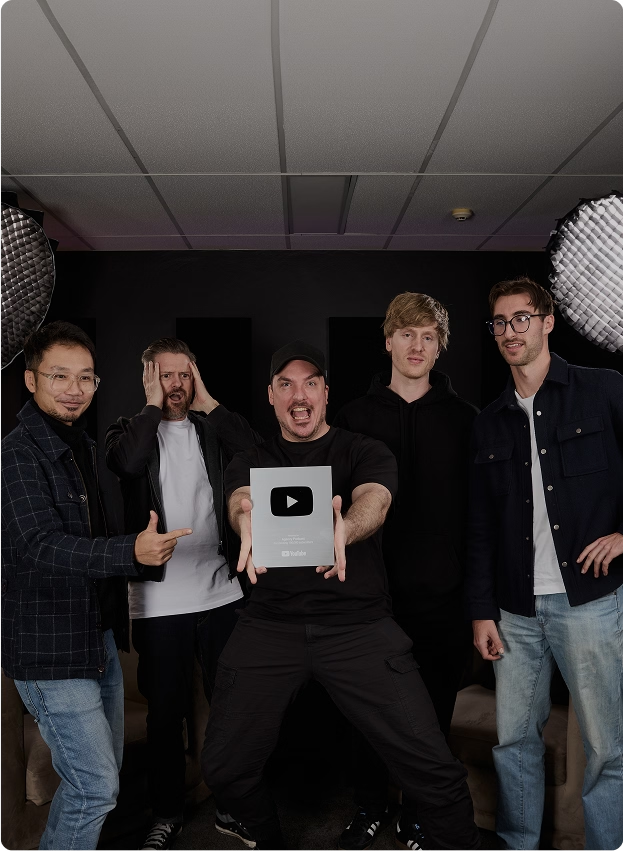
Stream now
Dive into expert advice and industry trends.