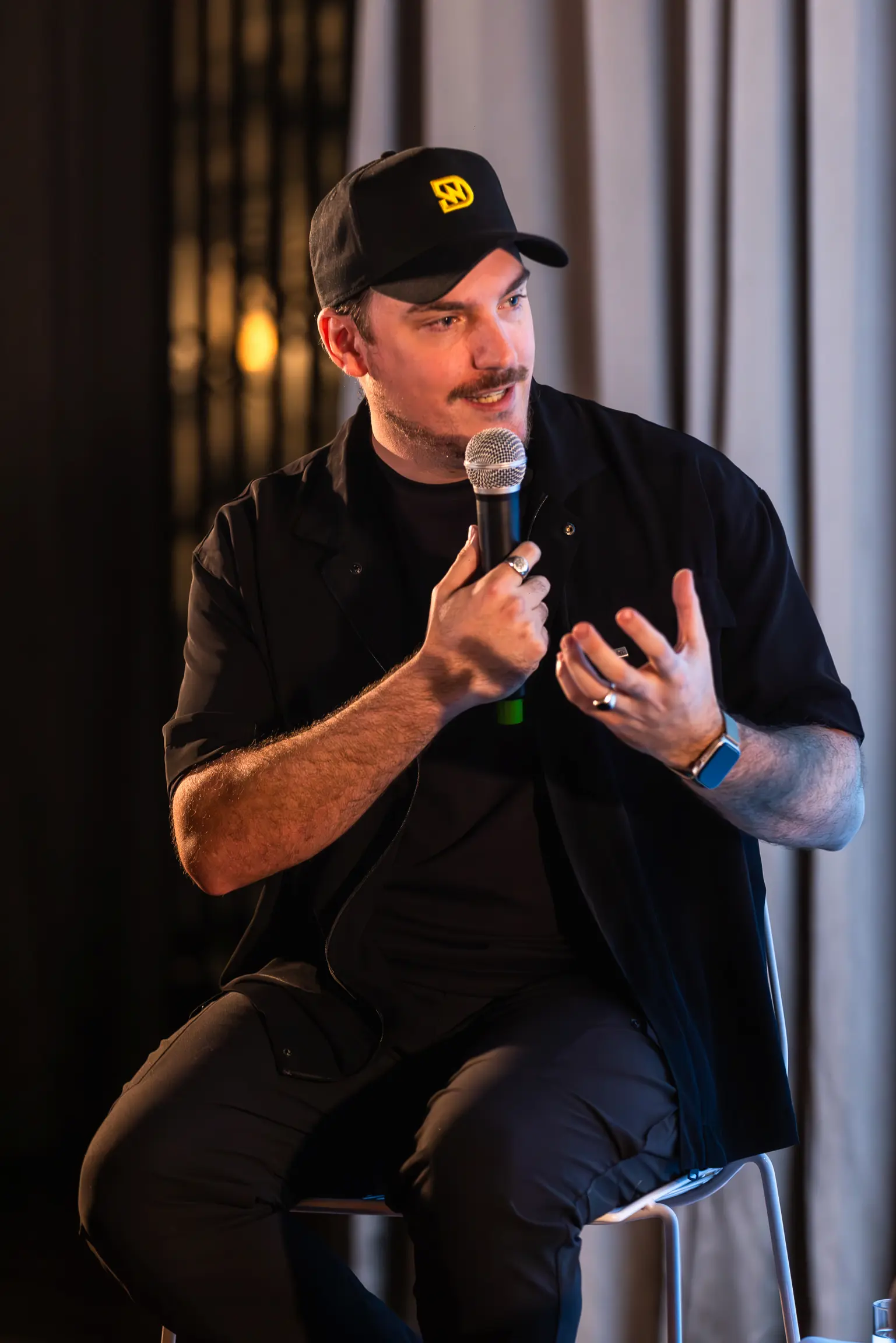
The Truth About Success From A 2x Guinness World Record Holder | James Castrission



TLDR
Summary
In this episode, Guinness World Record-holding explorer and founder of MyAdventure Group, James Castrission, shares his journey of leaving a secure corporate job at Deloitte to pursue extreme endurance expeditions. Alongside his partner Jonesy, Castrission recounts the grueling reality of paddling 3,318 km across the treacherous Tasman Sea for 62 days, facing 13-meter waves, severe sleep deprivation, hallucinations, and shark encounters. He then describes their historic, completely unsupported return journey of 2,200 km across Antarctica. Despite enduring a severe skin infection, extreme weight loss, and fierce competition from an elite Norwegian explorer, the expedition culminated in a powerful act of sportsmanship when their rival waited for them short of the finish line so they could cross together. Translating these extreme experiences into business terms, Castrission discusses the critical importance of team alignment regarding sacrifices rather than just KPIs, the value of extreme accountability, and how meticulous planning creates the necessary bandwidth to adapt to chaos. Today, he utilizes engineered friction and outdoor environments through his company to strip away corporate egos, foster authentic vulnerability, and practice effective communication in high-performing teams.
Highlights
- Left a predictable chartered accounting career at Deloitte in his early 20s to seek uncertainty and test his full potential in extreme environments.
- Completed a transforming 49-day, 2,500 km paddle down the Murray River, which provided a foundational lesson on aligning team expectations regarding sacrifices rather than just goals.
- Survived a 62-day crossing of the Tasman Sea in a coffin-sized kayak cabin, enduring a four-day storm, severe hallucinations from sleep deprivation, and sharks rubbing against the hull.
- Navigated a dangerous, unsupported 2,200 km return trek to the South Pole, modifying every piece of gear to reduce weight, including cutting toothbrushes in half and drilling holes in shovels.
- Highlighted the "30 rule" of polar travel, where exposure to -30°C temperatures with 30 km/h winds causes frostbite in just 30 seconds, leading to cold damage on his inner thighs.
- Experienced a profound lesson in sportsmanship on day 89 in Antarctica when Norwegian rival Alexander Gamme waited 3 km short of the finish line so they could conclude the world-first expedition together.
- Emphasized that 99% of expedition success relies on planning, which builds the redundancy required to adapt when historical data fails to predict the future.
- Argues that talent is overrated in business and exploration, prioritizing mindset, long-term perseverance, passion, and the ability to adapt under pressure instead.
- Explains the psychological shift of extreme accountability, noting that leaders taking full responsibility acts as a pressure release that allows teams to focus on moving forward.
- Found and operates MyAdventure Group, a corporate training business that uses controlled outdoor discomfort to build authentic trust, remove executive egos, and enhance remote team communication.
Transcript
00:00:00
To build connection, you need authenticity, you need vulnerability, and there's no better way to do that than pushing out of your comfort zone. 2,200 km distant, and you need all your food, all your provisions, all your supplies in a sled to survive for 100 days in Antarctica. And I'm dangling above this empty chasm with nothing below my feet, and this was day two. Welcome to Antarctica. I I don't talent is way overrated. What's more important is having the right mindset. And having that perseverance and passion
00:00:33
for a long-term goal, and the ability to keep on adapting under pressure, and the ability to keep on going to survive adversity. 99% success of the Tasman trip was the planning, and 1% was the execution. Those plans give you the redundancy and the bandwidth to be able to adapt more effectively when things don't go as planned. >> What do you think the worst thing on the trip was? >> You know, we had a storm out there. We had seas up to 13 m high, wind up to 100 km/h. One night we had
00:01:00
sharks come up on the kayak. >> Sharks? >> Yeah. >> For 2 months at sea with no company but each other, James [music] and Justin paddled in New Zealand's North Island. >> The most craziest day we'll never forget. There there were 35,000 people there. Networks from all around the world had come down. It was just manic, it was chaos. >> If you could pick one more trip, what would you pick as number three? >> Uh okay. So, there's a couple in there. >> This episode is brought to you by Wix
00:01:31
Studio. Here at the Agency Podcast, we're building a community, and we would love you guys to be a part of it. So, we would love to hear from you. What are you enjoying the most? What would you like to see more of? >> [music] >> And what do you think might be missing? Drop a comment. Make sure you subscribe. And now, on with the show. Now, James, you left a safe [music] job at Deloitte to paddle across the ocean, most people would call that insane. What were you running away from and what
00:02:03
were you running towards? >> I think it was a combination of both. Uh I was in my early 20s. I'd done what I was meant to do. I went to school, did all right, went off to Sydney Uni, did a commerce degree. And then started working big four chartered accounting. And I could see where my life was going. If I looked ahead, I could see where I was going to be in 5 years time, in 10 years time, in 15 years time. Uh I could There was a whole lot of I guess predetermined nature to where my life was going.
00:02:31
And in my early 20s, I was pretty unsure of myself and pretty insecure. And I didn't really know where I fitted on in in in the world. You know, I'd come out here to North Sydney, go out for a night on the piss with my mates, and go home and say, "What's wrong with me? I didn't enjoy that." But then when I head up to Blue Mountains and I go rock climbing or canyoning or I went on trips with my with my buddies, I was like, "That's what I love." And so it was in my early
00:02:56
20s, I was starting to do more and more adventure. The trips were getting a little bit more serious and I started to push the boundaries a little bit more. And then I just got to a point where I just wanted to commit to something where there was probably a bit of uncertainty, a bit of chaos, a bit of confusion, a bit of I don't know if I can actually do this, bit of a opportunity test what I was capable of. >> Was there a moment in your younger life where you realized that you enjoyed to
00:03:21
do these kinds of things? Like Like how do you wake up one day and decide to yourself that I'm going to do something absolutely insane, something death-defying, something that's going to put my life at risk? It It does feel like quite an escalation from accounting to to doing some of the things that you've been able to accomplish over the years. >> Look, at school I I was pretty normal. You know, we'd get we'd We never went overseas as a family. We'd go camping here in Australia.
00:03:44
It was really kind of family camping kind of stuff. The did did a bit of outdoor rec at school. It was all pretty standard at that point. And then yeah, as I left school, I discovered adventure. And so I started doing bush walks with mates up in the Blue Mountains. Started doing these things we called tiger walks. So we'd see if we could push off, you know, 24 hours without sleep, 48 hours without sleep. Put do a 90 km circuit with no tracks and see if we could navigate that with only a couple days worth of food.
00:04:14
And so the trips got bigger and bigger. And as they were happening, I I was learning more about myself. And then in that first year uni, I said to a few from school that I'd gone to school with, "Hey guys, why don't we try and paddle the length of Australia's longest river, the Murray?" You know, 2,500 km paddle. No one had ever done it before. And none of us had ever been paddling before. We were like, "Yeah, let's try it. Let's see if we can make it happen."
00:04:34
And so that was that was like the first big adventure. We ended up spending 49 days on the Murray. And it was like, yeah, 2,500 km paddle. And it was just completely transforming for me. I was like, "I love this. This is awesome." >> What was it that you felt that you learned on that trip? >> In my late teens, early 20s, I really hadn't give myself the breathing room to understand who I was or what I really loved doing. I I think a lot of that was kind of dictated by the environment I grew up in
00:04:59
around. And I, you know, I I was told that, you know, you meant to go out to nightclubs, you meant to go to pubs, you meant to enjoy that lifestyle. You meant to enjoy dancing. And I didn't. But then when I found myself out there, I was just psyched. And I just enjoyed it. And I loved learning about myself. I loved being in environments where I felt unfamiliar and uncomfortable at times. And it was almost like meditation for me. >> In in that moment, was there a particular moment that stands out in
00:05:27
your mind when you think back to that trip? >> The one on the Murray River? >> Yeah. >> Yeah, it was funny. Uh As a as a team, we thought we were pretty aligned. Like it's pretty simple. A couple of mates from school we're going to paddle from source, which is up near Thredbo, down to Goolwa in South Australia. 2,500 km paddle. As a team, we were 100% aligned. When we got on the river, what I realized was, and this has been a lesson I've I've taken away from it ever since then, was we were aligned
00:05:54
on the objective, but we weren't aligned on what success of the trip looked like. And what I mean by that is that the objective was going from source to sea, whereas what success was was my mate Andrew is a cyclist. So, he's one of those cats that wakes up at 4:00 in the morning, shaves his legs, drinks a little piccolo, uh you know, and he and he just thought success was busting out massive days, you know, 150k, 200k a day, get down to the end of the river nice and quickly, and get back for the rest of summer. And
00:06:23
that's all good, but my mate Jonesy, well, for him success was we're going to do the Murray, so yeah, we're going to tick off the objective, but this is going to be a Huckleberry Finn style adventure. What do you mean by that? We're going to float the whole way down, we're going to fish the entire way, we're going to stop at every pub along the way, meet the locals, and we'll get you know, we'll have this great experience, we'll get down for the end of summer. And it was just a really
00:06:45
great lesson that it's all well and good for for founders and business owners to set KPIs and targets and objectives of what they want to hit, but it's even more important to align on what you're willing to put into it, what you're willing to sacrifice, how far you're willing to go to achieve that. And we hadn't had that conversation, and as a result, it was a pretty miserable expedition the entire way down. And so, it was a big learning in any team that I've worked in since then was how
00:07:06
important it was to align on, you know, what we're willing to put into it, what we're willing to sacrifice to achieve the objective. >> When you correlate a trip like that with how people tend to run companies, how do you see the distinction between the two? Are they the same thing? Is it the same human going through the same experience, uh whether it's in the boardroom or floating down the Murray, or or is there more to it? >> No, absolutely. And I I particularly find with founders and business owners,
00:07:31
it's very easy to set um quantifiable targets as KPIs. Hey, this is where we're going to be at the end of the quarter. This is where, you know, the profitability of the project is going to be. This is where we're going to be at the end of financial year. This and and trying to line teams with quantifiable numbers. And me being an accountant, I get that. But it's probably more important to to align on, "Okay, what are we going to put into this together? What are we going to sacrifice? How far
00:07:54
are we willing to go?" Because you often find that founders and business owners are prepared to push a whole lot further than other team members that might be just rocking up to just do a job. >> Now, one of our mutual friends, uh Lachlan, was telling me a story about when the two of you were in uh high school. I understand that, and I think maybe you were 14 or 15 at the time. And this paints a picture of the times as well, which is when uh schools over the period of break would let you go on
00:08:20
adventures in the wilderness without much supervision. Uh and he told me this story where you guys got lost for a period of what, two or three days? What what exactly happened in that moment? Cuz he talks about you with such uh such an endearing perspective of like, "Man, James is just the kind of guy to to thrive in the worst possible situations." >> Yeah, it was quite a funny one. As you said, it was different times back then, but it was a yeah, a a cadet camp, and it was out uh yeah, out near Singleton,
00:08:48
and it was middle of winter. Absolutely bucketed down. Like it just was rivers of water running over the ground. And uh there was no way of getting out. And so everyone everyone's wet sleeping bags were soaked. We were only under little bits of plastic, so under little hoop trees. Uh they didn't keep out the water. Everyone was wet, couldn't light a fire. It was pretty dire. And it was fascinating to see the kids that stepped up in that situation and just kind of lent in and did what
00:09:18
they could to help everyone. And those that um just basically turned into electrocide, essentially look after themselves. And it was fascinating because I was only in probably year eight or nine at that point. As it went on to a few years later in you know, year 11 and 12, and you get your school captains, and you get your school prefects, and the and leaders of the school. It was almost a direct correlation with those kids that stepped up when it was real dire were the rat bags in year 11 and 12, and
00:09:46
they were the ones that were troublemakers, and they were the ones that didn't really get along with the school system. And those that went on to, you know, achieve school leadership and all that kind of stuff were the ones that were pretty much looking after themselves back in >> [laughter] >> year. I don't know what there is to say about that, but yeah, it was an interesting observation. >> If you had a guess, like having worked with, you know, thousands of different
00:10:05
people across a cohort of a ton of different companies, you would have seen this firsthand. What what's the difference between someone who likes to follow the rules, and then the rule breakers that don't like to be told what to do? What Why exactly do they turn different in a situation of survival? >> Those that thrive in those environments, and in order to survive in a real tough situation, I've generally found it's the more selfless people that do better than those that look after them their
00:10:37
own self-interest. And it sounds a little bit odd, but in a real survival situation, there's been times where it's been up against the wall when I've been mountaineering or climbing, it's those that have been more generous and more selfless that have actually thrived and done better in those environments than those that have only looked after themselves. >> You were working at a desk at Deloitte, and then you found yourself paddling through a deadly ocean from Australia across to New Zealands.
00:11:07
How did you end up in that situation? >> Yeah, so on the back of the Murray trip, so we'd never been paddling before the Murray, and that was 2,500 k paddle, and we we knocked that one off, and I really enjoyed paddling. So, that was a bit It was like an introduction to bushwalking on water for me, and I loved that. And then, uh as I started doing my chartered accountancy, and I first started off in insurance advisory before then moved across to management consulting, uh Uh, I was just feeling like I'd never
00:11:33
explored my full potential. And I'd started doing a fair bit of mountaineering at that point. So, I was mountaineering over in New Zealand every summer. I was going over there for a couple of months and and pushing some pretty hard routes over there. And coming back and I was like, "Look, I just don't want to keep on doing this for the next 5, 10, 15, 20 years." And I wanted to do something that was uncertain. I wanted to do something that wasn't predetermined. And this idea had
00:11:56
just popped up into my head. And uh I said to my best mate, uh Jonesy, who was on the Murray River trip, I said, "Mate, I'd just like to paddle a kayak to New Zealand." And I I remember the day so clearly. I I'd called Jonesy in the morning and said, "Mate, I'm I'm going to commit." And so, I walked into the office of the partner that I was working for and said, "Hey, I've really enjoyed starting my career here, but I'm actually I'm going to resign today. I'm going to
00:12:17
I'm going to paddle a kayak across the Tasman Sea." And this guy just looked at me and was like, "Whatever, dude. Good luck." And he did Yeah, and I walked out of there and I was like, "Okay, so that's that's half of the commitment done. The harder part for me was when I got on the train at Wynyard Station and had to back up the North Shore line to sit down with my mom and dad that night to tell them because I hadn't told them yet. And my mom and dad, they come you know, I come
00:12:40
from a Greek family. And Greeks are pretty traditional. Like my my grandparents didn't ever have formal education. They'd worked in cafes in here in regional New South Wales. Uh, and for my parents, the most important thing was getting good education, going to uni, and then getting a good job. And I'd kind of I was kind of successful. And so, I rock up and sit down for dinner. Mom and dad begin to bawl their eyes out and said, "Mom and dad, I've got something to tell you. I just resigned from work today." And it
00:13:06
just went dead silent. And then I quickly got out Yeah, Jonesy and I have decided we're going to try and paddle a kayak from Australia to New Zealand. Instantly, my dad, being a typical Greek father, starts chucking dinner plates around the table. Mom starts bawling her eyes out. It was uh Yeah, they were so devastated because they'd invested so much in me to get me to that point. And they just could not understand what had gone wrong. >> [laughter] >> And it really was that was probably the
00:13:34
toughest conversation I'd ever had, and that, you know, when I think about the toughest things I've ever done, that was probably the toughest thing, committing to it. Um because yeah, it was a real slap in the face, and it took a good 18 months for the relationship to semi improve. It wasn't until we got back from the crossing that they really understood why I'd gone down that path. I'd been expelled from two schools before I got to year five. I got kicked out of one school in year two, got sent
00:14:04
to another public school, and then in my year five teacher parent interview, um my my year five teacher at the time, Mr. Hamill, said to my mom, "Hey, my recommendation is to get James out of school as quickly as possible. Get him into a trade because he's going to end up in prison before he's 18." Is what my year five teacher said to mom. Yeah, year five. So, I got kicked out of that school, and then I went up to Knox Grammar. Um but my uh yeah, mom was the only one through all that time that had ever like really
00:14:33
truly believe in me and knew that I wasn't a failure and I wasn't a letdown, and that I did have potential, and if it wasn't for mom's belief in me, uh there's no way I would have ended up the way that I was. And so, to then turn around and I guess spit in their face in some ways in terms of just turn my back on all of that and go down this path that is completely random, they just could not understand. >> What was your thinking process like quitting your job, confronting your
00:15:01
parents? What do you think was really in your heart and in your mind at that time? >> I think we need we needed some commitment, and we needed some momentum. I mean, we we all get great ideas, you know, we can all sit down we can all come up with great ideas, and um with these big ideas in life, whether it be a business, whether it be something you want to do in your life, you've got to commit to it. And trying to work full-time, do chartered accountancy, go rock climbing on the weekends, and then just do this little
00:15:30
project on the side, it wasn't giving it the respect and the commitment it deserved and the time that it needed to get it off the ground properly. And so we needed to commit to it. And uh I'm sure we're going to talk a lot about it in um over the next couple of hours together, but to do these big projects, you've got to be 100% all in. You are fully committed. For every cell in your body, your time, you're not going to mates' birthdays, you're not going to weddings, you're not
00:15:57
going to barbecues on the weekend, you're not hitting the piss on the weekend. Like you are committed 24 hours a day, 7 days a week. These projects take everything out of you. >> If you want to grow your agency, you need more than just a website builder. You need Wix Studio. The all-in-one platform that's built to help you scale. Design smarter in a hyper flexible, responsive editor. Cherry-pick whatever clients need from pre-built UI elements and templates. Deliver robust back ends with built-in
00:16:27
e-commerce solutions for every industry, letting self-maintaining infrastructure just run itself. Stop reinventing the wheel with every project and instead create a shareable design system with reusable assets, apps, and components. Clients growing too fast? No sweat. Wix Studio AI-powered CMS lets you turn a single layout into hundreds of additional dynamic pages. It's true. More clients no longer has to mean more chaos. Wix Studio gives you one centralized view of every project and makes real-time collaborations seamless.
00:17:03
Do your agency's best work at scale. Build your next projects on Wix Studio. >> So if we picturing a situation where you and Jonesy make the commitment. >> Yeah. >> You confront your parents, they're they're irate. >> Yeah. >> Then what? Did you sit down with Jonesy and go, "All right, Mom and Dad are pissed, but we're all in. Let's go plan it." What was the master plan? How did you unwrap the map and go, "This is what we're doing."
00:17:31
>> So, initially we started asking a whole bunch of different questions like, you know, what's the kayak going to look like? What do we need to take with us? How long's it going to take? What route are we going to take across the Tasman Sea? What skills do we need? And then for the first few months, all we did was like detailed risk management work. And pretty quickly we realized that we weren't experts in different facets of what we needed to know. Uh we never sailed across an ocean. We'd never Yeah,
00:17:51
been out there before. So, we knew we needed to learn a fair bit of stuff. And we didn't have the expertise back then. We didn't have um an LLM to help us out with that. >> [laughter] >> Just putting a plan together. And so yeah, we designed up the kayak. Um we started trying to raise funding. And initially we thought, "Okay, we're two young guys in their 20s. We've got this amazing project. We're raising money for the Sydney Children's Hospital. Um super inspiring. Let's just
00:18:14
send an email off to uh you know, [email protected] and they'll just write a check for us and we'll be right." >> [laughter] >> We did that to about 100 different companies. We've got about 100 different rejections. Like we just that that generic sponsorship model just did not work for two kids with no runs on the board. And uh what we just started asking was, "Okay, you said no, but what are a few things that we could have done better?" And we started getting little bits of feedback
00:18:39
on how we could pitch and how we could um alter our approach. And what we generally started to find was the way that companies define their return on investment was quite different from one another. So, for one company it might be, you know, above the might line advertising. They wanted branding everywhere and they wanted to be able to see the logo. Whereas for other companies it might be some internal initiatives and they wanted stuff done with their staff. And so, it was about finding where the value was for an
00:19:01
organization and then designing a package around that. And so um yeah, we we started going through that process. We started working with a designer in the UK, Rob Feloy, to to design up our kayak. And uh by the time we got to the point where the kayak was ready to go in the water, we'd put everything on the line. We'd every cent of savings we had, we were absolutely exhausted. We've been working with a boat builder up at near Newcastle for a for a number of months. And we're going to put the kayak on the
00:19:28
water and that was the day our dreams were going to be realized. A few months of sea trials and we're going to be out in the Tasman Sea. >> Before we go into that, what exactly were the the things you needed to have the kayak be capable of doing to go into and need to to design it for? >> So, we needed to be able to have about 2 months worth of food on board. We needed a way to be able to uh produce fresh water. So, we couldn't take 2 months of fresh water with us. We needed to be able to produce water with
00:19:58
a desalinator. We needed to have communications. We needed to have a life raft. We needed a place that we could sleep um on board the kayak. And so, there were all these different considerations that we designed and built it all around. And what made things worse was we had a big media launch plan the week later down at the Australian National Maritime Museum down here at Cockle Bay. And so, there'd been hundreds of people that were coming down. All the networks were coming down from Australia.
00:20:21
And we we had this kayak that wasn't floating. And we're like, "Shit, what are we going to do? We can't delay it. We can't put it off." So, we went to the gym that we'd been training at and we asked them if we could just borrow uh four 20 kilo weights. And that week we made a little wooden skeg and we fiberglassed it up. And then we bolted these 20 or 40 kilos worth of weights from the local gym onto it. And that helped the kayak sit upright. And so, it's sitting up there
00:20:48
and we cracked the champagne and everyone cheers and it's all good and then um a few of the reporters come up to us say, "Guys, if you want this story to make the evening news, you've actually got to take her a paddle out in the harbor. You can't just have her sitting here." >> Did you feel like any of those points you felt like quitting or throwing in the towel on the project? >> Um so, we had this kayak that wasn't working and at that time we actually found ourselves competing to
00:21:14
be the first people to paddle a kayak across the Tasman Sea. And uh tragically that other kayaker was lost at sea 80 km short of New Zealand and they never found him. And he left behind his wife and 4-year-old son at the time. Um and the impact that had on us was just absolutely devastating, you know. >> Were you intending to get a Guinness World Record through the trip? Like were you setting out to to do something and and were other people competing to do the same thing? >> So with that one, we we definitely
00:21:48
wanted to do something hadn't been done before and that's where that element of pop competition had popped up with that other kayaker because it was one of those crowns of adventure in Australia. It's something that explorers for decades have been talking about in Australia. >> So this wasn't a new concept? >> No, the kayak near New Zealand, a lot of people had talked about it and or you know, joked about over a pub and a beer and then run the other way. Like it was one of those things that no way,
00:22:10
not going to do that. Uh and and so >> So it's a bit of an urban myth then? >> Yeah, it was like an urban Someone's going to do it but yeah, not me. And so there was a lot of conversation about it and for years people in the kayaking fraternity had talked about it. Uh but no one had really put the work into to actually to get there. When we started putting our trip together, that's when the other kayaker um popped up as well. >> So did you know that there were other
00:22:35
teams looking to do the same thing at the same time? >> No and uh we're Looking back on it, it was a very difficult period. So when we were in those initial phase of putting the the the plans together, initially we were sharing a lot of those plans with people that were in the know-how of expeditioning of ocean crossings, of um sailing circles. We're trying to get as much advice as possible. And one of those people that we reached out to was actually that other kayaker that end up
00:23:06
attempting the crossing and used a bunch of the information that was in our plans to try and put their own trip together. >> And unfortunately things didn't Yeah. end so well. There were other people as well at the same time which we'll we'll come back to. Um So, talk me through the redesign. What was that like? What did you learn from the failure of the first kayak? >> There was obviously the failure it wasn't working. Uh after a few months away from the project and after the other kayaker had
00:23:34
disappeared we sat down for a meeting and we had our boat builder, our electrical engineer, and the kayak designer all in the in this room in this meeting. And we wanted to see if figure out what was going wrong. And within 30 seconds we had like a full-blown yelling argument of all these professionals yelling abuse at one another. It's your fault the kayak wasn't designed properly. No, it's your fault. You're the boat builder. You've put way too much resin and you you specked up
00:24:04
specked it up too much. The electrical engineer then got involved and then they're throwing fingers back at him saying, "Look at those stupid electrical boxes you put up too high." And so we had this room with these grown professionals just yelling abuse trying to get shift the blame. And uh James and I were only in our 20s at the time but we looked at each other and go and just said, "Hey guys, just stop for a second. None of you guys are responsible. This is our project. It's
00:24:27
our fault." Fascinating that as soon as we accepted that responsibility instead of trying to look back as to what had happened, it was it was like a weight had been lifted off all their shoulders and it was okay. Right. So, we're at fault. What do we now need to do to fix this? And so then we looked started looking forward. What's the solution? What can we do to fix this thing as opposed to blaming whose fault it is? >> If you think about the nature of leadership and taking responsibility, why do those
00:24:58
two things need to go hand in hand? >> I think it's human nature and I think we're brought up in a system where failure is bad and making mistakes is bad and we want to when things don't go right we want to find a reason for it or we want to be able to point the finger at someone else to divert some of that pressure. And I think some of the greatest leaders are the ones that do accept the responsibility and do accept that accountability and realize that failure is such an important part of all our
00:25:31
journey and you know, Carol Dweck um growth mindset talks about it all the time that we learn from our failures and we try and teach that to our kids but as adults and as leaders we feel that we don't have that same right to to learn from our mistakes. We've got to get it right all the time. The crazy thing is you know, we're living in a world these days where there's way more change, ambiguity, uncertainty than ever before and as leaders if we're making decisions with limited information and we don't
00:25:56
have a crystal ball is and we're expecting our businesses to be pushing forward fast then it's inevitable we're going to be making mistakes and um yeah, I think it's such an important part in the culture of organization to make sure that um we support when there's a structure behind it mistakes and we move in and we learn from it rather than um trying to hinder on it. >> So when everyone's yelling at each other and blaming one another around what happened with the kayak
00:26:25
you and Jonesy sitting there and saying we take all the responsibility what is that psychological shift that happens in a team when the leaders take full responsibility on behalf of the team? >> I think it's a pressure release. I think it's an excuse for the rest of the team to be able to forget about looking back and start looking forward. >> And rather than defending themselves and they >> Yeah, rather than defending and rather than and a lot there are a lot of leaders that would want to point the
00:26:49
finger at someone that was in that room and put it on someone and make them responsible. But at the end of the day, a role of a good leader is to coordinate the activities of a number of people and a number of people, right? And and to try and get them people from point A to point B as quickly and as efficiently as possible and we obviously hadn't done that well. >> What were some of those things that were the breaking threshold that you didn't want to go below? >> Yeah, as I said, it was it's often very
00:27:17
rarely is it one thing. So, you know, we had a storm out there. We had seas up to 13 m high. We had waves up to 100 km/h. Sorry, wind up to 100 km/h. One night we had sharks come up on the kayak and knock us around for 2 or 3 hours and rub themselves up against us. >> Sharks? >> Yeah. Yeah, rubbing themselves against us at night. >> And only 2 hours earlier we'd been in the water scrubbing barnacles off the hull. So, that actually attracted them. >> Uh and so >> Wait, stop.
00:27:44
>> [laughter] >> So, this is at night, during a storm or or after the >> No, no, it was that wasn't in a storm. That was pretty flat. >> Okay, and then were you panicking in this moment? Like worrying about rations of food and the weather conditions? What was going through your minds? >> Yeah, a little bit of all the above. We could have kept on pushing out for a bit longer and we had food and provisions for about 2 months, but then we could have started fishing as well.
00:28:09
We had a water desalinator on board, so water wasn't a problem. We could have cut down our rations a little bit. We could have started fishing, but we were absolutely concerned and really, really frustrated. You know, when we first started doing our research on the project, we studied about 100 years of historical data and we were expecting about 60 to 70% of the wind to come from Australia and blow us across to New Zealand. In the 62 days we were out there, we got 6 days out of 62 that came from that
00:28:34
direction. >> Oh my god. >> And I know it's not something business owners want to hear, but you know, historical data is not always the best predictor of the future. >> [laughter] >> And sometimes we just need to adapt to what's out there. And so, because we'd been out there for so long and because we'd been in that current uh the EAC that comes up from near Cairns, um we had these barnacles attached attached to the underside of the hull. And it's one of those things that
00:28:59
barnacles, you know, they're about the size of golf balls and there are about 80 or 90 of them on the hull. And they were slowing our speed speed down about 50%. We weren't going to reach New Zealand on there. They had to come off. And it's one of those things that whether it be business when things are good, times are good you don't notice the 5 or 10% as you don't notice the little things. It's when you get the headwinds or a little bit of adversity that those small things become
00:29:21
a whole lot bigger. And so as we got 2/3 of the way across, we started getting those headwinds, that adverse current, and that started really slowing us down. And so we had to get them off. And it was a job that neither of us wanted to do. Imagine you're 600 k off the coast of New Zealand, you're 4 k of ocean beneath you, you've got no idea what's swimming around the water. So in order to figure out who's going to scrub these things off, we implemented a nice little conflict resolution
00:29:43
strategy. I'm sure you use in your business. The only old scissor, paper, rock. >> Oh, no. >> Do you use that one, I mean? No? >> Never. >> Never. Well, that one uh I did have a decent good state out there and I >> So you're 2 weeks Wait, 3 weeks into this trip? >> Uh no, we're about two 2/3 of the way across, about 40 days in now. >> Well, so you're 40 days in. Talk to me about your mindset, your your health, your your mental like where
00:30:05
where are you at before you're scissor, paper, rocking? >> So at this point, you know, we'd only been averaging about 2 to 3 hours sleep a night. So that was probably the hardest point on the part of the trip. >> Every night. >> Yeah. >> Uh >> We got stuck in a 4-day storm for 84 hours basically where we didn't sleep at all at one point. Because it was such a small kayak, I mean the the cabin on the kayak was only about the size of a coffin and a half stacked
00:30:30
on top of each other. So it's pretty small. And you're you're you're spooning in there at night time. There's not really much room to move and you're being thrown around like an absolute rag doll. >> So there's a cabin and that would have been terrifying being in a cabin together at night, trying to sleep, getting tossed around, not knowing what's going on outside. Only getting 3 hours sleep, were were you delusional? Were you imagining things? What happens to your brain in that
00:30:56
situation? >> Yeah, so we were at times hallucinating. We'd done some great training with these two ex- Australian Army officers, which we called food and sleep deprivation exercises. Where before the expedition they pushed us to the point of collapse and to the point of hallucination. So, in a relatively controlled environment with Army officers around us, we wanted to see how our bodies would respond to that stress. And, you know, when I get really tired I'm quite a visual person.
00:31:27
So, I'll see sleep monsters around the place. I'll see like a 6-ft 5 baby in diapers drinking out of a milk bottle sitting on top of the front of the kayak or something. Weird stuff like that. And then, but Jonesy, he wouldn't see things. He was he was more sensory. So, he'd feel someone taking the hat off your head or feeling someone trying to take the paddle out of his hand. And so, he'd feel things happening where as I'd see things. And so, we experienced that prior to the expedition. And so, when
00:31:53
those things were happening to us on the trip there was a level of familiarity about it. >> When you think back at this particular situation, like what do you draw from it? Do you draw terror, or nightmares, strength? Like what what what comes to mind? >> There's never been any PTSD or nightmares. The brain does a really good job of I think really forgetting all the bad stuff. Even I get told the story fair bit these days and I've seen a lot of the footage. And after yeah, 62 days
00:32:19
and 3,318 km of paddling we pulled into New Zealand and it was a just a the most crazy day we'll never forget. There were our friends and family on the beach there. There were 35,000 people there. >> 35,000 people? >> Yeah, 35,000 people. People from all over New Zealand had come to to visit us. Helicopters were in the sky, networks from all around the world had come down. It was just manic, it was chaos. >> I'm getting goosebumps. Okay. Walk me through what did that feel like
00:32:48
cuz cuz I can only imagine how exhausted you might have been at that time. >> So we jumped out of the kayak and our legs couldn't actually support our weight too well, so they just kept collapsing underneath us, but for it to be the Guinness World Record and a completely unsupported crossing of the Tasman, we actually had to get ourselves out of the water. So if if someone had come up and given us a hug when we when we were knee deep in the water, technically that voided the unsupported nature of the whole
00:33:13
expedition. >> Are you kidding me? >> No, no. There were a whole lot of security guards making sure that we could actually get out of the water. >> [laughter] >> I can't believe people would have like just crushed you guys. Until we got out of the water and then that that's when the crowd embraced us. >> Taking into account the entire 62 days, if you had to draw a line from one side to the other, what does the timeline look like in your minds emotionally? You think about the
00:33:40
whole trip? >> The start. To have committed everything to this dream, to have worked on it for almost 4 years, to have been through the kayak not working, everything that had happened, to have gotten to the start line, the most proud of myself I've ever been. I just to be there living what we were dreamt about for so long. That was success for me. Like it was amazing to just be out there. The happiness it But first and I didn't think I was going to feel this emotion. The The last few days
00:34:09
up in Forster, there was a lot of ambiguity, a lot of tension. My dad had left a few days earlier because he couldn't handle the stress of being up there. When we were waiting to paddle out the breakwater there at Forster, yeah, a lot of anxiety and anticipation of what the journey's got ahead of us. Stepping into the kayak and taking those first few strokes was just total stoke. >> What do you think the worst thing on the trip was? >> For me it was probably the seasickness.
00:34:37
I get really badly seasick and Jonesy gets badly claustrophobic. So, put those two things together, we probably weren't the most well-suited people for this expedition. [laughter] And getting getting over that in the in the lead-up to the trip. So, I I tried about 15 different concoctions on myself in the lead-up to find what would help me not get seasick out there. And out there on the Tasman, I was acupuncture myself and a hypnotherapy out there just to make it life at sea bearable. >> Were there any scary moments mentally
00:35:07
where you weren't sure if you could continue? >> Yeah, and I'm sure we'll talk a little bit about the the Antarctic trip. I I found and the Tasman crossing a big sea is absolutely terrifying. When you're in a small kayak and there's towering waves up to 13 m high destroying you and pummeling you for hours and then days on end, it's so humbling and you feel so small and so insignificant. Um yeah, so that was absolutely terrifying seeing how powerful the ocean was out there. And people had always
00:35:41
said that to us, you know, people in big boats don't go across the Tasman. It's it's a very violent stretch of ocean. And so that was yeah, pretty terrifying. And so there were times that we were absolutely scared. Uh but then the great thing about the ocean is half a day later can be dead calm, you know, sun's out, shirts off, paddling in the sun and you could, you know, be paddling down here in the harbor. It can be beautiful. >> Did you guys have any um any vices on the trip? Did you have any alcohol,
00:36:11
snacks, music? What did What did you guys use to cope? >> Yeah, so it was a dry boat unfortunately, so we're not proper sailors out there. So, no alcohol on board. No, I didn't smoke either. Uh there was no In fact, cooking we couldn't have a flame on board because of we were being tossed around so much. So, we had flameless heating rations to heat up our dehydrated meals. Um we had yeah, lots of energy-dense kind of food. Uh yeah, probably the biggest vice that we had that was
00:36:36
the old Nescafé Blend 43 >> [laughter] >> was our was the biggest luxury that we had out there and a few uh Snickers bars. >> Oh my goodness, man. And then when you guys got to shore, what was your What was the first vice that you guys were looking for? >> Yeah, so we went straight to that night we went to Lone Star and smashed some ribs, a few burgers, um few Speight's beer over there. We had an awesome time. Yeah. >> And the locals I imagine would have absolutely cherished you guys.
00:36:59
>> They just embraced us. They were so much fun and they were so good with us. Yeah. >> Thinking of this trip and and your relationship with business, what are the key lessons from this particular venture uh that you really draw from in the world of business? >> One big part is I often say that 99% of success of the Tasman trip was the planning and 1% was the execution. But what I've generally found through adventure is that those plans give you the redundancy and the bandwidth to be
00:37:26
able to adapt more effectively when things don't go as planned. And so I've always been a big proponent of planning properly and and that's setting up for success when when things don't go as planned. So that's probably the first component. Second component is I'd say that I think there's a massive reliance in the corporate world and particularly in Australia on talent. And I think talent is way overrated. I think um what's more important is having the right mindset
00:37:51
and having that perseverance and passion for a long-term goal and the ability to keep on adapting under pressure and the ability to keep on going despite adversity. And I think they're probably more skill important skills that we need to be teaching our kids than purely relying talking about that word talent. Because I was not talented, Jones is not talented, most of the great explorers I know are not talented people. They've just They've got They've got a goal and they go about it the
00:38:16
right way and they have the the right systems in place. And I think we You see that with a lot of great business people as well. They're not geniuses and they're not overly talented, but they've got the right mindset to to to be able to achieve their goal. >> When you think about the mindset, what are the key things that you try to keep front of mind when you're doing a trip like this and you're trying to persevere and you don't have any sleep and there there are literally sharks circling and you're
00:38:39
putting your life at risk. What are those things that have to be right front of mind to make sure you can endure those trips? >> Yeah, so one is not thinking too far ahead of yourself. I can so easy to think about, okay, where are conditions going to be in a week's time or what's going to happen to our food provision in a month's time and what's going to happen when we get to this point in the trip and when you start to think too far ahead of yourself, you can psych yourself out. Like on a lot of
00:39:04
these trips, the big picture was way too overwhelming. It was just about focusing on the day ahead of us, focusing on the next 100 steps or or 100 paddle strokes or the next 1 hour and just doing what we could do. And often like if the strategic work's been taken care of, if the kayak's pointed in the right direction and you've agreed with that with your support team, then you just got to focus on what you can do to keep moving in that right direction. And uh and yes, too often we get too far ahead
00:39:30
of ourselves and trying to and we we psych ourselves out. Like down in Antarctica, I'm sure we'll get there in a few moments time, the idea of skiing 2,200 km over 90 days in Antarctica is way too over whelming for the human brain to comprehend. Whereas but you can comprehend, okay, we want to do 10 km today or we want to you know, we want to ski for 8 hours. And then when you're doing that, if you're pointed in the right direction, okay, we just got to focus on the next 100 steps.
00:39:55
Whereas the big picture can just psych you out. >> I I imagine it's easier said than done to just focus on what's in front of you. What happens when your mind wants to panic, it wants to jump ahead, it wants to have more certainty and security? How do you pull it back into the current moment? >> Good question because I think the the word that you say you want to have more certainty, thinking big picture gives you more uncertainty. >> [laughter] >> It makes things a whole lot more
00:40:18
uncertain because there's a whole lot of different factors that you can't really control and you start doing crazy number games. Okay, well, if we're averaging 20 km an hour, but we've got to do this and and you start doing all this scenario planning. Whereas if you Yeah. Things become a whole lot more certain if you just focus on what you can immediately control. >> Focus on what you control, control that circle of influence, know that strategically you're pointing in the
00:40:41
right direction, and just keep on pressing repeat button. And the the repeat button to be is the part that we can all make huge gains on. Um personally, professionally, um is just Yeah, trusting the process over a long term. It's amazing how much ground you can actually make. >> And in business, a lot of people can get stuck on this. They can get fixated on the big crazy goal ahead and trying to run all the numbers and build out a P&L and a forecast and what have you. You know, what's what's the
00:41:05
direct correlation with running a business that is also about keeping things in the in the present? >> It's It's really important to have the strategic end goal in mind. So, yeah, we did want to get across the Tasman. So, you've got that set, then you put your plans in place to support that. And so, it's really good to be able to see, okay, well, if we do X, Y, and Z, it's going to get us there. But then when you're actually in the execution phase, not I wouldn't say forgetting about it,
00:41:26
but you don't need to be thinking about that five times a day. You just focus on the bits that you can do best today to get you there. And so, breaking it down, tracking it down, and focusing on that. >> If you could go back in time to the start of this particular trip and change one thing or add one thing, uh what might that have been? >> In hindsight? >> Yeah, in hindsight, if you if you could literally go back in time, what would you do? >> have paddled from New Zealand back to
00:41:51
Australia. It would have been way quicker. We wouldn't have got stuck in the middle. But yeah, the data at the time, as I said, pointed us in one direction, and that's what we followed. Uh but in hindsight, if we'd gone the other way, it would have been a way easier crossing. >> And what's uh one thing you would have taken uh on the kayak that you didn't take? >> We were pretty happy with the provisions and the supplies that we we've taken out there. Um there would have been a few more little
00:42:15
things for a bit more comfort or a few more treats along the way that would have helped a lot. >> All right, so let's talk about a different trip that you also want to give us a world book of records for. Um I want to touch on the Norwegian story because you went to Antarctica to be the first, but someone else showed up to do the exact same thing. Um can you take me into what that trip was and what the preparation was and then we'll talk about what happened? >> Yeah. Yeah, so we got back from the Tasman and
00:42:46
I'd always been absolutely psyched on Antarctica. A lot of the stories I'd read were from Antarctic exploration and >> like the most extreme one. >> It's the most extreme one, right? It's like the uh it's kind of like the Super Bowl of adventure. You [laughter] know, you got Antarctica and you got Mount Everest and they're the two that's like the Super Bowl. >> And Mount Everest now is just covered in people. >> Totally, exactly. Yeah, yeah. So it was
00:43:09
like, okay, Antarctica's it. And so um we started to do a bit of research and we found out that no one had ever pulled off the unsupported return journey. So just getting from the coast of Antarctica to South Pole and back out again completely unsupported. So >> For those that aren't familiar with this, could you paint a bit of a picture of what that what that is? >> 2,200 km distance. It's going to take about 100 days and you need all your food, all your provisions, all your
00:43:30
supplies in a sled to survive for 100 days in Antarctica. It was a lot more daunting. Yeah, a lot more daunting and because there'd been five attempts in the prior 12 years and some really experienced people that had gone before us and no one had been successful. So every one of them had failed. There were a lot of people, again like the Tasman, had been talking about this one as a big crown in the exploration world. Most people had written it off as impossible. And I it was it was that same
00:44:02
allure that attracted us to this project that it hadn't been done before. A lot of people thought it wasn't possible. Let's give it a crack and see what we can do in this space. >> What happened between the Tasman and this though, like for you guys to then commit to this new trip? >> Even when I was in New Plymouth in New Zealand, after I'm pretty could might have been the first night or the second night back. I remember being in the bathroom, looking at myself in the mirror,
00:44:31
and asking myself the question, "Did you just fluke that? Did you just wing it? Did you just get lucky?" There was I honestly had this conversation with myself was, "Did we just get lucky?" And I'm sure you've spoken to plenty of business owners that have done well with a business and done a nice exit or done it, you know. At that moment, I wanted to test myself in another environment, similar kind of philosophy and similar kind of methodology in putting a trip together,
00:45:02
but see if I could Yeah, it wasn't about paddling another ocean because I was like, "Okay, I don't just want to press the repeat button on what we've done. Let's go and try this in a different environment and see if the process works." >> This is crazy. You're You're You can't even rest for 2 days and you're already thinking about the next trip. >> [laughter] >> Well, it was it was more of a I wasn't actually thinking about the trip at that point. It was more
00:45:23
>> You were like, "I want to go >> Yeah, I was feeling a bit uneasy. >> expecting to feel this way? >> No. No, not at all. >> And and how did you feel looking at yourself in the mirror? Like honestly >> Look, I was still super proud and stoked on what we'd achieved and and was like, yeah, having a lot of fun when we'd arrived New Zealand. Yeah, was really really happy, but there there was this little seed of doubt that had crept into me of um "Did you just get lucky, dude?" Like
00:45:47
Um yeah, "Can you do it again? Is it Are you a one and done? Like is it Is it all Is that all you got?" Like all these little kind of >> Yeah. >> nibbling Like this little guy on my shoulder nibbling these thoughts into my head. >> Did you How did you decide on a Antarctica? Like was it the next biggest craziest one from the Tasman that you heard about? >> Antarctica was like the Charlie Chocolate Factory of Adventure. Like it's the most epic environment on Earth.
00:46:14
It's the most remote place on the planet. Uh a whole bunch of other teams had attempted this particular expedition. No one had been successful. There was a lot of naivety to us committing at that point because we'd never been cross country skiing in our life before at that point in our lives. We'd never been on cross country skis. So I was like, "Okay, we want to try and pull this thing off." And we've got so far to go on this journey. And so that was part of the allure and the
00:46:39
attraction of it. It was about exploring places on the planet. So a lot of our training we would go up to the Arctic Circle up to a place called Baffin Island. And then and and we'd be in this little town up there called Iqaluit. And seeing how the people live up there like it's funny you walk down a fancy street here in Sydney and they've got your little Prada handbag and your Louis Vuitton and your this and that with your handbag. You go up to these areas and they don't have their handbags but it's
00:47:02
the fur rough that they wear that tells how you know where people sit in society. So people have got like a wolverine fur rough or they've got coyote or they've got wolf or they've got these different things and people judge where you sit in in society based on the the rough that you're wearing on your on your jacket. >> A wolverine. >> Okay, yeah. [laughter] If you've got a wolverine >> You're you're killing >> Yeah, and they all do different things.
00:47:25
And so it was amazing learn finding places like that um exploring the back country here in Australia at the back of you know Perisher and Thredbo and getting right out of past the resorts and going up to Blue Lake and Kosciuszko in the middle of winter. It was amazing to learn a completely new skill set and discover these incredible places. >> What's the thing that surprised you about cross country skiing that you weren't ready for? >> How bloody difficult it is. >> [laughter]
00:47:50
>> Cuz rowing is one thing, right? >> Yeah. Yeah. They you're on these little cross country skis that are really skinny and they're really hard to s- even to stand up on. And so we yeah, we weren't great downhill skis and so learning how to cross country ski was a whole another thing. So that was the one part. And then there's something called the 30 rule. If it's sitting at minus 30 degrees Celsius and the wind's blowing at 30 kms an hour if you have any exposed flesh or skin
00:48:16
you get frostbite in 30 seconds. And so when we arrived in Antarctica the average temperature is in the mid minus 40 so minus 45 degrees Celsius and the wind was blowing up at 50 kms an hour. So there's no room for error in these environments. >> Did you speak to anyone that had attempted this trip before you decided to to go out and do it yourselves? >> We'd spoken to um pretty much all five of the groups that attempted before us and >> And they were happy to chat to you?
00:48:40
>> Yeah, really supportive and uh yeah two very close mates now. They were two Kiwis Kevin Biggar and Jamie Fitzgerald from from New Zealand that had attempted it two years before us and they were great mentors to us in helping get get ready for the trip. >> I imagine the difference was rather than looking at the chart of the ocean and the weather you were looking at terrain and elevation and what was that like? >> Yeah, so fascinating that the South Pole sits at an altitude of 2,800 m. That's
00:49:08
500 m higher than Mount Kosciuszko. And when you're dragging a sled from sea level up to 2,800 m you got to feel every single one of those in altitude gain. You know, your sled's 160 kilos and you're going to the plan was to drop off food caches on the outward journey and so yeah, dragging uphill into the wind and it was the winds in Antarctica are katabatic so they kind of start at the South Pole and they blow out towards the coast. So that >> Katabatic? >> Yeah. So it means that the wind start in
00:49:37
the middle of Antarctica and they blow out towards the coast and so the whole way to the South Pole you've got headwinds and then on the way back the wind's on your back. >> Okay. So then what was the preparation? How did you roll out the map and plan this trip? >> So initially we started just looking at the logistics and the feasibility of all We started asking a lot of questions like we did with the Tasman. In fact, it was a very similar blueprint to the process we went through. So, first up,
00:50:01
planning, risk management work, forming some people. We'd had some runs on our board, so the sponsorship trade did become a little bit easier with that one. Uh but then we were looking at ways, so the prior teams that had gone down before us felt the most effective and efficient way to do this expedition was to ski to the South Pole and then kite ski back. They put kites up in the air because you got the wind on your back the whole way back down, and kite ski backed out. And that seemed to make logical sense
00:50:28
initially, but then when we started doing a bit of research, we like, "Hang on. To take those kites, you're going to add in another 15 to 20 kilos worth of dead weight all the way to the South Pole. And we felt that that 15 to 20 kilos ended the expedition of a lot of the trips that had gone before us. So, people had tried to tried to go with the kites. >> Okay. >> And so, we were the first group to say, "No, we're going to ditch the kites, and we're going to try and go as light
00:50:55
as possible." When we're saying light, we're talking 160 kilos as opposed to 180 kilos, but every gram makes a difference down there. So, we we'd cut half our toothbrush off, you know, to save on weight. Labels on clothes had come off, you know, that's dead weight. What what what do you need that dead weight for? >> Um like a label? >> Labels on clothes. Every single gram made a difference. Every gram we could save would mean we could travel faster, or we could take more food and
00:51:21
fuel with us. And so, we were absolutely obsessed with saving weight. Our shovel we we drilled holes into to save a few extra grams of alloy to try and lighten up the sled. Like >> What were some of the other things you did to to save weight? >> So, there there's some examples. Uh food we repackaged. So, we actually we we we weighed it in South America. We had all our food, and if you imagine a muesli bar or Mars bar and that kind of thing, and you you package all that weight. There was about 10
00:51:50
kilos worth of packaging of food um that we we jettisoned and we used the lightest plastic bags that we could find which was freezer bags. They were the they were the thinnest and the lightest that we that we could find. And uh yeah, we saved about 8 kilos um with with all the provisions with that. >> What else did you guys have to prepare? So, you dropped the kites, you cut your toothbrush in half. >> Learn how to ski. >> Yeah. >> Uh every bit of gear needed to be modified. So, you can't just walk into
00:52:19
any outdoor store here in Sydney and say, "Hey, I'm going down to Antarctica. >> [laughter] >> Can I have a jacket, a tent, and a stove?" And off you go. Everything got modified and so um you know, we were lucky enough to have uh The North Face as one of our major sponsors. The jackets that we took down there was one of their top jackets, but then we we made 17 modifications to each jacket to make it a little bit more appropriate in that environment. So, we modified everything. We
00:52:44
we we cut a little bit of window for the so we could see the uh our our our our watch on our hand. Um we we did all these different little modifications. We changed the zips. We did all all these different things to make it a little bit more appropriate in that environment. And >> other things that you had to change on the jacket? >> Uh we put lots of breathing. So, if you think about a raincoat, it's to protect yourself against rain, right? Whereas we're not going to get any rain down in
00:53:07
Antarctica. What was more important down there, there's an expression in polar travel, you sweat, you die. And so, you're probably thinking, "What does that mean?" Well, if if you imagine if it's sitting at -45° C, and you're perspiring, eventually that moisture is going to get to a point where it actually freezes. And so, if you can't get that moisture away from your body and away from your clothing, it becomes an ice armor on you. And so, we cut in a whole lot of
00:53:33
extra ventilation when we're working hard to be able to get that moisture away from the body uh so that it didn't cross up on us. >> I would >> never thought of that. Uh you would think that you'd want to keep all the possible body heat and have no ventilation. >> It's amazing when you're when you're pulling 160 kilo sled and you're working hard, how much energy you perspire. We were burning approximately 10,000 calories down there a day. That's about 20 Big
00:54:00
Macs worth of food just in energy output. >> Did you lose weight on the trip? >> Yeah, so on uh down in Antarctica between the two of us, we lost 56 kilos of weight between the both of us. So Jonesy lost 30 kg, myself 26. We lost a huge amount of weight. >> And what was the level of elevation above sea level? >> Uh 2,800 m at South Pole. >> All right. Having spoken to the other people that had done the trip or attempted the trip before you, what were the most intimidating things
00:54:29
that they'd mentioned about the trip that that you would really wanted to drill down on? >> The one was frostbite, so we wanted to come back with all 21 digits working nice and happily and well when we got back. >> They lost digits? >> Uh so some people a lot of people down in Antarctica lose digits because of the cold, so yeah, it was about keeping our fingers and toes was pretty important. Um what was probably one of the biggest things, and once we got to the South Pole,
00:54:57
a lot of teams had there's a base down there with scientists. They'd kind of dropped their guard. They'd been in this the zone for a couple of months to get there. They dropped their guard. They're all There were some scientists around. Oh, can I come take a photo? Oh, pretty cool. I mean, how often do you get to the South Pole, right? So uh some scientists would say, "Oh, why don't you just camp here for the night?" So they'd set their tent up right next to the South Pole.
00:55:20
And then the scientists would say, "Oh, do you want us to bring you a cup of tea?" Oh, we shouldn't really because it's unsupported, but okay. Oh. When you get to the South Pole, there's a base down there. How cool would it be to go and look at the base inside and see the way the scientists live down there and the cool science work that they're doing? Why don't you come in and have a look? And so they come in, and by that point, they'd just lost all all their sight to keep on going on the trip
00:55:40
and then that kind of broke them down. And so we treated it like a summit attempt on a mountain. So we actually set up our tent 10 km short of the South Pole. We left all our gear there and we just took one sled with emergency provisions and supplies. And we skied into the South Pole. We were there for 5 minutes and then we were out of there straight away. We didn't So So too much comfort can ruin the momentum of the trip. Completely ruin the momentum. Yeah. What What do you Why do you think that? That's
00:56:05
interesting. Why do you think that having comforts in the middle of an enduring situation can absolutely kill the momentum of your mental state and and why you would want to not keep going? >> You don't realize how single-minded and focused that you need to be each day just to wake up. It just everything is so hard and so difficult when you get some relativity back in your life and you get some comfort and you get other people you kind of question, what am I doing this like what why? And um
00:56:41
when we made that decision to leave that tent there, our our mentor Eric Phillips, he knew that we were going to we were committing to suffer at that point. And that was a mental commitment that we had made that we were going to go all in and give it everything we had and that we were going to go to some some of the darkest place we've ever been in our life. >> Um could you walk me through landing, set up, prep, and then setting >> We get to South America. We're packing our food and clothing
00:57:10
getting ready to go. And then into our hostel room walks this 6'5" tall blond Norwegian. And his name was Alexander Gamme. And he quite he proudly announced to us that he was going to be the first person to ski from the coast of Antarctica to South Pole and back out again. >> Wait, he's smack talking you at the start of the trip. >> Yeah. And we were absolutely devastated. This guy's a full-on polar ninja. Like he's born in the snow. He's got ice in his veins.
00:57:35
>> We'll put a photo of him. >> He's like a full on the real deal. And then you've got these two Teletubbies from Australia just learned how to ski 18 months earlier. [laughter] So, we felt completely out of our comfort zone. >> like the Chuck Norris of >> He's he's the he's the he's the man. Like he's a polar guide. He's climbed Everest two other 8,000 m peaks. He's been doing expeditions for donkey's years. He's He's the real deal. And so, we felt
00:57:58
absolutely intimidated um when we first met him and we realized that we're going to be racing this guy. >> So, you had no idea that this dude was prepping for the trip. >> No. And he kept it pretty silent on us and that's something that pissed us off. Like we were feeling really angry towards him because we'd been releasing stuff online and everyone knew about our trip and uh he'd been following our trip and we knew nothing about him. And so, we get over there and we meet this guy
00:58:19
and we're just like, "What?" >> [laughter] >> So, you get there and you spent all this time prepping and announcing everything and then he just shows up to be like, "I'm going to absolutely destroy you guys." >> Pretty much. Yeah. >> Yeah. Yeah. >> [laughter] >> What did you say back to him? >> Uh it was pretty tense initially, but even in those first couple of interactions as frustrated and as angry as we were he seemed like a pretty good bloke, but
00:58:46
we didn't know. He seemed like a good bloke at that point. And yeah, things will develop through the trip, but at that point even though we hated his guts there was that little seed of ah, but does something's not adding up here because he does seem all right. >> Yeah, okay. So, then he just so happens to be there at the same time and he In his head, was he setting out to race you? What what What do you think that was? >> Similar to the Tasman in that it was this crown of polar travel and uh uh the
00:59:13
Norwegians have been talking about it for a while. Canadians have been talking about it for a while. There were people in Britain talking about it. So, it was this thing being discussed around the world and given that there have been five attempts and none have been successful, it it was alluring to that kind of person or yeah, let's give this a go and let's see if we can pull it off. All right. So, who set out first? Did he set out or you set out? >> both take a big plane across the Drake
00:59:33
Passage down and we land at a base down there called Union Glacier. >> So, you were hanging out as you were getting ready to go on the trip. >> Yeah, we're on the plane together and we fly down on this big cargo plane down to Antarctica, land at this base Union Glacier. We getting our food ready and we realize that one of our duffels of food had not been unpacked out of the plane and it flew back over to South America. And so, we're in this base and then so, Alex then flies out to the coast and starts
00:59:58
his expedition and we have to wait another day for our food. So, he gets a head start on us before us. The last thing we needed with a guy that was so much more experienced than us, we didn't need him to have a couple of days head start on us either. >> So, you had to wait for your food to come back and then walk me through your mindset as as the food arrives. You're like, "Finally." and then you set out. >> Yeah. So, then we take a small twin otter out to the coast, hook up to our
01:00:20
sleds. Sleds weigh 160 kilos. It's brutally cold. And you know, day one of travel, we knock out about 7.2 kilometers. You know, full day of travel, not very far at all. >> on skis the whole time? >> Skis, yeah. Yeah, dragging 160 kilos the whole Yeah. The next day we find ourselves for navigating through a crevasse area. So, crevasses are cracks in the ice. Um some of them are narrow, some of them are wider. And normally in those areas, you'd be roped together or you'd um have, you
01:00:50
know, crevasse rescue gear in case you fall down one. But as I was saying before, we cut our toothbrushes in half so, we couldn't afford that weight. And uh we had no crevasse rescue gear on us. And we're navigating through this crevasse area. By the end of day two, we'd crossed over two, maybe 300 crevasses. And right towards the end of the second day, I go out on this one bridge and it just collapsed underneath me. I start falling down. My ski pole snaps into the wall of crevasse.
01:01:14
And I'm dangling above this empty cavern with nothing below my feet. Jonesy rounds up, pulls me up on my shoulders and we just stood there petrified just looking at each other thinking what the hell have we got ourselves into? And this was day two. Welcome to Antarctica. >> Did you regret doing that? >> Uh it would have been really hard with the skis on. It was just one of those real tough bit of a trade-off. >> Okay, how did you how did you fix your your pole? >> Again, talking unsupported, you're
01:01:42
tossing up this thing about how many spare poles do you take with you? >> Also, you planned for that. >> Yeah, so we taken one spare pole, but then we taken a few ways to repair poles if we broke them. So, we took some splints that we could put on them, tape them up, and repair them. >> are some of the other things that you prepared for maybe going wrong that was in in the sleds? >> Yeah, so uh just like on the Tasman, really important that you get water. So, if you can't melt snow and you and your stove
01:02:08
breaks, you're not going to survive for very long down there because water freezes within a few hours, and so you've got to be able to keep melting snow. >> So, did you take propane? Like how did you melt snow? >> Yeah, so we had yes stoves that we that we had um gas fuel in, and so we had liters of gas fuel that we could heat our water up, but we had to be able to repair our stoves and have a few backup stoves, so that was really important. One of your most important things down
01:02:34
there apart from obviously water is your shelter. So, if you burn your tent or when you're setting it up, it blows away in the wind, you're rooted. Like there's you are you've got you are completely exposed to the most harshest conditions on Earth. You're not going to survive very long. So, yeah, those were little things that we had to prepare for. >> What were the things that you would do to make sure that your tent wouldn't blow away? >> So, before we even start rolling it out,
01:02:59
we'd peg in one side of it. So, at the front of it we'd peg it in. Uh the tent itself was a was a North Face tent that we'd figured out a way to set it up in about 30 seconds. So, the poles were all still in there, and so we were able to connect them up and get it up nice and quickly. But yeah, keeping it anchored down at all times was so important. >> All right, so by day two you almost died. >> Yeah. >> Uh walk me through the the next uh, series of the events. >> we were planning out this trip, we were
01:03:22
expecting the driest continent on Earth, Antarctica at that time of year is meant to be the driest continent on Earth, and it's meant to be a hard polystyrene like surface under your feet. So, a little bit like this carpet under your feet right here. Based on that assumption, that's how we designed our entire travel strategy. So, what the skis are going to look like, what kind of sleds we're going to take, what kind of mileage provisioning we should do each day. Now, we all make assumptions based on what we're
01:03:45
expecting with the conditions, right? But, just like the Tasman, things don't often go as planned, and over the next 3 and 1/2 weeks, it started snowing on us, and it did not stop snowing. And so, we had half a foot of snow come down, a foot, foot and a half. And when you're dragging a sled through a meter of freshly formed powder, it's not something I wish upon my worst enemy. We were lucky to be doing 800 m an hour. The entire expedition was falling out of our hands. We were, you know, we had limited
01:04:13
provisions, we had this Norwegian out there, and so we started punching out bigger days, trying to keep our foot in the game so that the mileage didn't become too unmanageable on the back end of the trip. We set up the tent, we just could not go any further. We'd pushed too hard. I got this infection breakout on my groin, and I had started a course of antibiotics, and we sat in the tent for 2 days, and we just felt like the biggest failures of our life. >> What do you mean? Like, what exactly
01:04:35
happens? >> Uh, it just a really bad skin infection had popped up. >> chafing from >> Yeah, chafing. Uh, chafing and um, a bit of cold damage as well. Um, from yeah, from from the sled hauling. >> Where was the cold cold damage? Was it on your >> Uh, on the inside of the thighs. So, yeah, they'd started to blacken a bit on the inside of the thighs. >> Oh my god. Okay. And how like, even though you're covered, you're still getting cold damage. How does that work?
01:04:57
>> So, if you think about it, if if you imagine, uh, even if you've got thermals, and you've got some warm pants on, and then a shell layer on outside, your leg, there's not really much barrier between minus 50 plus wind chill, and this part of your body uh, when you're sled hauling. Your other parts are a little there's a little bit more a little bit more cover there, but here there's not much. And the inside of your thighs there's not much blood flow because it's there's a lot of fat in
01:05:25
there. It's not actually blood flow in there. >> Okay. >> And so that's why they got damaged. >> Also it's not as hot. >> Yeah, exactly. >> Okay. And then so so then you're just getting a bit more blasted by the wind in that particular area in your body. >> Yeah. >> And then an infection breaks out and then you guys decide to take antibiotics and and buckle down. >> Yeah, and we'd been pushing too hard in that storm to try and control the
01:05:45
situation and control the outcome. And we we weren't working with what was going on around us. We pushed like the level of sustainability of what we were doing, we could not keep that going for 100 days in Antarctica. We pushed ourselves too hard too early and we paid the price. And it's a really it was a really great lesson for us that you know, so often we set ourselves ambitious goals and ambitious targets, but we need to realize that our progress needs to be sustainable for a long-term goal. Like we're not going
01:06:16
to achieve things in the short term. And down there in Antarctica we pushed ourselves too hard too early. We ignored what was going around us and we paid the price. And so you know, there was going to be a time to push, but that wasn't it. It was going to be the back end of the trip. >> Did you feel like there was some higher power taunting you or messing with you at that point? >> As we mentioned before, the idea of trying to picture the end of the journey at that point >> Right.
01:06:39
>> seemed completely and utterly impossible. In fact, day 30 we actually bailed on the idea of pulling off the return trip. We we dumped about a week's worth of food in the snow to try and lighten our sleds up. Trying to get one way to the South Pole and like the other teams that have gone before us, we're going to get evacuated at the South Pole and and and come back home. >> So 30 days in you're like we can't do it. >> We there is no way we can pull this thing off. So we we dumped some food in
01:07:06
the snow. It was the dumbest decision of our lives. Cuz on the way back we started getting pretty hungry. >> So at the at that point though you were like not a big deal, we just want to live. >> We just want to leave. We want to get one way to the South Pole. We should be proud of ourselves. We'll be the youngest people ever to ski one way to the South Pole. Sponsors will be happy. We'll have experienced Antarctica. Yeah, we just for everything to have pulled off this trip everything had to
01:07:28
go a little bit more right than it did. It's out of our control. Let's just get one way. >> What was the conversation you had at that time with Jonesy about that? >> Pretty much that. >> Yeah, you guys were in total agreement. >> Yeah, yeah, yeah. Yeah, because it just it felt so impossible in those conditions to do any more than what we could have. >> And that's because of the infection? Like what was the moment >> Infection, the the weather, the the deep
01:07:48
snow that we're pulling our sleds through, the limited provisions, the fact that we'd been delayed with the food, uh that we'd been delayed in South America by about 10 days as well because the weather hadn't been good enough for the big plane to come down. So there all these things that had happened and we're like okay, most people thought it was impossible if everything had gone right. Things have not gone right, so let's just pivot. Let's get one way to the pole. >> And so in this situation you didn't have
01:08:11
the support team to radio you into? >> We were radioing to them, but as you can imagine, you know, weather forecasting here in Australia isn't always great. Down in Antarctica it's even worse. >> [laughter] >> So you can't really forecast There's not really good weather forecasting. We didn't know how long it was going to go for. >> the team were like, "Hey guys, just like try to get yourself to safety and forget about it." >> Yeah, and some of it was really
01:08:30
frustrating. This is where we started connecting a little bit with the Norwegian. You speak to people back here in Australia and people would say, "Hey guys, you're Cass and Jonesy, you'll be right. Everything's fine." Uh and that would really annoy us. Whereas with the Norwegian, he was the only person on the planet that could empathize and understand what we're actually going through. >> So how did you deal with that 30 days into the trip to the leg of the rest of the trip?
01:08:57
>> A- as in we did at that So 30 days into the trip we were still 800k from the South Pole and we just want to try and get one way to the South Pole rather than bailing back. We thought it'd be cool to get one way to the pole. >> Okay. Okay, so you guys decided despite the situation >> Yep. >> had the antibiotics kicked in and worked. >> Yep. Yep. >> And then you guys just kept going. >> Kept going. Uh summer arrived down there, so temperatures warmed up to a
01:09:19
nice balmy -20° C. The storms finished up, and then we started making much better progress up on the pole plateau, then a few weeks later uh into the South Pole. >> Right. Okay, so then what happened when you got um to the halfway point? >> We skied in the bottom of the world, and right at the South Pole, there's a barber shop pole that's sticking out of the snow with a big round globe on it. We got round there, and we're running around in circles thinking we're circumnavigating the world.
01:09:44
>> You're not kidding me? >> No, no, it's really cool. It's really It's amazing. >> It's a real thing. >> Yeah, there's an actual South Pole, and we start running around in circles thinking we're circumnavigating the world. How cool is this? And then a scientist comes out to take a photo and says, "Oh, you you you guys are Cas and Jones, you're doing so well. But you're 5 days behind the Norwegian." >> 5 days? So there's a guy there
01:10:03
>> [laughter] >> Yeah, because there's a there's a scientific base down there. >> people are there? >> Uh in the summertime, the numbers swell up, and in the wintertime, there's only about a dozen people. In the summertime, maybe 50 or 60 that are down there doing some hard hardcore science work. >> Yeah. Okay, so then if you thrown in the towel on on the idea of making the return trip, like at what point did you decide we're going to keep going? >> As we got on the pole plateau, we
01:10:26
started making better progress, and conditions had improved. Uh we realized, "Okay, we still got provisions here. We're feeling a lot better than what we did at the start of the trip. We get to the South Pole. But we at that point only had 27 days to ski back to the coast because there's the final cutoff of the season. The final plane leaves the continent. And if you're not on that plane, you get left down there. Like you would be left down there for the whole of winter. >> For like 3 months?
01:10:52
>> Yeah. Uh no, 6 months. >> 6 months? Yeah. So if you don't make it back in 27 days >> Yeah. >> that's it. >> Either we get picked up on the way back so you know picked up short by plane but yeah we couldn't push beyond 27 days. >> What do you think was the window for the 27 days? Like was it was it a pretty tight window to get back in that period of time? >> It was it was insurmountable. No one had done mileage like that ever in the history of polar exploration in
01:11:20
Antarctica. >> Can you explain what that would mean to someone who doesn't understand >> Yeah so 42 42 km a day for 27 days in a row and >> twice across snow. >> Yeah and so you're going to be skiing 15 to 27 hours a day and at the end of a 17 hour day you've then got to set up your tent. You've got to melt snow. You've got to refill rehydrate. It was going to be like the Tasman. We're going to be sleeping two or three hours a night and then you're going to be out in the trail
01:11:46
for 15 to 17 hours skiing day after day after day to try and knock it off. >> Okay. Did you feel some sense that you were making ground on the Norwegian out ahead? >> By that point it was more it was a race against time and a race against getting back not a race against him. We couldn't We realized we couldn't fight and race him and the environment at the same time. >> Just focusing on yourself. >> Focusing on ourselves and at this point in the journey we actually started every few weeks
01:12:18
speaking to him on the satellite phone and he was really encouraging of us and vice versa and so >> Oh really? >> Yeah there's still um this friendship or this kinship popped up that I wasn't expecting. He was the only person on the planet that understood and knew what we were going through and vice versa. >> So how were you making contact exactly every every two weeks was it? >> Yeah about every two weeks on the satellite phone and we'd share a bit of information what was working for us and
01:12:44
what wasn't and yeah we just we just encouraged each other forward. >> Can you can you explain that to me so I can understand was that at a base camp where you guys would radio each other? team? >> phone on us and in our tent at night time we'd get on the phone we'd talk to our support team every night. But then yeah, every couple of weeks we'd try we'd send them a text and we'd we'd jump on a call. >> Right, so you'd reach out and you coordinate a time. And what were those
01:13:05
conversations? You're out there, there's he's alone. >> Yeah. >> And then there's the two of you, so three of you. Explain [snorts] that dynamic, that conversation. >> It was often encouraging. It was often how are you feeling and what are you experiencing and we were feeling and experiencing exactly the same thing. And I guess that's where the connection arose in that we could truly empathize and sympathize with each other. Whereas no one in the world understood what we were going
01:13:32
through. >> Okay, and then that when you said you guys were encouraging one another, what were those things that you were saying to each other? >> Just positive support about how well he was doing and like you're smashing it or uh the condition if we had sastrugi or some steep snow or good conditions we'd talk a little bit about that or some things that we were doing through the day that was helping us and vice versa. >> All right, and then towards the last leg of the trip um
01:13:55
did anything kick in in your mind were you trying to compete? Did any what was happening in you to feel like I'm going to really push myself here? >> We knew we had that 27-day boundary. We knew we had limited provisions that we couldn't go any further than that. And we're skiing these massive days even a week out from the end. So we're still 300-400 km away from the end. It still seems insurmountable and we're just focusing on each day. And then we get to day 87. And we hadn't caught him.
01:14:25
And by that point we'd realized okay, well it's we're only a few days out from the end here. He's beaten us. Um for we justified to ourselves that you know, for two Australians who couldn't ski a year and a half ago we've done pretty well down here. We should be pretty proud of what we've pulled off. The two days later on day 89 uh it's our final day of the expedition. We hadn't caught him. We packed down the tent. We start skiing back down to our start point just aiming for this black dot. It
01:14:52
was a rock on the horizon. >> You could see it? >> This rock. Yeah, it was this rock on the horizon. And that's what we're taking a bearing off and we'd we'd lose our stability, we'd have to fall over a few times, and we'd just aim for this black dot. >> What is it like being that that far into a trip? >> We were so proud of ourselves and we'd pushed ourselves so hard and we just we knew that that was the end of that point. >> If you think if you think about like um
01:15:18
I get I guess like rowing for like 60 days in a in a row and and sleeping in that cabin. Do you get into some kind of cathartic rhythmic state? Like what what is that? >> Yeah, you you get into this meditative state where you're just putting one foot in front of the other and hours go by and you're just going in that zone. And the fact that we could see this end point at this point, um we knew it was all coming to an end. And as we got closer and closer to it, we realized that it actually wasn't rock
01:15:45
in the snow. It was the Norwegian. >> No, that black dot? >> And he was waiting >> Get out. >> 3 km short of the finish line. >> Are you kidding me? >> all finish this mammoth world first expedition all together. >> This guy's a legend, dude. >> Yeah. >> [laughter] >> So like what was the black dot? Was it Was it his >> It was his tent? >> was his tent. >> He was waiting for you? >> Waiting for us 3 km short of the finish
01:16:12
line. >> Even though you didn't call him towards the last leg of the trip. >> No, um we didn't know exactly where he was at that point. We thought he'd gone. And uh yeah, we cuz we hadn't been in contact for a few weeks and there he was waiting for us and it It's the most incredible Now that I can I reflect back on it, the most incredible act of sportsmanship, um kindness, humility, exactly what adventure and I guess life and business are meant to be all about. It made me realize so
01:16:44
often our lives we perceive that to be successful we got to beat each other, get the foot in the door first. But he showed he showed me that a much higher level of self-fulfillment and achievement can often be reached when we look for ways to support one another, collaborate, share victories, carry each other forward. And so often in our lives we can achieve more together than we can on our own. In fact, we sat there for 30 hours um waiting for the plane to come down to us. And I said to him, "Why did
01:17:07
you wait for us for? You had it all yourself." And he said, "There is no way I could have pulled this off if you two crazy Australians weren't out there pushing yourselves as hard as you were and vice versa. If the other hadn't been out there, neither of us would have pulled this thing off. In fact, since the expedition there's been almost a dozen attempts and no one's been successful. And I think it's a testament to the fact the other one was out there and inspired
01:17:28
us both to achieve something we couldn't done on our own. >> What does that add to your psyche to know that there's someone else out there in the same pursuit? >> It's massive. And you know, as as business owners, as founders, as people on our own journeys, you know, a middle-aged dad in his 40s, you feel like you're on this journey by yourself. And it's that connection to another person that can help so much in helping us keep on going on a day-to-day basis. >> It It reminds me of um
01:18:01
Rockefeller wrote a list of letters to his son. And one of the things, I don't know if you know this story. >> No. >> He said to his son that when his enemy that he was competing against for decades in the same industry as him passed, he cried. He's writing this to his son and just encouraging his son that it's really powerful to have competition in the sport of business. >> Mhm. >> Do you think that there were parts of the trip where you pushed harder than you thought you could because you knew
01:18:35
that there was this Norwegian guy out there? >> 100%. also knew that he was out there pushing himself. >> Alone? >> Alone. And so it having that comfort that we weren't out there just by ourselves doing this, knowing that he was out there and if we were to quit, he'd still keep on going, it was a huge source of inspiration and drive. >> Can you describe to me what it was like realizing who who and what was happening and it that it wasn't the finish line, it was like this guy waiting for you?
01:19:05
Can you describe that to me? >> It was the craziest thing. Like when we arrived in New Zealand, I'd describe that scene to you with thousands of people and noise and cameras and intensity and carrying up this beach and it was just like mind-blowing. This was the complete opposite. It was a stadium of silence with not a single other person around apart from this one Norwegian bloke. So it was complete silence. But in some ways it was multitudes more powerful. Like it was just the three of us embracing
01:19:40
and having this moment together was just incredible. >> Okay. So you get back to base camp and then then what happens? >> We the plane picks us up. Uh and then we come back to Australia. Uh I get married a couple of weeks later. >> Congratulations. >> Thank you. Yeah, got married and uh yeah, life changed pretty significantly after that. >> What happened after that? Like what do you think changed? >> I realized that in order to achieve those two big world first adventures
01:20:09
I needed to be all in. Fully committed and there wasn't and life had been let's call it selfish for a number of years. It was mission first, everything else second. And at that point I I turned 30. I wanted to get married. I wanted to have a family. And I just felt that I couldn't do a big expedition justice because I wanted to put them first. I wanted to put my my wife first. I wanted to put my kids first. And so it meant that I for a for a period of time in there, I didn't realize how I could do the two together.
01:20:46
And then realized I'm actually not going to keep doing the big expeditions. Um I'm going to keep I'm going to yeah, commit to family life. >> Was that hard for you to to give up on such an intense pursuit? >> It was and something I question and query daily still. Uh I realized that there is no way we could have achieved those world first adventures without a level of sacrifice and commitment. But I also look back on it and realize it wasn't and it's a great path to achievement,
01:21:15
but I wouldn't say it's a path to happiness and fulfillment. >> My my favorite part of this is that um you endured suffering for so many years and you did accomplish these beautiful things. You then had to figure out how to package your suffering into something that people would buy. How did you come across the idea of merging this passion you have for adventure and these big projects together with then starting your business? >> Yeah, so when we got back from the Tasman, didn't really know what I was
01:21:45
going to do. I was like uh got to become a grown-up. Need to earn some money. And there was a bit of an inquiry few companies had reached out to say, "Hey, can you come and do some speaking at our company and at our conference?" And I was like, "How good's this? Just tell our story for a few months. And then uh you know, after 6 months we'll be old news and then we'll have to um find a find a grown-up job." And you know, 15-odd years later, I've now built it to a business where I've
01:22:09
now spoken to close to a million people in 40 countries around the world. >> You've spoken to almost a million people. >> Yeah, in 40 countries around the world now. So uh and I've taken been able to take those lessons and apply it to different organizations. And so yeah, really love speaking at almost yeah 90, sometimes 100 conferences a year around the world. Uh and on the back of that for years after the Tasman and then Antarctica I was going to these conferences and seeing
01:22:36
the ways that organizations would try and engage their people, try and connect their people, trying to build their teams. And they'd do these team building activities. I'd look at these activities and be like, "Man, that's just They're the kind of activities I do at my 5-year-old's birthday party. Like, what are corporates and high-performing teams doing this?" And I look back on those years of adventure, I look at the authenticity of the relationships I had and the things
01:23:00
that I learned from pushing myself out of my comfort zone and adventure. I was like, "I wonder if I can start a business taking corporate groups out on adventure programs." I was like, that was my initial idea. And uh yeah, over the last 10 years I've been lucky enough now to be able to take you run a business called My Adventure Group where I take corporate groups out on adventure programs. And the whole premise is to build connection, you need authenticity, you need vulnerability.
01:23:23
And there's no better way to do that than pushing out of your comfort zone. And so we, you know, we take people abseiling and canyoning. We've got beautiful glamping camp. And I've been lucky enough to have all kinds of different people from yeah, corporate groups to uh the Penrith Panthers ran their preseason camp a few years ago. And talking about high-performing teams, that's probably the most high-performing team I've ever seen. Had uh when Bill Gates was in town a few years ago, was able to host him up
01:23:44
in the Blue Mountains. It was interesting talking to him. Like, his level of understanding So, all these technical things I've talked to you about today, he knows all that. Like, he apparently the bloke reads like a book a day. And so, when I'm you to he would know facts about the Tasman Sea, about the currents, about the sastrugi in Antarctica. When I was descri- describing to you katabatic winds, he knew all about that. Like, everything was like talking to an expedition person. His level of understanding was
01:24:07
insane. Uh And so, yeah, that's kind of what I do these days. I share adventure with different groups around the world. >> What is it like stripping away a highly paid executive's title and using engineered friction to force actual vulnerability, like >> It's interesting. You used the word force, whereas I'd say it just comes out naturally. When you get people out there, it doesn't matter what their title is. It doesn't matter who they are. When they're in their shorts and their
01:24:36
t-shirt and they're on the side of a cliff and they're just doing that and we're we're taking them in these environments, in some ways it's kind of humbling in that you're in this incredibly beautiful environment. You're away from the stresses of what goes on in the business. >> When when people are in this situation and maybe they hit panic in their minds, why is that a good place for them to open up and and learn how to become a better leader or to to work better with their with their employees
01:25:03
or their comrades? >> So, the art of what we do is making sure we don't get to that point of panic. So, that's where that comfort zone is. So, you've got that you got your inner comfort zone where you're comfortable, then you want to push people out of their comfort zone, but you don't want to push them that point where there's that panic and tears and collapsing and absolute object fear. Like that's not where you want to get to. >> happen? >> What's that?
01:25:27
>> Have you seen that happen? >> the early stages of running the business, yes. We pushed people too hard. >> What Talk me through what happened. >> Uh there was a group uh a retail business that had all their sales managers come up and uh there were some people very adventurous people and when the leader was very adventurous, the rest of team wasn't and we uh we pushed them a little bit further than what we probably should have and there were some tears and there were
01:25:46
some um You want to see people overcome challenge, overcome adversity, go to places where they're super proud of themselves and the way that I learned over the last 10 to 12 years to do that is you progressively step people up with their ability. So, you're constantly monitoring them through the day and you're much better to go on the conservative side with activity as opposed to going too far with it. Uh because at the end of the day, if even if you're out there on bushwalk, people
01:26:11
are going to have a great day out there. And so, yeah, you might as well be on the more conservative side than pushing people to that point of of tears. So, research shows that 86% of workplace failures come from poor communication. Um if a team hasn't practiced communicating under a precious and situation, what happens when pressure actually hits? >> Yeah, so I guess with pressure, that's an interesting one and communication especially as we're working more remotely these days and we don't
01:26:42
have that time together, we're getting less and less opportunity to experience effective communication. And that's why more than ever it's important that we as businesses and leaders lean into giving our teams the ability to practice that communication. And one way to do that is obviously having an offsite. And one way to do that is an environment like I I have up in the Blue Mountains. And what you will generally find is it if it's the right environment, it's not forced communication. It's not like, let's sit
01:27:11
down, hold hands, and let's try and share your feelings right now. It just comes out naturally. It it it it oozes out of people's body when they've done something they're authentically proud of and they lose that side of their title or their who they who are they are in the real world and it's their ability to disconnect. >> I'm a I'm a quite a visual person like yourself. I'm trying to put myself in your shoes and and experience what it was like to be in these two situations across the
01:27:43
Tasman and uh in Antarctica. Looking around in these environments, what was the most striking thing about being alone in such an extreme situation? What was it like to be there? >> It was incredibly humbling uh to realize how insignificant how small how unimportant all of us are. Uh Uh, these environments have been there for millions of years, completely untouched, and they're probably going to be there for hopefully millions of years more. And we kind of we come and we go, and in our own personal bubbles and in our
01:28:23
personal lives, we kind of think that we're important and you know, we carry some weight in this kind of thing. But being in those environments, you just realize how minuscule we actually are, and that was it was really humbling. Uh, just to see the vastness and the beauty on such a big scale, and just to be this tiny tiny pink prick um just walking over it for a very short time. >> Um, something we ask everyone on the show is um I'm a guy who runs an agency and and I'm obsessed with people who
01:28:51
have these aspirational stories like yourself who like to take agency in life. Um, when you think about the word agency, what does it mean to you to to take agency in life? >> Not only just the ability to dream, like we all dream, but realizing that in a country like Australia, we've got the agency to get after it. Like we put all these self-imposed rules and boundaries and what we should and shouldn't do an expectation on ourselves, but the agency that we've got in Australia is to just get after it.
01:29:22
Like actually, you owe it to yourself and you owe it to the people around you to just have a crack and go after it. >> If you could pick one more trip and you were to map it out of like, okay, this would be the next one or for the listener who's a the adventuring type who would listen to this, what would you pick as number three? >> Oh, okay. So, there's a couple in there. Probably the first one, and this is this is is amazing. Down in Antarctica, you you've got something called the
01:29:51
Antarctic Treaty, and so you've got about 23 countries that own or not own, sorry, are responsible for a pizza slice of Antarctica. And so Australia's got this section, this pizza slice right underneath Australia, that goes all the way to the South Pole. So, imagine >> It's like a little sliver. >> Yeah, like a bit of pizza slice. >> And that's a part of Australia? >> Yeah, we're responsible for it. And that's kind of where our bases are down down there.
01:30:13
>> In that property? >> So, we we start on the other side of Antarctica and so we're on some other land in Antarctica. But this little pizza slice that Australia is responsible for, no one's ever traversed or gone through. And so >> So, no one's ever gone from one end of that to the other? >> To from the coast to the South Pole. And so that would be an amazing trip to do. It's logistically very difficult. The only way because it's it's of such a long section, you've got sea ice down
01:30:41
there and the planes don't come into there until later in the season. The only way you'd be able to do it is probably parachute out of a plane with your sled and everything to the start of the trip. Or you'd have to winter over for 6 months. So, that's a pretty full-on ambitious trip. But yeah, that one would definitely be up the top of my >> parachuting or waiting 6 months? >> Yeah. And then doing traveling ground that's never been traveled before. >> Which one would you pick?
01:31:04
>> Oh. Both would be pretty cool. >> If [laughter] you had to choose like >> I think you'd have to you'd have to do the parachuting. >> to go full Bear Grylls. >> Full Bear Grylls. Charter a plane from Australia, fly it over, jump out the back of it and just go from there. >> That would be gangster. >> [laughter] >> What are you doing this year? Oh man, I'm going to parachute out of a plane and traverse this uh pizza slice of uh Australia in Antarctica. That's wild.
01:31:28
Okay, if that's if that's number one, what's number two and three? >> Would love to head up to North Pole. So, from the coast of Canada or from Russia to the North Pole. Unfortunately, last decade with global warming, the the the thickness of the ice up there you're on a floating ocean has gotten thinner and thinner and so that one's probably not quite doable these days. And then there's dozens of mountains around the world love to climb. >> Yeah, what's another trip that that hasn't ever been
01:31:55
attempted before? >> Tho- Those two are the ones that are probably my top two ones. >> any mountains out there left in the world that no one's really >> Oh, there's hundreds. >> That people haven't conquered. >> Yeah, really? >> Okay. >> Yeah, the adventures out there. The next frontier though is probably Mars, isn't it? Space. [laughter] >> Yeah, do you ever think in your lifetime there's going to be someone out there who's going to go do a trip on Mars?
01:32:16
>> I'd be pretty psyched and it's seeing what Yeah, it's space. >> And I are just in our 80s or 90s. >> That'd be the coolest thing to see um humans land on Mars, I think. >> Do a trip. >> Yeah, yeah, [laughter] yeah. >> Um James, this has been an absolute pleasure. Thank you so much for for being here and and sharing your story and and pouring your heart out and walking you through some of these situations you've lived through and um my favorite in particular is the shark
01:32:40
story. I think that's insane. Um and uh yeah, I really appreciate you being here and taking the time. Thank you so much. >> [music]
Recommended Episodes
Check out our teams most highly recommended episodes.
.webp)



.webp)



.webp)

Let's Keep Connected
Work With Me
Enquire With Dain’s Team
Enquire For Speaking
Let's Get You Branded
Apply to be a guest
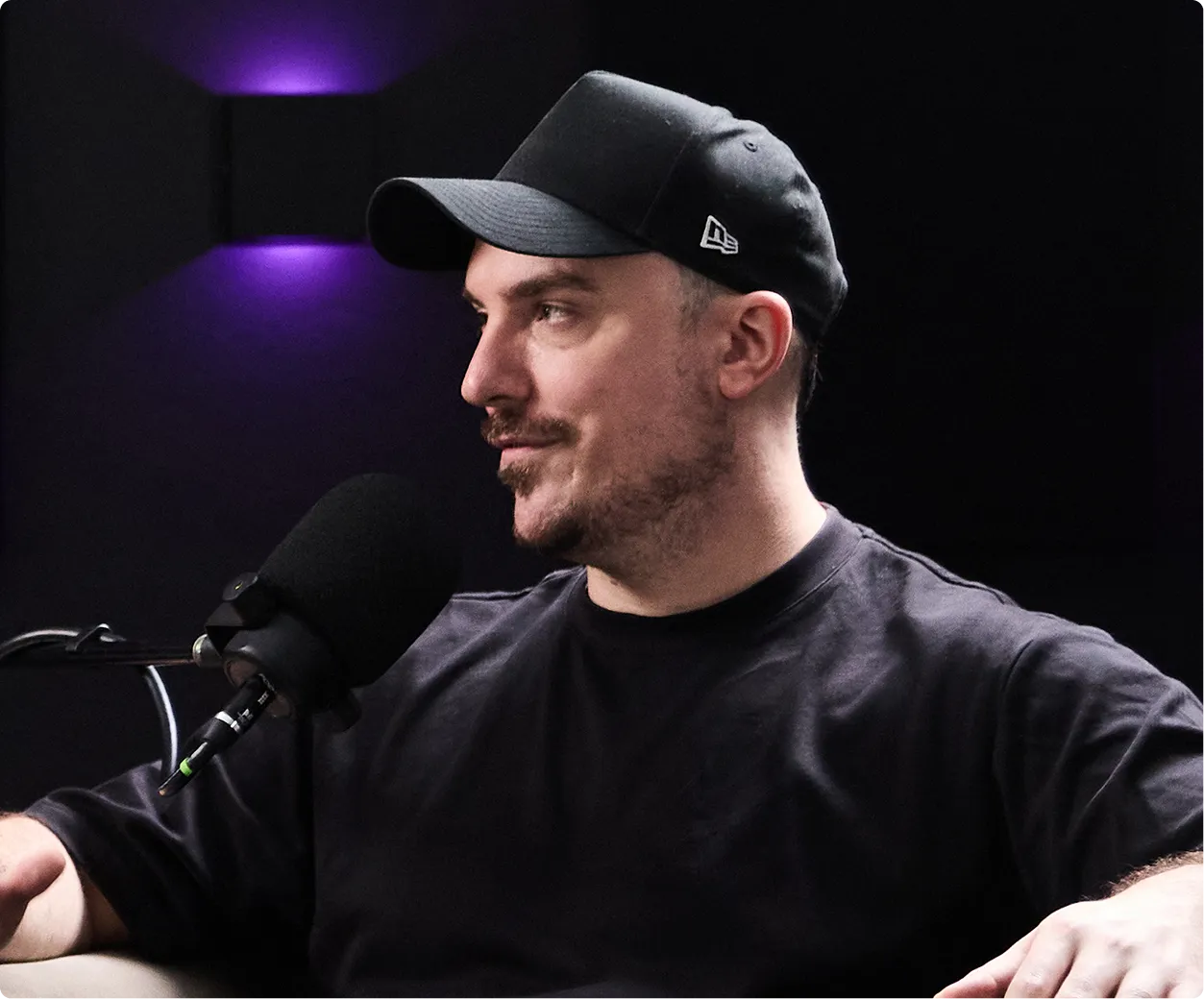
Dive into insights from industry leaders and experts.
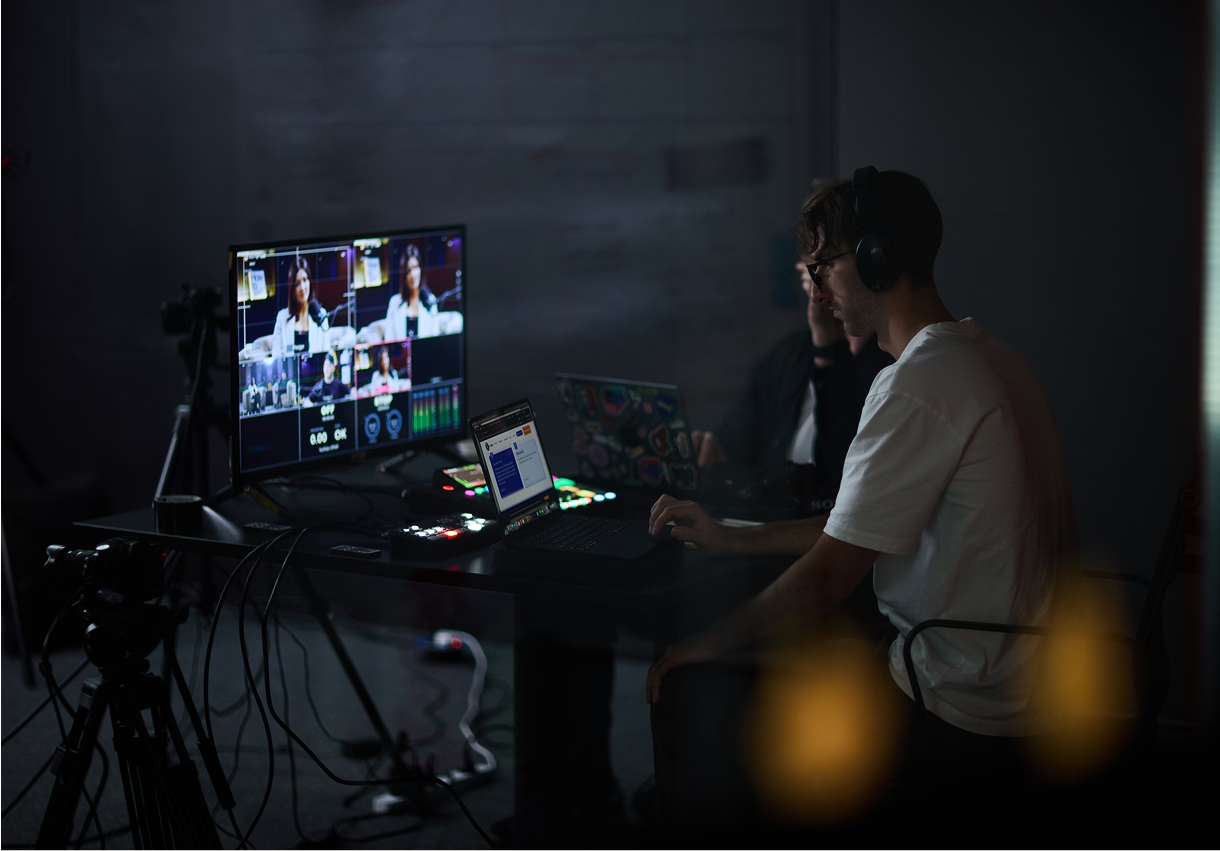
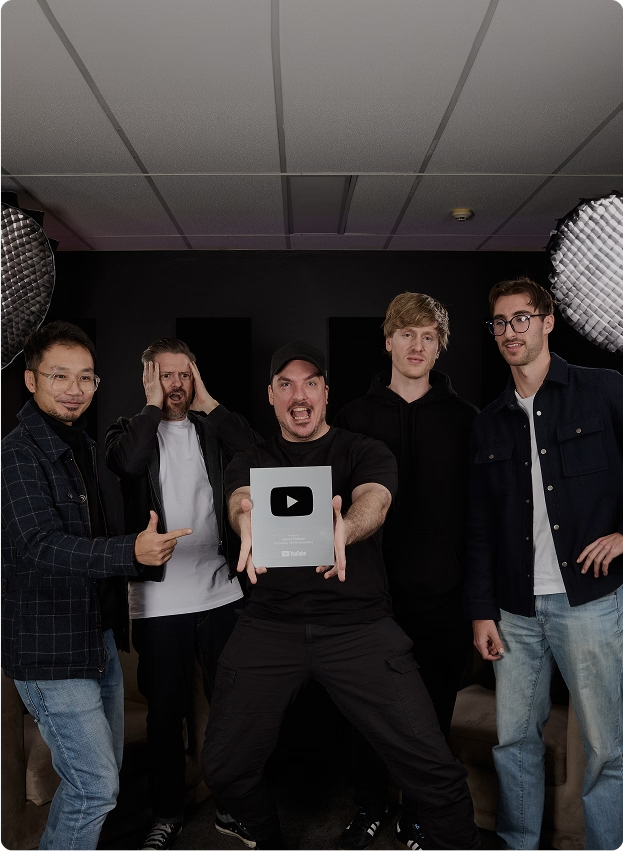
Stream now
Dive into expert advice and industry trends.