


TLDR
Summary
Scaling a business requires a fundamental identity shift from "Founder" to "Elite Operator" and eventually to "CEO." While the founder role is rooted in creativity, vision, and "blue sky" optimism, a CEO must be grounded in the efficient allocation of resources—time, money, and people—to increase enterprise value on a risk-adjusted basis. Many businesses fall into the "Founder's Trap," where the hustle that launched the brand becomes the very bottleneck preventing its growth. True sustainability is achieved when a leader moves past vanity metrics like social media likes and top-line revenue to focus on consistent free cash flow and operational excellence. By implementing "Day One" thinking and maintaining a balance between brand demand and rigorous maintenance systems, leaders can build anti-fragile organizations capable of enduring economic volatility.
Highlights
- The Founder vs. CEO Paradox: Founders are visionaries selling a dream, while CEOs are operators focused on increasing enterprise value through disciplined resource allocation.
- The Identity Shift: Mindset shifts are temporary and crumble under pressure; scaling requires a permanent identity shift where the leader "sheds a skin" to become what the business needs.
- The 4% Rule: Most people take tasks to 90% or 95% completion, but the real financial value and competitive advantage are found in the final 2% to 4% of execution.
- Brand vs. Label: A true brand creates organic pull and demand without constant discounting; a label is merely a product at a price point that requires expensive "push" marketing to survive.
- The Rainforest Metaphor: Businesses must balance growth (creation), maintenance (standardizing what works), and destruction (eliminating outdated systems and identities) to remain healthy.
- The New Guy Rule: To audit a company, a leader should pretend it is their first day on the job with no emotional attachment to existing systems or staff to identify what needs to change.
- The Danger of Early Scaling: 74% of fast-growing startups fail by scaling too early, often because they use debt to paper over cracks in fragile infrastructure rather than solving core operational issues.
- Anti-Fragility and Cash: Maintaining a cash buffer (at least three months of runway) and minimizing high-interest "low diligence" debt is essential for surviving recessions and maintaining optionality.
Transcript
00:00:00 - 00:01:01
The mistake that many founders have made is believing that the hustle to get the brand launched was going to be sufficient to see it through to a sustainable future. You have to become a different version. >> Or else what? >> Wow. The or else what can get pretty dramatic pretty quickly. >> You were the CEO of Tom Brown New York City and you worked with Urban Outfitters, Anthropology, DX Marketer and also MJ Bale. I think the best job title in the world is founder because it's the only title that no one can ever
00:00:30 - 00:01:40
take away from you. The CEO is by definition much more grounded. They are almost opposites in some ways. Mindset crumbles under pressure and becomes very difficult to maintain. The notion that the person who is doing the improving is the same person who needs improving. You start to get on a loop there that doesn't really work out well. And I made a number of significant mistakes. I remember lying there at night going, what would my kids get if I died tomorrow? The most significant was confusing access to capital with domain
00:01:05 - 00:02:12
expertise. And what I mean by that is the vast majority of us, me included, will take a task to 90 or 95% by default with the money is in the last 2 3 4%. Like you've got to take it all the way. I think the other mistake I made was >> This episode is brought to you by Wix Studio. >> Here at the Agency podcast, we're building a community and we would love for you guys to be a part of it. So, we would love to hear from you. What are you enjoying the most? What would you like to see more of? And what do you
00:01:40 - 00:02:38
think might be missing? Drop a comment. Make sure you subscribe. And now, on with the show. when you look at the current climate globally, where are we right now in the timeline of what it means to become a founder or a CEO? >> That's a great question because I don't think it's ever been easier to launch a business and in many respects I don't think it's ever been harder to build an enduring brand. And what I mean by that is so many of the barriers to entry around launching a business have been
00:02:09 - 00:03:10
greatly reduced if not eliminated with technology over the last 5 10 years. So when we think about uh everything from how do I go to market uh Shopify um middle office systems zero uh accounting systems etc etc you can assemble a tech stack and put together a concept and take it to market through some test and learn on social relatively quickly as we all know and I think the mistake that many founders have made is believing that that's enough and they're just they're just very different and what I
00:02:39 - 00:03:47
mean by it's never been harder to build a brand that endures, a legacy brand is that the this generation of entrepreneurs that call them digital natives, social natives have grown up with an incredible degree of hustle and savvy around what it takes on social media and through digital channels to to build a brand. What that has often involved is them becoming a founder very early in life and not typically having necessarily the kind of commercial training that we all got. It was almost like you had to prove yourself first.
00:03:13 - 00:04:09
You had to like earn your stripes, get into a large corporate, um go through the management training process, learn what it takes to build a business, run a P&L, balance sheet, cash flow, and then maybe maybe if you're good enough and creative enough, maybe you should take a shot at being an entrepreneur. That's all shifted obviously massively over the last 15 20 years, and thank God it did. But there hasn't necessarily been a parallel level of awareness around no I do need to have an organization that can
00:03:41 - 00:04:42
scale without me. I need the systems and processes to support this ambition and I need to generate the free cash flow and the profit to be able to reinvest in the growth. So it's very different like launching a brand getting something going on social media and you know your initial indent order of inventory and pumping the channels very very different to what a business needs to look like at 10 million 20 million let alone $50 million turnover. So I think it's it's very easy to kind of test your metal as
00:04:12 - 00:05:12
it were and get out there and launch a brand. I don't think it's ever been as hard as it is today. And that's setting aside the changes in the economic environment, which we'll talk about later. It's never been harder today for someone 21, 22, 23, who has got an incredible amount of passion and creativity to somehow through osmosis learn what it takes to be a CEO versus a founder. >> How would you define the difference between someone that you look at who presents themselves as a founder and
00:04:42 - 00:05:43
someone that you look at who presents themselves as a CEO? They are almost opposites in some ways. So there's some overlap and then there's some elements that are very different. We'll we'll talk through those. I think Fcott Fitzgerald said that the test of a first rate intelligence is the ability to hold two conflicting ideas in your mind at the same time and not lose your ability to function. And that is a CEO's live reality day in day out. And one of those challenges is the paradox between being
00:05:12 - 00:06:11
the founder where it's all blue sky. I'm selling the dream. I'm creating the vision. I'm out there pumping the accelerator at every opportunity I can to build brand awareness to create excitement around the brand and hopefully convert some of those early adopters and and get some revenue runs on the board. That is all about big picture blue sky optimism. The CEO is by definition much more grounded. So their their job and chief executive officer is also a funny job title to give yourself
00:05:42 - 00:06:39
when you've only got two or three people in the room because what what it means quite literally is you're the boss of the executives. You run the executives, the executives run the business. And the way that you run the business, your number one northstar is to increase enterprise value. That's your job. How do you increase enterprise value? You do it through the most efficient allocation of resources being time, money, and people. And you do it on a risk adjusted basis. Meaning that we test and learn
00:06:10 - 00:07:10
lowcost environment. We look at opportunity costs. What could we be doing if we're not doing this? And then once we've been invalidated, then we go and we invest heavily. That is very different to the intuition and spontaneity and crazy creativity that so often defines a great founder. And in a perfect world, they would be different roles. Your founder would be out there creating and and and getting all the excitement around the dream and the vision, bringing in fantastic team members who
00:06:39 - 00:07:41
are excited by that vision. Uh securing investors interest because they're attracted to the higher purpose that the brand is out there trying to achieve. It's all about blue sky. Next to them would be their their partner in crime, the CEO, whose job would be to distill all that potential into reality on a riskadjusted investment basis. And the reality is that to do both jobs at the same time is is really tough. You've got to hold those two quite contrary job specs in a way and also quite different
00:07:11 - 00:08:01
identities. You have to hold them in your head at the same time. It's tough. >> Does every CEO or founder when starting their organization need to have that balance? What what's what's best practice when you're at the beginning? It's a great question because you don't it doesn't always have to be another person and it doesn't always have to be another person who's a full-time employee. But to answer your question, you absolutely need that balance. Someone in your circle. So it could be
00:07:36 - 00:08:34
an agency you work with. It could be a consultant. It could be an advisory board chairman, whatever chairwoman. So I I think there is something to that counterpart, that trusted counterpart who you know has got your back, but is going to serve as the devil's advocate >> because none of us turning over 5, 10, 15, 20 million a year can go out and conquer the world. We've got to do it in a really systematic way. >> You've mentioned before that there is a thing called the founders trap. Do you
00:08:04 - 00:09:04
mind defining what that is and how can people become aware of it? So, it's a it's a it's a set of beliefs and there's lots of different ways you could describe it, but it's a set of beliefs that is contrary to the evidence that the business you started and the business that has reached 5 million, 10 million, 15 million, whatever the marker is, is going to require a different leader. You have to become a different person. It's not a mindset shift and it's identity shift. Mindset is
00:08:35 - 00:09:46
utilizing some combination of adrenaline, dopamine and positive thinking to temporarily paper over the cracks of whatever imposter syndrome or self-doubt or um fear and uncertainty you're feeling. So I am going to whip myself into a frenzy to shift my mindset to become more productive uh to become a more engaging leader you know whatever it is mindset crumbles under pressure. We all know that our mood going into a meeting that turns out to be a really difficult meeting is unlikely to be completely unimpacted by a whole bunch
00:09:10 - 00:10:09
of negativity in the room as we walk back out again. And you stack those meetings one after the other for 10 hours a day. And you do that for weeks and months at a time. And mindset becomes very difficult to maintain. So when people talk about a mindset shift, they're typically saying, "I'm fundamentally the same person, but I am going to shift the way I'm looking at things temporarily, and my emotional regulation will maintain that for as long as it can, and then it crumbles."
00:09:39 - 00:10:49
An identity shift is deciding that you are ready to become a different version, a better version, a more capable version of yourself. You are now ready to become the leader that your business needs. one that can support the weight of your ambition, who is ready to take the business from wherever it is today to the 5x 10x result that you want. It's very different to mindset. >> You're saying that the identity fundamentally needs to change as the company scales or else what? >> Wow. The or else what can get pretty
00:10:14 - 00:11:13
dramatic pretty quickly. uh the notion that the person who is doing the improving is the same person who needs improving. You start to get on a loop there that doesn't really work out well. You have to become a different version. So it's it's shedding a skin and it's deciding that you are going to transition into more of a CEO, a true chief executive and less of the all singing all dancing founder role. Not every founder wants to do that. Not every founder should do that. Uh I I I
00:10:44 - 00:11:32
think the best job title in the world is founder because it's the only title that no one can ever take away from you. So when I've got founders who are saying but you know but I want to be the CEO but I want to keep doing the founder stuff. I be the found anyone you can hire me as a CEO. If you're the founder, you're the founder. Like no one else gets that job. So I think often it is about working with a founder to have them recognize that it is ego that is maybe pushing them into thinking that
00:11:07 - 00:12:06
they want to be the CEO. Uh but then I do have uh definite instances of founders who are actually better CEOs than they were founders. So everyone's different but it's about recognizing that what you did to get the business to where it is today is not going to be sufficient to to carry the burden the weight of your ambition for the next stage. And I think for a lot of founders their identity becomes so attached to their leadership of the organization that you hear founders justify it. you
00:11:37 - 00:12:30
know, no one knows this business better than me. Um, I was here from the beginning. I understand the the client problem, the customer problem. I understand the customer. You know, I I've got all the relationships. I know the distributors. I know the wholesale accounts. There's all these justifications for no, there is no one better positioned to be the CEO than me. But the reality is that that is that is often selfdeception. And if we can just kind of unbburden ourselves a little bit from the
00:12:03 - 00:13:00
performative uh ego stuff and trying to convey a certain level of importance in an organization through a job title as opposed to saying you know what I'm the founder I started this thing and I'm completely comfortable with that and now I want to bring in a tenur CEO who is going to live and breathe the numbers and translate this dream into reality in a sustainable way. But to get a founder to that point is a is usually a bit of a journey. >> When you think about all the founders you've worked with, either as being
00:12:32 - 00:13:30
their CEO or helping support them find one, is there a certain moment when that should be the case where someone transitions? Is there a certain financial level, a certain business size? What what are the things you look for to help identify these situations? >> Uh typically I am engaged when something is not going according to plan. revenues flatlined. Um, uh, gross margin integrity is not there. We're we're discounting too much. Uh, we're destroying gross margin. We've lost some
00:13:01 - 00:14:02
key accounts. We're losing key people. You know, something is going wrong. And there's normally the symptoms that are visible and as you kind of dig deeper, there's a whole bunch of other symptoms underneath that. This thing is starting to get quite fragile, uh, even brittle where one or two impacts from the wrong direction and the thing could collapse. So it is it is less about objective markers although if I was looking for one those are typical. So revenues off gross margins off or key customers or
00:13:32 - 00:14:26
key territories are just not working the way they used to. Maybe it's a competitor that's come in and started to take market share. But really what what it boils down to, I haven't met a founder yet who hasn't at some point early on in the engagement when there's a bit more trust, you know, and and they're a little more comfortable with me where they start to reveal something that speaks to some version of imposter syndrome that I'm just not sure if I'm big enough for this room. Like I I'm not
00:13:58 - 00:15:11
sure if I can if I can handle this burden. uh that the the vision that I had and that I have made real to the best of my ability is starting to feel too much for me to carry going forward. So it shows up in certain metrics in the business, things going against us that we do not want to go against us. But it also shows up in that felt reality of anxiety, uncertainty, doubt. Um, you know, I I think for for a founder going through that, um, you know, 3:00 am on a Tuesday night is just it's 3:00 am every
00:14:34 - 00:15:25
night and it is waking up going, "What what am I missing? What have I forgotten? Who who did who didn't I call back? What was that deal the right deal? Did I not negotiate hard?" It's this constant sense that they're missing something. And sometimes we can solve for that with just good general management around them. So, good direct reports, better systems, better processes. um some of which are automated, some of which aren't. But getting a a structure around them to give them that sense of clarity know I
00:15:01 - 00:15:59
I've got I've got some I've got some vantage, I've got some elevation and I can see the domain and I'm feeling more confident. So for some founders, it it's no it's not as difficult. It's just getting them a little bit distanced from the day-to-day firefighting, the tactical craziness of their day-to-day work. But for others, they are self-aware enough to know that this business has become complex enough to require someone who lives and breathes the numbers, the systems, and the
00:15:28 - 00:16:27
processes and wants to leave the brand, the storytelling, the assortment, the customer, all the fun front end stuff that most founders are great at. We'll divide and conquer. Founder, this is all yours. I'm going to make sure that all the magic that you create there with brand and marketing and assortment and CX, I'm going to translate that into a business engine and a cash machine that just delivers you sustainable profitability. If you want to grow your agency, you need more than just a
00:15:58 - 00:17:07
website builder. You need Rick Studio, the all-in-one platform that's built to help you scale. Design smarter in a hyperflexible, responsive editor, cherry-picking whatever clients need from pre-built UI elements and templates. Deliver robust backends with built-in e-commerce solutions for every industry, letting self-maintaining infrastructure just run itself. Stop reinventing the wheel with every project and instead create a sharable design system with reusable assets, apps, and components. Clients growing too fast, no
00:16:32 - 00:17:37
sweat. Wix Studio AI powered CMS lets you turn a single layout into hundreds of additional dynamic pages. It's true. More clients no longer has to mean more chaos. Wix Studio gives you one centralized view of every project and makes real-time collaborations seamless. Do your agency's best work at scale. Build your next project on Wix Studio. When you think about imposter syndrome, how can that get in the way of someone being able to successfully scale a business? First of all, a little bit of
00:17:05 - 00:18:02
insecurity is almost a prerequisite to becoming an entrepreneur. Needing to prove something to someone and have that fire burning in you so hard that you see no alternative but to go out and stake your claim. That's my turf. I'm going to own it. This is who we are and this is what we're all about. If you don't have that, you shouldn't be an entrepreneur. As founders evolve and develop and they're on their own personal journey of growth, that often pivots from being about external validation and proof to
00:17:34 - 00:18:36
internal validation and proof. Like that classic heroes journey, you know, I'm out there slaying dragons and then I realize the dragons were within. At a certain point in time, that insecurity can tip into an unhealthy sense of, well, I've made it to here, but maybe this is as far as I go. Maybe I'm tapped out. Do I deserve the next level? Did I just get lucky or am I actually good enough and how much of this was my colleagues and how much of it was my early account success with a major
00:18:05 - 00:19:00
department or whatever it is and that kind of self-doubt can be highly corrosive. You start telling yourself lies. You don't see the world clearly anymore. So what was evidence of your success? I've gone to this step to that rung to this step to that rung and I'm climbing this ladder and scaling these stairs. I've got proof. I've got proof. I didn't fluke it. I've gone from one to the next progressively. Instead of seeing that, you're just looking up at all the wrongs still to go. You're
00:18:32 - 00:19:31
comparing yourself to other people. You're starting to think, what have they got what I don't have? Should I be further ahead than I am? Does this really matter? Does anyone really care? that is highly toxic and very corrosive to an entrepreneur and yet very very common. I've I've had it and I think pretty well all of my clients have had it at some point or another whether they admit to it on a podcast or not. >> When you think about people that are carrying this burden, what should they think about or do to
00:19:02 - 00:20:00
start adapting themselves out of that toxic behavior? >> What do you do to get out of that? I would strongly suggest that anyone who's going through that should work with a qualified psychologist. Not everyone has a great partnership, a great romantic partnership. Uh, and I mean that in two senses. I mean, not everyone has a partner who cares, but also a lot of people have partners who they want to protect. So, maybe you're not sharing because you worry that she or he won't relate or they will judge you or they
00:19:31 - 00:20:21
just don't care that much. But also, maybe you're a really protective provider who wants to continue to project an image of invincibility and you're not you're not sharing with your partner. So, who do you share with? We're not going to share with you direct reports. Uh same thing with your board and your investors. I mean, a great board and a really supportive investor will actually probe you on these. They they'll they'll want to they'll want to have the conversation, but not all do.
00:19:56 - 00:20:55
So, without sounding self-s serving, someone like you or someone like me who you can work with outside of the business, we're not looking for equity. We're here for you. We have a very specific project or a very specific opportunity that you want our support with and you're paying us appropriately. So, you've got our full attention. So, I think the first thing I would do if I was feeling, as I have in the past, that acute sense of I don't know if I'm going to make it. I I I actually don't know if
00:20:26 - 00:21:21
I can get through this. The the weight of this is driving me crazy. I mean, it's, you know, it's difficult to talk about, but you know, for for me personally and for founders I know, we've tallied up the money of what our our you know, dependence would inherit if we weren't around. Like you hit you hit that point where the business is super fragile and you're not sure if you're going to make it and you start thinking, what's my life insurance worth? Now, I didn't talk to anyone
00:20:53 - 00:21:47
about that at the time. So, founders go through it like, you know what I mean? Like, God, I'm just thinking about it now. And I and I've had clients who have gone through the same thing. And and so of course we weren't at the point we were actually lining up, you know, the bridge that we were going to jump off. But you reach a point of true despair and there's not a lot of people around you who have any comprehension of what you're going through either because you're trying to protect them or because
00:21:21 - 00:22:14
you've shared with them but they just don't understand because they just they they've been employees their whole life or you know maybe they're they're just different. They're built differently. So I think my one piece of advice, find a great psychologist. I did save my life. And then start to build a network of peers around you who have got your back. And they may start as paid professionals. That's okay. That's okay. Like find people who know what they're doing to help you. And often those
00:21:47 - 00:22:30
professional partners become great friends. >> Let's say someone's building a business. They've had a couple runs on the board. They're looking at the ladder and they're asking themselves the question, can I actually can I actually go any higher or is this it? What else can people do to better prepare themselves for this identity shift if they are in that dark place? >> When you're in a dark place, you're not you're not seeing the world clearly and the stories that you're telling yourself
00:22:08 - 00:22:58
are not accurate. So the objectivity of a psychologist or someone else around you just act as a mirror. Go are you sure about that? like like that's not what I've seen or what about this that and the other thing because we're constantly telling ourselves story and they're reinforcing aspects of identity and all of us have things that we feel we're very strong at that that that represent the best in us and we have examples from our past where we've overd delivered on those things and all of us
00:22:33 - 00:23:26
also have things that we hope no one else has discovered those weaknesses where we we weren't at our best where we made mistakes where we we didn't deliver on promises and what tends to happen when we're bad places. We focus much more on the latter than the former. We're not looking for evidence of our greatness. We're looking for evidence of why this story I'm telling myself that I've capped out, I can't handle this anymore. It's too much. Maybe it was all a mistake. Of course, the subconscious
00:23:00 - 00:23:58
does exactly what the subconscious meant to do. It goes, "Oh, okay, cool." So, we're feeling negative. Let's go find a whole bunch of examples from our past that would affirm that negative sense. So, that that tweaking of perspective is incredibly important. Mhm. >> The next thing I would say is that to the extent that you want to make that shift from the founder that is suffering from some level of of fear and insecurity, fear and doubt about how they can take the business either out of
00:23:29 - 00:24:31
a difficult situation it's found itself in or to the next level or often a combination of both. working with someone externally, a CEO coach, and this is going to sound completely self- serving because it's kind of, you know, a large part of what I do, but whether it's me or someone else, working with someone who has been a tenur chief executive, who understand what that job spec actually means, where it overlaps with founder and where it is quite distinct. At the very least, spend a few hours understanding what the CEO
00:24:00 - 00:24:58
role is before you make a decision. and it's one you want to fight for tooth and nail or it's one you want to delegate to someone else. Just dive into an understanding of what it's a it's a very specific job spec. It's it's not for everyone. And you know, I think if you then having understood it and got a real sense of what the day-to-day looks like as an elite operator, an elite CEO, well then you can either lean into the training and development that it takes to acquire the skills, solve for the
00:24:29 - 00:25:29
gaps in your current skill set, or you can say, you know what, I love being a founder and that CEO thing doesn't sound quite right for me. So, let's go to market and find an exceptional CEO. Now Josh, earlier you were talking about there was a moment where you were looking up life insurance. >> Yeah. >> What happened? >> So that was uh I'm going to try really hard to keep it together here. So the reason I have so much empathy for my clients and a a true heartfelt understanding what they're going through
00:24:59 - 00:25:54
is I've gone through it too. So I've had those roles and those appointments that were just they're the ones you put on LinkedIn. They're the ones that you're incredibly proud of. We 10x this, we 20x that. We went from bankruptcy to 100 millions, etc., etc. But I think also most of us, and certainly I do, have the stories that we don't usually tell publicly. >> Yeah. >> This was about Thrive. It was a business that I started, a business I was incredibly passionate about. And the
00:25:27 - 00:26:36
whole idea was to bring kind of real food uh uh health and wellness to a mass audience through uh unprocessed all naturatural real food, not artificial rubbish, no sugars, no seed oil, etc., etc. It's a bit ahead of its time because this was like goodness 15 years ago and we had an early run of success. I partnered with Ross Lane who was the chairman of Oruritan, big investor in MJ Ba, fantastic guy, great retail brain. uh he was my uh my partner and we had some some really fantastic early success. The first few stores did really
00:26:01 - 00:26:56
well and they were operating profitably and we attracted the attention of some venture capital investors. We took on a lot of money. We we brought in $10 million at a point in time where we were turning over 12. So it was it was a lot of dough and it meant that my equity got diluted right down. I was no longer in control of the business. So I retained the founder and CEO titles but I wasn't in control. I was reporting to a board and I made a number of significant mistakes. I think the most significant
00:26:28 - 00:27:41
was confusing access to capital with domain expertise. And what I mean by that is I became differential to the investors. And I think it was partly a desire to please and maintain great relationships. and they were and they were fantastic guys, but they had a vision for what the business could and should be that was increasingly different to mine. And I I wasn't strong enough at the time to really put my foot down and say, I will walk away from the money to preserve this vision or you can fire me. But that's how strongly I feel
00:27:05 - 00:28:02
about it. So, I just I continued to go along with it and it didn't pan out well. I think the other mistake I made was a more classic strategic mistake which was and I talk about this with my clients and I know it so well because we we did it at Thrive. Most pivots are Hail Marys. So the the whole notion of a pivot is we have tapped this opportunity out. It is not giving us what we thought it would or it has but there's no more for it to give and we're going to pivot. So we're going to take this brand or
00:27:34 - 00:28:33
this business in a new direction. The vast majority of pivots are Hail Marys. Uh I I know that from a bunch of my client work and also from what we did at Thrive. So we pivoted from focusing on the QSR restaurants, the fast casual restaurants that we had in food courts around Australia into home meal deliveries. So sort of a a luxury version of light and easy for one of a better description. We didn't own the means of production in that business at all. The margins are razor thin. So the guys producing the
00:28:04 - 00:29:09
food were making the farmers were making money. the food kitchen was making money, the distribution couriers were making money, metal was making money. We were kind of the last to make money. It was a classic classic era, like school boy era. And so I think and I and I could go on but at that point in time I saw my personal investment uh of cash, my personal investment of time because I was salary sacrificing for years, the friends that I brought into the business and all the energy that I had attached,
00:28:36 - 00:29:29
all the ego that I had attached to the success of this business, it was going up in smoke. And I I remember lying there at night going, what would my kids get if I died tomorrow? because I thought I was going to be able to give them this, right? I was going to exit and there was going to be some sort of payday and I'd go on to other things, but this would be a wealth creation opportunity. And so that was at my darkest that would have been probably about 2018 or so. We ended up exiting the business in early
00:29:03 - 00:30:07
2019. Uh so I was able to walk away. I then spent a good couple of years kind of figuring out the lessons. I'd done a number of ro I'd started a business and sold it very early in my career. I had done a number of tenur CEO roles and enjoyed a degree of success like had had some really fantastic wins. And then when it was me, when it was me actually being the founder and the CEO, I was making mistakes that I now try to help my clients avoid. I was confusing the role of founder and CEO. I was too much
00:29:34 - 00:30:31
of a cheerleader in my founder role and not enough of a hard ass in my my CEO role. And I didn't I didn't have the courage, my convictions. I should have resigned. So if I was a paid CEO working for XYZ Corporation and I went in there because I believed in their strategy and the board did a 180 degree shift in strategy. If I didn't believe in the strategy, I'd resign. But I had so much ego tied up into the fact that hey, I'm the I'm the front guy. I'm the founder. You know, I can't leave. And these guys
00:30:03 - 00:31:10
must know what they're talking about because they got tons of money. So for me, the the dark times came from realizing that I'd made mistakes that I'd spent 15 years not making when I was the CEO of someone else's brand. And I I had confused the founder CEO role and I had not had the courage to act on my convictions. All things that I see time in time out with clients and I have such empathy for what they're going through because I've been there. someone who's listening to this right now is going
00:30:35 - 00:31:40
through that, how can they help separate their pride or their ego from what their business actually needs and how can they shift that optically? >> As a founder, it is almost impossible not to become emotionally attached with the success or otherwise of the business that you started. So inevitably the ego is always going to be there in some fashion >> in some fashion and I think it can be healthy. So I care. I'm really passionate about it. Um I'm I'm conscious that I'm I'm paying 30
00:31:08 - 00:32:09
mortgages and there's a bunch of customers that really care about this and investors have come along for the ride. I want it to work and I'm going to do everything I possibly can to make it work. That is different to a sense of if this went away, who would I be? Will I get another go? In the Australian market, there's this tendency to see the kind of failure that I was facing at Thrive as a giant black mark on the copy book. Even though I just come from the US where I'd done multiple turnarounds
00:31:39 - 00:32:34
of businesses that were bankrupt, some of which went on to sell for half a billion dollars. So even though I had so much evidence, this this depression lies thing. I had so much evidence that you can always work through it and you can always come back. >> And in fact, in the US, there's venture capital funds that won't back a first-time founder. And specifically, they like to find founders that failed the first time who are crystal clear on why they failed. >> Really? >> Yeah. The whole idea is that the hubris
00:32:06 - 00:33:10
and arrogance that often accompanies your classic early founder gets beaten out of you pretty hard when you've stumbled or fallen. And if you come back for a second go, you are so hungry. I mean, you look at so Matt Jensen, our dear friend who has had phenomenal success with MJ Bale after Herring Bone, Herring Bone had too much debt. It was his first brand. Herbone had too much too much debt going into what in Australia we called the GFC, what the rest of the world calls the great recession, which was 2008,
00:32:38 - 00:33:34
2009. It was unable to renegotiate the debts the way it would have if we weren't in a crisis. and ultimately the business disappeared. Matt could have gone and got another job very easily. There are a whole bunch of employees that were interested in taking on in Australia because he's great retail, fantastic brand guy, knows the customer inside and backwards, great with product, incredibly employable. And I brought him over to New York to work with me on Tom Brown because I needed some help moving production from the US
00:33:06 - 00:33:58
to Japan. I knew he was between gigs as it were. And I remember walking with him in Soho and and I was, "What are you going to do next?" He's like, "I'm going to have another go." >> Simple as that. >> I'm like, "What are you women's kids?" He's like, "Same thing. Men's suits, tailored shirts, ties." I'm like, "What? Really?" And I was like, "How impressive?" Because he wasn't there deluded about what went wrong. He
00:33:32 - 00:34:23
rattled off a list of things that that he would do differently with MJ Bell. So, he fully digested the lessons. So when he was out pitching for investment, he was saying, "I have an elegant solution to a real problem. This is a market that is not growing quickly, but it's very large, and I have the full supply chain in my back pocket, and I know exactly what I did wrong last time, and this is what it is." Boom, boom, boom, boom, boom. That's enormously reassuring to an investor. So anyway, I
00:33:58 - 00:34:50
digress. Point being that even though I had a bunch of evidence that this was going to be a difficult time, but that I would get through it and I would go on and add value in a bunch of other ways to a bunch of other companies. And ultimately, there's probably some really valuable lessons here that I would be able to share with whoever I worked with next. Instead of thinking about that, I was like, you've messed it up like like you've done so well as a professional CEO for others, but you couldn't hack it
00:34:23 - 00:35:29
as a founder. And that sense of how was how diluted was I like like what what what was it hubus like did I just what what did I get wrong that sort of little cycle of self flagagillation which can go on for weeks months or years very important we pull ourselves out of that and having someone around you uh that is often it's better if it's not your wife or your dearest friend or whatever because it can be too much to share that level of selfhatred with someone who is in love with you. It
00:34:57 - 00:35:49
can be really disturbing and upsetting to them. So, I think you want to have someone help you with your mental health, a psychologist, just helps you see the forest from the trees. I mean, I I I had a pretty pretty quick snapback, but without Ben's help, he's Ben Steel, fantastic psychologist for anyone who's in Sydney. Without his help, it would have taken a lot longer. And then secondarily, I got my network of super smart entrepreneurs and business people around me and literally said, I want a
00:35:23 - 00:36:24
360deree review. I want to know what I did wrong because I think I've identified the things that I did wrong, but I want to make sure I'm not missing anything. So, whatever I do next, I can apply the lessons. >> When you're caught up in this noise of running a business and performing for people, >> what is that illusion? How how do we make sure we're not trapped by this delusion that we're actually building a fundamental business? >> It's a it's a very very easy kind of
00:35:54 - 00:37:11
self-deception. It's a very comfortable self-deception that we are somehow translating our hustle and our busyiness and our energetic frantic outpouring of activity into productivity. So there is such a distinct difference between hustle culture and the performative nature of so much of what we see in digital media on social media around uh likes and around audience size and around revenue. All these vanity metrics that matter to an extent like they're important but not sufficient. So it's
00:36:32 - 00:37:37
important to build an audience. You know, it's important to grow topline revenue obviously, but it's not enough. And the the the simple question I would ask if I was a founder in that position trying to identify you know how far along that journey from founder to elite operator to CEO to owner I am would be is this a random number generating machine or do I know with a high level of conviction what my revenue gross margin net profit's going to be next month and the month after that and the
00:37:04 - 00:38:05
how good is this machine in turning this vision this dream and this audience all this important ego vanity stuff if I'm not distilling that into consistent financial performance then it is much more of a hobby than it is a business and there's an awful lot of hobbyists out there who are great at digital content and social content they have a large audience uh they're well known they might even have a topline revenue that is the envy of their competitors but they're broke I mean they are they
00:37:35 - 00:38:37
are flat broke so if the business structure is not sufficiently robust that it can operate without you. If you are still the bottleneck to all major decisions, if you feel like you're the one that has to wear 15 caps, you're not comfortable delegating, etc., etc., then the business model itself is not yet sufficient. And if that business model is not delivering you consistent free cash flow, so that is free cash at the end of every month that you can reinvest in growth, pay out as a dividend or just
00:38:06 - 00:39:08
sit on your balance sheet as sort of an anti-fragile buffer. Then you're much more at the early stage hobbyist sort of level. You're not yet building a business that can scale. So at the point you're calling yourself a founder, you are acting in service of bringing in resources to turn this thing into a business. Like the founders's job initially at least is to prove out that this thing has sufficient legs that employees should join, co-founders should join, employees should join, uh
00:38:37 - 00:39:31
that investors should invest, that distribution partners should pony up capital to distribute your product or service, etc., etc. So, you're starting to get some of the elements of what will ultimately look and feel like a business, but you're still operating as a founder. You're still wearing a whole bunch of hats. You're not delegating. You don't have a clear understanding of the metrics in the business that truly matter. You're certainly not delivering free cash flow on a consistent basis,
00:39:03 - 00:39:58
etc., etc. The next phase is to become an elite operator. So, it's still not quite CEO, but you are you're a great operator. So, you know the levers to pull. It's almost like general manager versus CEO. >> So you are you are across the business. You're starting to see the way the systems across brand, business, and profit interact. You are getting better at pulling the right lever at the right time such that you're generating consistent financial results and hopefully a bit of free cash flow. But
00:39:31 - 00:40:22
between operator CEO, there is a truckload of value to be unlocked. So the the journey from this is a hobby I'm going to try something out to. I'm actually founding a business. like now I'm going to bring energy and resources in to turn this into something to wow I actually have to learn how to be a better operator because I had the original idea but I'm not getting consistent results the wheels are kind of a bit shaky this thing doesn't feel super sustainable elevation through
00:39:56 - 00:40:52
professional professional development um bringing in the right coaches attending the right course etc etc become a better operator the next level is okay I've now got the scale to bring in a team a genuine a team who are executives is in charge of the various functions across the business. My job as CEO is to define the vision, get the executive team aligned and then give them freedom within a framework to execute. By that I mean kind of soft and hard KPI. So there's there's there's a frame within
00:40:24 - 00:41:11
which those execs operate. But within that frame, you give them freedom to do what they do best. That's delegation. So most CEOs consider delegation I will tell you what to do. True delegation is these are the outcomes we're looking for in the next 90 days, in the next 12 months, in the next three years. These are the KPIs. So how much how much resource you have available to you, time, money, and people, what sort of profitability I need to see on a consistent basis, cash flow measures,
00:40:48 - 00:41:40
whatever. Go do it. So you're encouraging a level of entrepreneurialism within a defined framework from your direct reports. That's when you're starting to operate as true CEO. And you don't see that a lot in businesses sub a couple hundred million dollars. When you think about leaping from these gaps, do do you find that there's one area that's more painful than another or is it all individually experienced depending where people are at? >> It is individual. It does depend on the
00:41:15 - 00:41:57
founder, their their specific background, their strengths and weaknesses, what they enjoy doing most. But there's also some commonalities. I would say in the vast majority of founders, there is a level of financial literacy that isn't quite where it needs to be. Uh because that's not something that we're typically taught at school. unless you've done a finance and commerce based degree at university is not something we're born with and it's not something we're typically taught at
00:41:36 - 00:42:41
school. So financial literacy isn't always there. I think in terms of the business model it is operations is hard because it's about systems and structure the processes and the technology that support it and it's about compounding advantage day after day week after week which can feel quite repetitive and quite monotonous but that's where the that's where the money is. So two two things I'll just speak to really really quickly. one, the vast majority of us, me included, will take a task to 90 or
00:42:08 - 00:43:05
95% by default. And then it starts to feel kind of complete, you know, like we're pretty close. So the new shiny object attracts our attention or there's an opportunity over there. I get a call from someone over here and the last 5%, you know, I'll get to it eventually or or maybe 95 is good enough. The reality in my experience is that the money is in the last two, three, four%. There's a lot of people out there doing what you do to 90 or 95%. Like you've got to take it all the way in that last
00:42:37 - 00:43:31
little it's whether it's sport, whether it's business relationships, it's the last little bit that defines you as different and better than your competitors. There's just too many going to 90%. And you run the best brand agency in Australia. So you think a lot about brand. And without speaking ill of any of our clients because they're all awesome, genuinely, there's a point in the workshop, maybe it's a 1-day workshop and maybe it's 2:33 in the afternoon and you start to hear things
00:43:03 - 00:44:01
like, you know, I I think we got it. We're we good, you know, and you got the brand pyramid and I've sorted out promise. I kind of get persona. The pillars make sense to me. That's so much better than what we had. So, let's run with that. It's like, but have we articulated it as tightly as we possibly can? Like, in this minefield of competitor activity, we've got to we've got to weave our way through this minefield, it's got to be so precise. It's got to be so tight and so
00:43:32 - 00:44:31
articulate. Whether it's in words or it is in visuals or it's in activi whatever it is that is representing our brand promise and how we want to show up for our customer that last few% I I find that you you've said to me actually when you do brand exercises sometimes when you're talking about what it is and what it isn't or you know define yourself in terms of if it's a car what blah blah and you've told me a few times that until you get 25 30 35 words on the board until people are starting to
00:44:03 - 00:44:57
fatigue you're not really getting to the good stuff. >> Mh. >> So whether it's a brand exercise or whether it's a deep dive into the financials or it's a comprehensive competitor matrix or it's a review of all the suppliers in the space, there's a tendency for all of us to go, I think that's that's good enough, right? Like we're better than where we were. We've got a better idea on what we need to do. What I find is if we can persist that little bit longer and just dig that
00:44:29 - 00:45:23
little bit deeper, that last few percent makes all the difference. So that's my first point. Getting it from 90 95 to 100. There is there there's no way we can improve on this right now. Maybe in a year or two, but right now this is as good as we can get it. Do you believe that some people think it's at 100% even though it might even be at like 80 or 90 because they they don't have a way of seeing beyond what they've currently created >> a a great relationship between a client
00:44:57 - 00:45:46
and coach, client and consultant, client and agency. There should be a degree of tension there. >> So you need that other individual in your life as a founder or a CEO just to challenge what you're thinking. But when you're watching a documentary, you're watching an interview and the journalist will ask a great question and they'll get an answer that kind of answers the question but doesn't fully and they move on to I'm like ask the follow-up question like they they've given you
00:45:21 - 00:46:08
they've given you license >> because they haven't actually addressed the question which means either they don't know the answer and they're not prepared to admit it in which case we need to work through that together or they don't understand its importance. Like there's there's they're holding back for a reason. Why are they holding back? And sometimes you ask a follow-up question, it's like that's just not important to us or I answer whatever. But most of the time when you ask the
00:45:44 - 00:46:47
follow-up question, can we just unpack that a little bit more for me? I'm not 100% sure what you mean. You know, just contextualize it for me. So you ask the follow-up question, you dig a little bit deeper. Taki Moore talks about this a little bit in terms of the known spoken, the known unspoken, and the unknown unspoken. And the idea is that whenever we are presenting a problem that we want solved, we have different layers to the way we would articulate it. So the known spoken is what I'm happy to share with
00:46:16 - 00:47:11
the world. I need a new pair of running shoes cuz I'm going to do a marathon. The known unspoken is something that I would only share with someone I really trust because it's starting to make me feel a little bit vulnerable. So I need a new pair of running shoes. I've decided to do a marathon because I'm not frankly sure if I have what it takes to do a marathon anymore. I don't know if I can really I don't know if I can. I want to prove something. The unknown unspoken is when we're
00:46:43 - 00:47:42
getting to the real issue. This is something that is subconscious that if I if I talk to you about it and tease it out, you will recognize it, but you probably wouldn't even admit to yourself what it is. >> I want a pair of running shoes. I'm going to do a marathon. I want to prove to myself that I can do it, but I want I want I want to feel like my wife finds me attractive again. I want to know that she sees someone who makes a uh creates a vision and has the tenacity and the resilience and the determination to
00:47:12 - 00:48:12
pursue it. I want to see that look in her eye that I haven't seen in a while. So, you're getting down to deeper and deeper levels of emotional need. So when we're talking about branding or marketing, if you're talking about a client need at the brand level, if we can articulate the unknown unspoken, then we are automatically and subconsciously credited with having the solution to it. That's just a little bit of consumer psychology as a as a bit of background to why push, wh why go
00:47:42 - 00:48:35
further? Because the deeper we go in understanding the founders's vision with the customer's problem, the brand promise, whatever it is, the further we dig, the the closer we get to the truth. And the closer we get to the truth, the more compelling and engaging and inspiring it is for whoever it is we're going to share it with. >> And I think you were talking about a rainforest concept. So then, do you mind sharing the rainforest concept? and then let's unpack each of them uh
00:48:09 - 00:49:02
individually and we maybe we'll start off with uh growth and creation. >> So I I think that the rainforest is a is a great metaphor. It's a living ecosystem that we're all relatively familiar with. Not all of us have walked through a rainforest, but we get the idea. So we have a canopy layer at the very top. We have kind of a mid tier of uh trees and foliage and vines and strawberry and all the rest of it. And then we've got our sort of base cover, which is all those little shoots of
00:48:36 - 00:49:30
plants trying to make their way up, kind of struggling to find a little bit of sunlight amongst all the shade. The process of growth, maintenance, and destruction is occurring continuously in that system. So, as those large trees push out and up through the canopy, they create that upper layer where we have birds nesting and creating all the kind of waste from birds, which then sort of provide fertilizer for everything below. We've got the mid tier that is often occupied by other wildlife, monkeys,
00:49:02 - 00:50:02
psums, you know, whatever, again, providing a whole bunch of nutrients for the rainforest below. But unless those the the canopy layer and the mid layer are going through their own process of destruction, then those little shoots can never come up. So, it's this continuous cycle of pushing up, coming down, decaying, providing nutrients for the next layer that then come up. And depending on the specific species, they end up as a mid layer or as an upper canopy. and it just continuously happens. So from from the the
00:49:32 - 00:50:30
perspective of us looking from the outside in, it can look pretty stable. You can walk into a rainforest and nothing seems to be happening terribly quickly. But that system is highly dynamic and it is continuously going through these cycles. That destructive process, the creative destruction that is the hallmark of capitalism is a great example of this. At any point in time, there are businesses growing, there are businesses treading water, and there's businesses failing. And that cycle is what makes our economy so dynamic within
00:50:02 - 00:51:05
a business though it's true it's true on the macro level it's true on the micro level. So if we dive down onto the micro level and we think about well how does this apply to a business you either consciously proactively distort and bias your investment of resources time money and people into those three buckets based on what you're trying to achieve or it'll happen anyway. That process doesn't stop because you're not paying attention. So as a founder entrepreneur, you need to
00:50:33 - 00:51:31
look at your own allocation of your own time and then the money and people that you're allocating across the organization and get the right people focused on growth. I mean some people are just naturally growth people like your sales team your business development team your your brand strategists your marketers what you do like you're you know as a someone who is so innovative and so creative you're capable of creating something out of nothing if we put you in the middle office checking boxes on accounts
00:51:02 - 00:51:53
payable accounts receivable you would not be a happy camp there are people who just love that they want attention to detail they want an ordered day they want to know exactly what they're doing at the start of the day, exactly what they're doing at the end of the day. This is the system I use. This is what etc., etc. >> You're saying that a recession might be needed? It might be necessary to do what why is there a need for that in capitalism and why and how should we look at the rainforest of the
00:51:28 - 00:52:32
marketplace? >> Okay. in terms of what's going on uh geopolitically and sort of macroeconomically across the world and how that's impacting our economy and economies around the world. It is it is uh both scary and exciting. It's scary because it presents a level of volatility that is uncomfortable for a lot of us. We can't we can't predict as easily as we could before what are tariffs going to be next month. um you know are we going to have a fuel shortage that crunches our consumers
00:51:59 - 00:53:02
ability to spend etc etc that volatility is is really scary. Equally it is absolutely critical in terms of opening up space to either grow our existing business to start a new one to acquire new investors or new staff or whatever. >> So that is a recession necessary? I mean, Paul Keading famously said in '91, it's the recession we had to have in Australia. And he was the the treasurer of Australia at the time for for those watching this from other countries. And he got slammed for that. But he was
00:52:30 - 00:53:36
right. Like Australia had got fat and complacent and lazy and the recession sorted a whole bunch of stuff out really quickly. Now, that is in no way to denigrate uh the pain that people went through. Like it was it was very real. mortgage rates spiked in the high teens. A lot of people lost their homes. Uh unemployment went to double digits. It was it was rough, but it set Australia up for a period of prosperity that has been more or less unbroken since then. So these periods of of significant change, the uncertainty and doubt is is
00:53:04 - 00:54:06
unsettling. But if we can see through the downturn, which is my my CEO at Urban Outfitters when I was running uh anthropology e-commerce that was during the great recession in the US and he was consistent about you've got to the paradox that you need to manage is I need you to respond to the market reality today. You need to meet the market where it is today. At the same time, I need you to see through the downturn so that we are optimally positioned for when this thing shifts. And that's that's hard to do. It's it's
00:53:35 - 00:54:32
really hard to do, but oh my goodness, when you get it right, it it it works. I mean, that just that little example, and I was just part of a large team. I'm certainly not taking credit for it, but the Anthro e-commerce business went from 180 million to 300 million turnover through the recession. It was, as I say, a whole bunch of things had to go right for that to happen. But I I credit Glenn and the leadership team at Urban with forcing us he he got us out of that oh my god the world's on fire mindset to
00:54:04 - 00:54:59
>> Okay, see through it. >> So we go back to 2008. Yeah. >> You're working at Urban Outfitters. >> Yeah. 2009. Yeah. >> So 2009. And the brand is Anthropology. >> Yes. >> So uh Anthropology at that point had been around for a little while. I think it was about 10 or 12 years. And they built the business to about a billion turnover in total. uh the ecom business was uh it was about 1.2 1.3 actually because the e-com business was 12 or 13% and the idea was
00:54:31 - 00:55:34
that they wanted to go they want to take ecom to 25% of the total revenue mix whilst continuing to open doors. Yes. Aggressive retail and aggressive digital and the the urban outfitters went into the downturn went into the recession because in Australia we called it the GFC over there it was just a big whopping recession. What I think Glenn did brilliantly, two two things. One, Urban Outfitters and under Dane the founder and then subsequently with Glenn as CEO always wanted to maintain a very large cash balance on their balance
00:55:02 - 00:56:00
sheet. Uh when times were good, when times were bad, didn't matter. They wanted cash on the balance sheet, which is the antithesis to a lot of other retailers who are usually running on debt. like they've got no cash on their balance sheet or very little and they've got a high degree of leverage. Their view was that and there's that great book um uh talib antifragile. The whole notion being that resilience means that we can handle stress. You know we we're not broken by stress.
00:55:32 - 00:56:20
Urban Outfitters believed that the key to anti-fragility was having exceptional people including a bench of people that they're always talking to they hadn't hired yet. having cash in the bank, lines of credit that were not called upon such that when an opportunity presented to buy another business, to buy another brand, to open a whole bunch of retail, whatever, they would be in a position to take. They didn't have to ask anyone's permission. So, so we want to reduce debt, optimize for
00:55:56 - 00:56:52
profitability and bank cash. Going into a downturn, you want to have a level of you want to have some dry powder. You you need to have some optionality going into a a really difficult time. And I think Urban demonstrated that. But some of my smaller cl I mean I've got clients turning over under $10 million that have substantial cash on the balance sheet. Not a billion dollars obviously but substantial by the standards of the size of their business. >> So we often talk about runway like if if
00:56:24 - 00:57:22
revenue was turned off tomorrow. So let's say you're a business that's highly dependent on Meta. Uh 60 70% of your uh paid conversions are coming through Meta and for whatever reason your account was disabled. It was turned off. You would want to have at that point in time a minimum of three months cash runway in the bank. Meaning no sales. I can keep the lights on, pay everyone, continue to market, continue to do creative, continue to develop new products for three months. That would be
00:56:53 - 00:57:44
an absolute minimum. Uh too many of the people that I talk to have a week or two and then they're relying on a line of credit. The other thing that happened in the last GFC which is worth touching on because I know that that uh we spoke about Matt Jensen uh MJ Bale and Herring Bone. This happened to a what happened to Matt happened to a lot of businesses. They had a line of credit and they thought they were good. So the banks approved me for X dollars of the line of credit. A line of credit is not a
00:57:19 - 00:58:09
oneanddone thing. You don't get to keep it for 10 years. Like at any point in time the bank could change the terms. It's not like it's not like a loan. You haven't received the cash yet. You just got a line of credit. So that means that when I ask for it, the bank is obligated to give me money up to a certain limit at a certain interest rate. When I say obligated, it's not really that obligated. They can change their mind at any point in time. So when they start to when a bank or even a private credit
00:57:44 - 00:58:34
provider starts to see the conditions deteriorate, they change the terms. So, if you've got two or three weeks, maybe four weeks cash runway, but you're feeling comfortable because you got a line of credit, well, those three or four weeks can be used up very quickly. And that line of credit can disappear if the bank decides that you're in a high-risisk category. So, I think I just encourage people to look at their business cleared and say, is it fragile? Is it resilient? Or is it antifragile?
00:58:09 - 00:59:11
>> At the very least, we want to be running it in a way that optimizes for resilience and preferably antifragility. How much growth in a business is a good amount and at what point does it get out of control? >> The only sustainable rate of full margin growth is that created through demand via your brand. So let's just unpack that for a second. So the sustainable rate of growth for any business is defined by their ability to convert the demand they've created from their brand
00:58:40 - 00:59:40
and their storytelling and marketing but primarily brand which directs the storytelling and marketing. How they've been able to convert that into full margin or at least high margin sales that then translates into into bottom line profit. If you're not creating demand through the brand then you're not customers aren't pulling you. pushing to them. So, I see a lot of brands highly relying on paid digital marketing to just push, push, push. This is the relentless push. It's always a new
00:59:10 - 00:59:56
offer. It's a discount. It's a bundle. It's a pack. It's a collab. It's just about pushing product down the pipeline. If the customer wasn't seeing those ads, because this is what they're telling me, they're like, "Well, we we can't stop doing that because the customer will stop buying." Well, if the customer is going to stop buying because you stop pushing through your digital marketing and offering them some sort of bonus, extra value bundle thing, then you don't
00:59:33 - 01:00:26
really have the brand that you think you have. A a strong brand creates demand absent marketing. And the marketing is just there to nudge them over. It's just it's really to make them aware of what the latest thing is and where it's available. If you're having to bribe them, if you're having to pay for attention because you're not earning it, you're having to push because it's not being pulled by the brand, and then you're having to resort to a whole bunch of
01:00:00 - 01:00:54
extra value offers that erode gross margin, then the first place you need to look is is is brand. So when we talk about growth and when you talk about you know at what rate of growth the first thing I I I like to look at is what is our organic demand from brand absent all this paid activity >> that starts to give you a sense of the strength of the brand and we can then do some deeper dives into well what is the consumer relating to around the brand like what's working what's resonating
01:00:28 - 01:01:16
what's not what's going up what's going down so you can obviously go down that rabbit hole and get to a lot more detail so that's that's around growth we think that we've grown up thinking and I'm I'm a lot older than you so I guess I'm talking about your generation not mine but we didn't have access when I when I was running SAS and B early in my career there was no Wayfly there was no Shopify there was no Firefo there was no short-term credit there was no social
01:00:50 - 01:01:49
media so our marketing was primarily around brand it had to be about creating this aura around the brand that promised you a better life that if you partner with me I you and I together are going to have an experience of life that is better and different to the ones that we would have on our own. >> So I become a brand partner in your quest for self-actualization and self-exression. You you want to be the fullest version of yourself. You want to be as creative, as strong, as powerful, as sexy as whatever it is, depending on
01:01:21 - 01:02:09
the brand. >> You're joining those tribes essentially. Like you're wearing a pair of RM Williams right now. I'm wearing a pair of Vans. Two different tribes. I have RMS. You have Vans. But it's it's in that moment you're signaling I belong in this tribe. >> Exactly. >> Yeah. And specifically by being a member of that tribe, I feel like life is better because >> and that's a >> that's the brand. >> That's a better way to grow a company
01:01:44 - 01:02:47
versus pushing and trying to convince people with gimmicks and short-term tactics >> 100%. And I'm not saying you don't do those things, but I'm saying that if you are trying to if you are claiming that you have built a brand rather than a label and you have no proof of that because the only way that you're acquiring new customers or the primary way you're acquiring new customers is through paid advertising at a level of rorowaz that is unsustainable andor bundling bonuses and money off and all
01:02:16 - 01:03:06
the rest of it. Then you actually don't have a strong brand. You've got a product at a price point that's part of a promotional cycle that has a label stuck on it. Now, you can build a 1015$25 million business that's really just a a label. And in fact, in in the retail environment, there's lots of businesses that are really just a label, but they've got lots of stores. They're conveniently located. You know, they sell a good staple. If you're in that mall or on that high street, you might
01:02:41 - 01:03:33
pop in and buy it. But those businesses are being sold for three, four, five times EBA, not five, 10, 15 times revenue. So the the difference in valuation and the reason there's a difference in valuation is because with a brand I can do lots of things with a brand. I can move into other categories. I can move into other geographies. I can go up and down in price point much more comfortably. A brand you can stretch. You can move around. I mean, think about a Ralph Lauren or a Nike or there's
01:03:07 - 01:04:01
there's so many examples where even Levis's I was talking to a client the other day and Levis's will sell you a $400 US pair of jeans that are handmade in Japan on a vintage loom and they sell out. But you can also go into Walmart and buy a pair of Levis's for $29. Now, that's a level of stretch. I don't think Just Jeans could pull that off. No disrespect to Just Jeans, okay? Like there's a there's a difference between a brand and a label. So a brand gives you permission to play across categories and
01:03:34 - 01:04:34
price points and geographies in a way that's simply just more valuable. So I think if we're talking about growth, the first thing to distinguish between is how much of this growth is coming because I have a brand that is just, you know, compelling and engaging and inspiring and it's pulling customers in versus how much am I pushing offers and creative and paid marketing down their throat until they respond. Like the very definition of organic growth is that it was it was a natural outgrowth of where
01:04:04 - 01:05:01
we were. Customers were demanding it. Customers so loved our skin care that they demanded hair care or whatever it is. They so loved our basketball shoes, they wanted casual shoes to wear when they hang out on the whatever it is. So, it's not us sitting around with whiteboards going, "This is what our brand is because we've defined it in this room as this, and now we're going to take the customer, you know, we're going to push this thing down the pipeline with a whole bunch of extra
01:04:32 - 01:05:41
offers and value and bundle and blah blah blah blah blah." That's not really branding. That's that's more marketing. And it's it's important, but like I said before, it's important, but it's not sufficient. If you want to build a brand, you've got to go up a layer. How does constantly creating new products, new ideas, new verticals for your business actually get in the way of growth? Uh if if that is reactive and sort of spontaneous, non-strategic, then at best it's a distraction and at
01:05:06 - 01:06:14
worst it adds a layer of complexity to the organization right the way through from brand marketing, go to market, customer, distribution, ops, all of it. If you really look at any kind of growth opportunity in the through the lens of like you know so in service of what? So if we can go straight to what are we actually in service of here what are we trying to achieve as a brand and as an organization and if you are clear on that northstar this is this is what we stand for. This is the life we promise
01:05:41 - 01:06:48
our customers. The product or the service is just a vehicle. It's a vehicle to the better life. So if you've got the better life clearly defined in a really engaging, inspiring way, the customer is going to consider all sorts of vehicles that you offer them to achieve that better life. But if you're not clear on that, why am I going to hop from one if I know you primarily as a product at a price point, great t-shirt for 100 bucks or less or whatever it is, and then you introduce a cap range or
01:06:14 - 01:07:16
you introduce a suit jacket or whatever it is, bag. That doesn't make any sense to me because in my mind, you're the t-shirt guy. You haven't defined yourself as anything other than the t-shirt guy. So, I've already got a cap guy. But if I've defined or you've defined and I've accepted that positioning that you represent a life that is richer and more cultured or creative and more innovative or uh luxurious and sexy, whatever it is, through your specific brand, Prism,
01:06:46 - 01:07:44
and you are offering me a cap, I'm like, I've got another opportunity to live that life. I've got an opportunity to become that guy, the guy that Dne's going to make me. There's a huge difference between a brand that promises a lifestyle outcome and emotionally centric like a emotionally centric lifestyle outcome. I will feel better about myself and I'm going to be living this life. I'm going to be all I can be and one that has a great product at a price point. If you could speak to
01:07:14 - 01:08:10
having worked with Dar X Marina, you know, they sell everything from motorcycles to posters, jackets, hats, beanies, and in one of their locations, they even have an amazing cafe that has one of the best menus I've seen on it. >> When you think about a brand being able to stretch that far, what what could people do in order to build the lifestyle brand that they're trying to build versus just looking like they're adding complexity or a distraction to their business? I think Dare Dare
01:07:42 - 01:08:41
Jennings the the founder of DES he is a creative genius and from his perspective when when he when he's been asked about DES and people said I don't really get it like it's surfboards and it's motorcycleycling and it's t-shirts and hospitality like >> it's a wild mix. >> I don't really get it. And his response when I asked him that was he said it's all the same juice. >> Okay. >> He's like it's all the same vibe. He's right. There's a there's a there's an
01:08:12 - 01:09:00
energy to it. I don't have the language for it, but whenever I go there, I just feel cool for having been there. >> 100%. You walk in and you feel cooler. You feel like you're part of a tribe that is arty, but they're still athletic and they're a bit hardcore cuz they ride motorbikes and they still love a good coffee. I mean, it's just this sense of this. I want to hang out with these guys and girls because they're they're cooler than I am. And through osmosis, through
01:08:36 - 01:09:29
association, I want to soak up that cool. So what Dear's done is a perfect example of what I'm speaking to. He's suggesting that there's another way to live. You don't have to be constrained by the boxes of expectation. You can define yourself in your own way. And we're going to celebrate that creativity through the art that goes on the boards and on the t-shirts, through the custom nature of the motorcycles. Don't buy don't buy a motorcycle out of the box. Like customize it, make it yours through
01:09:01 - 01:09:58
a fantastic menu. It's a it's a way of celebrating a more creative life. a a a culturally richer life and I think also one that isn't scared of breaking rules. Now, for a lot of us, that sounds super appealing, right? I want to be more creative. I want to break some rules. I want to feel cooler, you know? So, he's just done a great job of packaging that way in a way that feels super accessible. So, I I love going in there and staring at the motorcycles. I frankly do not have the courage to ride
01:09:30 - 01:10:21
a motorcycle on Sydney roads. So, I walk out with a t-shirt, but I've still participated and I still feel a member of the tribe. >> I've done that. I've I've not yet bought a motorcycle, but I've stared at a lot of them and I do have a D X Markina poster out there in the in the foyer. How do you become a force of maintenance? And how many business owners from your experience are truly lacking what it fundamentally means to maintain a good business? >> I think almost all of us. So if we're if
01:09:56 - 01:10:54
we're thinking about the you know the creative entrepreneurial uh individuals that I imagine are the bulk of your listeners and watchers we are not by default attracted to maintenance. Maintenance sounds really boring. You know I want new I want innovation. I want growth. I want to tap into my intuition. I want to distill that through a creative process to innovate something new and better. That's my happy place. So the idea of cranking the machine two degrees to the left to get it slightly more efficient.
01:10:24 - 01:11:29
It seems really dull and really boring. Creativity without structure is impulsiveness. It's self-indulgence. >> Yeah. >> You know, and I I I think I just used this metaphor the other day with a client. It's like an artist paints within the four lines of the canvas. That's what defines an artist. If I'm not painting between the four lines of the canvas, I'm a graffiti artist or a h house painter. Either way, I'm not enjoying the commercial opportunity that I would if I was an artist. So those
01:10:57 - 01:11:58
constraint, creativity loves constraints. It distills it. It focuses it. It makes it infinitely more powerful. It's the spotlight versus the laser. As soon as I have to focus within a set of constraints, I have to get laser-like. I've got to get super clear on what it is I'm trying to say and exactly what colors I should use and how much white space and how does it breathe. So I like using that metaphor like if we are if we are not applying a level of structure and discipline to our
01:11:27 - 01:12:35
creativity then it's it's indulgence it's impulsivity it's it's highly unlikely to succeed but equally structure without creativity is a commodity product and that's why these these three kind of engines across brand business and profit not dissimilar to the growth maintenance destruction They interact as vin diagrams. These are not separate pillars. They are codependent and interdependent. So I think the the creative impulse that most of us have as founder entrepreneurs
01:12:01 - 01:12:57
is incredibly important. Like I said, it's critical but not sufficient. Either we or someone who works for us has got to have their hands on the levers of maintenance. What does maintenance mean? Maintenance means business as usual. So it's not a new customer. It's not a new product. It's not a new territory. It's what we have today. How do we make it incrementally better? Because if we're not making it better, we are highly likely to lose market share. Everyone's incrementally improving their existing
01:12:30 - 01:13:23
offer. And in fact, that's what customers want. So you the inverted S-curve early adopters, they love all the growth stuff, right? So they they I want the new new thing. I want the shiny brand new toy. I want to know that no one else has got it. I want to be first to market. I'm the guy in my peer group that is the first to get the new thing, the new iPhone, the cool new brand, the hot new hospitality venue, the new yoga pose, whatever it is. I'm into the new stuff. And as we go up that inverted
01:12:56 - 01:13:54
scurve and we get more to the main street market where most of the money is, like 80 90% of the money is up there, that customer doesn't want constant newness. They want something that they can trust, that they can rely upon, that is going to be delivered consistently, and it's going to get a little better season on season, year on year. So, the maintenance work is around understanding that the mainstream market, that customer ultimately pays the vast majority of our bills. They're not they're not the the customer that uh
01:13:25 - 01:14:14
from a brand and marketing perspective, they're secondary, but from a profitability perspective, they're often primary. You churn through the early adopters because by definition, they're on to the new thing. You have to ultimately build a significant business with those who do not want a new idea every 15 minutes. They just want to know that what they are buying from you is going to be consistently and reliably delivered a little bit better season on season. >> And when you think about maintenance,
01:13:50 - 01:14:47
what are some other things that people can do to optimize their business to have better maintenance processes or accountability so that we're not constantly just trying to build new stuff? >> I think I would start with uh strategy. We want to be strategically clear and by that I mean everyone in the organization and through osmosis your partners and your customers are clear on what you stand for, why you stand for that and what the arc of the journey looks like in working with you. So you've defined
01:14:18 - 01:15:15
three years out, five years out, this is where we're going to be. It's a bit of a rallying call for the team. You then want to align your leaders. So this is an incredibly important part of the process that is often overlooked. If as the CEO, founder CEO, you'd rather spend most of your time on on creation, then it's critically important that you define the objectives through strategy and you align the executives around how they're meant to execute to secure those outcomes. >> So, give yourself a canvas
01:14:47 - 01:15:29
>> and I want you to go for it. You know, show me what you're made of and we'll touch base every week and we'll have a deeper dive every month and quarterly we'll do a much deeper review. But I don't need to sit over your shoulder. You don't need to CC me on every email. I don't need to know every decision you're taking because you know what we're trying to achieve as a company. You understand how that's being translated to your area of direct responsibility and you have the KPIs
01:15:08 - 01:16:13
that will keep you within the frame of that canvas. And then you want them to be as innovative and creative and smart as they possibly can be in executing that then frees you up to do what you want to do creatively to build new partnerships with distributors offshore to come up with a new product or service to iterate the brand whatever. So the maintenance piece is critically important for the organization to survive. It's the bulk of the profit comes from those later consumers that really want trust and reliability more
01:15:40 - 01:16:28
than they want the new new thing. >> Of course though we still need the new new thing. That's what so the the brand and marketing energy is built around newness. I mean we all know this like whether it's digital media or traditional media. What's fresh? What's new? I mean, how often you ask this? Like, what's new, man? Like, what you know what? They don't want to hear that you've just sort of done the third iteration of the So, so as the leader, the best way for you to secure the
01:16:04 - 01:17:00
bandwidth to focus on what you love most, typically around growth, >> is to have that level of strategic clarity, executive alignment, and tactical autonomy with your executive team to deliver on maintenance. I I think to many founders that might be listening to this, their dream state is to have their business run autonomously so that they can have a holiday. They can go away. And you and I know that there's been periods of my business where I literally can't. And if I go away for a week, I come back and it's a
01:16:32 - 01:17:35
serious list of problems that I need to fight and solve for. So for those founders listening to this right now who are struggling to get that time freedom, is that a sign that they don't yet have enough maintenance in their business? 100%. And I think if they if they reflect upon it, there's a few questions that they might ask themselves. One is have I been sufficiently clear with my team around what we are trying to achieve? And I always I always assume it's my fault first. So I'm like, was I
01:17:03 - 01:18:03
not clear enough? Did I not articulate it in a way that made sense to everyone? Did we not distill that through the alignment process into a series of milestone, series of deliverables for each of my direct reports with some KPIs against it? Did I not resource it appropriately? So, I've given them outcomes that I'm looking for, but I'm not giving them the time, money, and people to execute properly. So I asked myself these questions around what what might I have done better to more clearly
01:17:33 - 01:18:33
articulate the strategic vision distill it into a series of 90-day 12 month and threeyear outcomes and then provide it to the leads in a way with KPIs that they can execute against. If I have done all that to the best of my ability and I am still coming back from a week away to find chaos then I need to have a really good look at my team. I think that the challenge for a lot of founders is they may articulate their dream state as having a business that can operate without them. There's often a bit of an
01:18:02 - 01:19:01
emotional process to to really provide an environment that truly manifests that. And what I mean by that is that many founders will tell me that they want a team that can operate autonomously, but then are over their shoulder constantly micromanaging. >> What exactly is destruction? because it sounds like a bad thing. I've mentioned this to a lot of clients I work with in passing about what you taught me and they start to hit the panic button when we talk about destruction. >> Yeah.
01:18:33 - 01:19:23
>> Could you define it and how it shows up in business? >> Absolutely. I completely understand that. It's it's it's not a word that's loaded with positive connotations, is it? The first thing that gets destroyed normally is identity. That that that notion of what we've just spoken to. So I talk all the time about, you know, no business can outgrow its leader. I know that and I spoke to this earlier. I was the problem. I was that leader at Thrive. The business could not outgrow
01:18:58 - 01:20:03
where I was. >> Were you being two different people? >> I was I I think I was I was trying too hard to like I knew as an ex-tenur CEO who'd done multiple growth phases and turnarounds, what I was seeing was not not working. But I was so attached to this new fun glitzy role of being founder that I couldn't bear the consequ the second and third order consequences of me acting on what I was seeing that wasn't right was that I would likely have to resign. And that was so confronting to my identity of founder
01:19:30 - 01:20:27
which I was loving. I was getting a whole bunch of validation out of that and really thoroughly enjoying it that I was unable at that point in time to shed the founder identity and ultimately become the CEO that was capable of carrying the opportunity of that business. That was a that was such a classic mistake and it's so much easier to see in others. Like it's very easy for me to recognize that in a client at the time. It took me a while to figure out that that that's what the problem
01:19:58 - 01:21:00
was. When you said that, you turn around and you look in the mirror and go, "Oh, the one common element here is me." It all >> Wherever I go, there I am. >> Exactly. >> Waiting for me. Yeah. Thank you. >> I can't get away from it. >> Exactly. So, the first thing that you have to destroy is whatever assumptions you have around identity that are holding you back. So, the they talk about kind of awareness, acceptance, action. So, we are often aware of a problem for months or years. It's not
01:20:29 - 01:21:25
until we accept it that we take action. Once we've accepted it, we often take action within minutes, almost immediately. We can be aware of it. It doesn't mean we've accepted it. I was aware of the issue. I was acutely aware of the issue. That what I was saying made no sense to me as a CEO, but by calling that out, I would be in conflict with the financial backers of the business. And at which point, the honorable thing, the only honorable thing to do would be to resign. I was in serious conflict because like well then
01:20:57 - 01:21:47
I'm no longer the founder of Thrive. Then someone else gets to be the front guy for Thrive and Thrive is everything I believe in. It's about health and wellness and living and you know look, feel, and perform your best and the power of natural foods and all this stuff that lit me up. I don't want to leave that. So my my challenge which I did not overcome in that particular instance, but which I now coach my clients to overcome a lot more quickly than I did, is moving from awareness to
01:21:21 - 01:22:14
acceptance. Because once I'd accepted it, it became very quick. At that point in time, I was a big proponent for exiting the business. I spoke about either resigning or exiting to a number of board members, including Ross initially, who was just fantastic and supportive the whole way through. But the point is that once I accepted it, I was like, well, I either resign or we change strategy. That's it. But I was aware of the problem for 18 months, two years. >> How does then destruction need to play
01:21:48 - 01:22:46
out? Let's say someone is in a predicament where they're not making as much profit as they need to be or they're slowly going backwards and collecting debt. How how should someone have a healthy lens of destruction over their company? >> I think uh the the frame that I often use that make it makes it a little bit more comfortable because destruction is a scary scary word. I think that an incredibly healthy way to look at it is uh just again leaning back to my time at Urban Outfitters. Glenn sank the CEO at
01:22:17 - 01:23:12
the time had a process where every three months you would sit down and the assumption would be you're the new guy. So Josh got fired new Josh's first day. You're not attached to the people. You're not attached to the systems. You're not attached to the partners. You're not attached to any of it. What would you do differently? So it's that idea of kind of zerobased forecasting or zerobased budgeting which came in vogue a little while ago and I actually think it's a great idea for everyone to do.
01:22:45 - 01:23:33
And the whole idea with zerobased budgeting is that you don't start with last year's numbers and say, "Well, we spent, I don't know, uh 8% of revenue on marketing last year. This year we're going to spend 7.2." It's like like that's in in service of what? Like that's in a complete vacuum. I want to ground from zero build up on the very best brand and marketing activities we could engage in. So rather than saying our reference point, we're always comping numbers in retail like you know
01:23:09 - 01:24:03
what did you do last year >> and if you don't spend it this year your budget will be reduced. all of that, >> all that rubbish, they're just total silly fictions. >> Whereas when I come into a business, and I've seen this a lot recently with the rise of AI and some of the AI enabled technology where we are incrementally improving a broken business model, >> what are we doing? Like like you can't we just rebuild the business model? You're the boss. Like if you're the CEO
01:23:36 - 01:24:24
and I'm working with you and you're telling me that you're not happy with the performance of the business and when we start breaking down the components the value leaders in the business and looking at them in isolation you're telling me every single one you would do differently if you started tomorrow what's stopping us so sometimes even though there is so much identity attached to I'm the founder I'm the chief exec I'm the owner I'm the boss etc etc when you really challenge some
01:23:59 - 01:24:57
it's like well we can't do that cuz why the next guy do it if If you go out of business and I buy your business out of voluntary administration for a dollar, I'll do it. >> So, do you want to do it yourself and direct how it's done in an optimal way where you can act in a dignified way? If if employees have to change roles or if certain divisions have to be wound back, do you want to be in control of how it's we all know what has to be done. So the question now is do you want to do it in
01:24:28 - 01:25:22
the most elegant way or do you want to surrender that control to someone else because this business is not performing the way it should perform. >> Yeah. >> So that day one thinking Amazon talks about day one thinking. Urban Outfitters used to have the new guy rule. It's different different ways of saying the same thing. If you came into this if you bought this business tomorrow no more Dane new Dane Dane 2 2.0 comes in would you do anything differently? I sort of actually flip it and say, you know, what
01:24:56 - 01:25:49
would you do differently? But your business is actually pretty good. It's pretty lame, runs really well. So maybe there isn't a ton you would do, but just asking the question is really valuable. And if your job as the boss is to deploy resources, time, money, and people, that's all any of us have in the most efficient way to increase enterprise value, which is that's your job spec. >> Yeah. >> What would you change? And start with a little bit of zero day thinking around
01:25:22 - 01:26:22
what would we do? Day one's tomorrow. If we were building a competitor to this business, we needed to be leaner, faster, and more profitable out of the gates. How would we build it? >> It's that data shows that 74% of fast growing startups die from scaling too early. >> Yeah. >> Why is fast growth actually the most significant danger to our business when we're trying to scale? >> There's there's layers to this answer. So I'll start at kind of the the the
01:25:52 - 01:26:56
highest layer. The infrastructure upon which you are tasked with delivering on your promises across brand, product, service, whatever it is takes time to build. There is no shortcut to bringing in great people, inculcating them into your culture, providing them with clarity as to their outcomes, their KPIs, and their operating parameters. That just takes time. That's just the people part. Then we've got the right tech stack. We've got the right partners, channels to market, etc., etc.
01:26:24 - 01:27:25
In the real world, these things require relationship building. And relationships take time to build. The only way you can solve for doing it faster is to throw money at the problem. So, you're growing really quickly, but you're spending more and more of that gross margin on papering over the cracks in what is pretty fragile infrastructure. You're paying a lot of money for people like me to come in and deal with a whole bunch of problems that are being created. You're paying a lot for systems,
01:26:54 - 01:27:54
patches, short-term fixes, band-aids. It's just a hot mess of immature systems and processes upon which you're trying to build a brand that has true legacy potential. So, what I'm saying there is that you can go out and create demand with with great branding and really strong marketing and storytelling and a and a compelling product at a great price point, which should be a prerequisite for getting into business in the first place. If you've dialed that in, you can grow revenue much faster than
01:27:25 - 01:28:20
your business model can support it. Now, that's just the infrastructure of operations. Then, let's talk about cash flow. the faster you grow. Unless you're delivering a digital product where there's no cost of inventory, if you're selling a a product of any description that requires you to pre-purchase inventory in anticipation of growth, then as I'm growing like this, I'm using my sales at this point to buy inventory when I expect my sales to be at this point. It's taking up all my profit and
01:27:52 - 01:28:37
then some. So, I'm relying on debt to bulk up inventory in anticipation of sales that may or may not come. So, that's you've now got a cash flow problem. that places pressure on you to fund it. So, are you going to take the business to market and raise equity at a sub-optimal valuation? I would suggest it's always a good idea to bring in equity. But most founders don't want to do it. It's like, well, we're going to be worth three times as much in 12 months. I'll just take on some debt.
01:28:15 - 01:29:06
It's just shortterm. It's it's cool. I can handle it. It's no big deal. Now, you're pouring debt. Debt debt should be used to supercharge growth. And it should be used to supercharge highly predictable growth. So, in other words, you're using it to leverage your strengths. So, where would I use debt? I would use debt if I just signed up, I don't know, let's let's imagine a large distribution platform. Let's say I'm doing women's apparel and I've just
01:28:41 - 01:29:29
signed up Neiman Marcus nationally and they've given me a purchase order for $3 million worth of products. Now, I can sell that invoice to a debt factoring company and get 60 to 80% of the value of the invoice on the day I receive it. And I can then use that to go and pay the factories. So, I'm not I'm going to deliver on time. I'm gonna get that product in the stores. It's going to sell. And Neiman Marcus is a good credit risk, or at least they used to be. Maybe they're not the best example. Maybe we
01:29:05 - 01:29:53
use Nordstrom, but anyway, you you're dealing with someone who's a good credit risk, and you're selling that invoice. It's no longer a risk to you to go and produce that inventory. Someone else has taken on the credit risk. It's credit insurance effectively, and it's foring you the the a percentage of the value of the invoice. That's a really smart use of debt. Another smart use of debt would be I'm going to pay, I don't know, $150,000 in rent this year and I can buy
01:29:29 - 01:30:22
the building and my mortgage repayments are going to be 180. That's a really smart use of debt, right? I'm paying slightly more than I pay at market rent, but I've created another asset. It's going to my personal superanuation or pension fund. >> Smart. So, I'm not anti- debt. I'm just anti the fragility the debt produces when you're throwing at you're throwing the certainty of repayments against an uncertain opport like highly unpredictable volatile opportunity
01:29:55 - 01:30:50
there's a mismatch for uncertain volatile opportunities we use equity for opportunities where we have a high degree of conviction and the payback use debt >> so you get the capital stack the balance between equity and debt right so my my point is that the maintenance piece there's a lot more to than just saying well we need an infrastructure that you can confidently scale there's there's a people element there's a systems and process element there's a capital element uh there's a fair bit that goes
01:30:23 - 01:31:21
into to getting maintenance right but the the one thing I'd say is before we even get into that is what are we m is this the right model what are we maintaining here or we better off thinking about it a little bit more radically assuming that we're going to be a competitor for a minute how would a competitor attack us where are we vulnerable where are we blow loaded where we were relying on outdated systems or ways of thinking that a compet it's our soft underbelly a highly motivated well- capitalized competitor
01:30:52 - 01:31:48
will take us out unless we address this this and this there's that Andy Gro said only the paranoid survive I can get a little paranoid on this stuff but I do like to run the red hat blackhead stuff if I was a competitor trying to take market share from me what would I be attacking >> you also talk about three different engines we need to have for our business Yes. >> One being the brand engine, two being the profit engine, and then three being the business engine. What is the brand
01:31:20 - 01:32:13
engine? And and how should we think about it versus trying to create a label? >> So when I think about brand, I don't think it's brand is not vanity. It's not ego. It's not some sort of, you know, I get this this sense sometimes when I'm talking to clients about it, they see brand as some sort of self-indulgent exercise. Brand is infrastructure. It is the very scaffolding upon which your entire organization hangs. If you do not have a strong brand, if you don't have a
01:31:46 - 01:32:47
brand that your audience defines as strong, not you defined as strong, if you haven't made that connection with the audience that you want to be your tribe, the risks run hot and high and they that they come from all directions. The way brand impacts everything we do downstream is probably too long to talk about in this podcast. Like it it impacts everything. Our ability to attract the best people, our ability to attract capital at the lowest possible price, our ability to engage partners who normally wouldn't work with a young
01:32:16 - 01:33:13
gun, you know, small little brand like us, but they are so engaged with the story we're telling and our vision for the future. The audience, of course, the customers that we want to enroll into tribe, they typically are already purchasing from someone else. Why would they come to you? Well, I wouldn't want to do it on a lower price. I I don't want to compete on price. I don't price is important and service is important and delivery time is important and returns policy is important. But if they
01:32:44 - 01:33:45
decide to swap their existing provider for a product or service to me and they're doing it on the pa on the basis of that we share a belief around what a better world would look like, what a better life might be, that's a much stickier way to attract a customer from a competitor. So my point is that it impacts everything downstream. pricing power, gross margin integrity, tribe engagement, stickiness, all of it. So I I think that we start with brand. Is brand enough? Of course it's not because
01:33:15 - 01:34:09
that creates the demand if we do our job well that we then need to satisfy the business engine that we build. The the antithesis of what we're talking about is the founder heroics thing that we spoke about earlier. So that is not a scalable business model. You've got a single point of failure that the founder you are relying on the founder being at their best being well-rested uh having access to all the information that everyone in that meeting has access to because they're being called upon to
01:33:42 - 01:34:33
make the final decision. That's an incredibly unfair position to put yourself in as a founder and it's a really unfair position for your executive team to ask you to be in. So what you want to do with the business is create through that strategic clarity the right executive team and clear alignment on what we're trying to achieve together and how we're going to achieve it defined by the KPIs that will allow you to start and it doesn't happen immediately start to step back from
01:34:07 - 01:35:07
being the owner of every decision and the hero that saves every day to I'm not the creator of everything anymore. I'm the architect. I'm the architect that oversees this entire construction. Everyone ultimately is following my vision. Everyone is ultimately complying with my plan, my blueprint. I decide who the contractors are. I decide what it's going to look and feel. Right? You get the metaphor. I'm not actually in there on the hammer and nails anymore. I'm the architect. So, you start to elevate up.
01:34:38 - 01:35:37
You've got a team of engineers that report into you and they then run the business in terms of the the profit. So, brand business profit. We've spoken about brand and how business supports the brand and how brand supports business. The vast majority of us sink or swim on our own. We might have a little equity finance. We might have a little debt finance. But if we're not taking care of our own destiny, if we are not creating the optionality to do that or not do that, to hire or not hire, to enter or
01:35:06 - 01:36:02
exit that market. The only way we create that optionality and secure that power for ourselves is profit. And the delusion that you can pursue growth at the expense of profit is a fundamental misunderstanding of the way this thing works. So I hear this all the time. I'm sacrificing short-term profit to maximize enterprise value. How are you going to make it? So when the window opens for the ideal exit and that's an unpredictable time, right? It's unpredictable process. There's macroeconomic elements. There's
01:35:35 - 01:36:17
competitive elements. There's what going on with interest rates. There's a whole bunch of stuff going on. For you and I to sit here today and say I'm going to sell the business in three years. that is, you know, at best hopeful and at worst completely delusional. You want to be positioned when the window opens to be able to say to the person interested in buying the business, I don't need your money. I've got a profitable business. I love it. Throwing off dividends every year. I've got a massive
01:35:56 - 01:36:50
property portfolio. I don't have to sell this business. So, if you want to buy it, I want a full price. And maybe I don't like you as much as I like her. and I might sell it to. You want to put yourself in a position where you can pick and choose the the acquirer and you have as much control over price as you possibly can. The only way that happens is if you've got cash in the bank and you're throwing off profit. If you are beholden to an investor who's been funding your loss making growth
01:36:23 - 01:37:14
trajectory who now decides it's time to sell, you've got no control of that process. They will sell to who they want to sell to and they'll get the price that they get. So, I think the idea that I'm sacrificing the one thing that would provide me with runway to choose my style of exit in the hope of getting to the exit doesn't make a lot of sense to me at all. >> When you think about the profit, you and I have talked about this. You'd rather be at the helm of a $4 million business
01:36:48 - 01:37:52
spinning off a million profit than a >> $ 38 million business that's going backwards. >> When we think about profit, how critical is profit in sustainable businesses? And is there a healthy amount of debt that could be acquired as a stepping stone to get to better profit? >> I think uh so two questions I think in terms of you know is profit necessary to have a sustainably successful business absolutely 100%. not only profit but banking it like keeping a portion within the business. But the for the vast
01:37:20 - 01:38:16
majority of people doing anything from startup you know half million a million bucks one half million bucks a year up to sort of 25 to 50 depending on the market. It is going to make a truckload of sense to optimize for profitability first. It forces you to clarify brand >> forces you to get crystal clear on who your customer is, your most profitable avatar, what whatever that customer avatar is. It forces you to engage with them in the least expensive way. So in other words, I could spend a fortune on
01:37:48 - 01:38:46
Meta and get my ads in front of them and be happy with a rorowaz of three or 3.5 or four. Or I could get really clever around PR and earn media and UGC and incenting loyalty. There's a bunch of things we can do to earn attention such that we don't have to pay for use of debt. Like I said before, the lowest risk use of debt is to pay for inventory when that inventory is secured against a purchase order from a creditw worthy uh vendor. If we think about we want to be profitable initially because that is the
01:38:17 - 01:39:23
that's the crucible. Like that is the that's the forge by fire test. you you and I can decide that it's an awesome dress brand or an amazing scent or an incredible pair of sunglasses or whatever and that we found suppliers and we're confident around blah blah blah blah. If we can't execute that plan and deliver profit, then the risk is that we think the problem is more marketing, the problem is spent. We're gonna misdi chances are we're gonna misdiagnose the problem. Because if we're not committed
01:38:50 - 01:39:41
to profit, we default to the things we love best, which is all the vanity stuff. It's growth, it's sales, it's audience, it's likes, it's engagement, it's all that front of house stuff. But we have to distill that into money at the end of the day. It has to be able to stand on its own two feet. So I don't like debt in early stage businesses at all. They should be equity funded or self-funded through profitability and some combination of both. I've totally opened a sensible use of debt in that
01:39:16 - 01:40:20
next phase which is typically anything from I mean high single digits maybe low double digits millions in revenue up to sort of 50 odd uh at that point in time there may be opportunities that if you do not have access to some credit you'll miss and we need to get really sensible about how we assess those so there's no hail Marys on the other side of that then you've got a choice then you can actually fully explor exploit and the leverage you've created with debt and the new opportunities that's given the business.
01:39:48 - 01:40:34
You can exploit that and just milk it for dividends and while you sort of work out what's next. That can be incredibly lucrative time for founders. They can, you know, they can be paying themselves millions of dollars a year because they've got through that really difficult period. They're now it's a very strong cash flow positive business. And then that next phase of growth, that sort of swing for the fences, can we become a $500 million business? That's typically going to involve some more
01:40:11 - 01:41:02
equity and some debt. And that's often where I encourage founders to take some risk off the table to sell a little bit to a strategic investor or a financial investor. Bring in some equity, leverage their relationships for lowcost debt, derisk a little bit, buy yourself a nice house, get the kids through school, whatever. You still got a huge chunk of the business. You are still using debt, but using in a really strategic way. >> What we don't want to use debt for, last thing, sorry, is papering over the
01:40:36 - 01:41:40
crack. What what are some frequent things that you've seen with the clients you've worked with and and how is that showing up as bad debt, bad decisions, avoiding profit, things like that? >> So cash just papers over a litany of cracks and sins. So you throw enough money at pretty well anything and it starts to look a lot better. The use of debt that I see that is disturbing is this highinterest, low diligence private credit debt. High interest is self-explanatory. Low diligence means
01:41:08 - 01:41:58
they don't really look too closely at your books because they know they've got a way of more or less guaranteeing payback. So, they're either taking a percentage of your ecom sales, they get a first security against all the assets of the business. I mean, they're going to be fine. Like, as a as a debt provider, they're okay. There's two issues there. The interest often is sufficient to completely eliminate your net profit or more. The second one is a diligence process. It's
01:41:33 - 01:42:22
a bit like when I was saying that when you appoint yourself as CEO but you've never gone through the process of proving yourself that you are a CEO. So when you go through a a corporate structure and you are being considered for promotion to the next level and ultimately perhaps getting the gig of CEO every single step of the way there's a a very rigorous process that you've got to get through and there's a little support that you're getting to go through that process but you've also got
01:41:58 - 01:42:48
to kind of prove that you can figure out for yourself so that by the time you're interviewing for CEO having worked your way up the slippery slope of the corporate totem pole you are very clear on what the role entails. you're very clear what your strengths and weaknesses are. You know who your first hires will be to solve for your weaknesses. It's a you just you kind of matured into the role. But when you appoint yourself as CEO, as a founder, when you're, you know, in your 20s and you've never done
01:42:22 - 01:43:22
a senior management role before, let alone a GMD or CEO role, you kind of don't really know what you don't know. Like this title sounds good. Um, you know, I am the chief, so I may as well call myself CEO. In the same kind of way, we see this this tendency to go with with debt. I know I need capital and I've had uh unprofitable approach to digital marketing. The rorowaz is too low. My unit economics suck. I'm discounting too much. Uh I've got a single point of failure on meta. There's
01:42:53 - 01:43:44
nothing I can do about it. I'm going to get to it later. We're losing money. I've got to make payroll or typically I owe the ATO some money because I haven't saved for my bass or my Australian tax office. For those from overseas, they're particularly vigorous in pursuing what we owe them. So, typically it's some combination of I've overspent on meta, I've made a bad inventory decision, I've got the wrong assortment or the right assortment at the wrong time, or I owe
01:43:18 - 01:44:05
the tax office money. And often it's all three. Okay, I could go through the process of raising equity, but debt is going to be available to me in 48 hours through one of these private credit providers, and it just papers over the cracks. So, I don't have to inquire too deeply. Like the CEO process, it's it's different, but similar in the sense that when you go through that process of being you've got to prove yourself at every you're being groomed for senior leadership, but you got to prove
01:43:42 - 01:44:37
yourself at every level. It's pretty it's pretty brutal. and you and you you quickly have a panel of people telling you what you're good at and what you're not good at and you've got to work out how to respond to it. When you just point yourself CEO, you haven't gone through that process. when you throw debt at a problem that is only going to get bigger with scale. So, you've got a broken acquisition funnel or you have a a brand that simply is not up to its job and you're relying on discounting and
01:44:10 - 01:45:17
promoting and bundles or whatever to skewer customers. You've got a middle office that is just bloated. You you haven't lent enough into technology or AI. You're doing things manually. Whatever it is, you are not forced to address it. You just throw the money in the machine. You paper over the cracks and you assume that growth will solve it. And the reality is that growth amplifies. Growth growth reveals and amplifies in a way that is really uncomfortable what you got wrong 6 months, 12 months, and 24
01:44:43 - 01:45:37
months ago. And if you don't pause, and this is where this is where founders hate this discussion because it's like maybe just don't grow next month. like just maybe take a minute and address what is broken in your funnel or address what where we're overspending internally or we've we've done an agency deal with a region that we could have secured on our own and we're effectively paying twice for the business. Whatever it is, you just throw debt at it. You feel better for a second. Everyone relaxes.
01:45:11 - 01:46:08
They exhale and they somehow assume that next month will be different. But all this happens, those those cracks are getting wider with every month of compounding growth. those cracks compound as well. >> How do we as founders that are scaling and trying to lean into the future version of ourselves best accommodate ourselves to really step into what you're talking about today? >> I think it is a process. It's no one single decision but you have to the first decision is that this is a journey
01:45:39 - 01:46:53
I want to go on and it's a journey that is ultimately about your own evolution as as a human being that am I prepared to do what it takes to become the leader that this business needs and my ambition deserves the opportunity that I've created here for myself my family my employees is too great for me to carry being who I was. >> I got it to here. I can't take it further. I need to shed that skin and become a stronger, better, more capable version of myself. >> And you think that the trial by fire
01:46:16 - 01:47:22
that someone would go through to become a CEO of a corporate company. You yourself need to create or fabricate some version of that skin shedding. You're saying that we need to fabricate that friction, that tension to allow ourselves or to force ourselves to grow. 100%. So if we think about what is the equivalent of that ruthless dissection of your strengths and weaknesses that you would find in a corporate search and selection process for a leadership role like CEO Shark Tank there is a process
01:46:48 - 01:47:46
that you can set up yourself utilizing external resources. Think of it as an advisory board with teeth because the the I've sat on advisory boards. I don't want to be disrespectful to advisory directors, but ultimately they're around for the long haul. They know that their job is to make you a better leader and make the business a more valuable business, but equally, in my experience at least, they're not always prepared to hold the CEO's feet to the fire because the CEO appointed them and the CEO can unappoint
01:47:18 - 01:48:16
them. So, we want to try to eliminate those conflicts of interest. You need to bring someone into your world who can hold a mirror up to you and say, "Honestly, is this all you've got? Is this your best?" It's about that acceptance verse awareness. So I can be aware of something intellectually. I need to accept it deep in my bones in order to act in a decisive way. >> Right? So let's say I'm aware there's a business problem in my company. Someone might not have yet accepted that
01:47:47 - 01:48:42
they are the problem. that they are the problem or that someone close to them is the problem or that this entire team is the problem or that this market is the there is some attachment that they are resistant to accepting they're going to have to cut that tie. >> And if you have an accountability board or a mentor or someone that has some teeth to call you out on that, unless that's happening, it's going to be difficult for you to step into a new identity. >> 100%. You need someone who you can
01:48:14 - 01:49:17
trust, who you know has got your back is coming from a position of of love. Honestly, that they want to see you win, but they know that the only way that you will fully exploit the opportunity that you've created for yourself is to push harder than you pushed before, to grow that little bit more into a very uncomfortable space that you've been for whatever reason not prepared to step into. and to shed at least some aspects of the identity that's got you to where you are today, which is hard cuz you're
01:48:45 - 01:49:49
asking a successful entrepreneur to shed a skin. So, someone who has now put themselves into the marketplace, found themselves tested, surviving that test, emerging on the other side with some level of organization and business around them. And what you're saying is, I don't know if you're good enough to take this to the next level. It's a very confronting conversation. And it's not that they're not capable in any way. It's that if they anchor themselves to those elements
01:49:18 - 01:50:14
of their identity or they anchor themselves because they're not going through destruction to aspects of their business model that aren't serving them, it's going to hold them back. >> If someone were to think to themselves listening to this, I need to go do that. what are two or three things that they should do in preparation to start this journey? >> I think I'm going to jump back to the first thing I spoke to was ensuring that your psychological and mental health is
01:49:45 - 01:50:31
as strong as it can possibly be because despite the fact that everything you've gone through today has been hard, this is about to get harder. So, you've got to get some support around you to ensure that you are thinking as clearly and you're as emotionally stable as possible because it's big decisions you're going to be making. So you want to be in a very clear frame of mind. You don't want to be driven by fear at one end of the spectrum, nor do you want to be driven by hubris at the other end of the
01:50:09 - 01:51:19
spectrum. You got to see this system clearly. So I think a psychologist or a mental health professional of some description is enormously helpful. That doesn't mean I think you're crazy. It just means that all of us are subject to bull. Second, I would encourage you alone or with a very small trusted group of uh mentors, peers, advisers, potentially someone from within the business to do. You do a day one exercise with them looking at this business from 30,000 ft, understanding the competitor environment, who our
01:50:44 - 01:51:35
customer. If we were to launch this business tomorrow or better put if we were to launch a competitor to this business tomorrow, what would we do differently and better? Incredibly helpful exercise to go through and you'll notice that at this stage we still haven't spoken to anyone inside the business. Okay, this is still an exercise that you are doing to get yourself clear such that when you are communicating internally that things have got to change, the level of conviction you have as a leader is so
01:51:10 - 01:51:53
obvious. You know how you were talking about when you turn up as a leader and you're feeling uncertain or you're feeling doubtful or a little bit fearful, everyone can pick up on it. The reverse is also true. >> You walk into a room with complete conviction, the leader's arrived. This is the direction we're going. This is how we're going to do it. You're in charge of this. You're in. It's like get behind him. We go. So, you want to you want to prep yourself internally and be
01:51:31 - 01:52:13
really clear. You then want to have the advantage of a bit of a 360deree review and some elevation of the business and really look at it from the perspective of someone wants to come and destroy your business, how would they do it? Then you're ready to introduce the concept internally that things have to change and we're going to work together as a team. My leadership team and I are going to co-author this. So, we're going to take them on the journey. They're going to very invested. They're going to
01:51:53 - 01:52:42
feel like they're part of the solution, not part of the problem. And together, you're going to go from strategy to alignment to tactical autonomy and and go. But by doing it this way, you've also created optionality >> because you've got an exceptional team. You've got a business that can scale without you. You've got the cash flow that's created runway and buffer. So if the target was we're going to dominate this market in Australia and you determine that actually there's a bigger
01:52:17 - 01:53:14
prize in North America or a bigger prize in Europe or whatever it is, you are good to go. So, not only have you got a greater chance of hitting the original target, you've also got a much greater chance of taking advantage of the bigger opportunities that you can't even see right now that will emerge as you execute well and become best-in-class at whatever you do. >> You and I could continue to talk until uh until deep into the night, and you and I have in the past. Josh, your your
01:52:45 - 01:53:44
ability to understand the founders's mind, how to adapt to becoming a CEO, how companies run almost in a spiritual sense as well as in a physical sense is just so valuable and I always appreciate your time. I always appreciate you being here. This has been deeply insightful for me. I'm I'm sitting here and unfortunately I'm not writing notes but I'm making mental logs of things I'm going to go do with what you've talked about today. as a friend, as someone who's been a mentor and as a confidant
01:53:15 - 01:54:05
to myself, everything you've been talking about today, I I would heed anyone listening to this to to seriously implement what you're talking about because this has changed my life as well as some of the people I've worked with that I've taken this and handed them to. Uh we definitely love to have you back again as another idea I'm having on the spot as to what that could be. But with that, all that being said, dude, thank you so much for being here and absolutely just dropping epic knowledge
01:53:40 - 01:53:50
bombs for us today. Thanks. Thank you so much, mate. It's such a pleasure.
Recommended Episodes
Check out our teams most highly recommended episodes.
.webp)
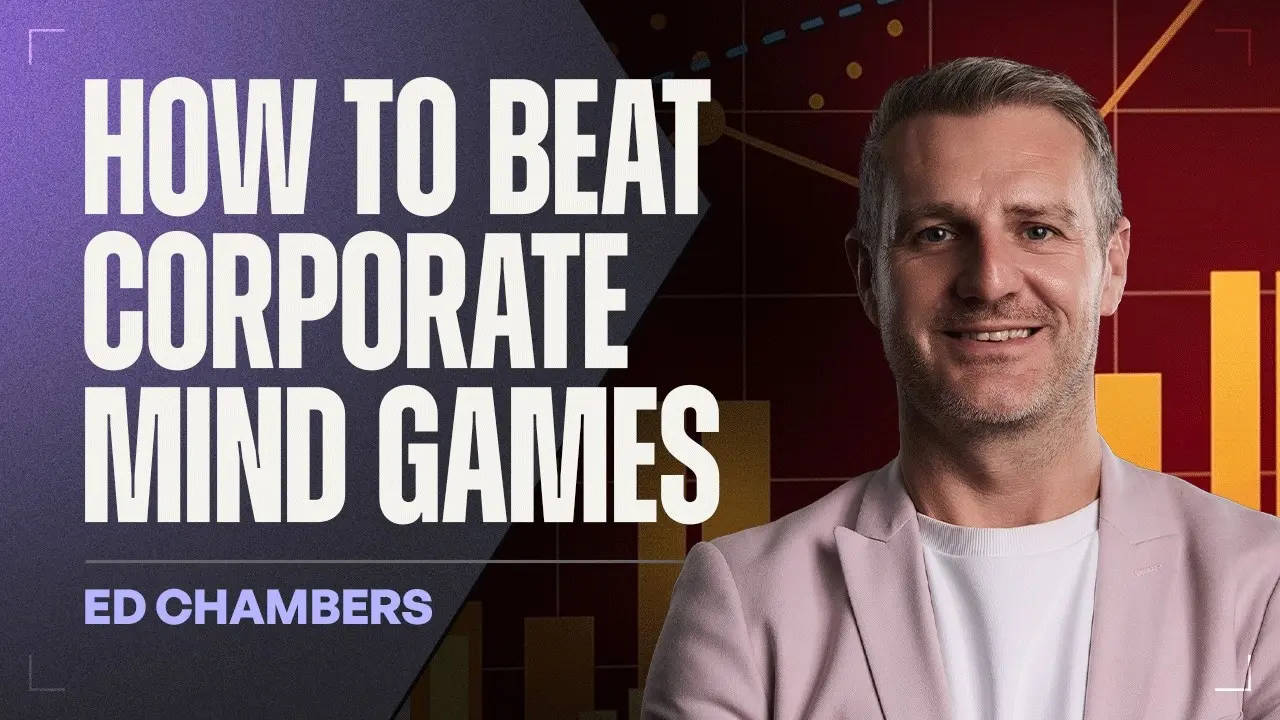
.webp)

.webp)
Let's Keep Connected
Work With Me

Enquire With Dain’s Team
Enquire For Speaking
Let's Get You Branded
Apply to be a guest
Dive into insights from industry leaders and experts.




Stream now
Dive into expert advice and industry trends.