


TLDR
Summary
In this episode, Andrew, an ad-testing expert from System1, dismantles 11 of the most deeply entrenched myths in modern digital marketing. Backed by extensive global campaign data representing $140 billion in market share, he challenges the industry's obsession with short-term, digital-only vanity metrics, starting with the hard truth that engagement rates have absolutely zero correlation to actual sales or brand awareness. Andrew breaks down the strategic dangers of the "ROI trap," explaining how prioritizing immediate, short-term digital efficiency over long-term emotional brand building forces scaling businesses onto a performance plateau that halts future growth.
Through data-backed insights, he explains why slap-on "logo hooks" in the first two seconds of social media ads actually increase viewer skip rates by 50%, and why integrating a product organically into a narrative or utilizing fluent devices like brand characters is twice as effective as hiring expensive, one-off celebrities. Moving beyond simple distinctiveness, Andrew advocates for high-reach paid media plans that respect consumer entertainment value exchanges, urging founders to stop chasing fleeting cultural "fireworks" like viral organic trends in favor of planning around predictable cultural "bonfires." Ultimately, he addresses the massive financial "cost of dull," proving that the most boring 25% of global advertising suffers a 40% lower ROI, and shares his own unconventional journey from The Apprentice and medical school to becoming a champion for creative confidence in marketing.
Highlights
- Andrew reveals that extensive research from Meta, Nielsen, and System1 confirms engagement rates, clicks, and organic reach share a 0% correlation with long-term brand awareness growth or purchase intent.
- He exposes the ROI trap, noting that chasing immediate, short-term efficiency inherently limits business scale; instead, optimization should look at long-term, profit-based econometrics over a two-year horizon.
- Data reveals that editing a logo overlay into the first two seconds of a TikTok or Reels ad increases user skip rates by 50%, whereas integrating the brand organically into the story structure maintains viewer attention.
- He highlights the power of "fluent devices" and characters (e.g., the Geico Gecko), proving they are twice as effective at building permanent brand distinctiveness compared to popular, one-off celebrity endorsements.
- Andrew warns against wasting team resources chasing fleeting cultural trends like viral internet memes, advising brands instead to anchor their messaging around massive, predictable "cultural bonfires" like major sporting events or reality television.
- System1's database shows that 50% of emotional response to global advertising is total neutrality, and this "dull advertising" carries a heavy financial penalty by driving a 40% lower ROI compared to interesting, showmanship-led creative.
- He outlines the four pillars of executional marketing (Price, Place, Product, and Promotion) and details how great creative must aim for "fame"—the literal buzz and word-of-mouth that statistically doubles a brand's likelihood of generating market share gain and profit.
Transcript
00:00:00
that arrives at the speed of light is still it's true. Two types of advertising. One you've got salesmanship, facts, repetition, figures, comparisons. The other side of that is showmanship, character, a story, a clear sense of place. Effective advertising taps into those huristics and builds them. And then good advertising is highly emotional, ideally positive because things that feel good influence our behavior. 1,265 global campaigns which represent $140 billion worth of market shares. Yet the first
00:00:40
thing a marketer does when they get a new job is ah we're going to make a new campaign. The saving grace of digital media might be creators. Marketers have no idea what they're doing with creators. Brand characters, for example, are way more effective than celebrity use. Marketers are using the wrong kinds of distinctive brand assets. And I suspect it's because they want to get a beer with celebrity after the campaign shoot. Think this is the most important skill of a good marketer over the next decade
00:01:12
is creative confidence. Being very clear on where you need to go and every effort needs to be a step towards that direction. Have we have we done number? We got time. We got time. I'm not talking much D. >> I'm loving this. >> This episode is brought to you by Wick Studio. Here at the Agency podcast, we're building a community and we would love for you guys to be a part of it. So, we would love to hear from you. What are you enjoying the most? What would you like to see more of? And what do you
00:01:45
think might be missing? Drop a comment. Make sure you subscribe. And now, on with the show. We got a little bit of a spicy one today that we're going to unpack. And you've had something that you've been um building in the background. You do a lot of keynotes, you do a lot of speaking, you work with some of the world's biggest brands all across the globe. There's probably not a global brand that you're not in some way, shape, or form connected with. Um so I just want to add some gravity to
00:02:09
this, but uh yeah, today you had a specific topic, which is the 11 things that most people get wrong about marketing. >> Of course. Yeah. Yeah, I mean so yeah obviously I work at system one which is like an ad testing business where we measure the emotional response advertising and predict and understand how it will work but my job specifically within that is working with this huge platforms in huge brands to understand like you saw yesterday actually you saw some great research with Tik Tok how
00:02:35
advertising works how we can be more effective in our marketing strategy these are 11 things that I think modern marketers today could actually understand a bit more about and then tomorrow literally get to their desk and change. So yeah, >> amazing. So well, let's kick it off with number one is that engagement rates are [ __ ] >> This I'd say this one pisses off about a third of the room when you talk about this um or a third of clients. So in 2016, Meta did some great research
00:03:05
working with Neielson looking at um clicks and they showed that um there's no correlation between um the amount of clicks and brand awareness growth, purchase intent, um ETC, no correlation. Meta showed us this 10 years ago. They also showed us that 90% of sales that happen that were driven by Meta didn't actually happen on on the internet. they actually impacted other sales. That's how advertising works. Yet the industry is still obsessed with engagement rates. We're spending so much now on social and
00:03:39
digital that this misconception is causing more and more damage. So I'm doing new research with Tik Tok this year that will be launching at Can's Lion next month. Um I guess I'm allowed to share a little bit where we've got the data again 10 years later on a modern, you know, social platform. What we've actually found is that and it's reassuring. The answer is reassuring um if marketers make a good distinctive entertaining emot ideally emotional ad and put paid media behind it to get it
00:04:13
reach i.e. this is how advertising works reach and creative quality as long as you got your strategy onions in a row then good good things happen. That explains kind of growth. Um, and also why engagement rate is [ __ ] and why it's such an interesting topic right now is that, you know, we were at the event yesterday with Mark Ritson who does the brilliant mini and he opened up talking about the essence of strategy and how strategy is about um choosing not what to do because um there's a cost to doing
00:04:44
everything. So strategy really is about choosing not what to do. That is organic social in my point of view and engagement rate. These days, a lot of people are spending time on organic, trying to go viral, etc., tracking it by clicks and shares and and engagement rate and um and chasing this stuff. I'm incredibly large on LinkedIn. I think I reach a couple million people a week now. Um my business loves it. They think it's very important. But you know, all my CFO needs to do how much all he needs
00:05:17
to do is look at how much paid media costs on LinkedIn and we'll find out for a couple thousand pounds you can reach a million people anyway every day. And it's not that important. Organic reach is one risky, two, it's dwarfed anytime anyone gets their checkbook out. And three, the real strategic flaw in it is um organic stuff will always reach and have a bias towards your current customers. Anyone who's actually interested in marketing effects should go have a look at what the Rosser Reeves fallacy is.
00:05:47
this guy called Rosser Reeves um who did this who did this research a while ago where he looked at um two groups of people, people that could recall seeing an ad and people that couldn't recall seeing an ad and looked at how effective that ad is by looking at how many people actually bought the product and the people that can remember the ad and not remember the ad. Always lots more people who remember the ad were brand buyers and bought the product. Because when you buy a brand, when you've entered a
00:06:15
brand's funnel, you notice, engage with, remember, share that brand's communications more. It's a similar thing. And the flaw with engagement rate and organic reach, you might get a million, you know, organic reach because lots of people have engaged with your content. That's probably people who have already bought your brand. And if you've read anything like how brands grow or you understand how marketing works, you need to recruit new customers and convert light buyers into buying your
00:06:49
brand. So even if by some miracle you've got, you know, every day you pump out great organic and you get, you know, as much reach as the people who are doing what I would call proper strategy of paid media, even if that's true, you've no idea if you're reaching new customers in the first place. So, I do think engagement rate and organic organic social is a fugghazi. Um, and you're going to the casino of effectiveness when you chase this stuff. And yes, there's brands that have done it. Of
00:07:19
course, there are. But there's a handful of them that have grown that way. And there's millions of brands that have grown through proper marketing and advertising, paid media with creative quality. And yeah, the organic piece splits the room even more. And I I I have lost clients that have ripped to be honest cuz they can't get their heads around why organic isn't the perfect way. >> If I were to play devil's advocate for the listeners, maybe the 60% out there that would disagree. Um what is their
00:07:46
counterargument? Do they tend to say, "Well, I get leads from organic. I post organic content, therefore I get leads from it, therefore I'm winning." What's your take on their argument? And how do you tend to unpack that? Often when people tell you that organic works or even like an oh that ad worked and you actually press them on why three W's they'll give something at the start and you press them again and again and again. It doesn't normally come down to something as robust as I have proven I
00:08:12
got a lead from that organic post. It's a trap that people make with digital in general. I have a good friend who um runs a very large um challenger brand in a global challenger brand now actually um and he's the CMO. He um bought TV once, spent millions on TV. Um and normally they spend millions on Meta. Um he calls them Zuck Bucks. You put a dollar in, you get a dollar back. Big Zuck bucks. Um and he did TV once, never did TV again because um oh, what did I get from TV? I got all my leads from
00:08:47
Meta. I convert those customers on Meta. Whereas that TV ad he did three years ago is probably why he converted 50% or more of those leads on Meta for example. It's a similar thing with organic. Sure. What you actually find is organic actually does sit at the bottom of the funnel. It's the people who are closest to buying is interacting with your stuff. How's it got them there? It's all your other marketing funnel normally. Organic does work for me. I, as I said, I post on LinkedIn, but and I get leads
00:09:15
from it as an example of what you said, but that ignores the fact that we've been building a brand at system one for the past 20 years. I'm not pretending that I've generated all that business. Like, that's just last touch attribution, which we also know is horshit. >> So, you're looking at the origin of the attention, and you're saying that that typically outweighs what's created organically in your experience. Um I'm talking about how marketing works is through many touch points and not and
00:09:43
how advertising works, communications works is through many touch points and paid stuff that gets actual reach and is guaranteed is the more dependable um strategic option. And even when you do see stuff working, often people neglect the fact that stuff can take years to work. Like a TV ad has has a lasting impact for years, for example. So yeah, and people conveniently take whatever statistic they want to prove it. So yeah, I feel like I'm never going to convince some people away from organic. Maybe this one last anecdote,
00:10:20
don't mind. The most viral piece of uh I think I talked about this yesterday as well. most viral piece of um content on the internet is the baby shark video on on YouTube. You know, baby shark doo. >> Um it's got a couple billion views now or something. Compare that to John Lewis in the UK. It's a department store, like a big department store that pretty much invented Christmas advertising 10 years ago. They put out a really great TV ad every Christmas for 10 years and um their business did very very well. um
00:10:51
their paid media plan over 10 years where Baby Shark has got a couple billion organic views, their paid media plan has reached 200 billion impressions. Like no matter if you're the most or organic viral, incredible content ever in the world like Baby Shark, you get dwarfed by a proper paid media plan. like so yeah it's just chasing the uh chasing the illusion of free reach with organic I think is uh what a lot of people have been sold on and um uh it might work for a year but the the algorithm might change and leave
00:11:30
you behind so yeah it's not dependable I don't think >> do you think that people tend to avoid uh spending money on marketing because perhaps they're not working with the right agencies they're not using the right tools what do you think is um the biggest obstacle for for most when they're trying to solve this problem. >> Um, spending money on advertising or marketing? >> That's a good question. How would you define the two and how do they work together?
00:11:51
>> Yeah, marketing is um the whole job. Advertising is about 2% of the job really. Um, but often it's the thing that marketers can control the most. And if you've got all the other stuff set up, the difference in your effectiveness in advertising can define whether a business grows or not. Why would a brand not be in um investing in advertising? You might be working in a salesorientated business where um you know this it's it's led by a sales commercial function and you know when a
00:12:24
lead comes in when a com when you convert a lead etc they'll be ringing a gong in the b in the corner of the office being like yeah I just closed a million pound deal etc. um those businesses need to go and launch in a new market where they haven't got brand awareness or marketing done for them and realize how hard it is to close a sale without that marketing business set up. Like often you get that rude awakening when you see people trying to expand and the advertising marketing job hasn't
00:12:50
been done. And why else might people not be spending on advertising and well it can be seen as a cost right? >> Indeed. Yeah, >> advertising is not a cost. Technically it is on the P&L. I do hate when you know uh industry thought leaders say you know advertising is not a cost technically legally from a financial point of view it is a cost on the P&L you can't avoid that but it should be viewed as a business as a long-term investment and if you've not got that strategic um
00:13:17
uh leadership at the top of the business that understands that and understands that um you can't just plow the field you have to plant the seeds and put fertilizer in it otherwise eventually the soil's going to die and nothing will grow. Um, then you won't be investing in broad reach long-term emotional advertising. And if you do, you're probably just investing in the stuff that tries to capture those clicks at the bottom of the funnel. It's literally what the the entire industry is going
00:13:43
towards right now. And you can see I'm speaking at Mumbrella um 360 later today about this. If you look at I do a lot of research with the FE FE awards data um and system one's data you can actually see in that data that campaigns are getting uh less effective over the past 15 years where they're growing brands less because because of this issue where um people think that advertising is about converting demand but actually it's about creating that future demand as well. >> So if advertising is 2% of the deal
00:14:12
what's the other 98%. >> Uh advertising sits as your four um executional pillars your four Ps. anyone that tries to invent you know everyone all so four Ps being um price place uh product and promotion advertising is promotion coms so it sits as four of the executional levers you can pull before that you've got your strategy which could be considered as STP your segmentation your targeting your positioning before that you've got your diagnosis which is also where system one kind of sit understanding where the
00:14:46
market's going um what kinds of position is going to create the behavior change you need to make your advertising as effective in in the first place and above all that where um the more senior you get as a marketer I think you discover this second layer which is actually kind of business strategy of understanding where our company sits where the customer sits and where the competition sits and understanding how you play within that space so yeah advertising is a small slice of the whole um marketing and business
00:15:16
strategic pie Okay. But it's a [ __ ] important one that, you know, I've proven in all all my research can massively change the odds of um of you creating profit and growing his business. If you want to grow your agency, you need more than just a website builder. You need Rick Studio, the all-in-one platform that's built to help you scale. Design smarter in a hyperflexible, responsive editor, cherrypicking whatever clients need from pre-built UI elements and templates. Deliver robust backends with built-in
00:15:50
e-commerce solutions for every industry, letting self-maintaining infrastructure just run itself. Stop reinventing the wheel with every project and instead create a sharable design system with reusable assets, apps, and components. Clients growing too fast? No sweat. Wix Studio AI powered CMS lets you turn a single layout into hundreds of additional dynamic pages. It's true. More clients no longer has to mean more chaos. Wix Studio gives you one centralized view of every project and makes realtime collaborations seamless.
00:16:26
Do your agency's best work at scale. Build your next project on Wix Studio. All right, which brings us to number two. Creators are brand builders, not salespeople. You can get very depressed about digital media in many ways actually. um you know I cited the FE data with um from our research the creative dividend at system one looking at um what drives brand and business growth and how it's brand growth is technically going down in that um some people would point to the fact that we've moved towards more digital
00:16:58
media and when I say digital media I mean um shorter term targeted lower attention less audio visual so more static and often sometimes with sound off this kind of stuff Some people will go um you know that's why that's happening um because you know you know the antithesis of that is TV advertising which is broad reach high attention audio visual storytelling um platforms and you you know there's data proving it if you look at lumen who are an attention agency um globally their data
00:17:33
they've actually shown there's this judo flip of how we spend our media so um 10 years ago we'd spend 75% of our media budget on um high attention media channels like uh TV, radio, print um and only 25% of that would go into lower attention media channels like um social digital display out of home. There's just been absolute flip into we now spend 75% of our budgets on lower attention stuff and 25% of high attention stuff. People go, "Yeah, digital's, you know, ruin marketing." Uh
00:18:05
I do think that's bollocks. I think um what um you can build brands on digital. It's it's different. You have to understand how to capture attention. And it's not just about distinctiveness. It's about early distinctiveness. This kind of stuff. There's tactical things you can do to make it more effective. But I think the saving grace of digital media might be creators. So creators are human, broadly interesting, emotional. They respect the medium that they are in i.e. What a lot of people get wrong with
00:18:41
digital media is they don't respect the value exchange. All media works with a value exchange. I.e. I'm sat in front of the TV because I want news, entertainment, information, etc. So, good ads on TV respect that and fit within that context. Similar on digital, I'm sat on Tik Tok because I want some I want some entertainment plugging into my veins. you know, I want to, you know, be entertained. So, when you come across a static product shot with 10% off people, you know, obviously that's not going to
00:19:16
work. Creators understand that value exchange and the hack for brands to really tap into that, but brands are using them at the moment in the wrong way. They are thinking that they are salespeople. They're giving them products, asking them to do quite hard product demos. If you look, if you actually spend spend half an hour scrolling Tik Tok or reals and all the crate ads you see normally are quite hard pushing new SKUs of FMCG products or tickets to events, sign up here, click here, go here, use my discount
00:19:54
code, that's selling, that's doing the short-term stuff. But when you look at the econometrics data, which the IPA have done with WPP, you can actually see that the long-term ROI of creator campaigns um is the highest of any media channel. That takes a shift because you have to start thinking about creators as a media channel, which is one shift the industry kind of needs to make. What what do I mean by that? I I.e. If you put a pound into uh any media channel, put a pound into creators, they pay back the most
00:20:25
once you take into account the 2-year view, not the one week view, the two-year view. So, if you're giving a creator a discount code or um uh a UTM link or whatever to track visits to your website and then after a week you go, "Actually, I'm not working with you again. You were [ __ ] I only got 10 leads." um you're ignoring the value that creators are making. They are doing a great brand building job in digital. They are a way to turn digital media into a more human emotional showmanship
00:20:59
brand building channel and they do a very long-term brand building job. I've seen it as well in my um research with the FE and system one data. If you include a creator as a key media channel in your campaign, um you create on average more brand effects than any other um channel inclusion. And TV is obviously second because TV is great at brand building as well. Um so yeah, I think creators are a great opportunity. I think um people are using them wrong as salespeople. I think they're um what
00:21:33
I would call commoditized brand building. 10, 20 years ago, brands could only be built if they could afford a linear TV slot. Now, you can afford a little portion of brand building from creators. It's very exciting. Um, but marketers have no idea what they're doing with creators. So, I've got this new research coming out in CAN. If you actually look at um a lot of media metrics with creator campaigns like um cost per CPM uh campaign duration, there's no relationship between media metrics and
00:22:07
campaign outcomes like ROI. Why? Because um there's some really good creator content and there's some really [ __ ] creator content. Um often this stuff isn't branded. often you've over briefed and you've stripped the creator of what they're good at and it's not emotional, human or entertaining. Um, so you'll see in a few moments we'll be launching what we're calling the creator playbook with WPP and um, Tik Tok where we're starting to bring the science and strategy that
00:22:38
you've seen with other media channels um, you know, over the past decades like how do we use TV finally to creators so we can actually scale them. So I do think they're the future of um of content in many ways, especially digital content. >> How would you explain perhaps using data the intrinsic value of the emotional blueprint of a piece of content and I think when people think of entertainment they think of dancing like could you just maybe flesh that out a little further? >> Daniel Kman wrote um some great research
00:23:10
and there's a great book on this. It's a big book, very big book um called Thinking Fast and Slow. Basically, you've got these two roots of thinking. One is system one where um it's lazy. It doesn't want to make effort. It's makes decisions based on huristics. Um >> what do you mean by huristics? >> Huristics are a behavioral shortcut. That means that when you walk down the aisle in a grocery store, it takes you two minutes, not five hours. A huristic, a good example of a huristic is the
00:23:42
affect huristic. Um i.e. If something comes to mind and it feels good, it's the right choice. The familiarity huristic. If something's familiar, it feels like the right choice. These these are the things that it's why you chose Where's your Red Bull gone? You had a Red Bull here. It's why you chose that, mate. You weren't standing in the aisle going, "Oh, yeah, actually it's got 5% less sugar." Um, and oh, actually, when you look at the caffeine to dollar ratio, actually better value than
00:24:12
Monster. You weren't doing that. You wouldn't be here. you'd still be in the store working it out. What you actually did is I recognized Red Bull. He's buying Red Bull. It must be good. Um the blue triggered Red Bull. Oh, I actually remember that um two 20 years of Red Bull advertising that's made me feel good about the Red Bull brand and you grabbed it from the the store and you carried on. That's how most our behavior and decisions are made to this system one pathway. Um that's avoiding effort.
00:24:42
We've got 5% of our decisions being built by the uh the system two pathway which is very um slow and rational. So if I were to ask you why you picked the Red Bull, you would lean on your system two pathway and you'd try and rationally explain it to me. Oh, I needed a pickme up. Uh it's only a dollar. But that's not why you chose it. So um often when we have to grow businesses, you have to get that fundamental understanding of how consumer behavior change works. Um if people want to know more about that
00:25:13
go and look at Rory Sutherland and everything he talks about. Um so then you then you have then that gives you the cl the keys the clues to effective advertising. Effective advertising taps into those huristics and builds them. So effective advertising should be reinforcing familiarity. um consistently building the same brand assets for Red Bull again and again. So it makes it feel familiar to you and so it comes to mind quickly because things that come to mind quickly are are um are chosen especially um come to mind
00:25:48
quickly within the occasion. So Red Bull doesn't want to just be building memory. It wants to be building memory around I need a pickme up occasion because then in that occasion you reach a Red Bull and not a coffee. And then good advertising has to build the emotional response to that brand. So good advertising is highly emotional, ideally positive, because things that feel good influence our behavior. Um, and that's why you'd want to do emotional advertising. And technically, if you put
00:26:17
someone into a higher emotional state, um, you build more brand memories. Um, that's just how our brains work. And then how do you do that? You have to be entertaining. So, there's this guy that works for system one, our chief creative officer called Orlando Wood. He's been researching this for like 10 years. >> What a name. >> Orlando Wood, right? I know. Cousins of Orlando Bloom, I'm sure. >> Um Orlando Wood. Um and he's wrote this book called Lemon. Um and he's got this
00:26:44
great um course called Advertising Principles Explained, which really goes into this stuff, but um looking at um two types of advertising. one you've got salesmanship and the other side of salesmanship is showmanship. Salesmanship is a kind of advertising that assumes our interest. Um unilateral communication, repetition, facts, figures, um comparisons, convincing you through your system to pathway to buy something. A lot of advertising is like this and it taps into this more and more actually if you look at the data. The
00:27:18
other side of that is showmanship. It doesn't um assume your interest, it earns it. Character, a story, a clear sense of place, um dialogue between characters, music with melody, the [ __ ] you go to the cinema for that creates emotion and it captures attention crucially for people who are not in the buying mode. So you're you're I'm not in the buying mode for Red Bull right now, but a showmanship piece of advertising from Red Bull, which they're actually quite good at with their
00:27:52
cartoons, that will capture my attention still despite me not being interested in buying Red Bull right now. And when I might buy Red Bull in a year's time, that memory is being put to work. That is brand building. That's how advertising works. That's why anyone at the helm of a business shouldn't see emotional, entertaining advertising as frivolous. They shouldn't and they should be aware of when they do it to not give the salesmanship rational digital advertising all the credit like
00:28:20
that CMO I was just talking about because you'll actually find all the demand and memories that the entertaining emotional stuff that you've put on a broad reach paid media that's done all the heavy lifting in the first place. Um, but we're getting into the heavy echelons of like only the top kind of 5% of marketers are operating this way and have enough budget to really systemize it. So like if you look at um, you know, that that's essentially what econometrics does. It proves and puts
00:28:49
numbers to, you know, the ROI of those campaigns versus just kind of last last touch attribution. I'm horribly aware we're at number two. Are we have we done number two? We got time. We got time. >> You're not talking much, Dave. I'm loving this. Let's move on to number three, which is that digital media can grow brands, but bad creative can't. >> You know, there's two camps in the world, in the marketing world. I see. I think 80% are now in the digital media
00:29:15
world where it's like this is how advertising works. We'll exclusively use this. 20% are in the traditional world still about a more traditional channels like, you know, radio, out of home, TV, and you know, we we want to heavily um lean into using that instead. Um the digitalist camp would call the tradition the traditional world world of advertising um you know outdated ETC. Uh the traditional camp will call the digital world of advertising you know that doesn't build brands ETC. You know
00:29:45
both sides are wrong and both sides are right. You can all channels have their use. Um, but if you're putting [ __ ] into digital media, it's not going to grow your brand. Obviously, David Abbott said, "Shit that arrives at the speed of light is still shit." >> It's true. We have become obsessed with the pipes and not what we're putting in. >> Yeah. If at you know at system one we test every linear um UK and US TV ad to understand how it's going to actually
00:30:19
work with millions of um millions of people. I would say half of what goes on TV which arguably should be the best creative in the world is [ __ ] It's not got a strong enough emotional response to influence the behavior we were talking about. I mean it's technically what we call a one star. We've shown that one star advertising doesn't really change long-term market share, doesn't grow brand. Um, which >> what might an example be of something that's like a one-star versus five star?
00:30:51
In people's minds, they might think, "This is entertaining. I created it. I think it's great." Yeah. >> But I've experienced that most people's taste or radar for great is not really that great. >> No, agreed. Another damn good question, Dane. We're never going to leave this studio. So look, um I used to work for um Diagio. I used to help run Johnny Johnny Walker um uh on on brand side as a marketer and then I came and then worked at system one which um focuses on getting the
00:31:23
consumer's point of view into advertising. It's a humbling experience. When I was working brand side, it was all about my opinion and you know which is not good. That's not you know I'm I'm going to say I did some bad things. I I emailed back copywriters with better lines for copy. I was not a great I've learned from my mistakes. Um and a humbling experience because you have to take a point of view of market orientation. Bringing the actual consumer and how they feel and what they
00:31:57
think into the creative process is crucial. So yeah, um you might think you've got a great ad. I've made some ads and they you know then I've gone and tested them at system one out of curiosity and uh I've never shared the results because I'm I'm embarrassed Dane they weren't great ads from the from the minds of the consumer from the eyes of the consumer. So a good ad what we would call a fivestar ad at system one that grows brand and we've we've proven grows
00:32:20
more um profit. Um I presume everyone's seen Amazon's um Christmas ad with the sledging granny's. >> Yes. >> Okay. >> Yeah. Um the the Sledging Granny's Christmas ad that is a fivestar ad. >> Do you want to describe it for people who have not seen it? Yeah. >> Um uh I probably shouldn't call them sledging granny's. I mean um some people who are in their later stages of life respectfully. Um they are three of them are hanging out. Um and it's snowing.
00:32:49
They're Yeah, I think they look like they're in their 70s. Um but you know they can't go sledging like they used to because you know things hurt when you're in your 70s. So they open up the Amazon app, they give a little click and um uh cushions come for their sledges. Cut to beautiful scene. Three old friends sledging down the a snowy hill at Christmas. Um with I think the Beatles, they must have paid millions of quid for like a Beatles soundtrack on piano. It's beautiful. Um, the wrong way to judge
00:33:26
the ad would be how many sledge cushions did Amazon sell that year. The right way to judge the ad is that it makes everyone feel intensely positive about Amazon and they know it's an Amazon ad. Um, we obviously we work with Amazon and uh I work with the team there and we we tested it a few years ago the ad and it was 5.9. It actually maxed out our motion scale. It broke it broke the scale. Um, and it did horrendously good things for their business. They did a different ad the year after. Um, it was
00:33:59
a that year it was a cleaner and he finds like a tuxedo in a locker. So, I don't even do you remember that one? Okay. Interesting. Um, the third year I worked with him and um, we retested it again, the sledging ad two years later and they I don't know if you noticed they just ran that globally again this year. Um, I've noticed that. So, they use the exact same ad and it worked just just as well. Um, that's the power of emotion. That's what a great emotional ad look like. Um, what does a onestar ad
00:34:27
look like? >> I'll just turn on some daytime TV and look at the absolute shine that people are shouting at you, you know? Um, discounts, rational, people speaking at you. Often you don't know where they are. They're in like a black studio. There's no sense of place to actually root what's happening in. It's advertising being used as a vessel to deliver deliver messages and USPs unique selling points. Whereas the Amazon ad isn't delivering a unique selling point.
00:34:56
It's delivering a unique personality. Um yeah, >> the emotional visceral reaction that we can experience when we're watching something is is much more potent than than the logical reason of justifying a purchase. >> Oh, it's more effective as well. Yeah. Yeah. And it makes your job easier next week. If as a marketer you choose this stuff, you'll find that your job gets easier next week and everything you do works harder. It's it's a compounding effect. >> I I learned this to be true when I was
00:35:22
uh in particular selling cars. So I worked at Subaru and um you know people would logically say they couldn't afford something. You put them in the driver's seat, take them for a roll around the block, come back and they're lit up and they buy it. >> Yeah. Exactly. >> Because they're emotional. >> They can't rationally explain that, can they? >> Can't they? They go home, you watch them justify to their mother and their siblings. a this is, you know, got great
00:35:40
mileage and it's got a great resale value and all the rest of it. Um, >> then they have to postrationalize that decision. Exactly. >> Okay. So, number four, we can no longer ignore creativity and focus solely on media. >> What I'm talking about here is that um if you're in a you're in a business and you're in the marketing team, you'll often find that the entire effectiveness conversation is owned from a media lens. A good example is if you can afford a
00:36:07
mixed market modeling which is MM where you take um all your sales data, the weather, your advertising data, um how much you spend on advertising, um what your competitors are doing, and you'll get some statisticians trying to go, okay, that um ad there drove this amount of sales for this long. And you can actually start going okay I need to spend more on that channel on here when Y why etc. this is what the best kind of marketers in in the world are now doing. That's what you can do. In fact, now
00:36:40
AI's got involved. You can even um do that and it can predict the future in some ways. Um but won't get into that. Um but what you get in those conversations and even just when you go into like um your measurement and evaluation phase at the end of a year, you'll find that it's all about spending media channels from an advertising point of view. And people completely ignore whether you had a [ __ ] ad. So, like, oh, we oh, oh, TV didn't work because X, Y, and Zed. Um, we can't use TV anymore.
00:37:12
Um, no one's ever stopped and thought, oh, wait, the TV ad didn't have any [ __ ] distinctive brand assets in it. So, we can't as marketers keep separating the media decision from the creative decision. And it's a difficult one because I think to get there and I think this is the most important skill of m of a of a good marketer over the next decade is creative confidence. Creative confidence is being able to um assess campaigns and creativity. Understand, justify and guide creativity
00:37:44
to the point where it's of good creative quality and then be confident in enough in it to then back it with enough reach and media. So if you're not doing that process, you're just spraying and praying and you're never going to get very senior because if you know the really senior marketing roles are MDs of a country where you have to decide where you're putting your media dollars, your chips at the casino. Is it on this brand or that brand? Well, you could do that through creative confidence. Uh Bailey's
00:38:16
has one of the most creatively effective campaigns, whereas this brand doesn't. I'm going to give all my money to Bailey's. that's how my market's going to grow. Or if you get to a really senior global level, you can do that at a market level, right? That market is creating creative excellence. This market isn't. If I put my media money over there, I'm going to see global growth and shareholder return. If I put my money there, I'm going to lose profit. So, unless we start connecting
00:38:44
creative and media together and growing our creative confidence, it's just shooting in the dark. Um and especially as asset proliferation happens, which is we now create thousands of assets when we used to create again a decade ago couple assets. Um unless we connect those pipes and think about the [ __ ] not fling it at people at the speed of light, then we're not going to get to a place where advertising and marketing is a respected uh industry that isn't seen as a cost. So I think it's a it's a
00:39:19
quite important one. >> Now something you mention is that media creates the chance to be seen. Creativity decides whether anything is felt, remembered or acted upon. >> Mhm. >> When you're talking about connecting media and and creative together, um how how does how does one understand that at a deeper level? >> A useful um analogy will be um comes from a great researcher um uh Dr. Karen Nelson Field who runs a business called Amplified Intelligence which looks at um the attentional
00:39:52
response to advertising. She talks about media channels as springs. Um a media channel that can get lots of attention like uh TV advertising um streaming advertising etc um is a big spring. there's an a large opportunity there for creativity to work. Whereas uh something like digital display, which is something you scroll past on a a column you're reading or something, is a very tight spring, very small spring, gets half a second of attention. No matter how great your ad is, it's only a little bit of
00:40:30
what you can deliver there. Whereas on TV, you've got so much opportunity. You can deliver [ __ ] or you can really deliver brilliant stuff. So if we think about media channels as an attention as delivering the opportunity for advertising to work and creativity then delivering it and determining the size of the impact these springs. I think that's uh how we can really understand planning um advertising at a more a deeper level. You also mentioned that boards need to talk about creative quality with the same seriousness as
00:41:06
reach, frequency, and ROI. >> It's kind of a point around connecting creative and and media. When you when you go to your board um or or your shareholders and present your marketing plan or what's happened over the past year, you'll see it's about cost, CPMs, reach. People now even include like engagements in those conversations. But what you should also be talking about is this year we doubled the creative effectiveness of our advertising and all this stuff worked twice as much. You
00:41:38
cannot talk about these things in isolation. Um you know I can I can buy X amount of impressions but if it's you know if it's shy stuff it's not going to work. But we haven't got the language or the knowledge in a lot of marketing at a board level at a business level because actually a lot of marketing teams do get this. It's the rest of the business that don't um to actually talk eloquently about creative effectiveness and the power of it. >> Now number five is that we are giving
00:42:12
too much media spend to our worst work >> with this new with this um book I've I've just written with um Effie. So the FE awards, the effectiveness award and FE stands for effectiveness actually um shows that your marketing decisions led to growth. And as that process submitting to an FA, you have to fill out a load of information. Submit your ads, how much you spent, what your strategy was, which channels you used, what brand effects happened, what business results happened. ETC, there's
00:42:42
this new um research that I've worked on and it's called the creative dividend. We actually launched it with Mark Ritson last year at Canon. Now, now it's a full book where we've taken all that data and we've connected it to system one data. So, we've actually got um all the creative data for how consumers saw those ads, not just the market's opinion, what it did in terms of actually in the market from an FE point of view, all that data submitted. And then we've looked at we split campaigns
00:43:13
by are they spending more on media than their competitors and are they creatively better than their competitors. You actually find that only 17% of global campaigns, advertising campaigns um are better creatively than their competitors and they're spending more than their competitors. You actually see that four in 10 campaigns are creatively worse than other brands and are spending less than other brands. I call that busy work. No one's going to see it and if they do, it's not going to
00:43:47
do much with. Then you've got this brilliant group of brands or not brilliant groups that they're creatively disadvantaged, but they get loads of media spend. Um I which is a mess. We're putting millions and millions of pounds into this work that doesn't actually achieve anything from a creative point of view. So, um yeah, we are not good at recognizing incredible work and backing it with media. Only 17% of brands are doing that globally that have submitted to the effes. So, it kind of links back
00:44:26
to my creative confidence point, right? We need to be able to understand and recognize, champion, foster and build creativity within a business. Um otherwise um we'll just keep spraying and praying. If you could uh install a perspective in every founder's mind who's watching this right now, what are the most overvalued metrics in marketing and what should be avoided? >> ROI is the most overvalued metric in marketing. ROI is efficiency. Do you know the the best way to boost ROI to
00:45:02
stop spending of anything? Your ROI goes to unlimited. Right. >> Yeah. Correct. >> ROI is an efficiency metric. If you start chasing ROI, purely chasing ROI, um what you'll find yourself doing is that you'll stop you'll stop growing because it's not about creating future demand. It's about finding the people who are closest to buying now and getting them to do it for less. Effectiveness must come before efficiency. We must work out how to do the job at hand, build our
00:45:39
brands, create demand, change behavior, and then look to efficiency to how do we do that quicker and cheaper. People have got it the other way around. People look at actually they ignore effectiveness. They just go, "How do we do what's working now quicker, cheaper, etc." And ROI is a metric that they often track. An easy way to get out of that trap is to actually two things. Extend the period you look at ROI in long-term ROI is often what a lot of good um mixed market modeling, those economic trick
00:46:15
models we were talking about before, that's a much better outcome than same week ROI. Because if you do same week ROI, all you'll do as a marketing team is buy paid search because that's the best thing at driving same week ROI. But we know that's not how the best most effective businesses are built. The second thing you can do to make ROI better is move it from revenue to profit. Profit ROI is much harder to work out, i.e. It's incrementality, profit versus just spending more on
00:46:49
revenue and driving sales. So, if you can make the leap to opening up the time period you consider ROI in, it gets better. If you can make the leap to profit ROI, not revenue ROI, that gets better as well. But, um, yeah. Uh it's it's difficult because often ROI is the looks like the best thing you can track as a as a marketer. And I recognize a lot of the people watching this podcast we're working in performance le businesses and yes when you're doing performance campaigns that does need to
00:47:23
look at ROI and efficiency. But if you're only doing performance campaigns that's going to keep shrinking. Your opportunity is going to keep shrinking and shrinking and shrinking. We need to look at how do we grow the size of the pie, expand our categories, expand, get more customers and using ROI for that activity will lead you down the garden path. That's not a great metric to track. So in some cases, performance campaigns, yes, sure, if you're comparing apples to apples, looking at
00:47:51
ROI can be useful, but generally I think it's a horseshit metric. you've been in some of the world's um most significant brands within their campaigns. Walk me through what it's like being in the boardroom with an executive team that know what they're doing just holistically if someone were starting a business or very early days trying to kick their first million. Yeah. What are some of the um things that they could had sat in a boardroom pick up and then take and implement themselves? If you're
00:48:21
in that spot where you're starting out as a business or you're in a large business that just starting to welcome um marketing um go and look up um the performance plateau. The performance plateau should scare any um scale up brands, challenger brands because um it's going to be your future in a year or two's time. If you just implement as a business stuff which chases conversions and um very short-term tactics, at some point your business will stop scaling and you'll reach a literally a performance plateau
00:48:59
where you're not growing anymore. And no matter how much more money you throw at these short-term targeted tactics to pump sales, often discounting, you're going to stay at this plateau for the next phase of grow growth. You need to then move to more broader brand building stuff. If you're not doing that at the start of your journey, you are going to come against a performance plateau at some point. So getting that um knowledge within a business at the start will mean that you're not going to be one of the
00:49:30
95% challenger brands that just you know fail after a year. I think Hule is a good example of this where they could have just done the direct to customer digital advertising. Buy a case of 12 Huels we'll give you $20 off ETC. But actually what you look at they lent into creators from the start kind of full circle to our creators a brand builders um piece earlier they lent into creators at the start to actually recruit broad demand and do some entertaining emotional brand building from creators
00:50:07
who are trusted etc not just chasing that short-term targeted performance lens. I think that's a really good example of people that have done that. Yeah, if you're in that situation, instilling um that is important with the most senior people in your business because then you also understand that marketing and advertising isn't about saving this quarter. It's about making next quarter growth more likely. Um and that is a mindset that shifts the conversations with a senior team. what metrics you
00:50:42
look at um how you perform what you fund who you hire um so I think that's a very if you're genuinely at the start of that journey um looking at the performance plateau and getting everyone onto the same kind of marketing language because I think it's very important that we have a a language within marketing for us to operate within otherwise you'll never see eye to eye with anyone in the business so yeah I think that's a possibly the number one tip from me >> okay now speaking about the creative
00:51:09
types uh which brings us to number six and that is that lazy marketers use celebrities as one-offs. >> Yeah, this is a quick easy one. Look, I think most people agree with me on actually would they? Don't know. Um so when you look at um in this FE data set that I was talking about um you know um 1,265 global campaigns which represent $140 billion worth of market share. So huge data set. If you look at year by year um you can actually look at what types of distinctive brand assets um people have used over the years. A
00:51:43
distinctive brand asset type being you know logo, slogan, color, brand font, celebrity, brand character, the different types you can use. I went and had a look at the types of brand assets used in a campaign and how likely they are to grow um distinctiveness which all brands need to be growing, growing recognizability, familiarity to tap into those huristics we were talking about, you are twice as likely to grow brand um distinctiveness. If you use a brand character in your campaign, stuff like
00:52:15
the Geico Gecko, the Compare the Mircats, Mia Cats, these uh Tony the Tiger for Frosties, these characters that are used consistently over time that are only attributable to your brand. And when you put them in advertising, brand characters actually attract attention, deliver emotion and showmanship and entertainment themselves. Whereas, if you put a celebrity in your um campaign, you see no additional advantage to distinctiveness growth. They're half as effective in terms of distinctiveness
00:52:44
growth as brand characters because often they're not used in um consistently. They're often used as a one-off and they're often used across multiple brands. Um so David Beckham, I think, is in like a hundred different brand campaigns at the moment. I lose count. Um, so you actually see that brand characters, for example, are way more effective than celebrity use. Obviously, there's some good examples of celebrity use, which leans into what I've just talked about, consistently um using them
00:53:12
for your brand over time, >> like uh maybe Nespresso with George Clooney. >> Exactly. That's a whole bunch of times. >> Best probably one of the best examples. And to give David Beckham some credit, his work with Stellar over the past few years has been consistently doing the same stuff. Um, and then also we also see the use of audio distinctive brand assets becoming more and more important because often we're now visually distracted with multiple screens but you can't close your ears. So sonic assets
00:53:37
and jingles or saying the brand name is really important in advertising now. >> Well, you said this last night. You said you can close your eyes but you can't close your ears. >> Yeah. Right. That's the most groundbreaking insight. You heard you you heard it here first. Um whereas if you look year by year how people are using um distinctive brand assets the use of the sonic device and the jingle is falling to zero in this campaign set that I've looked at. Um the use of brand
00:54:04
character is decreasing as well whereas the use of celebrity globally is dramatically increasing. Marketers are using the wrong kinds of distinctive brand assets. And I suspect it's because they want to get a beer withing celebrity after the campaign shoot. I've been there. I nearly hired this celebrity for a brand which it all fell through at the last minute. So I can't share who it was or what brand it was. I was excited to meet this dude. But the best thing I could have done for my brand was actually launch a brand
00:54:34
character. But that I can't have a beer with a A-lister celebrity. I can't have a beer with a brand character. I can with an alist celebrity after the shoot. So, yeah, it's another one of these things where we're often doing what's popular and not effective. So, we should really be looking at brand characters, not celebrities, and advertising more and more um which normally people agree with, but um rationally and then when they go back to work, it's like, oh [ __ ] let's hire Serena Williams. We
00:55:04
>> we've done some work with mascots for brands. Um, there's many cases where I've suggested a brand should consider having a mascot versus just having a logo. The push back I usually get is that it's too childlike, it's too whimsical, too much novelty. What What would be your counterargument? >> That's a really, really good push back. I often get this in B2B as well, where people are going, "No, I've got a very serious brand. Why would I have a brand
00:55:28
character? Why should I be emotional? B2B needs to be very serious. >> This is a serious industry. >> The inconvenient truth is that data just doesn't agree. The these are widespread marketing principles that literally work for no matter how I look at the data it works great in B2B. Look at the look at the B2B brands that are winning right now. Workday they are they literally or Salesforce Salesforce hasing brand character. The Salesforce little dude Apple have just one of the most you know arguably scaled
00:56:01
premium brands. They've just turned the finder icon into the little finder guy. All the good brands are doing this. Um, it doesn't and there's different ways of doing it. You don't have to be a whimsical. It doesn't have to be Tony Tiger eating cornflakes for the family. You know, there's elevated ways of doing it. George Clooney is a great example for Nespresso. You know, that's a very sexy way of doing a brand character with a celebrity, isn't it? you can deliver
00:56:30
um your strategy through brand characters in different ways. It doesn't have to always be an actual person. It could be, you know, when I say brand characters, I'm actually referring to the concept of a fluent device. So, a fluent device, again, um this was coined by um Orlando Wood, our chief um creative officer at System One, is a repeatable use of a creative concept over time that you own. One of those ways to do that is a brand character. I'm Tony the Tiger each time. What separates him from a distinctive brand
00:57:01
asset like a logo is the fact that if you remove Tony the Tiger from that piece of advertising, it wouldn't make sense anymore. You know, if you've not got, oh, Tony the Tiger kicking down the door. I've actually never seen a piece of advertising with Tony the Tiger. I'm sure he like kicks down the door and steals everyone's breakfast or something like that. If you removed him, the ad wouldn't make sense anymore. The other way of doing a fluent device is a creative concept like you're not you
00:57:25
when you're hungry. >> The Snickers line that is more than a slogan. It's a a vehicle for drama and emotion. Um it wouldn't make sense why the rugby player just or Betty White just turned into the rugby player after biting a snicker if the line you're not you and you're hungry wasn't there. So it's a fluent device. So, you don't have to launch a brand character, but you can deliver a Mastercard. Priceless. Um, you're not you and you're hungry. Kit Kat, take a break.
00:57:57
>> Uh, Corona, um, with they're using a place, the beach with the Corona in the sand. Would that be a fluent device or No, >> no, because it would still make sense if you removed um the the bottle in the sand. um where Corona could get to a creative device >> because they do have the line uh place I'd rather be. >> Okay, that would be a Oh, true. That is a I've not seen them creatively lean into that. That could be a line that connects the dots for sure. Corona could
00:58:28
also use the silhouette, the the bottle of a silhouette as a framing device. Um but I'd actually say in the world of beer, a better example of a fluent device is Good Things Come to Those Who Wait, the Guinness line. Um because they deliver whole campaigns about the idea of having to wait for something and it being good at the end like pouring a Guinness and then good things come to those who wait. Oh [ __ ] I get it. So a fluent device has to carry drama and emotion and connect the dots because
00:58:58
good advertising is like baiting a trap for a mouse, >> you know. So, because good advertising when you're baiting a, you know, a trap, you you have to put cheese on it, but you have to leave room for the mouse. The consumer has to fill in a little bit of the blanks themselves. >> Oh, that's clever. >> And then you've got them because they've done a bit of the thinking and that's what a fluent device does. That's what humor does. Humor involves a consumer
00:59:26
connecting a few of the dots themselves. Then they've involved themselves in the advertising. It moves from a passive experience to an active experience. And that's what the best advertising in the world does. So that's that's why a fluent device is so important because keep on using celebrities. So carry on if you want. >> But I'm inspired. I think I'm just going to steal a lot of that for when I'm talking to clients next about mascots. A fluent device and how how potent and
00:59:49
effective it is. All right, which brings us to number seven. We have reduced creativity to distinctiveness and a logo. Um we need to raise the bar of knowledge of what creativity is seen in advertising as and in businesses where um the best boss I had at when I worked at Bicardi and when we were in the creative reviews banned talk about logos because if you're in a creative review looking at the work you've got some [ __ ] at the back who goes um is the logo big enough shouldn't the logo be here and
01:00:26
immediately we're about to talk about does this is this broadly entertaining? Will it make anyone feel anything? Is it on strategy? And now we're talking about actually the font size should be 24 not 22. It is a deterioration of the creative conversation. We get it. Brands have to brand advertising otherwise it's not advertising. That's for sure. But this is the table stakes of creativity. It's creative efficiency. You know, if it's not branded, sure, you're not going
01:00:58
to turn your media spend into revenue. But what's going to determine profitable market share growth that changes behavior? Not your logo. It's whether it's entertaining, consistent, tapping into those huristics, emotional. So, I think we all get it as advertisers and marketers. Logo here, more logo. Have you considered making the logo bigger? We get it. It's time we move on as an industry beyond just thinking about creativity as distinctiveness and branding things whether is it going to
01:01:32
influence future behavior because that is the difference between revenue and profit and I we don't need to get out of bed for a million pounds worth of revenue. I can spend a million pounds on advertising for a million pounds of revenue. That's a waste of time. I'm just expertly moving cash between my agency and my bank account. What I need to get out of bed for is is profit going to be more likely in the future? That's what advertising and marketing must do. I know how to create revenue. I do 50%
01:02:05
off this weekend. That's going to create revenue. It'll bankrupt business. Whereas, we need to focus on profit and market share gain. That's what shareholders care about. That's what we all get paid for. And to do that we have to move away from distinctiveness and into the upper echelons of creativity, emotion, showmanship, consistency, the more uh the harder stuff people like to comment on logos and distinctiveness because talking about whether advertising is going to have a cultural
01:02:38
impact or having a point of view on whether the emotional response to the ad is much harder um than hey have you not considered Ed putting the the logo in the open in the opening frame. You >> Now, you shared some data about this last night. You said that um when people put their logo front and center digitally in the first two seconds of an ad, it's 50% less likely to be engaged with as opposed to putting the logo organically in the ad in a uh for example like Uber having a bag with the
01:03:10
Uber logo on it versus the Uber logo animated >> as an overlay. Yeah. >> Yeah. This is come this comes from my research called the long and the short form of it with um my colleagues at sister one Josher and Beth Merchants where we took um a thousand campaigns on Tik Tok tested them with all of system one's tools to understand um the creative response and then looked at um brand lift studies on Tik Tok which is um kind of the creme de la creme of how you how you can see your campaign is
01:03:36
working these days on Tik Tok and reals um understanding whether it changed the brand memories and we found um in our creative testing at system one, the um ads that had an a logo overlay, i.e. it was edited onto the asset in the first two seconds, it got 50% more skipping those ads in general. And I've had some people go, that's [ __ ] Like that's just like u and that's just noise in the data. No, it's not. Um we have trained ourselves to spot what advertising looks like on these platforms. These are
01:04:09
learned huristics, these behaviors. And when a logo pops up, people are 50% more likely to skip if it's edited on. Whereas, if you've taken the time to integrate your brand into the creative idea itself, the Uber Eats bag is a great example or it's actually in the scene, you get lots of brand recognition and it doesn't cause skipping. Um, it's just what the data says. And I think this is annoyingly like that's the most popular research I've put out there and it's so basic. It's so obvious. I think
01:04:40
half a million people have read this stuff now. Um, but it it's a fundamental shift that the industry um has has realized. For years, we were told we must put a logo in the first two seconds of our ad if we're going to put it into social. I that is not good wisdom. That has screwed brand for some people. What would be way better and we showed it in the data yesterday. Um, yeah, editing well including the brand within the creative idea itself or audio assets we talked about or including a character or
01:05:15
literally getting someone to say the brand name. Um, there's other ways of branding um and uh editing a logo into your asset is not the one. I I do lose half the room when I talk about this, but I've got data coming out my ass for this one. So if anyone's really insistent and it it's a shame because you know you've an a you hire an agency an expert agency who are good at creating content and you you know you get your assets and you email them back and go ah it's great but can you edit a
01:05:44
logo in the first two seconds please because that's what you know that's what best practice looks like here and they're like it's not it's not good advice stop doing that. um involve that conversation earlier on and think about how is this content going to be unmistakably ours. The best test not even just looking at social but in advertising in general is is the idea itself branded. So a good example of this is um Pringles at the Super Bowl. They stopped doing this but they did it
01:06:12
for a few years which is a shame because um I think it was consistently building into something brilliant. They had this idea where people would go for a Pringle and get their hands stuck in the Pringle. um [ __ ] tube and then they'd have to go through the rest of their life wearing the Pringle tube, which is hilarious. You can't explain that without mentioning the Pringles tube for someone to interact, engage with, talk about, and uh swallow that advertising. Um they have to connect the dots with
01:06:42
Pringles. Um, it's a similar thing with that you're not you and your hungry Snickers piece. For me to understand that ad that someone's turning from a ruby play from Betty White into a ruby player when they have a Snickers, I have to think about the Snickers brand. So, I think if we think about distinctiveness earlier on in the in the creative conversation, >> um, >> it becomes way more effective and it actually helps you when you're presented with creative ideas. like um the best
01:07:10
marketing training I ever got was at Diagio doing the Diagio way of brand building. So Diagio is a a global um one of the biggest spirit brands in the world. They have this brilliant training where they help you um arm yourself with what you should be um how you should be choosing creative ideas when an agency brings you various creative ideas. Um one of them is is this unmistake is it can it be only for my brand? Um, I would challenge that a little bit. Like brands don't need to have a unique um a unique
01:07:41
kind of anything. Brands can don't need uniqueness to win. But is this creative idea ownable by my brand is probably a better question. And the other really powerful thing I learned from that process as well is how stretchy is my creative idea. These days um the best creative ideas that deliver returns to brands um stretch over time and space. So the best creative ideas run for 10 years. The best creative ideas work out of home, social, TV, radio, uh, print. So if you can see an idea and you can
01:08:15
see how it could be executed in 10 years time, how you could refresh that idea again and again and again and how it could be executed across your channels, then you've got a great a great idea. >> Number eight, Muang is not culture strategy. >> Do you know what muang is? I have no idea what mudang is. >> A greasy tiny hippo that got really popular in in November 2024 is this really cute hippo that's in a zoo somewhere um in the world that people lost their minds over and brands started
01:08:49
putting mudang in all their social ads, all their organic social ads um and all their organic content um where people thought, "Wow, people are really talking about this hippo. Okay, how do we how do we tap into culture? Um, how do we really, you know, talk to Gen Z? Well, we'll put Mudang eating a slice of Pizza Hut pizza. Hey, that's good content. That's good ads. The issue is Mudang is a cultural firework. Mudang was yesterday's news after two weeks, but you disrupted your whole team for two
01:09:23
weeks. not strategically consistently building emotional distinct advertising that you paid media to reach a million people. You put everyone chasing how are we going to create mudang organic content this week because it's culturally relevant. When you go and look at the search data and I've done this for Australia, it's what I'm talking about um this afternoon at the Mumbrella event. Um, Mudang did get super popular on Google search data for two weeks. You know what's more popular?
01:09:57
Home and Away. An olding TV show that's consistently more talked about than Mooding, but brands are chasing Moodang. No one cares about Home and Away. It's far more culturally relevant than Mooding, yet all marketers could talk about. Another example is Laboo. Leubu were [ __ ] in, you know, Labubu. >> Yes, of course. Yes. >> Yeah. That was a bigger spike in Australia than mood. It was a spike that lasted three weeks essentially in the Google trend data. Um the issue is with
01:10:26
that and how useful that is to marketers. It's not useful because we [ __ ] know one is this spike going to be big? Is it actually going to be culturally relevant to enough people for us to put effort behind? Two, when does it end? Is it two weeks? Is it 3 weeks? How long have we got to make this a thing? Three, when is it going to happen? No one knows Lab Boooo is going to be culturally relevant, if you can call that culturally relevant or when it's going to spike or what the next big thing is. No one saw 67 coming whereas
01:10:57
that's now a big spike in search data. What you do know is coming is you know the state of origin in in Australia. That's huge search data that you know is happening this month. So you you can plan around it. You can integrate your ideas into it. What you do know is going to happen is the World Cup again that dwarfs any interest in any culturally spiky fireworky stuff. These are cultural bonfires that brands should plan around and base their creative ideas around. Married at First Sight is
01:11:30
another one. Married at First Sight is one of the searched bits of culturally relevant stuff on Google in Australia. Um, for people who aren't in Australia right now, um, a similar thing would be like Love Island in the UK and stuff like this. This is like genuinely cultural moments that bring people together to talk about. It's what you'll talk about with people in the office. That's what you should be chasing, not a greasing hippo. >> How can people better prepare themselves
01:11:57
for these bonfires to capitalize on them? Do they need to know in advance? Do they need to sit down and ideate a clever strategy around it? What's some best practice for that? Um, it's a really boring answer because um, to get to the dizzy heights of being culturally relevant and taking advantage of that stuff, you have to sit down and do your marketing and brand strategy, which I would say 95% of people that Mark Ritson has data on this haven't done. If you've done your marketing and brand strategy,
01:12:29
i.e. What are the one or two things that I stand for as a brand that people care enough about that I can own to change their behavior and impact future behavior? Essentially what brand strategy is then if you've answered that one you're in the top like 5% of marketers globally as Ritson was pointing out yesterday. Um and two then you can step on to like culture. What does that brand positioning mean in culture? You can go and find is the state of origin relevant to my brand? No. Married at first sight is Love
01:13:02
Island is great. How are we going to tap into that cultural moment? Because often what you get is if you've not done that marketing and brand strategy, understanding who your audience is, how are you going to grow and deliver the business growth, what brand positioning is going to get you there, and what advertising and coms and executional strategy is going to deliver that growth. Then you'll just tap into all these like random, you know, let's sponsor the cricket. Okay, let's do a
01:13:30
[ __ ] partnership with uh what's the big movie? Um Marty Supreme. All right, let's turn everything orange for this week. You know, then you're just spraying everywhere and you're not doing what brand brand growth, brand management is, which is being very clear on where you need to go. And every effort needs to be a step towards that direction. And it's important to get your brand strategy right because then a few degrees in the wrong or right direction at the very start after five
01:13:58
years building there you'll be in such a closer spot to where you need to be going if you get that strategy right and once you've got that strategy right then understanding how to deliver it and through culture is one of those ways to get there but yeah I think to tap into those cultural bonfires sadly you have to you know do the marketing basics in the first place of actual of strategy which you'll find a lot of people uh don't do. They're just working brief to brief, ad to ad, idea
01:14:25
to idea, new product innovation to new product innovation >> or agency to agency. >> Exactly. A very good point. And then, oh, I've had an agency for a year. Why is the growth not coming? Well, you've not even defined who your target audience is, what your brand positioning is, or how you going to change uh 5% of the market's behavior into consuming your product during the relaxation occasion. And then you're surprised that the agency hasn't delivered results. Well, you're going to have another
01:14:50
problem when you brief the next agency as well. So, yeah, getting back to those fundamentals allows you to then do the fun things like, I don't know, hiring one of the cast of Married at First Sight, for example, to be a brand character or some [ __ ] Yeah. >> All right. Number nine is only marketers get bored of ads. >> Yeah. So, I've done possibly my most famous piece of research now purely because of the name. Um, Roy Sutherland talks about this. um you will spend 99% of your marketing job doing a load of
01:15:20
[ __ ] that doesn't move the dial and then you do 1% of something 1% like a great idea that shifts everything. Um I worked with this great guy called um Lawrence Green at the IPA on this research and he I think we were having some wine and he said and this research I've done is about consistency. I'll get I'll get to the point. Um and he was like oh you should call it compound creativity. how consistency compounds creativity to brand growth. Those two words have done the 1% of all the effort
01:15:49
I needed to do over the past three years because this research has got silly silly popular. And what we proved in this research was um I followed um um about a hundred brands around for five years in terms of data looking at whether they're um consistent in their foundations um which is their their idea, their positioning um their agency, whether they were consistent in their culture um which is are you consistently executing um your ideas across media channels? Are you putting your ads out for longer? Um,
01:16:26
and then consistent in the third pillar, which is execution. Are you consistently using the same brand look and feel? It's like a holistic view of of uh of consistency. And we've proven that the more consistent brands um um see double the amount of business growth, um see four times higher long-term ROI, are three times more likely to report incremental profit. And that's if you're consistent. And within that, um, there's this data which shows the longer you use an ad, the more effective it gets from
01:16:58
an emotional and brand point of view. And you actually don't see much data showing um, uh, ad wear out. No matter how you look at the data, it doesn't happen. Yet, the first thing a marketer does when they get a new job is, "Ah, I'm going to make a new campaign. That'll look good on the CV. Oh, uh, six months into a campaign. I've been staring at this campaign for six months. I'm bored of it. Let's create a new one. Or even, God, that purple, I've worked on this brand for 5 years. It's a bit
01:17:31
garish now. Why don't we change it to orange? Um, whereas a consumer has been, you know, knocking about their life, doing what they do, and they've seen maybe two ads from your brand, two of them that are trying to subtly nudge their behavior, and you're thinking they're bored of these two ad exposures or that purple that is inconsequential to them. Only marketers get bored of ads. All the data says it. Um yeah, >> what's uh what's some advice you would give to internal marketing teams about
01:18:08
how they can uh better manage brands in also conjunction with maybe AB testing ads and things of the nature of campaigns and so forth. >> H probably bring your mom to work once a week before you do something stupid like thinking someone's got bored of your campaign or people don't like the purple anymore. Ask your mom, you know, put her in the corner, give her some coffee and, you know, whatever your mom likes to do. And occasionally go, "Oh, mom, did you see that?" She goes, "What ad are you
01:18:36
talking about?" Well, there you go. No one cares. Let's carry on doing our job. The customer doesn't give [ __ ] Maybe put that on everyone's t-shirts. Um, yeah, the mum test or, you know, less facitious because my mom's a very busy woman and can't come to work with me sadly, although I'd love that. um I would integrate actual research and data into my way of working. So like creative data or AB testing or social listening or econometrics depending on a scale of how
01:19:11
much cash you've got as a business to do that. If you bring the consumer's point of view into more decision- making, be it in your innovation testing, in your what products we're going to launch, whether that positioning is going to work, whether that is the right target audience, whether that ad is actually emotional, that people have actually got bored of it, whether people actually link purple to my brand, whether orange is of any use to anyone etc., If you stop making it your opinion and making it a
01:19:40
data point of view from the customer's point of view, you'll start making dramatically better decisions that compound into brand growth. And that's how you don't waste money. That's how you grow the next um huge brands of the future. >> Number 10, media plans are still full of marketers bias. >> Yeah. Okay. Pop quiz, Dan. um in 2025 Q4 um walk I've looked at global media plans 99% of media growth came from three channels in Q4 three types of media do you reckon you can name the three
01:20:19
types of media where all the growth in media spend came from at the end of 25 >> uh Tik Tok shop broader I'm not talking about the platform form. I'm talking about the specific media channel like TV or search or etc. >> Ooh, search. >> Okay, correct. >> TV. >> No, TV lost share again. Search, social, and retail media. >> Retail media. >> Retail media. Really? Retail media is where >> social makes sense, but retail media. >> Retail media is what I call a tax on
01:20:58
distribution. So, previously you could go to Tesco or um what's relevant here, Walgreens or Costco and go, great new product. It's great. Your customers are going to love it. It's going to increase basket size. Going to increase your average spend in the cereal aisle. And the buyer will go, "Fantastic." Now, they go, "Great, but also you're going to have to give me £20,000 to appear in our retail media network if you'd like that listing." Um, roughly, I'm not I'm
01:21:25
not accusing any of those specific brands of doing that. I'm not being liable. Um but some people frame it like this. So um I don't I I think retail media is a tax in many ways. There are some advantages. I'm being a bit facicious. But the growth at the end of Q4 came from social search and retail media. Um and again these traditional channels shrunk. Um if you look at all the effectiveness data, TV which shrunk, radio, um which I think shrunk as actually I think it might have been flat um and out of home had this
01:21:59
brilliant compounding effect on other media channels to make them work harder yet we keep spending less or not putting more into them. Um and marketers are ignoring that data and just going with what's cool. I'm not saying search um social or retail media are completely useless. Maybe I'm saying retail media is social isn't. Social is a brilliant way to grow your brand if you get it right. What I am saying is that these other traditional channels that we're just forgetting are um being forgotten
01:22:32
and it's not for the right reasons. It's just because we have bias um towards each other. Is it because we want to choose the thing that's fashionably accessible or acceptable as a strategy such as do more Tik Tok content versus looking at what really works? >> Um I would say it's because we um our decisions are often based on what's popular and not effective. So yeah. >> Yeah. What else would you say to how people can make sure that they're taking advantage of such new strategies? Where
01:23:01
can they find out what's hot off the press? Where can they get this data? and how can people use it for themselves? >> God, it kind of gets to my point of um we never been in a better time to be in marketing. Um if you're in marketing and want to be in brands, get on LinkedIn, follow people like ourselves who like post every day. Follow Walk W that consistently report on effectiveness and actually get interested in who are the right people to follow. Um genuine thought leaders, you know, on LinkedIn
01:23:32
there's a lot of trash. there's like engagement pods where it's like, you know, people post a show real and for some reason it's got a thousand likes and it's just absolute shite. Whereas there's genuine thought leaders on LinkedIn that are genuinely sharing the right data and not just agreeing with everyone. There is a caveat. There's a lot of contrarian faces that just disagree the point of it. Sniff those out and stay away. But get on LinkedIn, follow the right people, and you'll able
01:23:59
to find the actual useful data points that will steer your decision making. Um, that's what I that's what I did like 10 10 years ago. And uh, you know, finding the right people and the right thinking can really change your career and how well work. >> Which brings us to number 11. Half of global advertising is dull and dull is expensive. >> Yeah. So system one where I work tests ads consumers. We we specifically test every TV ad that goes on there in the US and UK. So our customers can see, oh, what's my
01:24:34
competitor doing? How's my rank performing? >> You test every ad, >> every linear TV ad. So if it's a long form ad, we've probably got it tested with millions of people. Big investment, but that if you don't do that, you can't compare yourself to your competitors. So it kind of have to do it. And then we also work you know in all all these markets globally and uh you know we test thousands and thousands of ads for our our customers when you then and luckily I get all this data on my laptop. It's
01:25:02
insane like I can you know if I get an idea I can just tap into our database and go ask you know ask it something have a look at what what's happening in advertising. One of the key things that's happening in advertising and I said it earlier 50% of emotion that is felt towards global advertising is neutrality. Neutrality is apathy. Neutrality is dull. It's boredom. Technically, people feel nothing towards 50% of advertising of all the social ads we've tested and of all the ads on Tik
01:25:33
Tok and etc. And there's a massive cost to dull. We did this research um with um Eat Big Fish um called the cost of dull. And we actually showed that the most dull advertising, the 25% most dull, boring ads see a 40% lower ROI. You have to spend millions of more pounds getting them to do the same market share and brand effects than the nondull advertising. And um you know, we've had a very eloquent almost wanky conversation about marketing today with some high flung concepts about system
01:26:10
one and showmanship and bollocks. If anyone's going to learn anything from this conversation, it's make your communications and brand interesting. If they're inherently interesting and not boring to the customer, be it current or future customers, you're going to dramatically see everything you spend and do work harder because dull leads to no memories. It leads to forgettable brands. It doesn't make your brand more familiar or fluent or emotional. And yet we often focus on uh marketing efforts
01:26:43
as an industry on convincing and delivering messages not making people feel something. If we can do that flip to thinking how is this going to be interesting the people that aren't interested in my brand now how is it going to make people feel and how is it going to grow the category? How is it going to make the category more interesting? Because the biggest brands and the best brands don't just grow their customers, they grow the category as a whole. >> You have do you have an example of that?
01:27:13
>> Growing the category. Hule. I keep using Hule as an example. Liquid. Liquid. Well, actually, Hule is a great repositioning of my grandma used to drink Slim Fast. Is Slim Fast a thing here? Yes. >> It's like a Weight loss Weight Watchers shake. >> Um that is a meal replacement. That's what Hule is. It's a blend of nutrients in a bottle that they positioned for the elite. Me and you, we're too busy to chew food or sit down and eat toast. I need to consume my meal on the go. They
01:27:47
dramatically increased that category. And now you're getting a load of competitors coming in. This this is food or why food or other stuff will be in your markets wherever you're watching. That is a is a category. They grew that category. They made it more interesting, right? It's no longer about losing weight. It's about being the best you. You're too busy. You need to feel good on the go. You need to give your body nutrients. They made the category more interesting. Another more boring example
01:28:16
will be spritz. The spritz category. 10 years ago, no one was drinking spritz apart from the Italians. uh appperol strategy was all about making the spritz an occasion because if you grow the spritz occasion, people naturally found appperal is actually in testing the most quaffable spritz you can have an appperol spritz. The rest is history. Apparel is one of the biggest [ __ ] uh global drinks brands now because they didn't grow appperol. They grew the spritz category and arguably they grew
01:28:53
Italian culture which is a category in in itself. They focused all their advertising on that not drink appperol. Apperol is great. It's look at your friends drinking spritz with an Italian apperatif. They grew the category. So um yeah, making the category more interested in growing the categories how the world's best biggest brands are actually growing as a challenger brand. I think that's a bit um of a bit of a big expectation for brands. It's okay as a challenger to steal share to start
01:29:22
with but then you'll again hit a growth plateau where you have to grow the category at some point. Um or there are some challenger brands that actually invent a new category themselves like got to think of one sort tinfish like you know the very posh tinfish stuff now that you get where you know we've always had tin fish guys [ __ ] tuna but now tinfish on a cracker with a bit of barata on the side that's fancy they invented that category and that occasion >> have you seen the ad that uh Dave's uh
01:29:56
is it David is Yeah, David. The gold protein bar and now they've done a tin cod. >> They did a tin cod. Yeah. And he he announced it like a Steve Jobs Apple conference and it's just got in a That's what you mean by like growing a category. >> Exactly. And that is interesting. Do you know what I think it's David, isn't it? That David the protein bar. Do you know what they could have done? They could have done another campaign where they tell people actually wear the highest
01:30:23
protein bar. Look how shiny the rapper is. Actually, we're going to be doing 10% off in July. It's actually the most um nutrientdense and it's the less processed bar. Messages, messages, messages. Boring, boring, boring. Instead, they went actually I'm going to launch a tinned cod David brand. And look how interesting that is that you actually just talked about. >> It was fascinating, >> right? And you're not currently thinking about eating protein, but that has built
01:30:52
memories that are going to that's going to grow that category and that brand. It's a great example of everything we're talking about being emotional, broadly interesting, not dull, and you know, growing the actual category. >> If if you looked at it on paper, most people would say that's obnoxious, that's ridiculous, that's a stupid idea, but if you look at the implication or the ripple effect of that, what what's psych what's psychologically happening in the market?
01:31:14
>> Because it it sounds like a stupid joke, but I imagine people are going to buy it in droves. >> For what you're talking about there is fame. Fame um comes from the Latin word fammer which is Latin for rumor which is brands talking people talking about your brand fame word of mouth some people call it word of mouth some people call it buzz technically in a lot of effectiveness research you call it fame um if you do a campaign which generates more fame for your brand you are 100%
01:31:42
more likely to generate profit and market share gain growth um strategies that get people talking and bothering it's not like ludicrous often, you know, often people think that's a risk. You know, launching a gold cod in a tin, you know, how is that relevant? The riskiest thing is to be boring, not generate fame because then you're not increasing your chance of profit. People talking about your brand increases the relevance. It increases how hard your media works. It stretches your media dollars. So, um
01:32:14
yeah, what you're looking at there is fame. and some people um this great guy called Paul Paul Feldwick who's one of the one of the world's best kind of planners from BMP back in the day wrote a book called um how does a pedal sing which I read every January and I recommend it to everyone um he actually says the only good brief is um generate my brand fame that's the only good creative brief you know stop this whole uh you know I need to grow 5% business growth with you know 28 to 39y old
01:32:45
[ __ ] skater um go I need people to talk about my brand and from there good things happen. So, some of the best campaigns came from that thinking when he was working at this agency called BMP. Um, like the the Honey Monster, the Honey Monster was um is a brand character that, you know, they were launching Honey Puffs, which is just puffed rice covered in sugar in that kids, you know, were convinced they should eat in the morning, rice covered in sugar. And they were like, "Okay, we need to launch this. How are we going to
01:33:16
do this?" One of the ideas was, "Okay, let's launch the honey monster that is so jealous that of this rice puff that has honey on." I actually do think he like breaks down the door and steals a kid's breakfast in the morning. Makes no [ __ ] sense. What is the honey monster? I don't even think there's any honey in the product. But um people in the focus groups were like obsessed and couldn't stop talking about it. when they were rationally asked about it, they were and they said the honey
01:33:44
monster was terrifying and no, you shouldn't have that um because it would scare kids, but that was the rational stuff. That's irrelevant. What they really got to was the fact that this was worth talking about. This would generate fame. Another example is a famous um tango. Another example of a campaign that um lent into getting fame and had no rational rhyme or reason but was horrendously effective is the you've been tangoed ad um who um was actually created by Ted um Ted Robinson who's OB
01:34:18
now who runs a great agency called Quiet Storm. He um had people drinking a tango um and then someone would run out of a crowd and slap them in the face and scream, "You've been tangoed and then run off." Um I think it got banned because people were doing it to other people in public and assaulting people. It got that famous. Um you know, you've been tangoed. Why am I being slapped? That doesn't make any sense. But it got people talking. Fame is a powerful tool in marketing that arguably you could cut
01:34:54
out a lot of the strategic process and go, how am I going to get my brand talked about today? And you know that stretches into um the entertainment economy and why we're sat here. Why is Trump so successful? He understands that whatever he says when there's a camera on him, it needs to get him attention. That's why Trump gets so big. And you know, a lot of people would argue that the rational rhyme or reason of him being president is isn't really there. But he's so famous because he understand
01:35:24
if you entertain and get attention, that's how modern brands grow. And that's why I think creators are so interesting as well for brands. >> You've blown my mind today, dude. Thank you. Thank you so much. Uh this is a show about uh a guy who runs an agency and I'm obsessed with taking agency. What does taking agency uh in your world mean to you? Um, I'm from a very small town in the UK called Huddersfield and where not much happens. Um, I I was bored and I saw actually I saw um saw
01:35:56
Alan Sugar. Do you know who Alan Sugar is? >> I don't. >> Sir Alan Sugar I think he's a lord now. Lord Lord Sugar in the UK. He runs he runs the apprentice in the UK. I saw him advertising um to come on the apprentice. They had the young apprentice back then um where 16y olds compete on the apprentice. Do we have the apprentice over here? >> We do. Yes. Okay. >> Yeah. We had uh Mark Boris. >> So um uh and filming that involves going to London for eight weeks. Um and I was
01:36:23
bored one summer and wanted wanted something more for what I was doing with my time. I applied to that and then I I at 16 I I was on the apprentice for uh eight weeks down in London. >> I didn't know this. That's >> Yeah, it's a niche fact. >> A niche fact. I got a taste of London and a taste of what more could be out of my life in kind of my small town. I I want something more interesting from my life. Um and I actually moved to London to study medicine. Long answering
01:36:53
question unfortunately. I studied medicine and I trained as a doctor for three years at University College London. Um and I couldn't afford my rent. Um, so I started um helping brands on the side to run brands like Innocence Smoothie and stuff like this to pay for my rent and I enjoyed it and I found myself talking about it with people. I found myself on a Tuesday evening when I had nothing to do. It was what I was doing at my desk. Um, it's what gave me energy. So I quit med school and I
01:37:23
started working in marketing because what you find yourself doing on a Tuesday evening and keeping you up at night and gives you that reason to go do something else, leave that small town, talk to your friends about gives you energy. Um that's what we should all be spending our lives doing otherwise um I don't know what the point is. So I think taking agency is um accepting the fact that um what you're doing in life has to give you energy and it's it's up to you to chase that and create that energy and
01:37:58
it's it doesn't happen to you. You have to happen uh to it and you have to work out what that stuff is and it won't happen to you. You have to actively search out maybe it's going to study medicine for three years and decide that was a use useless idea. Maybe it's uh going on the apprentice and making a fool of yourself for eight weeks and you know just to understand that actually [ __ ] that time I shot an ad on the apprentice that was actually really good fun. Um I should explore that more. So
01:38:22
it's an active process of finding what gives you agency and chasing it which is probably a very wanky answer to your questions. of it. >> No, it's a beautiful answer and it's a it's an accurate one and it's a true one >> and um Andrew, it's been it's been a privilege. Um and uh we're in your neck of the woods in August, so we might need to reconnect if >> Yeah. Um thank you so much for being here. This has been a pleasure and uh yeah, hope to see you again soon.
Recommended Episodes
Check out our teams most highly recommended episodes.
Let's Keep Connected
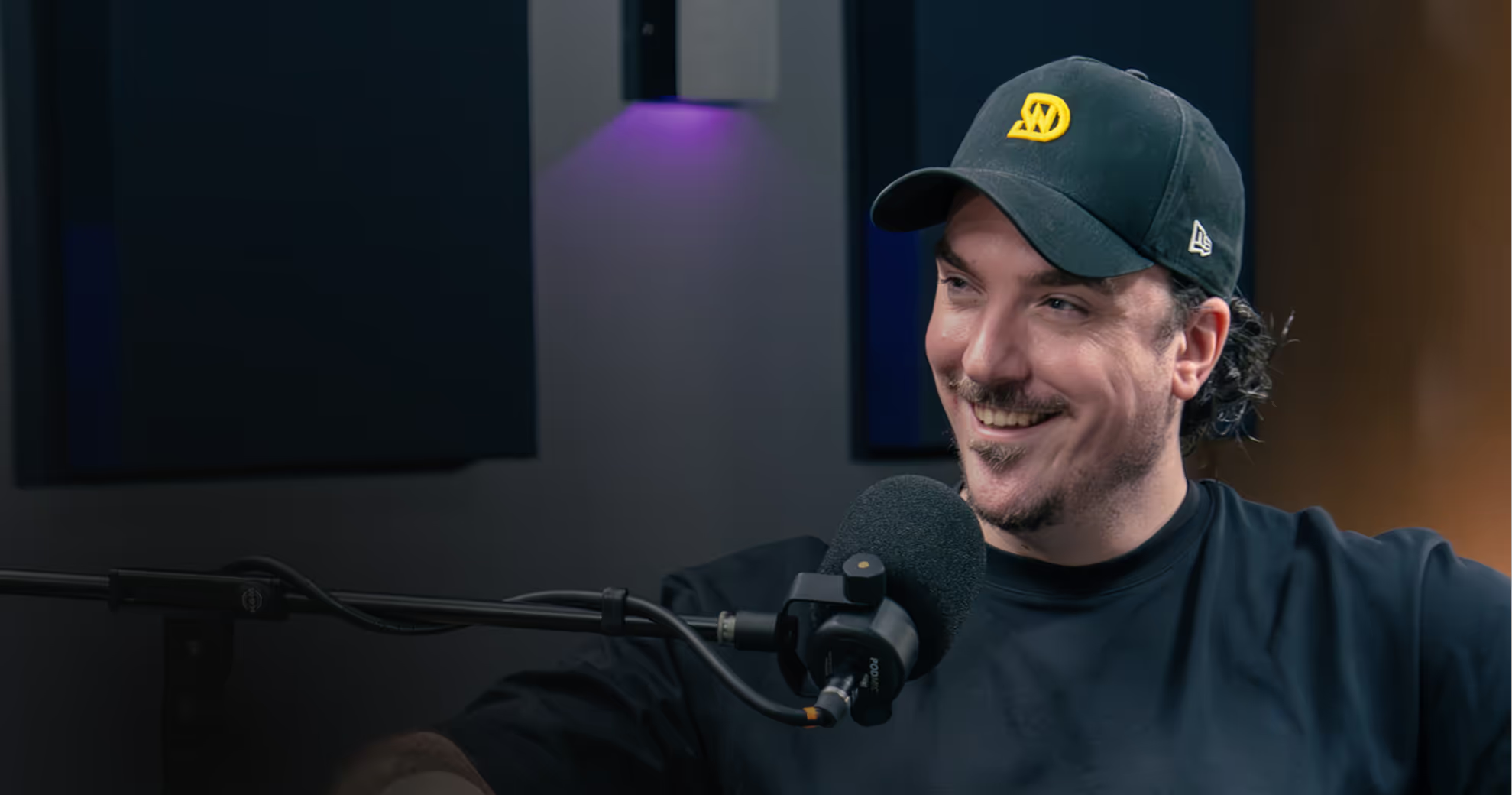
Work With Me

Enquire With Dain’s Team
Enquire For Speaking
Let's Get You Branded
Apply to be a guest

Dive into insights from industry leaders and experts.


Stream now
Dive into expert advice and industry trends.