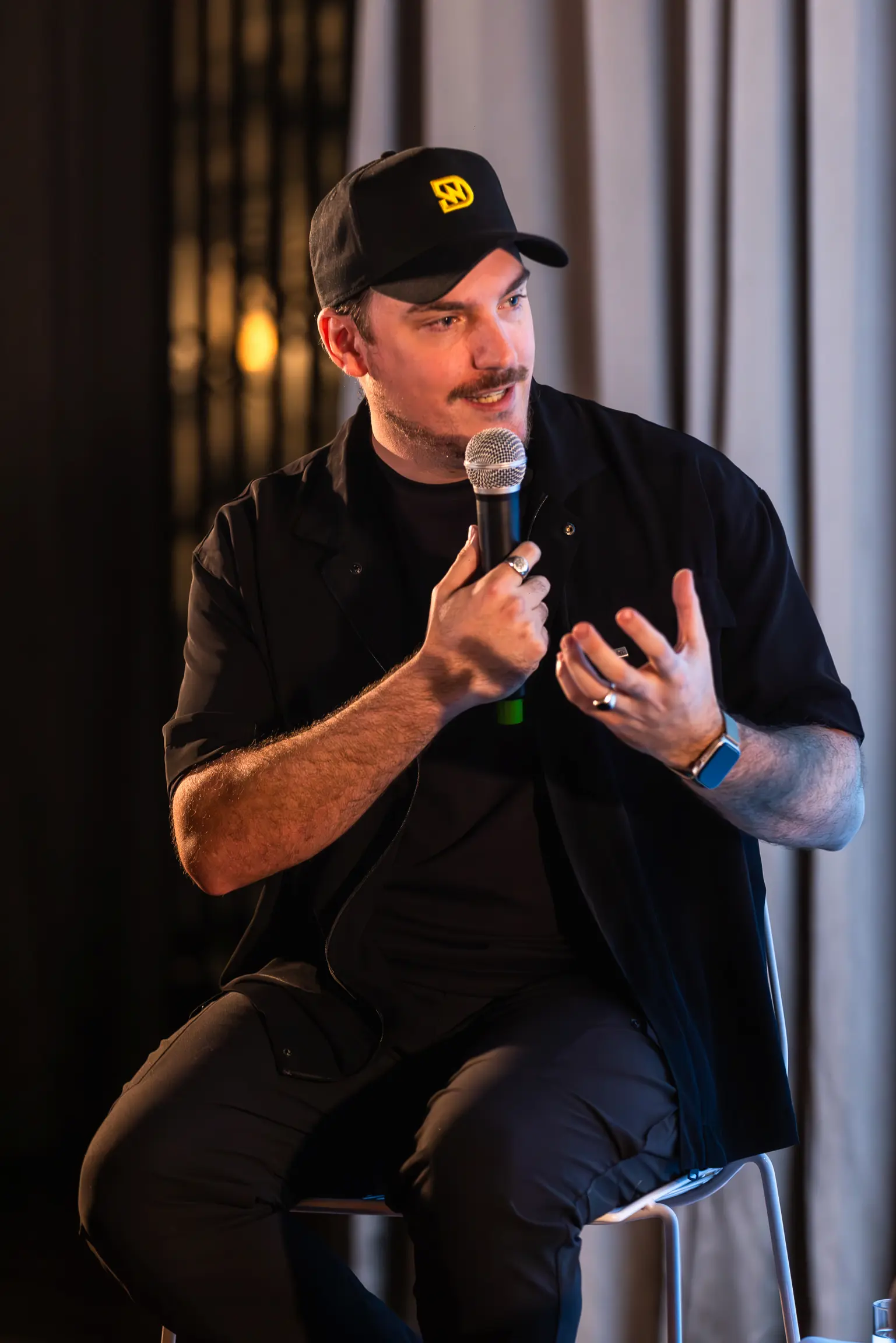
Booking Global Icons in 48 Hours: How We Built Australia's #1 Festival | Mike Christidis

TLDR
Summary
Mike Christidis, co-founder and managing director of Australia's largest independent music and events company, Untitled Group, shares his journey of building a $150M live music empire. From starting out with small local nightclubs in Melbourne to operating massive national festivals like Beyond the Valley and Pitch, Christidis deconstructs the high-stakes reality of the global music industry. He candidly details navigating catastrophic financial setbacks, including a sudden $3.6M loss from a ticketing provider going into administration, managing industry egos and complex artist negotiations, and utilizing data-driven systems to spot breaking global talent. Throughout the discussion, Christidis emphasizes the crucial role of long-term relationships, staying connected to grassroots youth culture, prioritizing real-world community experiences over online noise, and maintaining transparency through industry crises.
Highlights
- grassroots Origins to Scaling a Live Empire: Started Untitled Group with his best friends running a local Melbourne nightclub, eventually leveraging relationships with homegrown talent like Dom Dolla—who originally worked as their graphic designer—to build Australia's largest independent live music business.
- Navigating the $3.6M Financial Hit: When global ticketing provider Festicket went into administration, Untitled Group absorbed an unrecoverable $3.6M loss for Grapevine Gathering to protect fans and preserve community trust rather than passing the burden to attendees.
- The "Uncle Test" for Identifying Talent: Identifies early global hits by analyzing cross-platform metrics across Spotify, Instagram, and TikTok, paired with input from younger, trend-focused office staff; notes that if your parents or uncles recognize an artist, you are already too late.
- Outsmarting High-Stakes Egos & Negotiations: Illustrates how high-pressure negotiations with agents often require strategic silence—referencing a partner holding a 10-minute pause on a call—to maintain leverage against industry demands.
- The "Promoter Mayor" Concept: Admits to the industry phenomenon of "promoter mayor," where promoters stretch the truth on sales speed and numbers to build unshakeable momentum, hype, and FOMO around an event.
- Creating Viral In-Person Cultural Moments: Detailed how securing Nelly Furtado out of retirement for Beyond the Valley led to an iconic stage moment with Dom Dolla, igniting a viral global hit and collaborative relationship between the artists.
- Prioritizing "Non-Negotiable" Real-World Experiences: Focuses on creating high-value, immersive live experiences that audiences prioritize above other discretionary spending, while actively adapting to shifts in youth culture such as declining alcohol sales and rising interest in health and wellness.
Transcript
00:00:00
Who really holds the power in the music industry today? >> The music industry isn't governed [music] by a handshake. It's governed by contracts. Proceeding that, that's where strong [music] relationships really, really matter. And a lot of artists, sadly, make amazing music that just doesn't reach the ears of many people around the world because they failed to make it a commercially viable business. Being, you know, the biggest festival [music] in the country now, we know our
00:00:28
audience and we will continue to adapt and [music] change with that audience while staying true to the what the core festival is. We just want to run the sickest parties. All I know is that nostalgia is back in a big way. We had what was a really great bones of a festival, you know, we had your Dom Dollas, your Bicep, Kaytranada, but we needed that big headliner name. And we're in our nightclub hearing Nelly Furtado edits play all the time. And we're like, we should put Nelly Furtado on the bill.
00:00:59
>> [music] >> Which is fantastic when things go well. What happens when an event potentially goes [music] south? >> Yeah, um so we lost $3.6 million in one day. But >> This episode is brought to you by Wix Studio. Mike Chris Artist, welcome to the Agency Podcast. It's exciting to have you here, man. >> Thanks for having me. >> You're the co-founder and managing director of Untitled Group, which is now Australia's largest independent live music and events company. When you
00:01:33
actually stop and look at everything you've built, what part of this journey surprised you the most? >> I think I think the the the scale, I mean, even hearing you say that, um it is still kind of pinch-yourself moment. I mean, you know, you look at how important relationships are. Relationships need to start somewhere and and in our case, um you know, my amazing co-founders, my three best friends, um we were a bunch of guys with an idea to start a nightclub in Melbourne. Um, we called it Treehouse.
00:02:03
We themed painted themed it up like a treehouse, rolled out a green grass, and thought this is going to be great, white picket fence, etc. And after night one, you know, the whole Treehouse concept was was scrapped, but what we built was a community of people that actually loved the experience and kept coming back week in, week out. So, that rapport that we were building with that the clientele and that customer, making those slight tweaks to the club, to the music, and and we we were creating a venue or a club for
00:02:30
ourselves. So, it was very easy to market to ourselves. So, building that rapport with our with our audience was one. But then also building that rapport with these artists that were coming through this next wave of electronic music, you know, we we mentioned Dom Dolla, um, amazing homegrown success story, first DJ to sell out 50,000 tickets at Marvel Stadium instantly. You know, Dom was our graphic designer back back 13 years ago. Yeah. >> Wait. What? >> Yeah. Yeah. Yeah. Dom Dom >> Dom Dolla was your graphic designer?
00:02:56
>> Not exclusively. Dom was our graphic, but but he would make the the the posters for our club and um, be our resident DJ. So, similar to how we were building that rapport with our audience, Dom was week in, week out. I mean, the guy, you know, all these great artists we work with, Dom Dolla, Rüfüs Du Sol, they were hustling and playing to small clubs and small venues and building up that that rapport you know, rapport or relationships, as you call it. Those artists have scaled those relationships
00:03:23
from being one, three, five people, 300 people in a room, 2,000 people, 10,000 person arenas, and we've been on the the journey every step of the way. So, um, I think like, you know, people will talk about the word relationships and and trust, um, uh, you know, these artists and these people that have worked really hard, just as we've worked hard as promoters, maintain and compound this relationship with any type of audience or any type of artist. And and yeah, I think that's the thing that scale that
00:03:50
we're discussing now is a kind of pinch yourself moment, you know, when we're talking routing tours with Rüfüs Sol and it's, you know, how many arenas we're doing here, how we can tracking this production from here to here, and doing that. And with Dom, we're talking about, you know, the, you know, how we're pricing the tickets of the area, the stadium. So, what are the four price of the seats? What sounds fair there? And, you know, what's the next strategy, the next
00:04:10
strategy? And taking a real long-term view, um is is is a pro- a key to, I guess, um a really kind of fruitful long-term relationship. And just being transparent with what everybody's trying to get out of that objective. But, yeah, I think the scale is still the thing that shocks me, you know? I mean, some of the things we're planning now, I love that I love what we've achieved to date, but you know, these artists, just as we are as promoters, are are quite ambitious. And, um we just want to keep raising the bar
00:04:35
for what music experiences, you know, we can bring to you to the world, really. >> Now, a brief segue here, cuz you said that Dom Dolla was working as a graphic designer. He was hustling and doing shows in small venues. What was it like knowing him before he blew up, and then watching his career trajectory in such a short period of time? >> I think, um there's a common thread that you'll particularly and a lot of people say this about all the best artists that I have to work with. And that is they're
00:05:04
still the same person. And they still hold that same characteristics, the same charisma, and everything like that. And they still have the same time for the same people, you know? Um Dom, Rüfüs, all these artists that we work with, they still work with the same management teams from day one. And there's a lot to be said about that. Is that, you know, a lot of people can change over time when there's, um success comes quick and fast and everything like that, but I I don't think that these are overnight success
00:05:27
stories. I think these are generally artists, you know, he was a promoter running a club night. >> Okay. >> And me and my me and my business partner, Phil, we started a club night competing with him. So, we were going head-to-head. >> Really? >> And then we end up doing a truce where Dom was like, "Okay, I'll come DJ for your club night, and we'll do the flyers." And and that's how this like, you know, these these crazy stories about, you know, you look back at those
00:05:48
periods of time and um yeah, when we when we all went on to launch our next bigger club anyway, um we launched with Alison Wonderland, Golden Features, Parachute Youth, the artists like um Rufus Du Sol played, Peking Duk, and you look at that era and all these artists have gone on to do great things and I think that's the great thing about um you know, why I feel kind of lucky to work in this scene at this time is you look back at the great Aussie pub rock scene of '70s and '80s and some of the
00:06:15
great bands that came out of that, AC/DC, etc. Um and now um you've got the the great club scene of Australia where instead of the pub rock scene where you've got artists getting in a van and touring the country, you've got DJs going and playing clubs all around the country and that's how we're we're really nurturing these artists, building a fan base here, and then exporting that fan base um globally. And we're seeing that now with a lot of our artists on our management roster. You
00:06:42
know, they play amazing slots at our festivals like Groovin the Moo or Splendour in the Grass, building an audience here, but now they're starting to translate that audience to markets like Europe and America and yeah, it's it's really great to see that um it's not, you know, Australia can often be that little afterthought as we've discussed in different uh aspects, but for for for your dance music globally, we're leading the charge. >> Yeah, you made a joke earlier before we
00:07:06
sat down uh that people tend to see Australia as a bit of a petri dish. >> Yeah, yeah. I joke I joke about that because I'm like you can either test something in Australia and take it to the world or if something's working in the world, you can just quickly take it over the you know, the petri dish. I mean, we've got [laughter] some So, you know, you see something taking off in America, everyone's like, "Quick, copy it. Take another name on it, you know?" >> Yeah. Cuz anytime I go to the US or
00:07:26
Europe, everyone's like, "Man, Australia's too far away. I'll never travel there. It's like a 12-hour flight." >> The this is this is the the big issue that we're facing right now is um I mean, cost of living, the cost of our dollar versus the US dollar, and getting artists to come to the country is harder than ever. And we see that also when you there's some it's really funny with social media and TikTok now. You've got people that are posting club
00:07:49
flight posters from back in 2006 or 2008 going, "This is the big day out lineup and that. Can you imagine why don't festivals have Kanye West with Red Hot Chili Peppers with Rufus Du Sol that?" I was like, "Different times. It It was a different, you know, things were cheaper to do back then. But also those artists also didn't, you know, weren't weren't of the scale that they're at now." So, but it's just funny with TikTok when you can compare a full lineup to now compared to 2006 and
00:08:16
everyone's like, "Oh, we were cheated, you know?" >> Yeah, if you think about the music industry and the event space in particular, what do you think is the single craziest thing that you've ever experienced in the music event space? >> The single craziest thing about within the music and event space, I think would be you about when you are dealing with some of the top top tier talent in the world, sometimes you do have egos and some of the demands that you can see
00:08:41
that would put a entire show at jeopardy if something's not adhered to. Um you know, and without going into specific details with artists, but you know, something as simple as why is that trailer not 10 m closer to the stage? We're not walking that distance. If that doesn't happen, show's not going on. And so how getting people to quickly redesign a site, flip something, or artists that will just rock up with no regard to the set time, just say, "You know, we're here now like you're
00:09:10
going to be on stage in 10 minutes." And they have to rearrange the set times, etc. So we as promoters have to quickly j- juggle things around. I think the good thing is now that due to the information for the audience is more informed than ever. And if an artist isn't put if an artist is being a diva or an artist isn't putting in, etc., it doesn't reflect poorly on the show, it reflects poorly on them. And those are the artists that, you know, quickly don't you know, always follow.
00:09:34
And we all know who these artists are because, you know, oh, another rapper cancels another show, or another, you know, uh another festival cancels, your headliner's not rocking up, etc. And there's a lot of um entitled um uh and egos within the industry. Um and then also to counteract that, a lot of people coming in with no actual experience in the music industry just throwing around money. So, without any validation, you'll have someone come in going, "I'm going to do a concert. I've
00:09:59
got $2 million for this artist." And you there's a whole system, you know, you've got your artist, your man artist manager, the agent, um us as the promoter, and there's a really strong relationship between all those parties. For the teams that have been working together for decades on consistent plans. But there's always an outlier that comes in and goes, "Hey, we've got a $5 million offer on the table to play this random castle party in Brisbane." Does anyone know about this
00:10:25
guy, you know? And and you know, we have to go through the vetting process. And and these these things do happen. Yeah, there's a there's a lot of um you know, the music industry is a bit can be a bit of a cowboy space, and um the good operators, we've, you know, built up this trust and built up this rapport over years. So, the great news is that anytime some of these random crazy money offers or anything come in, the agent from overseas will usually come to us and be like, "Hey, do you
00:10:49
know anything about this? Like, should I just steer clear of this?" And um a lot of time it's attached to a questionable figure or a brand or anything. I just go, "Steer clear. It's just it's not >> Can you give me an example of what that might look like? >> I think you see all of these private events that are happening at the moment, and a lot of par uh you know, and it's great way for artists to to, you know, work with the brand or do something, but a brand will come along and and and
00:11:09
throw ridiculous money at an artist. And it's so, let's say we're doing a, you know, a a Dom Dolla show or anything like that. They'll say, "Hey, we've got X amount we want to throw for a a private party." But the reality is is like, what's what are they actually trying to leverage here? Because you have to be super careful. Like, what is this? Is this just a private pop-up for a thing? Or are they going to be these logos embedded around, and suddenly are product shots in this? And
00:11:33
I just need to be more careful than ever with their brand because, you know, they they are a brand they're a business and you see so many artists or celebrities in general that are using this reach to create and and propel their own products. I just need to be really careful that, you know, their performances aren't being used to kind of propel something that they didn't really mean to. >> Yeah, I've seen a bit of this where, um, you know, I've done a few different headline keynotes around the world and
00:11:57
you'll do the photo booth thing, but then people start handing you their products. >> Yeah, asking if they can take >> I I I I gave I I gave you the one in your photo shoot, I'm sure. >> [laughter] >> You you were doing it to me before. Uh, but people get, you know, hold something and they take a photo of it and then they put it on their socials and then you're you're then >> Really bad. >> Uh, you're then attached to that brand in some regard. Could you maybe paint a
00:12:15
picture for me? If if you were to look at an artist and then zoom out, what's an artist typically looking at around themselves that could be, you know, of benefit to them or a threat to them? If you would just to give me a 360 perspective of what it would be like to sit in the shoes of an artist? >> Yeah, I mean, like, and and I I say this to a lot of artists because, um, nobody knows where to start. Uh, the you know, the whole revenue generation of the whole kind of, um, commercial logistics around being an artist and and
00:12:45
where you make all your income has totally changed. You know, this used to be these big record deals, streaming, etc. Um, now with this online your short-form content, etc., we're finding that artists are more brands and and finding ways to engage or monetize their audience through other products, other things, pop-ups, things, uh, merch, etc. Um, but, you know, an artist would generally starts with having a good manager. And that manager and the artist will put together like the business plan about,
00:13:10
you know, where are we Are we a touring artist? We're seeing most of our revenue through live. Are we recording artists? That's going to be trying to get, you know, streams online, which is generally one of the harder ones. Um, are we looking for syncs, which is getting our our our music published on TV or rights stuff like that? Um, and then you've got So, you've got your publishing and and and essentially a good artist has all these spokes that are coming off them like a wheel. You've got your label,
00:13:34
your publisher, your booking agent, your manager, you know, your sponsorship rights, your production manager, and the really good teams have just got that so robust. Um, and then so many artists really just kind of struggle with like one or two of those. It can be It can be the defining thing that makes or breaks them, really. >> If you want to grow your agency, you need more than just a website builder. You need Wix Studio. The all-in-one platform that's built to help you scale. Design smarter in a
00:14:00
hyper-flexible, responsive editor, cherry-picking whatever clients need from pre-built UI elements and templates. Deliver robust back-ends with built-in e-commerce solutions for every industry, letting self-maintaining infrastructure just run itself. Stop reinventing the wheel with every project, and instead, create a shareable design system with reusable assets, apps, and components. Clients growing too fast? No sweat. Wix Studio AI-powered CMS lets you turn a single layout into hundreds of additional
00:14:34
dynamic pages. It's true, more clients no longer has to mean more chaos. Wix Studio gives you one centralized view of every project and makes real-time collaborations seamless. Do your agency's best work at scale. Build your next projects on Wix Studio. >> Let's imagine there's a there's a center point as the artist, and then all the spokes are coming out. What are the major spokes around an artist that they have to get right? And then perhaps what's the flywheel that interconnects
00:15:04
each of those elements for themselves? >> Well, again, um, most important is the manager, yeah. And and again, I I touched on some relationships before, but an artist-manager relationship is super super important because they're ultimately coming up with the business plan together, and and kind of man- managing all the business affairs for that artist. And the manager usually just takes 20% of the you know of I guess the net kind of earnings of of an artist. >> So, that's industry standard. Is that a
00:15:29
good manager will take a 20% clip of whatever the artist does? >> Yeah, it can it can vary but as a standard as a stock standard it's about 20%. Yeah. >> And then how would you flag what makes a good manager or bad manager? >> A good manager would allow an artist to be an artist. Allow an artist to focus on doing the thing they are creative force. They need to be creating their music. They need to be doing that. And have a vision and then how can you turn this vision into commercially you
00:15:55
know viable pathway in collaboration with them. And that's where that that kind of relationship is going can can phrase. It's like some people will take that vision and turn it into something that's commercially viable but destroys the art or the or the or the essence of what that artist is trying to do versus the great artist managers teams that's a it's a it's art it's creativity and it's commercially viable. And you know as I'm saying this I kind of like you know I
00:16:19
think about our business a bit as well when I kind of look at the festivals events that we do. We just want to run the sickest parties. Like [laughter] my business partner and particularly I you know my business partner Phil who's you know he um develop is in charge of a lot of our unique venues and operations and we're driving past this um this warehouse one day and we just went stop stop we have to we have to see this place and it's called the wool store warehouse uh built in 1903 heritage listed um
00:16:46
10,000 square meters all under one roof. Now it was a five story wool store but it's so dilapidated that they all just they just cave the whole inside in but kept the shell of the building and it's so beautiful and we work so hard to to get this um thing going there but again we we we launched Untitled Group at that venue with Solomon. He did this amazing three hour set there. One of the best events we've ever did. Didn't make money off it. The next event that we did they didn't make money off it. Didn't make
00:17:11
that but now we've kind of this this venue's built up such a or and we we saw the long a vision that every event we announced at this venue now is selling out. We've just announced our first three so they've sold out. We've got another kind of six more announcing shortly and um yeah, we like to see that it was sold out, but um >> Just real quick, like what year was that cuz I follow Solomun and I love his music. Was this like 2000 >> Uh this was 2016. Okay, so 10 years ago. Solomun DJ'd for
00:17:39
3 hours in the in the wall store. >> Yeah. >> Then afterwards cuz we were running night cuz we we've we've run night clubs for the last 15 years and they were that night clubs are very much still that grassroots connection to what's bubbling at that very very entry level. What are the young DJs playing? So Solomun DJ'd for 3 hours at the wall store. Went to our night club XE54, DJ'd from 12:00 till 5:00 there where the club was meant to close. He didn't stop so we had
00:18:06
to shut the doors. He kept going till 6:00, 6:30, didn't stop. We had to force him off the security at the store and um >> [laughter] >> He just kept going? >> Yes, but then he's like he wanted to keep going somewhere so we we we threw a little after party at our good friend Alex Donnan's house and this is like a kind of Melbourne folklore. There was no furniture in the house so no one had set up the decks. So we set up this ironing board. And Solomun's DJ'ing on this
00:18:29
ironing board from 7:00 a.m. And as the social media starts going out, people start flooding in from all over Melbourne and the house gets just overrun and I was just kind of like makeshift security. You're at the front door, you're at the back door. And this guy comes in and goes, "Flower delivery for Solomun." And I go, "Oh yeah, we'll take it." He goes, "Sorry, I have to get him to sign for it." I was like, "You're Solomun, okay, you can come in."
00:18:49
And this guy's gifting Solomun flowers, kisses him on the forehead. He DJ'd from 7:00 a.m. to 7:00 p.m. >> [laughter] >> And again, the the police came and shut down the party. >> Wait, so he was DJ'ing at the venue from midnight until 5:00 a.m. Then it became a house party and then he DJ'd the whole day. >> 7:00 to 10:00 at the warehouse, midnight to 6:00 at the club, 7:00 a.m. to 7:00 p.m. at the thing. And again, you go back and you look at like you said you're a fan of Solomun.
00:19:16
Yeah. >> Yeah, I love his music. [clears throat] Yeah. >> You know, we there's a reason why he is the the the king of kind of house music. He loves what he does and he loves his craft and there's such a passion for it and he's turned it into a very viable business. Um you know, but he loves it. He loves it so much and um at the core of it with particularly music you you love what you do and you just want to put either throw a sick party or play these tunes for a great audience or put on a great show or make
00:19:40
good music or release it. Um but you have to find a commercially viable pathway to make that sustainable. And a lot of artists sadly make amazing music that just doesn't reach the ears of many people around the world because they failed to make it a commercially viable business. I'd say probably there's some of the best artists in the world that are just undiscovered just sitting there because they can't actually turn into a business. >> If if they're so talented, what why do
00:20:06
you think that they're not going to get penetration like if if we're coming back to the diagram of like looking at an artist, they have to have a great manager. Is it then the manager's job to make them commercially viable or does the artist also share that responsibility? >> 100 100% No, but that's the problem is that some of these artists being creatives as well um might even struggle getting the right manager. Might even go, "No, this person doesn't sound me. No one does this." And
00:20:29
yeah, we see it a lot with um artists that are just amazing amazing creative forces but then either struggle to work within the ecosystem or don't want to play the game that is the music industry. Um because it is it is it is ultimately a game. It's going um you know, "How can I if I've got a good art or good music, how can I have that resonate with as many people as possible? How do I get that heard by as many people as possible? How do I play with the algorithms of Spotify and these streamers?" And some people
00:20:55
are are purists of the art and go, "No, I'm going to make good music and I'm going to release it and those that want to listen to it can and those that don't." And yeah, I I I truly just believe it's um you've got purists, you've got creative forces that are really good at the art and then also understand the business and then have driven this into like a a machine that's is like you know these these icons of kind of you know this iconic kind of brands and bands and
00:21:22
stuff you work with and and then there's those that just um either either great on the creative force. I will say on the other side of things you get people that are so good on the business side of things and the the the population of that and the music's not that great but they've got an audience that's hooked that's got it and I'm like I don't get it but you know it works. >> If you if you think about then some of the artists of today who would you deem as the person who's equal parts creative
00:21:48
and equal parts commercial even though on the outside they might not appear to be commercially minded? >> I don't think it I don't think it's like it's it's a person that's equal parts creative or equal parts commercial. It's ultimately it's a team that's got it right. You know I mean like one of my favorite I keep mentioning Aussie artist but you know one of my favorite bands is Tame Impala. >> Oh yeah. >> And you know Kevin Parker's an absolute
00:22:10
genius you know and his music really like ranged true but you know he's got a great team around him and and what they've been able to do to to work records in different territories and stuff you know they just got Jenny on the on this um Dracula remix that's now kind of just revamped the track to make it go crazy again and you know he's selling out body of arenas headlining festivals all around the world again and it's just great to see that you know I'd consider him an ultimate kind of
00:22:36
purist of like making great music and doing great thing like that but um he's ultimately got a good team around him that just gets the business side of it so >> And when you say purist what exactly do you mean? >> I mean someone that's making music that's true to them and not making music just because it's what the audience wants to hear you know it's your music's a really expressive expression of the art it's it's the >> chasing the views or the charts they're
00:22:59
trying to create and >> that's actually probably the best thing in terms of the artists that are the most successful as well. I mean, you listen to um you listen to a Rüfüs Sol album, and they've got seven albums out now. You can hear that distinct sound. You know, you listen to a Tame Impala album. >> There's a style. >> There's a style. And I think artists that go chasing the current trend or the current sound or the current thing either lose the old fans, gain some new
00:23:26
ones, but then it's too jarring, you know? >> saw Pharrell um when when he was being interviewed about there was an era where Pharrell Williams was in the Timbaland era, there was a distinctive sound between him and Justin Timberlake and Timbaland and Nelly Furtado and all those people around that era. And he said that uh I think at the time he had in the top 100 he had 10 songs. And he did he did this radical thing where he made the decision to completely change his style. And everyone was saying to him like,
00:23:54
"What are you doing? You're at the top of the charts. Like, just keep making what you're doing." And his response to that was like, "Well, if I'm at the top of the charts now, I need to pivot because then if I just keep doing the same thing, I'm just going to collapse with the next era of music. I need to get ahead of this. I need to tap into the next thing." What's your thoughts around an artist who's thinking a couple moves ahead like that uh where they're crushing it and then
00:24:15
decide to make a pivot? >> I think that's the key to to every I mean, you know, I I talk a lot on the artist front and then but I also speak about us as as booking festivals and programming. Um you need to equal parts adapt while staying true to what your core you know, core either um business or core sound or core um you know, offering is. Um because it's those that fail to adapt with our culture and and trends and times change are the ones that get left behind. And look, you know, um
00:24:47
you know, I know you you you spoke about it from an artist perspective, but looking at it from the festival front, you know, Australia's music landscape has undergone the most radical change in the last decade that you know we've ever seen. You know, we when I was growing up we had Future Music, Stereosonic, Big Day Out, Soundwave, Groovin the Moo etc. And within a matter of 3 years these major festivals that were doing 40-50,000 people per city just completely collapsed. And they collapsed because they failed to really
00:25:15
see the undercurrent of the youth that was wanting something different. And that you know and that undercurrent of youth I know it was easy for me to comment on because that was that was us, you know, we were we were selling tickets for these festivals and going to them. And it got to a point where we were like, "Okay, um you know, you look at the Big Day Out lineups and they're great, but I remember the final Big Day Out lineup had undercards like Foals and Rufus Du Sol and Toro y Moi all these
00:25:37
kind of amazing artists on it. But the the top artists were Blur, Pearl Jam, Arcade Fire. And there's that real polarizing thing about you know the Blur or Pearl Jam fans they just want to go see those bands. And the young people that want to see these new emerging things they don't want to see those headliners. So you're If you try and be everything to everyone >> Oh, I see. >> Yeah, if you try and really kind of like you know cast a net far and wide you're going to you're not going to grab
00:26:04
everyone. But ultimately what it is and this kind of like developing the new sound or chasing it's about kind of that defined scope that you're in continuing to shift it even with the times while maintaining a foot in where you've come from really. >> So when you're looking at putting a show together to your point there if you're casting a net too far and wide you're going to mix a crowd together that don't perhaps want to be together. >> I I I think it's different. I think um
00:26:30
because I I people say that multi-genre festivals are dead and it's it's like oh and and crowds that want to be together you know, I I totally disagree with that because you look at our festivals and we've got amazing you know, amazing electronic DJs like Mall Grab or Kiki or Charlotte de Witte you know, all these amazing techno and house DJs etc. Then you've got the Veronicas on the main stage, you know, belting out some killer classic things. And last year, you know, even something like the Nelly Furtado
00:26:59
who you mentioned earlier, we in 2022, we were really struggling to get a headliner because the whole global industry restarted. And suddenly, every artist is kind of accepting shows everywhere around the world, and this kind of rhythm of an artist who would tour North America, then tour Europe, etc., kind of was lost, and um we we were struggling to get a headliner, and we needed to really think outside the box because everybody's going for whoever released the album that year, etc. And again, going back to that this
00:27:30
grassroots connection of being in our nightclub, Nelly Furtado edits were just playing every week. >> What do you mean? >> As in like, DJs are playing house music and stuff like that, but then they throw in Maneater or Promiscuous Girl and stuff like that, and the club club would go crazy. >> So, this is maybe 14, 15 odd years past the prime of that song, and they're still hitting the club. >> was retired at the time, right? >> So, she had she hadn't done a show in 5
00:27:52
years. >> Woah. So, you were like, okay, she's playing in the clubs [clears throat] all the time. >> Yeah, it's funny. It's this um uh we were we're kind of trying to figure out what the peak uh nostalgia point is. >> [laughter] >> So, I read this paper online. It's this nostalgia curve that kind of like nostalgia peaks at 16 years, you know. Yeah, cuz it goes from like um new, dated, retro, nostalgic, and there's like this 15 to 18 year thing. And when you look at it, and it's like
00:28:17
that's where the 2010s are really kind of popping back now, you know. >> You believe it's true, 16 years? >> Oh, look, I don't think there's there's true rules to it. All I know is that nostalgia is back in a big way. >> Yeah. >> We had an amazing lineup that year, and it had >> What year was this? >> I'm going to say 2023 because um when we came out of hiatus, we you know, Australia came out of hiatus uh late 2022. And we were continually
00:28:41
booking lineups, trying to get the next event on. We were going to do drive-in cinema concerts, so like people would be on stage and tune in their car. You know, when we finally uh were able to kind of resume mass gatherings again, um we had a lineup ready to go. So, we were on the news that evening basically announcing Beyond the City, which was a you know, a inner-city version of Beyond the Valley. Um which, you know, it was 2 days at Sidney Myer Music Bowl and you know, sold you know, 50,000 tickets
00:29:08
there cuz we we were we sprung back to it so quickly cuz we had the team that was fully engaged trying to run events even when we couldn't run events. Um trying to do new things and um basically when the world did resume, we were first to it. So, we rolled out Beyond the Valley, Beyond the City, we did Grapevine Gathering. We had all these lineups ready to go and that built this big steam of momentum. So, when the actual rest of the world really re you know, um came back online, there was every event company in the
00:29:35
world was trying to restart and book the talent pool >> At the same time. >> same time, which just doesn't happen, you know, it's like it's it's it's like go and then everyone's gone. So, you're trying to book any artist that just released a song on on cycle. And we were really struggling to get, you know, that that big name that sits at the top. And we had a whole bunch of amazing artists on that bill that you had can can >> Can I interrupt? Like, is it because you
00:29:57
didn't have the budget for for the big names cuz everyone was fighting over them? >> No, um I think because because every festival, you know, restarted in in that same time. >> But they had the connections, they had the relationships. >> yeah, and that so they've just gone and they've just taken all this this big talent pool around. And so, we had what was a really great bones of a festival of the amazing artists that we're connected to that we know, you know, we had your Dom Dollas,
00:30:20
your Bicep, Kaytranada, you know, uh I've got a lot of great bands on there, but we needed that big headliner name. And we're in our nightclub hearing Nelly Furtado edits play all the time. And we're like, we should put Nelly Furtado on the bill. And we were all for it because we it's you know, it's something for us equally so, but we're like, oh, will will will the audience get it? And I was like, how will they not get it? It's just it wasn't how many bangers she's got. She
00:30:45
is an absolute pop icon. So, this is where this guy kind of sequence of kind of artist manager agent etc. go. So, we hit up Nelly Furtado's agent, who's [clears throat] and you know, one of the biggest agents in the world, does a lot of like, you know, does Kylie Minogue, does all these great acts. And we said, you know, "Hey, Beyond the Valley it's such an a culturally important moment. It's you know, biggest festival in the country for a while. We really want Nelly." He's
00:31:10
like, "Thanks, but you know, she's not doing shows." I'm like, "Yeah, but this is the thing. Thanks, but no thanks." And there's an amount of times you can kind of realize like, what's the angle that, you know, we've got to get through. And and we kind of found this this this kind of thing cuz you got to look at what drives an artist. And Nelly hadn't performed in so long. So, she hadn't had an opportunity to really kind of play for she's a you know, amazing
00:31:31
mother, play for her family, bring her daughters along etc. So, we said, you know, "Let's fly the family out. This is going to be a great performance in Australia. It's a market that's a I feel like a bit more forgiving, you know, a bit like less pressure in terms of like, come to Australia, it's a you can treat it like a holiday, do [snorts] this, do one show at a festival." And we got that number. And I'll never forget this because it was actually only 48 hours before the
00:31:54
announce. >> So, so you'd reached out to Nelly Furtado and how many times did you get rejected? >> We got rejected four or five times, I'd say. Yeah. >> But then he somehow landed a call with her. >> No, no, it's her it's her it's her agent. So, the agent the agent who deals with the manager. So, we go through all the agents and going back to this kind of ecosystem of of who you trust. So, um every artist has a manager that's responsible for the commercial, you
00:32:18
know, building out the business then. And then the next point of call is an agent who deals strictly with the live performance shows and deals with promoters like me or around the world. >> So, they're the bridge between the manager and the event company? >> 100% yeah. Yeah, think of an agent as um probably the the worst case scenario would be um Ari Gold off Entourage. He's an agent. You know it? You got You got You got good Ari's and you got bad Ari's. And And it's literally So, Ari
00:32:44
Gold is actually based on a real world character, you know? And then >> I didn't know that. >> Yeah. Yeah. Yeah. There's these >> [laughter] >> Uh there's these big agencies like WME, CAA, UTA that essentially are massive massive companies that control the major talent pool. Um and you know, a lot of these are great companies and they just have different, you know, uh I feel like um you know, key eight players that work with the key players around the world. Now, when we were
00:33:12
coming up through the ranks and we were trying to book talent for Beyond the Valley, we'd always have to go through third party people that would kind of validate us and we'd go over to LA every year, sit in the foyer, request meet you know, these >> How are you going in like physically >> Yeah. >> into the building to try to get in front of the agents? >> Yeah, cuz we wouldn't get responses over emails till all the time. Um and I didn't I look back at these now.
00:33:35
Now I know how the system actually works. >> [laughter] >> Again, trying to hustle a relationship and looking at that now like being a you know, 22-year-old kid with a book printed off A4 like here's our festival with like color things on it. I'm like >> [laughter] >> I look back at it so embarrassed right now, but we would sit in the lobby, we'd wait and they'd say oh, sorry, he can't He might not have time till 4:00 5:00. No, we'd we'd wait for that agent to finish up
00:33:59
with us. And sometimes they'd send the assistant down and the assistant would have the meeting for us. Um but the great thing is is that, you know, we kept chipping away and we got our foot in the door, we proved ourselves with a few like agents that were willing to take a chance with us. And now we built that rapport up with some, you know, of the biggest agents in the world. So, uh this particular agent Phil had a relationship with and because she represents so many different artists, um Phil would always call up about another
00:34:26
artist and then naturally bring the conversation go, "Hey, back to Nelly for a second." And um And it became this [clears throat] ongoing thing where we said uh just drop please drop it. And he made me join him on the call. He goes, "I want you to be there so you know, I'm not skewing the truth or anything cuz we've got 72 hours to announce, you know?" >> And and can you just give me an example of like two announces what exactly is that for the listeners? >> Yeah. So,
00:34:51
your festival announce is everything. When you reveal your lineup, um that's when all eyes are on you. Your your audience ultimately decides, "Okay, is this a good year that I want to attend? Is like who have they got?" There's there's so much speculation >> maybe the moment where they're going to make the the most eyeballs to make the the decision. >> Yeah, yeah. And ultimately um I think you know, being you know, the biggest festival in the country now, we
00:35:13
open ourselves up to uh you know, you can't be everybody's cup of tea. And I think that goes back to that element of um do you educate the audience or just give the audience what they need or want? >> Yeah. >> And I think that's what uh Untitled and particularly our festivals are really good at doing is we we know our audience and we will continue to adapt and change with that audience while staying true to the what the core festival is. >> Okay. >> You know, we're not just going to keep
00:35:42
jumping around and um that when you look at that year for Beyond the Valley, it had all the right elements to be a good festival. The only thing that would make it a great festival was the X factor. >> Yeah. >> And that was Nelly Furtado. And um >> So, you get on the call with Phil? >> We get on the call with Phil and um Nelly's agent. And naturally, we started the call talking about a different artist as as per the plan. And then said, "Hey, just back on Nelly, look,
00:36:08
there's just this short window because we've got this funding from blah blah blah. Um what's it going to take?" And the response was "Look, you guys aren't going to like the number. Like it's you know, you can I can give it to you but you're not going to number." Gave us a number and there's that silence where we're all texting each other. I message is going around. Yeah. >> so what did Phil say? >> Yeah, okay. So, we didn't think it was
00:36:30
over when we heard that we're thinking, "Okay, it's going to be that." And she said, "Okay, minimum We're both like, "That's That's like we can I think we can afford that." You know, and this is where things get really funny. So, we just we're texting away. There's silence and she's like, "Boys?" I'm like, "Yeah, just 1 second." And we get the approval, so we send the offer off. And she laughs and goes, "I I love your your enthusiasm, but you
00:36:55
know, I'll be back." Go to sleep, wake up the next day like a kid on Christmas. "Hey guys, now he's interested. Can you please elaborate on this? Travel, travel, travel." Now the clock's ticking. We've got 48 [snorts] hours to announce and these are usually week-long negotiations. So, we've compressing this negotiation to this really condensed period. It's the night before the announce and we're not we haven't heard back and we we we're desperate. We need artwork change. We
00:37:20
need that. We've got to let Triple J know. And we're getting desperate and we haven't heard anything and we're going, "Oh, what can we What can we offer? What do we Add more flights. Add flights for the family. Add this." No, we're doing no and play it cool and there's this kind of element of like a good agent will want to get more and more out of the promoter, you know, make the promoter sweat. And they got to this point where we were about to offer a private jet. We said,
00:37:42
"Look, we'll just jet the whole family over a private jet from the US." And that's when my business partner Phil stops and goes, "Hey, have you Have you ever taken a private jet? Do you even know how much that costs?" Private jet from the US, as you can imagine, is >> Is a couple hundred grand. >> Yeah, yeah, a couple hundred grand US. And we're like, "No, no way." So, you know, we added them some, you know, business class flights to fly the rest
00:38:03
of some of the rest of the crew over. And look, honestly, again, signs of a good agent and a good relationship and the rapport that we'd built up, we were able to get an email back that said, "Thanks, guys. This is confirmed. Good to go. Good to announce tomorrow." And we announced No If Ands Or Buts on that lineup without um, you know, we were going to go through the actual contract process. We're going to go through all that um, you know, I spoke a bit before about the the kind of handshake deals or things of
00:38:33
the music industry and the reality is is that the music industry isn't governed by handshakes or or governed by relationships. It's governed by a contract and governed by term sheets and things and and embargoes and um, money in trust etc. releases. There's a There's a strict process, but preceding that is ultimately sometimes a word, a handshake, a deal, a level of respect. Um, and I think that's that's where strong relationships really really matter because we could be
00:39:07
3 months into negotiating an an artist deal a headliner for Beyond the Valley or a huge tour and then suddenly a another festival in the country will come along and say, "Hey, we really and just they're desperate. They'll throw double what our fee is at at an artist." And we're at the point of kind of we've agreed on terms. We're about to sign the contract. And a bad artist team or a, you know, someone that you don't have that that strength relation with, they could go,
00:39:34
"Hey guys, sorry. This has come along and, you know, just just no no contract. It's not signed. I don't think." But a good team is like, "No, we've given you our word. We'll stick to it. We just want you to know that here's what we're forgoing." And a lot of the time um, that honest discourse is is what it takes to build those really really meaningful relationships. Like um, sometimes an artist team knowing you know, what they're either forgoing or or or or why they're working with you
00:40:01
over other people. So, you can double down on that or understand that. And similarly so, knowing what are your limitations are as as a promoter, you know, sometimes um, you really want to book an artist, but you're you're capped out financially, but what else can we do? How what What positioning on the bill do they want? Is it album promo? Is there things that we can offer? Um and I think that's a way of kind of getting creative of kind of you know, good relationships about you know, mutual
00:40:28
benefit and um understanding the wants and needs of and um and and drivers of that other party. Um and just trying to be the best for them to to sit fit that. And I'm not saying that every relationship has to be you know, oh what what are we both getting out of this what are we doing? Sometimes it's just a good relationship and it's like, I respect what you do, you respect what we do. Um but we've got that even with international promoters now that we're planning some international shows with
00:40:53
next year. We're actually excited to that. >> Okay, so so Nelly agreed, she came out, you guys crushed, and it totally worked, and the audience and the fans loved it. >> Yeah, I mean, not only did they love it. Um you know, culture is ultimately a collective of individuals, you know, people coming together for a shared, you know, experience of a shared shared values, belongings, etc. That's what, you know, culture is kind of coming together. And so ultimately, I think like a a festival or events is is is a
00:41:22
vehicle for culture to kind of breed or or change or adapt, etc. I don't want to sit here and say like, you know, we're we're making culture. We are the culture, you know? But we have a part to play in shaping it to an extent. Um and the reason why I say this is uh there was a viral song going back to these edits. Um Nelly Furtado had a a viral song called Say It Right crossover with Bicep Glue. Um Bicep were playing the festival, but them and Nelly were on a different day, and Dom Dolla was
00:41:49
bringing in the New Year countdown right after Nelly. And we said to Dom, "Hey, this song's going viral online. You should play the song and get Nelly to come out and sing it live." So, this song that's got hundreds of millions of views on TikTok and everything. Yeah, Dom and Nelly get, you know, practice this moment together, and Dom brings in the New Year, goes, "I've got a special guest for you." Nelly Furtado comes out and plays that mashup, and that becomes a viral moment, which goes on and on.
00:42:15
And then through that, Nelly and Dom then form a relationship, start writing music together. Nelly starts, you know, appearing on Dom's festival performances at Coachella overseas. And and sometimes it's these kind of like ideas that start as like a little catalyst that can become on to like a little global kind of thing. And that was the first time that we did that viral moment, and we were kind of like, "Okay, for New Year's Eve, Australia is one of the first economies, major economies in
00:42:39
the world to to to to tick over the new year. And all eyeballs are on us because there's globalization of content right now. People in the US are going, "Oh, what's going to happen in New Year's in Australia?" So, what we realized is we can create that moment every year. And so, the following year, >> Oh. >> Yeah. The following year, uh Rüfüs Du Sol were headlining the festival. Um and Dom wasn't even playing the festival. And, you know, obviously those two are the two like just just biggest
00:43:05
global exports Australia has going at the moment, which we're very lucky to have worked with over their career. And, you know, just so grateful for the relationship we have with those guys. You know, Jon and James from Rüfüs are amazing DJs and love popping up. Like, they're very much embedded in that culture of going, "We have our live show, but we just want to get up and do a DJ set as well." And Dom wasn't at the festival. Um but Dom was like, "Hey, I'm going to
00:43:27
come in and do like a little pop-up performance." So, we've got this thing called the Dance Dome at Beyond the Valley, which is just like the best dance music stage, I believe, one of the best dance music stages in the world because with the sound limits we get, the design we have, etc. It's this beautiful stage. And um Rüfüs Du Sol and Dom Dolla both did, you know, uh pop-up surprise sets there uh back-to-back, and it kind of became a um yeah, again, another viral moment. Like, like, watch Rüfüs Du Sol and Dom share
00:43:56
the stage uh after DJ at this festival Beyond the Valley. And the problem is now you then kind of want to one-up it and you know, chase all these new kind of big moments. And we've had some really cool things. We had um Sugar Babes and the other year uh Jo Jo played last year which was really good. Temper Trap was a was a was a absolute like highlight for me last year because they played to 40,000 people in the amphitheater. And again, Sweet Disposition is streaming at its all-time highs ever
00:44:24
right now. Now, for those that know Sweet Disposition, that you know, amazing song. I remember enjoying it at the Big Day Out in these huge crowds, you know, oh man of that Audrey. And I was at Beyond the Valley and 40,000 [snorts] people again, that moment came back. >> Yeah. >> 15, 16 years later and I was like, oh it's so great that we could facilitate this new kind of moment and era. And and I say this because um you know, my parents and I think a lot of the you know, people in Australia will talk
00:44:56
about these iconic moments of I remember AC/DC shut down Bourke Street and did this thing there or do you remember when Powderfinger did this or that? And I was like, well, you know, it's going to be great. Like, now [snorts] we'll be telling our grandkids, do you remember when you know, Dom and Rufus popped off at Beyond the Valley? Oh yeah, I was there, your pops was there or something like that. Um but it's these it's these checkpoints in time that I think are just great to be
00:45:21
kind of part of participating in and creating in culture right now. >> Yeah, one of the things that you mentioned that you do is that your venues, uh you actually walk around the venue as though you're an attendee, uh kind of like in situ. And and I'd like to understand why exactly are you trying to place yourself in the uh kind of in the eyes of the viewer or the attendee or the fan of of your venues? >> Yeah, um I mean, when we started this company, again, we we found a gap in the market
00:45:47
which was a club night that was based more around community and music. There was a lot of club nights that were just, you know, after the wrong things. Like, you know, bottles of just girls or different, you know, we This was a about community and music coming together. So, we created a product that was targeted as us as the target market. And we were able to kind of build upon that and build upon that to a bigger club to a bigger club. And then we said, "All right, there's a gap in the market for
00:46:13
the festival market right now, where dance music is being underrepresented." Um so, you know, we grew up going to Falls Festival and Splendour in the Grass, which are predominantly a lot of bands playing there. Um you know, Beyond the Valley went up head-to-head with Falls Festival. Um and ultimately kind of because we were more in touch with the undercurrent of the the the cultural shift in the music tastes of youth at the time, Beyond the Valley's come out as as a you know, a top festival.
00:46:38
Um but we were always developing products and things for ourselves. And you have to you know, you have to at at a point realize that what what do I want and what does the audience want? And it's it's actually one of my my favorite Simpsons quotes. It's uh "I used to be with it, then they changed what it was, and suddenly what I'm with >> [laughter] >> isn't it. And now everything's scary and weird. And it'll happen to you." But the reality is like I I I'm front
00:47:04
and center for my shows because I like just like you could learn so much from a customer survey data, how a crowd goes, etc. You learn so much more through just standing and having a conversation with someone in the audience. And go, "Hey, what did you think of that?" "Yeah, oh man, this is my favorite Beyond the Valley yet. This stage, I like how they've changed this, I like how they've changed that." And we take all that anecdotal stuff on >> tell them that you are in the venue.
00:47:27
>> No, you don't. No. >> So, you're just going in as if like, "Oh yeah, what a sick show." >> Yeah, yeah, yeah, yeah. Yeah, like like like like like undercover boss type thing, you know? Um but the reality is is that I do that, and then someone will come along now because we've done more podcasts and things like Dylan Friends that are our audience sees us on, and someone will come over and go, "Aren't you Mike?" And I go, "Yeah." They go, "Don't you
00:47:48
organize this thing?" And I go, "Yeah." And they go, "Why are you out here?" And my answer's quite simple. I say, "Why would we put on such an show to be back there not experiencing what we've created? And and how else am I going to know what to how to make it better, you know? So So we're we're out in the crowd in the audience at at every one of our shows. >> What's one of the weirdest things you maybe you picked up on um being out in the crowd at one of your own events?
00:48:14
>> My favorite thing about the um being out in the crowd is finding the different choose-your-own-adventure characters. Like [laughter] Like there's we call them side questers. There's people that like There's the >> What are the different characters? >> Oh, there's the side questers that like you know they're always like, "No, we're going to go to this campsite. Wait, my friend's having a party." Then they're going to do this and they miss the main
00:48:31
act. There's like the the the loyalists. There's the dance dome people that literally front and center at this the dance dome stage which just want to dance and doesn't care who's playing. There's the, you know, um there's the adventurers because I've been at the Valley we've got so many experiences. There's like a wedding chapel you get married. There's, you know, there's a lot of health and wellness stuff there at the moment now as well. We've got,
00:48:53
you know, QE did a amazing installation last year with the sauna, ice baths, etc. We had a run Solomon did a run club last year. Uh 4,000 people signed up for that which is just crazy. Um but yeah, yoga, talks, podcasts, uh the food experience is amazing. Um So yeah, it it's a choose-your-own-adventure type thing and I guess what I love is like all of being out in the crowd finding the different characters that all have a different adventure. And often I'll join some of them for an adventure. Um and
00:49:23
it's quite, you know, it's kind of fun. I was like, "Oh, really? You're going to do that?" And they're like, "Yeah, I haven't checked it out. Come on, get in the buggy. Let's go." And they're like, "Really?" And I love that because like, you know, I think um when I was going to events like there was there was the big dads where they were You didn't really have a connection to whoever was organizing it. They're great people and putting on
00:49:43
great events except um I think now peeling back the layers and people can understand there's a bunch of people that really care about what this event is and what we're putting on and what we're trying to do. Adds a human element to it which I which I also like because um if people just treat you like a product, like I guess it's like that, they can be vicious. And we live in a in a day and age now where it's better to comment something negative on a flyer, better to do that,
00:50:09
you know? We had an amazing pop star Addison Rae on our lineup last year. So, amazing performance to be on the valley. Everyone loved it. Um but, you know, she's she's very much come risen through the ranks quite quickly and was quite polarizing on the lineup with people commenting, "Oh, why Addison?" This and that. And I was just like, you know, people can be very negative um quick to negative if online. And that's why I think like why I love what we do as well. We're
00:50:37
getting people off their phones and in real-world experiences, you know? A human connection through moments that matter is what we're we're all about. >> When you think about culture and how it shifts and how these big companies kind of get caught up in the the monetization side of things, what is it that these bigger venues tend to miss? Because music is one of those weird things where it's a product but it's not, it's also art but it's not, and and there's so
00:51:05
many layers to it. How can you predict culture? How can you understand how to stay ahead of that? And what do you guys do as a team to be on the bleeding edge of culture? >> Mhm. I think the biggest thing is you can't buy culture. You can't buy your way in to all of these things. It needs to be earned or developed. And um that's why a lot of um you see these new festival brands that will pop up or we are really good at celebrating our own festivals and events. We've had a lot of
00:51:33
big international brands try and come here, your likes of like your Sydney City Limits which was Austin City Limits or Download Festival or Rolling Loud recently. And we just don't adapt to it because it's it doesn't feel genuine. It's not an an event that cares about the local market or or it connects with it. It's basically just slapping in and coming in. It needs to be thought out and and and um curated or adapted for our market really with people on the ground that care about running and doing it. I'm not
00:52:00
saying it's always that that way but this whole um element of culture is like um it's it's developed over time thing otherwise it's just a one-off kind of, you know? >> So, if you if you can't buy culture, how how do you then make sure that you're good stewards of it and you're paying attention to it? >> To not disregard the participants or the people that are in those communities that this culture is kind of being defined by because that's where I think a lot of the um the
00:52:27
bigger companies or or the festivals that um might have collapsed in the past kind of lost their way is um they didn't know how to have that discourse and I think um we're very big on surveying our audience and taking up on a lot of feedback. Um but that can come in all different forms, you know, we've got a team of 70 in Windsor in Melbourne and our team is very young and our great team that we've got at Untitled they don't really operate in silos. We've got people in the finance
00:52:56
department that'll come in and be like, "Hey, you should do this." So, we've got people in marketing that comment on, you know, "Oh, what about this act or what about this event concept?" And that's what I love. I love that kind of like um cross-pollination of people that are actually passionate that are in the industry cuz they they they they love it. And so, you know, we'll take artist suggestions from everyone. I look at our office Slack and I see and someone's
00:53:16
like, "Who's on tunes today?" Yes, cooking this and I love just seeing that participation discourse. Um to give you an idea of how sometimes granular it can get there was a um an artist called Yeat y e a t's going to be a very big rapper now and um I just hadn't hadn't no idea who it was. And the agent pitched it to us and said that you've got to book this. He's the hottest rapper. He's he's going to blow up. But every agent pitches like that. So, every everything that we get is
00:53:46
going to be the biggest thing and you're making a huge mistake. You know, I mentioned the Ari Gold parody before, but yeah, I mean, some agents will literally just abuse you for like not booking their artist. Or or better or worse, like when you go to book the artist and you just give a fee that you think that they're worth, they go, "This is insulting. You know he's playing this show in in Detroit, this show in that." But it's like they don't get it that Australia is very
00:54:12
different. So, >> Can you Can you give me an example maybe how like rapacious these calls get? Like how intense are the conversations? Are they swearing? Are they yelling? Like When I think of Ari Gold, I think of someone who's just flying off the handle. >> Yeah, I mean, here's the thing I I So, I act as a promoter within the team. So, my business partner Nick acts as a promoter. He's a director of touring. Um you know, Nick's a promoter for 60-plus tours. I don't know how he
00:54:38
manages all that. Um but as the promoter, you are the one that has the relationship with the agent. Agent feeds back to manage it. Manage relationship. Sometimes we've got the relationship with the artist or management ourselves, so we might side bar. And if you have a conversation with management and like you're going around the agent, you will get a call. "Why are you talking to them? This is this this and then you know, we're never working with you again." The amount of times I've been
00:55:01
told we're never working with you again. And then 2 months later get a get an email, "Hey guys, would love to have this artist on, you know?" Um it's kind of Yeah, it's it's a really I I think a lot of industries probably you'd say are might be emotionally fueled. But the reality is with um music is really fast-paced in the sense that if an artist is breaking and they're hot, all eyes on them globally. So, we're not just competing against the festivals in Australia.
00:55:30
Particularly for New Year's Eve, we're competing against money in Vegas. Or do they want to spend time in this another territory, you know? And I go to the festival circuit every year, you know, we go to Coachella every year. I like to go to Glastonbury and all these other festivals around the world. And see, okay, what artists are really breaking there? And can we see a trend before they come down to Australia? >> What I think is really interesting about this is you're not just sitting behind
00:55:52
your team, sending your team out there. You yourself are out there attending venues, sitting in your own crowd. >> Yeah, I think it's um I think it's like a multi-faceted, you know, you kind of like cuz anybody could go and see a performance and go, "That was amazing." But, you know, is it going to translate? Like, let's let's talk to the label. Let's go ask people in our office. Let's look at our survey results to see where they polled. You know, we could pull
00:56:14
data from Spotify and see, you know, how many listeners they've got in the region. Is that spiking? And it's about finding those artists and those trends that are actually hitting all of the touch points. >> What are some of those touch points that you look for to give you a sign that this is an early artist that is about to break through? >> Uh metrics rising metrics that are consistent across a multitude of channels cuz that shows real fandom. Like, if it's just Spotify streams increasing, they might
00:56:42
be an artist that's just getting good streams on playlists. But, if you're seeing their Instagram following go up, their TikTok go up, you're seeing their mentions on things in in the territory kind of go up. And then, there's the ultimate test. Like, you know, if you're asking the cool people in your office or the cool, you know, people in that audience and they're going, "Oh my god, yeah, you have to get that." They're the first to know. If you're asking
00:57:05
your mom and dad or uncle and they know, you're too late. >> [laughter] >> You're too late, you know? >> Yeah, you have to find the the people that are into the niches in the office and all that. >> And I think I think that's the hardest thing is that like um you know, I'm very, you know, we spoke on, you know, vertical integration and how much the groups evolved and changed is that I love music, but it's such a broad spectrum of changing genres, artists,
00:57:28
tastes that um I think like I think a big thing for us at Untitled now is that, you know, a the four managing partners and our amazing team, um you know, we we've built up a lot of um relationships and rapport over the years, but now it's about how we can start trying to transitioning a bit of that, you know, institutionalizing, I guess, some of that kind of rapport relationships and and kind of passing on to the next wave of senior promoters that are kind of coming up in our team or or, you know,
00:57:59
the just the next wave of >> the next generation, right? You know, I know you know, I spoke about agents. We've got a great agency that we've developed from scratch, Proxy Agency, represents over 100 artists across Australasia, and you know, that's got the next wave of great >> agents coming through who do things a bit differently. They don't yell it, you know, it's it's about, you know, being doing good business and I'm with good people, and you know, now our management
00:58:20
roster's really starting to take off those clients, but um you know, with that, you know, I used to be an artist manager. I used to manage a a lot of artists, and um as an artist manager, you're the banker, the lawyer, the therapist, the accountant, you know, and um I I I I kind of like the position that we we're in now is kind of harboring the ecosystem to build up this next generation of talent rather than trying to be the promoter, the agent, the record label, etc., you know, I think we've just got a really good um
00:58:48
platform to to kind of build out something special here. >> Okay. So, for being a little Machiavellian, and we're looking at how do we navigate this world and how we navigate the power spectrum and the ego spectrum, um who really holds the power in the music industry today? Is it the artist, the manager, the agent, the promoter? Who Who do you believe actually maintains the highest altitude in the industry? >> It It depends what type of business model the artist has, you know, if they
00:59:15
are If you're an artist that is, you know, if your business is predominantly in the US, and you're getting to a point where you're an arena artist, ultimately, you could say the you know, big companies like the Live Nations that control those arenas or the or those amphitheaters that are the venues that those artists know they need to play for that next stage of their career holds that power. Uh because the artist needs them or their venues or their things to kind of propel that next stage of their career.
00:59:45
Uh but ultimately, if you're an artist that's really breaking and it doesn't matter whether you play this venue or that venue and there's two or three promoters that are all vying for you, the artist holds the power. >> Right. >> You know? Um I'd say that's a kind of pretty good balance between like the the artist holding the power. In some cases, like when artists make the wrong choices or get put into contracts or deals etc. that doesn't don't favor them, that's
01:00:09
when um you know, a promoter or agent or somebody could might hold the power here. >> I've noticed that there's been some trends as well. Like you take someone like uh Fred again who is doing spontaneous events that is creating a bit of uh urgency and you know, if you don't pay attention, you're going to miss out. Those kinds of things. So, have you seen some new strategies recently that artists are starting to deploy to build that fandom? >> Yeah, 100% um the I mean, just the way that we're
01:00:37
consuming music, the way that we're consuming live events etc. has all changed so much over over the last decade that talk about holding the power like Fred again has such an engaged audience that he realizes, "Okay, let's do things a bit differently." I mean, announcing bloody stadiums a week out and doing things like that cuz he knows that he's got such an engaged audience that he can do this and >> Some of them are like a day before. >> Yeah, yeah. >> announcing at 6:00 p.m. like, "Hey,
01:01:01
tomorrow night at 10:00 p.m. I'm going to be here." and then it sells out. >> Yeah, it's >> That's power. >> That is that is power. And and then going back to it, if if you're hot, you're hot and you have the power. Um but if you're in the in a development mode, you you might need a promoter to take a chance on you. And you know, we work with a lot of artists that are like or agents that particularly agents that are the good agents that say um "Hey, I know I'm working with you on
01:01:25
this act and I know I've delivered this act, but can you give this act a shot, put them on this stage? Um they're going to be big in a few years, and taking that chance early on, I think is another big thing that artists will remember. But then you also look at just this current um climate economic climate that we're we're doing shows in, you know, you see an artist that sells out big arenas or stadium shows, etc. It's not as lucrative or profitable as people would think, you know, these the
01:01:54
the the with the ticket price that we have to charge, the amount of money that goes feeds one to the ticketing fees, to the venue hire, to the cost of doing the production, to market it, to the amount of crew that they take on board. People think that artists um and similarly, sorry, you know, promoters are you know, cash machines doing these things. So much of it gets reinvested back into that you would be absolutely surprised by how many artists are doing shows at a massive that are just breaking even, and
01:02:22
they're doing it as a brand builder, as exposure to drive their streaming, to drive their next festival booking, to do the other things like that. So >> Yeah, I've spoken to a a couple musicians here on the show, and um uh one of them was explaining to me that as an artist, you always have to have the next play set up. >> Mhm. >> Right? So if you're dropping an album, you then have to have the promotion ready. And if you're doing a promotion, then you have to have the next hit
01:02:46
ready. It does seem like if you if you kind of fall off the momentum train, it's really hard to get it going again. Um do you have any thoughts around what an artist needs to do to stay relevant? >> You said that word momentum, and that that's the absolute key with an artist is because um you know, all the best artists, they're they're doing in two, three, five, 10 year cycles, if you can, you know. I've got We've got our headliners locked for Beyond the Valley next year because it's
01:03:14
an artist that we're working with. We're going, "Okay, here's the game plan. Do this. We'll do this." You know, you come into a headline show and it's that uniqueness of an offering to be able to go you're going to participate with that same audience and engage with them, but then you're going to come back in a meaningful way where they go, "I have to I loved the last show. I've got to see him again." And oh, I've got to do that and they get more friends and more
01:03:32
friends and you compound that. >> Mhm. >> And that's why you look at the the pathway with like the Rufus Du Sol or Dom Dolla, like you know, they were selling out multiple theater shows, then it went to Sidney Myer Music Bowl, then we did the festival plays, then to the Greenfield shows at Flemington Racecourse, then um back to the festivals, then arenas or stadiums. And it's kind of a diversity of experience. Um and I think yeah, even unless you're dealing with a really macro lens,
01:04:00
>> Yeah. >> and every decision leads you to that North Star, um then you're you're just being too reactive, you know? And I always say this to an artist when an artist when we used to manage artists and they need to need to release this song right now. I've got to release this song right now, but they didn't have the next two or three songs. I'd always say, "A good song will be a good song now or in a year. If it's not going to be a good song in a year, you shouldn't be
01:04:21
releasing it." Because if there's such an urgency to release it right now, then then that's the wrong that's the wrong decision, yeah. You've got to be able to stand by your art's your art. You've got to be able to stand by it. And the artists that always kind of like lose that momentum are the ones that have an identity crisis halfway through or or change their thing and um and the other big issue, if you try and go too big with the momentum too early, there was a big uh
01:04:49
surge in kind of demand for domestic artists. So, international artists couldn't get into the country. And so suddenly you had domestic artists that were selling out two three um theater two three theater shows all around the country. And then when the international market opened back up and it was a bit more flooded, they go, "Okay, we just did three forums. Okay, next we're going to do John Cain Arena or something." And such a big ambitious step without having the the the next hit or the next
01:05:16
thing to to follow up. They just thought, "We've done this. We'll go big. We'll go bigger." And once you half sell an arena and your tickets aren't sold out and people are going, "Oh, they're discounting tickets or this or they downsize the venue." If that if there's a in that momentum, the market recognizes and knows more than ever now and suddenly that artist doesn't become a hot artist. It becomes like, "Oh, oh, does anyone want some free tickets
01:05:40
to this or they give free tickets to they and and it can very quickly be a momentum in the other direction. >> I've I've seen this often. Um I'm not going to name names, but there's an event playing out right now here in Australia and there's buy one get one for a dollar. There's a lot of marketing around different events. If you think about that in the armor around the momentum, why is it so sensitive if the music's so great that all of a sudden now this person has a half-filled venue,
01:06:06
therefore they're no longer hot. Is it truly that sensitive? That that artist can >> Yeah, it and and and I think the the hardest thing right now is um you used to be able to maybe get away with certain things, but now with just how much information is freely available and shared and commented on, you know, um particularly through the likes of TikTok, um you've got people whose sole job and these, you know, amazing just like passionate, you know, at at home journalists and stuff like that that
01:06:36
that have these little blogs and stuff that will talk about, "Did you just see Kendrick Lamar drop his ticket prices down by $50? Oh, another Kendrick Lamar price raise." You know, and they and people will comment on it and talk about it. Um you know, I think one of the most interesting developments, talk about shifts in culture that we've had, is we we really hated ticket scalping when Beyond the Valley used to sell out back in, you know, 2008 or still doesn't sell out, but back when it was ticket
01:07:02
scalping was a big issue, um we helped to invest in this great technology, Tixel, uh ticket resale platform that really just ruled out scalping, official resale platform that we'd we'd send everyone to. And they'd cap like what people could on sale charge for tickets, so you know, people weren't scalping. Um but ultimately creating a secondary market that's so trusted, if something doesn't sell out straight away, people will sit on the fence and go, "Oh, I'm not going to buy it now. I'll
01:07:29
just wait till a week before the event and get it on Tickster." And ultimately, what that's led to right now is when you announce of an event, it's either going to sell out and people need to know I need to get my ticket now or I'm going to miss out on my ticket. Or if it doesn't sell out, they go, "I've got a sense of security and I'm going to sit back." And the problem is is that these people don't always have a sense of security. They just think they do because it's
01:07:54
like, "Oh, it didn't sell out. I'll sit tight." But the reality is is that some of them do sell out, you know, to halfway through the campaign and then everyone's going crazy again, so I think um, you know, in terms of particularly of events, it's either it's either super hot or it's dropped off. And we're seeing that a lot now with the um there used to be a kind of like with people's like propensity to spend or willingness to kind of like, you know, they used to choose between, "Oh, do I
01:08:21
go to this concert or this concert or should I go to this?" And now that's not kind of industry specific. It's no longer do I go to this concert or this concert, it's do I go to this concert or do I save that money for Europe? Do I save money for Europe or do I go for that Bali trip? Am I doing And um what we're very big on is giving people something that we call like an a non-negotiable. So, it's a non-negotiable. I, you know, it's for example, um when Taylor Swift's in town, it doesn't
01:08:52
matter how much money's in your bank account, you are finding the money for those tickets. Same thing with sneakerheads when Nike does a limited release shoe drop. They show that these really big snakeheads would get the sneakers over paying their rent because they know that they will find the money for their rent down the line. But that sneaker opportunity is a non-negotiable. It's It's only now. It's only here and only now. So, you know, one thing we're very big on right now is um
01:09:19
and particularly with all the events that we do, we go, "Is it a non-negotiable? Is this going to be an event that's so good that your audience will find the money to to to >> How do How do you not feed into the delusion that yes, this is good enough? And And how do you truly know if this is something that is a non-negotiable event? >> I think that's what being a promoter is all about, you know? Promoting is uh >> Is there a formula? Is there a signal? Is there something you you try to look
01:09:45
for? >> No. And you know what the craziest thing is? Is like we you spend your whole year like we spend the whole year working on these lineups. And you look at it for so long that the night before announce, you have a panic attack every time. And you go, "It's good, yeah. It's No. No, people are going to like it. But wait. should we have added this?" And And me and we we freak out. We're on the phone and we don't sleep the night before. And then the This is a really fun some funny years
01:10:14
have happened. Like um we always used to sit in the office and um again, imagine releasing something and instantly having 100,000 eyeballs give you feedback on it. So, we One year we were in the office and um my business partner Phil was playing um the music on his laptop. And we were just like, "Oh, the lineup lands well." And we release it. And the first five comments were "Trash. Trash. This is Where's the headliners?" Blah blah. And Phil went "I knew it." And he slams his laptop
01:10:42
shut. He's playing the music through the speakers. So, the whole office now goes quiet. And he just storms out of the office. And everyone's going, "Is it that bad? Is that Those five comments were followed by 30 positive ones that came out?" He's left the office without it without his phone without his laptop. Probably just like you know walking with a sad montage music playing in his head and he came back with like a sausage roll or a bag of popcorn or everything he goes, "How is it?" We go, "Take a
01:11:10
look." And we show him the feedback. And it's like, "Oh my god, this is amazing. Everyone's loving it." And again, the reality is is like um Beyond the Valley uh sells out sold out last year instantly 40,000 tickets the year before that the same. The reality is that when we're at this scale, you don't need to be everyone's cup of tea. And if we're not your cup of tea, then don't come. Go do whatever your cup of tea is and let other people enjoy their tea
01:11:36
parties. I know I joke about that, but I think um that's the thing I hate I think a music festivals are meant to be all about inclusivity, community, diversity, and a diversity of experience. That means like, you know, if you like the lineup or you you just want to come for the experience or anything I I don't think we should be um you know judgmental or or critiquing particularly online with the keyboard warriors. Um you know, that's why I keep going on about you know, our mission's to kind of
01:12:04
you know, get people off their screens more and and for these real-world moments cuz that's where I think that people are less divisive and and and more connected. >> Which is fantastic when things go well. >> Mhm. >> What happens when an event potentially goes south? A severe weather case which you had at Pitch >> Mhm. >> in 2024 you had to cancel the festival uh halfway in and at that moment all eyes are on you. How do you manage it when everything goes south?
01:12:36
>> Yeah, um >> [snorts] >> Yeah, Pitch was a very interesting one because you you look at these and there's a reason why these multi-day festivals there's less and less of them in the country. Um one, the cost of operating these events are just astronomical. You know, just to to the resource required to keep people overnight for multiple days, the bumping you you build a mini a mini city, essentially. Um but then you're exposed to obviously the weather threats, you're exposed to
01:13:01
potential artist cancellation, all these things, human behavior is a huge variable when you have 25,000 people there. Um in this particular instance, we our hands were particularly tied because we can't just cancel an event. We can't just send everyone home at our own will because we would be bankrupt. We have no We know For us to get our insurance, we need the event to be canceled by the powers that be, by the authorities. And um in Pitch's case, um we had to you know, there's um mandated kind of
01:13:34
outlines and reasons within fire management plans and kind of extreme weather days and there had to be a certain number of extreme weather days in a row for the festival to be canceled. So, while we would have loved to have just said, "Let's not go ahead with the event." it kind of had to go through the you know, the the the process of the by-the-book process. And then we finally got we're canceled and had to send everyone home. So, what happens then? Your insurance kicks in because you've
01:14:00
been canceled. But you're only insured for your pre-event costs and your costs of like if the event is canceled. This event was half run, so we've incurred a whole bunch of costs that we're not going to get covered for. On top of that, there's a whole bunch of people that have, you know, come and experienced half a festival. It was such a messy, messy moment that we have to come in as a company and go, "Okay, what outcome do we want from this week? What what do we really care about?" And
01:14:29
I think first and foremost was one, um our patrons, the community, you know, um in you know, firstly, we wanted to ensure that we ran as as safe an event as possible and the cancellation was the right thing with all the events that that transpired. Um and we've taken a lot of learnings from that with the local authorities to how we produce future events. Might have had a bit of friction towards us not understanding that we're doing everything within our power to kind of better serve them or do this. What's our
01:14:58
What's our stance here? And um, yeah, we made the conscious choice to refund you know, everyone's tickets to that event even though that people came and um, >> Even though you didn't have to. >> It was at our discretion because some of them experienced you know, half the festival. Do we do we um, refund 50%? Do we do this? Um, I think where we ended up settling on was if your ticket didn't get scanned and you didn't come in, we get a 100% refund. And if your ticket was scanned,
01:15:27
I think we ended up giving um, 80% of the thing even though they experienced like half the festival. And that not only on top of that, we had to incur all the costs of actually running the event, which we don't get insurance money for. So, we took a huge huge hit there. >> So, I understand while this was all playing out, you weren't actually even in the country. You were overseas at a wedding. >> Yeah, um, and again, going back to I mean, um, the Riverstage manager, Danny, who's
01:15:55
getting a dear friend of mine and getting married in Mexico over Pitch weekend. And Pitch is always going to be there every every year. And um, you know, I made a decision to go to the wedding because I you know, had to set out to miss my own event. And it happened to be the catastrophic one. So, I'm online watching all the comms come through first hand. And I can just feel for my business partners my team on the ground there and what they had to go through because you know, in a way I kind of almost felt
01:16:21
like I was observing it how the punters would have been observing it is that I'm not in the meetings hearing the rationale from the authorities and from everything. I'm just seeing the comms go out and the festival's going to continue continue until it's canceled. So, I kind of shared a bit of frustration in the sense that um, um, I could I could see how you know, as festival operators sometimes people are very quick to think that, you know, we're at fault or we're more acting
01:16:45
maliciously or we're just chasing the the dollar, you know? But, the reality is is that, you know, no, we you know, particularly I I I can speak for us at Untitled that we really do a you know, you know, while it's punter first, it's a multi-stakeholder approach. It's not just about the punter, it's about the artist show, it's about the local community that we engage in, it's about the authorities that are coming and keeping our punters safe and everything. Like, how is everyone catered for? And
01:17:10
if you take a multi-stakeholder approach and go, "Okay, let's make it a win for everybody." you create a really good event. We could have easily canceled many of our events that were projecting a heavy loss. But, it would have been terrible for the reputation and terrible for the fans that bought a ticket wanting that experience, looking forward to it. And then suddenly get told it's not on. Um, you know, in 2023, uh, Great Wine Gathering festival national festival, five cities in wine
01:17:34
wine regions all around the, um, wine regions all around the country. Um, 10 to 15,000 people per city. Uh, all of a sudden, we wake up one day and our ticketing provider, Festicket, has gone into administration. So, global ticketing provider has gone bankrupt. >> What does that mean? >> Exactly what we're all going looking at the news going, "What does this mean?" Our ticketing provider we're calling the, you know, Australian team etc. trying to get some clarity. >> So, they're holding all the money?
01:18:03
>> Well, so, the way it works with ticketing providers is like they hold a portion of the money and they kind of advance you based on your credit kind of relationship with them. Um, or in the you know, arenas don't you don't get an advance of money, but it's it's it's all different. And we had a kind of deal where we were getting an advance on but they held some. And I'll never forget the the moment where we quickly quickly switch ticketing operators. We can't be we can't be
01:18:28
sending them any more money. We quickly make a deal with another ticketing company, Megatix. >> How did you find out though? Like, can you walk me through the series of events? >> Yeah, okay. So, you we were chasing them up on email for hey guys have been able to iron out payment for our next advance of funds. Hey guys, is there anything going on here? You know, what's like get cuz there was just a bit of lack of comms and silence and things were getting a bit weird, but with an operator that's
01:18:53
that big, we're talking a company that's, you know, 10 hundreds of millions of pounds of business around the world based in the UK. You have a level of trust that there's just oh, sorry for the delay, here's this. And then all of a sudden it comes out in the in the news um Festicket going into administration. >> Wait, so you found out in the news? >> We We found out in the news, but we really quickly realized they've got a large chunk of our money, that have purchased tickets for our
01:19:19
events. And I'll never forget when my Christian my my business partner Christian or called us all up cuz, you know, the four partners were very involved and we all had a call and we said, how much how much of our funds they have? And he said, 3.6 million dollars. >> They had 3.6 >> 3.6 million dollars of ticket funds and we spoke to the lawyers and we said, are we getting are we getting any of that money back? Is there any chance of us recovering any of that fund? And Christian said, no.
01:19:46
So, we lost 3.6 million dollars in one day while the event is still live and on sale. And that's when you're faced with a situation. Okay, do you be completely open book to your audience and say, hey guys this is what's happened to us. We don't have the funds to produce the event. We're going to refund you the money, but how are we refunding all the money because we've we've 3.6 million short, you know, what what where where do we stand with this all? Um do we just be
01:20:16
open with everyone and say, hey, you know, we're going to be dividing this and chase up Festicket for your funds cuz they can do all this thing. And ultimately we came to the realization that, you know, as a independent kind of company that really prides ourselves on, you know, the way that we operate. We chose that ticketing provider. We've took the risk on board with that. That's not our customers um decision to bear um your burden to handle. So, we proceeded with the event. We ran a great
01:20:42
event. We We had people in every state, you know, 10 to 15,000 person shows. Um but yeah, we carried a $3.6 million loss for that for that festival. But, we, you know, saved face with our community, saved face with our audience and um I think that's something that, you know, like it it happened with Pitch, it happened with Grapevine, and it's actually something that happened even at the first Beyond the Valley, you know? We did not know how to run a music festival. We were just a bunch of four
01:21:09
mates running a nightclub. And all we knew was book the talent. The talent is that much, marketing is this much, door times this many people is that. Net that off, great. So, [laughter] so with the festival, we did the same mentality. Okay, we want to start a music festival centered in dance music. Who are the kings of dance around? Okay, we got to get Rufus du Sol, Dillon Francis, Kaytranada. Had all these targets. Great, here's our budget for it. Great. When How many tickets we want to sell?
01:21:37
8,000 tickets at this price. Great. Two weeks post the festival and everything all the reconciliations come in, we lost a million dollars. And we were all 20 years old. And how do you lose a 20 mi- uh you know, how do you lose a million dollars at 20 years old? You simply go and run a greenfield festival site without knowing anything about traffic management, security, crowd control, permitting, health and safety, just all the things that we now know. It was the ultimate baptism by fire and being promoters, the only way, as you
01:22:11
said similar to an artist like, you've got to have the next plan, the next thing. The only way to recoup a loss is to go again. >> [laughter] >> And And we >> like short handing your your your loss and >> Well, well, well, all the money that we made through the nightclubs, and we were making good money in the nightclubs because it was bricks and mortar pay things, you know, it cost was great. We lost all that money and some. But, what we did have was a good brand and a good experience. People came out
01:22:41
of that first Beyond the Valley going, "What that was festival was great. They had DJs and unique stages and everything. It was on the cliffside on Phillip Island." Never again running a festival on the side of a cliff. Tents flying over the cliff and everything. Just just chaos. Um but, we we took a punt and rolled the dice and and I think that's like right now we're a lot more educated with the risk that we take. And and I I I love that for a company that's at this scale,
01:23:05
you know, you're no longer you know, you talk about a million-dollar loss or margin, you know, that that can be percentage a couple percentage variance for one event right now. But, at that stage um we were like, "Okay, what do we have?" Great brand, great asset, great audience feedback. And suddenly artists wanted to start playing the festival they heard about. For year number two, um Flight Facilities released their amazing Down to Earth album. They're like, "We want to play this festival."
01:23:32
Jamie xx released In Colour, and he had that Good Times song going crazy. And he's like, "Hey, I've heard about this festival. I want to play this festival." And we just knew we had something. And going back to what it is being a promoter, being a promoter means that you can put down hundreds of thousands more on artists and music you can feel swelling and brewing. We'll get an end product and say, "This is worth x amount of tickets at x amount of dollars." And that's the way
01:23:58
all our shows work. It's can I get x amount of tickets at x amount of dollars? What's our average break even, etc. Or what are the times if you see an artist come to the country and that their shows aren't full, it's not the artist that's losing out there. It's the promoter cuz the promoter pays a guarantee to get that artist out. And that So, that's what we do with the Beyond the Valley, you know, we pay everyone a a certain trade guarantee. And then we put tickets on sale. And you
01:24:22
either sell enough tickets to be successful, run another year, start another festival, start a touring division, start that, or you buy a ticket to Mexico and you disappear, and you Yeah, do it That That That was that That was the ultimate life. So, I wonder what Mexico life would have been if Beyond the Valley didn't work out. So, >> Uh I'd like to talk more about human nature. So, when you think about running a festival or an event, you obviously have 10, 20, 40, 50,000 people. Uh a lot of
01:24:51
crazy stuff can happen, I can imagine, in a in a large cohort of people like that. What were some of the things that you had to learn over the years as to how to better manage people at a live event? >> I was spoken on a panel overseas, and we spoke about um you know, what are the What's the biggest risk outside of um you know, everyone talks about weather and the finances and goes, "What's the biggest risk you know, I'm running these multi-day festivals at that you think
01:25:13
you face as to why, you know?" And I said, "Human behavior." Cuz it's the one thing you don't get a forecast for, you cannot predict, and you cannot You just cannot predict. And then genuinely, like, you know, if I think the great thing about all of our events is we don't get fights. We don't have people that fight or abuse, etc., because we've trained a culture that weeds it out from the start. >> What do you mean? >> Well, okay. So, with the Beyond the
01:25:39
Valley particularly, um your pre-event comes, the way that your staff engage with everyone from the welcome people that are welcoming the cars in to the way that they um spoken to at helper huts, and and just the real community element and the way that we kind of It all It all starts like, you know, it starts with our company, then it starts extends to staff, and then that kind of slowly gets ingrained in the community that we're just not about Like, if if you want to be a a a a You know, and and
01:26:08
the funny thing is is that there's a lot of really fit people that kind of, you know, come to the festivals, and they've got, you know, the you know, you know, might have their muscles out or anything like that. Yeah, but but but these guys are the most loveliest kind of like having the best time and and what you know having that. But you know back in a lot of festivals there used to be like the gym bros that would get in fights and stuff like that. And it's like if if you come to an event or anything like
01:26:28
that and your your aim is to incite or violence or anything like that, get out. And the reality is is that the community around you is not going to stand idly by while you fight somebody or that happens. You will be weeded out or you will be kicked out. >> that kind of starts off with how they arrive. >> It's all it start it starts off it starts off by what we accept as an organization. And it starts by how we talk to our team and everyone and and everything on site. And then to how our
01:26:56
team is trained to speak to everyone upon arrival. But then also to then how we deal with these incidents on site. Cuz we've had incidents in the past and it's a strict zero um you know zero tolerance policy. Um I've had people that have climbed the you know the the the big top tens climbed to the top and just kind of like hung out there and tried to you know be a hero. Um and P King Duck that year Beyond the Valley had to stop cuz I had to say hey guys we have to stop the music while this
01:27:24
hero comes down and or people that are just you know we eject them from site. We pay for their transport back to Melbourne. We pack up all their stuff and get them off site. And you know we've evicted people we've evicted people many people off site that don't adhere to the type of people that we'd want on site. Um that includes people that dress in offensive outfits outfits intended to offense offend because a lot of people love their costumes and their doof sticks. Are you familiar with the doof sticks?
01:27:50
>> What's a doof stick? >> Doof sticks originated back at Bush Doofs which were you know raves held out in the bush where there was no reception and the only way to find someone was to have a totem pole which they'd call it a a doof stick. So you'd hold a stick yeah? >> Yeah up in the air. >> the air and that's and then you would have like a doll or this or a face. >> [laughter] >> And they've become so popular now, yeah? That when people uh love our Australian
01:28:15
festivals cuz they go, "Oh, you have their festivals in Australia? They have their the sticks. Everyone has sticks." The crowd is a sea of these light-up things that they spend months making. And some of them are so creative and a lot of them are just puns, uh you know, on certain topics that are just hilarious. But it got to a point where we uh we had to actually address it. And we um cuz we design these beautiful stages and some of the doof sticks were getting too big. Giant signs, giant things. You see
01:28:41
this at Glastonbury as well. And we put out a public statement about how we love the community expressing itself, but you know, this is impacting the visual of the performance. And my business partner, Phil, put up a comment that said like, "Hey guys, you know, when it comes to this, size matters. Please keep it respectful. Keep it to under A4, etc." That year at Beyond the Valley, there were three doof sticks with Phil's face on it that just said, "Size matters." And >> [laughter]
01:29:06
>> and and and again, it it's kind of the funny that community kind of giving a cheeky jab back like how they've got this discourse with us at Untitled. Yeah. But again, we wouldn't confiscate those and just go, "Come on, guys. Like this isn't, you know, we will weed out idiots. We will weed out people that are just trying to do the right thing." But then also, we celebrate those that are participating in the best way possible. At Pitch Festival, people dress up in the most elaborate I'm
01:29:30
talking like Roman cavalry soldiers dressed in in in 12 Marching On. I'm talking boardroom meeting set up on the on the dance floor with a white board. And um you go over and I go and I'm the owner and I go, "Hey guys, I just want to say I I love this." And they go, "Sorry, um we're in a meeting. Can you just like, you know, they're back to this um uh the the the pizza [laughter] guy. The pizza guy. >> The pizza guy? >> Dude, this is the best guy. He we gave
01:29:55
him free tickets for life. Um and you can show a photo of this one. We were dancing in the crowd and you turn to your right and there's a guy in a Pizza Hut outfit with 35 pizza boxes high. And he's And he's just going, "Order for Steve? Order for Steve?" And you he committed so much to the to the bit. He was the pizza guy. He was running around the festival going, "Order you know." And it's that type of thing that people going, "What? Am I seeing this?" Or like
01:30:22
um you know, chefs, conga lines, Lord of the Rings characters, Harry Potter themes, you know, pitch primary where there's a whole bunch of um you know, people no hat, no play, and all the uh the community really kind of gets amongst uh each other. And and that's what we want to do. We want to celebrate those people that are participating in a positive, profound way, involving each other, community, doing that. And when I say that, the community will weed you out. The people that are then
01:30:50
doing that in a negative sense or or or not participating or just like that, it weeds it out. So, you're really grateful that we you know, we're living in a time where I do think people uh have a lot a lot of a lot more respect, particularly as a younger younger audience at the moment. Um you know, treat them like adults, but guide them through everything because you know, it can be a lot. Festivals are expensive enough as is. It's We try and keep our ticket prices as low as possible. I don't want to have high
01:31:17
ticket prices, but that's the reality of what it takes to produce an event. And the more people that are jumping events and trying to do stuff like that means the more fences, the more security, the more ticket the more cost I have to charge onto the ticket buyers that are supporting the the artists and the people that have worked so hard as they career, you know? >> Okay. So, if that's what you have to manage with the fans, can you talk a little bit about what it takes to manage the the
01:31:41
talent behind the scenes? What are What are some of the challenges that you've had with different level of artists um when when trying to manage everything behind the scenes? >> You know, and it's it's a it's a it's probably something that people don't really realize, but it's it's something that I'm I can talk probably talk about openly because festivals, particularly around the world, the billing on the flyer and where the artists are is one of the most
01:32:04
meticulous things to go through because you know, artists want to be the headliner or they'll say I'm bigger than this artist, I should go here, I should go there. So, that's why you'll see a lot of our flyers like A to Z per section, per tier, tiered off this. Um it's a huge huge thing and and >> Is it easier to manage a large artist or or the smaller ones? >> I I think with the larger artists um you know, you spoke about that power dynamic. The artists get what they want
01:32:32
from the start. They know like hey, I'm I'm top left headliner, I'm this, I'm billed that. Um it's more that mid-tier that's you you don't realize that you're dealing with a global landscape that they've got ego competition with other artists around the world. They No, I'm not playing the bill cuz that artist is billed above me. Okay, well, we'll switch that. Then the other artist goes hey, I'm not playing below that artist and you're like okay, there's some beef
01:32:55
going on there. Um so, managing a lot of egos is is really good there. Outside of that, when they are on site, like they are rockstars. They are the most important thing. We've got a great team that treats them like you've traveled all the way to Australia and we need to treat these artists special because otherwise less and less artists will continue to come to the country. So, credit to them, those that actually get on the plane and come down here and play our festivals. Like we're grateful to
01:33:20
have them and we want to treat them with that level of service that they deserve. Um but yeah, of course there's some that are just don't know if it's the long flight here and they're grumpy. They're just just not, you know, great to some of our staff or our team or and it can kind of show, you know, those that sometimes the performances are just there's they're lacking a bit of that heart or they're not there. Um but again, we're lucky that we're pretty good at working with
01:33:43
great artists and the artists that you see at the festival and they you know, the festival has so many good performers, so many good international artists that you know, that you know, who's really putting in their effort and who's just um you know, might be having an off day. >> When you're thinking about the competition in the landscape and all the other events and venues that you're competing with, is it always about money when you're trying to lure the best talent?
01:34:07
What are some of the other things you can do to attract good talent? >> Yeah, definitely definitely not. In fact, if it was about money, I'd say that our company would really not have a moat or competitive edge against in this landscape. Um money's the one thing that, you know, we can't battle it out with a lot of these multinational conglomerates that can just throw money at artists. The reality is is that when an artist looks at two proposals on the table, we will try and get as
01:34:32
competitive as possible, but we're very selective and have very well-thought-out plans of how that artist is going to make a sustainable career participating and engaging and building an audience in the country. And we've proven it with so many artists um over the last decade um and there's so many success stories. I mean, even an an amazing artist Akiki who sold out two Wall Souls on her last visit to Australia. So, that's like 16,000 tickets instantly like that, you know, that's been a very well-thought-out kind
01:35:01
of progression of headline show or festival into the next. And, you know, we do that with a lot of our artists right now. And people hear the tickets that they're selling and they go, "Wait, what? How did that work?" And I go, "Because it's a trust and discourse of like, here's the plan, trust us locally on ground, we know what to do." But then also with that, it's finding the unique offerings that we can do. So, our venue, the Wall Soul, which I mentioned that Solange
01:35:24
played at, you know, that's a venue that's exclusive to us. Beyond the Valley and Pitch, uh our festival properties that we program exclusively. Um and we've got a lot more kind of um new and exclusive things that we're doing. Um and similarly, so it's a tactic that's used by a lot of other promoters where they try and kind of have um exclusive venues and whatnot. Um I think the biggest difference is that um you know, we we really really care about we wouldn't work with an artist if we
01:35:50
didn't have a a vision and plan for them. And the teams that get it get it, and it's hard sometimes cuz some teams will just chase the dollar, and um uh yeah, you sometimes you just got to be easy to sit with that. And also, sometimes you just got to respect it with as a friend to the artist and just say, "Hey, that's a lot of money. Respectfully take it. We'll be here waiting when you want to come work with us again." And um nine times out of 10, they end up coming back
01:36:16
and working with us, so it's it's good. And I think that's what's good about being, you know, having that uh friendly relationship. If you're a friend, and your friend, you know, it's like a it's like if you're free if you're in a supermarket chain, and your friend's got the hottest energy drink, whatever, and he's been doing through you, and then all of a sudden he goes, "Oh, hey, I really got to You go, "Hey, you know what? I want the best for you,
01:36:36
but you know, keep uh keep supporting us." >> Looking back at everything that you've accomplished in the last couple of years, um what do you think the biggest opportunity is to come if you're looking at the trends right now and where the future of events is going? >> I mean, everyone's looking at the opportunity of, you know, everyone says AI AI, but um I think um I mean, like one thing that COVID really did for us was provided the space and time for us to think and plan, and then
01:37:06
really come out executing. So, you know, we've now gone from seven to 70 staff in the matter of 4 years, and you know, from $0 revenue. We were the first industry to get shut down, and the last to recover. Mass gatherings ultimately is what our core business was. So, you know, with all the festivals coming back, we very quickly solidified our market position again, and we we're doing 60, 70 million dollars in in revenue just off the festivals. We springboarded into developing our touring division, and we quickly grew
01:37:36
our touring division now equally alongside the festivals. So, that's grew up to take $100 of revenue across the group. Went to 120, and now 150. Now, ultimately that growth, we've been going at such a pace, working, working working that we kind of throwing you know more more team more things more events and and constantly doing more isn't always the answer and now when I look towards I guess this new climate of and where things are going I kind of look towards doubling down on kind of what's really
01:38:07
working for us and in our flagship events and in our touring and and stuff like that and then also looking at um obviously I've spoken a bit about the diversification we were able to look into new opportunities which struck an investment in the Daily Oz and now looking at all these trends so basically basically taking the time to slow down and and actually realize where are we in this point of time and where are we going rather than just kind of keep keep busy and keep doing and more events and next things and for me I
01:38:36
think it's looking at these trends and kind of all right what are some new exciting industries that we can kind of go cuz we've got a great great audience you know it's a it's really engaged audience and I'm that's why when I was joking before but you know our bar sales compared to where they were you know a decade ago they're down they're down literally 70 80% per head spend really that's that's how extreme it is cuz our scale is not pretty dramatic drop in
01:39:03
yeah and I look it is different based on events like you know we did Good Charlotte out in Bendigo the other the other week and you know bars are smashed for that because everyone loved dinner was in the Good Charlotte and but you know for our for our bigger festivals bar sales down our audience we you know survey them ask them questions etc. They are interested in health and wellness and it's and I don't think this is a trend I don't think this is a it's a come and gone thing I think this is a
01:39:31
a real more conscious shift in the way that the community is kind of participating with each other the only thing I think isn't here to stay is these are sober day morning coffee raves like if you see those videos of anybody like we're having And then it No, that's that's not that's We're not doing coffee raves, but you know, we're launching, you know, the one the long longevity blend. Um and I think the biggest thing is that being people that are so big about culture and embedding in culture,
01:39:57
um we've partnered with an amazing team and uh that's kind of really science-backed, science-led, TGA-listed, um and got an amazing science team and and um that is we're kind of now going to be rolling out, you know, a suite of our kind of wellness products um for our audience. And I think it still goes down to the core thing, which is um how can we better understand our audience to better serve them with better products and services, whether that be festivals and events, delivering
01:40:26
the news, whether that's um you know, the supplement brand, the one, um or even a thing is like, you know, we have the Ugly Vodka, which is ugly you know, we we everything we have to do has has to have purpose with it and Ugly Vodka's uh tag line is party with purpose. Because we could have created any vodka brand and said, "Oh, it's so cool." But Ugly Vodka's made from ugly apples, apples that farmers throw away, so usually goes into landfill. And just through serving Ugly Vodka at our
01:40:53
events, I think we've saved over like 200 tons of landfill or so far just across all the, you know, So it's it's really cool, you know, you can you can you can find better ways to do things. And when you say, "What's next on the horizon?" I think AI is going to open up a whole new uh veil of kind of insights into what our audience actually want, what they actually need, and how can we execute that quicker than what we've done in the past, you know? We're launching well
01:41:19
we're working on a few little kind of products in the background and some things, but the reality is is that um at its core, music festivals will always be the key and the heart and and touring and art, you know, Music will always be at the backbone of our business, um but out of it is going to be be great ecosystem. >> So if you're looking at where AI is going down music, a lot of people are making music even though they don't know how to play instruments or they're using
01:41:45
these algorithms to produce their own media. What's your thoughts on where music is going that it and what does that mean for live events if people are then able to mass produce AI music? >> I'm less concerned about AI music because um I think good, you know, music AI is ultimately a tool and I think that we're going from a creator economy to like a curator economy. And if anything, you're going to get great creatives that might not be able to play instruments or might not be
01:42:12
able to do anything make great music with AI even if it's AI created or whatever it is. It's it's still going to come down to the real world experience and that's what we're doubling down on is like real world experiences, human connection through moments that matter. So, when I say AI, it's quite, you know, the hot topic everyone you know, everyone's talking about AI, it's going to affect every industry. Um but I think we're in an industry that's going to be the most
01:42:36
resilient to it if anything alongside things like sports and things like that. Um it's about how can we use AI to better the fan experience, the the artist experience, stuff like that. Like how can I um you know, best predict the the right artist to book them. How can I tailor their experience on site? Yeah. And I think the insights is a really really cool thing. >> How quickly do you think people can accurately read someone? >> You can very quickly. Um I wear my heart on my sleeve and I what
01:43:05
you see is what you get a lot of time and a lot of people take advantage of that in particularly in this industry. Um and I notice that when they're trying to get their motive or thing over the line or do that. And people don't think I do notice it, but I do. I just adjust how my future interactions going to be with that person and whether I'm going to let that person in that circle or trust them. And I think that's a very big that's that's a good skill in terms of like if
01:43:28
you know someone's trying to play or manipulate you, it's it's not about calling them out on it at the same time. It's about going on with it and just adjusting how you act or interact with that person down the line. We see it so much because people know we have access to artists. And as soon as I you know, they they weren't they weren't really taking interest to you. They'll be at an event or something. They say, "Oh, that's Untitled there." Oh, hey yeah yeah. You
01:43:50
guys work with this artist. Yeah, you know, I think that'd be great for That's funny. You actually ignored me 20 seconds ago in that conversation and those little things that you notice. Um you know, I think um yeah, I I read people very quickly and um you know, wear my heart on my sleeve. So, I like people that are just open and do the same. >> What behaviors immediately build trust with an artist who's a complete stranger? >> Being a vulnerable, obviously. Like just just being real, being human.
01:44:17
Every artist is going to tell you, you know, um you know, thanks so much for having me. This is a great show doing this. Or but an artist that's going to just say, "Hey, I just want to say like you know, I was really nervous before coming here." Or I'd heard so much about this. Or just just an honest it's giving a real thing. Um the amount of generic kind of handshakes and all thank you so much. You know, great. That's just not but there's someone that's going to be a bit
01:44:40
real and present and you know, you get that straight up. >> When you trying to get an artist on board, what's more important, logic or emotion? >> You lead with emotion and justify with logic. Ultimately, what they're chasing and and what you're trying to achieve together is an experience, which is a feeling, which is an emotion. It's it's what what are we going to achieve together? What are we going to do for your fans? What's the outcome? And then you have to justify with the
01:45:07
logic of can we actually sell out a stadium? Can we actually play a song show in an airplane hangar? Is it really make sense for you to go travel and do this? Like you know, but it you need to lead with that emotion in in my opinion. If you continually just lead with the logic and take the emotion out of it, you just won't be bold enough to to to take risks and the best people in this industry are the ones that take risks. >> What's the biggest mistake promoters make when trying to persuade people?
01:45:36
>> They oversell. And they overselling becomes desperate that desperation and it just totally shifts the power imbalance. If it's the right show for the artist to do, then you're delivering for them. And you have to have a level of confidence in that. I'm going to pitch you and pitch you and pitch you, but this needs to be you know with this is the right thing for you because I know it's you know and I I you I just see so too many things where you know, if you lead with desperation
01:46:07
it or if you're just kind of constantly pitching and selling, then that power dynamics out and you know, promoter partner to an artist is a partnership and any good partnership should be like, "Hey, this is the best thing for you. I'm going to tell you why, but I'm not going to tell you more than that, you know." >> What's more important in a negotiation, speaking or listening? >> This is a tough one because I I think the answer is listening, you know? The answer is listening.
01:46:33
Really taking on board that and kind of going addressing the points or or how they they can really, you know? And but the problem is I get so excited that I talk so much and I try and jump in and cut in. Um but I think the thing is that that kind of again as long as you're genuine in your approach like people can tell when I'm talking so much and doing it it's because of the passion that's coming through. Um but I think listening is is is is definitely key and it's something that
01:47:02
I've actually had to take a really practical approach to. Of um biting my tongue and doing that because um I've had you know, I've had um colleagues and mentors and people and stuff that pulled me up and they've you know, it's it's an art to you know, to listening and hearing and also um I think particularly if you're in a group environment um but there's a lot of agents, or promoters, or managers, etc. listening a lot in the group setting, and then taking that feedback to kind of
01:47:29
present something privately is is very powerful cuz you could present something um in a room full of people with eight different opinions, and they can rip it apart to shreds, and the person listening might not receive it the way they want to. But if you deliver it to them right one-on-one, they receive it, they make their own judgment, and you can move forward then. >> When you're in a negotiation, and there's that moment of pause, knowing that if you speak first, you lose. >> We've had We've had
01:47:59
I think my my business partner, Nick, who's director of touring, he had a 10-minute um 10-minute pause. >> A 10-minute pause. >> 10-minute pause on the phone call? >> With a negotiation. >> With yeah, with an with an agent. I think so, you know, or or something as simple as he goes, "All right, well, if he's not headlining above this person, like, cancel the show." He's like, "Okay, so you're saying that this is your ultimate thing? You're going to
01:48:19
cancel the show?" And whatever the thing Whatever the point was, there was a silence, and Nick messaged us in the thread and said, um you know, "Hey, I'm I'm cuz I'm 1 minute of silence, and it just is getting really awkward. Do I" And I'm like, "No, hold strong." And it kind of got to like 9 minutes. It It It can be funny. I think Nick actually broke it in the end. Um but it's funny. There's a lot of egos in the industry. Uh We work with a lot a lot of great
01:48:42
people, so um I don't think that um it it it th- th- they're few and far between all of these things. >> When should you walk away from a deal? >> Whenever you fail to justify the logic, and it's just the sole emotion that's that's dominating. Like, leading and justifying is still a 50/50 balance. It's It's like, start with one, justify with the other. We uh particularly as I you know, this this is artists uh Disclosure, who we absolutely love cuz they're like, you
01:49:14
know, amazing electronic artists, and um we have got kind of joke internally because we've always keep like we love them so much. We've always bid higher and bid higher and bid higher. And you look at it in hindsight, and it's always what happened? I let my emotion, my ego, my pride overcome any part of the logical justification um sitting in. And you have to step away from things. Like you have to be okay with someone else doing something and being the cool guy or putting on the cool show or working with
01:49:42
that artist, but knowing they're losing money from behind the scenes. And we've we've done that with a lot of artists where um a an agent will come to us and say, "Well, they're offering X much, which is double your offer." And we go, "You know that it's not viable with the ticket price we're doing." They said, "Well, are you going to let this go?" And we go, "I guess we have to." And we let it go, and we got to be better off for it.
01:50:04
>> If you had one regret where something went south, what would it be? >> Um growing too fast beyond the Valley year two. I spoke about losing a million dollars in the first year, and then wanting to you know, as a promoter, you got to roll the dice and go again. And how great we got flat facilities in JMX. We were selling so many tickets that we just kept selling tickets, selling tickets, selling tickets. And we weren't ready to run a festival that was 18,000 people in our second
01:50:35
year. We didn't have the process and the management. So, we started um well, as we were loading people in, I remember we getting the call, "All right, campsite black's full, campsite gray And we're like, "Hold on, we're running out of campsites. How many more people have we got left?" And we had 3,000 people still to load in. And Beyond the Valley went from an a small 8,000 person event that was a cool event that lost money to a event that made a lot of money, but
01:50:59
the event 18,000 people. And then it dropped off because it was a event, and we had to rebuild from there. So, we went 8, 18,000, 10, 12, 15, 18, 25, 35, 40, 40. And so, I think the the big thing there would be chasing the dollar or recouping, you know, um in terms of like one thing I could do different, um you know, grow sustainably and don't chase Don't chase losses. >> How do you give an artist difficult feedback without losing the relationship? >> See, again, this would be one for my my
01:51:30
business partner, Nick Greco, who does a lot of the the touring. The relationship needs to be strong and you need to choose your time. Like, if an artist plays an average set and you'd have offering improvements for them, uh you have to have You better got to be very sure in your relationship to to to give critique to that. Um and it's backfire, you know, I've I've told an artist where I was like, "Yeah, you know, you should play a bit more of this next time do that." And we haven't had
01:51:53
the greatest relationship, so they go, "Oh, they obviously don't like like me or rate me." But, we were right cuz we were there in the crowd. We saw and felt it. Versus an artist like Dom Dolla, um who was one year at Beyond the Valley, he had played a most flawless set ever, amazing. And we pay We get fined for every minute that we go over. Um like, you know, by the EPA, etc., of our noise limits. And um Dom turns around, he's played such a good set, the festival's sold out. He's
01:52:21
like, "I want more, one more." And the whole crowd's, "One more song." And he's got four-to-the-floor, thin white duke groove mix, and I'm like, "It's absolute banger." And we go, "Good, one one more. Let's Let's do it. Let's do it." And um he quickly goes, "Okay." Turns around and puts on John Denver, "Country Road." And everybody in the crowd had just come from this big dance set and these young kids were just like,
01:52:44
"Where's Virginia?" They They They didn't really know what Apparently, it went off in the other thing, but we went up to celebrate after New Year's Eve and we went, "What the hell was that last song?" You know, we gave that feedback. And we joke about it now, he was probably ahead of his time because "Country Road" now they're playing on dance floors and stuff. He's like, "See, I was ahead of my time." But, we've got the relationship, you can joke and be
01:53:04
like, "Hey, you you on that one." Or "You you that there. But, if you don't have the relationship, just hold your tongue because um if someone if you don't have that rapport with someone to think that you're giving that feedback for the best of their actual journey or their actual thing, then they're just going to think that you're not aligning with their vision. And that happens a lot with artists. Like, if you say um particularly when you used to manage artists or anything like that. Hey, not
01:53:29
feeling this part of that. If your relationship's strong, they know that's for the best intention. If it's not, then they think you're just not aligned with their vision and um you're better off biting your tongue. >> Have you ever deliberately given someone else credit because it gave you more influence in the long run? >> Everyone wants to have a moment in the spotlight or be the reason why this happened and sometimes you bite your tongue when it's like, oh, I pulled off
01:53:51
this or you did this and you know that's not the way it came about, but it's like, okay, well, I'll just let that be the narrative or let that happen. Um similarly so, we probably there's this thing called promoter mayor where you kind of you you stretch the truth a little bit. >> Promoter mayor? >> Yeah, yeah, yeah. So, basically it's like you add mayor on top, you know? So, I'll be like when when Beyond the Valley sold out in 2019, we sold out 25,000 tickets and we had Rüfüs Du Sol and
01:54:16
Tyler the Creator headline. And I was overseas and I was flaunting and the story suddenly went from, yeah, we sold 25,000 tickets in 1 hour. Yeah, we sold 30,000 tickets in half an hour. Yeah. Yeah, we did 35,000 tickets in like, you know, 10 minutes. We sold out, you know, I was just promoter mayor and more and more on top. >> [laughter] >> And um one of the agents overseas heard it that heard we sold 35,000 tickets and immediately contacted my business partner Nick and said, so, apparently
01:54:42
you've sold 35,000 tickets which is 30% over what we've contracted. So, you're going to need a 30% increase on the fee that you contracted for. And Nick laughed and he said um no, no, no, no, no. See, what that is, that's promoter mayor. So, Mike's just, you know, promoters we've got to promote. So, everything's done is like instant so out. It's the most important thing It's done that um because again it's about the narrative, the momentum, the story line, the emotion. And going
01:55:08
back to it, it's the emotion that you're giving people. And so the audience, you need to let them know that this artist is the hottest thing, they've got to buy tickets to this or they're going to miss out. >> What's one moment out of all the events that you've sat in and run and produced and managed that is special and dear to your heart? >> So I touched on this earlier, but um the reason why I mean you know, it sounds very random doing this health care stuff and that sort of
01:55:37
thing. So I studied biomedical science. I wanted to be a doctor like my older brother. Come from a Greek family where you know, it's like you have to be a doctor or a lawyer and go to the union. Um I was studying I wanted to just be like my brother, Dr. Dan. Um and you know, the way that my my grandma used to say it when I was doing the parties at the night clubs, "Daniel is a Daniel is a doctor." And Michael he he does the disco. Like so I was >> [laughter] >> I was disco boy and he was Dr. Dan. Um
01:56:05
sad and the funny thing was was um I was trying I had a one foot in uni, one foot in doing these clubs and festivals. And my brother would always come to our festivals, be it Every Be on the Valley, be it Pitch. That Chaos Mos moment, the reason why it's so special that that I was there with him. That was the last kind of really show that we got to see together. Um sadly um uh about 8 years ago he was in a tragic shark attack that um claimed his life at the in the Whitsundays. It shocked the
01:56:33
medical community, but it shocked the music community a lot where everybody at Beyond the Valley knew Dr. Dan because he was 6'4, handsome doctor. And if you had like a stomach ache or this or that, he'd come in and have some Gaviscon, take some nasal spray, do this. He had his big jacket with all these supplies. And so we started a stage called Dr. Dan's Electric Psychedelic Swingers Pussycat Nightclub. Cuz he loved Austin Powers and we always loved heart beds and stripper podiums and everything.
01:57:01
And before you know it, you know, some artists like Flight Facilities wanted to do a DJ set for Dan and someone else wanted to do a DJ set. And Four Tet's doing a DJ set and and Dr. Dan's became a bigger and bigger and bigger thing. Now it's our third largest stage up in the valley. And um I think like one of these moments that just just really really got to me or just was like crazy is um think KSHMR was playing a um KSHMR is like huge huge DJ that we have that was headlining the festival I think
01:57:31
like last year. He went to Dr. Dan's stage and he did a surprise set and he stopped the music and he, you know, got me and my family up in there and he goes, "Hey, we're going to give it up for the late and great Dr. Dan." And it's kind of everyone, you know, it's these surreal moments where um we're creating these moments that are often they're often like, you know, a performance or things like that. Um but for me pop-up sets on Dr. Dan's and people are talking about "Oh, you're going to Dr.
01:57:58
Dan's. Meet you at Dr. Dan's." There's TikToks about uh fake doctor's certificates getting handed in like, "This is a real one. It's from Dr. Dan." And he wasn't a real doctor but like his legacy lives on and um hearing artists giving my brother a shoutout and people that know him like on his stage and then playing songs in his honor. And secondly, having my parents visit the fest My parents come to the festival every year. And um mom's up on stage or or out in the crowd
01:58:24
feeding fruit to people she thinks look malnourished or something cuz she's a Greek mom. But um dear to my heart is yeah, ringing in I ring in the new year with my sister every year in honor of my brother. And um I know he's definitely looking out for us because um yeah, I mean this it's been a crazy journey with the festival so far and um I'm excited for the future holds for us. >> Uh last question I have for you and this is something we ask everyone on the show at the end of the show is that um you
01:58:49
know, I'm a guy who started an agency and I'm obsessed with people who take agency, and you're someone who's taken an exuberant amount of um agency over, you know, pioneering an industry, and I understand you're now ranked in the top 12 um promoters and events in in the world um according to Billboard, and and you've accomplished a lot, and I'd like to understand for you, what does it mean to be an individual and to be someone who takes massive agency? >> Um for me, in terms of taking agency,
01:59:20
it's it's not accepting the unacceptable. It's it's it's not just accepting that something you're like, "Well, that's just is that cuz the way it is." Or "Well, we can't do that cuz we can't do better." It's it's not accepting or or or um that that behavior is acceptable because it is it's it's not accepting the unacceptable. And that goes for things you're unhappy about in your life, your business, um your people you surround yourself with.
01:59:46
I think taking agency is about that, and um and then yeah, designing the life that you want to have. And you know, I think we're all guilty sometimes of just falling into the trap of um letting your work all consume you that you accept some things that you're like, uh and for me, it comes down to like, you know, sacrificing exercise or diet or this or that, and um um and I I I I kind of want to really kind of take back agency in self-accepting the things that that you, you know, you want to kind of maintain your life
02:00:17
and accept for family is very big and important to me. And I think in the go go go go go, you know, you can sometimes um lose track of like what's important and be there, you know. I've lived around a couple different places and traveled a lot, etc. I'm proudly back home and, you know, have my home in Melbourne now. Um and I spend a lot more time with my family, and I'm a lot better off and happier for it. So, and perspective is a crazy thing. I mean, I'm you know, while I was shattered in terms
02:00:49
of what you know, it was just it was my brother's 40th or would have been his 40th from the weekend that just passed and it was really sobering because he didn't get to see 40 and that perspective everything but then also you don't know what weight everyone else is carrying around and you don't know what burden and you know, you I mean you could say something like design your life or something like that but like I think we don't know what journey everyone else is on so having a bit more
02:01:12
compassion to everyone's journey um and having a bit more compassion to people's ability to take agency because um sometimes I've been hard on people where I'm like, you know, I said accept don't accept it or etc. I've said why aren't you taking action? Why aren't you doing this that and you don't know what they're going through at the time. So that was that that's been a bit of a sobering thing as well kind of like um you know, everyone's on their journey.
02:01:38
You don't know what someone's carrying. So to take agency is great but um also um be there for those that can't you know, take agency or or have things the way they want to have at that certain time. >> Mike you're a gem. You're a star. What you've created is is inspiring. Clearly you have a beautiful team, beautiful culture. Uh you're leading your company with not just you know, great ability to drive and promote and market and advertise but clearly with the right intention and doing it from a
02:02:11
purest perspective of love of the game and trying to do some good for the community and I understand behind the scenes uh a plethora of things that you're doing to you know, improve your events and improve the health and mindset of the attendees and I've I've enjoyed this conversation. I appreciate you taking the time out of a very busy schedule before you go to IBW to to be here and and sit with us and and unpack some of the strategy that you use in your business and I'm I'm just
02:02:36
grateful to have had sat down and had this amazing conversation man. Thank you so much. >> thank you for for having me and for doing this. Appreciate it, man.
Recommended Episodes
Check out our teams most highly recommended episodes.
.webp)
.webp)
.webp)
Let's Keep Connected
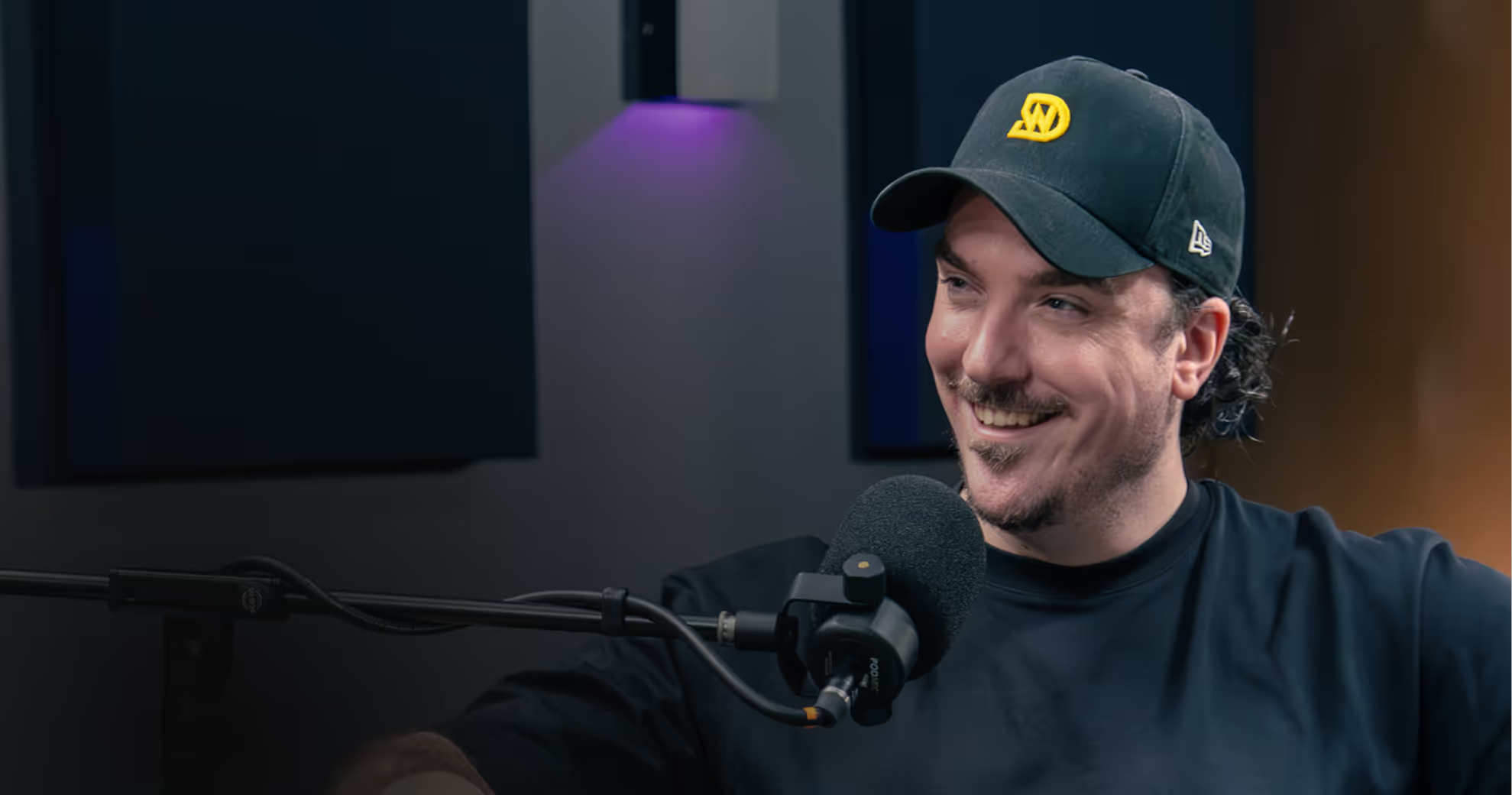
Work With Me
Enquire With Dain’s Team
Enquire For Speaking
Let's Get You Branded
Apply to be a guest
Dive into insights from industry leaders and experts.
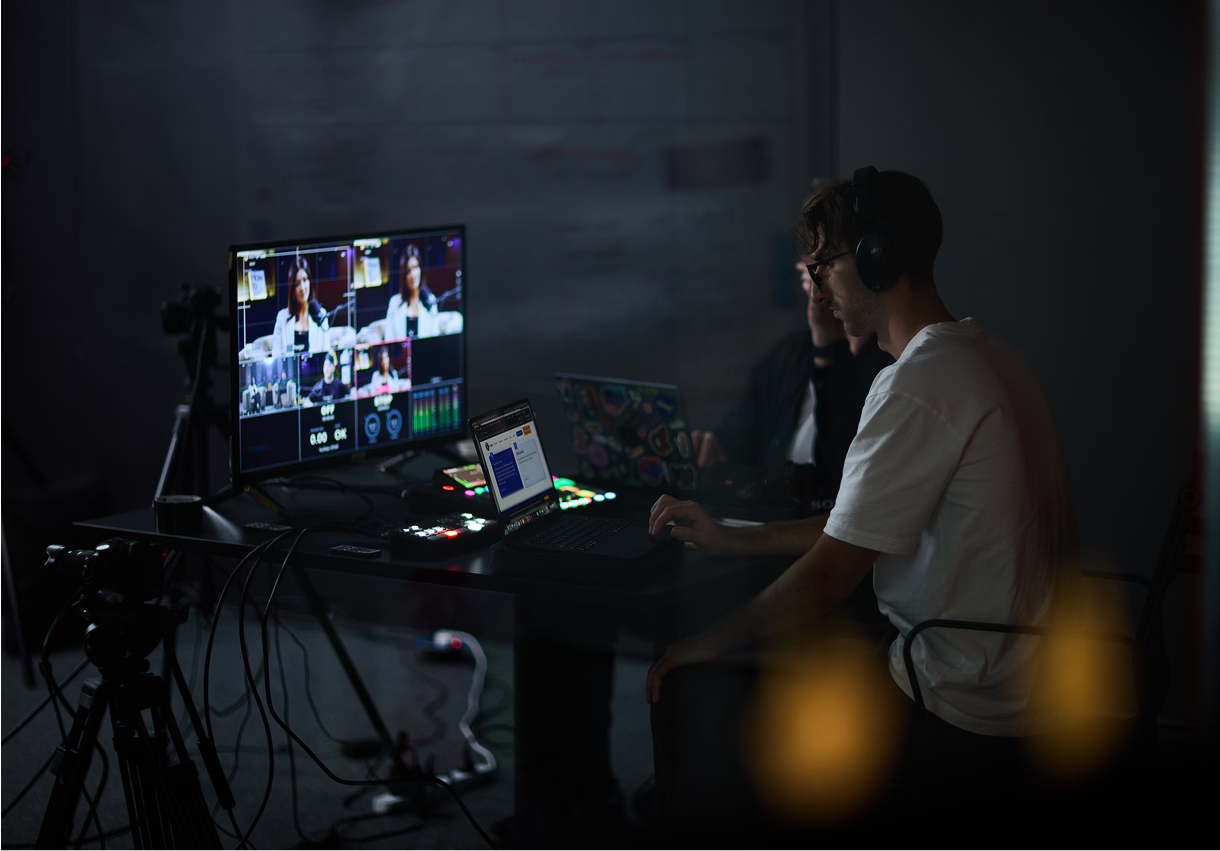
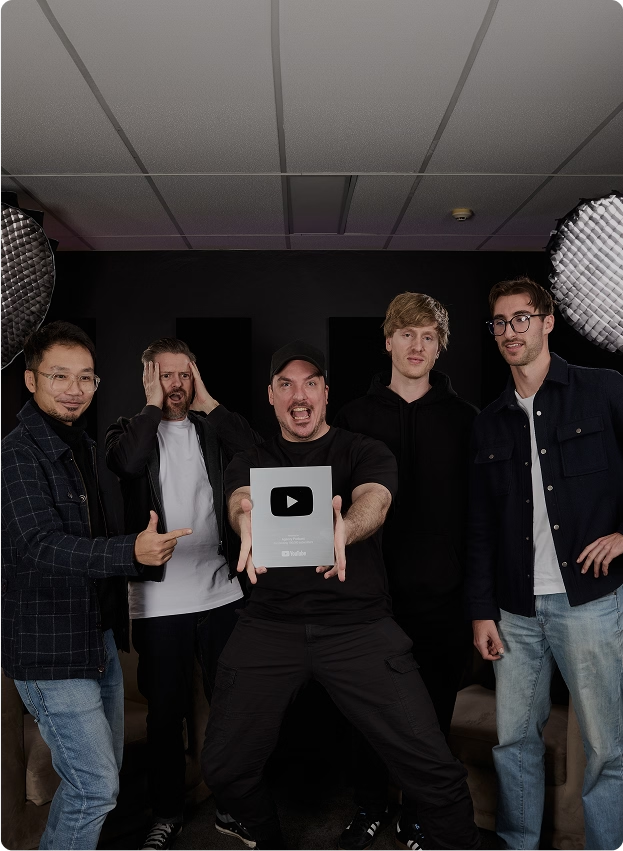
Stream now
Dive into expert advice and industry trends.