


TLDR
Summary
When Yasser Zaki moved from Egypt to Australia, his father gave him a sharp piece of advice: "Don't come back crying." Shortly after arriving, Yasser found himself broke, sleeping under a tree in Campsie, and eating just one meal a day at 4 PM to survive. Today, he is the CEO of Tender Loving Care, overseeing 9 businesses across 7 industries and 8 countries, leading a workforce of 3,000 employees. In this episode, Yasser shares the story of calling out his first manager's integrity, facing betrayal from a coworker that led to being fired in his first month, and how he turned those early setbacks into motivation. He also breaks down high-level business mechanics, detailing the horizontal ecosystem strategy inspired by Richard Branson and his "backward" butcher-paper planning method designed to guarantee success.
Highlights
- Journey to Australia and Early Struggles: After moving from Egypt to Australia against his father's wishes, Yasser faced homelessness and severe financial hardship, sleeping under a tree in Campsie and limiting himself to one meal a day.
- The First Job and Workplace Betrayal: Yasser secured his first job at Nick Scali Furniture by directly confronting a manager about his integrity. Despite being tricked by a senior colleague into handling non-commissionable stock—leading to his termination in month one—he was given a second chance and eventually became the company's top salesperson and senior manager.
- The "Backward" Planning Method: Instead of starting with current skill sets, Yasser advocates mapping out a clear goal, working backward to build a pathway, conducting gap analyses to identify missing skills, and utilizing strategic networking or capital to fill those gaps.
- Horizontal Business Expansion: Inspired by Sir Richard Branson, Yasser built a diversified, horizontal business ecosystem across multiple industries to mitigate risk and create long-term enterprise value.
- Purpose-Driven Enterprise: As CEO of Tender Loving Care, Yasser embeds a strong social purpose into his business models, such as hiring people with disabilities in a cheese import venture to promote community inclusion and employment.
- Systems and Culture Over Scale: Managing 3,000 employees across 8 countries requires relying on robust systems, processes, and clear communication rather than attempting to manage every individual directly.
- Overcoming Fear with Knowledge: Yasser emphasizes that fear is the primary obstacle to business growth, and acquiring knowledge and executing risk mitigation are the most effective ways to eliminate that fear.
Transcript
00:00:00
Money is not the only factor that can create success. It's a contributing factor. It's helpful. It's important if it's there, but if it's not there, that shouldn't stop people from trying to build a business. >> You started your first business with only $500. Can you fully unpack that for us? >> Grow your knowledge. Because with knowledge, fear walks out of the door. Let risks with knowledge, risks with mitigation strategies, risk with education. That's risk management
00:00:29
framework there for you. >> How would you find the difference between a business coach and a mentor? >> How do you get a coach to help you to run a billion-dollar business when they never ran a billion-dollar business? And but my take on it is that I'd rather have someone that has done it before. >> What do you think was your greatest fear in business and perhaps one of the greatest risks? >> Um the biggest [music] fear I've had is >> This episode is brought to you by Wix
00:01:03
Studio. Here at The Agency Podcast, we're building a community and we would love you guys to be part of it. So, we would love to hear from you. What are you enjoying the most? What would you like to see more of? And what do you think might be missing? Drop a comment. Make sure you subscribe. And now, on with the show. Yasser Zaki, welcome to The Agency Podcast. >> Thank you for having me. >> You and I have known each other for some time and you have served as an amazing mentor and dear friend in my life and it's an
00:01:35
honor to have you on the show. Yasser, you landed in Sydney and quickly found yourself homeless. And your dad said to you before you left, uh don't call crying. >> Yes. >> What happened? >> When I finished my studies, I wanted to do something different and I had an opportunity to come to Australia. So, I went to my dad. I'm like, "Hey, I'm excited. I've always been this son that wanted to do things just differently, independent." Um when I was in uni, I did a lot of
00:02:05
little small little business ventures that helped me to buy my car, my first car. I bought it with my own money, that kind of stuff. And culturally, um usually the dad buys all of that until you finish uni. So, but I never wanted that. So, when I >> That was custom in Egypt? >> In Egypt. So, so generally speaking, the father will always buy for the kids things until they finish uni, based on what they can afford, obviously. Um but I went to him and said, "I'm going to Australia."
00:02:33
And he's like, "No, you're not." And I'm like, I I really I've the visa's done, everything's sorted. I'm ready to go, and I just want to go explore my future there. And he goes, "Well, if you really want to travel somewhere, why don't you go to the States? Cuz we've got a big family there. Your uncles can help you, you you yeah." And I said, "Well, that's exactly why I don't want to go there, because someone else has done it. I want to go and
00:02:55
explore my own future." And and he was completely opposing to it. He didn't want it. Not from a vindictive side of things, it's just from a caring father that you're going to somewhere you know no one, we have no family, we have nobody, no friends, nothing nothing. You know one in Australia. And that was exactly why I wanted to go. So, we had we were not on the same page, and I told him that we're not on the same page. And I'm I'm keen to go. So, he said, "Well, go. You're going to
00:03:18
fail, and and you're going to come back, so don't come back crying." And I'll find jobs standing in the airport waiting for me. I'll just pick the jobs that I like, you know. Cuz there was a massive shortage in Australia um for employment, right? So, I thought, if I'm getting um you know, all this research that says there is a a need for for people to work, then I shouldn't struggle. I spoke reasonably good English. I was lame, my jokes were terrible. Couldn't joke. It's
00:03:45
really bad. I mean, it's improved now, but I could speak English, like good communication. But what happens is, when you start applying for jobs and you you you don't have the same competitive grounds, right? So, all the companies that I applied for they never called me back until one of the guys said to me, "We'll get back to you." And that was the common thing that I heard. So, I knew they're not going to call me. So, I asked him, I said, "Look, it's obvious you're not going to call me.
00:04:11
I don't really care about that as much. I just want to know why. What am I doing wrong? Cuz I'm I'm good at what I do. I've got the right knowledge and experience. I've got the energy, you know, everything is there. So, why am I not getting the jobs?" And he said to me, he said to simply that when we get people to apply for the job that are born here, graduated from here, and they've got everything, and you don't have any advantage to offer, then why would I offer you the job? It's the same pay,
00:04:36
same everything. There's no difference. So, I pick the one that will fit a lot more. And it made sense to me. I would have done the same. So, there was no really like, "Oh, this is bad. This is wrong." It was like, "That actually makes sense. What have I brought to the table to get the job over my, you know, competitors such and I say in a positive manner?" So, I had to go work hard on this. But, while I was doing that, I ran out of money. Couldn't call my father. Couldn't ask for help.
00:05:07
And because I didn't want to go back crying. I did cry. >> [laughter] >> Still didn't call him call him crying. And um and I had to work it out. And that actually I guess one of the most disappointing things which I I have no regret for is I never actually worked in the field that I wanted to work in because life just took me to a journey that's completely far from it. >> Now, I understand there's a as a part of this story as well where um you had to call out someone's integrity in order to
00:05:37
um negotiate your ability to attain the job. From what I understand. >> So, so the lesson that I learned is simply you're not going to get what you want by standing back and waiting for it. Okay? What I did is I I sent the resume. The person just said nice things. Don't worry, we'll help you out, whatever. And I was talking like I'm really desperate. I really want you to help me. I I will do everything I can. I'll work extra hours. I'll do double time, whatever is needed to to do well. I will not let you
00:06:06
down. Just give me the opportunity. And the person was like, "Yep, don't worry about it. I'll help you out." But I kept coming back cuz that was the only light at the end of the tunnel, right? He's the only person that gave me hope. I applied for many other jobs like, "Yeah, we're not looking for anyone. We're not" He's the only one that said, "I'll help you." >> They didn't give you the job, but he said he would help you. >> No, he didn't give me the job at all.
00:06:27
And and but it was the only hope. So, I kept coming back. Like, "Is there any you know, update? I need it. I'm I'm starving here. I need to I need to work. I was getting hard." And um and then one time I just when I came to to the point where I was I mean, I think desperate is probably less than where I was because I was coming to a point that I'm just exhausted, tired, not sleeping well. And I knew he was lying to me at that point. I could see through it. And I I pointed out that he he had a
00:06:59
Jesus on the cross and Virgin Mary behind him and and it was very Italian and he had that, you know, aura around belief system and I said, "You know, you're the worst Christian I've ever met." >> [laughter] >> And he got really offended. He didn't like it, you know? And and he said, "How dare you tell me something like that?" And I said, "Well, you're lying to me. How is that Christian?" And and he had this wake up call he could hear in his face and he's like,
00:07:24
"You're absolutely right." >> Wow, so you saw him live >> [clears throat] >> change his belief. >> I I could hear his face changing and I don't think he did it out of bad intention. I generally cuz he's till now he's a he's a a person that I know. I see him every few years. I know exactly where he was. He's still at Next Cali, by the way. He's never left. Um and I What I think he did is he felt sorry for me. He said whatever is needed, but he didn't really care for
00:07:50
You know, it was just another guy coming in. He probably had a hundred walking in and yeah. >> Yeah. And when I said that, it just I think hit him hit him where it needed to. And he got me the interview right there and then and I went to Lidcombe, which were the head office was at the time. I believe they moved there. And I did my interview and I got the job. And that was my first challenge ever in Australia, um which I overcame. Purely because I fought for it and I spoke my mind and I asked for for what I
00:08:19
want. You know, I mean, there's always this saying that a lot of people focus on the hurdles and not on the goal. And you get bogged into the problem to a point that you never achieve your goal. And that's not how I That's not how I behave. I focus on the goal and I ignore the hurdles. When I say ignore them, I don't particularly dismiss them. I just don't let them affect my journey. So, I work with them. I risk manage. I risk mitigate, but I don't take my eyes off the goal.
00:08:48
And that's exactly what it was. My aim was to get a job. That's what I wanted. And I was hoping to get a job that is reasonably wearing a suit or that kind of stuff. That's what I wanted. >> And for those that aren't familiar with Nick Scali, it's probably our premier more prestigious uh furniture store. It's It's like the Mercedes of a furniture store. >> It's a It's a very good furniture store and I think it was and don't call me on that, but from memory was the largest
00:09:15
furniture company privately owned or family owned. I mean, they are They have some shares and stuff, but they are uh uh owned by the Scali family. >> So, if you think about that moment where you're at the the till and you're seeing these um these items and and and then you confront him on his belief system, was there a part of you that a voice in your head or or something that was saying to you like don't do that, you're going to offend this person just leave the store and go look for
00:09:40
something else somewhere else? >> No, the voice in my head is don't walk out of here until you get the job. It was completely the opposite like [laughter] don't take no for an answer. Because I mean they say desperate measures require desperate actions, yeah? So this desperate outcomes require desperate actions. I needed the job. So not getting the job was not an option. It's it was about how I'm going to get the job. I mean the first month I worked there I got fired. >> Why did you get fired?
00:10:09
>> As naive as I was and I'd like to think that that was a good thing because I was very um innocent and open and and white-hearted. I walked in um the Auburn store and that was the first place I worked in. And um one of the sales people which he was the top sales person at the time. He walked up to me and this is how he spoke. He goes, "Brother, I'm going to help you here, brother. I'll make sure you're okay." I'm like, "Thank you. I really Yeah, I really need
00:10:36
the help. I would really appreciate it." First time I work anywhere every time I can encounter a person in in that level. >> This is your first job? >> This is my first job, my first day. This person walks up to me and says, "I'm going to help you." I'm like, "Yes, I found an angel." Little did I know this person he This is his advice. He goes, "The store was quite large, right?" He goes, "Go at the back of the store and you don't have to compete with the
00:11:01
experienced sales people now. You're not ready yet. What happens is when we talk to customers some will slip through and go to the back. You pick them up at the back so you're not competing with anyone at the front. And then you sell to them and and until you learn and get confident and you can come out the front." That made absolute sense to me. I'm like, "Yeah, that makes sense. I don't have to compete with the seniors. I'm going to just do my thing at the back."
00:11:24
I did that and I kept selling like hotcakes, you know? I'm like I I would buy them lunch and I buy them drinks and I was like happy, you know? Life is smiling at me now. And then a month later I did look at the numbers and my numbers were almost none. And everyone else was like 160,000, 120,000 sales and I was like 5,000. >> Um. >> I'm like, "Well, I've been running a lot. What's going on there?" So, I told the manager, his name is Jim, which I don't know where Jim now, but Jim was a
00:11:51
Greek gentleman that was um firm but really uh fair. And I said to him I said, "Look, I'm not sure why this number is incorrect. I've been selling a lot." He goes, "Okay, well, let's have a look." He opens up and he goes, "Oh, well, you've been selling C50. C50 is the floral stock. It doesn't add to your overall sales numbers." >> Oh. >> So, what happened is this person, everyone that wanted to buy floral stock products, he said, "There's a guy at the
00:12:17
back or see him." >> Okay. >> Yeah, so he positioned me to service himself. And with that was complete disregard that I could lose a job that I was desperate for. >> Wow. Yeah. >> And um and I did get asked to leave. And if it wasn't for a person by the name of Deon, the South African gentleman that that been living here for years, um he stepped up. He was a 2IC at the time and and he stepped up and and he said, "I will take him under my wing, give him another chance, and I'll make
00:12:45
him the best sales person." And I became the number one sales person in the company until I got promoted to become a manager and one of the senior managers and had a career out of Next Cab. >> How long were you at Next Cab for? >> About 5 years. >> 5 years. Okay, cool. So, you went in this guy stitch you up a little bit, "Brother, I'm going to help you." Taking all the clips. >> You really >> Pushing you in the back of the store. >> But when I think about it now, it's
00:13:08
probably one of the worst yet best things that happened to me. >> Mhm. >> Because it What it did is it made me distrust in people. I mean, I I coming to Australia, I'm land of opportunity and I'm was really happy and then this guy sells me out. I'm like, "Is everyone like that?" Then you start losing trust in people, which is wrong. There are a lot of good beautiful people that I met after that. But at the time you didn't know any better. So, I shut down on people quite a lot. I
00:13:33
didn't open myself after that. He really affected me. But the other thing is he made me so motivated to beat him. I didn't care to become the first the number one sales person. >> You just want to beat him. >> I just wanted to beat him. I wanted to make him number two to me. And I did. I did for years. I was always the number one. And my focus for years was how can I beat him? >> Mhm. >> Not anyone else. >> If you want to grow your agency, you need more than just a website builder.
00:14:01
You need Wix Studio. The all-in-one platform that's built to help you scale. Design smarter in a hyper-flexible responsive editor, cherry-picking whatever clients need from pre-built UI elements and templates. Deliver robust back-ends with built-in e-commerce solutions for every industry, letting self-maintaining infrastructure just run itself. Stop reinventing the wheel with every project and instead create a shareable design system with reusable assets, apps, and components. Clients growing too fast? No
00:14:34
sweat. Wix Studio AI-powered CMS lets you turn a single layout into hundreds of additional dynamic pages. It's true, more clients no longer has to mean more chaos. Wix Studio gives you one centralized view of every project and makes real-time collaborations seamless. Do your agency's best work at scale. Build your next project on Wix Studio. >> I love this about how your father said, "Don't call me back crying. You're in this country and struggling to get this job, which you finally got.
00:15:12
And I understand at the time you'd spent the money you had when you landed, and then you found yourself without much money. Uh Uh, it was so bad that you were living off one meal a day and you would eat it at 4:00 p.m. in order so you could sleep at night without feeling sick while you're trying to get some rest. >> Yes. You have to pivot, right? Like you have very limited resources. Think about it in anything now, business, life, whatever. You have You have limited resources and great dreams
00:15:42
and you have to use the resources you have to get to the dreams. You compromise. If you eat three meals a day, you basically cut it in 1/3. So all I did is I expanded my longevity to be able to survive so until I find something. And if that meant I push myself to the edge, then I push myself to the edge. I mean like I still push myself to the edge till today. Just different context, different size, different approach. But we always do it. I mean risks are part of the life that we take and I I took a risk coming here.
00:16:13
I dealt with the consequences and I kept pushing. Did it affect me? I It did and I realized it affected me when my dad um came to Australia around COVID. My dad passed away now. But um when COVID came about I They came and stayed with me in Australia and then they got locked in so they stayed for 3 years. And that was the first time my dad actually knew what I was doing. Which was very interesting cuz I never really told my dad I I I told him I'm I support people with disability. That's
00:16:44
all my dad knew. He had no idea the context. He had no idea that we went international. Had no idea that I won this amazing awards. None of that. He had no idea. I never had the the feeling that I should tell my dad because I always felt that um he didn't believe in what I could achieve. And I And I only woke up to that when he came here. I did not pay attention that I was not telling him. Every time he would talk like, "How's things going?" I'm great. That's it. >> You weren't telling him about the you
00:17:18
were having >> I haven't told him >> of the business. >> Nothing. He had no idea. I was invited on this prestigious top thing and he was there. So, I he came with me naturally and and the things he said about me and how they spoke about me and all that kind of stuff. And he looked at me and he actually teared and he said, "I just want to tell you I'm really proud of you." So, I'm tearing a little bit inside. Um and and that was the first time and then that's when he actually sat with me
00:17:47
that night and he said, "Tell me exactly what you do." It was the first time he actually wanted to dig deeper into it because initially he just looked like you're working in disability, that's fine. How's life? How you going? How's your health? That was the general conversations that we had. >> What was that moment like for you? >> Very emotional. Very emotional. Because you know, when you when you work hard to So, when you work towards goals, there's also these little hidden goals
00:18:14
that motivate you that you don't even know they're there until something triggers it. So, you you suddenly discovering your characters like if you if you are living a very happy life and then suddenly you face an earthquake. And then you go out and help people and support people. This part is something in your heart that you didn't even know you had because you never had to actually exercise that emotion or that approach. This is one one of them. I had it inside me that I wanted to impress him
00:18:42
and I wanted him to be proud. But I didn't know that I had that in me until it happened. And then I started to like, "Wow, shouldn't I have told him long time ago?" Because that's how it made me feel. I felt a bit guilty if anything, to be honest. >> So, I have a surprise for you. >> That's scary. >> Uh we were able to get some photos. And one of them is of your dad and your mother. >> How did you get that? >> [laughter] >> How did you get that?
00:19:14
That's impressive. How did you actually get that for real? >> Uh so I spoke to your brother Zach. And he was very kind and he refused to tell me any stories, but he gave me some photos. >> Wow. He never told me. >> [snorts] >> He kept it a secret. He kept his word. >> never told me. >> his word, but um yeah, looking at that photo of your your mother and your father there. >> Wow. >> What comes to mind? >> Um Father, he just he just got me.
00:19:43
Um So so let me tell you maybe about the dynamic about my dad and my mom, right? So my my dad was a a very strong smart man that was extremely fair and and kind um in a way that he never showed it on the outside, but it was deep in the inside. The way he gave us life, the way he protected the family, the way he worked very hard to give us a a good life um was was big. And he faced a challenge in his life that I never forget, right? Which around his brother um doing the wrong thing by him. And we I was very young at the time. I
00:20:21
was maybe 12. Um but I remember very well how he went. He went into like a mini depression phase because he lost everything. His brother pretty much took all his money. They had a business together. It was just really sad. But the one thing he never stopped doing is making sure that we don't feel it. So he was completely broke. Still sent us to um private schools. He borrowed and went into debt. We had no idea. I paid attention a lot, but generally speaking, he never spoke about it. My mom on the other hand did not make
00:20:55
him feel that she needed anything. She just pivoted. My mom is a very naive She She's a lawyer actually, funny enough, but but she never practiced law. I don't think she would have been a great lawyer. >> [laughter] >> She's too naive. She's this sweetheart that just believes anything and everything and that kind of person. And the dynamic was so perfect that we supported each other. My dad just recovered completely from that and built it all up again from scratch. Um not
00:21:19
particularly in business even though he was a quite a smart person in business, but well he was more in the legal world, judge, lawyer, that kind of stuff. Um so yeah, it was just an interesting uh you know, journey seeing my dad going through these hiccups that shaped a lot of me and I've seen him in in some tough situations how we put resilience in through and I think that definitely part of what I've learned from him. You know. But uh I'm impressed cuz [laughter] I don't even have this photo.
00:21:51
>> Well, you have it now. >> Yeah, thank you for that. >> And the second photo there, we were trying to figure out which one was you. >> The handsome one. >> [laughter] >> So, you guess. >> I can guess. >> Guess. >> I had a guess that you were on the left in the college shirt. The dark college shirt. >> Okay. You got it wrong. >> Is it the white shirt on the right? >> Yes. So, I'm the cheeky one. So, I'm always the I'm the always the cheeky one. So, the
00:22:16
one on the left is my middle brother. And he's the sweetheart of the family. He's the one that never did anything wrong. >> Well, he looks like a sweet in that photo, yeah. >> He's actually like he's the perfect human being. Honestly, not because of my brother. He's just such a nice guy. He still lives in Egypt. Um he's an engineer as well and and does well in life, but he's um he's that person that never said no to the parents, never skipped school, always studying well,
00:22:42
never did anything against what the parents want. Like I was the naughty one. I'm the one I'm the one that broke things in the house and and would play soccer on the streets around exam times and my dad would like come in, get up and study. And so, it's all of that dynamic. >> And what was the dynamic between you and your father before you came to Australia and then what had changed after you'd reconnected when you came to Australia? >> So, my father was a father. So, the
00:23:09
relationship with me was a father. So, I was the youngest in the boys. I have a younger sister that is 12 years younger than me. So, I was So, in this time my sister wasn't born yet. Um and so, I lived as the youngest for 12 years. And the youngest means the one that you get less um fear from parents, you know, like if what is called it's fine put in the rubbish bin. It's okay. Like you know, you know that feeling like always the oldest gets all the attention, put more clothes, make sure he doesn't get sick,
00:23:41
that kind of stuff. And um and and my dad was purely like a father figure. And as we grew older, my dad turned into a friend. But I missed big part of that because I traveled. I came here. So, my older brother for example was very close to my dad in terms of friendship because he lived into that era with my dad. I didn't. You know, when I came to the point where I started life where my dad ultimately moves from being a father figure to becoming a friend figure I was not in the country. So, we
00:24:20
we had a pleasant and and I was very close to my dad. He He was a fantastic dad. But I was away. First time I visited Egypt after I came to Australia was 5 years for 2 weeks. And then the time after that was another 5 years. So, in 10 years I went only twice for a couple of weeks. So, you can see that the distance that I started to have not from interaction. We spoke a lot and all that, but just the feel like like simple things like my sister when she I left when my sister was like 11. And she was a baby and first time I saw
00:24:52
her after that she was a lady. That when I went there I wanted to sit with her and she had no interest. I want to go out with my friends because she's now a teenager, 18 years old or whatever. And she just wanted to go out with her friends. And I got a bit taken back by it. Like this was my baby sister that I used to carry and and play around with and suddenly she doesn't want to sit with me. Not that she didn't want to sit with me, but she had a life. >> Yeah. >> You know? So those are the sort of the
00:25:18
little things that I would see the dynamic between her and my middle brother who is just a sweetheart. And and all these things and I'm like I missed out on a lot. You know? It's just in the journey. >> Do you think that that still affects you to this day? >> Look, it's a price to pay. I mean, let's agree on something. That there is nothing you're going to get in life without paying a price. The question is are you willing to pay the price? You're not going to get
00:25:42
everything in life. It just doesn't work like that. So what price are you willing to pay and are you in terms with it? I'm in terms with the prices that I had to pay throughout everything I did. Um and this is a price that I had to pay to come to Australia. And a lot of people don't see that side. You know, I we're coming to there. I love Australia like you have no idea. I owe Australia everything. Um it is my home. It's my country. I'd fight for it every day. I love it.
00:26:10
But to build that life here, I lived here more than I lived anywhere else in the world. >> Now talk a little bit about business. Uh knowing more about your culture and your background and your relationship with your father and your your parents and your siblings. When you think about business and having had worked at Ixcate and then moving into a state where you're then starting your own business, there's something that you said to me recently and that's um if you don't have enough
00:26:35
money, that's a weak excuse. And you started your first business with only $500. >> Yes. >> Can you fully unpack that for us? >> So what what I believe in is does money make life easier when you start a business? Absolutely. And if you have a lot of money, you can build structure foundation very solid. You don't have to worry about tomorrow, rent, all that kind of stuff, yeah. But if you don't have it, does this mean you cannot have a business? Does this mean you cannot
00:27:02
build an empire behind it? That's the real question. And the answer was, actually you can. And and money is not the only factor that can create success. It's a contributing factor. It's It's helpful. It's important if it's there. But if it's not there, that shouldn't stop people from trying to build a business. Now, how can you offset that? But I'll tell you sort of a about a theory that I have around building a business. And and then that will make sense a little bit more, I think, when I dig
00:27:29
deeper into it. What's common that's how we all grew um knowing is that if you want to start a business, you have If you're a barista, you open a coffee shop. If you are uh a chef, you open a restaurant. So, we all grew into mindset if you've done something or you know something, that's how you start a business. Even though in reality, the CEO of Coca-Cola, for example, doesn't know how to make Coca-Cola. You know, the CEO of Domino's Pizza probably doesn't know how to make the pizzas or
00:27:59
the or or of Hungry Jack's or of McDonald's. They don't know how to make these things. And if they know, it's going to be very basic. It's not going to be at the same quality as the people that are actually professionals in it. Because you don't actually need to, particularly in my opinion, to have the actual skill set because you can have You can have people that have it. You need to know how to manage people. So, the way I designed my approach was completely the opposite to that.
00:28:26
I look at things as, what is the goal? What do I want to achieve? And I pay a lot of attention to that. I literally went in the room 2 days with butcher papers, and I did not go out. Two full days, maybe 18 hours each day. >> You locked yourself in a room. >> Locked myself in a room and working out how I'm going to get this to work and how can I work it out and what's the methodology and all that kind of stuff. And that's what I'm saying, doesn't need a lot of money, but it needs a lot of
00:28:51
energy, a lot of effort, a lot of work, a lot of focus, a lot of paying attention to details, listening to podcasts, listening to people, having mentors. Without that, these things does not cost money, but require hard work. And if you're not willing to put the work, and you don't have the money, then that's different story. But I was willing to put the work. And when I sat down, I said, "Okay, I know the goal. What's my purpose?" Which I'm very clear about my purpose. My purpose is to help
00:29:15
vulnerable communities live quality of life. That's it. I can explain my business to you in 1 minute, and I can and I've been challenged on that many times. So, if you can't explain your purpose and your business in 1 minute, you need to work on that. Because how much do you know your business if you can't explain it in 1 minute? >> Yeah, you see all those people when you ask them what they do, and they go on a 10-minute rant? >> Yeah. >> And then it sounds like
00:29:35
>> to the point. I know exactly what I want to do. I know exactly why I want to do it. I will know exactly how I'm going to do it. >> Why do you think it's so difficult for people to find that point? >> Because we we always pay attention to what's in front of us, and sometimes we get distracted by the noise around it. So, we don't pay attention. A lot my have the purpose, and somehow feel the purpose, but they don't know how to articulate the purpose. But that's exercise that
00:30:03
people have to work on. It's important if you don't cannot articulate how do you get your team, your people, your family, everyone to believe into your mission if you cannot articulate what you want to do. >> So, if they have a purpose, and they can feel it, then they must learn how to articulate it. >> Uh it's a very important exercise you have to do and train yourself on. Sit down and work it out. >> When you think about articulation for those that aren't familiar with how to
00:30:23
be good at it, what would be your advice around how someone could take their felt passion, and then turn that into words? >> So, there's many methodologies. I mean, having mentors is very important. Um you know, sitting down and just writing down what you want, and keep narrowing it down, and summarizing it. Um even to some extent, if you want to use technology nowadays, you can do that. You can write what you want, how you feel in 10, 20, 30 sentences and then put it up on one of the
00:30:51
platforms, technology platforms, ChatGPT or whatever, and say I want to say this in one sentence. And then you connect to it. You have to analyze it and take it blindly. You have to analyze it. But I want to go back to how I started the thinking process because I think that's very relevant. So when I set up the goal and the purpose, most people what they do is they say, "Okay, I'm here today. I'm a chef and I'm going to start a restaurant and I need a place. I'm I'm good at Italian food. So I'm
00:31:21
going to go start doing Italian food. I keep working upwards, you know, one step at a time and then when I have a challenge, I deal with a challenge and then move on and keep going, right? But think about it this way. What if I have the goal I I want to become and the goal has to be smart, right? Specific, um, uh, measurable, attainable, realistic, timed, yeah? So you have to have the methodology of the goal properly written, so if so you understand it and know what you're working towards. So if my goal Some
00:31:49
people's goal and you have to be bold about it cuz no one else has to know it. That's your goal. But you have to be bold about it. Some people would say, "Uh, I don't want to say that I want to be rich." I don't want to say it. If that's what you want. I want to help people. So I my goal is to help people. And and it's very important to do that. And you have to be specific about exactly what it is. And then what it is, you see where you're at today. That's the goal that I want to achieve
00:32:14
backed up by the purpose that I want to I work towards. And then I start building the plan backwards. Not forwards. Most people go forward. But go backwards from the goal backwards to where you're at today. So what do you have here? You have a pathway plan to where you're at today. To achieve that goal. The other thing you need to do is you start looking at what hurdles I might face along the way. And financial is one of them. I don't have money. So you can think of the alternative.
00:32:48
Then you start building contingency plans for these hurdles. What can go wrong? Environmental risks. What can go wrong? Um disasters. Because yeah, if the more you think about these things, the more chance you succeed. Right? So think about that. You have the goal. You know where you're at today. You have the backward plan. So you know exactly what where you're going. Clarity is important. You know what the problems that can face you. And the more effort and energy you put into this, the more
00:33:17
chances of success. You have a contingency plan for every hurdle, for every challenge, for every risk. That's risk management framework there for you. See, if you notice one thing I didn't do so far, I did not talk about my skills at all. I did not mention my skills. My skills is not at this point relevant to what I'm doing. While most people start from their skill set. I'm a chef, I'm going to do a restaurant. While when I'm planning, my skill set is not at it's not yet relevant at this point.
00:33:47
Then the last step I do, or the the step before last, I start writing the skill set that I need to achieve this plan. Not my skill sets. The skill set. I need finance, compliance, marketing, whatever, whatever, whatever, whatever. I list them. So now what I have, think about it logically. What I have here is I have the goal. I know exactly what I want to achieve. I know what success looks like, cuz I need to have trigger points. Because sometimes what people do is they work towards something, they achieve it, and they don't even
00:34:19
know they achieved it. So they never work towards the next phase. They keep in the same loop, because they never actually recognize that they've achieved something and need to re-plan. So remember, what brought you here is not going to take you there. So you need to know when you reach that point, so you can restructure, revamp, re- educate, whatever you need to do to get to the next step. So, you have a goal, you have a purpose, you have you know where you're at today. You have the pathway planned to achieve
00:34:46
it. You understand what can go wrong. You have a plan for what can go wrong to fix it. And you know the skill sets that is required to actually do it. And the last step you take is putting your own skill set on Which of these skills sets that I need I have? So, I'm going to find a stick. I'm terrible at marketing. X. I'm good at this. Right? You start recognizing what you're good at and what you're not good at. Very honestly. And you start writing it down. What do you have What What are you doing here?
00:35:19
Gaps analysis. >> Gaps analysis. >> Gaps analysis. And now I know the gap that I have in the business for it to succeed. Now, if I go and do the business without covering the gaps, my chances of success reduces. If I cover the gaps, my chances of success increases. So, my job now So far, there's no money involved, yeah? This is now a proper solid plan that can help me succeed. I then start looking All right, I've got these three skills that I don't have. If I start the business, I'm reducing my
00:35:50
chances of success. How can I offset it? That's when we start looking at relationships and networking. Do I have people in my network that can help me out that understand that I don't have the money, I don't have the budget, that I'm happy to do it? And what added value I can give them? For example, sometimes we come to people and say, "Okay, I don't have the budget in this company, and I would like you to help me into it. But I'm more than happy for you to brand what you've done with me to open a
00:36:15
market segment for yourself in my space. I'll be your credit because we know credibility is important in business. So, I'll be your credit. You do the work with me, and I'll be your creditor for life. You don't have to pay anything. That's my give back to you. That's one way. So, network is important. Friends, people that are capable, things like that. The second thing you could do is raise capital. You Now you have a plan, you can go and present it. If you believe in what to
00:36:43
do, they might put money on on it and do it. But you need to try hard because good things don't come easy. You know, good things come with hard work. But if you can tick all the boxes for the skills, your chances of success increases significantly and then sometimes that's all you need more than actually money. >> Assume someone is listening to this and thinks this is fantastic and has never yet done a plan like that or sat in a room or put your paper for 2 days straight. What would be a couple points
00:37:13
of advice you would give them before they go in as to their attitude or behavior or demeanor approaching this because what I've witnessed a lot in uh people when they are starting a business is their mind gets to a point where they shut down and they're like, "I think that's everything." You know that that moment when they need to dig further, push further. What What are some of those things that people should try to adopt in order to persevere long enough to create a plan like that?
00:37:41
>> So So, there is there is your personality and your character and and you need to know. I mean, how much do you actually know yourself? It's very important, yeah. Cuz I can tell some of us don't know ourselves very well. Your capabilities, your frustrations, what will trigger you, what will not trigger you. Sometimes we don't pay attention to it. So, how much do you know yourself? And then if you realize that I'm I'm a person that gets bored, I don't have very low um attention um span and and
00:38:12
I've got a problem with that, then I need to start offsetting it. As I find people in my network, friends, family, um and see if they can actually come and help me out with the exercise. >> How do you find the difference between a business coach and a mentor? >> So, business coaches have studied a lot of theories, a lot of um how to actually like mentor other not mentor how to educate others, coach others, that kind of stuff. But they do not always the business that like how do you get a
00:38:44
coach to help you to run a billion-dollar business when they never run a billion-dollar business. In my opinion, right? So, I think this is this is a detachment. I'm not saying they don't have validity cuz I don't want this to be mis- misconstrued. They have value to add. And but my take on it is that I'd rather have someone that has done it before. I'd rather have someone that actually can can tell me this is what I did, this is what I faced, and this is how I dealt with it. Practical mentorship and
00:39:13
examples life relevant to what I want to learn. >> So, say you want to create a trucking logistics company, you should then therefore go find a trucking logistics entrepreneur who's had success at a level you want to get to. >> For example, but also one of the things you need to recognize is you don't have to have one mentor. Like if I want to have a logistics company, I'll go to someone that did logistics. But I also want to learn how to read a P&L, so I'm going to go to
00:39:42
someone that done does finance. And I want to learn how to do marketing, so I'm going to go to someone that does marketing. >> Right, so you get it from many sources, not just one. >> of course. And if you and the more you can get from sources, the the better it is. And and I always say how do you get the most out of a mentor? It's not following their steps. It's getting them to follow your steps. >> What do you mean? >> So, if I have a mentor, I need to be ready, research this person, what I want
00:40:12
to learn from them, the questions I need to know. I don't want you to come and mentor me about things that I already know. I want you to mentor me about the things that I don't know. So, who should lead the conversation? Cuz this is a common mistake that people do. They go to the mentor, and the mentor is usually someone fascinating, someone very successful. So, what do you do? They sit quiet. They just listen. And the mentor will just go in and give them what they think they should know.
00:40:37
It's a It's a It's an honest discussion. It's an honest and fair interaction. But it doesn't really give you the value you want. >> I love this concept around the mentor must follow you and your steps because you're the one that has to articulate the problem in a way that they can understand and then give you the nuanced information that fits you. >> Absolutely. Curiosity in business is such a powerful thing. >> Why do you think it is when the student stops asking questions that there's a
00:41:05
dilemma between them and the mentor? >> Because you are not Well, it's not a dilemma. It's just more Do you get the most value out of it when you are just following? Or is it Or you get the most value out of it when you control the conversation and then knowledge you want to gain? It's It's become Ask questions that you want to learn. Because no if no one knows your business more than you. No one knows the gaps more than you. And remember we said you have to have a plan that has clear gap analysis into it.
00:41:37
So, if you know the gap, ask the question that covers this gap for you. And instead of doing the mistakes that other people did, do new mistakes, learn new journeys, and learn from others. This is This is the whole concept. But if you are not driving the conversation, it naturally means people will talk about what they believe is good for you. And that can align, and it's great if it does, but in a lot of cases it doesn't 100% align. >> Why do you think it it doesn't align if you allow the mentor to drive the
00:42:10
conversation for yourself? >> Because the mentor will talk about the things they believe you should know. Not particular things that you should know. >> Now, could you describe to me the difference perhaps between a mentor who is paid versus a mentor who is invested? >> Um look, it's it's different motivation. I don't think particularly one is better than the other. I think it's just different stages of what you want. >> Have you experienced personally that
00:42:36
there's a different dynamic either way? >> I I've never paid for mentors. >> Never? >> I've never paid for mentors. Um never had to, to be honest. Not that I'm against it at all. I'm not against it. I don't think mentors have give you the time they deserve to get paid if they choose to. Um but I've always the way I look at things, what value can I add to you and what value can you you can add to me. So, I make sure that I add a lot of value to my mentors as equally. You
00:43:03
know, and that value could be direct or indirect. >> What do you mean by direct or indirect? >> Direct is basically um I know something that I'm really good at. You know something that you good at. You share with me what you good at. I share with you what I'm good at. Share knowledge, share experience, and maybe even go in business ventures in some cases. >> [snorts] >> Indirect is I know that you're fantastic person. You don't need anything from me, but you're running a charity. I might
00:43:28
help instead of giving you the money, I might give it to the charity cuz you don't want to get paid from me, but I want to give back. I want to add a value to you. So, that's indirect um support to my mentor. Indirect one is more directly shared experience with doing business together. >> When you think back in time and you think about the key mentors you've had in your life, is there one or two individuals that stick out in your minds that really pivoted you and how you scaled your businesses?
00:43:55
>> I was very conscious of the time, the energy, all that kind of stuff of the person, right? And I chose Sir Richard Branson. And the reason that I chose him is the alignment that I have with his thinking fascinated me. He didn't know I I was so aligned with his thinking. He had no idea. But I actually um have so much alignment with the way he thinks and the way he does things, you know? Um simple example is he built a horizontal business. I believe in that. Um a lot of businesses are either
00:44:28
vertical or horizontal. So, if you're a tech person, you do a tech company and IT SaaS system, whatever whatever. >> But it's usually around tech. >> Yeah, it's very heavy in the space, but but very vertical. >> Yeah. Um while Richard Branson, what he did is he has airlines, gyms, uh phone companies, um >> entertainment, gaming >> entertainment, media. He did so many things. This is all and they're completely different businesses. Not even relevant to each other. They might have some
00:44:59
little bit of connection here and there. And maybe it's an ecosystem that services each other. But ultimately, they are standalone businesses that have no relevance to each other. Saw an opportunity, a problem to solve, went in and did it well. Yeah? That's exactly what I believe in. Why is this is good in my belief system? It derisks. Any business is at risk of, you know, some environmental challenges that can affect. And and if you have a diversified business, then you your eggs are not in one basket, which
00:45:28
naturally means you can actually find opportunities. And that is when we acquire businesses, for example, one of the things we always say, one of the best acquisitions to do is an acquisition that can serve your business. Like if you're a marketing company, maybe you can acquire printing company. >> Oh, I see. So, you can um um I'm thinking of General Electric, how they would acquire adjacent companies to bolster the big company. >> But why is that? Why would you do that? >> I I the way I would think of it it would
00:46:00
be the more of the conveyor belt or the system that you can control, uh the more profit you can make and the more the value of the companies uh compounds. >> Yes, but the bigger picture is the actual business that you buy. It automatically makes money the day you sign it up. >> How so? >> Very good question. So, let's assume I'm a I'm a marketing company or a business that buys I'm a pizza pizza company that buy um cardboard boxes for pizzas. Yeah? So, I buy a business that does the
00:46:36
cardboard boxes for for um pizza. Now, before I bought that company, it didn't have my contract. It's value, let's say, $10. The second that I sign, now they have my contract, the value automatically goes up because you now have a new contract. >> Right. So, the money that was leaving and going out of the company is now landing in your second company. >> Into the second company. That company becomes much more because it didn't have it before. >> Yes. >> So, if the revenue was
00:47:05
$100, hypothetically talking, before you bought it and before you're doing business with it cuz you don't buy what you do business with. You know, that's not the idea. And then you contracted it. So, now it was doing $100, but you're contracting it, it's now doing $120. It automatically values more. Does that make any sense? I'm making any sense? >> sense. So, therefore, what what does that allow me to do? >> So, that allows Well, I'm talking about wealth creation here. So, you you bought
00:47:35
something worth $100 and by being on to now it's worth $200. Just because you >> On paper? Or you talking about cash flow as well? >> No, well, well, cash flow is not is not the idea. The idea is wealth creation and value creation. If I'm going to invest an investment, yeah? I'm going to invest in a company, I expect it to return a surplus to what I invested in, correct? So, if I'm putting a $100,000 in a company, I expect to get back maybe $120,000 the year after, sort of increased 20% or
00:48:10
so. But, if I put $100,000 in that company and that company has my contract, I guaranteed naturally that I will make my profit. But, it doesn't impact my current operation because I'm anyway buying car parts. I'm anyway spending that money somewhere else and now I just spent it in a company that creates value for me. I'm making sense, right? >> makes sense. >> So, So, if I if I go in and I say um let's buy let's buy a company. The first thing I look at, can I be this
00:48:43
company's customer? And if the answer is yes, what would that look like and how would in valuation that would impact? So, if the valuation is five multiple EBITDA then I will put it in, increase the profit by me buying in and then I made my money multiply by five. So, now I'm instead of putting my money in a company that I make nothing out of it, I'm now putting my money the same exactly money the same car part that I'm buying I'm putting them in my company that it makes me five multiple of that money.
00:49:13
So, I'm not actually spending I'm making I'm gaining. Uh it's a very it's a chess game it's a bit of a chess game. But, that's that's how um I look at things, right? So, if I'm going to buy a company, it needs to be a company that I will put um my business towards it because whatever money I'm spending and now I can get it multiplied by five in the EBITDA. >> So, when you look at the Richard Branson and you look at how he went lateral with his companies, is is that what he was
00:49:39
doing? Was he was trying to create an arbitrage of the compound of wealth? >> It's It's de-risking. Significantly de-risking. >> the airlines play movies, then I should also have a media company that provides the movies. >> Stuff like that. It's an ecosystem you build. Um and his alignment with me is he's a philanthropist. He does a lot of goodness in the world and I've seen it firsthand. And at the same time he's a good businessman. And that's exactly where I am. I love
00:50:03
helping people through success. And that's what I learned from him and he helped me out. I mean, I I pivoted a lot because of his methodology of business. >> Having spent time with someone like Richard, obviously being, you know, a billionaire, being a philanthropist, being someone who is a bit of a public media figure, what's the thing that strikes you or surprises you the most about spending time with him? >> The willingness to do the extreme to get the message out there. Um
00:50:35
Richard Branson jumped off when he was launching one of his businesses, he jumped off a building. He story that he tells he told me, I'm sure he told it in media, but he told me personally about it. That makes me laugh every time. All right, so he built this he wanted to do April's Fool trick. So he built this UFO thing that flies above London. And it came in as looks like a UFO ship. And when he landed, the military and the police were all there with guns thinking it's a UFO. And it was like April's
00:51:08
Fool. So >> Wait, real military? >> Real military. It was >> Showed up and they thought it was real? >> They thought it was real. >> I don't know I don't think I've ever seen this. >> Yeah, yeah. You should look it up because it's >> to put a photo up. >> It's a it's fascinating. But you hear the story from him and like he took it as a laugh and he was he was like he didn't think it was going that bad. Like it was But he also did wanted to travel
00:51:28
the Atlantic um on a air balloon and that collapsed and and didn't actually make it across. Um and again, that was one of the biggest things that he he did he just he was very bold about doing things. And that lesson is if If to be the best, you better do things a bit differently and you go to the extreme sometimes to do it and that's what he does. >> When you think about going to the extreme in business, what do you think is something that you've been able to accomplish in your
00:51:58
businesses that was quote-unquote extreme? >> [laughter] >> Um importing cheese when I never >> [laughter] >> Importing cheese when I never ever worked in food and beverage business >> Cheese? >> Well, I chose cheese because I I told you I like things to be a bit different, right? So I just made it listen cheese that never come to to Australia legally, I guess. >> I just don't When I think of cheese, I don't think of safe business. But that's what the research said.
00:52:29
>> Food was the starting point and then I had to look at which food I want to be associated with that reflects on my mission of being different um you know, finding a problem in the market and solving it and there was no feta cheese from the Middle East in the country properly distributed. But the idea was not So remember, I believe in in sticking to your purpose, right? So my purpose is helping vulnerable communities live quality of life. So I can't just go get cheese or get food or all that kind of stuff
00:53:00
because it doesn't align with my purpose. So the constitution of that business is 70% of the employees are people with disability. So we're helping vulnerable communities live quality of life. It's just through cheese rather than through programs or support. But that made people as essential workers as well so they've been able to get out of their homes and instead of going to a day program where learning art, they go and learn a skill into the factory. >> So you have your business Tender Loving
00:53:26
Care >> Yes. >> and you're you're helping find ways for people with disabilities to work in the workforce and to find employment. >> Yes. >> Now I saw some employment You somewhere recently, I think you showed me this Richard Branson had recently um hired someone for Virgin as well. >> So, Virgin Australia um hired a person with disability um to work with them. So, I'm an advocate for this, all right? I So, so let me put some statistics to make sense of it, all right? So, Australia has one
00:53:55
in five people with disability. >> One in five people? >> five. So, 5 million people in Australia have some sort of a disability. All right? >> Could you give an example of what that might be? >> So, it's like a social um it could be a physical disability, intellectual disability, Down syndrome, autism, that kind of stuff, all right? So, when we say 5 million people and we and so many people that don't care to afford them in employment who picks the bill? I mean, these people still has a life to
00:54:23
live. They they need to eat, they need to drink, they need to study, they need to they are consumers like everyone else. They are sometimes the best customers for some businesses because the consistency with them is better than anyone else I know. So, if you're a business that is not catering for people then maybe you should consider it. And that is the language and the advocacy that I have. And think about that. If someone wears glasses yeah? And you take the glasses away from them they are disabled.
00:54:54
The only thing that reduces the disability is because they have a tool that offsets that. Which is the glasses, correct? >> Correct. >> perform better. You cannot do your job without the glasses if you wear glasses if it if you're significantly affected. And it's a it's a tool to help you to work eat safely cross the road safely. Yeah, do do things. Why doesn't that apply to people with disability? If you want to hire someone with disability in your business, maybe all they need is a computer that suits
00:55:21
their need or maybe door that is a little bit wider that helps them to go in with the wheelchair, maybe even wheelchair accessibility in the first place. Cuz maybe that's all they need. You know, so I and I'm not saying hire them because they have a disability. I'm just saying see the ability they have and see if it works with your business and if it does, then amazing. And what does this do to our community? Impact. Positive impact. So, instead of we hear noise all the time about the government
00:55:50
handing out money here or throwing money there, all that kind of stuff. But, they have to because these people need help and they support and they need to eat and need to drink and need to live like everyone else is living. And they cannot find opportunities. Most businesses don't give them opportunities. So, I'm trying to change the narrative that they have a lot to offer, they have abilities if just find it. And if they service the business well, then be it. And if you're not the right person, then
00:56:17
don't hire them. I get that. But, treat them equally like you would do with anyone else. Give them the opportunity to at least display their capabilities. Give them the tool to succeed and let them flourish. And then if they don't do the job well, manage them well. It's fine. It's fair. >> Okay. So, then let me ask you this question. If you think about entrepreneurs uh and anyone doing business who's putting in in their own minds their best. But, let's argue that their best is the
00:56:48
equivalent to maybe 80 to 90% of what would be classified as the best in industry. What's the difference then if the few individuals who go the final 10% all the way to 100 inside of an industry what happens in that final 10% that the people don't go all the way for, never learn? >> Sometimes we don't reflect on our skill set or what our capability or what we're actually achieving. Sometimes we get content with what we have to a point that it doesn't matter if we do the extra 20%, right?
00:57:24
Um that's not what I do personally, but and that's what I would encourage what what I [snorts] would not encourage anyone to do. Reflect first, understand that you're doing the 80%. Because if you don't know they're doing the 80%, and if you have to get someone else to reflect with and someone else to come in and have a look like a consultant or an advisor or mentor, then do that. Because it's very important to understand are you 100% and 110% or you 80%? Knowing is the first
00:57:50
step. Know exactly where you stand with it. Second thing is, remember when we spoke about the methodology and you put their skill sets there versus your skill set. So, if your skill sets does not align with you pushing to the 100%, then find someone to do it. Because I always say, if I'm not the best person for the job, I'll get someone to do it. I'll get the best person for the job because I want the best person for the job. And I'm not in my position because I'm the founder.
00:58:18
I never use the word founder. Very rare. Never. You go into my LinkedIn, it doesn't say founder. You go into my Instagram, it doesn't say founder. Not nothing against that. I've got no judgment on anyone. But it takes away my opinion, my accountability. I'm not in my job because I'm a founder. I'm in my job because I'm the best. I'm the best at what I do, and I'm happy to be challenged by that. And if someone else is the best, then I'll hire them. Someone can come in and do a better job
00:58:44
than I am, I'll step aside. It's my success when I step aside for my team. And that has happened in the past, by the way. My group CEO currently, she was my head of growth. And I took her on an international trip to our offices. We went to Paris, Saudi, uh Dubai, and Egypt. And it was a quite an interesting um uh journey because she she really surprised me with wondering if Egypt has camels on the streets. It was a very interesting thing. >> [laughter] >> We had a laugh about it. But she came
00:59:15
and told me on that trip, she goes, "Yeah, sir, I want to become the CEO, and I feel that would never happen because you're the CEO." >> Wow. >> And I said, "Well, then you don't know me well enough. Beat me in the skill sets and you will take my position. And tell me how can I help you to get to that point. This is true story. I mean >> So you told her how to beat you. >> How to beat and she did it and I gave her the position. >> What was it that you told her that she
00:59:39
needed to beat you at? >> So So what I'm what I'm good at from a character perspective is I don't take defeat very easily. I push until I win. Winning is not an option, it's a journey. I will walk the journey until I win. And it doesn't mean that I'm going to have hurdles in the middle. It doesn't mean I'm going to have issues in the middle, but I'm just eyeing on the win on the goal. Never take my eyes and I don't stop until I get it done. I don't stop.
01:00:08
And while I'm and her way of doing things is I'm trying to achieve this and I'm going to do the best I can. >> Mhm. >> I don't settle for the best I can. Because the best I can is an acquired skill. So all I need to do is learn more to do more. So if I reach to my capacity, then I might have to go and learn more. To So then I can increase my capacity to do more. Is that making sense? >> It totally makes sense. So my next question would be if one believes that they are doing their best,
01:00:40
what is the danger of having that belief system? >> If you are not clear about your goal, so clarity is such an important thing then. Do you know what you trying what you working towards? Do you actually know it and live it and believe it in your heart what you working towards? Because then if you have achieved it or come there and that you content with that, then that's your best and you can stop. I don't stop at that, all right? You can maintain, it's fine. Some people do that
01:01:08
and I'm I'm okay with that. No judgment calls. But for me, I know exactly what I want to achieve and when I achieve it and then I work on the next one. And then I push up again. And then I work on the next one. And then I push up again. So, I don't stop. >> Is is there something in the notion of saying to yourself, "I've done the best I can." Is accepting you're at the the end [clears throat] versus embracing the curiosity of the next? And what is the gap? >> Well, look, people people think
01:01:41
differently. Like, it depends on what stage in life you are, what you want to achieve. Some people Um I was talking to people that their happiest moments in life is that they can have a nice meal, drive a reasonably nice car, don't have to worry about a mortgage, and that's more than enough. And that's fine. That is success. Because they achieved their goal. You can't You can't take that away. Um some people just want to have a family and kids and that. And once they have that, they're content in family.
01:02:10
That's success. But it's Success varies from one person to another. My success is not your success. My dreams [clears throat] are not your dreams. The only thing that I see big gap in is that when people don't actually know what they want. I've seen people like once they achieve um the the the the goal they wanted, family, kids, for example, or or certain business, they say, "I'm not satisfied. I'm not happy, but I don't know what it is." Because they lost sight on the purpose.
01:02:36
They lost sight on the goal. They're not working towards something. So, they get lost in the translation. And the things that was once a dream became the things that are source of sadness for us. So, you need to be disciplined into that. If you are a person that are always ambitious and want to achieve more, then you're going to have to be disciplined to always plan for more. If you're a person that are content, then accept that and then enjoy that. And there's nothing wrong with either.
01:03:03
It's success both ways. It's just different level of success. That's all. >> Now, this woman who became CEO, what was it that helped her unlock that belief into how to set goals to be able to beat you at your own game? >> The smartest thing she did is she chose me as as her mentor. >> [laughter] >> It's true story. Um she everything I told her, she implemented on me. And I thought that was very smart from her. >> Like what? >> Like finding a mentor. She chose me as a
01:03:33
mentor for a long time. >> You're like, "Go find a mentor." She's like, "I'm standing in front of you." >> Get curious as uh and ask a lot of questions. She does not stop asking questions till today. If you don't know something, go and learn it. She went and did studies. She was not big on studies before and suddenly she's went and did all these studies and things like that because she wanted to learn. And and she's one of our most trusted
01:03:53
people in in the company. I trust her significantly. She's a good human, very good human. But I built her up to be the She's not just a So I built her up to be the CEO. Then I built her up to be the group CEO. So she's she's went twice up taking my position. Literally. >> And can you help me understand perhaps the dynamic of the group because I'd like to understand maybe how many businesses might exist in that cohort. >> So it's a seven different industries, nine different businesses um across the
01:04:24
world. >> In eight countries, I understand. >> Eight countries. Hopefully nine soon. Working on the ninth. >> Wow. >> Um and um if every business has its own MD or regional director or CEO. Pretty much the same position with different titles. >> And then how many people are in your group? >> In total? >> In total? >> About 3,000. >> So you have about 3,000 people >> Yeah. >> in your care uh in eight countries in seven industries in nine different businesses.
01:04:51
Yes. Very impressive. How can you really build something as big as that? And the only thing that comes to mind is over a coffee recently you said to me something that really pivoted my perspective is that you can't build people, first you must build systems. >> When when you have a team of five, the natural issues you'd have is 10% of your workforce will have some sort of other unhappy or maybe do the wrong thing or maybe not aligning with >> Looking for another job. >> like that, right?
01:05:26
>> Yeah. >> So, 10% is usually the number that I feel happens. Up and down, it's fine. Now, if you have five people, 10 staff, that's one person that will go through cause you a little bit of grief. Yeah? It's easy to keep the culture tight. It's easy to connect with people because you just going to walk around their offices in 10-15 minutes and you're done. Um and if one person does the wrong thing, you can you can move on. You can still manage. Everyone else can pick a
01:05:53
little bit and it'll be fine. Now, put that to 100 staff, that's now 10 people. Problem is bigger. Still manageable, but bigger. Put that to 1,000 staff, that's now 100 people. That's an unmanaged problem. If you have 100 people doing the wrong thing in your business, your business is gone. Collapses. That's too many people to mitigate and too many fires to put out to put out. So, how do you then manage that? How do you actually manage that? One, you communicate your values very
01:06:21
clearly. So, everyone aligns. So, the ones that don't align, they naturally leave because they cannot survive in an environment that you're not aligning with. That's number one. Be bold about it. Um the second thing you do is you have the right processes and systems in place that can manage people. So, then everyone fits in the process. And everything if anything goes wrong, then there's something wrong with the process. You go back and fix the process. Cuz processes, when it's tight
01:06:46
and intact, it creates culture because everyone is in doing the same thing and understanding and communicated with appropriately. And you if someone goes out of that process, the system naturally picks them up for you. So, you can see who's doing out of it. For example, reporting. If you get everyone to report for for they're doing, and someone doesn't or someone's not achieving, the system will tell you, "Oh, well, that guy this person is not actually doing it." Then you can go have a conversation.
01:07:14
Why? Is there anything I can help you with? Are you not aligning? You know, cannot see the mission, vision, whatever. So, you start working with people on it. And then the ones that will not fit, they naturally will not be able to tolerate this level of pressure because it becomes pressure, it becomes bad because they're not performing the way they should as part of the team. I always say a team is like a chain. Even though only one will be one piece will be broken, it naturally means that a whole chain is broken.
01:07:41
>> So, from the outside, let's say someone's grown up with uh not necessarily living a life of abundance, and maybe they've never really had access to money or never really lived around it. And, you know, from the outside in, it could look like, well, having money means I could solve everything. Does money actually, in essence, help solve most problems? And, if so, what energy must someone shift to be in a position where they can start to receive more money? >> The first part is, money solve problems?
01:08:20
Depends what the problem is, and depends what you want out of it. >> Let's say the problem is uh living week to week and grinding to feel like I'm not progressing or moving forward. >> All right. So, you're not talking about money here. It was sounds like it money is a solution. You're talking about freedom. >> Correct. >> Right? Freedom is a different kettle of fish because freedom if you if I take you out of that and send you to farmlands in X, Y, and Z country that doesn't require
01:08:51
any of this, then I solved your problem without giving you any money. >> True. >> Is that what you want? So, freedom is a very interesting thing, right? Because a lot of us think, "Okay, if I don't pay the rent week to week, and if I have food on the table, and my health is good, I've got everything I need. And that's true. But you might not be able to do it in Australia. Pursue it somewhere else. Go to Indonesia, there's places like that. You will sit down and you will or Bali has
01:09:16
some of them or or Thailand. You will sit down, they'll give you food every day, and you will, you know, be farming, and you'll be sweet. Your problem's solved. But does that actually fix your problem? Or the problem is deeper. So you need to understand the problem for real. Because it's not about the money. Money is important, and it's beautiful, and it's good to have, but it's not the defining factor. I hate it if someone defines me with that. I hate it. I'm a lot more than that.
01:09:42
I'm a lot more than, you know, a travel or a car or a or a house or whatever that is. I'm a lot more than that. I have a lot more to offer. I'm a much nicer person than that. Go and get to know me. Sit with me. Spend time with me. And you will see that I am a completely simple person that loves simple things. And I appreciate simple things. So what I'm trying to say is is money beautiful to have? Yes, of course. Does it make life easier? Yes. But if you don't have it, it's not the
01:10:12
end of the world. There's other offsets you can have. You just need to know what you want to do. So we we cannot practically succeed on our own. Let's agree on that, right? You can't make it just on your own. You cannot be the uh you know, the person that made the $100 billion sitting sitting on in Mars. You're not going to make $100 billion sitting in Mars, right? You you have to have people around you. Now, how much are you welcoming to this? How much are you open to having people
01:10:44
to come into your world and add value to it and could you >> about energy? >> Well, I'm talking about energy. >> Yeah. >> Your energy has to be welcoming. Correct? If your energy is is blocking people out and how many people would walk in the room and you say, "Oh, it's like All right, I feel I feel good just seeing that person. here. even know that person." How many people would walk in the room and you know what? I don't know what is it about this
01:11:05
person that as soon as they walk in the room I feel the room is lighter and I really feel drawn to. >> What do you think that is? >> Well, it's energy. It's positive energy. It's being content gives you positive energy. Being accepting to what you have, positive energy. Being appreciative, grateful. All these positive traits create positive energy in the world. Do you have a gratitude board? I have a gratitude board. Every morning I say, "I'm grateful for my health. I'm
01:11:29
grateful for the people around me. I'm grateful for the work I have. I'm grateful." You know, because that brings energy into it. So, when something bad happens I'm like, "Ah, one bad thing, but I have 100 good things." Let's stay grateful. Let's stay positive. Yeah? So, it's all a mindset shift. It's all a mindset change. Am I looking at the challenge that I'm facing as a problem to solve or I'm looking at the challenge as the end of the world? If it's a
01:11:56
problem to solve, then it's fixable. Then why would it take away from my energy? >> So, if if someone changes their energy and becomes more welcoming and can come from a place of gratitude, um >> [clears throat] >> what are some practical activities I can do in the real world to then start making progress toward my goal? >> Reach out to people and mentors that would help you start the journey appropriately to save you time. Learn from other people's mistakes so you don't have to do the same mistakes
01:12:27
again. But if I go to a mentor where I'm have a very negative energy, very terrible approach and hey, you got to have to mentor me. You know? See you later. Good luck in case. Yeah? >> Yeah. >> Or if you come in with the right men- mental approach and the right energy and the right questions, then you your chances of getting people behind you is a lot higher. So, you you're the driver own bus, remember that. And And the way I look at my world is it's a train and it has only two lines.
01:13:03
It and it it's heading in one direction. That's it. Now, people will come in and out of the train as they please. But if you are wanting to come on my journey, you need to be on my train. >> Now, for yourself, you've worked in a lot of businesses and you've seen a lot of different cultures and a different dynamics of different teams. What's the one thing that you think is a business needs to have in order to last in order to persevere through hard times? >> What is the most
01:13:38
challenge that hurdles a business from growth? Apart from like if you have everything, if all those stars align, what would be the one thing stopping you from growth? >> People. >> Okay. But so, I'm going to I'll take it deeper than that. Go deeper. >> Deeper than people? >> Because why would people affect it? What you said there is what? I can I can help you with the answer if you want me to. >> Intention? >> Intention? Intention, but what offsets intention?
01:14:13
What creates you? >> Purpose. >> So, so what I'm talking about is so what all you said is correct, but the underlying layer that creates all the disruptions around these things is fear. >> Fear? >> Fear. The fear of actually taking the risk, the fear of taking the step, the fear of people, the fear of the of the being intentional, the fear of of of you know, your achieving your purpose. The actual fear itself is the biggest hurdle of growth. Being scared to do something when you
01:14:43
should stops you you're not even trying. So, you'll will get success if you don't try, yeah? You have to try to get the success. And if you're scared to get to try, you're scared to manage people, if you're scared to grow the business, if you're scared to deal with the challenges, you're scared if you're scared if you're scared if you're scared, you're not going to go anywhere. Fear. You know? That's But, if you can create If you can just stop worrying about fear
01:15:10
and start focusing on knowledge, it eliminates or reduces that fear because we are very confident with what we know. Yeah? So, if you are If I tell you now, would you do an operation on someone? The answer would be, "No, I'm not a surgeon. I would never do it." But, if you're a surgeon, it's like, "Yeah, let's do it. We do it on everyday." If you have the knowledge, fear walks out of the door. True? >> True. >> You know? I would never try and brand
01:15:40
because I have fear from branding. I don't think I'd get it right. I don't have the knowledge. But, you would like any day brand. The difference is knowledge. That's it. I I'm a very capable person, you're a very capable person, but you're a lot more knowledgeable than me. Then you're confident. So, what I'm trying to say here is if you want to grow a business, you need to get fear out of the door because the fact that you're not taking risks is an actual risk.
01:16:09
So, you're actually taking You're already taking risks by not taking risks. So, what you want is you want to grow your knowledge because with knowledge, fear walks out of the door and mistakes are a lot less. Make sense, yeah? So, this is how I approach it. This is how you can grow a business. This is how you can have opportunities, and how you can pursue opportunities is when you take steps towards risk and take some risks, but knowledge risks with knowledge, risks with mitigation strategies, risks with
01:16:42
education. >> What do you think was your greatest fear in business and perhaps one of the greatest risks? >> Um the biggest fear I've had is failing and my dad sees me as failure. My biggest motivation was to show my dad that I could win. Um I had moments of thinking when I was um on the street, I said to myself, this will never happen again. Until now when I have one of these big challenges, I go to the place that I was in and I say this will never happen again. >> Where is that place?
01:17:21
>> Kempsey. >> You have a specific place you go and visit? >> I don't have a specific I used to sleep and lie on the tree there. And um and I go and remind myself every now and again and I say to myself, this will never happen again. It's a one of my biggest motivational things that I do to keep going, to never stop when I have challenge. This will never happen again. I need to overcome that challenge. So this is this is um you know, probably what was one of my biggest fear, yet my biggest motivation.
01:17:51
Because the fear is that I want to go back there and the motivation is that I don't want to go back there. >> Throughout your years um having acquired different skills, what do you believe has been the most significant unlock around a skill that you've been able to acquire? >> Communication. >> May I add one? So I I interviewed a few people that know you and word on the street is you're a killer negotiator. >> [laughter] >> Apparently. And a silent assassin.
01:18:26
>> So when you think about communication and you think about negotiation, um what are the benefits of being a great uh master or student of both. >> Um look, we we negotiate our way in through life regardless. We negotiate every even even with our family members, with our friends, we negotiate. Right? I mean, if you have a partner, for example, you want to negotiate that you can stay late at work and not come home earlier. Sometimes you want to go with the boys or or you want to go with the girls or
01:19:01
yeah. So, we negotiate our life. And you know, it's like sales. We sell every day. We sell our sell so people can like us or we sell products or we sell it's part of our lives, yeah. So, negotiation is part of our life. Now, the better you get at negotiation, the better people endorse your journey, the better you can actually um uh get people to to come on your journey, yeah. Um but you cannot negotiate if you're not a good communicator. You cannot be a you cannot pass and articulate yourself properly if you're
01:19:33
not a good communicator. That's why I say communication is a big thing for me cuz it's something that I worked consciously on. So, when [snorts] I first came to Australia and I worked at Nick Scali Furniture, when John was training me, he goes to me, uh yes, sir. We we going to sell Manchester. I just remember that explain there was many other things, but I'm just going to say that as an example. And I said, "Manchester? Okay." So, I wrote that down. I had no idea what he meant.
01:20:01
No idea what's Manchester. Right? Because to me, Manchester United is what I know. All right. >> [laughter] >> So, I'm like, "How do you sell Manchester?" If you don't know what a Manchester is. >> You're like, "Yeah, okay." >> And then he went in and discovered Manchester is more than the one I don't know and all the blankets and all that kind of stuff. I had no idea that's what he meant. And so, can you imagine the gaps and and
01:20:19
measure a lot of things on this, you know. Um I remember when I was working in an accommodation services looking after a a client and uh person it was time to go to bed and I'm talking to my colleague and and said I I can't remember the word but I said I'm going to put him down or something like that. And she was like, "Yes, sir. This sounds like you're going to kill him like you need to speak it differently." It was proper English but it's books English and not street
01:20:48
English >> [laughter] >> which means that people could misunderstand what I'm saying. Um I had a manager, funny story. I had a manager um who passed away now. He was a good person to me. Michael Goework his name was. And when I moved out of the open store I worked under his management and he was very fair and kind to me. We built this close bond and connection. He came one day really sad and upset and you can see his energy and demeanor is very It's It's a funny but sad story,
01:21:19
right? And his demeanor was very down. And I said, "Michael, are you okay? What's wrong?" He goes, "Um I just had to put my dog to sleep." So me being as naive as I am, I'm like, "Why don't you wake him up?" Because But see how it's funny and sad and so cuz I genuinely thought putting the dog to sleep is actually like asleep. Yeah. So to me it's like, "Well, just wake him up. Don't be upset about it." Like And then he like looks at me and he
01:21:46
goes, "Yes, sir. Dead. The dog is dead." >> [laughter] >> But he knew he actually didn't get upset from me, right? Cuz he knew I didn't I get what he was trying to say. Yeah. But do you understand the gap Yeah. in that? So communication is big. I had to then work hard on being able to articulate well to be able to sit and have a conversation with you, to present on a stage, for presentation, half an hour or an hour presentation to audience. I mean you've been to one of my presentations,
01:22:10
800 people in the room. It's not easy. Communication is key. Negotiation is as good as communication but you cannot negotiate without communication. I went and studied negotiation by the way. Studied London Business School because it's a big thing. I did courses with Harvard because it's in life, in business, in the our world, negotiation is important. And fair negotiation is very powerful. >> What do you think are some of the components of negotiation that people should learn if they want to be good at
01:22:39
business? >> Um you have to be sharp. Um you have to be aware of what you want. So, there is what what's good to have and what's must have. You have to know the difference because the good to have is what you negotiate up and down on. The must have is what you don't negotiate Negotiables and non-negotiables. Um you don't get caught on um what's Like you focus mainly on what's important to you versus what's important for you. All right, there's a big difference
01:23:09
between both. What's important to you is what you don't negotiate on. What's important for me is okay, might be good for me, but I'm happy to let go some of them. And it it's also subjective to people's opinions. When you sit in a negotiation, if you negotiate high-level negotiations, the person in front of you, if they have the upper hand, you've got a major problem at hand because they don't have to buy into anything. So, have you researched what you're negotiating? Do you know the the pain
01:23:36
points that you can resolve? Do you know how far you can push without breaking? All that comes. >> What are two or three things you would say to yourself as a young boy for the journey ahead? >> Strap on your own for a ride. >> [laughter] >> For sure. My life has been a bit of a ride. Um I honestly um have always been that kid that just wanted more. And always since I was a kid, always wanted more. And not not more as in money or this. Um it's actually um wanted more as in
01:24:15
glory. I love success a lot. I find success is a very pleasing journey. And a very hard journey. And I am those hard. I love hard. I don't mind hard. But I love to have success in my life. And again, as I said I told you before, success is subjective. What is success? Success has changed for me from year to year. My current success is to change the world to be a better place. Every time I give someone with a disability an employment. Every time I help someone with that is age. Every time I help
01:24:47
another organization. I have my competitors. And I can give you examples and examples and examples. You know, every time someone would send me a message and I showed you some of these messages before. When they say, "Hey, we were talking about you yesterday and you are an inspiration for us." All behind your back. Didn't have to tell me that. These are the things that I work for, that I love, that I enjoy, that I celebrate. And that's all contributions to my success. I look at my young self is the
01:25:14
journey is going to be rough. The journey is going to be hard. The journey is not going to finish anytime soon. But if anyone can do it, it's this young kid there. >> There's a quote that your dad told you and it's that a ship without goodness sinks. What do you think he meant by that? >> So, it has a story behind it. I'm a storyteller. I love telling stories to create context, yeah? >> Yeah. >> So, so I had to make one of my hardest decisions is to quit a stable job to
01:25:45
start a business. >> Right. >> I didn't need the business money. Financially I was not like, you know, but I was comfortable. But I was never settled with comfortable. I always had something to achieve. You know, I have something to achieve. Now, it can be business, it can be personal, but I always have something to achieve. But at that point, I had to make a decision that literally walk away from a job that I cannot get back once I leave. So, there's no turning back. And if it doesn't work, I could
01:26:16
potentially lose everything I ever worked for. And as you know, I didn't want to go back to where I was, so I was really anxious. Yeah? And I called my dad. I said, "Look, I'm my head and my heart are in two different places." And he goes, "Why?" I said, "My heart is telling me that I should um help people and do business out of helping people and create a purpose-led business that creates success. And the more success I have, the more people I can help, and it aligns everything I
01:26:48
live for." But my head is telling me "You can do that voluntarily, and you can keep the job you're already in a successful job. I had a good position. I had good reasonable income. I had everything I needed. So you're fine. I'll just volunteer." But I feel like I can do a lot more by succeeding by having my own business. And my dad said, "Look, I'm going to tell you one sentence, and I'm going to hang the phone up, and you're going to have to figure it on
01:27:12
your own." I said, "Okay. Tell me." And he said, "A ship without goodness sinks." And he goes, "You figure it out, and I'll talk to you later." And he hung up the phone, literally. And I'm like, that doesn't help. >> [laughter] >> I'm more confused now. But I But I reflected on what it meant to me. That's my interpretation to what it meant is that my life without goodness has no meaning. So I have to constantly create goodness in my life to be able to
01:27:45
have meaning and to to achieve my goals. And that ever since has been my my thing. The second one that also that I live by is one hand can't clap. Which basically you cannot do anything on your own. You cannot succeed on your own. You need people around you. You need networks. You need family. You need friends. You need people that care about you to help you achieve your success. So don't try and do it on your own. >> Uh I'm a guy who runs an agency, uh, but I'm obsessed with people who take
01:28:16
agency. And Yianni, you're certainly someone who takes on a lot of it. When you think about the word or the concept or the term to take heed, to take stride, to to take agency, what does that mean to you? >> I I had a very lonely journey in the beginning. Okay. And um, that journey translated into a lot of pride, a lot of um, confidence, and a lot of understanding to what it means to have a rough journey. What it means to what things to go wrong. What it means for things to go completely not as planned.
01:29:01
And without the support of people that can help you mitigate these things, without people that are there to actually help you reflect even, to open your eyes to the reality of the world, the reality of you know, the impact you could be having on others, um, I feel that I would not achieve what I have and I would not achieve what I want to achieve. And I I have a genuine belief that my journey is only a definition to my future. And my future is what I will achieve, which is complete success to help
01:29:40
people. And anyone that will contribute to that journey is welcomed in my life. >> Yianni, this has been a pleasure. I always love catching up with you and so many words of wisdom today, so many goose bump moments for myself and um, just fun stories that have beautiful meaning and uh, almost poetic in a way. So, um, yeah, from the bottom of my heart, thank you so much for joining us. This has It's a pleasure. We certainly will have you back in the future and uh for now appreciate you being here.
01:30:11
>> Thank you. >> Thank you so much. >> [music]
Recommended Episodes
Check out our teams most highly recommended episodes.


Let's Keep Connected
Work With Me
Enquire With Dain’s Team
Enquire For Speaking
Let's Get You Branded
Apply to be a guest
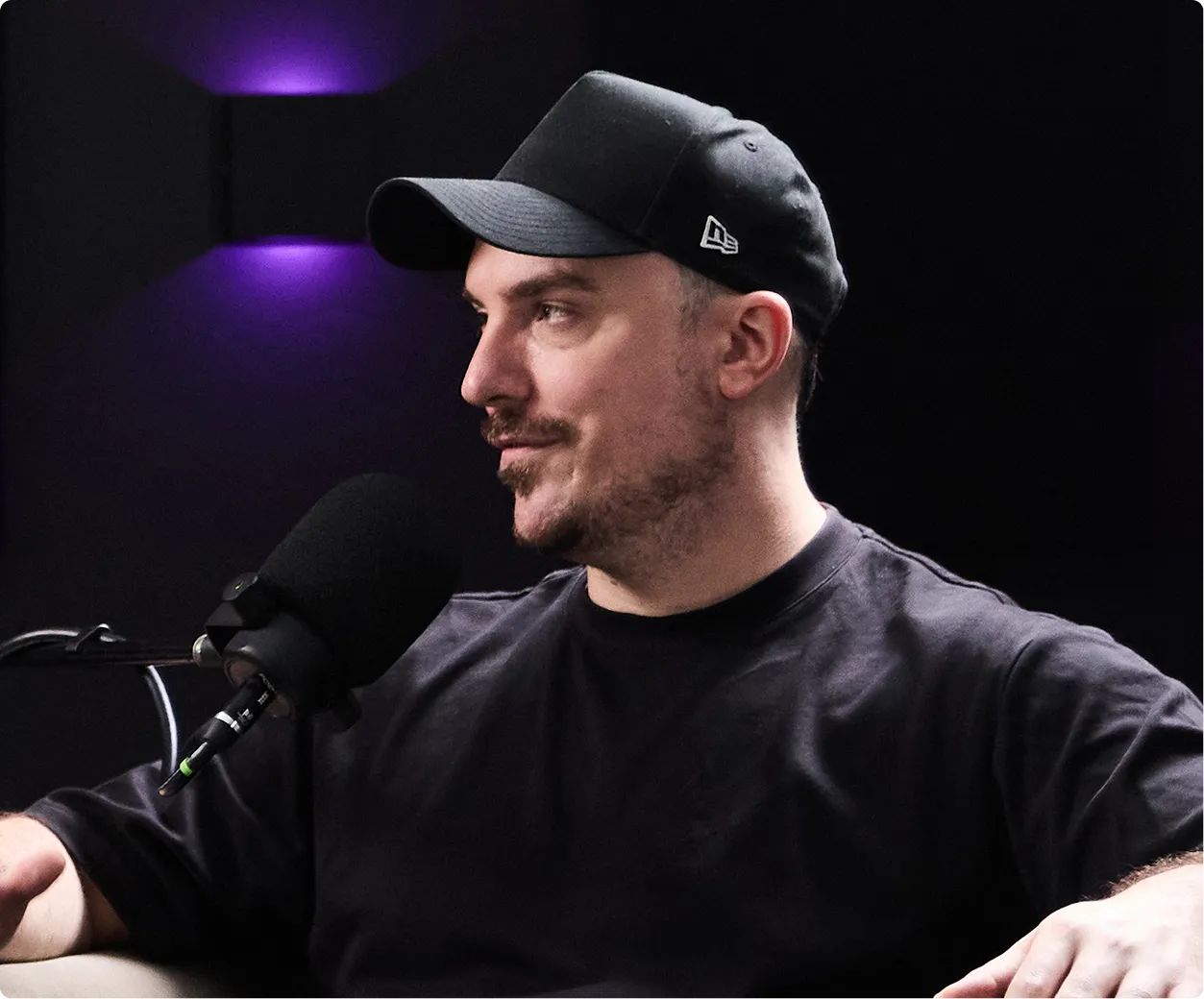
Dive into insights from industry leaders and experts.


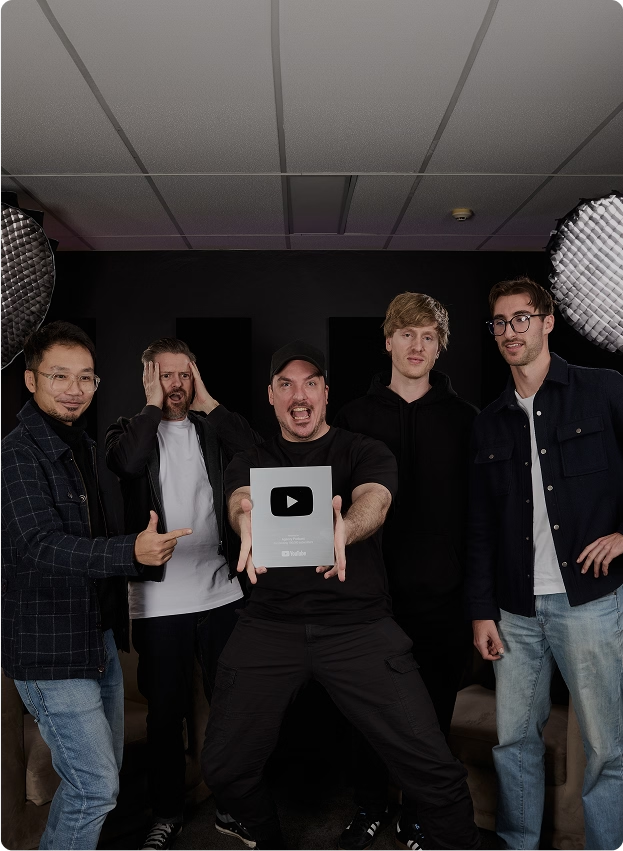
Stream now
Dive into expert advice and industry trends.