


TLDR
Summary
Leaving behind a corporate accounting career at KPMG and EY, Jane Lu chose to forge her own path in e-commerce, eventually founding the global fashion brand Showpo. Driven by a desire to avoid a decades-long corporate rat race, she pushed forward despite early setbacks, including a failed pop-up business and a former business partner claiming that "nobody shops online." Lacking initial capital, Jane bootstrapped her venture by leveraging a zero-cash consignment model and physically transporting inventory on public transit. To spare her parents the shame of knowing she had left a prestigious position, she maintained a corporate facade for two years—commuting into the city daily in a suit—while secretly building her venture into a major global e-commerce enterprise.
Highlights
- Rejection of the Corporate Path: Jane abandoned a stable corporate accounting career at KPMG and EY after realizing that traditional financial security felt like a "prison sentence" rather than a fulfilling future.
- Overcoming Early Failure: Following an unprofitable pop-up venture and her partner's exit under the belief that online shopping had no future, Jane taught herself website design and launched Showpo in a single night.
- Maintaining a Dual Identity: To protect her traditional immigrant parents from the news of her career shift, Jane spent two years pretending to commute to a corporate job in Sydney while building her business in secret.
- Bootstrapping and Inventory Strategy: Operating with minimal funds, Jane utilized consignment arrangements with suppliers and transported large bags of clothing via public transport to manage initial overhead.
- Organic Growth and Social Strategy: Showpo drove early user acquisition through viral social tactics, such as a community-driven modeling competition that expanded their Facebook following from 3,000 to 20,000 within a month.
- Leveraging Personal Branding: Operating under "The Lazy CEO" moniker, Jane utilized her personal brand on platforms like Instagram to build brand affinity, generate media coverage, and bypass traditional advertising costs.
- Focus on Execution: Jane attributes long-term success to agency and iteration over technical perfection, emphasizing the importance of taking action and adapting through trial and error.
Transcript
00:00:00
Jane, you've built a hund00 million brands. What's the part that no one talks about? >> I I faked it till I made it for too long. And the point of faking it till you make it is you're meant to make it and I never made it. So my business partner went on holidays, comes back, looked me straight in the eyes and she said, "Look, Jane, nobody shops online." >> Wow. What year was this? >> 2010. And we closed the business down then. I think if you are starting with a
00:00:28
low budget then the personal brand is the biggest the most important thing but the only moat you really have against everyone else is yourself. The biggest things I see people doing wrong is they're treating it like a sales channel. It's almost like a sale poster that you would have in front of a shop front, right? Like that's not content. That's not value adding. It's taken me that long to come to terms with like no we are making content. This is who we are. The biggest difference that sets people
00:01:01
apart, it's not intelligence, it's agency. They have an idea and they just go do it. And then if you miss, you just strike again. He goes, you're not going to get to $100 million without blah blah blah. And I was like, you know what? I'm going to get to $100 million. I'm going to do it without my CTO co-founder. >> If you were to go back in time, would you build another fashion brand? Um, >> this episode is brought to you by Wick Studio. >> Here at the Agency podcast, we're
00:01:36
building a community and we would love for you guys to be a part of it. So, we would love to hear from you. What are you enjoying the most? What would you like to see more of? And what do you think might be missing? Drop a comment. Make sure you subscribe. And now, on with the show. Jane Lou, welcome to the Agency podcast. It's excited to have you here. >> It's great to be here. >> I wanted to briefly surprise you. Uh I've got to say that the whole team has been looking forward to today's episode.
00:02:01
We got a lot of super fans here in the background. Uh and we wanted to celebrate a huge milestone with you. Um before we get started, so happy 40th birthday. >> Yes, I'm 40. Yay. >> Not to uh not to rub it in, but we have a surprise for you. >> So nice. Oh, thank you. Oh my god, this is >> This is so cute. Thank you. >> Happy birthday. Yeah, >> I'm going to eat away my midlife crisis. >> We can totally I'll take I'll take one for sure. But um we can put it in the
00:02:35
middle here. We can >> Yeah, let's check it here. >> We saw a post where you made uh you shared that you had 40 lessons >> to celebrate your 40th birthday, but you certainly don't look 40. You look fantastic. >> And um yeah, happy birthday. We wanted to celebrate it with you. >> Thank you. Thank you, >> Jane. You've built a hund00 million brands in one of the most brutal industries on earth. What were the biggest challenges that you had to overcome at the beginning and
00:03:03
what were the things that your competitors underestimated >> about your approach to business? >> Yeah. So, if we were to take it all the way back to the beginning, I think the biggest the hardest thing was the fact that I didn't know what I was doing. um which no one knows what they're doing when they're starting. But I think the great thing about starting a business now is that there's podcasts like this. Um there's lots of information out there. There's business courses. Um and
00:03:27
then there's also lots of other people who have made it that you can kind of look to for inspiration. Whereas when I started there really wasn't anything at the time. There was like ASOS and Nasty Girl. There were like a few online stores, but it wasn't there was no blueprint on how to kind of run a business. And I previously I, you know, I was an accountant, which you would think I would had these basic financial skills, but I was a terrible accountant and I had no idea what I was doing. Like
00:03:56
I was just in kind of like enjoying like the, you know, when you first get a full-time job, you're wearing a suit, you're like in a co-ed space and you're going down to like uh Rhymes bar on a Friday night, you're just having fun. I'm I was just enjoying working in the corporate firm more than I knew what I was doing or learning on the job. >> So you're living the corporate lifestyle >> without learning the skills which is not how you should approach it. So anyway
00:04:25
and then I had no experience inos uh in retail um you know even in high school I worked in hospital like in bars and like my first job was marketers like I never had retail experience. I don't even know how retail works, right? And so having no experience at all, no money, I think that was probably the biggest obstacle to overcome. Um, and you know, at the time, I guess the competition out there, you know, that was a time of like the big PE retail powerhouses of Maya and David Jones. And you know, we were just
00:04:57
like a little speck that, you know, wouldn't have even been a consideration if you think about the BR. It was it was very um retail chain dominated this um the landscape back then. >> So maybe a US equivalent to that might be like Macy's and then uh would it be Nordstrom in the UK? >> Yeah, Nordstrom. Um >> so the big box retailer that have all the brands in it and they were the gatekeepers essentially to fashion. >> Yes, exactly. And then all the Forever Forever 21s,
00:05:25
>> right? Okay. >> Yeah. Yeah. And then I guess from the outside looking in um one of the parts of your story that I love the most was uh you were working at I understand Ernston Young and then before that was uh >> KPMG >> KPMG and there's this story about how you used to catch the bus into the city in a corporate suit with your mother uh to hide the fact that you'd eventually quit your job at Ernston Young. I went actually this this one thing I implore any like young person who still has
00:05:56
freedom. Um and you know I think we all understand the freedom now is not the we have freedom now it's not the freedom you have in your 20s despite having no money you have the freedom to go do whatever you want and I implore everyone to go travel and I don't mean just go to like IA or like the Greek islands for like a euro vacay I mean actually travel and like move there and just like absorb a new life. So I basically did that. Um, I went on an exchange in Sweden and I did not go to find myself um because I'm
00:06:25
just not that deep and it was a bit of a booze fest. But when I came and but when I came back I realized I saw that there was a whole new way of doing things. I used to look at the you know I realized that there was more to life than just the corporate rat race. So if I go back another steps, sorry, I actually immigrated from China when I was eight with my parents and as an also an only child, all the pressure was on me. So you know, I feel like it was all about me getting the right getting into the
00:06:58
right high school, the high school to get the right uni degree, the degree to get the job and the job and financial stability. And that's what, you know, any immigrant family wants, um, financial stability. And so me getting that corporate corporate finance job in EY and KPMG was like I did I did it all. I did everything that my parents could have possibly wanted and I was like the model Chinese immigrant daughter. And then when I went traveling I realized that I started to look I came back and
00:07:28
looked at things differently. I realized that I looked at the 40 the I looked at the financial stability not as a financial stability but rather like it was a prison sentence. And I knew that I didn't want to do 40 years of hard time in accounting and I just needed to break free. And so when a friend came to me and she said, "Do you want to start another business? Do you want to start a business?" And I was like, "Yeah, let's do it." Without like any care for what it was. And she wanted to run a pop-up
00:07:59
store. And I was like, "Surely, what do we know about retail, right?" And you know, I I feel like back then the I You know, you would think that in order to do run a retail store, you would have to be from like a rich background. You would have to be like my age now. Like you got to be like older, right? Um you have to have connections, influence, like affluence. Um and it's just not it it's not like, you know, it's not what you do. like you know like a uni job is like maybe you start being a club
00:08:32
promoter or like you like start I don't know you're not running a retail store. That was her idea and I was like let's just do it because I don't have a better idea and my rule is unless and I say this to my team unless you have a better idea we're just going to go with one we got. So let's just let's just do it. So, we ran these pop-up stores um un unprofitably because I think one of the biggest mistakes um a lot of young startup founders make is that they don't
00:09:02
account for their time and so they don't realize they're actually running the business um unprofit unprofitly because they're not factoring the opportunity cost of their time if they were to be working somewhere. running this business so excited. Um, my business partner convinced me to quit my job at Ernston Young. Half of me was just so excited and so naive just like excited that yes, I can make this work because I'm going to work so hard because I had that mentality. If I just put all my if I had
00:09:32
this enough passion, it will it'll make it happen, right? If I work hard enough and I'm passionate, it'll make it happen. And the other half of me why I gave you also the context that I was really bad at accounting. I pretty much been working three years in accounting still not knowing what I was doing. And the first two years you know you're new. It was at a point where it's like you probably should know what you're doing. So I was like I I faked it till I made it for too long. And the point of faking
00:09:58
it till you make it is you're meant to make it and I never made it. So I was like okay there's I got to go anyway. quit my job to work on building this business full-time. Um, and so at that point I was like, you know what, we should make build this online because physically, you know, before you were giving me your office tour and you were showing me your old pop uh podcast space where you're setting everything up um you're setting up for every podcast um and how much manual work it was. for
00:10:29
this pop-up store. We were setting everything up daily because we were running it in a bar because it was a hight traffic area. It was a popular space, but it was busy. It was open um vacant during the day, right? So, they wanted traffic. We get cheap rent. We set up a retail store with all this like knickknacks and like clothes and home wares and whatever. It was like a market store within a bar. So much manual labor. And I was like, let's turn it online. So my business partner went on holidays coincidentally.
00:10:59
>> So I spent that month building a website, taking photos of almost a thousand products. Wow. >> Because it was like everything was in like a lot of products was just just had every skew probably just had one unit behind it. >> But it was just I just took a lot of photos and like uploading it. It wasn't like a dialup era back then, but it was slow to upload these photos. So it took a long time and I didn't know how to build a website. I had to teach myself. um she comes back from um her holidays
00:11:29
and I was like, "We're pivoting. We are doing this as an online store and then she said, "You know what, Jane? I'm sick of the broke startup life. I don't want to do it anymore. I've been secretly job hunting and I'm going back to corporate. We are shutting the business down." And I and I said to her, "Please come on, look at the website. I think we're on to something." And I'm not kidding you. She looked me straight in the eyes and she said, "Look, Jane, nobody shops online."
00:11:59
>> Wow. What year was this? >> 2010. And we closed the business down then. >> How How did you feel in that moment? felt like the biggest failure like my like I think everyone's biggest fear about starting something obviously you lose you lose money and no one likes that but it's the sense of failure the shame after you've just like been flooding Facebook back then you know with all these like all my business promo and marketing and like having events trying to invite friends to come
00:12:31
and just like hustling and getting PR and just trying to push it as hard as you can and to fail and and to have quit my corporate job where people said like why are you doing fashion? Why are you doing retail? You don't know anything about it. Questioning and you're like I'm going to show you and you're like no I won't. Um I can't. And just that feeling of failure that was probably the worst part. Losing all the savings. I've been working three years corporate by then. um lost all my savings and now I
00:13:00
was unemployed and I was living at home and I couldn't bring myself to tell my parents I quit my job because they had sacrificed everything for me like they left their family friends their corporate jobs back home in China to come here when they we got here they worked as cleaners they worked in factories like they did everything they could to give me this better future and I just thrown it all away on this stupid idea um that didn't go anywhere. So, how could I tell them? So, I didn't. So, I would get up early
00:13:37
and having breakfast with them. And then my mom also worked in the city. So, I have had to keep getting the bus into the city with her. And so, riding the bus, just feeling like the most pathetic person ever, throwing everything away. absolute like you know I like you know the Mulan story I just watched it recently with my kids and it's all about bring honor to your parents it's all about saving face and honor I'm like oh my god I bought disgrace to my family what will I do and so that was stuff and
00:14:10
it was it was in the middle of the global financial crisis so no one was hiring >> so I was >> what what were you doing in the city throughout the day >> um at From the very start, I would just go nothing at first. Um I even like >> you would hang out in the city all day and catch the bus back with your mom. >> No, I at least I didn't have to I didn't finish at the same time or so. So that was fine. >> Um next step was to get um just a part-time job. So I worked as a
00:14:40
receptionist at a laser hair removal clinic, which >> honestly like um that's why I tell people people are like, "Wow, your story is great. I'm going to quit my job also." I'm like, "No, don't quit your job." Like, cash is the most important. It's the lifeblood of any business. You need cash. Do not quit until you're ready. Um I like it worked out for me, but I wouldn't wouldn't do that again. Like I would like to have money some cuz sometimes I'm like, you know what? Like
00:15:08
you actually can if you make money that can fund the your ad spend, fund inventory. Like you need money going into your business to fund it, right? So number one takeaway isn't to go quit your job. So until you validate your business and you get momentum, okay? So don't don't take that the wrong way. So quit this job um at at as a receptionist and it was just really demoralizing because of the this woman was just such a nasty boss like very like you know gets you the vacuum and like oh you
00:15:38
missed the spot. Very like um like a Cinderella stepmother vibe, right? >> Condescending. condescending, which I think like the lesson trying to take a lesson out of every part of life. And I think the lesson there is just what kind of boss not to be. >> Um, and then actually that was the only job to have ever fired me cuz they said, "Your heart's not in it." I'm like, "Yes, correct. My heart's not in it." Um, and then so how I got at that eventually I had at this point only one
00:16:07
friend that had a business and I reached out to him cuz and I think in the back of my head I'm like maybe maybe he could give me a job and I can learn from him or like he can and I can learn how to like start a business or whatever. And he basically said you should meet my other friend who she um wants to start an online fashion store. And I was just thought, you know what, that is the last thing I should be doing online retail. I clearly at it. Um, and he's like, "No, no, no. Go me. I think you'll like it."
00:16:38
I'm like, "Oh." He was paling me off. What a waste of time. Cuz honestly, even back then, I feel like I think when you're older, you get probably more like, "What's that? What's that connections that are more validated, more like um qualified, right?" >> Yeah. >> When you're younger, you just like I don't know. you. I just felt like I hadn't met really any connections that's really led you anywhere. So, I thought it was a waste of time. But then if I'm
00:17:02
asking for favors, I should at least accept the ones like I should accept his ad advice. Right. Do you get people who come up to you for business advice and then they don't actually listen to what you're saying and they just want you to validate what they're saying? Exactly. And it's like actually frustrating. If you want more advice from this person, maybe try and do the things that they suggested before you go back and ask more. So, it just it just happened. I think when I meet someone, I get
00:17:27
excited. I'm like, "Let's just do it." >> If you want to grow your agency, you need more than just a website builder. You need Rick Studio, the all-in-one platform that's built to help you scale. Design smarter in a hyperflexible, responsive editor, cherry-picking whatever clients need from pre-built UI elements and templates. Deliver robust backends with built-in e-commerce solutions for every industry, letting self-maintaining infrastructure just run itself. Stop reinventing the wheel with
00:17:59
every project and instead create a sharable design system with reusable assets, apps, and components. Clients growing too fast? No sweat. Wick Studio AI powered CMS lets you turn a single layout into hundreds of additional dynamic pages. It's true. More clients no longer has to mean more chaos. Wix Studio gives you one centralized view of every project and makes real-time collaborations seamless. Do your agency's best work at scale. Build your next project on Wix Studio. Now, if you were to think back in that era where
00:18:36
your friend said to you that you'll never make money on the internet and nobody shops online, what's something that you wished you knew back then that you now know? um that you can that with absolute confidence you can make bis you can just go and make money online like you can just trade you just buy like it is buy low sell high get attention I think the thing that we didn't understand back then the way actually the way we talk about getting attention and attention being the new currency like is something
00:19:06
that we never thought about back then it's still like a little bit of like it's still a little bit back then like almost embarrassing to be like let's make content, right? You know, like that you can just start your own podcast. Like you can't just like build a personal brand. It and that it all it is all about getting attention on your yourself, your brand, your product. And that is ultimately the hardest part of any business. And I think that's what I didn't know back then that I wish I knew
00:19:37
now. I mean I know now I didn't know back then but so actually so with this first first business you know even though like the even though there was it was so hard in that first business to get everything up and running like the pop-up store took 3 months before we actually were able to open which sounds like a lot for a store but it was a popup you know it wasn't like a proper you know fully fitted out store um just to get like supplies and stuff and then when I built that website it took me a
00:20:06
month um and Then it took I mean all all nine months six months of being in operations we didn't actually we weren't profitable. Um, but when it came to this new business, when my business partner, um, when we had that dinner with the red wines and we wanted to start that business, um, I came home that night and I built the website that night because I didn't want I wanted her cuz she had more experience. Um, and like kind of the balls were in her court to whether we go ahead with this business or not.
00:20:39
Also, cuz I had just previously been dumped by my ex- business partner. So I, you know, I felt vulnerable. So I came home drunk and built that website that night because I had the experience from building a website a month ago to be able to do it now. Um, and then we we both had some I had we both had some industry contacts um in models and photographers. So we had a shoot that weekend. She had supplier contacts. So we got stock that week. And so within a week we made our first sale. And the best part and then well it was to
00:21:13
truthfully it was to one of the models friends who saw a Facebook post but what it counts. >> It does count. Um but what it did prove two months after my ex- business partner told me that nobody shops online that people in fact do. >> Yeah. I think, you know, when when you look back at these moments, I've had them myself as an entrepreneur where you're like, man, that moment kind of sucked or that person thought or believed the wrong thing and and it weirdly leads you to the right place.
00:21:40
>> Yeah. >> I think back at your story and I have a question about your mother. Do do you believe had you felt that she was going to support you from the beginning that you would have built the company that you've built today? >> Yeah, probably not. I think that is the thing that probably pushed me to like really get myself out of the situation I was in. Actually, my initial goal was to just even make enough money. So then I I my honestly everyone's like did you intend to build
00:22:10
what you have built now? I just wanted to make enough money so I didn't have to go back to corporate and so I would have told her at like as as long as I can make like enough money to cover that and then so 15 months to make like good money and then once it did it just started exploding. I had to do it from her garage. I had to ask her to chuck a sticky so then um she had she can help me pack orders. Um and >> so your mother was calling in sick to help you. >> Yeah. She was terrible though because I
00:22:38
realized she wanted we were so busy. quick story. And then it was 5:00 p.m. You got you got to get everything to Australia Post in one of those parcel bins by like 6. And I'm like, and we used to handw write thank you notes. And I saw that she had has been writing everything in broken English. Like she got the words wrong. I'm like, "Oh my god, we had to redo all of these." Anyway, so she's fired. That's all right. But um no, so she you know like within the space the business took so
00:23:07
long to to re take off it it actually got to a point where just before this business partner left we were making $5,000 a month which is like one or two orders a day. You think about how idle you sit there just packing one or two orders a day. And then actually when she left it just doubled. It went from 5,000 to 9,000 to 40 to 75. All of a sudden it was like boom. And then we got our first office. Um, and it just and then I got staff. It became a real business just all of a sudden. But the thing is even
00:23:40
at that point I didn't have the confidence to really tell my parents. So at that point I told them I was on unpaid leave. So I still had a backup corporate job waiting for me. >> So you had an office, you had employees, you you distribution and you still couldn't tell your mother. >> And yeah, it was in the city as well. It was like a proper Yeah. on pit street like it was a promo office and everything and then we got a warehouse and with the warehouse we had so much stock I was like worst case I could fire
00:24:06
sale this and start another business so I'm like I'm ready so it took me two years after I had the business to tell them >> two years to tell your mom >> yes and I took them to the centerpoint tower which is the most one of the most iconic >> Sounds like you're going to get married >> buildings I know buildings in Australia their first fine dining white tablecloth restaurant um it was Father's Day. So, I told them and I was like, "So, um, I'm buying you guys a new car. P.S., I quit
00:24:34
my job two years ago, and PS, I'm going to pay off your mortgage." I s I really sandwiched it really well. >> How did your mom and dad take it? >> Oh, they were just in shock. I mean, they were very happy that with all the gifts I was giving them, but they just they were like, "Yeah, I can't believe you did this last year." I'm like, "No, no, no, no. Two years ago." And they were like, "No, no, no. You mean last year?" like, "No, 2 years ago." And they
00:24:59
just couldn't actually believe that it's been that long I've been lying. Like, how? They were like, "How how could you have fooled us?" I'm like, "You guys are so freaking gullible. You have one child. You're so gullible." Like, and I started telling them some of the other things. Like, I used to throw my mom's cooking in the toilet cuz she was a bad chef. And then I used to like pretend to play the piano um when they come home because I can hear them coming in, you
00:25:21
know, like I'm like and then I was probably digging a bit digging my own hole a little bit there. It's probably a good time just to like tell them all the things I've done bad. >> Yeah. You're like I'm really going to like get the most out of the car in the house and >> just to tell them you guys are really gullible parents. But um no, I think they were just really also just shocked like we you know no one in our immediate family is entrepreneurial. So they just thought how did you have where did you
00:25:46
get this from? Like we don't have this gene and um to that I think it's the fact that like they immigrated here like they left everything they have ever known um back be before the internet era. I feel like everything's a lot easier with like in internet and Google translate right they didn't know what they were doing. It took them five years to even just like apply, get rejected, apply, get rejected to even be here and to come here and leave everyone everything they know to a country where
00:26:16
they don't speak the language that risk. And then with a child as well, I think everything's harder when you have someone to support like that is such a big risk for them to have taken. And I think that's probably where I get it from. If you were to go back in time uh and let's say you'd lost your post tomorrow and uh you know you're in today's current day and age and you didn't have all your contacts and all of the things you have access to right now, but you had $10,000. Would you build
00:26:42
another fashion brand? >> I would do I think I would stay in retail ecom. Um maybe I wouldn't do like women's fashion. Um maybe like kids fashion or something like that. just something a bit different but like some something adjacent. Um because it's just I feel like it's like the market I'm in is very competitive and also it's like I've done it for like so long, right? Why I might as well do do a new challenge? Um but still be able to take all the skills I have with me. So
00:27:16
definitely I would still always I think the two things I would always do ecom and and market to women. everyone. It feels like everyone romanticizes e-commerce. What's the part that no one talks about? >> I think the part that people don't talk about is how hard it is to actually scale in ecom because I think it's so much easier to start these days. Like Shopify has just democratized the ability for anyone to start an online store. Um, Meta Ads is it's easy to get to pay for attention, right? You don't
00:27:50
need to. Back in the days when I first the the difference between me making it and not making it was understanding how to go viral on Facebook. Um and and some people just never got it right. And some businesses never got that. But then actually when you are able to pay for that attention um I think that makes it easier for everyone to get to a certain level of sca uh certain level of like growth. But I think in order for it to scale to a true business um where one where you're not working so much on in
00:28:25
the business and where you're working on the business and then you have like you're not just paying for you haven't just built yourself a job. I think that is a lot harder than people think it is. Now, when you're talking about stock and ordering stock, something I hear a lot about in the e-commerce space is that people are hand or hog tied essentially because they're they're trying to harvest stock and then get rid of stock, harvest stock and then get rid of stock. >> Did you have anything that you did to be
00:28:53
able to manage that issue in the early days? >> So, I was very very lucky in that my first business partner negotiated um for us um to be able to get stock on consignment. >> Okay. And consignment is when you're when you have the stock, but you haven't paid for it yet. >> Yeah. And we only pay for it after it's sold. >> Wow. >> Yeah. And so back then we were doing And so what this meant was I would go in every single day to the supplers's office and then pick up stock just to
00:29:22
send it. So back then I what I didn't have was money, but what I did have was time. So it was fine for the for the start. So >> So like I'm picturing So you had the online site. Mhm. >> You had the photo of the product. You didn't actually have the product and you would have to drive to the supplier, >> get the product to just ship it. >> Yeah. >> Back then either. >> Okay. >> I didn't I didn't have my license back then. And then so actually even back
00:29:48
then um after 3 months we had a store um in in Broadway in Sydney and >> you had a physical store for show. >> Yeah. Because honestly back then it didn't I actually didn't I believed in online but I didn't even believe in pure play. It honestly seemed crazy to be able to just like have a pure play online store because it doesn't feel like you have anything cuz it's not tangible. That's the mentality back then, right? Like considering my business partner didn't think you can
00:30:17
even shop online. It's like not that. Anyway, so I would go in and work in the store and then send and then also sometimes and so by the time we had the store, we had stock as well. But then I had these memories of like going into the supplers's office and then getting the bus and then I would also be stocking up the store as well and I would have had these giant bags like huge. Oh yeah, we've got we're on video this big and I can barely carry them and you get them onto the bus like
00:30:45
and I just it's like I should have a license or if you're actually making a little bit of like I didn't have the money to get a cab, right? So just like public transport with all my stock in like these giant bags everywhere. Um so but by the time sorry but after a while we were able to at least get the money to buy a little bit bit of stock because we didn't design our own products back then. We were stocking other people's product and you can buy in as little as um a pack of seven different um seven
00:31:16
units of different sizes. So it's actually quite an e economical way to get started. So, I think that's where people where it's hard is people can fall too much in love with their own product and they really go ham on their initial investment. Um because, you know, they're like, "Of course, it's going to work, right?" And if it doesn't sell, then you're then you're screwed. So, I I think that's what we had the luxury of, like learning what our market wanted, what our
00:31:46
customers wanted, learning like what sells. Um, and so I even though I have I never had a passion for fashion, I was able to just like kind of come into it with this lens of a mass consumer, um, and just really think in the like put myself in the in the shoes of a customer and really know what what a customer wants and then learn it learn it as we go. I I just love this vision of you getting on a bus with massive bags and I'm picturing the ones that you can buy at BigW, like the big stripey ones.
00:32:19
>> Yeah. Yeah. Yeah. Like the IKEA ones. >> Yeah. Just shoving them full of clothes, dragging them on the bus >> and then just like one's probably falling out, picking it up and another falling out like, "Oh my god, people like get off the bus." >> What was uh what was in the back of your head as as you were scaling in the first few years? Were you just thinking to yourself, "This is too good to be true. This is going to run out soon." or did you have confidence that it was going to
00:32:41
continue to scale? >> Um, so when it finally started doing well, I remember um I remember once I was driving, so at this point I actually was using my parents' garage to cuz I had left my ex- business partner. We actually got rid of that store. Um, and it was in my parents garage and then so in the Australia Post mailboxes, I would fill up one mailbox and then have to rush to another mailbox cuz I filled up the entire mailbox of stock and then just driving home and I've been like working I get, you know,
00:33:13
I've been working probably like 10 hours straight at my parents like no time to even like stop for lunch. um just doing every everything by myself and then just driving home and it's like the sun's setting. I'm like listening to like you know like top 40s banger and I'm just like driving with so much pride and that feeling of like oh my god I can't believe I've actually done it and that just like and I'm going home now and I'm going to keep working on the couch and
00:33:44
I'm just like so so so excited. Okay. So, can we talk a little bit more about social media content and how you were able to use Facebook and use yourself as a bit of a um a magnet, if you will, or a lightning rod to bring energy into the brand? So, I know it started off chaotically, but at what point did you start to fundamentally plan out or scheme how we could then leverage social media content to scale the brands? Yeah. So, my first ever time, so it was six months into the business when I
00:34:17
realized what going viral meant. Um, and actually, so I always knew social media. Um, like back when I was working corporate, um, EY was the only big four company that let you use social media because they were using it as a recruitment tool, which is great because I spent my whole time there on Facebook, which is probably why I was terrible at my job. like would have some like spreadsheet open and just like alt tab when a manager walks by like just to hide this hide that I was on Facebook. But I knew the ins and outs of it really
00:34:49
well. Like I'm that person that like uploads an so annoying but I'm like the person that uploads an album every time you go out creates a Facebook event for whatever activity you're doing. Like just like use every function on it. And then when it came to building this brand um it was because I didn't have the money and I wasn't going to go down the PR route. Um, I just really focused on social media. And then, so six months into the business, the business hadn't taken off. We're like making like
00:35:16
probably a few thousand dollars a month and I was watching America's Next Top Model. And then they had this new segment called um like audienc's favorite that that invited um people at home watching the watching TV to vote for who their favorite is, which is like kind of like a miseniality, right? And then I realized, oh my god, we could do this for Showpo because we need models anyway. So why don't we do a modeling competition? And then so we did. So we uh when we had 3,000 followers, we asked
00:35:46
them who wants to be our model and we maybe got like 10 people entered, right? Not that many. 10 people entered. We put it into a little Facebook album and then it was vote for who you think should win. But back then fgate was on. So it meant that you had to like a page, follow a page in order to engage with the page. So then all of these 10 girls would go and ask all of their friends to vote for them and then some of their friends would enter themselves and then they would vote and then they would
00:36:11
enter some of their friends would enter themselves and people will create like Facebook events, Facebook groups just to really like build themselves that hype and then within the space of one month we went from 3,000 followers to 20,000 followers. >> Wow. >> And it cost nothing >> and we got a model out of it. >> So it was just like the best. It was my first moment of like a growth hack and also going viral. And I think not only, you know, I think back then in 2011 having 20,000 followers was serious like
00:36:43
social proof. Um >> yeah, these days it's not a lot, but back then that was insane. >> Yeah. >> Yeah. Yeah. >> No one else No one else like none of our competitors had it. Um and so >> what was the mechanic that that you think that allowed it to go viral like that? like what was it that they wanted to gain from the brand? >> Um, it's like you know, you know, Bonds have a baby competition. I think people just it's like now you now you're probably better off just being an
00:37:08
influencer, right? But back then it was still like this is how you get a platform um to be a model. And so people like that and um and we actually worked with a model for quite a while um that won. And so, but the best part of it was the fact that like that was a moment I understood how what so what going viral meant and how social media was meant to be used. Well, I think the hard thing about social media for is the fact that the algorith algorithm changes, right? And so, Facebook engagement, I mean, we
00:37:41
were just to set the scene, we were at a time when like you could post a cat meme and get followers and get engagement, right? it. You can post like your lunch and it'd be something, right? Algorithm changed and you had to start running ads. As much as that sucked initially, but actually it meant that if you understood how ads worked, that is your new um secret source, right? And that actually is much more scalable than just organic. So, being able to do as well was probably the next thing that helps
00:38:14
helped us grow. Um, and then also moving on to like really understanding how influencers and Instagram worked as a new new platform. And like honestly, we didn't always get it right. Like we would we missed YouTube. Like we did a bit of YouTube, but I don't think we ever nailed it, right? So it's not like it's not like we we have the answers for everything. Um, but I think it's about like the thing about every platform is just like to really try and understand how the algorithm works. And when you're
00:38:44
not doing well, the algorithm isn't broken, you need to be doing something different. >> Now, at what point did you label yourself as the lazy CEO? When did that happen? >> So, probably like back in like um it seems recent. It seems late to the Instagram game cuz Instagram had been around for a while. We've probably got 300,000 followers on the Show Pro account, maybe 2016, 17. Um and then I never had my own Instagram account. Um, >> so this was all under the Chopo account
00:39:14
at this time >> at Yeah. >> And how how much were you in there uh showing yourself in the content at that time? >> I think maybe a year before that I was like posting just my holidays and whatever. It was probably a bit too close. But I think that was when Facebook was still the main platform. And as soon as we realized like, oh my god, no, we've switched to Instagram being the main thing. I got myself out of it. And so I kind of had like no account for a while. And then I think
00:39:39
the the main reason I actually started my own Instagram account was so that I could have an account to play with because I wanted to test cuz basically we got to 300,000 followers on Instagram for Chopo and it just stalled and I didn't know how to we were trying everything and it just didn't know what was working. And so I got my own account just to like cuz when you have it's almost like you know a brand new business, right? You can just be like, "Let's just only run EDMs and see what
00:40:08
happens. Let's only run Google ads." Right? Because you can literally set everything constant and just see the impact of whichever lever you're pulling. Whereas like when you already have a big business with an Instagram, an account with a lot of followers, you can't really see that impact as clearly. So basically having my own account um we were I was just able to test a few things and also if I did something wrong like if it's you know you know it wouldn't be that bad. So I
00:40:35
was able to just like be really fast, agile, nimble. I didn't have to like consult the my team members. I could just try it on my own account. If it worked then we'll just flush it through the chopo. And so that was like the thing I think really helped because in the next two years that's when we grew our first million followers. At what point did you realize that people were buying into your personal brand as much as they were buying into Show Pony? >> You know, I'm actually make content. I'm
00:40:59
like, everyone should build a personal brand, but I actually never did it um like strategically. So, the only reason I even started doing PR, it was because when we started to look at doing PR again, um even though I felt burnt by it at first, um when we started doing PR, no one wanted to write about our brand because we were stocking someone else's products. the only story there was e-commerce, social media, um entrepreneurialism. So th those angles all centered around the founder and so and once you start
00:41:34
getting PR, once you start building a bit of a name, you know, it was still in that early stage of like ecom um entrepreneurship in Australia, I was able to just like ride that momentum quite well well and so just build the brand from there. And then um and so that was amazing to start building a personal brand, but I wasn't even like actually even focusing on doing the right content, right? Like even the even the podcast I was I remember like be before co we actually had these meetings at show being like we should start a
00:42:07
podcast blah blah blah blah like no we don't have time for that. Even back then, I remember like I think 2009 I January I was like I did this um Instagram post saying like guys most of you guys probably follow follow me because I'm the CEO. I I'm the founder of this business um and I'm you follow me for business content um and I'm just here posting like hey I'm out at this thing now I'm doing this. It's just like kind of like you know at the time it's it's how millennials post on Facebook
00:42:38
right? it's just life update. And so it it wasn't actually offering any value to my followers. And then so I did a few like I wrote a few posts. They didn't really like do that well and it was just it took so much time I just like gave up. So it's um not necessarily like yeah it took me a while to actually get everything going. I probably actually been like actively building my personal brand probably for like two or three years only. Now, is a founder without a personal brand in today's day and age
00:43:13
becoming obsolete? >> Oh, interesting. I don't think so. Um I'm I'm sure like there's a million brands out there that can the people that can do it well, right? And then a lot of like honestly the big some the big corporations can, right? But I honestly think especially if you're starting with a low budget which a lot of us are and then I think if you are starting with a low budget then the personal brand is the biggest the most important thing and I think we're in this age of like AI you know anything
00:43:50
can be copied you know the only moat you really have against everyone else is your own personal brand is yourself so why not build that and I think Like honestly it's like everyone everyone is unique. Everyone is like you and you might not be like you know you might not think you're interesting but other people do like you know like you might think this is just the same old thing but the great thing about content is you can build you can do content in a million different ways. Like some people
00:44:21
are great at like yapping on camera. Uh you like you've got your like your podcast which is like wildly successful. I'm like love doing like crazy things in the office. There's people like um who just film themselves doing what they whatever they if they don't love being necessary on camera, they time lapse what they're doing and they can do a voice over. There's like a million ways to do it. Um that you don't have to be like a big eccentric personality to, you know, there's no certain like there's no
00:44:51
mold to how you can do it. You just need to show up in your own way. And I think the most important thing is actually the thing about like social media these days isn't to to follow like an existing formula. It's to actually have that one repeatable format that series that can be recognized um to your own brand. So just finding so the best thing to do is finding like what you actually enjoy doing um what what's comfortable and what you can repeat because you want to be able to do a lot of it. M I was
00:45:20
having a conversation with someone recently and helping them understand what personal branding was like and I said to them if you imagine a comedian who is trying to sell tickets to an event. If the comedian who's an aspiring comedian only cares about selling the tickets, they're probably not going to have a great career. >> So when I ask a lot of people when you want to build a personal brand, what do you want? They go, I want to generate leads. >> Yeah. >> But what you just said is really
00:45:43
important. You said you have to love it. And I think to pursue a career as a musician or comedian, >> you have to have a love for the art itself. >> How have you found >> I also don't think people like I don't know maybe just because I am an extrovert. I don't think people necessarily just want to follow generate leads. I think it's almost that thing where like maybe they do I don't know but maybe it's just like it it's just like not shame but like you feel weird
00:46:08
saying like I want to have a platform. I want if I have something to say, I want there for people to be able to listen to it cuz I was okay. So, quick story. Five years ago before I started doing my own content before I got like be I I think I was making like trying to make a Tik Tok during co and I was like really and I was upstairs at my in my house. This is before like everyone is making making Tik Toks now, right? And then I'm there trying to do a Tik Tok dance or a talk or whatever and I hear my husband's
00:46:39
footsteps coming up the stairs and I'm like I grab my tripod and I throw in the walk-in wardrobe like I was having an affair and like my husband's coming hide cuz I'm so embarrassed for him to see me doing content cuz it's embarrassing. And I think like now I'm like I it's taken me that long to come to terms like no we are making content. This is who we are. Um, and I think some people like you'd be surprised how many people I don't know that do secretly like not like I think
00:47:10
there's just still some kind of shame with saying like I just >> like it's embarrassing to make content >> because also it's the thing that like it is actually it is actually getting harder and harder because the more people are doing it. So the fear of like failure is always going to be there and the fear of being judged. Do you think it's harder now to make content at an entry level than it was, let's say, in 2006 or 2016? Oh, >> 100%. Yeah. >> How much harder do you think it is?
00:47:38
>> Oh, I think it's like I think the thing about now is that it's more acceptable. Like, so I think it's like that first leap of like whether people would judge you. Um, that's easier because you people are like, "Yeah, chasing the bag, got to hustle." Like that makes sense. But I think it's like um you know the quality of the content you know like you have to have the hook then you got to do the payoff like you know like you can't just like >> can't be too stiff.
00:48:06
>> Yeah voice. Oh my god. Like it's actually pretty hard. >> What would be your advice uh to anyone who's looking at getting started now if they wanted to enter the market and build a brand? >> I Okay. Um, I think just like start with something just I think almost like film like just bulk film a few things and then almost if you can't do it get someone else just to post it for you cuz I think sometimes >> oh getting someone else to do the the hard thing >> post it because it's like sometimes
00:48:35
you've got it and you question yourself last minute you're like ah this is cringe and just get them to post that you don't have to look at it and then another thing to do is just just to try a reel if you're not sure what to do post make two versions of it try a real and and see what works better and just like kind of learn as you go. >> And then what would be your advice around trial reels? Like what what should people look for? How should they test things? Uh what are you trying to
00:48:59
trial when you're trying to produce one of those? >> Yeah, I think the biggest thing to trial is the hook. I think that's the thing that's going to really shift the needle. >> You're switching up different hooks when you're triing things. So maybe the same video edited with a different hook at the start. >> Yeah. >> Yeah. >> And then sometimes like it's it's also just easier to settle debates at work. Um, like sometimes we're like, "Oh, do
00:49:18
we film it upstairs or film downstairs?" We're like, "Just film the exact same thing upstairs and downstairs. We'll see." This one video got 500k upstairs and 1.5 downstairs where it's messier and like dark. It's a It's like it's upstairs is like cleaner, white, brighter, but it probably just looks a bit more clinical. And then downstairs looks like actually in our office and actually like did so much better. So, it's like good to test those things out.
00:49:44
So the messy crazy background did way better than the clean clinical >> backgrounds. But I think everyone's got to test that out for themselves, right? And then you can just retest some of these things as well. Also like um yeah, you can test the duration of you know a piece of content this I think test things that will shift the needle and test things a few times and then you know and then the thing about testing is always like test just one thing. Hold everything else constant so you know
00:50:09
exactly what you're testing and what the results are. And then when you're pre-planning, what are the things you're thinking about that you need to test or need to uh try and do on video? >> Definitely the hook. I think we're still trying to like get better at the hook part of the content. >> Um but whenever it's on camera, it it can come off like a bit presenty. >> I call it camera itis. >> Yeah. Right. I like it. >> Like a weird thing possesses you. You
00:50:31
lose your uh ability to have a personality. >> Yeah. And then you just it just doesn't come across as authentic if you're trying to get all your points across. Um and so I'm I'm trying to work on that. She's like trying to she's trying to train me. I've got like I've got my 25 year old mom in the back. She's like posture up loose like let's let's this do that blah blah blah. Um and then I think everything else I think like there's there's obviously editing styles
00:50:57
and whatever but I think it's like if you're not a great editor like I think there's you can be just it can be lowfi, right? It doesn't need to be high-fi. >> How how patient should people be before they change their strategy? Let's say you're testing stuff and it's not working for a week. Is Is there a ratio that you like to play by with your team? >> With the team, I think we need to try like at least like I would say like five times before we can say this isn't
00:51:23
working. Um I'm still and then even getting the team to try real different ways of doing things, right? Because sometimes you believe in the night cuz sometimes even like we have an idea and when it goes well it can get millions of views and sometimes it's just like you can see it's like a watered down version of the idea in the execution. Right? So and sometimes you're like is has the trend passed is is is it is this like not like are people not interested anymore or are we just not doing it right? So I think it's
00:51:55
like when you have a great idea also you have a content series that you own, it's always important just to try and make it work cuz sometimes if you if you look at sometimes like you know some really like big big influencers out there, they generally just have like that one content series they use and like you can see sometimes the likes drop off the views and then it picks back up. So like they just persist. So on my podcast I have this segment called help my small business. So every month we like look at
00:52:23
a new a small business and give them business advice on like how they can improve, right? It's like Shark Tank but without the investment. Um but then a lot of it is I'm like ah people with their content it it's the biggest things I see people doing wrong is they're treating it like a sales channel. They're like, "Here's this blah blah like you." It's almost like a sale poster that you would have the front of a um shop store shop front, right? Like that's not content. Um that's not value
00:52:53
adding. And then they're also just being like, "Hey, so this happened, you know, like it's just it's not it's not stopping the scroll. It's not interesting. It's not engaging. There's no value ad." And the millennial pause that you know the hi I'm here, you know, okay? You know, and I'm like, guys, come on. It's 2026. Like, even us millennials got to stop doing the millennial pause and they don't clean their phone screens, which is it's pretty easy to
00:53:23
do. So, I I feel like I couldn't say that enough. >> Something you said there that I find interesting is how people treat their social page like a license to sell. >> Yeah. And I talk about all the time where you need to provide value and then people think that that means talk more about their product. >> When you say value, what what is that truly like? What has to happen inside the content for the value to actually exchange from yourself to the viewer? Um, I think there's something that's
00:53:56
like save truly the best ones are something that's save worthy or shareworthy and you you get the instant signals, right? Or they comment or they like they actually it actually sits with them, right? Um, and you can look at the watch time and to see if people are scrolling past straight away. Uh, and then whereas and then even even promos promos um like a like a sale like if show 25% off, right? even that that you can deliver that in an interesting way. Like sometimes we'll do a dance, sometimes it'll be like a it'll there's
00:54:28
creative graphics you can do to to kind of pull it off. You've seen like people have had like giant novelty receipts, giant novelty bags. I know not everyone has the budget like that or recently actually we had um a shop warehouse sale and so we went I I went around the city and handed out notes to everyone and the note was like uplifting girl power sayings like you know slay queen like you look amazing blah blah blah and then so we basically got people's reactions and they're like wow and they were
00:54:58
everyone looks so happy and then made it seem like the the note that I was handing out was like show price on sale So there's ways you can do it that's still entertaining. >> And with your personal brand and the content that you're producing, were there things that surprised you about being a personal brand that you weren't expecting outside of driving attention to Chopo? What else? >> I think Yeah. Yeah, the thing that really surprised me is how, and I don't want to invite haters, but I think the
00:55:28
biggest fear people have about building their own personal brand and putting themselves out there is getting hate. And I think, oh, like what if the 1% of people who will be haters and I think I am surprised at how little there is. Um, and so, you know, I think and when it does happen, it's it's I don't I it's just like it's so small compared to like all that all all the benefits you're getting from it. All the people that come up in the street and say they love what you're doing, the people that like,
00:56:03
you know, and the people that love the brand. Um, and it's like I actually I remember the first time I got negative feedback. I open up the Daily Mail. I was in the Daily Mail and I went to the comment section and I was like, whoa, where I I'm like, I can't even people how do you even get there? I can't people I can't even believe people think like that. But then I was also like, wow, I've made it. You know, like Australia Australia has tall puppy syndrome and this means I've made it.
00:56:32
>> Yeah. This this is something I've noticed recently and and I'd love your opinion on it is that, you know, during some of the recent events, uh, businesses have been struggling. Yeah. and a few people that you and I know have gone into receiverhip. They've gone into administration and then it's, you know, there's people are piling on top of these people and and ripping shreds into these entrepreneurs. What's your thoughts about it when you see someone who's for whatever reason had a hard
00:57:01
season in business, they've lost and then the internet attacks them? >> Oh, I it's brutal. Like business is hard. Of course, business is hard. Like we're not going to I think we go we're so quick to you know what I hate the ones people go oh yes cuz they did this cuz like blah blah I'm like bro what have you done you know like what have you done for you to qual to qualify you to make that comment business is hard they've taken a risk we all take risks could happen to us but I think the
00:57:31
biggest thing for me it's like let's let's who it's like I think the best thing for me to have started show pro is the last 15 years of the best time of my life that it's afforded me that I I couldn't have had if I didn't start this business. And so those people that like when if you're if you know and receiverhip by the way is also like that's just that you know lots of people bounce out of receiverhips but even if you were to start again you know um I think we all are very well equipped to
00:58:04
start another business so it could be the the start of another exciting chapter but I just honestly >> people are very quick to judge and I think I think that's the tall poppy um coming out and then I also think it's like I think sometimes it's like the it's you know it's never the what's that saying it's never the like millionaires will never judge you for trying to start a business right it's all the people who are also sitting around doing not doing it that will judge because I think
00:58:32
people who people who do something and they go and build something they almost shine a spotlight on the people who are too afraid to do it right so I think those are the people that are first to judge >> yeah I've seen a fair bit And Chris Doe said something really interesting to me a while ago. Do you know who Chris is? So Chris Doe is uh in the design space and he shared a quote with me and he says uh he said to me, "Do you know what the word humility means or to be humble?" And I said, "Sure, it means to
00:59:03
put others needs above your own." He goes, "If you invert it, it's to put yourself beneath others." So he was saying that there is a thing in Australia that he's experienced where people try to be quote unquote humble. Yet he said that the danger to that is that it's not either you're humble or you're arrogant that there's nuance >> in between. When you show up on the internet and you put yourself out there and you're giving advice and you're
00:59:28
showcasing your lifestyle and and everything that you're doing and sharing these educational resources, is is there any temperament that needs to come with that? Is there, you know, is there anything that you would give people as advice on how to do it without feeling shame? I guess there's a certain way to do it without I mean I try I try to because I think you know for me to be like I I lead a lot of content with like I'm the founder of $100 million business right because that is the hook that
00:59:53
works for me cuz trust me we I I don't want to say too much but it makes a huge amount of difference. So um you want to be able to say that and you also want to like have the visual cues to put that out there. Um but even speaking to speaking to business th those you know businesses that are struggling. I think a lot of people like commenting on like you know oh it's cuz they've spent and like like there's a few businesses where they're like oh it's cuz they spend on this they spend on that. What else do
01:00:23
you expect? I mean like wouldn't you go and like like treat yourself if you've just built this successful business? Like there was a while me I was like looking like I was we were making like $2 million a year and I was driving my um driving my husband then boyfriend's Subaru Impressor. It's like been keyed. It's got scratches and it was like we it was was sold for $2,000. It's like why you don't have to you know live the struggle life. Um, and so I just think it's like
01:00:59
what? Like everyone celebrates wins in their own way. Like I personally love traveling and like building memories um and going to restaurants like and people like to buy like like some people like to buy nice things. I just don't buy nice things cuz I can't take care of things, right? But like people can like let people do whatever they want with their money and their success. >> Yeah. Preach. I love that. Um, let's talk about the boardroom and where you're pitching and you're trying to do
01:01:26
partnerships and negotiate with others. Have you ever found that there's a nuance or a difference between being in an environment where there are powerful men versus being in an environment where there are powerful women? >> Um, I'm actually very lucky in that I don't have to pitch a lot. Um, and this is where the personal brand now helps um to open doors and get have those conversations. I think the most and I think what's really hard is for women who have to um get get investment right
01:01:56
and I think that is probably like one of the hardest hardest places for a woman to be um in those rooms and I think for me the I've only I've got three times where I've really really felt it. Um once was like EI's entrepreneur of the year. I was going for the award and then I'm sitting in a room u mainly of men trying to explain how my little business wasn't just a little business and how social media worked. And I think this again was at a time where like it was working but I hadn't even had the time
01:02:27
to stop and think about the strategy and how to actually like articulate how important social media was and how it's like the next big thing or it's already the the thing. Um, and I just re just I think I think part of it is also my fault. I probably didn't prepare enough um for it, but just really realizing like these I'm not in the right room. Like these people don't really know what I'm talking about. And then another was I was in a meeting with a CMO who was a man and we were in a meeting and um the
01:03:01
people were meeting with kept addressing him. Um, which is kind of fun because I it's like you get that pretty woman moment where you're like, "Do you work on commission?" Big mistake. You get to have like a haha moment where he's like checking in. Anyway, >> so you're you're paying the bill. He's your employee. >> He thought it was pretty funny and they're talking to him. Yeah. >> Yeah. And then I think the worst was cuz this is still like probably the first
01:03:28
time it's ever happened very early early on. We were trying to hire a CTO, a um a chief technology officer and we basically got quite far with um candidates through a recruitment agency and then the last candidate pulled out last minute because I think he wasn't sure of the stability of the business and you know he has a family to take care of like what if the business goes under like it's he he p he changed his mind last minute and then the recruit which is fine like on um from his side
01:03:59
but then the recruiter basically said to me, "Look, you're not going to be get you're not going to be able to find a great CTO unless you make him a co-founder, which translates to you're not unless you give away equity, no one's going to be the CTO of your little fashion business." >> And so I said, "I'm going to get to 100." He he goes, "You're not going to get to $100 million without blah blah blah." And I was like, "You know what?
01:04:25
I'm going to get to $100 million. I'm gonna do it without my CTO co-founder and I'm gonna do it by 2020. >> And you did it. >> Yeah. Just while CO hit, so just after 2021 counts out >> pretty much. I like asterisk co I didn't know there was a pandemic coming. >> That year doesn't count. >> Yeah. >> All right. Now, if a young female entrepreneur or founder is listening to this right now, uh, and she's walking into a room full of suits tomorrow, uh,
01:04:55
what's a a playbook or some tips you advise them into how to prepare to walk into that room? >> The biggest thing is you don't have to overexlain yourself. I mean, I know you're there to like to to to sell yourself and let your natural excitement come out. I tell myself this, I don't know if I actually do it, but to really just slow down, pause, um, and then let let it breathe. Like I think like there's something there's there's a certain confidence with just like just back yourself and
01:05:26
then don't overthink it because even yes, this could be the biggest thing right now, but this is just practice for your next big thing. >> Would you say that being underestimated is an advantage or a disadvantage when you're at the helm of a business? I think it's definitely an advantage to be underestimated because >> why? >> Because I think I love letting spite be a motivator. I think like so many of my like so much of my history besides the getting out of my corporate job and having to tell my
01:06:02
parents all of that, so many things has just been like just to prove people wrong and that's been pushing me forward. What what is uh what are some more of those moments where you really wanted to prove people wrong? >> So, when I left corporate, one of um a few people told me like, "What do you know about fashion or retail? You're making a big mistake." And obviously, this one guy in particular wanted to prove him wrong. And ironically, he's the first person to ever come to me for
01:06:28
advice and he wanted to start a fashion brand. >> Lol. That That's what I say. It's like because you're >> That's so That's so bittersweet. >> Exactly. Cuz you're doing it. It makes them go, "Oh god, like if she can, like you can't do it. If I can't do it, you're you can't do it. Like what are you doing?" And then when you do it, it shines a spotlight on the fact that they haven't gone and taken the risk. >> Yeah, that's it's an interesting one
01:06:52
because I brought it up too when I I love a little bit of spite. >> Um there's a great quote from Jim Ran and he says, "It's good to have a couple's at the top of your business to-do list." >> Oh, I like it. >> Yeah. And uh you know um for me I think you know some people think about this negatively. They're like oh you're coming from a place of hatred or bad energy. How would you define what it what it truly means to have spite and how is that a how is that a good thing
01:07:19
in business? >> One of the nicest things you can do just let it motivate you right like my ex business partner like I wanted to prove to her that you can shop online. Pretty harmless thing to do. Now, something else I want to talk about here is that um Jane, you work uh directly with your husband now. Uh him being the CFO at Chopo. Uh is there a hard line between, you know, being the CEO in the office and then, you know, being the wife at home? >> Um yeah. Um he's we definitely try and
01:07:51
we kind kind of like try and stay away from each other in the office. Um >> that's hard for a CEO and a CFO to do though. >> Yeah. >> Yeah. But I think I think we're pretty good at like I think how do we manage this? I I honestly I have to say we're still trying to figure out how to work well together. And he's kind of been working the business for eight years now. We still haven't really figured it out yet. Um because we approach things very differently, which
01:08:18
I do think is a good thing once we figure out how to work well together because we both like to tell each other we're not thinking of it in the right way. He's probably right most of the times, but I don't want to tell him that. Um because I like to approach things like even like I don't know he's very like he's a very top down thinker. He's like okay here's let's be strategic. Let's think about all the let's let's think about if this is the problem here are the things like he
01:08:44
he'll go top down and think about all the scenarios and how we could approach it. Whereas like I'll just go random idea random idea random idea. I'll get all the ideas on top of my head out and then we'll go okay let's group them up and then we'll like figure out what the root cause problem is and how to fix it right and like technically the great way is we if we actually both reach the same conclusion that's a great you know way of looking at things but we don't really
01:09:12
get we we it's hard to get there together so we're still trying to figure things out um but and I at home I try and set we try not to talk about work too March. Um, and we've so now we have like set like strategy time at work at during the like so Monday lunch we'll talk about work Thursday morning and then like Thursday afternoon we've got like set work strategy hours. So then we don't talk about we try not to talk about work um outside of that he always breaks the rules but anyway
01:09:42
>> have have you honestly found it difficult at points to to be at the helm of a business and and also doing that together with a loved one? Yeah, I mean I think really hard was co when business wasn't going well. We were we made a few bad decisions. We hired a few wrong people. We were um we had a kind of like the the the the brand kind of like lost this like mojo a little bit. I hate to say um we the pro, you know, we had a few bad product um collections and then we got we were over dis we got overstocked and
01:10:20
then we were in a bad discount cycle. So everything bad that could happen happened anyway. It was really really bad and then I was pregnant so like probably a bit emotional and then all of a sudden feeling all the pre pressure on my shoulders and my husband too feeling like oh my god we're about to bring a child into the world what are we going to do and then also you know before then you go I would go into my giant warehouse being like look at how big the warehouse is look how much stock we have
01:10:46
look how big our team is all of a sudden being like oh my god look how much stock we have look how big our team is oh my god fixed cost. So, and then my, you know, before all of that, we were doing we were doing so well. Um, there was it really felt like there was no risk in the business and my risk profile, my appetite for risk was so high and all of a sudden within the space of a few months, uh, the risk in the business was I first time ever I thought we could the business I could lose the business and
01:11:15
then also my risk my I was so riskaverse because we were about to start a family. though that was so stressful and it was just and you couldn't get away from it because you're stuck at home and I was pregnant so I couldn't drink. So anyway, I had an identity crisis. I think I just didn't know what to do with myself and that was really tough. >> How did you navigate through that season? Um, I I think we just it was a lot of like I think with his CFO hat and my accounting hat on like we just had to like cut trim
01:11:49
a lot of fat, make a lot of hard decisions. Um, and then just kind of like I think I think we didn't follow our gut on a few things and that led us in the right wrong direction. And I think the I think the most important thing through that period was like we thought if we can get through this we can get through anything. And then so that built our confidence into like backing our decisions. And I think just like getting you know there's no quick way of trading yourself out of that but it's slowly trading ourselves out of
01:12:22
that discount cycle trading out of the um the obsolete stock. Some of it still there. Big warehouse sale coming up guys. Watch this space. Um, but yeah, I think just and then the best thing is now that we did all that, made all those hard decisions, like we do have a more robust business than ever. So that's, you know, there's and then we've and then we've got more confidence in the business. We work better together. Still figuring it out, but like we do work a lot better together. And so what was great was like
01:12:54
Shop was like our first baby, but kind of like his adopted baby. So I think it's almost like he had this traumatic like a tra he trauma bonded with the business. So he you know it's like a father and adopted son. They went through this hard time. So he really felt like he earned the fatherhood and it really feels like his business >> which can be a good thing and it also can be a challenging thing because at some point uh you probably felt like for a long time it was your business
01:13:20
>> and now we need to share it. So that can always be a tricky thing. Yeah. I remember like during during it he's like Jane during that period he's like yeah Jane you really built an amazing amazing business. He's like yeah I'm really um I'm really good at building good businesses like turning them from amazing businesses to good ones. >> Anyway, we always find the humor in things. >> You have to find the humor in especially in a relationship. Okay. Uh now more of
01:13:46
a uh a spicy question here perhaps is that a lot of women listening right now feel like they have to choose between raising a family uh and building a business. What are your thoughts on this? >> Um I think it's different for everyone I guess. I think it means it depends on like what raising a family or building a business means like how much what how much of it you want to be there for what. And I think like that's different for everyone. It's like kind of like choose your own adventure, right? And so
01:14:18
I I mean I personally do think like you can do both. And when I first found out I was pregnant, we just hired senior people into the team. And I was afraid of telling them that I was pregnant because I didn't want them to think that they just left the other big, you know, jobs to come and work for us. Like these are the most senior people we've had in the business. Um, I didn't want them to think I was going to take a step back now that I was pregnant. And that and I hate to say it because it's almost a
01:14:46
little bit my own bias in that thinking like that might be what happens and whether it could be possible to kind of do it all. And I'm and not everyone has to do it in this way like not at all. But I'm would like to I've you know I I'm surprised that the state at which I've been able to kind of like juggle it all not perfectly and I think it's um there's this book I love and it's called how will you measure your life and it's all about it's it's all about like um
01:15:16
looking at you know basically it's Clint Kleen Christensen I think he did the innovator's dilemma um he wrote that book and it's all about like looking at these business problems also with and how it's the same lesson from family problems. And it's one of the key things is about, you know, there's things that can give you instant gratification. And that's like, you know, answering, clearing your inbox, getting that next promotion, closing that next deal, doing that next big work thing that gives you
01:15:46
that instant gratification that reading a book to your child won't. And but if you but in order to build that relationship with your kid for at the time that he's 15, you need to start working on that now. So these are the long longer term dividend tasks that you have to really work at. So I think that is something that I'm trying to juggle at like how do you balance between the two? Um, and so like one recent thing I thought about this week and I think this is what I still don't know what the
01:16:19
answer to this is. So I've got like I've got a four-year-old and a six-year-old and sometimes they're playing and they're playing and they're like in their own zone and you're trying to play with them but you can't just be like, "Hey, hey, I'm here. Let's play this together." Cuz they're just like in their own zone. So, at that time, you go grab your phone and you start going on your phone and they and then they turn around to be like, "Mommy, are you
01:16:42
looking and you're on your phone and imagine when you you've got these 15year-olds, you're on like, you know, you're spending your Saturday afternoon together and then you're just chatting away and you turn around maybe to like get something out of the air fryer and you turn around and they're on their phone like trying to get away with from this and not being the moment as soon as possible, right? How you would feel. M. >> So, I don't know the answer to that, but
01:17:06
just trying to like juggle it. >> It's a hard thing to juggle. And I have three children. >> So, I have a 5-year-old, a three-year-old, and a six-month-old. And >> yeah, it's it's a it's a thing where now when I'm at home, like phones down as hard as it is. >> Uh, you know, Ellie and I have a rule like put the phones away as and and it's like if it's so important, you know, it'll be there waiting for you in the morning when you pick it up. That
01:17:30
>> and also no one else is No one's no one's responding to you. >> No. >> Who are you writing to? >> Yeah, it's just me texting my EA Jess being like remember to do this tomorrow. Oh, this come to mind. So I I think it's um >> I think I want to have like a notepad. I think my like that's what I I was just talking to my husband about it this weekend. Good idea >> cuz sometimes you do have things you just want to write. You need to get your thoughts down. So just have a notepad on
01:17:54
hand. Um cuz otherwise it you know you're going to it's going to eat away at you anyway. And then yeah no phone time. That's why I love holidays with pools cuz you definitely have to be like not on your phone. Um and I think it's like I think that's the thing being my mine's actually three and five. I'm rounding up two rounding them up. But I think this is the age where it does make a difference cuz everything up I'm just going to everything up until now like they probably won't remember anyway. So
01:18:22
starting from now, >> let's let's set a template here and and speak from your lens. So let's not worry about um too much about how other people might see themselves. But if you were to say, okay, someone were to look at you, let's say a young female entrepreneur is like, okay, I want to do it the way Jane did it. What's your advice on how to be, you know, able to juggle business and being a mother all at the same time? know how to ask for know when to ask for help. So I think at work you know
01:18:55
there's there's things that you as a founder you can never like you know delegate and abdicate you have to really you have to you are still responsible for everything that happens in the business but there are things that you just have to let go let go of. So setting up putting the right systems and the right processes and just hiring the right people um that can help you in the business is important but also getting that help at home. So I do like I have a nanny. She's also like my assistant. So she's does
01:19:26
half my admin as well. Actually before we had this okay so we before we had this nanny we just bought um our new house and our new house is just a lot bigger um than our old house. Um and we just started fighting. I remember saying to my husband, we just started fighting a lot and I was like, and and it was at the same time that we got the house. I'm like, you know what they say is true. Rich people aren't happy. I was being so dramatic. And then when we got this amazing new nanny, like everything just
01:19:53
got like so much better. >> What's your advice to someone who has that belief that they need to go get qualified before they can do the thing they want to do? >> Um, don't. No, just don't. I think like if you want to learn the best thing to do is probably just work for like a smaller business work with work in one where you can have like some contact with a founder. Um and then also cuz those businesses are fast moving and you can also you can learn from the founder but also I think there even not not directly
01:20:23
the founder people who work the 2 the next tier of the founder you can also learn a lot from them you can be an entrepreneur within an organization and that's what you can learn so much from. Now, let's talk about your lazy CEO title. I want to challenge something here because I actually want to know what what it took to get to this point. Is recently that you said that your success looks like sleeping in until 9:00 a.m. But let's be honest, did you always wake up at 9:00 a.m. or did you
01:20:51
have to work your face off for a decade to make that possible? >> Oh, so I definitely have I had to work my butt off for a very long time. Like there was a while in my first office sometimes I I I was working till 3:00 cuz I was like on to something and then I'm like oh my god like I have to walk through High Park which is like bit sketchy at night. I'm like I'll just sleep in the office and I just like sleep on the floor in the office. Um so there's definitely been times like that.
01:21:19
Um but and and but I think yeah so definitely there there's there's a lot of hustle in those early days and I think I'm not against like working hard and I think it's about working smarter and harder and I but I think the way I was brought up is that you have to it's kind of like input in output out you have to like work hard to get a direct output right and it's like that you know in the corporate ladder like you have to work so hard just to climb one level at a time whereas like in the
01:21:55
entrepreneurial world you can actually just you can actually run your own race not this corporate right race you can run run your own race and like if you if you have the hard now you can in you won't have the hard later well try not to have the hard later right and so I think it's it's a lot of that and also the fact that like if you love what you're doing then it doesn't feel like work you But when I'm like in the office there and and I've got like I've got TV up while I'm like working like I'm not
01:22:24
I'm like working watching TV. I'm like this is great. I like I love what I'm doing. So doesn't actually feel like work >> now. Something I I've experienced myself. So I'm year seven and a half into business and I think I've worked harder in the last six months than probably like the first two or three years combined. And >> that's amazing. That means you've got momentum. I think nothing makes you work harder than momentum. >> Oh, it's the best. Um, so, so you know,
01:22:46
for me there was a thought that went through my head. I'm like, man, I'm seven and a half years in. Why am I working harder than ever? I should have like made it quote unquote at this point where I shouldn't have to do that. My question for you is when when it comes into business and and the seasons get hard again, uh, you know, what's a frame of thinking that people need to apply to that? Because, yeah, after seven to 10 years, you know, markets change, they flip, they they they adjust. How have
01:23:12
you adapted to those hard times over the years? >> I just think we're in these industries where you have to if you stay still, you'll go backwards, right? Um, so just enjoy the not hard times while you can. I honestly I remember like there's been so many times with my husband where like like just like having a wine around the kitchen bench. We're like, "Yeah, this is like how great. This is great. Like work is great. Everything's great. everyone at work is so amazing, blah
01:23:42
blah blah. And then cut to next week, everything's falling apart. Like, remember when we were here last week saying everything's great. What happened? So, it just I I have no solution. It's just just enjoy the good moments. >> Yeah. >> Yeah. >> Yeah. I've had those moments where like, "All right, everything's sweet. This is good." And then the next week comes around, you're like, "Where did that week go?" Yeah. And it's and you know I
01:24:05
I found it it's it's hard to be on that roller coaster because you're up and then you're down but then you're back up again. Um have you found that anything in particular has helped in those those moments of intense stress where you've got young children, you've got your husband, you got the business, like how do you balance yourself out? >> Um yeah, I think look I I don't think I figured out exactly how to yet, but I think sometimes it's just about writing
01:24:28
out those tough times. Um I think being kind to yourself. So sometimes when it's tough, you don't have to solve it right then and there. So actually just like switching off um actually just h having a wine non-alcoholic having a wine just like just just taking it easy cuz and just watching whatever it is. If it's my husband and I we'll go have dinner, have a drink and just like just not talk about it. If it's by myself, I'll just watch TV and distract myself. The good thing about wine is also because then
01:24:59
you can't really work. I think it's all about like just like making yourself not want to be like, "Oh, let me go and try and fix it now. Go back to work." Because I think sometimes you just need to actually get your mind off it and then come into it with a fresh fresh mind cuz nothing is actually as bad as you think it is. >> Uh let's look at the endgame. You you told your younger self that the dream isn't more money, it's more options. Now that you have the options, a lean team,
01:25:25
and the leverage, what's the actual reason that you still want to grow your business every day? >> Um, I love the challenge. Um, the what we're doing the challenges now is different to what it was. Um, and you know, now we're dealing with like crosswater trade. You know, we're uh we just launched a UK warehouse last week. We're looking at um other international warehouses. like these are not the challenges I had to deal with years ago. We're um we're evolving what the brand
01:25:57
means. We're evolving the product. And so it's really exciting to kind of still be constantly learning and growing as we go. Um and I think just like the the ambitious side of me just wants to see where where I can take it. No. And I and I think what keeps it exciting for me is this um this new generation of like women that join the business. You know, I'm just learning so much well from everyone, but especially the Gen Z's, you know, I think this new this new generation is like so much savvier than
01:26:31
like we I think we were back in the day. But I think also just creating this environment, fostering an environment that where everyone can, you know, be creative. There's no wrong answer. and pushing everyone to be their best. Um, and just like creating this amazing workplace, like the workplace that like I always wish I had. Um, and I think that's um, still so exciting for me. >> And then if you think about the spirit of competition, >> you're striking me as an entrepreneur
01:27:00
that loves the fight, loves a bit of spite, loves a bit of a challenge. When you think about your business and how big it's become, how do you keep that energy, that fighting spirit in the business at that size? Um, oh, I think we just all love to see green and we love to see big numbers. So, um, yeah, I mean it's just it's again like it's like a game, right? We all want the high score. So, yeah. >> Um, everyone is just really driven. Um, sometimes like when we're when we're at
01:27:30
having a bad season, if you think of a traditional company, it's like it's normally like the boss being like, "Work harder. What are you doing?" I'm like, "Guys, it's okay. We'll get it next time." Blah, blah, blah. This collection's coming. We got it. Don't worry. So, >> you're always twisting it into a positive, do you think? >> Yeah. I'm like the I'm like hyping everyone up and being like, "Come on, it's okay."
01:27:49
>> How how have you evolved as a entrepreneur over the over the years, do you think? How how have you changed or shifted as as an individual, as a person? >> Um, yeah, it's it's interesting to have learned to learn like leadership by just being thrown the deep end. definitely made a lot like mistakes before like not knowing how to like manage. I mean if you think about like the people that uh people that join shop now they we have they go through management training there's management sessions and there's
01:28:20
a big focus on like leadership skills but there's we definitely could have done things better and even like back at KPMG like there's like to get to the top there's like 20 levels in between and you get train like manager training through every step um so there's a lot to have been learned um but I I think one of the biggest things I've also learned actually my ex-had and people culture said to me when we were interviewing for her she she asked me what would you like um what do you want
01:28:52
to what do you see the next person in this role doing? I'm like oh I would love to learn how to be a better manager she and she goes Jane do you like managing? You strike me as the type that don't like managing. I'm like oh I don't. She goes then why do it? It's your business. But oh, okay, cool. >> I think we have this idea that we have to be the perfect CEO and then we don't realize we get to build the business we want. >> Yeah. >> Yeah. I recently came to the same
01:29:18
conclusion with Bridget on my team. I was like, let's just let's just do it the way we're doing it. >> Do what we're good at. >> Yeah. >> Yeah. Division of labor. >> All right. Last question here is uh as as a guy who runs an agency um I I find myself obsessed with people who are like taking massive levels of action and taking agency over their lives. Jane, you strike me as someone who who doesn't like no as an answer, that doesn't like to have limitations imposed on them and
01:29:44
and you certainly want to be someone who's carving out their own path, their own lane. Um when you think about the concept or the idea of taking agency in your life, what does that mean to you? I think I think the biggest difference that sets people apart, it's not intelligence, it's agency. It's the ability to the people that go, they have an idea and they just go do it and then they go, "Okay, we'll figure it out." I mean, I think of like business or like any kind of goal you're trying to
01:30:16
achieve. It's like golf. And I don't play golf. I don't know why. I don't have a better example. Anyway, you hit the golf ball and you if you miss, you're like, "All right, see you. I'm out. You You strike it as hard as you can, as close to the goal as you can, the hole, and if you miss, you just strike again. Each time you get better and you get closer. But the most important thing is that you just keep going and you strike. You you hit it again. And so I think that's someone
01:30:44
with agency. They just they don't worry about perfection. They just go do it. And they just have that it's about one foot in front of the other. Jane, this is it's been a pleasure. Uh, as I said before, you're you're such a joy to watch. You're such a positive person who is setting a a template for other women to to duplicate for themselves. You're setting culture and fashion. You're resetting people's expectations around what's possible in Australian business. And um, yeah, you
01:31:14
should be very proud of yourself, as I'm sure you are. But um, we're grateful for you being here and thank you so much for your time. >> Thanks for having me. This is great.
Recommended Episodes
Check out our teams most highly recommended episodes.
Let's Keep Connected
Work With Me
Enquire With Dain’s Team
Enquire For Speaking
Let's Get You Branded
Apply to be a guest
Dive into insights from industry leaders and experts.

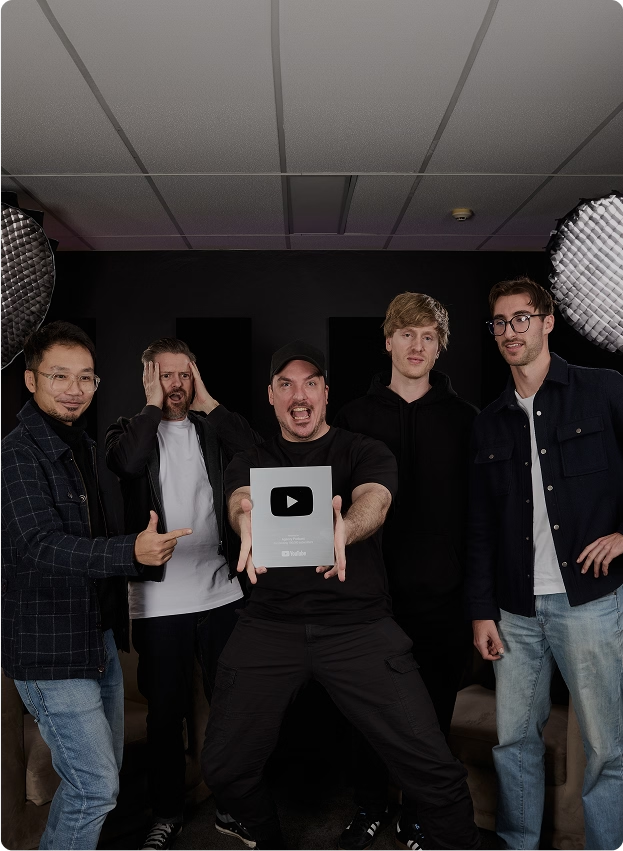
Stream now
Dive into expert advice and industry trends.