How To Radically Change A 133-Year-Old Legacy Brand Without Destroying It | Michael Breckler



TLDR
In this episode, Michael Breckler, CEO of Betts Shoes, provides a masterclass in corporate turnaround and personal resilience. Inheriting a 133-year-old family legacy burdened by $12 million in debt, Breckler describes the "startup mindset" required to save a multi-generational empire from the brink of collapse. He detail-oriented approach involved cutting the store network nearly in half—from 73 to 40 locations—and slashing the product line by 50% to focus exclusively on high-performing women’s fashion. By transitioning the business from an "unoffensive" unisex brand to a targeted, vertically integrated powerhouse, Breckler demonstrates how data-driven decisions and a ruthless elimination of "archaic" thinking can reverse a downward trajectory.
Parallel to the business restructuring, Breckler opens up about his personal journey through addiction and a "rock bottom" moment that led to his temporary removal from the company by his father. He shares the unconventional tools used to rebuild his mental fortitude, including "graveyard meditation" to gain perspective on his legacy and rigorous cold therapy to cultivate discipline. Breckler argues against the traditional notion of work-life balance, instead advocating for intense prioritization and extreme accountability. His story serves as a blueprint for leaders navigating high-stakes crises, highlighting that the ultimate competitive advantage lies in the intersection of a refined brand and the unwavering discipline of its leader.
Highlights
- The Turnaround Blueprint: Michael managed a massive restructuring by closing underperforming stores (73 down to 40) and reducing SKUs from 700 to 350 to focus on the core 24–39-year-old female demographic.
- Brand vs. Product: Breckler asserts that while good products are essential, a strong brand will beat a good product every time; combining both creates an "unstoppable" market presence.
- Vertical Integration Advantages: By designing and sourcing products directly from China, Betts achieved gross profit margins 10% to 20% higher than traditional wholesale models.
- The Debt Crisis: Upon taking the helm, Michael faced $12 million in bad debt, requiring immediate "savage" decisions to "cut off the arm to save the body."
- Cultural Overhaul: Michael eliminated toxic energy and resistance to change within the head office, even providing pay raises during a cash crunch to ensure the remaining "A-players" felt valued.
- Extreme Accountability: A pivotal moment in Michael's recovery was adopting 100% accountability for his life, refusing to blame his past or upbringing for his current circumstances.
- Graveyard Meditation: To shift his mindset, Michael practiced a guided meditation in a real cemetery, imagining his own funeral to determine what kind of legacy he actually wanted to leave behind.
- Cold Therapy for Resilience: Using 3°C ice baths, Michael retrained his brain to "get comfortable being uncomfortable," building a mental toughness that translated directly into his ability to handle business stress.
- The Myth of Balance: Breckler rejects the concept of "work-life balance," suggesting instead that high achievers must prioritize what matters (family, health, and business) and go "all in," while cutting out "time-wasters" like social media and socializing.
- Startup Mentality in Legacy Business: Despite the company’s 133-year history, Michael approached the turnaround with the speed and risk appetite of a tech startup, choosing to "fail fast" rather than move slowly and methodically.
Transcript
00:00:01 - 00:01:06
A good brand will beat good product hands down. If you have both, you'll be unstoppable. My great great grandmother founded the business in 1892. Uh so 133 years old and it's gone through my family generations. We're a shoe store and we were Australia's favorite family shoe store for 100 of those years. The business was being run in a way of we need to do things this way because this is the way we've always done them. The way that we used to succeed wasn't the way to succeed in the future. It just had to be
00:00:34 - 00:01:34
different. >> Were you nervous or apprehensive about doing a total rebrand? >> I knew it had risk for sure, but rebranding the business is critically important to change customer perception. We won't see it in revenue on day one. Maybe not even day 60 or at a time you shouldn't be spending. You might look at me and go that's crazy. I can't be the generation and the person and the breckler that this company dies with >> the shoe king. He's still got a little
00:01:04 - 00:02:05
bit left in him. >> I need to be the one to come in here made it thrive. All the pressure that I put on myself really destroyed me. I had to walk into my dad's office and he had to stand me down from the business. And with all of these changes that you've accumulated, all these lessons that you've now got, if you went back in time to 3 years ago, how would you hit it from do? >> It's a good question. I think >> this episode is brought to you by Wix Studio. >> Here at the Agency podcast, we're
00:01:36 - 00:02:33
building a community and we would love for you guys to be a part of it. So, we would love to hear from you. What are you enjoying the most? What would you like to see more of? And what do you think might be missing? Drop a comment. Make sure you subscribe. And now, on with the show. Michael Breckler, welcome to the Agency Podcast. >> Epic to be here, man. Well, you inherited a 133y old company with 12 million in bad debt while personally falling apart. Walk me through your first 90 days. What was the scene and
00:02:04 - 00:03:06
what did you have to accomplish? As you said, I I stepped into 133y old business, 12 million in debt. And I think the like psycho in me stared down the barrel and just smiled and said, "Let's [ __ ] go. How do we do this?" um something that would give most people nightmares and keep you up at night. I just saw as an insane opportunity to fix something that was so broken and it excited me. So, could you paint the scene here? So, for those that aren't familiar with the brand Bets, we're
00:02:35 - 00:03:31
talking about a fifth generation business. It's been around for a century and stood the test of time through the Great Recession, through market upturns and downswings. Can you explain to the viewer just a little bit about what what they can envision for the brand at this point? >> My great great grandmother founded the business in 1892 in southwestern Australia. Uh so 133 years old and it's gone through my family generations and uh we're a shoe store and we were Australia's favorite family shoe store
00:03:02 - 00:03:59
for 100 of those years. uh selling women's men's kids school shoes and we've adapted through as you said so many changes in in the market from selling other brands to creating our own product to shifting to ecom to sourcing out of China and uh we're here today cuz we've gone through another massive transformation. >> This is pretty crazy stuff cuz I can imagine there's a lot of weight or responsibility that comes with inheriting a company from your father. What kind of responsibility came with
00:03:31 - 00:04:33
that? I walked in with the weight on my shoulders to go, I can't be the generation and the person and the breckler that this company dies with. I need to be the one to come in here, turn it around, and make sure I'm the one that made it thrive into the future. So, that's a big weight to carry. >> How dire was the situation you walked into? >> Yeah, so we're going back 2 years, 2024. I was CMO of the business and I knew that if things didn't radically shift and fast, the business wasn't going to
00:04:03 - 00:05:04
make it. >> How fast? >> Immediately. 12 million in bad debt. The company wasn't being run well and everything from top to bottom had to change. >> So, you were in the company obviously being the CMO. You were seeing the inner workings behind the scenes. I I understand that your father wasn't the CEO driving at this time. There was another character who was. Um what what were you witnessing uh before having the reality check of like we have we have got to turn this around now.
00:04:33 - 00:05:37
>> Yeah. I think the business was being run in a way of we need to do things this way because this is the way we've always done them. And it's just such archaic thinking. The the leader at the time just could not see the potential and was really fixated on bricks and mortar, multi-brand, multi-offering, trying to be all things to all people as a business. And it just wasn't working. The way that we used to succeed wasn't the way to succeed in the future. And I could see that it it just had to be
00:05:05 - 00:06:14
different. Did you feel at the time that the brand had lost its identity uh completely or it was just replaying the old hits that no longer felt like they were hits? >> We we had lost our identity from what we once were and I think we were shifting into an identity of being a discount retailer that was really price driven and that just wasn't the way to grow the business successfully into the future. What's the risk of building a company that is priceled? >> You've got nowhere to go. Uh the only
00:05:39 - 00:06:36
way is down and competitors will come in and they'll find a way to source it cheaper and sell it for cheaper and you compete until you can't compete anymore and and you're done. >> It's a race to the bottom. >> It's a race to the bottom. And I think price it's just an old way to compete. like what makes you unique and different and gives you a point of difference to your competitors. Price is so secondary. >> Yeah. I was looking at some old homework I was doing with Marty Newmire. For
00:06:08 - 00:07:02
those that don't know who Marty Newmier is, uh he worked with Steve Jobs, he worked with Massive Brands, a great author, a great creator of brands. And one of the things he was talking about was what he calls the brand ladder. And the first step is to satisfy a customer. And he was saying that most brands typically get stuck on this step because they fight over price. You're looking up this ladder. The next few steps are delight people, which is the next ladder. Above that, it's like how do we
00:06:35 - 00:07:39
engage with people? And then above that, you have empowerment. How did you look at the brand of like we can't just race to the bottom anymore. We got to move up this food chain and we have to start building a story that people care about. Yeah, I think that's a great question and it really came down to brutal honesty and removing ego and removing emotion and looking at the product and going would someone really be so happy with this product and does someone really want to connect with this brand
00:07:06 - 00:08:05
and when we were brutally honest we went well not really and that's the harsh reality and we went if I'm not making a product that I actually want to hang my hat on and go this is damn good product. We're not doing something right. So, we had to make a shift there. But then we had to create a brand, as you said, that delighted, that empowered, and that made people want to be a part of. And we' done it historically as a business, but we stopped doing that for a long time. And we got into price and features and
00:07:36 - 00:08:32
benefits and trying to sell people on the bottom tier. Uh, and it's not how you grow your business today. There's a famous story for this and that's Macy's in the states where they basically every weekend, every week, every month of the calendar year, they were on sale. Yeah. >> Which ends up being a priceled war. Um you're saying that over generations the brand went from quality products that fulfilled a need to price oriented positioning >> essentially. Yeah. >> Okay.
00:08:04 - 00:08:58
>> Now with that, let me understand what else was happening. So at that point in time, Bets was making its own products and shoes going vertical versus supplying from >> other brands. >> Other brands. >> What is that strategy? What's the difference between just hosting other people's brands and taking a clip versus uh sourcing our own product and building it from the ground up? >> Yeah, it's totally different in regards to control, price structure, and profitability. And
00:08:32 - 00:09:24
>> so control Yeah. >> price structure, profitability. Yeah. >> Can can we can you break down each of those? >> Yeah, absolutely. So, when you know what your customer is after and you can design something from scratch, you've got total control over the product. So, how you want to structure it, how it fits, every little bit of trimming and detail and specification as opposed to buying someone else's shoe. So, you're not just serving up what someone else has put together. You're putting it
00:08:57 - 00:09:48
together. You also have a point of difference because you're not selling what everyone else is selling. If you take someone else's brand, for example, I now sell Nike shoes. Well, so do a 100 other retailers in the world. Why would you come to me to buy a Nike shoe and you go to hype or you go somewhere else, right? JD Sports. >> So, differentiation in product absolutely key. >> But pricing and profitability is a big one because when you're wholesaling someone else's product, you're working
00:09:23 - 00:10:17
on their cost structures and their margin structures. You might buy from someone else and sell out 55% gross profit margin, which there's not a lot of room to move there. When you take all your operating costs out of the business, you generate your own product through a vertically integrated supply chain, which is what we've done, you're talking, you know, 10 to 20 percentage points higher in gross profit margin. Uh, and so you've got room to move. That's the difference. And if you look
00:09:50 - 00:10:38
at the pros and cons each side, because I can imagine, you know, having worked with Culture Kings, um they're a big box retailer where they pick the latest, coolest upcoming brands, put them on the shelf, and they become the draw card for the zeist of what's cool. >> Um the upside with that is obviously you get the foot traffic of people coming in to go, "Okay, I like these brands." And they get variety. >> Uh the downside is you don't get control over the products. You don't get as much
00:10:14 - 00:11:17
control over the margins. What are the pros and cons by being vertically integrated and doing that all yourself? >> Yeah, I think the biggest con is that it's [ __ ] hard. Like there's if if you actually go and count how many people can run a footwear business through vertically integrated channels. There's not that many. It's very difficult to walk into China and start to design your own footwear from the ground up with tooling and mold costs and constructions. it is very difficult
00:10:44 - 00:11:37
thing to do. Um, so the easier route is to wholesale other brands. People have done all that hard work for you and you're essentially focused on marketing and sales. So it's a very different business model. Uh, yes, there's the pros of using other people's brand power to draw customers into you, but if you can get really good at branding and marketing, you can do that yourself with your own brand through your own supply chain at much higher profits. Thus the need for change because you were looking
00:11:12 - 00:12:06
at either we're leveraging other people's brand power or we're building our own. Yeah. >> And at that point in time you weren't building your own brand power. >> Yeah. So we went I mean we're talking before almost my time now but we made a huge shift around the year 2000 and we went from being a shop full of other people's brands to and this was my dad moving up to southern China. He opened an office there. We sent some Australian team members up to live in China for a
00:11:39 - 00:12:34
while and set up a supply chain where we went completely vertical and that that was I guess a huge pivotal moment for the business. >> And what happened between 2000 and when you stepped into the helm in 2024? >> So there were probably 10 years where it went brilliantly and >> so 20 >> 2000 2010 >> did really well with the vertical integration. >> Did brilliantly with the vertical integration. We had multiple brands and those brands all had their own identity
00:12:06 - 00:13:05
and we went really wide in bricks and mortar retail. >> So you there were your own brands. >> Yeah. So we had Bets Shoes which is our main brand. We had Zoo Shoes which a lot of people might remember was a really cool Australian fashion brand with high quality kind of Italian design inspiration. We had the Airflex brand which was bit more senior customer premium quality premium comfort. And we had a Bets kids brand which was kids shoes, school shoes. And all four of those brands, we opened bricks and
00:12:36 - 00:13:41
mortar retail stores. >> Oh. They each had their own stores. >> Yeah. So we went really wide and aggressive in a retail strategy. And so you'd walk into Chadston Shopping Center, which is the number one shopping center in Australia. We had four stores. So we had four leases. We had four shop fitouts. We had four teams, four sets of wages. And really that was kind of the tipping point of from something that was really booming and going well to to the downfall is we went really overexposed
00:13:08 - 00:14:09
in bricks and mortar. Uh at the same time that Australia was being hit by the GFC, a downturn in the economy, retail was starting to slow and we're sitting there with 200 stores going [ __ ] Um this is a problem. >> Yeah. >> Yeah. Yeah, cuz I can imagine in hindsight um it would be quite difficult to have school shoes next to cool luxury Italian uh next to kind of something sports or athletic. They they don't really have harmony. >> Yeah. So, so that's where it was. It was
00:13:39 - 00:14:34
this family shoe store. You come in, you've got all these different brands talking to a different customer. And we went that doesn't make sense. Let's split them all out because that's a great idea. And uh we ended up with four brands in four stores. We we were running four websites. It was crazy. >> Yeah. >> Yeah. >> So, was that still the case when you stepped in? >> No. >> Okay. >> So, I started working on this strategic shift before I took control. I I had
00:14:06 - 00:15:05
very big input in the business and the direction of the business through my whole career. I've worked 22 years in the business since I was 13 and I I've worked very closely with dad the whole way through. And actually one of my first big challenging moments in the business, I was 23 and I'd stepped in as the brand general manager for two of those four brands. And as a 23 year old, I made the decision with dad that we have to start shutting these down. We have to remove the brands. We have to
00:14:35 - 00:15:39
reduce our bricks and mortar retail exposure because it's absolutely killing us. And as a 23-year-old, I remember having to drive a restructure and make people redundant who had been working in the business longer than I had been alive. >> Jeez. >> Um to really start turning the business around. >> That's something I can be a savage if it is required, but I don't go there often. I'm very empathetic. I build deep connection with all my employees >> from my three-hour week Thursday night
00:15:06 - 00:16:18
casual to the board of directors. and I treat everyone uh the same and with love and with compassion and with empathy. And so yeah, I feel like when I have to let someone go, even if they um even if it's warranted, it still takes a piece of me. If you want to grow your agency, you need more than just a website builder. You need Rick Studio, the all-in-one platform that's built to help you scale. Design smarter in a hyperflexible, responsive editor. cherry-picking whatever clients need from pre-built UI elements and
00:15:42 - 00:16:51
templates. Deliver robust backends with built-in e-commerce solutions for every industry, letting self-maintaining infrastructure just run itself. Stop reinventing the wheel with every project and instead create a sharable design system with reusable assets, apps, and components. Clients growing too fast? No sweat. Wix Studio AI powered CMS lets you turn a single layout into hundreds of additional dynamic pages. It's true. More clients no longer has to mean more chaos. Wix Studio gives you one
00:16:17 - 00:17:18
centralized view of every project and makes realtime collaborations seamless. Do your agency's best work at scale. Build your next project on Wix Studio. you came to your father and said we got to cut or annex part of the business. How did you come to this conclusion? Were you privy to the P&L, the forecast? Like what led to that decision? >> So, I've been really privy to the numbers through my whole career. I mean, I grew up talking about shoes around the dinner table from when I was a kid and
00:16:47 - 00:17:41
knowing how the business is going, where what's going well, where the challenges are. I've known it my whole life. It really came down to understanding the numbers. I was, as I said, I was general manager of of two of the brands at the time. So, I was right in the numbers. I could see the decline in sales. I could see the challenges we were facing and it was really a decision that I came to of chop off the arm to save the body and and that's what it came down to. And I sat down with dad and went through it
00:17:14 - 00:18:07
and I said, "If we don't do this, then the whole body is going down." So, not to be dramatic, but you know, 133y old business, it has its ups and downs and and there's been multiple times through the journey where like we're eating [ __ ] but you know, we find our way out of it each time. >> What what numbers were you looking at specifically? Like what were what was the moment where you're like, "Okay, this this is it." >> We started letting the the you know the
00:17:41 - 00:18:42
expression the tail wagging the dog instead of the dog wagging the tail. We started making decisions based on the wrong data, which really led to our brands looking the same. And so we went, all right, market's struggling. This shoe's working really well in this brand. Well, let's do a version of that for this brand because we know it sells. And it's all about short-term cash generation. This shoe's working really well over in this brand. What's the version for this brand? And it got to the stage where
00:18:11 - 00:19:21
there was a lot of sameness within the brands and it just really imploded and the revenues were going down in a couple of the brands. The um kids business was declining. That was the first one that we made the decision to remove and the zoo shoes premium fashion business was also declining. And I think it was a little bit of a sign of the times because it was definitely a challenging market. But we made poor product decisions that I think led to that decline by not staying true to what the brands were designed for.
00:18:47 - 00:19:48
>> Yeah. >> And so looking at the decline >> and we tried different ways to really turn the ship and it just wasn't happening that we went again. It it's really cut off the arm to save the body time. So the numbers spoke for themselves and we had to remove emotion. And I remember and there'll be female listeners out there for sure who remember Zoo Shoes. It was a lot of people's favorite shoe brand in the country. It was mine. I remember it was the first place I couldn't wait to work
00:19:16 - 00:20:20
when I was old enough. And it hurt everyone to go. It's time to actually let it go. But like all things in business, to make the right business decision, you have to remove emotion. You cannot let emotion drive the decision. There's definitely an element that good entrepreneurs and good leaders have where it's about gut feel and your instinct, but that's different to emotion. >> How do you distinguish the difference between an emotional uh entrepreneur and a gut feel entrepreneur? If you can sit
00:19:48 - 00:20:57
back, look at the data, look at the numbers, and then really look inward at what your gut is telling you, and bring those two together, then you're bringing instinct with data and making an informed decision. I think you can have an expert analyst looking at the data, but that on its own isn't always right. And I think there's something with successful CEOs, entrepreneurs where the gut is so important, but the gut feel and the data coming together is very different to emotionally reacting to
00:20:22 - 00:21:30
I love that so we have to do it or this means so much to me so we can't discount it. And that just can't be a driver because you you're not making informed decisions. You're just going off emotional reaction. And I've trained myself in the last really 5 years to learn whatever happens in business or personally. Take a breath, take a step back, look at the facts, come back in calm and clearminded, then react and remove emotional reaction out of the picture through everything. Something I
00:20:57 - 00:21:58
know that you're big on in in your company is qual quality of life for your team. When you think about working for a company, you know, when you think about big brands, big retailers, there's this rhetoric that the company doesn't care about us. I'm just going to hit I'm just going to collect my paycheck and move on. When you think about truly trying to improve the quality of life of what it's like to work inside this system, what are the things you think about? >> It's good question and I think we had
00:21:27 - 00:22:37
big problems around this under previous leadership. And I wanted to change that big time. I needed to make a cultural shift. And everyone spends majority of their life at their job. And so if it's a place that you hate coming to or there's drama or toxic culture issues or you're not, you know, everything is not ideal. Um you're going to have miserable workforce. You're going to get less out of them. People are going to quit. You're going to have a high staff turnover. And so I took a step back when I took
00:22:02 - 00:23:03
over and I said,"Well, what are the things that empower me to enjoy coming to work every day and how do I pass that on to my team?" And I think when you build a team of people that have to be micromanaged and set to a strict set of rules, you're hiring the wrong people. And if you can hire people that you trust that are aligned on the goal and the vision of the business, well, they don't need to be micromanaged and they can run their own race because we're all heading towards the same goal. So, I'm
00:22:32 - 00:23:29
very laxy daisy in the office about what time you get there, when you clock off, if you got something for your family, you don't need to take annual leave, go and be there for your family because everyone who works for me gets their [ __ ] job done. And so we're a very small team. You know, we're a $60 million business. We run a team of 20 in the head office, which is lean. You know, we've obviously got our staff out in retail stores. Um, but every single person in the office I trust. They get
00:23:01 - 00:23:59
on with things. They don't need to be micromanaged because we've built a culture where they love coming to work. They all get on really well with each other and help, you know, each other work towards the common goal. So that's that's what I try and breathe in the culture. >> Okay. Now be honest with me. When you took over in 2024, was that the culture? >> No. >> Take me back into that moment cuz I want to understand when you when you were walking in there five generations of
00:23:29 - 00:24:28
baggage. How do you even begin to think about culture? >> Sorry. Makes me laugh. Taking me back. Um >> take me back, man. Like I want to I want to understand this. Yeah. I think there was a real like it wasn't just the the the debt situation when I was like right I have to take over. There were good people in the business that had been there for a long time that were like I'm ready to walk out of here because the culture was that bad under under the previous leadership. And we had good
00:23:59 - 00:24:56
people going this is [ __ ] miserable place to turn up to. This is not a job. This is bit like prison and and my time is running out. And so I knew that one of the first things I had to do was was fix that. So, you know, business was going through a tough time. I don't think anyone had had a pay rise for a couple of years. The first thing I did within the first week of taking over was right, let's fix this. No cash to support it, but we'll fix it. We'll make it right and we'll make sure that people
00:24:27 - 00:25:31
feel rightly remunerated. That was a >> You were giving payraises when you were running out of money. >> Yeah. >> Why? Because the staff need to feel valued and they need to feel that even though things are [ __ ] them showing up and doing their job is noted and appreciated and I'm grateful for it and I'm grateful for their support. And so I was like, I will find other things to cut. Um, I'll cut my own salary, which I've done many times over the journey to make sure that everyone else gets to
00:24:59 - 00:26:04
eat, so to speak. So that was one of the first things I did. I then removed the people with the toxic energy that were coming in that were causing drama that were creating issues that didn't want to work hard gone. >> How would you define someone who's toxic? If you're coming into the workplace and you're bringing your outside baggage in and making your problems everyone else's problems on a day-to-day basis, not when you know if if something really serious has happened, please let us support you,
00:25:32 - 00:26:32
but on a day-to-day basis, you're bringing in the negative energy and then everything you have to do that's part of your job is a problem or an issue. And you know, you're causing workplace drama with other colleagues, there's no [ __ ] room for you. So, show them the door. We have really a no [ __ ] policy where if you're going to come in, you're going to start issues, it's not the place for you. So, that was a very quick distinction. And then there was one other type of person that had to
00:26:01 - 00:27:08
leave, which is the person who was resistant to change. And again, 133y old business. A lot of people had a mindset of, well, we have to do it this way because that's the way we've always done it. It's probably my most [ __ ] hated quote that I can ever hear from anyone. And anyone with that mindset that just did not want to change had to go. And so we were left with a really lean team of people with a great attitude who wanted to be there, who believed in the vision and who were ready to embrace change like there was
00:26:36 - 00:27:39
no tomorrow. >> So I just want to unpack those last two things a little further if you may. for those listening that are thinking about their team right now and going I got a couple of those people who are bringing bad energy bad juju every day spreading it into the company how should someone seriously look at that and at what point is it um you know even if it's a menial little thing should should you really seriously consider asking someone because of the bad energy >> yes br as brutal as that is yes a
00:27:06 - 00:28:18
hundred times over toxic energy spreads like wildfire. And you might look at something, you might go, "Here's this one person. They do seven out of 10 things really well, but these things are okay, but this one's a real problem." And if it rubs off on others, it can spread so quickly and tear your culture apart. And I've seen my A players become C players because I've left a toxic person there for too long. And so if you have someone who is you're seeing those red flags, I'm all for a chance to fix
00:27:42 - 00:28:38
it. So call it out. Pull them aside. Have the difficult conversation and say, "Look, this behavior is not accepted in this company. Work on fixing it. Give them a chance. Maybe a second chance. But if if that doesn't change, show them the door." And it might sound a bit savage. And you might go, "Oh, but look, they still do this, this, and this." Well, I promise you it's not worth it and it will destroy your culture real quick. >> And the last one was that you really
00:28:11 - 00:29:14
don't want to build a team around people that don't believe in change. >> Yeah. So, I took on the reigns with a startup mindset. I went this 133y old business, but we are going to change everything. We are going to move quickly and we are going to make a difference. And so you need the team to buy into that vision to support it or again your vision is going to fall flat on its face before you even get started. So having a team of people that went, "Yep, we can see the writing on the wall. We're ready
00:28:43 - 00:29:44
to change. We believe in the transformation." Yes, let's go. But again, if if you've got players and it might not even be resistance to change. If you've got players who don't believe in the vision, full stop, it's not going to work. You need buyin from top to bottom. How do you stand in front of a company that's in all essence moving backwards and say to them with confidence, we're going to change everything? What gave me the confidence, I should say, is I'd already had
00:29:12 - 00:30:03
tremendous ecom growth. So, I knew that the strategy that I was working towards and the shift I needed to make in the business, I had some hard data to show that we're on the right path. >> You had extreme proof. >> I had extreme proof. Can you share some of that because I understand that it was a pretty significant >> uh sign of >> when you manufacture your own product vertically integrated product there's minimum order quantities with the factories. So you have to go into a
00:29:39 - 00:30:41
factory and go I'm designed a new shoe I'm going to order at least 2 to 3,000 pairs of this thing. And so historically we needed economies of scale to support that. So, we needed x amount of physical retail stores to hit the order quantities with the factory. When we doubled the online business, we went, "Shit, we can sell so much volume online that we don't actually need as big of a store network to support the minimum order quantity required from the supplier." And so that was a light bulb
00:30:10 - 00:31:14
moment that went off in my head and I went, "Okay, well now we can look at the company structure totally different and go, okay, let's look at the store network. Let's go which are the shops that are losing money that are declining in revenue that are costing us in rent and wages more than they're spitting out in profit." And I h haveved the network. So, I took the stores from 73 to we're at 40 today and we've got a few more that are going to close over the next 6 months and went, we don't need a store
00:30:41 - 00:31:47
in every center like we used to pre- ecom days and we just need the right shop in the best location in the country to support an e-commerce program. And because I knew the strategy made sense. And because I had that crazy online proof, I could stand in front of the company and go, "Hey, we're in trouble. There's a lot of things that haven't been done as good as they could be. We're going to go through a radical change, but here's the numbers." And I put up a chart on the uh board of the
00:31:14 - 00:32:12
online growth, and you can see just month, year on year up, 30% up, 60% up, 80% up. Wild numbers. And you can't argue it. You can see it and go, "Shit, he's right. Let's go." And so it was pretty easy to get the company and the staff to go, "Yeah, this is right. This is the way we need to move forward and this is the way we're going to make pretty big shift in the business." >> How important is it that the founder needs to have a clear vision for the team to look at?
00:31:43 - 00:32:40
>> Very important there. It's important for the founder to have vision for themsel. You can't just go day after day going through the motion. um and expect growth and great things to happen. So I I'm a big believer in three-year plan. I know a lot of people are like five year, 10 year. That doesn't work for me. It's too far out and so many variables can change between now and then that I I kind of zoom in a little bit more and go right 3 years. This is what we want to be. This
00:32:11 - 00:33:10
is where we want to get to. This is how we want the numbers to stack up. And then I break it down and go, okay, well, to get there, what do we need to do in the next 12 months, 6 months, 3 months, and make sure that every single person in the business knows where we're going and how we're going to get there, so that you get complete buy in. And that way, you also don't need to waste your time with useless meetings, stupid check-ins, because you're all on the same path working towards the same goal that you
00:32:41 - 00:33:32
know makes it easy. >> Okay. Now, when you stepped in and you started to look around and go, "Okay, there's a lot of toxic people here. There's a lot of people that hate change here. Um, there's not a clear path or plan or vision here." And then you started to, you know, move those people on, close those doors down, a lot of pressure, which I imagine comes with high stress, bouts of emotional moments where you're trying to navigate things. What parts of your life needed to change
00:33:06 - 00:34:13
for you to be able to become a CEO that could be capable of dealing with this level of stress? Luckily for me, I guess I had spent two years prior becoming that person that I needed to become to actually step up and take over. And I think if I go back a bit, I my dad took over the business at 21 years of age. And he had to do that. He was forced into it. His dad who ran the business had a heart attack and died in his 40s. And it left my dad um who he had a mother and two younger brothers and he
00:33:40 - 00:34:43
just got married to my mom and had my sister at 21 and he stepped up into the role of looking after his mom, looking after his brothers, looking after his wife, looking after his baby and taking on the a fourth generation at that time family business. I obviously wasn't around at the time, but as I got older and I knew the story, I was so impressed and inspired by my dad. He was really my superhero, my superman. I had him on this pedestal as as this incredible uh human. And at that young age, he took
00:34:11 - 00:35:28
the business from um the largest shoe store in Western Australia, largest shoe company in Western Australia to a a national shoe legacy. And I put this crazy internal pressure on myself when I was younger to go, well, dad's my hero and if he can do that, I want to make him proud of me. So, I need to do that. If he can run the company at 21, I want to run the company at 21. And I remember like the second I was old enough, it was like 13 years and 7 months or something, I was in the shop working. and I started my career and I
00:34:50 - 00:35:48
went, "How do I climb the ladder as fast as humanly possible so that I can get to the top and and beat my dad?" So, um, yeah, I put I put this crazy pressure on me and I went from I finished high school, I went straight into the business. I had to study at uni on the side cuz dad made it clear that I had to have that piece of paper. So, I was doing full-time work and full-time uni or training to learn how to design shoes. And at 23, I took over as brand general manager, which was really one
00:35:19 - 00:36:39
removed from the top. And I thought, I'm I'm so close to to getting there. And I crumbled. It it really all the pressure that I put on myself really destroyed me. And I wasn't emotionally ready. I wasn't mentally ready. I had the skills. I was damn good in the business. And there were areas where I absolutely excelled and did a [ __ ] good job, but the personal stuff I hadn't figured out. I was immature young kid and I really crumbled under all of that and found myself with really
00:35:59 - 00:37:10
bad addiction problems to to manage. And I found myself in this like wild rock bottom scenario of I had to step away from the business for 9 months. And at that point in time, I felt not only like a massive failure, but that I'd let my dad down. And that to me was like the unthinkable because I'd spent my whole life trying to make him proud, trying to be the best version of myself that he would look at and go, "Yep, that's my son, and I'm very, you know, proud of where he's got to." And I I'd
00:36:35 - 00:37:44
failed, I guess, to bring it back around. hitting rock bottom was what I needed to do to actually find the strength to to crawl back out. I I had to I had to walk into my dad's office and he had to stand me down from the business. He had to say, "Whatever this [ __ ] is going on in your life is impacting your ability to show up and do your job. Take some time, sort it out." That crushed me. all the problems that I was facing at the time, you know, I was projecting onto everyone else. It's
00:37:09 - 00:38:28
mom's fault, dad's fault, the world's fault, everyone else's fault, why my life is falling apart. And so I became real kind of nasty, negative, pessimistic person. Um, my self-worth disappeared. Um, didn't recognize the person I saw in the mirror. Forgot how to be happy. I I genuinely I've written about this in a journal, but I don't think I smiled for two years. Forgot how. I've always struggled historically with mental health and depression. And I remember I had a very pivotal moment that's like
00:37:48 - 00:38:51
scarred in my brain where I was driving in the car with my best mate at the time. We were 17 and I dropped him home after a gym session and I felt this is a moment for me to actually open up and talk about my [ __ ] And I said to him, I was like, "Man, I think I'm like got some issues and depressed." And he obviously not really understanding it at the time. He kind of laughed it off and was like, "Fucking toughen up, princess." And it just sat with me as this is something I can't talk about and
00:38:20 - 00:39:22
I can't share. And I don't think I mentioned that I had depression or mental health issues for probably seven or eight years after that point because I like this is taboo. I cannot talk about this. I didn't have selfworth. Even though I was ticking the business box and I was climbing the corporate ladder and I was kicking goals, I definitely felt just very alone. And the one thing that was a healthy addiction that helped me manage was I love sport and I played footy. Um, Australian footie for those listening abroad. Um,
00:38:51 - 00:39:56
and that was my healthy outlet in amongst all the unhealthy addictions that I had. And at a similar time to where I got stood down from the business, I'd coped a nasty injury that kept me on the sidelines for 18 months. So, I lost my physical outlet. So, from a young age, you projected, I'm going to be like my father. I'm going to run the company like he did when I'm 21. And then your other identity, which was your sports identity, both of those collapsed, you found yourself an addiction. And then your father had to
00:39:24 - 00:40:37
stand you down from the company. >> Yeah. >> Brutal. >> Very brutal. Yeah. >> What was swimming through your head when this all collapsed? At the same time, >> I genuinely genuinely didn't want to live anymore. I was lost and felt like if the things that I valued most were taken away from me, then you know what's there to live for? And I closed my eyes for 10 seconds while I was driving. And thought, if this is meant to be, it's meant to be. And I opened my eyes 10 seconds later, I
00:40:00 - 00:41:23
was still driving. And on the road, I pulled over and like broke down crying. And that was a turning point to at least start to try and figure my [ __ ] out and go, I'm glad I didn't end things then. Um, I'm on this earth for a reason. Let's figure it out. >> Retrospectively, looking back at all this, as dark as it got, what did hitting rock bottom teach you that now led you here? Yes. So that's the exciting part is I really went from that moment to running the business and that journey
00:40:41 - 00:41:51
had so much transformation that really made me the person that I am today. And so it started with complete and no excuse accountability for everything. And so when I talk about accountability, I go, "Right, every single person watching this had a different upbringing. You cannot choose the life you're born into. We all play the cards we're dealt. Some of us had it way tougher than others. Some of us had it way easier. But every single thing that's happened into your life up until
00:41:16 - 00:42:21
this very second, you can sit there and go, "Well, I can blame this person or I can blame that or I can this is why I'm this way. But if you draw a line in the sand and you go, "Right, stuff the past. If I take 100% accountability for every single second in my life from this second onwards, I'm in control. >> Everything. >> Everything. Even if it's not real, take it." Because the second you give up accountability and you can blame anyone or anything else for anything, you
00:41:49 - 00:42:50
relinquish control and you let that thing control you and dictate where your life is going. So if you take full accountability, you go, okay, well, I'm in control and I can dictate now where my life goes from this point onwards. And it's it's very empowering. >> What was that truest moment of accountability after all this played out and you're looking back at the company and going, I got to step back in and figure this out. >> So there's kind of two moments there.
00:42:19 - 00:43:30
There's the moment after I met my wife where I realized I need to actually own the things that are going on and take on this accountability and work through it. It's easier said than done, right? So, it took me a couple of years to actually go from making that decision to to figuring it out and building up to be the person that, okay, now I'm here and I take it all on. And after a year, I got back into the business slowly and built myself back up, but was still just at the foundation.
00:42:54 - 00:44:11
It was really through that process, I went, I actually don't want to live the life that I was living ever again. And I knew that there were still things that triggered me and set me off or made me spiral or made me react emotionally or want to turn back to my addiction. on various things and I really just had to to draw a line in the sand and go I never want to be that person again. So, how do we start building, I guess, the the building blocks of the person that I want to be? >> And how do I make myself get from here
00:43:33 - 00:44:27
to there? And that was a journey, a big one. And I can talk through like the key things that I did, but I think the first moment, and it's a bit of a weird exercise. If you've heard of it, you'll fully know what I'm talking about. If you haven't heard of it, you might think it's really weird, but it's like a graveyard meditation. And I I did this exercise. Listen, >> a graveyard meditation. >> Yeah. Like >> that sounds horrendous. >> We literally
00:44:00 - 00:45:20
It was It was this kind of therapy session. We went to a cemetery. >> Really? >> A real cemetery and we took our own little spot and we went, "Right, pretend that this is your grave." And we did a kind of meditation exercise where we were digging the hole. And then we lay there and we were going through this kind of guided meditation and it was lay down, close your eyes and imagine that this is your funeral. And the f the first question was who shows up? >> Yeah. And you got to have a real harsh
00:44:40 - 00:45:49
look inside and go if if I died today, who would show up for me? who would be there at my funeral? And then the second part is how are they? Are they crying? Are they indifferent? What would they say about you? What would they say about the life that you've lived? What did you picture? No one was there for me. And if they did show up, they'd be very disappointed in the person that I was. I remember balling my eyes out and like it hit home real hard and I was like this isn't how I want to be remembered. This is not the
00:45:15 - 00:46:16
life I want to live and this is not what I'm on the earth for. Like I can do so much more than this. I want to go down at the end of my life and have too many people there because I've had such an impact on others. And that was like a real wakeup call to go I need to change. What was that decision at that point to go, "Okay, cool. This is what I don't want." What did you decide you do want? >> So, I hadn't figured it out still, but I knew what I didn't want. And so, I
00:45:45 - 00:46:44
thought, I have to start somewhere. And even though I didn't have a goal and a vision at this point in time, I just knew it was as far away from the current version of me as possible. And so, I started rebuilding my selfworth cuz I had none. the all these things that I was battling internally and the negative selft talk had destroyed my life. I I believed the voice in my head that said you are worthless. You can't do it. You are a quitter. You are soft. And I had to take all those voices and write down
00:46:14 - 00:47:19
the opposite on paper of this is who I want to become. And I stuck it on my mirror in the bathroom and twice a day every day I spoke the words out loud. And it just changed over time the negative selft talk to go I am these things that I keep telling myself that I am. And you know fast forward to now I don't have negative selft talk at all because I've [ __ ] destroyed it completely. Those voices don't come near me anymore. And so it's building that resilience. But there's layers right?
00:46:48 - 00:47:44
There's multiple things. That was one thing I did. I got incredibly addicted and obsessed with cold therapy, ice baths, and uh that was another thing where most people won't do it because it's uncomfortable. And so I went, "Right, well, if I want to build mental toughness and mental resilience, I'm going to get comfortable being uncomfortable and I'm going to do the thing that most people wouldn't do." Go talk to 10 people and say, "Do you want an ice bath?" Most people say, "Oh, I
00:47:15 - 00:48:00
don't like the cold." Well, no [ __ ] >> No one does it cuz they like it. do it because you like it. >> A couple sadistic people might, but Yeah. >> Um but you do it because it's uncomfortable and most people won't. >> Yeah. >> And so when you start to do something like that out of your comfort zone, your brain will try to tell you a hundred reasons why you shouldn't do it. >> Yeah. >> Not today, maybe tomorrow. The temperature is not right. You don't have
00:47:38 - 00:48:34
your bthers. Whatever it is, your brain will try to convince you, don't do this. And when you can >> tell your brain, "Fuck you. I'm going to do it anyway." and you take control back and then you get in and your brain goes, "It's cold. Get out." And you can go, "No, I'm staying in for three minutes." You win. And you start beating your mind. It's you against you. And when you can take control, you you build this resilience and mental strength where
00:48:05 - 00:49:11
there's nothing that you can't do. And I think starting my mornings with the mantra and the ice bath meant I started in such a positive instead of rolling out of bed having a coffee going to work and being like ugh work and and changed my mindset and changed my my day. And if I can get up at 6:00 a.m. and get in a threederee ice bath, my day is not getting any harder than that. Like that that's as hard as it gets. come to me with a business problem. >> I just sat in the ice for three minutes.
00:48:39 - 00:49:43
No one else is doing that. >> And so it started to put other problems into perspective >> and and then like nothing's too big. You can't handle it when you start retraining your brain to to think that way. >> Did this replace the addiction piece, do you think? >> Yeah. So So I I have such an addictive personality that I don't think I could function without addiction. And I learned to reshape my addiction from darkness to light, so to speak. How do I take my addictive, insane, obsessive
00:49:10 - 00:50:10
personality and use it for good? So I went, okay, well, I have to be addicted to something because I can't operate at normal frequency. I need something to fuel this character within me. So I became obsessive about self-improvement, self-development, and and these other topics. And I went, "All right, I'm obsessed over my business. I'm obsessed over my customer. I'm obsessed over driving ecom growth. I'm obsessed over my mental health, resilience, and well-being. And so, I
00:49:40 - 00:50:31
shifted the addiction to like good traits. >> Okay? >> And subbed out the bad for the good essentially. >> So, if someone's listening to this and thinking to themselves, hey, you know, maybe I'm not an addict, I might challenge that by saying, well, do you doom scroll? Do you watch Netflix every night? Do you you know there's there's things that we put massive amounts of energy into that might not be serving the mission of what we need to be doing. Sounds like you need to then get real
00:50:06 - 00:51:00
with yourself around where to put that energy. >> 100%. Yeah. I think it was about going okay here's where I am. Here's where I want to get to. And that might be business is at this level needs to get to this level or whatever aspects going on in your life. >> How am I going to get there? And then you go, what are the things in my life that I'm doing that are helping me get there? >> What are the things in my life I'm doing that are not helping me get there? And I
00:50:33 - 00:51:23
think a lot of people aren't brutally honest with themselves about this. And I I'll speak to so many people who are working that like, "Oh, I don't have time for the gym. Okay, how many hours are you doom scrolling a night? You staying up till midnight on social media and then you can't wake up at 6:00 a.m. to go train." And I think it's really about how badly do you want the thing you think you want and are you prepared to make the behavioral change and sacrifice to get them.
00:50:58 - 00:51:56
>> Do you think entrepreneurs need to be obsessed to stand a chance in today's market? >> I think there's a level you can get to as a hobby, a level. But if you want to build something big and succeed and grow and make a difference, the only way to get there is through insane obsession. And just think about two people trying to build the same thing. This person has four weeks off a year and spends every weekend not working and they have great work life balance and they look after
00:51:27 - 00:52:30
themselves. This person works relentlessly every [ __ ] second of every day. So they get 52 more weekends and four weeks on this person who's going to win%. So how do you justify this notion around one must have balance in business? >> There's no such thing as balance. Work life balance I think gets thrown around and balance is thrown around. It depends how you structure your life and how you pull things together and how you make it work for you and if you have a family for you and your family. I think it's a
00:51:58 - 00:52:58
horosy quote but is like if you're in your, you know, 20s and 30s, you're talking about work life balance. Like you're not [ __ ] serious. There's the door. Um, but in saying that, you don't have to go all in on business and cut out everything else. So, I'll explain what I mean by that because there's two different things, right? I spend a lot of time with my kids. I absolutely prioritize my wife and my two children. Every morning I'm up, I'm with them. I make sure I leave the office to
00:52:29 - 00:53:35
come home and have dinner with them and put them to bed before I'm back grinding. And I definitely prioritize weekend time with them. But I haven't had a holiday in four years because I don't need to. It's what's important to me. Business, my health, my family. So I don't socialize. I don't go out drinking and partying. I don't go on holidays. I find time to get in my exercise. I prioritize my kids. And then I'm all in on [ __ ] work. And I think people might think they have that balance, but
00:53:02 - 00:53:56
then when you actually look at, well, how many hours are you on your phone a day or how many hours are you watching Netflix or on social media? And you go, [ __ ] there's probably 15 hours a week that I could actually be shifting into either filling up my cup with my family or actually investing in the business. So, I don't like work life balance, but I think prioritizing time for the things that matter to you and then go [ __ ] all in on them. So for those listening to this who are like it's not that easy.
00:53:28 - 00:54:18
You don't understand. What's your advice on how they can find time to prioritize these things? >> There there's two things. One, it's about what's really important and a priority. Because most of the time when people say, "I don't have time." You're just not prioritizing. It's not that important to you. But again, it's a horosy thing that he referenced. He's like, "Spend one week, seven days with a stopwatch and notepad and set the timer
00:53:53 - 00:54:51
for every 30 minutes. And then once it goes off, write down what you did in that 30 minutes. And you'll be ridiculously amazed at how much time you waste during the day, during the week. And when you actually zoom out and you can be brutally honest with yourself, you go, "Okay, I procrastinate a lot. I waste time in meetings. I, you know, spend too much time on the toilet during the day." Whatever it is. Um, like there's so much wasted time that everyone has. And if you actually zoom
00:54:22 - 00:55:18
out and you're honest, then you go, "Right, well, if you're running a business, you control your time. So if being healthy is a priority for you, you'll find the time to make that happen." >> So I've got a gym 100 meters down from the road for me at the office, I go down at 12:00, lunchtime. >> I get to the office early. I I prioritize my morning with my kids. I get to the office early. I work my ass off till lunch. Go down. I train for 30 minutes. Get my exercise in. Get back to
00:54:50 - 00:55:34
the office. workout the day. >> That's what I've started doing as well. I can't I can't stress how great this is >> to smash a workout. The reward is I get to go to the gym. >> Yeah. >> And then come back to work and keep grinding. >> Yeah. It also it makes my afternoon so much more productive cuz I've got out of the chair and away from the screen for 30 minutes in the middle of the day. It's like cool, reset. Let's go. >> Second half the day is just as
00:55:12 - 00:55:56
productive as the first. >> It's a great hack. If anyone can do it, they should try and do it. >> Yeah. I I think you know why work for yourself? And you know, if we're talking to CEOs and founders, I if you're working for yourself, then what's your excuse? You control your time, you control your calendar. That's why we do this. That's why we, you know, go through the craziness of what is running a business. Most people can't. >> But if you're there and then you say,
00:55:34 - 00:56:25
"Oh, I don't have time." >> Well, you got priority issues, not time issues. >> That's a good point. If you can deal with being an entrepreneur, you can deal with a lunchtime workout. >> Yeah. You know, do you want to be the um 50-year-old millionaire that's big and overweight and struggling to get into his supercar? No. You look ridiculous. Look after your health. >> Yeah. >> Healthy mind, healthy body, and then you'll crush your business.
00:56:00 - 00:56:51
>> If you if you truly ask yourself the question of like, okay, I inherited funds, like, what would I really do? >> Most people don't have an answer for that. How important is it that people have like a really good answer for what they would do had, you know, the thing they're running toward happened? >> I I think I think that's a very key piece of the puzzle that I was missing when I hit rock bottom. And finding that helped me figure my [ __ ] out. >> And I think trying to understand that's
00:56:26 - 00:57:34
critically important because so many of us focus on the destination and you go, I want to build my business to this level. I want to have a $100 million exit or I want to have a supercar and and do this. And the problem with having your goals and objectives around these materialistic I guess end results is you don't enjoy the journey. And like most of the most of it is the journey. And so, you know, let's just say my goal was, oh, I want to have $100 million in my bank account. I'm not going to be
00:57:00 - 00:57:47
happy till I get there and I'm going to grind every single day until I get there. And then you get there and you go, "Oh, well, I haven't spent time with my kids. I've missed them growing up. I haven't been present with my wife. I haven't traveled a little bit." And trying to understand what you would do when you got there. Start doing that now. There's no reason you can't. You fit it into your life. And then you enjoy the journey and you enjoy every day as opposed to the every day being a
00:57:23 - 00:58:12
grind to get to the goal. And guess what? If that's how you live your life, you'll get to the goal. You'll be happy for 3 seconds. You'll move the goalpost. It's what we all do when you're chasing those materialistic end points. It's I want this car. You get that car. Great for 5 seconds. I want the next one. Or I want to buy my own house. Cool. I got that. I want a bigger house. Chasing those goals is okay to have them there and you know, manifest it. Have your vision board. Understand what you're
00:57:48 - 00:58:56
going towards. But I think it's who you need to become on the journey to get there and enjoying the journey. >> Let's talk about the mechanics of how you fundamentally turn the business around. You trim back on product. You trim back on locations. You remove staff. You went through a myriad of challenges. How how should someone look at solving a problem like this? I think when I broke it down, it was really looking at the business from top to bottom and going, I need to understand every number, every
00:58:21 - 00:59:12
department, how everything operates, >> everything. >> Everything. If you're running your business, you need to understand how to do the job of the product team, the marketing team, the ecom team, HR, finance, business systems, payroll. Because if you don't understand how everything works and how to do the job, then how do you know how to structure your team and the department properly? >> What if someone's excuses, I don't have time for that? >> Well, then you're not doing a good job.
00:58:47 - 00:59:40
Figure it out. And and it's brutal honesty. How do you know if your HR department is set up perfectly if you don't even know what goes on in there? If you couldn't walk in there and do it yourself, then you don't know how much can they do in a day. How long does it take to do XY Z? How long do I need them for? Can this person who's doing 5 days a week actually do 3 days a week because that's how long it takes? With AI systems and processes, can they do their 5 day a week job in two and a half days
00:59:13 - 01:00:10
and now they can have two and a half days more of other bits and pieces to fill their week out? If you don't understand how your business runs from its core, how can you make those decisions in like wi without being properly informed? So it I think I had the advantage of I have worked across every single department of the business on my way up to the top. So I already knew the ins and outs and nuts and bolts of every single part of the business. >> So let's say someone >> didn't do that.
00:59:42 - 01:00:26
>> Didn't do that. I mean I mean if you're the founder and you've built this thing, >> you should have a either you've either got co-founders with you who might be experts in other spaces, but you should be figuring out these roles as you're hiring and building your team so you know exactly what's going on in there. If you don't like you don't have to do every part of the business forever. That's why you build a team. That's why you scale. But you need to understand
01:00:04 - 01:00:57
what everyone's doing otherwise >> to know all the roles of every corner of your company. >> Yeah, you just have to. That's what part of being a good leader and a and a knowledgeable leader actually is. Otherwise, you're not making informed decisions. You know, if I didn't know how many staff I need at every moment of the day during the week in each shop, how am I meant to structure my rosters? Am I having two people on the shop floor when there's no customers on a Monday
01:00:30 - 01:01:27
morning and wasting salary? So, you've got to know the ins and outs of every single part. Then you can at least sit back and go, "All right, operationally, how's the structure? Where are we being efficient? Where are we leaving money on the table? How can we set this up differently?" That's part of it. Understand the structure. Understand the people. Understand the jobs, roles, responsibilities, and what needs to get done. There's also a large amount of well people do XY Z. Is that really
01:00:59 - 01:01:57
critically important to the future growth of the business? I think as some businesses grow in scale, you start adding people and roles and responsibilities and tasks that are kind of nice to haves and when you get to a situation like our business was in. And again, if you're facing debt or or you're in a kind of similar situation, well, then you have to get really ruthless and savage and go, well, this stuff's nice, but is that going to turn the business around? And so having a really hard look at everything that your
01:01:28 - 01:02:21
business is doing and go, is this the thing that's going to contribute to the turnaround and getting us out of this hole? If it's not, cut it. And that's pretty brutal, but it it's required. And again, this comes back to getting rid of ego, getting rid of emotion, and having data plus gut feel kind of decisions to go that's not helping me get from here to there. It might come back in the future when you know the dust settles, but right now it's done. But >> there's a there's a quote from Elon
01:01:54 - 01:02:46
Musk. He says, "If you're not adding things back into your business that you removed, you're not removing enough." How do people make those decisions? How do you know when it's a really as as it's almost like viscerally it feels wrong, but you need to do it anyway? How do you deal with that? >> Yeah. So, for me, it was very much write a list of all the things that we're currently doing in the business. >> Write another list of all the things that I'd like to be doing in the
01:02:20 - 01:03:23
business. figure out the ones that actually drive the most revenue or are conducive to turning the business around. So they might be supply chain efficiencies or cost cutting or or things like that. And then go right these things that we are doing don't need to be done. These things that we need to be doing we're not doing and and pull the list together and go right these are the top three things or top 10 things as a business that are going to move the needle enough. And you might have things that this is going to grow
01:02:51 - 01:03:45
revenue by 1% or half a percent or 3%. They might be nice, but if you're up [ __ ] creek and you need to move the needle 20%, well, what's going to do that? And stay hyperfocused on doing one or two things really really really well, executing them. >> Were you looking at your staff in kind of two two lights? One which is this person costs the company money and then this person contributes money. Like how do you >> how do you look at a team and go they make money, they cost money? Again, it's
01:03:19 - 01:04:11
a bit savage, but it's the reality of what I had to do. And again, if you're in this situation, what you need to do and go, is there a role for this person to play under the strategic shift that actually adds value back into the business? And therefore, is there a place for them? And if there's not, well, the sad reality might be, look, this role, this person might not play a part for the next 12 to 24 months of the turnaround cycle, and therefore they have to be cut. So again, it's bringing
01:03:45 - 01:04:44
it back to those lists and going, these are the things that will move the needle in a big way. And some of them might not be immediate revenue drivers, but I know that they're critically important part for the next 12 to 24 months of the turnaround cycle. We uh have gone through a massive rebrand for the company, which we started rolling out in October. And it comes down to all of these things that I was looking at and going, what's the brand perception? What are we selling? who's our core customer
01:04:14 - 01:05:17
and really shifting the brand and we can come back and talk to it more. But at a time when cash is tight, we're in debt, we went rebranding the business is critically important to change customer perception and improve the core customers shopping experience with us. We won't see it in revenue on day one, maybe not even day 60 or 90. This is a big decision because you have >> a big decision cuz we're in >> fit outs, logos, packaging, >> box designs at a time where you
01:04:45 - 01:05:32
shouldn't be spending money. >> Absolutely. Yeah. And so, like, yeah, you might look at me and go, "That's crazy." And I think people who really understand the power of brand and marketing will go, "Yeah, it's good investment." And people who don't would go, "Nah, cut that." I I firmly believe that the rebrand is what the business needs to take us into the next step. And I know that if we fast forward 6 months that the 12 months after that are going
01:05:09 - 01:06:00
to be epic on the back of it, but we're probably going to eat some [ __ ] in the short term. But that was one of the things where I was like, investing in the rebrand right now is something that we have to find a way to make it work because it's going to return big dividends in the near future. So that, you know, that's kind of how you got to look at that. So you're looking at longtail branding equals more money. short tail, we're going to lose some money to do the the good long tail.
01:05:35 - 01:06:38
>> Yeah. >> Uh better to eat that bullet now rather than later. >> Yeah. >> What were some other examples of um some of these decisions you made that equaled immediate income? >> Yeah. So, I guess starting from a cost base, I wanted to understand every single part of our supply chain and go so much money goes into sourcing, manufacturing, transporting the goods from China to Australia. how the warehouse operates and the cost there and getting the shoes to the customer.
01:06:06 - 01:07:16
Every single part of that process where the shoe touches someone else is cost. And so I looked at that process with a microscope and I went right. If we change our shipping logistics partner, if we change how we do certain processes within the warehouse, if we um here's a hack. If you tape the satchels um that you're sending from the warehouse to the customers, you'll be charged less with Australia Post. Um and so all these little things we're going, "Oh, if I change this, this, this, and this with
01:06:41 - 01:07:34
the supply chain, that's two 300 grand to the bottom line without touching anything else in the business." So that's like behind the scenes work where if you don't understand your numbers, you don't even know where to start. Am I paying too much for a shipping container? Is my 3PL charging me the right amount to pick and pack an online order? Are my rates with OPOTS good? If if you don't know your numbers, you don't know what to fix. And so that's you got to understand what makes your business tick
01:07:08 - 01:08:02
and then you can get in there and tinker and and rip cost out without, you know, I think when people think, oh, I got to save cost. I have to cut this or I have to cut that person or I have to drop that which we did some of that but there's operational efficiencies that you can also do that that rip cost out of the business. >> So when you talk about optimization like for example how do we tweak this to be more profitable tweak this to be more profitable I imagine that's a very different playbook to complete total
01:07:35 - 01:08:48
transformation. >> Yes. So the brand feels yeah to to rebrand is to completely transform. Uh to >> look at our logistics um system and to tweak things that's optimization. How how do you break things into those two different cohorts of operational >> improvements and complete transformation? >> No great question. I think it was pretty easy to to figure it out because we had really spent the last call it five years since co fighting with operational improvements to try and fix the business and it
01:08:10 - 01:09:12
didn't matter how much we saved we weren't driving growth and so you can tinker and you can do these things and that will that will help a component of your business for sure and it's important to do but I knew that we couldn't keep doing the same thing and expect a different result. And so the brand growth was something that I I had this really big piece of data from the online growth that I had done that doubling of ecom. So much information around who's our customer, what age is
01:08:42 - 01:09:35
she, what does she prefer to shop, what categories are performing, a lot more data than we can get out of bricks and mortar tech stack that we're operating in. And so it gave us a lot of intel to actually go, we're doing all these things in the business at the moment. We're selling women's shoes. We're selling men's shoes. We were still selling school shoes within a bets environment. So we'd kind of shifted back to this big box retail mode where all brands under one roof. We were
01:09:08 - 01:10:31
running a few different brands, all our own brands. And we just went, who are we today? If if you had to put our core customer on the wall, there's like five totally different ones walking into this one shop and it it didn't make sense. And then I went and looked at every single product in the business sellth through stock turns gross profit margins and went okay since co the men's business has been on a steep decline and I think everyone watching this and I can see everyone in this room is wearing sneakers. Um the
01:09:49 - 01:10:50
the landscape shifted and most men in Australia and it's probably similar globally but will wear a branded sneaker most of the time. um maybe a pair of RM Williams boots if he works in an office. And we just saw that business just shrink and shrink and shrink and shrink. And we were really chasing this like men's fashion shoe customer that that didn't really exist. It was a very small part of the market. And if you went into a physical store, men's took up 25 30% of retail space and was making 10% of
01:10:20 - 01:11:22
revenue. So it didn't make sense. And again, the the previous conversations are, well, we've always done men's. How could we possibly run a business without men's product? And my way to challenge the thinking is just because we've always done it doesn't mean we have to do it anymore and it's not turning enough of a profit. So the the issue we had with the brand was we always had this brand that was unisex and unoffensive. So a guy could look at our branding and go yeah it's okay. And a
01:10:52 - 01:11:52
female could look at our branding, oh yeah, it's okay. But in doing that, we really watered down the female shopping experience and interaction with our brand by having this watered down version of a unisex brand. And so when I was looking at the numbers and I went, "Okay, men's equates to 10% of revenue." But if we ripped it out completely and then we did a full rebrand and we went right, men's is no longer a thing. This is a women's fashion brand only, which is the best
01:11:21 - 01:12:45
part of our business. Redo the logo, redo the packaging, redo the application of branding, launch a new website, completely change our marketing, completely change our instore look and feel experience, which we're working on. Then can we drive serious growth to that core customer? And that's the decision we made and that's what we're going through at the moment. >> Were you nervous or apprehensive about doing a total rebrand? I knew it had risk for sure, but I I was probably blissfully ignorant of
01:12:03 - 01:13:10
the downside that could come our way. >> You're the best type of customer when it comes to that. It's like I I think >> if you just ignore the bad and just assume it's going to be all good, it'll somehow work out. It it's it's part of my strength as a leader and it's probably also a part that frustrates others who work with me. I I I run things like a startup and I go I would rather move quick, hope for the best. If it fails, what have we learned? Pivot and move on. And so I move quickly
01:12:37 - 01:13:44
with big decisions, especially at a time when the business is in such critical need for a turnaround. It wasn't time to like what are the pros, what are the cons, how do we do this slowly and methodically and mitigate risk. We were so far past that that it was more about we need to back ourselves. we've made an informed decision based on data, the right people's input, the right gut feel to go, we believe this is right and go all in and and there's been some challenges on the way through, but let's find them
01:13:10 - 01:14:21
in a live environment and deal with them and and manage it that way. >> What what in this transition have you found to be the most difficult? Would you say that it's been harder to change the product line and remove certain categories or has it been harder to change the perception of over 100 years of brand equity into now becoming a completely different identity? I think there's a bit of a mix. We definitely have in some instances probably alienated a previously loyal customer for sure. And
01:13:46 - 01:14:52
I knew that there would be a risk associated with that. But when you're forward planning the next 10-15 years, you have to think about who's the core customer now and into the future, not now and 10 years ago. >> Yeah. >> And so in shifting our brand to really be aimed at this new I'm going to say slightly younger customer, we have alienated some of the older customer. Um, clearly we've upset some men who can no longer come to us and buy their shoes and and you know there's a bit of a a
01:14:19 - 01:15:15
hurdle going through that, but we've already seen huge positive reaction on the rebrand. Um, there's so much organic stuff going viral through Tik Tok about loving what we're doing and and we've seen the growth in in the women's and bags categories to more than make up for what we've taken out in men's and kids. So, we know that we're on the right. You were showing me some photos of some young viral influencers that are buying from the stores now because of the target demographic change.
01:14:48 - 01:15:53
>> Yeah. >> Can you just speak to that a little bit? Like what what were the >> I guess >> key target audiences that you were speaking to and what is it now? Like I want to understand how drastic that changes. >> Yeah. So it's pretty wild. Again, if you go back to the I guess multibranded store environment that we have been operating in, we had different brands really aimed at different customers. So, we had predominantly a bets branded non-leather fashion group of product aimed at your
01:15:19 - 01:16:41
call it 18 to 25 year old female customer. We then had a brand called Zero which we ran for a few years and it was sustainably made product really um nicely made comfortable quality commercial product that really hit that 25 to 39 year old female customer and we ran a brand called Airflex which was um beautifully made premium quality spec comfort all day everyday product and that was aimed at 40 us. We then had replica of all of that from a men's point of view. So you've got different aged women and men and we still sold
01:15:59 - 01:17:00
school shoes for for kids. So we essentially were a a shoe shop where we had something for everybody at all ages. And we went um and I think this is a good example. There were the old way of thinking about our business was the way to grow was to offer more things for more people to get more customers in the door. And when you sit back and you look at the brands that are winning in today's world doing huge revenue, some of them are doing it off one product. And so when you look at a brand that can
01:16:30 - 01:17:35
run less SKUs with a very clearly defined customer demographic, you actually can start to believe, well, if we sell less things to a smaller demographic, but do a damn good job at it, we can sell more to that customer and drive revenue growth. And so that was really the shift. and and today our core demo is really 24 to 39 year old Australian female customers. Um that's the core and we of course there's people on the peripheries um but that's the biggest growing part of our business. Um
01:17:03 - 01:18:01
and that's where we're wholly focused on. >> How how do you feel also like having cults skews brands management over like it sounds like you've stripped back quite a lot >> which I would imagine removes a tremendous amount of pressure as well. Yeah, it it it simplifies the business, you know, going from 75 stores to 40, going from really we were running like 700 SKs in a season to now 350. So, we've cut the SKS in half. >> Um, and it will probably come down a little bit more as we get into the next
01:17:32 - 01:18:42
season, as we fine-tune. >> Um, but it's a lot less complicated, which means we can do the things we're doing so much better. What what's changed in your head around branding now you've gone through this transition and you've started to see these changes work? >> I probably when I was younger was a little bit naive to the power of brand. I thought a good product will win all day every day. And that's changed a lot today where a good brand will beat good product
01:18:07 - 01:19:14
hands down. And if you have both, you'll be unstoppable. Uh, but I definitely understand that within not just our core customer, but how everyone shops that people shop with a brand that resonates with them. And so if your brand isn't really nailed in who you are, what you stand for, who you're talking to, and you can't make your customers feel connected to your brand, you're missing out. And so I really believe that that's so critically important. Um, and I think that's what's been missing in our
01:18:40 - 01:20:02
business for uh, recent years. >> How did your leadership style change over time from the beginning of this turnaround journey to now? What what do you think's changed >> because I was so critically important and pivotal being hands-on in driving the online growth moving into the CEO role and and running the business. I really struggled to let go of the ecom role and I built a team an agrade team to come in and take that off my plate and probably for the first 3 4 months of them in there doing it I I was in the
01:19:21 - 01:20:38
way. I was micromanaging. I was hands-on. I was interfering because it was my baby that I was so proud of that I was handing off. And I think what's changed is if you find the right people to build your team, you need to trust them to get on with and do their job and you need to step back. And for all founders and CEOs, there's a a level of scale where you can't do it all. you have to empower your team to be able to do that and for you to step back and have much more of a strategical
01:20:00 - 01:21:01
long-sided vision for the business and make sure you're supporting your team to to get there. And so that transition from being I I like to be hands-on. I like to build. I like to have a direct impact. And to being able to kind of step back a little bit from that has been the biggest change in my leadership style, empowering my team to do more. >> And with all of these changes that you've accumulated, all these lessons that you've now got, if you went back in time to 3 years ago,
01:20:31 - 01:21:40
what would have been your playbook from jumping known that you had the confidence to do it? How would you hit it from the start if you got a doover? >> It's a good question. I think it's semi hard to answer because I I moved really quick. I when I when I took over it was like do or die. We we moved at a million miles an hour and I implemented change pretty damn quickly. So I don't know if I went back I'd probably do it the same way because that's my nature. I I would rather move quick and fail fast and
01:21:05 - 01:22:05
learn and pivot than take a slow and calculated approach. Um, maybe someone else in my position would have done it slower and more methodical, but you know, I sit here today and I know where the business is at today and we're four months down the line of an epic rebrand, which we might be four weeks down the line of an epic rebrand if I did it slower and more methodical. So, I'm a big believer in rip off the band-aid, make the hard decisions, once you've made it, go all in. Um, so I
01:21:36 - 01:22:41
probably wouldn't have done that differently. As I referenced before, when I bought on new team members, I would have just been less in the way. That's a good lesson that I've learned about myself. >> How do you distinguish the line between micromanagement and delegation? I think again it's it's about if you have to micromanage which means if you have to go and sit down with your team and tell them do this do this do this have you done this have you done this have you done this you've either got the
01:22:08 - 01:23:06
wrong people or you've got the wrong vision or the wrong systems and processes because that's micromanaging and if you have clear vision if you got the right people who know what to get on with then they should just be able to come to you and go I've done Yes, here you go. Uh, and give you updates along the way. And so that's what I guess having a good vision and being able to delegate to good people looks like. And if you're doing the opposite, one of those things is broken, and you need to
01:22:37 - 01:23:50
fix it. >> That, look, there's employees who are happy to be kind of micromanaged because they're happy to show up, tell me what to do, help me get there. And, you know, that's important to have players like that. But your team leaders and your really pivotal people, if you're micromanaging them, there's something wrong with you or them or the process or the vision. >> What would you say is the hardest truth about business that most founders learn too late? >> It's [ __ ] tough.
01:23:13 - 01:24:38
Uh, I think most founders like the idea of building something, of working for themsel, of the freedom that comes with running your own business. And I think what everybody realizes once you're in it is you work longer hours. There is no free time. You uh take on ridiculous stress. you're responsible for feeding other people's families. Um, and and it's damn tough. Um, but you get the freedom of being able to do it for yourself and for something you believe in. So, I just think, yeah, you learn
01:23:56 - 01:25:12
once you're already two feet in that it's a pretty damn tough journey. But, I think life's tough either way, so may as well be tough doing something you enjoy. You know, >> if you look at this whole picture from 10,000 ft, >> what separates companies that recover from companies that die? >> The appetite for risk, the appetite for change, and then the like inability to quit and say no. I think you have to have those characteristics in in your leader and your team. >> An inability to quit.
01:24:34 - 01:25:36
>> Yeah. like no I have have no quit in you because it's so easy when things are tough to go it's too hard the person who does the the repetition is going to out wit and outlast the person who you know does it when they're motivated or feel like it and you got to do the reps and so the person who just shows up every day with discipline not motivation because motivation comes and goes and if you're waiting for motivation you'll you'll peter out but if you show up every day and do the
01:25:05 - 01:26:00
[ __ ] work, then you'll succeed. You know, everyone needs a bit of luck. You need certain things to go your way. And I think everyone you talk to who is successful absolutely uses the word luck because luck plays a part. But if luck comes along and you're not disciplined showing up doing the work, well, it's going to fly straight past you. >> We built this show on the premise that we wanted to talk to people that take massive agency over their life. and you've been someone who's absolutely
01:25:33 - 01:26:43
done that. >> Uh what does taking agency mean to you? >> In all honesty, in my life, it's the difference between life or death. It it it was the huge turning point where I went, I am now in control of every single part of my life from this point onwards. And that empowered me and that changed the kind of person that I was. Changed my mindset, changed my ability to have a really healthy, successful relationship with my wife and as a father to my kids and be able to do what I've done in
01:26:07 - 01:26:58
business. So, it means everything. Take control. Michael, it's been a privilege learn learning your story, understanding how deep the roots of what you've accomplished go and um seeing what you're building live right now in the market. Um I would encourage everyone to go look at what the brand's now doing and have a look at, you know, the rebrand and how you guys are rolling this out. It's really exciting. Michael, thank you so much for being here, man. Appreciate you, dude.
01:26:33 - 01:26:42
>> It's been an absolute pleasure. Thanks for having me.
Recommended Episodes
Check out our teams most highly recommended episodes.
.webp)
.webp)
.webp)
Let's Keep Connected
Work With Me
Enquire With Dain’s Team
Enquire For Speaking
Let's Get You Branded
Apply to be a guest
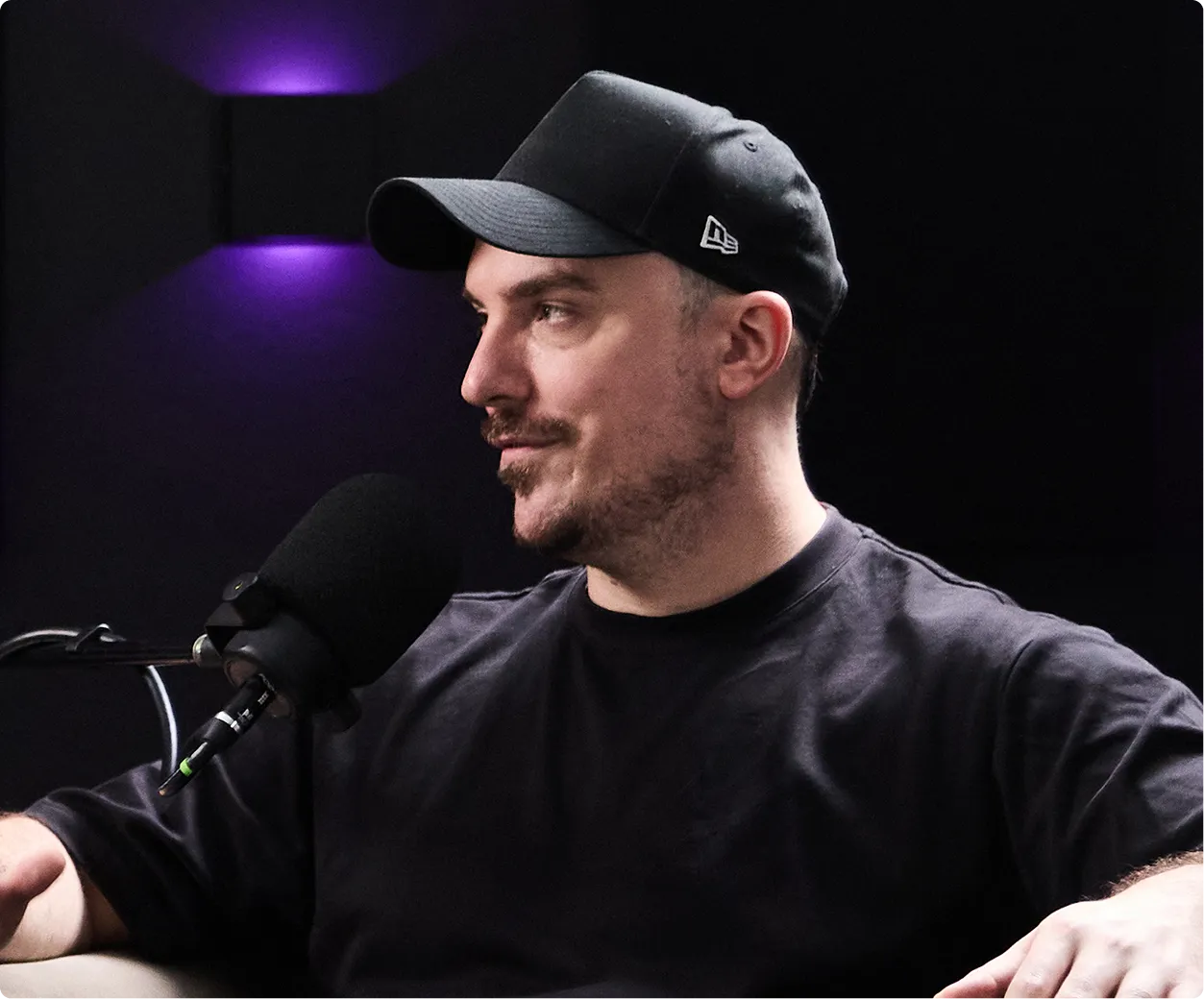
Dive into insights from industry leaders and experts.

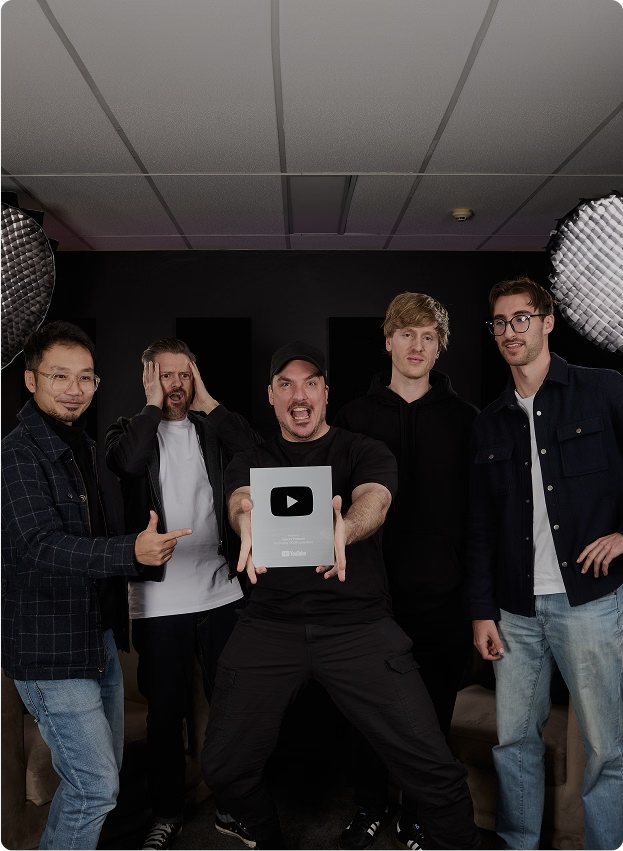
Stream now
Dive into expert advice and industry trends.