

TLDR
Summary
Priscilla Hajiantoni’s journey with Bangn Body began as a personal mission to solve her own 15-year struggle with hormonal acne and eczema. After becoming disillusioned by a skincare industry that prioritized commercial greed and multi-step routines, she used her house deposit to bootstrap a brand centered on simplicity and multipurpose efficacy. Her "customer-first" philosophy led to the creation of the iconic "yellow tube," a product formulated to replace several specialized creams with one high-performing, sustainable solution. By prioritizing brand integrity over rapid expansion and building a dedicated community years before her official launch, Priscilla has scaled Bangn Body into a profitable global powerhouse that balances viral success with strategic, long-term restraint.
Highlights
- Personal Problem as a Business Catalyst: The brand was born out of Priscilla's necessity to heal her hypersensitive skin after years of unsuccessful medical treatments and steroid creams.
- The "Yellow Tube" Philosophy: Unlike competitors that launch numerous products to increase average order value, Priscilla focused on a single, versatile formula that can be used in seven different ways.
- Bootstrapping and Sacrifice: Priscilla invested $80,000 of her personal life savings and lived with her mother for years to fund a proprietary manufacturing process that many suppliers initially deemed too difficult.
- Pre-Launch Community Building: She cultivated an Instagram following of 50,000 people three years before launching a single product by sharing aspirational content and her authentic founder journey.
- Organic Virality: Bangn Body achieved massive success without paid influencers in its early years, instead relying on organic gifting and real customer results to sell out three months of stock in just eight hours.
- The Slingshot Effect: Priscilla describes business "stalls" as necessary moments to reassess and pull back, which ultimately allows the brand to propel forward with greater precision and force.
- Strategic Restraint: Despite pressure to expand globally, she spent six years winning the Australian market first to ensure the brand's roots were strong enough to support international growth without collapsing.
- Purpose Over Profit: Priscilla emphasizes that building a brand for a potential exit lacks the innate purpose required to sustain long-term success and genuine connection with consumers.
Transcript
00:00:00
Our skin is our largest organ. We invest a lot of money in our face and we neglect our body. We sold out of 3 months worth of stock in [music] 8 hours and we were the number one and number two product for a week. This business has started with really helping to resolve my own skin that I was searching for close to [music] 15 years and I was the customer. The business was customer first. [music] We launch with one product that does multiple different things. If anything, you can use it in seven different ways.
00:00:33
Our yellow tube can be used in seven different ways. What do you think of the founders that are building business with the intent to exit? >> That's not a true innate purpose [music] that's going to set you on a trajectory that you will leave the world a better place than what you started. People that build brands based on purpose and integrity and intention, [music] we're building for others. We're not building for oursel. It's deeper than just product. It's it's
00:01:00
building connection on a deeper level. [music] It's making people feel truly their best self. Sacrifice is what you do when you build a brand with purpose. If you're not willing to sacrifice, then maybe business is not for you. I feel [music] so grateful every day that I get to show up and do what I do because it's my purpose in life. >> Where did this entire [music] concept come from? >> That's a good question. I think >> this episode is brought to you by Wix Studio.
00:01:33
>> Here at the Agency podcast, we're building a community and we would love you guys to be part of it. So, we would love to hear from you. What are you enjoying the most? What would you like to see more of? And what do you think might be missing? Drop a comment. Make sure you subscribe. And now, on with the show. >> Priscilla, welcome to the Agency Podcast. >> Thanks so much for having me. So, Priscilla, you've bootstrapped Bang & Body using the deposit intended for a
00:01:57
house and you've now sold over 600,000 firming lotions and you're uh Forbes 30 under 30. Before launching any new product, you have a 30,000 to 50,000 weight list. You've worked with Holly Kingston, uh Justinta Franklin, Khloe Fischer, just to name a few. and your recent firming oil has sold out four times in the past four months, selling over 60,000 units and selling one every second at launch. You're now a global bestseller. You're stocked in Sephora and you're about to go on a global
00:02:31
expansion. Where did this entire concept come from? Like how did this whole thing come together? >> Thank you for sharing that. That's kind of like a bit of a oh my like hearing that all that at once I think was just like oh my god wow like that is that's that's a lot but I think it's just for me I this business has started with the intention of really helping to resolve my own skin and I was the customer I needed something that I was searching for for close to 15 years and couldn't
00:03:06
find I was stuck on this vicious cycle of steroid creams and antibiotic treatments and all the rest of it which really compromised my skin. And so I was really really trying to find something that just couldn't couldn't and didn't really meet my needs. Um cuz I do have really hyper sensitive skin. So I guess just to share I did suffer with hormonal acne and eczema for 15 years and it was quite crippling um at a a lot of the time and yeah on top of that skin being temperamental super sensitive adding
00:03:39
steroids and antibiotic creams and ointments on top of that um didn't help and so I really struggled and I just I think I just went on a big personal journey where it wasn't really healthy. I would buy every product under the sun that would say that it would help my skin and it was very very shortlived. I would buy it, get excited and then be completely defeated after I used it. Either it flared my skin up, it didn't do anything or yeah, left it being worse. Um, and so yeah, that really kind
00:04:10
of started the journey of what Banganger Body was going to become. So, this wasn't an idea around I want to get rich, I want to build a brand. It was just purely I got to figure out how to solve my problem. And and I grew up with pretty severe acne in high school. >> I had it all across my forehead, my cheeks, my neck. >> And I just I know how painful that is. And I think it's even more amplified for for a girl. >> Um what what was the moment where you realized like, oh, I'm going to do my
00:04:36
own thing. Like I'm gonna I'm gonna go on this journey and try to create my own product. There was a very big pinnacle moment and it was I I didn't know where it was going to go. I was just going to be like, "Okay, I well when this all came up, I didn't even know if I was going to embark on this journey." So, it all happened when I was in my corporate job and going to work on the train and I could not cover my skin that day. I had it all over my face. I had it all over my body, eczema on top,
00:05:05
sensitivities. It was just I just could not cover my skin that day for a presentation with pretty big um corporate heads and I was one of the younger ones um within the organization at the time. And back then I think as well like looks did matter if that makes sense. Like we're not as kind as what we what everyone is now. >> Yeah. >> And so I believe now but >> yeah but I it was >> there was no commentary around it. It was just pretty much like you look a certain way. I just knew people would be
00:05:33
looking at me and it was heartbreaking and I just cried the whole entire trip on into work that day. Called my mom, cried to her and she was just like, "Priscilla, I just I really can't say how much it breaks my heart like seeing you this way and I can't take it away from you. I want to help you." And she's like, "You're just so intelligent. You know so much about your skin. You've read everything in every packaging. like you are so on top of it. Surely that you
00:06:04
know with your job like research is like surely there's something you can do that you can create that's going to help you and potentially help other people that might be suffering the way that >> So your mom encouraged you to go on this journey. >> My mom really did and she and I love my mom for the way that she is. She's very entrepreneurial. She's very go after your dreams. You know take that risk. You only live once. You know if it matters to you that much then you should
00:06:30
do it. And I think it was hard because I also am quite risk averse in nature. I will always give something a go but with caution. I don't just go head first. And so it was a lot for me to hear that cuz I was like where do I even begin? Like I'm so overwhelmed already with my skin as it is, let alone what this looks like. And so she tried to come for me. I, you know, ended up getting to work. I was in a bit of a state. Did what I had to do. And then from that moment training it back home, I just said to myself, I'm
00:07:05
done feeling sorry for myself. I'm done stopping living my life because I wouldn't go to social events. I wouldn't even see my own twin sister if my skin would flare up. I was so embarrassed with myself and my confidence just was gone. And so I just said to myself that day, why? I'm I'm I've stopped living and I can't continue doing that. And so I think the support of my mom and the encouragement of going, okay, if I was to do something and create something, what would it look like and what problem
00:07:37
would it solve? And that was the first message to myself. And from there, I embarked on an 8-month journey to finessing what this would be through my research experience and understanding all the ingredients and everything that I had built up over time across 15 years. pen to paper, mindm mapped, and just planned it out. And then I was just happy doing that. It actually gave me some peace and and a positive outlet instead of feeling constantly sorry for myself. Um, but then there was a pinnacle time where my partner, now
00:08:15
husband, was like, "Okay, I think we've saved enough money to buy a house." And so four years of just working so hard, too many noodles, not much socializing, [gasps] um just not doing anything to save for a house. And that was the moment I had to say something. It was either okay, just be my corporate job. He was a commercial chippy, um save money, buy a house, have a couple kids, and that would be our life. Which is nothing wrong with that. It was just my heart and my soul was screaming that I needed to to do this.
00:08:48
And yeah, I communicated what I wanted to do. It was quite scrappy and messy and he was just like, "Yep, 100%. I back you. Let's do it." >> Wow. >> Yeah. >> So, he was all from the getgo >> from a conversation. >> He was Yeah. And I think because >> he's such an incredibly understanding and supportive like husband back then, partner. Um, but we we've been together since 14. >> Wow. So from my pinnacle journey of my skin. >> So he's seen the whole journey.
00:09:16
>> He has been there and he has seen past it and he saw my beauty before I could see it. And I think that's what really his encouragement was everything cuz he's like I want you to see how beautiful you are from like the way I see you without judgment. Um and yeah backed me and I said okay. So for 3 years we embarked on the journey of conceptualizing, finessing, searching for manufacturers, going down that whole rabbit hole of understanding that industry from creating something, not
00:09:49
just being a consumer. And yeah, I before work, after work, lunchtimes, weekends, like was all in. And then 3 years later, the day that we launched was my last day in my corporate job. And he just powed down. He was like I was like, "Are you okay if I this is my like resign and teed up with the launch?" And he was like, "Yep, I've got us. >> I'll obviously keep working. I support you and you can be all in and you can you can do what you got to do." >> My gosh. Before we go into the launch,
00:10:20
cuz I want to I want to understand that dynamic as well, cuz I think so many people have this moment where they're like, "Oh like should I quit now? Should I quit later? Like what do I do?" I want to come back to that. Yeah. Before we get into that, for the eight months before you had this conversation around like, hey, I want to build this thing, >> what were you researching? What were you looking at? Like take me through the the the prep process of discovering how to build your own product.
00:10:42
>> Yeah, definitely start with the solution in mind or the problem that you want to fix. >> So like one key problem, not like >> uh you know um a solve all product. >> Yeah. No, like I think our products are very multifaceted and multitasking. So, we wanted I wanted to have a product that I could that could work for my face and my body at a time where it was very taboo like what do you mean you can use this body product on my face like how does that work? And so I was actually
00:11:08
launching into a market that was quite there was a lot of scarcity around what what is this formula like how do how does this work? But I was actually led by the consumer and I was one of those consumers and having multiple products for my face and for my body to treat different things. It was becoming incredibly expensive and un like not sustainable. And I was like surely there is a better way to be able to calm and soothe and heal the skin. Our skin is our largest organ. Yes, there's different facets to face to body, but we
00:11:39
invest a lot of money in our face and we neglect our body quite drastically. And so I thought, what about if I formulated face first and what you would normally see in a 30 mil small bottle and pay a bomb for, I could expand on that size and make it larger. So then your body is getting the benefits of what your face gets. >> Oh, I see. And so >> Yeah. So you're taking the same kind of concept and like remixing it, >> reinventing how women look at a particular product. >> Correct. It's not just one for one.
00:12:08
>> So was that because like let's imagine like uh if we kind of set the stage here, you're in your bedroom. >> Yeah. or your bathroom and you're staring at a wall of products. >> So many. >> You said you went into stores and you bought everything red. >> So much waste. Yeah. >> When you were looking at it, what what patterns emerged? Like what were you seeing where you were like, "Hang on a second. These guys are getting it wrong. They're not listening to consumers."
00:12:29
Like what were those things that were going through your head? >> There was just so many things that could have done the same thing. Like if I was looking at three cleansers, I'm like, that could all just be one cleanser for my skin type. like one brand would have three different cleanses. >> Yeah. Three different type. Yeah. Exactly. For like just say if it was a a gentle cleanser, but it said that it didn't um strip your natural pH balance. It was hydrating. And then another
00:12:54
cleanser was like, oh, it's brightening and then soothing. And then another cleanser was, oh, it's, you know, going to help with radiance. That should all be into one gentle cleanser. Like if I'm applying product to my face, I want the brightening. I want the soothing. I want the calming, but it's for my skin tone. I'm not, you know, fair enough if someone's like hyper sensitive, oily, and dry. Like, yes, there's different benefits for different skin types, but if it's for one skin type, why can't you
00:13:19
get more for your buck? Why can't you add more value into that product so your customer can get the most benefit out of that product? And so, that's what I was seeing. I was seeing like all these like acne products or all these brightening products or these, you know, soothing healing products. And I'm like, "Wow, they really just got me for one word." when that and that and that and that could have all just been together and been still quite a niche product but you're get giving more to the customer
00:13:47
but they've made me and I look at I'm like they've made me spend four times like four different products instead of one and I understand what that means right it's it's to service the brand not the customer >> well let's unpack that a little bit like when you're thinking about a brand that's creating four products for one problem or one solution what what is their intention >> it's to grow their average order value and their basket size and to ultimately
00:14:08
get you to spend And so for me, I've got the customer in mind always. And the business was customer first. We launched with one product that does do multiple different things. If anything, you can use it in seven different ways. Our yellow tube can be used in seven different ways. And most people would say that's cannibalizing. What do you mean? Like that's one product. What are you going to bring out next? You know, a lot of brands would would be like that's a silly move. But for me, I think because
00:14:35
the customer was so important to the cause, and I was the customer. I was sick and tired of spending thousands of dollars on products that didn't work. I wanted a solution that could work for my face and my body and that would actually deliver what it was promising. And so that's what that formula took over 3 years to formulate. And I was the guinea pig through that journey. And even now, our products take years to formulate because we are creating something from nothing. you know, our philosophy is so
00:15:02
different from everybody else out there. >> No, I I love how you really tried to find a new way to hit the market. >> So, so when you're looking at all these products, the pattern that emerged for you was there's commercial greed. They're thinking about the highest order value they can get on their checkout experience and that bothered you cuz you were like, I'm a victim of this. I'm spending all my money on this and I'm not getting what I want. >> What what other patterns did you see
00:15:25
emerge or was that enough for you to go, cool, I know what I want to do from here? I think that and then I think marketing like you know marketing is so powerful um and it is needed to I guess get your message out there. But I think for me I was just so it's such a vulnerable place to be when you're you know not feeling your best and you just want to fix the problem. So, I think there was also a lot of misleading in a way that I should have picked up as a consumer because the ingredients there
00:15:53
was like like all these random ingredients that had no skin benefits. They were all like surfactants and emulsifiers and things that just make the product the product that but they there wasn't any skin loving ingredients or benefits that would actually help my skin long term and give it value and and and make it better than what it was from that moment of using it. So, if we're to pinpoint the crux, it's like they don't care about the consumer. They don't they they can't they could maybe market that they
00:16:20
do, they can't truly >> stand behind that statement because you felt like nope, they >> I just think the proof's in the pudding. You know, the product has to work and that's something that we're constantly evolving. You know, even like going back to the drawing board with products that we we think are amazing, but we know we can do better. So, we will always constantly improve. there was always going to be something that, you know, could be pushed to be better. And I
00:16:45
swear my manufacturers hate me because I'm constantly [laughter] pushing. And it's great. We have a great relationship. I've worked with them for over 11 years. Um, and they challenge me. I challenge them because the customer is the most important person and aspect of of the brand and we need to service them. And so it's not to say like you can't have products. So, we've obviously expanded our range to be very complimentive with each other, but they do their own thing. So, you can use them
00:17:11
singly all together, but you're not going, "Oh, there's five cleansers that are all gel cleansers, but one's brightening and one's soothing and one, which one do I get, and do I have to get all of them if I want all the benefits? Like, how does that work?" And so, for me, it's going, you can have multiaceted formulas that have different viscosities. One can be an oil, one can be a like, you know, lotion, cream, gel, like you can have different um bases because then that obviously is then
00:17:41
something that can be customized to the consumer. If someone's like, "No, I prefer a you know a wash um foam cleanser over like a oil." Well, then they have their own benefits. One's better suited for dry skin and for hydration. One's better for um combination skin. Do you know what I mean? It's very compliment. You can have variations, compliment, but you're not trying to trap one client into buying a myriad of products to go through a process of jumping through hoops
00:18:06
>> to get one outcome. >> Clients want it all. A slick looking website that can run their business and scale with their success. Wix Studio is built for that. Plan out your client's whole site in seconds with AI powered site mapping and wireframing. Then when everyone's on the same page, jump into the creative. Starting off in Figma or in the Wix Studio editor with super precise layouting tools like grid, stack, and flexbox. Go above and beyond the brief with no code [music]
00:18:37
animations, custom CSS, and built-in business solutions. And make your whole vision responsive in a click. And there's zero need to break a sweat when clients grow fast. A dynamic CMS with global design settings and reusable assets lets you turn one page into hundreds. Design smoother and deliver sooner. Go to wixstudio.com. >> When you think about the next three years, you said it took 3 years >> to formulate the product. >> So you had a list of what you wanted to do. What were the challenges in that
00:19:12
three years and what were the things that you >> needed to do to be able to get this together to be able to actually create the product? Yeah, it's no small feat. Like I honestly take my hat off to anyone who's embarking on a journey with product because trying to align manufacturers with your vision is not that easy. And so we started out with, you know, going out to different um manufacturers and at that time there was a lot of a few different Facebook groups that were sharing manufacturers, but I
00:19:41
did a lot of research just through Google and just yeah, there isn't really like a yellow book like when you go like hire a hobby like whatever it there's nothing like that. You can't go and like just find a yellow book and I don't know why I even said hire a hobby. I [laughter] don't know why that came to my head. >> But you can't just like uh Google search. >> Exactly. You couldn't What year was this by the way? >> 20 Oh, so 2019 we launched. So 3 years
00:20:03
before that. >> Okay, so it's 2015. >> 2015. Yeah. >> Yeah, it was a little hard to get an e. >> It was a lot harder. There's there is not the content that people can consume today. >> Holy smokes. If I had that when I started, it would have probably made my life 20,000 times easier because I had to >> like scavenge. I had to like really dig through the cracks of the world of manufacturing and you know Shopify was just kind of uplifting at the time. It
00:20:32
was big commerce and Magento back then like it was the dark ages as people call them. So um we're very blessed now. I can say that. But yeah, it was hard to kind of find manufacturers and at the time not many were into the natural beauty realm either. And if they were, they were offshore. And so I wanted everything to be made in Australia, made locally with locally sourced ingredients and even our packaging like as much as we could. Like I wanted it to be homegrown. Um and then so I think for me
00:21:03
that was like really important and not so easily. >> Why was that so important? Because a lot of people when they're a founder at the beginning they're so conscious of their budget. They're so conscious of like >> we're going to make it cheap. We're going to make it affordable. We're going to make it retailable. Um, why were you so hellbent on on doing it this way? >> To be honest, I think I was so naive to business because I had never done business before. So, I was the customer
00:21:28
and I was like, if I I'm not going to buy some shitty product from China, you know, like they probably market it and then I would get products and it would take 3 4 weeks to arrive and then when it would arrive it was all in Chinese language and I was like, "Oh my god, okay, this is crazy." And so, I never wanted that for my customers. I wanted to know that they were getting the purity and the you know authenticity of a Melbourne girl Aussie grown brand um that I could really invest in and also
00:21:56
with the power of ingredients I just I knew that I needed it to be and how it was made and needed to be here. >> So if you think about the naivity of this >> um >> is is that perhaps a stroke of genius because if you think now >> that's that's why people love the brand. So, so weirdly enough, what is not the commercial thing ended up being the most commercially viable thing about what you did? >> I took the hard road. Like our packaging took over a year to make sure it was
00:22:24
viable with the formula cuz with the aluminium tubes, they need to be ethically sourced with BPA free lining and make sure it doesn't cross-pollinate with the formula. Like I took the hardest road possible. There was nothing easy about my journey and why it took three years and with the formulation process and finaliz finally found finding our first manufacturer um who was based in Sydney and again as I said and I mentioned there was not many manufacturers at the time that really I guess leaned in or were an
00:22:54
expert in the natural realm. So whenever I could find them I was like banging down their door and yeah I found someone and we started the formulation process. I definitely invested majority of that kind of um deposit which was close to like 80k into this manufacturer and in the end just one day I received a I think it was like our fifth sample and I just pushed back and I said it's not there yet and they were like Priscilla it is there. I'm like no it's not there yet. I go, "Yes, it's helped my skin a
00:23:28
little bit, but it's not I'm not seeing the wow factor that I need to see with investing this much money and time and energy into the product. It can't just be another product on the shelf. It can't just continue to add to the saturation of this industry. I need to be different. We need to be different." And like I kept like having to educate them on that. And they were like, "We don't we we honestly can't take it further." And I was like, "Okay, well
00:23:49
then we're done." And so I called my husband that day and I was like, "So, how do I say this? We're kind of starting again." And he [laughter] was like, "What do you mean? We just invested all of our life savings." I said, "Yes, we're starting again." He's like, "Well, I can't talk now. I'm I'm I'm" And I'm like, "All right, well, I just wanted to give you the heads up cuz I'm starting I'm going back to the
00:24:12
drawing board and we got to start again." And so I spent two days going back, googling and I think a lot of my learnings I could start typing in more particular things like um >> like you learned a vocabulary like how to how to communicate and so I kind of just started anyway found a manufacturer locally in Melbourne because I'm based in Melbourne and I remember calling them and just didn't think anything would kind of eventuate from that first initial conversation but that conversation was
00:24:43
then ended ended up being a 3-hour conversation. So, this person gave me their time who is incredibly busy um and went through everything like I went through the formulation that we had, the ingredients that we had, what wasn't working, what needed to be improved, you know, going back to the drawing board and they were like, "Yep, 100% would love for you to come into the office. We can talk about this further." Um after the meeting, which was fantastic, I left. And they were like, you know, no
00:25:09
pressure. Think about it. If it were not for us, I understand. like just not pushy, right? And I was like, "Yep." And I just left knowing that they were going to be the manufacturer. And then we started on that journey again for about a year and a half, two years, um really to perfect. And to this day, they say to me, "Priscilla, if you handed me the yellow tube," which they get multiple requests cuz they're very confidential, multiple requests um for people going, I want to make this. And it and he says,
00:25:35
"Priscilla, it's the yellow tube." Um and we say, "You know, that's already been done. So, you know, what do you want to do? Let's innovate for you. And so, cuz again, like we own our IP, so they can't. But it's interesting how, you know, people love it so much. They know the consumer is also obsessed and they want to carry that through. Um, but to this day, they say to me, Priscilla, if you were to give us the yellow tube, we would respectfully decline because it
00:26:02
is an absolute to make. >> [laughter] >> um it has to be like heated and cooled and set and it's just yeah a very lengthy process to make and also a quite expensive one. Yeah. >> Um and so it's very interesting which I think a lot of people just don't know that. Um and so yeah, we embarked on that journey and after two and three years in total of formulating the the product, everyone was like, "Priscilla, it's perfect. Like you need to launch this." And my skin
00:26:34
had drastically improved at that time. Um, and yeah, I still had this nervousness of, "Ah, it's not ready." And my family were like, "Priscilla, look at your before and afters. Like, look at your skin. Look, like we are obsessed. My auntie had psoriasis on her leg. It it healed her psoriasis." Um, other family members had, you know, eczema that runs in my family. Their skin was being less inflamed and and we're like, "Okay, now's the time." And yeah, we I launched obviously the yellow
00:27:05
tube on its own. Um, and it just completely took off like wildfire and had its own legs. >> I'm I'm excited to really unpack the architecture behind >> how someone could replicate something like that for themselves. >> Before we do that, every founder I believe I meet has the intention of doing the right thing. Yeah. >> At least >> from some perspective. >> Um, >> I think every founder thinks that they're integral. They think they're being honest. they think they're being
00:27:36
trustworthy. Um, so why do founders in your industry never get their ideas off the ground if they have a similar intention? >> Um, what what is potentially the missing ingredient that you think people miss? >> Um, it's definitely not for the faint-hearted. I think this is a grueling grueling industry and there is so much saturation out there that you could have the best intentions but if you don't have and I I don't know if it was innate in me like I do I am very creative as a person um so I don't know
00:28:11
if that's what led to the decisions that I made to bringing Bangan to life because in a sea of white and millennial pink at the time I decided to launch yellow people like what the hell is this yellow tube and so the curiosity was the first entry point into people embracing and engaging with the brand >> cuz it was quite distinctive cuz I remember uh Ellie first showing me the product she's like check this out what do you think about this >> she's always like grabbing packaging and
00:28:38
[clears throat] >> probably buying too many products just so she can show me the packaging she's like here's a box it's inspiring you should do this with a brand in the future um but just the tube is is so interesting so like even how you innovated how distinctive the product felt in a woman's hand, how different it was, how practical it was. What was your intention behind the packaging? Like, was that something you knew was going to be a hit or did it kind of surprise you?
00:29:02
>> Yeah, it surprised me to the level because again, I'm not a creative >> specialist expert genius, you know, especially at that time. I was in a corporate job. I loved being creative and I loved color um in a sense of not so much wearing color cuz I feel like living in Melbourne we're all just like this is actually quite I wear denim but this is actually quite fun. Um but yeah, I guess I liked color when I saw it. So I was always gravitated to that where I I think for me as well in my skin
00:29:35
journey of only using and only being allowed to use white packaging. I felt so excluded and so different from my peers of going into a Mecca at a time. Sephora wasn't around, but going into a Mecca at a time and they could just go and buy whatever they wanted. And I really couldn't buy anything because my skin was so temperamental and I was like, "Okay, I you girls go in there. I'm going to go to chemist warehouse and get my script or like go to, you know, whatever I had to do like at that time
00:30:04
to service my my skin or go into a um price line and or and get like the most organic product that I could find. Um or I had to buy it online. And so I just felt so such a disjointment to why can't I buy something that has nice packaging and I feel a connection to it but it's not going to be good for me. And so >> right cuz you have this uh conundrum where like pharmaceutical >> products are very scientific and stripped back and they're not fun. >> No. >> Um and then you have these you know
00:30:36
beauty brands that are like ornate and frivolous but their their products aren't always >> or just was going to suit my skin. you know, you wanted to bring and and the fun brand together. >> Correct. >> And so that's where I think that energy of color sparked, but I didn't think it was going to kind of take its own wave based on the tube. And I think for me, I wanted that luxurious feeling, but still being accessible and still feeling like it was lived in. it like felt like it
00:31:08
wasn't so far-fetched or it was too like oh that I can't like didn't it like it's too pretty like I wanted it [laughter] I wanted it to feel lived in and a part of your life and >> why was why was that important do you think >> I think because up until that point I didn't have products that were lived in for me I didn't >> you didn't have to like take the lid off or >> Yeah I just think I didn't have a connection to it I didn't have >> it felt like a personal item perhaps
00:31:31
>> yeah exactly it felt like I was every squeeze it was doing good for me >> oh I see You know what I mean? Like it was like >> dopamine hit. >> Yeah. It was kind of like you know the love of hand creams like you know the Asops and the you know all of those brands like um even the Lwakans they have they all came out with their their hand creams is the heartbeat of their brands and so you think why [laughter] >> and so I think having that kind of same concepting but for a face and body
00:31:59
product I think was very new at the time as well. >> I think that's very clever. I think, you know, for anyone listening to this, I think like >> the physical touch and the the handheld experience of a product is like >> super underestimated. Like so many clients don't think about this. Like when we worked with Voomi and we launched Voomi, >> um Tara Elizabeth was like, "Hey, I want to do like a bag." And I was like, "No, like let's like make something that's
00:32:21
cute that a woman can hold in the palm of her hand." And she's like, "I like that idea." So then we did these tubes. And I think that's why they >> they sold so well at the start was cuz it was distinctive. >> Yes. When you think about launching a product, how important is it in the beauty space or any space to have like really distinctive packaging versus just following the status quo what everyone else does? >> Yeah. No, you if you're going to copy,
00:32:44
you're not going to be original and be new and be distinctive because it's already been done. You have to see what people are loving within your industry and how can you make it your own? what's fresh and what's, you know, new in a way that you want to represent your product. And so having that distinctive nature and the consistency across all your brand, you know, comms and assets and e ethos and just what that is and how that feels for you is the most imperative because if you see a brand that's, you
00:33:14
know, leaning into like moves and reds and you're like, "Oh, that's fun. That's cool." But you're like, "Oh, that doesn't really go well with me, but it's a trend. We got to get on this trend. you know, we got to we got to be where the consumers are, but it still doesn't feel aligned to your ethos and what you're doing as a brand. It is not going to cut through because you have to talk to that. You know, it's so funny. I'll give you a very clear example. We
00:33:37
launched a face range more specifically, which was quite I think it was a a few factors. It was probably industryled, not necessarily a trend, but just something that I think we needed to try. It was kind of lent a little bit too much, I think, from the manufacturing side as well. like they had all these ideas cuz we're very collaborative. And so I think we got wrapped up in, you know, the what people should expect of you world, >> right? Right. >> Which was a very interesting learning
00:34:03
curve because what we found was those products, you know, being a blue color um and again not in the true DNA of the brand with its multifaceted face and body formula or firming formula. Um it hasn't kind of leveled up to the DNA purpose of the brand with with our yellow packaging and our firming formulas and our core DNA of who we are. um they were slightly different and so even though they do well for people that buy them and they're a high repeat but the volume and the appetite and that's because I think
00:34:39
we just subconsciously don't also push it as much on social media or even through our marketing because it's so different from our brand ethos. Um, it's it's that same analogy. You know, if you're not aligned to those colors or those shades or that packaging or what you would love to see as a consumer or who your consu what your consumer would love to see, then >> it can't really have it. It can't grow. You can't p you're not going to have the innate push or you're pushing but it's
00:35:08
inauthentic. Yes. So, I think it's very very important to have a distinctive nature about your brand and a very clear messaging for what you're trying to communicate, but it has to align with your true ethos. And >> I would agree with that. I I said to a client recently, we were talking about their packaging uh for their beauty brands, and um she came to me and said, "Look, this is all the suppliers have as the options." Um she's like, "We just have to pick one of these." And I said
00:35:37
to her, "Do we have to?" And she's like, "Yeah." And I was like, "What makes you think there are no other options?" And she's like, "Well, you know, because this is what the budget says, and this is what we can and can't do." >> And I said to her, I said, "You told me you want to have a world-class brand?" >> She goes, "Yeah." I'm like, "Why are you not putting in a world-class effort? Why are you compromising on the packaging
00:35:56
>> just because of something the supplier said?" >> Yeah. >> From your perspective, let's say someone were right now in your shoes >> uh and they're going to the suppliers and they're not really playing ball. What's your advice to encourage someone to know go find the money? >> Yeah. >> Go pioneer a product and go do something truly distinctive. What would be your advice to that person? >> My whole philosophy is never settle. I think as soon as you start settling for
00:36:22
other people's expectations or for what you think you should be doing or if you're pushed to do it, it's never going to end well or it's never going to end to the the outcome that you have in your own mind. And so I think having the confidence to communicate if it's someone that you've been working with for a long time, you can say the reason why we started working together was because of X, Y, and Zed and bring it back to the reason for the initial engagement. Cuz I feel like that gets
00:36:46
lost over time. And you might need to just remind them of, you know, this is my intention. This is what I wanted to achieve. This is the journey that I want to go on. This is the, you know, philosophy of the brand. And then they go, yeah, that's great. Fantastic. Let's work together. But then over time when things get a little bit hard or you know it's it's a bit of a a struggle people sit in that and go it's too hard you know let's just these are the options. So you got to push back and say these
00:37:09
options are not viable for my brand. They're not going to be able to give that wow factor and the elevation that we need to be able to deliver a world-class brand or product. Do you want to be on that journey with us or not? And of course they want to. So they will be like >> we want to get paid. They will be like, "Okay, we'll go back to the drawing board." And I think it's just so important. Like, you can't go to bed thinking, "What if I just said that? What if I just did that?"
00:37:37
>> You know, you have to be true to yourself and have courageous conversations. Someone said that to me once and I was like, "Oh my goodness, courageous conversations." That is so true that you might be literally fighting with yourself to be like, "Oh, I don't know if I should have this conversation. Is it going to ruin something?" But sometimes these conversations are going to propel whatever you're doing so far forward and with intention because everyone is aligned. And you can't just do that when
00:38:05
other people are trying to navigate your path or kind of guide you where they want you to go. So I definitely think if you have a true intention, it's just got to be recommunicated. >> I I just love how you refuse to compromise uh and that you're you're taking to my detriment. >> Yeah. You're playing this slower approach. Um, how do you manage the pressure of moving, I guess, slow in a world that seemingly rewards, especially in your industry, >> brands for moving fast, jumping on
00:38:34
trends? Like, how do you justify that? >> It's a good one, especially with retail. I think that's also another pressure cooker that they're always looking for the newness. They're always looking for your new thing. But I think we've built relationships with those, you know, with our manufacturers and also with our customers that we do things with intention. We do things where it matters and we do things to complement and to create a journey for the customer that they're going to be so happy with and
00:38:59
that's going to make them feel amazing. So we just constantly remind our partners and the people that we work with and our customers like that is who we are. But I think as we've grown also the investment on new product development as mentioned you know it's a very costly exercise. So unless you're reinvesting in your business and you're growing, that's just only going to help supercharge the next phases of growth. And so with that, over the course of the last three years, a lot of our products
00:39:25
that we've been able to formulate um will start to come up, you know, going into next year, you'll start to see all the efforts and all the times that we've, you know, been formulating in the background is slowly going to creep. But it's not something that can happen overnight. And I think that's what's forgotten as well. Like, oh, you know, where's something new from Banganger? I want this. I want this. I want this. We have to be so, you know, strategic based on what our customers are wanting to
00:39:50
then acknowledge the pathway of formulation and testing and development and going through packaging and packaging compatibility and all the rest of it to then officially launch. And I think through that communication piece with our customer and built up that loyalty now that we when we do launch a product, it's so in sync with them and also their connection with the brand cuz they know the effort that's gone behind that product that we sell out. >> There are challenges with that too,
00:40:23
right? Like having retailers say, "Hey, we need a new thing. Customers are asking for it." the beauty industry, I guess, appears to reward newness. Um, whether it's the latest discovery, the latest technology, the latest trends. Um, is this a problem for consumers? >> I think so. I think also it's something that consumers also probably are wanting. You know, consumers like newness or the next big thing or, you know, so it's just, I guess, aligning expectation. And you know, it's not to
00:40:51
say that we don't do any new nurse throughout the year, but if we don't have product, we create newness with things that can complement or add an enhanced experience. So whether it's limited edition sets and we bring in different >> So you don't have to have a new product every summer, but yes, >> uh you can package it differently. You can do a different campaign. >> Yeah, you can do a collaboration with, you know, aligned um >> brands or businesses that have, you
00:41:17
know, similar audiences. like you can be expansive and you know bring in that excitement and newness in other ways. Um but when it comes to product yeah we're definitely I think a little bit slower than most because we want it to be the best it can be. >> I think there's advantages with that too. Uh obviously you can scope out the competition, see what trends come and go and I can imagine it gives you more data and insights as well. Um you've spoken about the invisible clock of
00:41:47
competitors. Can you explain what this is? >> Yeah. >> Starting any business, you want to go to zero to hero in record time in your brain. Like you just want to be better. You want to keep moving the needle. You always want to be servicing the customer more and more and more. And that's ultimately getting more customers into your funnel. So you have this invisible clock. What I had that I was racing against to prove the business's worth, my worth to the industry, to competitors, to customers.
00:42:18
Like I had to do something. I had to be here then. But I was putting that immense pressure on myself. And by doing that, I think I just could have gone slower in a sense of articulate like been more articulate or strategize a little bit deeper, aligned more intentionally with the outcome that we wanted to achieve instead of going got to do this, got to do this, got to do this, got to do that and then in the end you're not really moving. It's kind of like you're running in on the spot.
00:42:47
Um, and so it is a lot of pressure that business owners put on themselves that they have to achieve the greatest heights in record time because that's that's the standard. You know, you see brands pop up and then next minute they're like global sensations and that can happen, but that's also 10 years in the making behind the scenes. And like for me with Banging, people might go, "Oh, wow. So much has happened and the brand's got to the heights that it's gotten to." But that's six years in
00:43:15
market and then also three years or three four years not in market >> and then 15 years dealing with the problem >> and then exactly 15 years dealing with the problem. So I think we put a lot of pressure on ourselves to show up in a way that >> is how we want to be viewed in the industry and and with our customers. But I remember one day I think I just I can't remember the p like the pinnacle time of when it happened but I just said why don't we set our own rules? Why aren't I working on my own clock? Like
00:43:49
what what's going on? Like I just had this epiphany and maybe it's with age or you know experience within working in such a fast-paced industry. I was like you know we know what works for our customers. We have the data. We have the knowledge. we, you know, we live and breathe it. Why why are we trying to listen to other people and and bring in what they think is best, which we obviously it's, you know, with a grain of salt with everything, but you lean into people and wanting that support and
00:44:19
experience, but then when you get it and implement it, it doesn't really align or doesn't work. Um, >> what do what do you think are the dangers of uh founders and entrepreneurs that try to move too fast? That's a very good question. I think moving too fast, you miss the small foundational opportunities that will set your business apart and set it on a trajectory that could stand a test of time. You know, moving too fast, you miss a lot of things and you're chasing, you know, the next thing which is a
00:44:57
blip. So, you'll always be be chasing the next thing. What's uh one of those tiny details that a customer will never notice, but you do anyway because it's the right thing to do. >> I think and maybe it's expected, but all of our packaging is sustainable. Like you said, why the tube? Why did it take us 12 months? Um that's a really important factor to the brand, which I think now it's a bit um what's the word? Like I think expected. Um, but it's something that we communicate, but maybe
00:45:28
customers don't realize in the moment or when they're purchasing, like every aspect of the business has a sustainable practice and an ethos um that we try to stick with. And we're not perfect, but we always try to improve. Um, you know, we're always secondguessing ourselves in the best way to make sure that customer gets the best delivery outcome experience. So we will constantly be like we will plan it all out, we'll execute it, we'll think it's fantastic and then we'll circle back and be like
00:45:57
actually we need to change that. So the customer probably doesn't realize the amount of iterations that we go through to protect to perfect and to provide the best we can and we're not perfect. Like we are still learning and evolving and hearing our customers like we want to be better. Um, but it's it's always heard from them. Like anything that they say, we see it, you know, even if it's like so many different comments or, you know, messages that we don't get to everybody
00:46:27
all of the time, but we we are they are always front of mind. >> And on the other side of this, uh, what are the risks of potentially moving too slow >> and, um, what what can be the backlash of this strategy? um being too slow, you can open the gate to competitors to come in um and who might have bigger budgets, bigger teams. >> Has that happened to you? >> Um I think there has been people who have tried to dup us. Um, but again, I'm very grateful for the intricacy of our
00:47:04
formula that it's very hard to and unless you know exacts, it's very hard. And as I said before, my manufacturer wouldn't manufacture it again because it's such >> a insane formula to make. >> Let's uh call those competitors out. Let's start some beef. Can we [laughter] talk about >> No, I think when we launched I can communicate like when we launched into Mecca, we sold out of 3 months worth of stock in 8 hours. Oh, >> and we were the number one and number
00:47:30
two selling product for a week. >> And that turns heads, right? Cuz then you think about other founders who are like, "Hey, who the hell are these guys? >> Maybe we can steal some of their mojo and have the same success." >> Correct. >> I I just think that that's so fascinating that your obsession is what created demand in the market in in some aspects because you were like, I got to solve my own problem and >> inherently that was other people's problem, right?
00:47:54
>> Most brands chase demand. They try to jump on what others are doing in front of them. You seem to create it. What's the secret to making something that people didn't really know that they needed? >> I think you have to be very good at listening to your customer cuz even though when they might be giving feedback or sharing an idea, they might just think it's like off the cuff, like they're just saying it, but there's such information in their conversations that
00:48:23
they're having with you. And I think by understanding your consumer and understanding where you can add value, you can really innovate. You can really create your own momentum, your own demand, your own, you know, proposition. And I think at the end of the day, people are willing to try something new. You just have to tell them and show them why they should buy from you, why that they should hand over their hard-earned money. You know, what what is that? Um, and so yeah, I think there is definitely room for you to be
00:49:00
authentic and disruptive and really driving your own momentum and growth. Um, obviously the market will always have a say. There will always be a demand for something. Um, but at the end of the day, you know, you look at the likes of Haley Bieber, there was no such thing as a glazed anything. And now if it's not glazed, it's nothing. So, do you know what I mean? She created her own category within the world of beauty. Same with glass skin, with Korean beauty. They did the exact same thing.
00:49:33
And so that that happens. It's not these these people. Yes, they have enormous opportunities at their doorstep, but still an idea that came from nothing, which I think if you can listen close enough to that consumer, um, yeah, you can spark something like that as well. Now, I I want to better understand the verality component piece here as well as the community because it sounds like when all this stuff played out with Mecca, your community were like right there like, "Hey, we got your back. Um,
00:50:04
we want to champion this brand." When you think about your community, what what do you think about like because a lot of people throw the word community around as if they've done a ton of it, but you've actually >> legitimately built like a hardcore hardcore fan base, which is a little different, I think. and you had a 50,000 people waiting list for one of your launches. And we're not talking about an email, >> you know, subscription. We're talking about like I'm ready to buy the product
00:50:32
the second it drops. >> Um what pressure comes with this kind of demand and and how would you define what that community really is? >> And that's and that's a challenge. you know, even now like you know, stock planning and forecasting is still something that we just are trying to get a handle on cuz when you think you've and it's a great problem to have, but we never want to disappoint. And so when things are out of stock or on pre-order, you know, >> you don't ever want that to feel like a
00:50:58
blip in the road. And so for us, it's so important. And you know, even though you've you've forecasted, you think, "Yep, you've got 3 months worth of um stock on hand. You've got some coming in, it's going to be enough." And then someone posts or it just an ad just crushes or something. >> Priscilla, this is like a stadium full of people that are like, "We're ready for your next drop." Like, like imagine you're on a stage and there's 50,000
00:51:23
women out there and they're screaming. Like what pressure comes with that? That's nuts. Well, the pressure of like performance like you know of the the product delivering what we've communicated up until that point as well as stacking up to the cult formula. >> Yeah. >> That OG the die like people die on a hill for that product. Like it's insane. Like I've I know what it means to when you love something and you you are obsessed and die hard fan. Like I I get that. But it's so interesting to see the
00:51:55
magnitude of that of that scope of community. And so having to constantly one up it, that's a lot of pressure. Like every product we drop, it's like we want it just to be better than than what the original, like even though we're always trying to improve the original, we're always want trying to focus on ways that we can improve um in different facets, but how do we create products that are going to stack up, especially if it's got firming in it, like the firming range? If you're putting
00:52:23
firming, you best believe it's going to be a knockout and we're going to make sure that happens. So, the pressure of that absolutely the pressure of not having enough stock even though you've forecasted and you have built all this anticipation and this momentum and the investment to get it to that point and then you sell out. >> You not that you would lose momentum after that, but that's not a good place. It's a disappointment for a customer. It's not great for you. So you're like
00:52:48
the stakes are high because you've had such a great streak of success >> that if a flop comes out, you're afraid that that's going to tarnish the OG brand or the OG product. Like what's that fear that you have? >> Oh, you just you always want to make sure that you are providing greater benefit with every product that you give that you that you present to your community or you know what how does it work within their routine? How does it stack up? So there is >> what's what's a fear that you have?
00:53:19
>> Oh, disappointment for sure. Like I feel like I never want to disappoint our customers or community or our dieh hard fans who have been with me from the very beginning. And so to make sure that I can deliver and that I've taken their feedback on board and I can offer them something that you know might not be in market or it can be innovation of a version that sits within our realm. Um, and I think that's the biggest thing like you know we we know what our customers come to us to
00:53:49
buy. And I think if you can understand what that is and you can >> aside aside from product, what is that that you think that they're buying from you? >> They're buying connection. They're buying obviously from a product standpoint the results or the feeling that you get from that product. But I think they're buying because they feel heard. I think maybe there is that deep understanding of banging, you know, when they've shared things that they might want to see from us and then it comes
00:54:18
out and people like, "Oh my goodness, I've been want like this is exactly what I've been wanting. Thank you so much." Like it's help like and then just I don't know like I'll never forget I got an email. I was having a pretty rough week and there was a lot happening and I got an email to our hello inbox which got red redirected or rediverted to me at that time because our team was being restructured and I got this email from this lovely lady and she just it was a whole like essay of how much the brand
00:54:46
has helped her like the products and the brand has helped her and her mom. um her mom had really severe um chronic skin dermatitis or something like really bad and she lived on steroids her whole life pretty much and using our products completely changed the game. And not only did that help her mom, but also she had some skin concerns that helped herself. But she said the biggest thing was the fact that seeing my mom the most happiest that she's ever seen her like brought this unwavering level of joy.
00:55:17
And I think it just goes deeper like what our products can do or what a product can do for someone. It goes so deep in their soul of happiness. And that's a lot of pressure like you know in a sense of I just want people to feel good and I want I want them to know that we are on their skin journey with them. But then to hear like that we're changing lives in a sense and we're not surgeons. we're not really doing like I feel like wow like people are really saying that people are really using
00:55:50
those words like that definitely gets me through the hard times because it's not easy like there's a lot of challenges when it comes to business um and so to know that that really has impacted someone in such a positive way yeah that that will never >> it's heartwarming and I think when those when those things come in like we get beautiful messages from people as well uh we get like tears quite often. Yeah. And we've made Navy Seals cry at the end of their brand delivery. Yeah. Like I
00:56:19
think there's something >> something remarkable as a founder when you can see >> that your vision actually works >> even though you know it works. You've got the formula, you've got the science, but actually like seeing that like physical response from someone is always is always um heartwarming. >> I want to talk more about the the engineering of the virality around the community building. Um, you call verality an engineered outcome. What's the repeatable science behind going
00:56:47
viral and what's periodic or a circumstantial? >> That's a good question. I think virality is such an interesting beast and it all started I think with simplicity. I think for me I did not have a strategy really when I launched Bangan. All I knew was that I wanted to create a place and a sense of belonging and Instagram being the platform of choice at the time cuz Tik Tok was not around. Um I started building a community 3 years before Bangabody launched. >> Oh wa okay. So like before you actually
00:57:20
went live you were making content on Tik Tok. >> No on Instagram. >> On Instagram. >> Yeah. Because Tik Tok wasn't around. >> So Instagram was >> like 2015. Yeah. >> Wow. Okay. This is >> And that was just starting. Instagram just like started and it was quite like pretty and aesthetic. Yeah. So it's quite pretty in aesthetic and the algorithm was in very favorable to people like the more you posted the more you showed so the more followers you got
00:57:42
so it was very simple at the time um to really kind of build this community and I as soon as I knew the name I got the Instagram handle and then I just started posting um you know motivational quotes and you know really beautiful inspirational and aspirational imagery and even things that I didn't necessarily create but other creators did and I just tagged them and gave them credit which at the time they loved because I was building their own kind of awareness and their own um growth on their platform. And so I yeah just
00:58:13
started to talk to people like I started to connect and hopefully we became like Bang and Body again. >> It wasn't anything about skincare at the time. It was just a platform. People are thinking, "What's this bang and body page?" And they're posting like aspirational, inspirational quotes and kind of like really nice aesthetic imagery and just like a feel-good page where you could come and just feel good and maybe. >> So there was no intention to sell anything. You were just like, I'm just
00:58:36
here to share vibes. >> I'm just here to Yeah. And there was a few pages doing that at the time that, you know, a sense of belonging, a sense of, you know, when you open the um Instagram app and you'd scroll and then there would be this really aligned message that you got that day. I think that made people feel good. Yeah, it's like a you know when you crack open like one of those cookies, you get a little note like, "Oh, that's for me today >> and that's for me."
00:58:57
>> So, I think that was really amazing in in building that sense of community and belonging and feel good energy, which ultimately was going to be the DNA of the brand. >> Talk to people, >> DMs, going back and forth, having conversations, >> no marketing, just purely >> not at all for like a good year and a half. And then once we started to, you know, really get into the momentum of formulation and packaging, then I started to share the journey. And again, it's so crazy. I didn't have any
00:59:27
strategy back then of, oh, I'm going to share the founder journey. I'm going to share, you know, the >> there was no founder. >> There was nothing. I was just >> And I think as well, too, everything was quite curated and pretty that I thought stories is a great place to be quite authentic. And so I would be super scrappy. Like there would be like packaging everywhere on my messy desk and I would like take a photo and be like you know progress um what's coming stay tuned and people deem me oh my
00:59:51
goodness what is this and that just kind of evolved where people wanted more and they were asking you know can we get an update and then you know the bio changed from you know feeling good every day to then what we were kind of doing um and started to communicate more about okay we're we're a skincare brand we're in the you know beauty industry this is what we're going to be And I started to gather intel on the consumers that like the community that we had at the time, you know, what were
01:00:18
their biggest skin concerns, what were their biggest pain points when it came to skincare. And I started to just get those insights quite early on. Um, and yeah, by the time that we launched 3 4 years after building that community, I think there was about 50,000 people on that page. So then I started to get email signups, which was great. Um, >> so you were like uh taking photos in your stories. Yes. saying I'm working on a product like how much were you giving away as as to what you were building?
01:00:45
>> So at the start it was just drips and dubs and then as we knew that it was getting closer to launch then maybe like eight months out I started to really heavily communicate that this is the um kind of category we're we're going to be in. This is like so yeah not necessarily that it was a lotion but more around skin care and face and body and these are the ingredients that we're thinking. This is the packaging. This is the vibe. Like just kind of like how you would hype anything.
01:01:09
>> What was the reaction? Was there like a ton of feedback or just a couple people hanging out? >> I think people were really like a lot of DMs like super excited, super excited to know more and to see this come to life and you know people curiosity like can you tell me more about this product? This is super exciting. So there was a lot of kind of initial interest which was crazy because we never mentioned it was a beauty brand so people weren't necessarily signing up to follow a
01:01:33
skincare brand but I think because the energy didn't change like it was still very much a feel good space and I made it feel that way. Um so then by the time that we did launch it was yeah quite amazing. we had an influx of purchases because I'd used that as an engine to then get email signups to then really kind of connect with the consumer. Um, and then from that moment, I just started to share anything and everything that our customers posted. So whether it was an an unboxing, whether it was
01:02:06
before and after results, whether it was a a review, anything like everything was shared across that platform. It was so scrappy. I remember I just like messaged the the person that had messaged me being like um you know they say these are my results. I can't believe it. This is amazing. I'm like oh my thank you so much for sharing. Would it be okay to share your amazing results in the hopes it will help others? They're like yep absolutely and I'll just screenshot and then list it. There was no curated net
01:02:33
on a very on a very curated >> platform like Instagram. Everything was so polished and beautiful and I'm there just screenshotting and just getting [laughter] it up. Um, but then that just like I guess caught like wildfire and then more people started talking about it, more people started sharing. It was just and then we had micros that we were gifting like because we had a big like micro content strategy. That's probably the only thing I did have. I wanted to gift it the product to as many people as
01:03:00
I could. Anyone that would take the product to try it, I was handing it out. Um, and so I think with that it it just that momentum and then seeing the yellow tube and then eventually the yellow tube hit macros and they were purchasing and they were requesting for us to send them product and then some really top tier big influencers really wanted to you know try the product, share the product, share their um results or share their experience and then yeah they just wanted to collaborate further and that's
01:03:30
how it all kind of >> Yeah. Now, what I love is you didn't pay influencers in the beginning. No. >> Um, what benefit did you find for the brand when you weren't paying for it, but they were actually just passionate about the product? >> I didn't have money to spend at the time. The only money I had >> force strategy. >> I didn't have any. All the money went into formulation. All the money went into the before launch, you know, approach. Um, so I had to get
01:03:58
really creative and I was just like, okay, how am I going to get this product that I've spent three and a years formulating, it's worked for my skin, someone who's got all the skin concerns under the sun, it's worked for me. If I can get it in the hands of the masses, hopefully it will make a difference in their skin. And so by gifting, it was very authentic, very organic, very genuine. And I just wanted feedback, good or bad. And I said to them, I just would love any feedback. Even if you
01:04:25
don't want to share about it, just please just any feedback would be a huge help. And yeah, it was just from there, yes, a lot of DMs, a lot of feedback. But then it was a lot of shares, a lot of tags, a lot of I just tried the yellow tube. It's amazing. And positive positive positive feedback. Um, and so that was really really amazing. And then yeah, I think that would have been like maybe 2 years. We didn't pay anyone. It was just gifting. Yeah. So if you were to start the brands today knowing where social
01:04:55
media is at right now. >> Yes. >> What would be your strategy? Because I think uh what happens is we see these brands come from like six, seven years ago >> and they were kind of like in a pocket of the algorithm or a pocket of like >> meta ads or something like that. There's there's almost like a a period in time where you could do something the way you did it once. >> Yeah. >> If you were to kind of tackle a new brand today from the ground up, like what would be your playbook?
01:05:20
>> Interesting. it would be quite different in a sense that I think there would be a few different strategies for me. I without knowing I had no other choice. So I gifted a lot of different products but also I shared um my my founder journey and so I think there's something to that but I would do that on the in on Tik Tok. I think Tik Tok founder you know communication driving >> so like way closer experience with yourself. Yo. Yeah. Like take people people actually really genuinely care
01:05:51
about what people are doing. Like it's very interesting. Even if I follow people on on TikTok that are starting brands and starting accounts and they're taking you behind the curtain. That's not necessarily normal. It wasn't normal for me like back in the day. Like no one everything was picture perfect curated. I was the oddball sharing scrappy as hell stuff on on on stories on Instagram. So now I think I would still take the gifting approach. However, it is a lot harder to just gift and hope
01:06:19
that they would they would purchase, >> right? That era has come and gone. >> I feel like everyone now wants to get paid, which it is what it is. So I think it's getting creative about how you build relationships with people and even on a small scale on a content level scale um people who are making insane awesome content that might not have a big followership but you're able to gift them or pay them a very small fee um and say would love to you know collaborate with you work with you they would they
01:06:47
would be like oh my god that's amazing like I get to show my work on other platforms you have to give them something. Yeah. The only thing I would say that I personally experienced was um we we got a DM from Feastables >> and they were like, "Hey, can we send you some chocolate?" And I was like, "Sure." >> Uh but they sent me a briefcase full of chocolate. >> Yeah. >> And when that arrived, we were like, "We've got to make content, >> of course."
01:07:10
>> You know, um but they had another campaign where they uh it was for Halloween and they sent us a Jack in a Box and when you open it, it exploded with chocolate and confetti. And I was like, "This is clever." Like there's a strategy almost where um they're doing free content creation, but they have to give you something. >> It's probably cheaper than paying an influencer. 5% 10,000 >> maybe it was for the briefcase $180 in packaging. I don't know. Um exactly.
01:07:36
>> Do you have strategies around that? Like would you do anything crazy with the activation? >> You will have to be intentional and I think there's just as I said before like a few different pockets. So I think like leaning into your founder journey and how that evolves and why you're doing what you're doing the every the stages that you're at and do it before you launch. I think >> way before >> way before like >> why >> I think because you're getting people
01:08:00
aligned and getting people a part of your journey that when someone is a part of it they want to they want to support. It's like It's like them helping you with a recipe and then you bake it and they're going to want a piece of the cake. >> Oh, it's like a You know, >> I have children. I don't know if you have children. >> Not yet. No. >> So, I have a 5-year-old. She just wants to crack the eggs and feel like she made the omelette, you know, like [laughter]
01:08:23
>> Exactly. >> She sits on the kitchen bench. She's like, "I'll crack the egg, daddy." And then she thinks she made the eggs. Absolutely. That is exactly right. So they want to feel a part of your journey so that when the time it comes that there's a purchable purchasable option or something that they can really show their support, >> they're going to feel more connected because they've had a hand in that journey. >> Okay. >> So I think that's a really big thing
01:08:44
that I would probably do and probably what I did do without knowing back in the day, >> right? To build a like a tremendously tight-knit fan base of some kind by just interacting, showcasing exactly what you're doing and and being as intimate and as intentional as possible. And I think for what feels comfortable for you cuz like you know I can say this and you know I'm not >> very It's funny. I feel like when I was starting out I was in front of the camera all the time. I was like I
01:09:11
thought I didn't even I had a tripod like or I had my um my mom or my assistant at the time like who helped me pack orders. I'm like oh god do you mind just like taking this video of quick video of me and I had no like I it's weird. It's like I'm more petrified now than I was back then because back then I felt like no one was watching. Yeah. And so you and that's the best place to be because before you know it, you have this amazing community of people that you didn't even know how you got.
01:09:35
>> That's a good reframe for like anyone starting. It's like, hey, no one's watching anyway. >> No one's watching. And you you feel like it just even if it's a personal um strategy to track your journey to look back on and go, "Wow, this is what I you know, that's it's like a memoir. It's like memories that you have for how you started and what you did." and you could look back and >> even if it's just that mentality because you got to feel you know what's
01:09:57
comfortable comfortable for you but if you do feel like no one's watching and you can be scrappy and especially with Tik Tok it's such a entertaining but also realistic platform to showing the real life of people that you have more freedom I think to not so worry so much that it's you know has to be perfect. >> Yeah, I think people are kind of especially the younger generation are kind of tired of commercialism. um that they can kind of see through >> the lies. Um do you think that uh beauty
01:10:29
brands don't give consumers enough credit for how intelligent they really are? >> Oh, consumers are very intelligent and transparency is everything and they're very savvy. >> How do you think that most beauty brands get this wrong? Like do you think they underestimate how intelligent a collective community fan base is? >> I think so. Or again, they're not focused on their community. they're actually focused on other quotas or KPIs or other metrics that they need to focus
01:10:55
on. So then it's just maybe not >> they might think that they know what the consumer wants but then they're doing something at a time that works for them and what builds their kind of growth or scope or whatever that looks like. So I think that potentially could be it. But yeah, it's it's a very interesting dynamic. I think you know with community and and customer transparency like I know it's so important especially during really busy time periods like if it's a Black Friday you know we always
01:11:27
communicate to our customers like there's going to be extended um lead times or packaging might you know require extra days to pack due to the volume of orders. So I think customers just want to want updates. I think people customers just want to know where you're at and being transparent. You're always going to be commended, you know, by that by doing that instead of, you know, if you don't say something, then that's where you're going to get in a bad spot. >> Well, I just had a thought like um you
01:11:54
know, like I I I've heard about your brand so much for like years through my partner and she would I would come home and she'd tell me stories about something you said or something that happened on your social page. like it it's almost like a you're you're making this content and you're giving your community something to talk about, >> right? Which is a weird thing to think about that um you're not only making content, people are not only consuming it, but you're then giving them
01:12:18
something to talk about. >> Yeah. >> Um do you think that too many businesses focus on, you know, the data and the metrics and and they overlook like all of this activity that could be happening in a community? Yeah, it's such a diverse and constantly evolving and constantly changing landscape. And that's what I said from the very beginning like the world of business is so like you learn a lot about yourself in business. What what I've learned in my time like working in Bang & Body is
01:12:54
more than I've ever learned about myself and probably will learn. you know, like I'm always constantly evolving and growing and learning. And so it is such a a crazy landscape that there is so many different factors that you have to constantly think about. You know, there is data and there is knowledge in analyzing what the consumer is buying and when and how and but then you also have to align that creatively and through new product launches and team and it's a constant balance. You know,
01:13:27
you have to at the end of the day, I think come back to your truest ethos and values and drivers because those are the things that your community have adopted. Those are the things that the community looks out for. >> Those are the things is what you're building your community off. >> So when in doubt, go back to that. That's just the best because I I think you you know when you think about connecting truly with a community and a fan base, it is in a it's an alignment of values. Like if you take a I guess
01:14:03
you know let's take Nike in their heyday like in the '9s like the brand was for athletes who are tenacious, relentless, bold and want to take massive action and then the brand's like hey we we see the world the same way. When you think about your community and your values like what are those values? What are those things that you think are really like important to them that when they see them they're like, "Yeah, we're going to ride or die this brand." >> 100%. I think, you know, uplifting
01:14:30
confidence and self-belief and, you know, feeling good and knowing when you get to that stage, you can really conquer all. Um, I also think I mentioned like a sense of support and a sense of belonging. Um, you know, people shouldn't go through skin issues or troubles on their own. So they come to us and I think having when you say sense of community it's not only community with connection with the brand it's community with community and even in our Bang & Bessie Facebook group it's so
01:14:59
funny they all have their own little conversations going in the group and so you just think it's it's deeper than just product it's deeper than just a yellow tube. It's it's building connection on a deeper level. It's making people feel truly their best self and it also helps inspire them to chase their dreams and go after their own desires. There's there's a something you you stated which was rather than building your brand from the top down >> and saying like hey you're our consumers
01:15:31
this is our brand buy the product you believe that you want to essentially give the responsibility to the community and co-author the brand with them. >> Yeah in a way >> what do you mean by that and like what is that? Yeah, I think because that was me like I >> I was building the brand but I also was a consumer. So me as a consumer, not the owner of Bangan and then me the owner trying to navigate it. I think I just saw myself in two tiers. So I was always co-authoring >> like looking at yourself from two
01:16:00
different perspectives. >> Yeah. I was always like reflecting on the customer and because we listen to the customer and we always try to get as much information from them from what they loving, what they would love to see, you know, what are their pain points, you know, how can we bring continue to bring joy and um happiness to them, you know, they are a big driver, you know, if we just wanted to bring out or I had peers, you know, like the gradual tan, if they just wanted to bring it out then and I wasn't even
01:16:29
aligned to that and who knows Because if the customers were aligned to that, you know, that would have just been a spark decision. So now it's going, you know, for so long we saw our customers have our lotion and pair it with another oil. And when we would say, "Oh my goodness, so happy you're loving our lotion." They kept saying, "Okay, now bring out an oil [laughter] >> because I'm sick of using other people's, you know, I want your oil. >> Come on. >> I want your oil." And so I think
01:16:55
>> having that like that communication piece and it's just so important. and it's imperative to the growth trajectory of the brand and there's just so many facets. It's just forever evolving and I've definitely taken the slower more considered approach especially with expansion like it took us um a couple of years to launch you know into Mecca and then Sephora um again they're like you know Sephora is our primary kind of beauty retailer at the moment and so you know a lot of people like oh why aren't
01:17:25
you you know in a lot of retailers for example like you know that takes energy that takes consideration like it needs to be where our customer is and you have to do it for what it's right for your business, but also for the time of that consumer in their life and where they're shopping. Um, same with product development. Like again, that's a slower approach. International expansion, we're not we're Australia and New Zealand predominantly. Yes, we ship globally, but we don't pay to play
01:17:50
there. We don't have influencers there. We don't have strategy there. It's just whoever finds us. Um, and so we do take that really considered and strategic approach in. We don't want to spread ourselves too thin that we start to do things halfass and the intention evaporates. And so I think I always was battling with myself on that being like, "Oh, is it too conservative? Is it too slow?" And someone said to me, someone who is very well um respected and very big in the US of
01:18:23
beauty said, "Your restraint is commendable." >> And I was like, "Okay, >> wow. And I was like, "Okay." And he was like, "Not many founders, not many business owners that have had your momentum and have your momentum would would hold it hold it down." And I was like, he goes, "It's if you can win and you are winning in your own market and you are taking this considered approach, you will be a force because you know where your limits and resources and everything. you you
01:18:57
know what it takes to be you know a viable, profitable and scalable business with intention and you're leading that and yeah >> what what do you think that deep lesson is like what what is that benefit >> of the restraint because you can get clearer to the cause I think by going far and wide you're trying to service the nature of what the landscape is or what you're forced to do or you got to be everywhere and all of the time. But the integrity and the communication piece can be easily lost
01:19:35
or dismantled if you don't have the right resources to hold the weight. You know they say about the root of trees and if you don't have strong roots your tree is going to fall over. And so having strong roots whether it's team whether it's external resources whether it's finances whether it's consistency in brand equity identity whatever that looks like. If you don't have that in place and you want to go far and wide, it could all topple over before it even starts. And so I think that's probably
01:20:04
where and the analogy of what that person said to me, I was like, "Yeah, I I get that because you don't want to go far and wide and the tree falls and you're picking up the pieces when you could have been growing steadily and and you know, in a scalable approach that fits what you're doing." >> Yeah. And there's always a fear of like, I got to do this now. target to do it quickly because the competitors are going to come and take it. >> Uh but rarely does a business collapse
01:20:31
because of a competitor. They collapse because they overindex >> uh and they starve themselves out or snuff themselves out by having too much to do. >> Yeah. And I think also being persuaded by the industry of what your competitors are doing. >> Yes. or what the industry is expects of you because I've had commentaries where you know industry-led individuals not consumer not e-commerce but just industry-ledd um had doubts of our growth and our innovation and you know is Bangan even still relevant
01:21:02
>> and little did they know we doubled our revenue and doubled our business growth year on year and doubled our like you know what I mean like our community is growing they have no idea on the insights of >> cuz again I think being quite private as a brand, but they have no idea about the insights and the evolution of what we're doing for our communities and being a community first brand and also the pipeline we have to align on that. They're just thinking, "Oh, Bang is not
01:21:26
moving as fast as probably the expectation of what the industry or what is expected." So, they're not moving at all. But little do they know, we've moved a hell of a lot. Um, and so I think it's just not really it's doing again knowing what you you're doing, knowing what is benefit to you and your customers because industry will just be noise that would just cause you doubt. >> And like you said, it's doing it with precision. >> Mhm. >> Doing it with intention.
01:21:53
>> Yeah. >> Like really planning out each little step. >> Um, I kind of think of like this silly idea in my head like imagine trying to raise a child quickly. like come on get to 18 like hurry up. Yeah, >> you know it's just you can't force >> community development. >> If you look at musicians this is a similar thing. Whereas if people uh rise too quickly in the music space they actually don't build a fan base. >> Yes. It's temporary. >> Yeah. People like the song but they
01:22:22
haven't had time to kind of develop an affinity or a love of the person or the band. >> Um the the most successful musicians typically have a slow burn. they build a core fan base over a long period of time, then they pop. They tend to do the best. When you're fostering this community uh and you're taking your time with this and you're slowing your business down and these other whoever these people might be are saying, "Oh, you know, isn't she irrelevant now cuz she's not blowing up like scams or what
01:22:52
have you." When you're thinking about all of that, what what are those unsexy business lessons that aren't really cool to talk about that are really fundamental to the success of Vagant Body? >> I think um not playing into the noise that doesn't serve you. I think if you are too absorbent of things that other people are saying and sharing and you're taking that as truth, I think that's going to set you back person in terms of your own being of what you're setting out to do
01:23:29
because people can can assess or have their own, you know, um, perceptions and that's what it is. It's all perception. And so I think really understanding what it means for you to be a a business owner, a brand founder, what does it mean to for you to have a brand that can stand the test of time by building a long-standing community that believes in what you believe? You know, at the end of the day, you're living it. You're living your brand. You're in the weeds. You're in the grunts of everything. what
01:24:00
everyone else is saying is perception from what they see and that's only what you show them. So if you are, you know, you're not shock, like for me, for example, like not many people know that I have a very very lean team and I'm in the weeds more than what probably people go, what what do you mean? How does she have this size business and these small lean team? Like there's not many things that people know because I don't really share, but they have, you know, presumptions and they have their own
01:24:30
thoughts, which is so fine. But if I just listen to that all day, it would be like quite confusing is to oh my god there's so much noise I should be maybe I need to change strategy maybe I should be doing this maybe I should be doing that you become to question your own >> kind of like your own true approach >> well it's not a good headsp space to be in anyway I think Tony Robbins says comparison is the thief of joy >> you're constantly playing yourself against these other founders that have
01:25:00
had five minutes success for whatever reason >> like you have to realize that you're playing your own journey you're then you're in game and if you're growing year on year >> like that's a good thing. Why why do you need to move faster than that? >> And I think just for what works for you like you know there as I said about being your own road map and your own pipeline for what you can do within your means and for what your customers are wanting. And I call that the slingshot effect.
01:25:29
And it's happened to me multiple times and people are like what the hell's a sling slingshot shock effect? And I it's something that I have learned over time where sometimes you feel like you're being propelled back or you're staying still. >> Yeah. >> And cuz you're like having like why I want to do this. I want to move forward but why isn't it working or why isn't it flowing? You know when you're in good flow it means you're you go flow is go.
01:25:53
And so but you're feeling like h something's like not working. And in that moment instead of resisting that I just sat in that and going okay let's assess what's in front of us. what is stopping us from doing X Y and Zed? What is prehibiting us from moving the needle forward? And when we assess those things, the business and myself personally propelled further and faster than I ever thought possible with the original trajectory. And so sometimes it's going to happen where you do feel
01:26:25
propelled to take a beat and reassess or things are moving too fast. It's running away from you. You need to bring it back. You need to bring it back to center. You know, I once got told, you know, exploration is like a elastic elastic band. You start in a center and you can stretch it out to as most it can go. Have a look around, but you got to come back to the core DNA of what you're doing. And with that sometimes through fast-paced growth or through momentum, through other people's
01:26:56
desires and you know kind of encouragements, you start to go down weird paths. And so that's probably what the slingshot is doing. It's reminding you to come back to the true DNA and the core vision and values of what you're doing. So therefore, you can reassess and then propel forward. When you think about founders that are building a business with the intention of uh financial gain as their pure motive, what what are they missing? What what are they never going to have? >> Purpose. [laughter]
01:27:32
Cuz their purpose is to just sell it and to make money. That's not a true innate purpose that's going to set you on a trajectory that you will leave the world a better place than what you started, you know? And I think how like you can't just keep waking up every day chasing the dollar and thinking that's going to make you happy. I really say to people, you know, when you find your calling, when you find your purpose, when you find something that you solely believe in, that is a true gift because people
01:27:57
unfortunately in this world have to just survive. So they just get any job to make a living and that's just how they are. You know, if you have an integral purpose of what your you wanting you want your life to be and you feel the pull, that is the greatest blessing. Like I feel so grateful every day that I get to show up and do what I do because it's my purpose in life. I I truly believe that. And so I think people that are so eager for the win or the dollars or the fame or the materialistic things,
01:28:30
they're not trying to create beyond themselves. That's the difference. People that build brands based on purpose and integrity and intention, we're building for others. We're not building for oursel. I lived with my mom for three years in a dark room packing on the floor. You know, barely had any money. You know, my amazing husband was, you know, servicing both of us, but we st like I've shipped everything back. I sac sacrifice is sacrifice is what you do when you build a brand with purpose. And if you're not
01:29:07
willing to sacrifice, you're not willing to sacrifice your social outings, you're not willing to sacrifice living with your parents, you're not willing to sacrifice anything, then maybe business is not for you. Because the whole shiny, you know, sipping on a um sipping a pinina colada on a beach analogy, that will be one day when you least expect it. Not something that you should expect straight away. Why why is expecting money to come fast a risk or dangerous for an entrepreneur? >> I think because again you're not
01:29:40
thinking about the purpose of the customer. You're not thinking about the end goal of what you'd want them to feel or achieve. It's about you. You know what's going to make me the most money? What's going to make me the most um fame or growth? Like you're thinking about if you're thinking like that, you're going to get give out the cheapest products. You're going to try to cut corners. You're gonna do things in a way that serves you and no one else. Like, you're
01:30:06
just not going to have the true heart to be able to deliver on a greater level. And it's, and I said, this is this is this is on a trajectory for people wanting to do it themselves. If you go in hand with investors and you've got money to be able to then hire the right people to everyone has their role and obviously you as a founder can hopefully explore why you created this business in the first place and you can do it beyond yourself. That's a start. And then obviously h you have the resources and
01:30:37
the money to be able to hire the right people to helpfully build a brand with intention and listen to the customer but because that is the intention to to to re work this trajectory of building a brand and selling it off. Um, but I still think there there will be bumps that could get a bit hilly because you're not again really sacrificing and and building a brand that is truly to give the value and everything the effort and everything sacrifices to the customer which is your desired goal. So
01:31:13
>> when you when you think of your legacy beyond the dollar like what what do you really want to leave behind? I want people to see Bang and Body that it was a happiness in a tough time. It was a product that was trusted and relied on and it was a brand that they felt heard and they felt supported. And for me, I hope they see that I laid my heart and soul and bed it seriously like naked bared everything I have for this business. Um, and it's not to tap me on the shoulder. Like, it's
01:31:56
not about that. It's just I hope the purity of what I do and how I show up and what I want to give is is seen. And if it's not, then that's okay. I think it's just for me that's what I live by and and I live brea live eat breathe sleep this brand so much and I think even if there's been opportunities to sell the business and I haven't shared that openly um and it would be life-changing amount of money and I've said no because I love this business and I love servicing our
01:32:31
customers and I love my team and I just think what else would I do you know money is only going to give you the happiness to a certain degree. You know, it might alleviate a lot of stresses and pressures and you can service yourself in a personal way like you know, starting a family and and living a personal life of myself, but I am such a true creative and entrepreneur that I think I would just keep doing that. And so I why wouldn't I just stay in something that I love and grow it to the heights that I I really do believe is
01:33:02
possible? I I had some um not [clears throat] recent but like um people offer you know to acquire us and roll us up into their businesses and stuff like that. And you know I I'm with you. People were offering you know eye watering sums of money and I was like I don't know. I want to do this till I like turn old and turn to dust. I want to be like 90 years old in the corridor like pointing at logos on a screen. Uh I get it. I think I think there's something magical about building a business that aligns with your
01:33:31
fundamental passion and there's place in the world to to do you know um commercial oriented businesses but I I think there's different games people can play and I'm I'm right there with you. I I think the same way when every dollar is like your own um like in a business like this like you said if you have investors it's a very different game. Uh but when every dollar is your own and you're bootstrapping a 20,000 $20,000 house deposit uh that you've saved years for um risk hits different, right? So
01:33:59
does has that made you more cautious or uh more focused in any way? >> 100%. You know, every dollar >> I [clears throat] have to assess and go where is this dollar going and what is the impact is it going to have on the outcome and the trajectory of this business. And so I am I am very cautious. You know, my um mom, as I mentioned, she's very entrepreneurial, very riskaverse, go after your dreams. But my beautiful auntie, who's like a second mom to me, was very much, you know, you're steady, your backup, make
01:34:33
don't don't spend beyond your means, like very much like down the line. And so I have both of them on my shoulder all the time. I have my mom being like, you know, there's opportunities out there that you you're if you're closed off, they're not going to reveal themselves. And on the other hand, it's always don't spend above your means. Make sure you are assessing every dollar. What goes in? What comes out? How are you monetizing this? Replenish, replenish, replenish. Everything stays
01:34:58
within the business. Like recycle and rinse. Like obviously there's a lot of outgoings. So, you just have to constantly go with that. Um, and that's probably why and how I've been able to scale Bang and Body for six years in such a cash positive position and extremely profitable because I am so mindful of where that dollar goes. And even with team, right, my team is so lean, um, but want to make sure that they are supported and they're, you know, able to bring their best selves to the table.
01:35:32
But I'm in there with them. Like I am in the weeds. I don't just pop in once a week and say, "Oh, hi guys. You are good." And then duck out. If anything, my my team are saying, "Priscilla, you can work from home a day. You can, you know, you can let us be." Um, so and that's not to say like the any micromanagement or anything like that. It's just to say that I am so in the weeds sitting next to them every single day and potentially to my detriment because then I go home at 9 10:00 at
01:36:00
night and I'm thinking of topline strategy. I'm thinking of you know progression and and trajectories for the next couple of years. And so finding that balance balance is difficult and I know with growth I am going to have to make room for team but I think by keeping my team so lean it's also been able to help reinvest in the business. >> I I would agree. I think for the first 5 years I was like right in there like every inch of the way and I really think that allows you time to kind of carve
01:36:28
out a method. >> Mhm. >> Right. So even when you're not there the team are like we're going to play it by Dane's rule book. I think the longer you're with your team the more of a formula you can set and the easier it is to replicate yourself. So I'm I'm right there. >> Um you said that profitability uh can actually be a creative constraint that fuels innovation. How has cash flow challenges forced you into your smartest idea? >> Yeah, because you got to be scrappy
01:36:56
[laughter] and the world of like gorilla marketing, you know, there's there's some pretty amazing cool things that you can do on a on a tight budget or a low budget. Um, you know, we did an event uh in Bondi and it was for our one of our our gloss balm launch, I think, for our cherry pot. And um we decided to collaborate with a really viby cafe and we were going to give out x amount of drinks and x amount of um balms. And you know, again, small but very viby cafe in Bondi. We put it out to the community.
01:37:27
Hey guys, for the first 50 people in line, we're going to give out, you know, gloss balms and this. It's like a coffee matcha cherry drink which is a very much their um bestseller but they just twisted it I think from mango or another fruit it went to cherry so limited edition flavor and no joke we had a line around the block there was definitely more than 50 people there so whether people tried to get in or you know whatever it is but so many people showed up and I was so I was like oh my
01:37:57
goodness like this is in this is crazy and so the exposure we got people taking photos of their balms and their their drinks and being amongst it. And that only cost us like maybe a thousand bucks like for the decaling and a few signs and then obviously the gloss bombs and whatever else. But that's something that you can do like at a really low cost that's going to drive you really big impact. And yeah, I think it's just being able to understand the outcome that you're trying to do. So, if it's
01:38:23
like brand awareness or if it's community connection or if it's um you know, whatever that looks like, I think just having the outcome in mind and going, okay, you don't have to spend tens of thousands of dollars to potentially get that outcome. What's another way of doing it? And yeah, >> it just sounds like you're really in there with the community. And um something else you talked about which was you waited 6 years before even considering expanding internationally which is something that a lot of people
01:38:50
that work with us in their workshop to create their brand are like how do we go international now? So I I love how you wanted to win locally. Um what did it mean for you to win locally first and how would you know you had one locally? >> For sure. Um, it was very important for us to win locally because it was the proof that I needed to go, okay, we have a brand that has legs. We have a community that believes in us that will help back us when we do go internationally because that is such a
01:39:18
heavy investment that we want to make sure that our local community is still supporting us and helping the brand service not only the Australian market but can also help us reinvest in an international um market strategy. So if it's launching into the UK, the US or whatever it is, you know, your home market should help fund and should help, you know, be able for you to achieve that. And that's why it's super important to make sure that you do have those solar foundations because otherwise you're going to be out of cash
01:39:48
really quick. You're going to have to come back to your home market, reassess, try to rebuild, and then try to go again. And so that's not something that we were ever wanting to do. >> Um, and also going one market at a time. I think if you're going to go far and wide, you're going to need very deep pockets and a lot of resources. And I think I also um obviously through the conversation previously about my restraint. It wasn't just for the fact that I wanted to win in my home market,
01:40:16
I was very mindful of our resources and I didn't want to stretch my team so thin that they were just everything was crumbling under them. You know, you have to be mindful for what you have in in front of you. And so when people might have said, "Oh, you know, you're not going as fast as what you know, everyone else is or whatever," it's like, "Well, they don't understand, you know, what our resources are. They don't understand what our profitability benchmarks are.
01:40:41
They don't understand what our growth levers are." Like, no one really knows but you. So, you have to align on that. And I think, you know, scaling profitably and how we've been able to do that, you know, knowing your numbers very closely and really and it's not sexy at all. Like it took me years to really understand all the numbers and the parameters and what our benchmarks were. But honestly, it is gamechanging when you do that because then everything you're doing, you have a foundation, you
01:41:09
have benchmarks, but they're there. They're not there to derail you to make decisions that don't service your customer, but they're there to complement. So you can be like, "Okay, we want to achieve this, but this is where we're at. Where's the middle piece? What does that what is how does that work?" And therefore, you can stretch as far as you are able to without breaking. >> Yeah. >> Because I think so many people just go too far, too wide, too quick. They
01:41:31
stretch, they break, then they've got to come back and and it's just a nightmare. >> It's an important lesson. I think uh two two founders do this in their early years. Um two last questions. Um one which is what's the best investment you've ever made in yourself? Oh lord. Um, okay. Best investment I would say is very early on with Bangan. I again never launched a business before. Didn't know what anxiety was only until I started banging. [laughter] All these emotions were running wild.
01:42:07
I'm pretty regulated. Um, but I just had a lot of fear. I think because I invested all of my mine and my husband's life savings into the business. There was no plan B. It was just me. I was learning as I was going. It was a lot to handle. Um, so I'm very grateful that one of my close friends who also has a business recommended me this amazing woman who's like she has a psychology background but it's like a self-awareness coach. Really leans it on energy. She Yeah, amazing. Um, from my
01:42:39
first conversation, I think that was 3 years ago now. and she has honestly been such an amazing asset to me because the emotions and and the aha moments and things that you when you're in a b when you're in business you run a million miles an hour that sometimes you can't rationalize your own thoughts and so I could have like a lot going on have a session with her leave the session and go I know exactly what I'm doing like the clarity is there the realization is there and whether it's just talking it
01:43:08
out to someone that cuz it's not just your typical one-sided convers conversation like she really throws it back at you in a in a in a positive way, but it's like, oh, like it actually wasn't that intense in my brain, you know, when you're overthinking. So, I think that's probably been the biggest investment personally. Um, yeah, she's helped in a lot of situations. >> Yeah, it's it's so I I think there's different types of people you want to have in your orbit, right? Like you want
01:43:36
to have those caring friends. Um, but you do need that challenger, that person to kind of call you out on your >> Oh, yeah. >> Yeah. You know, this show is all about people that have, in my opinion, taken enormous agency on like accomplishing something. >> Um, what what does taking agency mean to you? >> That's a really good question. I think you just got to give it everything you've got. And I think what you said before like I'm quite assertive in my approach which not
01:44:09
not was not always the case. And I think knowing my own capabilities like at the end of the day as a business owner, as a brand founder, you know, we birth our businesses from our souls. You know, no one knows our businesses as much as we do. And I think if someone's willing to question you on that or someone's willing to, you know, make you change that narrative, then you have to question that being like, why? Like, you know, you don't just go with it. Question, should I do this? Like, always
01:44:43
second guess that little voice that's saying, "This doesn't seem right. If it's not right in your soul, if it's not 100%, it's probably not the way to go." And so with you know that whole commentary of sometimes and and I learned the hard way you know there was so many moments where so many people said so many things that I trusted and did and it derailed the course for a little while and I had to put back the pieces and I had to correct course and kind of you know stay steady
01:45:12
on that journey. So I think it's just never forgetting what's already inside of you because you're you are questioning whether it's right. I think just listening to your gut and to your soul and what matters to you because at the end of the day, you wake up every day and you're going to that business. You go to sleep, you're thinking about it. No one else is doing that. And so I think that's where Yeah. got to show up for yourself. >> It's It's been a pleasure.
01:45:38
I I just I love how you think about business and I I could continue talking about all these little rabbit holes we've crawled into today, but um yeah, genuinely it's it's just I'm in I'm in awe of what you built, how you're building it, how you think about it, um what drives you and and I I really appreciate that you know um your intention is to build something. It's not just to cash out. And there's something magical about someone who's found their passion, who's deeply
01:46:06
attached to the outcome and how they can help people, and then found a really cool way to like build a cool brand, build an epic product, and then have this rabid fan base that are willing to kind of gobble it all up. So, um, Priscilla, it's been a pleasure. Thank you so much for joining us. And, yeah, in the future, you're always welcome back. >> Thank you so much for having me. Honestly, it's been such a cool, joyful experience chatting with you. I really appreciate it. I feel like you've even
01:46:30
gone deep than ever before um in terms of the commentaries that yeah I haven't been had the opportunity to share. So thank you for letting me share so openly. >> Thank you so much. [music]
Priscilla Hajiantoni
Priscilla Hajiantoni is the founder of Bangn Body, a wellness brand built from personal experience and deep audience connection. In this episode, Priscilla shares the realities of growing a brand in public, navigating burnout, and evolving as both a founder and leader. The conversation explores discipline over motivation, long-term brand integrity, and what it takes to sustain success without losing clarity, confidence, or personal alignment.
Recommended Episodes
Check out our teams most highly recommended episodes.
.avif)

.avif)

%20(1).avif)



.avif)



Let's Keep Connected
Work With Me
Enquire With Dain’s Team
Enquire For Speaking
Let's Get You Branded
Apply to be a guest
Dive into insights from industry leaders and experts.

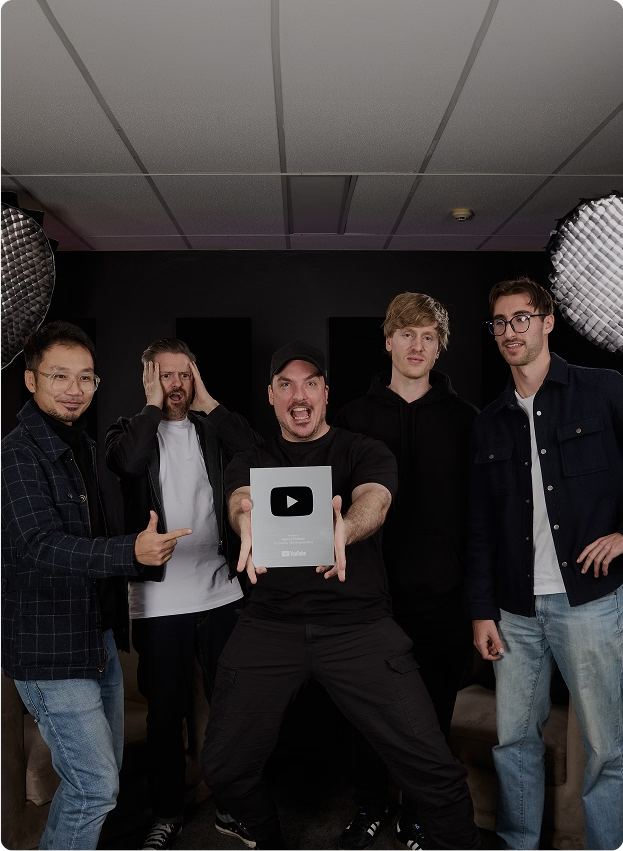
Stream now
Dive into expert advice and industry trends.