

TLDR
Summary
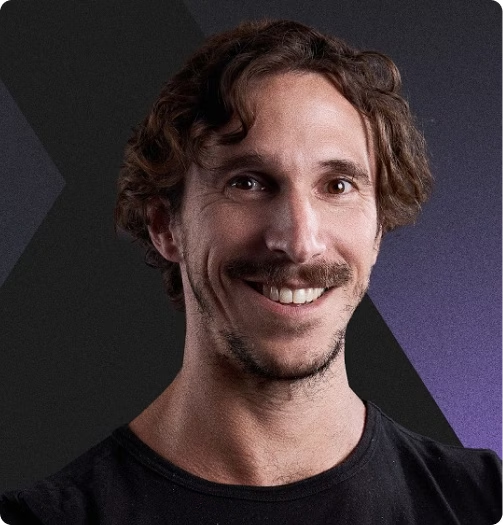
Cameron Grant, co-founder of Unyoked, built the company to address the pervasive "rat race" he and his twin brother experienced in their demanding corporate careers. Unyoked's core mission is to help people "switch off to be switched on" by providing a network of intentionally designed, minimalist, off-grid cabins located 1-3 hours from major cities globally. The business model is deeply rooted in the scientific benefits of nature, proven to boost creativity and problem-solving by up to 50% and reduce stress (cortisol) by 20%. Grant details Unyoked's strategy, which prioritizes uncompromising vision, operational scalability (e.g., designing cabins for easy serviceability), and powerful brand storytelling. Despite being told the idea was too expensive, he successfully expanded from Australia to the UK and Europe, collaborated with cultural icons like Matthew McConaughey and Apple, and raised over $35 million, demonstrating his belief in the solution.
Highlights
- Core Mission & Scientific Basis: Unyoked is based on the philosophy that modern humans need nature to thrive. Scientific research supports this: nature decreases cortisol by 20% and is critical for "diffused thinking," which connects disparate ideas for creativity.
- The "Little Big Things" Experience: The user experience is intentionally designed for forced disconnection and immersion. Rituals include parking away (up to a kilometer walk) to immediately begin a new experience, and hand-grinding coffee beans to transform a routine into a mindful moment. The cabins contain nothing digital, relying on tangible items like books and cassette players.
- Strategic Growth & Operations: The company's cabins are designed around three principles: Desirability, Serviceability (essential for single-room boutique rooms in remote locations, leading to abandoning design elements like sunken beds for easier cleaning), and Longevity. They leverage private landowners (hosts) who share revenue and manage housekeeping via a custom app.
- Unique Host Acquisition: In the early days, they found hosts near desirable areas by targeting large land sizes and lower median incomes. They utilize the "naked test"—a property must make a guest feel completely isolated and safe to be naked on the deck—to ensure total seclusion.
- High-Value Collaborations: Unyoked's extra creative activity has amplified its brand strength, allowing it to land partnerships with:
- Matthew McConaughey/Wild Turkey: Collaboratively designed a bespoke cabin called "The Reserve."
- Apple Music: Created "Field Recordings," an album by musicians who wrote original tracks inspired by their time in the cabins, which was launched on the front page of Apple Music.
- International Expansion Learning: While expanding to the UK and Europe, they learned they needed to adapt to the market. In the UK, they focused on locations accessible by train (not just car) and had to provide milk for tea, a supply item they skip in Australia.
- Taking Agency: For Grant, taking agency means doing things your own way and living by the philosophy: "uncompromising on the vision, flexible in the details," and choosing to act rather than accepting a task "because" it's the cultural norm.
Transcript
00:00:00 - 00:00:58
We were caught in this kind of rat race, this cycle of like busyiness and kind of feeling like we have to be in the office at our desks all the time. So, we wanted to scratch our own itch. We have a saying, but it's basically you've got to switch off to be switched on. I guess in a nutshell, we help people get to nature and our mission is to help people do that more often. These guys quit their jobs to build a series of cabins made from sustainable materials to encourage more of us to enjoy the
00:00:28 - 00:01:33
natural beauty of the bush. >> So, it's basically been proven to improve relationships to offset depression and anxiety. >> If you're a peak athlete, you're not sprinting and operating 110% all the time. But those of us in corporate world, what we do is the exact opposite. We're like throwing ourselves at problems, at stuff every day, but that's actually like totally counter to it. There's just so many things done in the world where you ask why and people say
00:01:02 - 00:02:07
because and that's such a answer, but so many people didn't really realize how powerful nature is. Why were you so hellbent on making this work? Uh, that's a great question. This episode is brought to you by Wick Studio. Here at the Agency podcast, we're building a community and we would love for you guys to be a part of it. So, we would love to hear from you. What are you enjoying the most? What would you like to see more of? And what do you think might be missing? Drop a comment.
00:01:41 - 00:02:38
Make sure you subscribe. And now on with the show. Cameron, welcome to the Agency podcast. >> Thanks for having me. >> I I guess a point to jump into here, which I think is a bit of fun, is that your mom famously stopped you from burning your suits when you quit banking. Uh what did the corporate uniform represent to you before all of this happened? >> That's hilarious. I had actually completely forgotten that. Uh what it represent? I guess it sort of, you know, philosophically sort of
00:02:10 - 00:02:57
represented the the shackles of the 9 to5, if that's a phrase that I would probably use. But it's sort of like like, you know, I I never wore a tie. I always had my sleeves rolled up, but when I went to meetings, I'd put the jacket on, so you couldn't quite tell, and you still look smart. But those were like my little rebellions for the corporate world. But, um, I sort of saw that, you know, the requirement to wear that stuff, to conform to that was unnecessary. Like, you didn't need to be
00:02:33 - 00:03:26
wearing a shirt and suit to be smart and creative. Um, so I guess moving away from that, yeah, I was keen to like signal an end to that kind of I guess to that like just you know nodding to something that you feel like you have to do whereas it actually doesn't have any tangible value. >> So what happened at that time like at what point of your journey was this uh moment where you decided to quit and go all in? >> It's a good question. I don't actually remember if there was like a light bulb
00:03:00 - 00:03:48
moment. I actually can't remember the decision of us like making the call to do the business. I remember all of the work beforehand and like we did, you know, we had post-it notes on our parents' living room wall for like weeks and we were doing all planning and brainstorming and research on cabin designs and stuff and then I remember us having built the cabins or building the cabins but that little decision where we're like let's do it. I don't know if it was one decision or just like are
00:03:24 - 00:04:17
getting used to it and and then suddenly like we're in it. >> What what exactly is Unyoked and what was the genesis of this idea? >> Cool. Um, I guess in a nutshell, we help people get to nature and our mission is to help people do that more often. We do that in two ways. We sort of raise awareness for the scientific benefits of nature so people can understand how it impacts their day-to-day more so they can understand the benefits and go more often. And then we help them do that. We
00:03:51 - 00:04:46
do that through our network of off-grid cabins. They're all minimalist designed. They're tucked in uniquely secluded and immersive natural locations all within 1 to two hours of major cities. And that's across Australia, UK, and New Zealand and soon to be Europe. And then um supported by a intentionally designed experience that's every single little step from where you park your car to how you grind your coffee is sort of designed purposely to help you slow down and tap into those benefits quickly. And
00:04:18 - 00:05:09
I guess it all came from I mean going all the way back. Um so it's me and my twin brother Chris were the co-founders and we sort of grew up moving around Australia our sort of early lives. So we went from Darwin, Melbourne, Sydney, Perth, Melbourne, Sydney all in our young years. And one of the constants in our life at that point was um was nature. You know, we'd moved to a new city, wouldn't have any friends, our parents would chuck us outdoors. Um that sort of evolved into like hiking and
00:04:44 - 00:05:39
camping. That sort of evolved into overseas trips to places like Nepal, Somatra, the Amazon. And then we didn't realize it at the time, but that was having a real effect on us. like after those trips we'd come back you know refreshed reflective re-energized sort of actually having a reset and then when we started getting into corporate world so can go down that tangent at some point but I worked at um CBA in the strategy department my brother was working um first at Wworth's in the digital marketing but then in a high
00:05:12 - 00:06:08
growth startup called um general assembly and we were stressed we were busy we're a bit more anxious and we sort of started to realize that what was missing was were those trips it was our ability to get out to nature to really switch off and get away from civilization. Um, and we realized that we wanted to have that. We wanted to be there, but we wanted to do it on that Wednesday or that Thursday when we actually needed it. Like we were stressed and anxious then. We didn't want to have to plan for a 4-week trip
00:05:40 - 00:06:38
at the end of the year, get leave, research, fly away, go and do it. We wanted to feel those benefits of being away in the middle of nature. So, we sort of put two and two together and we realized that, you know, tiny houses were kind of just taking off around the world, like they were little pockets of architects um tinkering with them. And we sort of realized that by building these sort of little minimalist off-grid structures, we could unlock spaces within an hour or two from cities on private land because you wouldn't
00:06:09 - 00:06:50
require the building codes, you wouldn't require the cost, and you can actually get into spaces that you couldn't otherwise go into. And then that would enable people to get into these locations quickly and easily be able to start doing it as a sort of habit throughout their day-to-day. >> So you're at work, you're looking at spreadsheets, and you're like, "Dude, there's a polarity here. We need a we need less of this and more of this." >> Pretty much.
00:06:29 - 00:07:17
>> And did this just start with a conversation between you and your brother where you were like, "Hey, I got like an idea to build cabins." Like what was the genesis of the idea? Because it's such a unique concept where you're marrying nature together with minimalistic design. you describe it as like an instrument of nature, which I want to get into in a moment, but um what was the formulation of that concept? Like how did it go from idea through to okay like now we're actually
00:06:54 - 00:07:49
going to start tinkering on this and building it? >> Uh I mean again I guess to go a bit down a tangent like we we always wanted to do something. So our like I guess with the benefit of hindsight like probably instilled us in us from our parents. So like our dad uh left, he was from the UK, left home when he was 16, joined the merchant navy and then sort of jumped into um uh worked for Cart United Breweries and sort of worked his way up, created his own path and was relatively successful. And our mom was a teacher
00:07:21 - 00:08:12
and always sort of pushing us to be curious and those sort of things. So we never really thought we'd end up down the full just 9 to 5 path and we'd have like we being me and my brother had um books full of ideas over the years that we'd sort of researched, we'd looked up, we were sort of in the kind of startup world like you know reading tech crunch and going to events and stuff. So we sort of knew the space and we wanted to do something. Nothing had really been the thing that we want to spend like you
00:07:47 - 00:08:45
know 10 years of our life doing and go through all that stuff. And as cliched as it is, that is true. Like you've got to be passionate about it cuz there's so many ups and downs of you being something you actually believe in makes a massive difference. Um so I think this idea just came up because of our need like we wanted to scratch our own itch. We knew realize that around the world in pockets people like artists, athletes, creatives, you know, like Steve Steve Jobs, Bill Gates does it every year.
00:08:16 - 00:09:07
goes to a cabin in the middle of the wilderness to think um artists and writers have done it for hundreds of years. Um we saw that other people were doing it but we realized that the rest of us were missing out on it. We were caught in this kind of rat race, this cycle of like busyness and the kind of feeling like we have to be in the office at our desks all the time. Um so we wanted to unlock that for other people and kind of realized like I don't know it's a bit of a bet I guess but we were
00:08:41 - 00:09:38
pretty sure that other people would be looking for this as well. And um we yeah I guess we started we did a bit of um customer researching first. So we did a bit of a survey um sent it out to our friends and family and stuff and asked some questions like how far would you be willing to drive on a Wednesday night? Um what would you be looking to pay? What sort of things would you look from from the experience? So we sort of knew the general idea and then we were also like deeply researching like cabins and
00:09:09 - 00:10:03
all designs and architecture blogs and all of that kind of stuff. Um on the business side though I guess because we already knew that we wanted to build something and knew that this was going to be a business from day one. We yeah we approached it with a lot of frameworks and stuff like that from the early days. So one of the ones we started with early was um it was from their Airbnb guys and they sort of did this thing where they mapped out from a one-star experience to a 10star experience what the customer journey
00:09:37 - 00:10:26
would be. So that was the thing we had on our parents living room with posters. We were imagining what, you know, what's a onestar experience like a real time. What's a fivestar experience a normal time, but then what's a 10 star? So, you know, you you rock up to your cabin, you've got a personalized chef there cooking like all these like off-grid ingredients that are um like using indigenous species and things like picked handpicked around the cabin, blah blah blah, like all that kind of stuff.
00:10:01 - 00:11:00
And that then helped us inform like what the core elements of the experience and the business model we wanted to deliver on. Um on the strategy side I guess we well before we go into the strategy because I I think you've just raised an interesting point which is like these core ingredients around the user experience. And I love that you went out to the market and talked to them first because I think a lot of people assume they know what the market want uh probably too much and it sounds like you were like, "Nope, we're going
00:10:30 - 00:11:15
to be curious. We're going to ask people how far would you drive on a Wednesday night?" What was the answer, by the way? What were people saying on a Wednesday night? How far they would be willing to drive? >> It it was basically what we've built the business around, which is between 1 and 3 hours. So two was Wednesday night. >> Yeah. So yeah, two. >> Was that surprising? Uh, we No, I guess we we always thought it would be Well, we thought it'd be one, but two two is the sort of sweet spot.
00:10:53 - 00:11:40
Yeah. Yeah. >> Um, but do you think it was surprising? >> I think it's surprising on Wednesday night. Like I I would do it, but I'm like surprised that a lot of people would, but >> I guess it was four. Like we asked like how far would you drive for this? So, not just like to do anything to get some milk or something. Um, yeah. Okay. Okay. So, when you're talking to the market and you're doing your research, you're doing your due diligence, what were you thinking about regarding the user
00:11:16 - 00:12:08
experience? Because you've talked about how you wanted to create something that was kind of like an instrument of nature, not just like I'm staying in the woods, but you wanted it to be more of a ritual or something that felt like a like a memory or something like what were those things you were looking for for those core ingredients to make it a good experience? >> Yeah. So, I guess there's a couple of things there, but first off is we have a phrase um that I'm sure we borrowed from
00:11:42 - 00:12:39
someone like the best ones are um but called the little big things. Um, and that's like all the little touches like a bit of microcopy on the shampoo bottle or the way that you just have to reach back like this and flick the light switch and like the length of the step or like in our UK cabins, we actually research like the KFC um ideal length of the seat and the bench at the at the little dinner booth because they've researched the out of it. It's all based on like psychology and physiology
00:12:11 - 00:12:58
and stuff like But you research like the the >> like like the optimal size of like the bench and the depth of the bench and the length between the bench and the table and stuff for like the best experience. >> That's intense really. >> So all of that like from day one that's all the that we really focused on was the little big things and like you know from like the car park for example like >> you know think of any hotel motel experience you've had. >> Well the car park's like right next to
00:12:35 - 00:13:24
the front door right? >> Yeah. Exactly. which people think like people want. It's convenient and stuff like that, but it also just feels the same as everything else and you kind of you bring your day and whatever you're in with you, right? So, we wanted to create this as this space that's intentional and is it like pure disconnection from the dayto-day cuz in your experience, you have to park like away and then you have to walk to the cabin. So, you can't even really see the
00:13:00 - 00:13:46
car >> from the cabin. You feel like you're fully immersed. You can't just walk out the front door, jump in the car, and take off. Exactly. >> You actually feel like what something more distinctive of like actually I'm out here. I'm not right next to technology. I'm not able to just get out of here quickly. >> Yeah. So, usually you've you've driven down the highway a bit then you go down a little like dirt path generally. You might have to open like a gate or two.
00:13:22 - 00:14:10
So, it's gradually getting fur and f further and further away from civilization, but it's all within an hour or two. >> Feel like you're Froto leaving the Shire for the first time. >> Pretty much I'm out here in the wilderness. Um what what else is around that? So, like you wanted to disconnect people from their vehicle cuz that sounds like more immersion potentially than than feeling uh some more sense of security potentially. Like what what is that exactly? >> Yeah, it's um I guess yeah, immersion
00:13:45 - 00:14:30
and it's sort of it's forcing you to begin a new experience I suppose. So like you've got the car, we actually have a sign that says park here. Um leave your worries, continue on foot cuz that's that's the idea and that's been there since day one. And you basically you grab your little wheelbarrow, you put your bags in, and then there's always some kind of little path, whether it's like I think our shortest one is about 100 mters, but longest is like kilometer. And you go through this
00:14:09 - 00:15:01
little path and you're like surrounded by trees or like up on a mountain pass or down by a river and like you're somewhere that feels like you are in the middle of nature. And we actually tell you to slow down. Like don't rush unless it's raining, I guess. But like don't rush. Take your time. Take it in and just stop. And like all you can hear are the birds, the wind, and the trees. It instantly calms you down. And then when you get to the cabin, um we've got little ritual where essentially like
00:14:34 - 00:15:20
people when you like when you get to an Airbnb, right, you'll generally go and like look in all the rooms, look in all the cupboards, like what's here. We tell people not to do that. You put your bag down, you go outside, and you stand there whether it's like 10 seconds, 30 seconds, a minute, but that sort of really grounds you in the space, brings a bit of intentionality, and sort of Yeah. leaves all of your stress behind. And there's tons of science behind It's quite like meditative.
00:14:58 - 00:15:42
>> Yeah, pretty much. And that's >> what what is the science behind that? Because I I'd like to understand that a little better because people talk about it's good to get in nature. It's good to touch some grass sometimes. Um but what's the data behind this? Like what what evidence have you found >> um that might be obvious or even uh surprising to people? >> Yeah, so there's actually decades of research behind it, but um it's growing exponentially now as the sort of focus
00:15:20 - 00:16:19
on well-being and wellness has continued to rise as people understand its importance for well how we live, I suppose. Um, but really there's three core benefits. There's de-stressing. So, um, nature, I think one hour out in nature decreases our cortisol by 20%. >> Really? >> Yeah. And things as like, you know, fractal patterns which are really p um common in nature. So, just like a tree or a shell or something like that, the repeating patterns um bark and things, they're they can reduce our stress by up
00:15:49 - 00:16:46
to 60%. Just by looking at it. >> Looking at like bark and trees can make you happier. >> Yeah. And it's been even proven you can look at it on a screen where it's more powerful looking out the window or being in it, but just looking at it can actually decrease stress levels. Um then there's um creativity. So it's one that's we focus on because we think that it's one of the ones that has the biggest lift for humanity because people don't think about going outdoors and its
00:16:17 - 00:17:23
um ability to help us think and and improve our cognition. But that's one of the biggest things. You know, it's been proven that um two days out in nature can boost your creativity and problem solving skills by up to 50%. Um we actually did a big um study with Interbrand um part of DDB the creative um agency and we sent their um strategist, writers and designers out to our cabins for 2 days and then also did a control in the office and they were working on real life briefs and both the originality of ideas and the volume of
00:16:50 - 00:17:40
ideas increased for the nature group >> really and yeah >> what do you think caused that? It's um largely because of um I can't remember the exact term, but it's basically two modes of your brain. There's one called diffused thinking and one I think called like let's call it tight or focused thinking, but basically your brain when you're focused your brain goes like this. Like all the dots draw together for everyone that's listening. It's basically like a whole bunch of dots.
00:17:16 - 00:18:16
They're tight. They're collected. They're close together. Um that's focus. That's good for being intense studying things like that. To actually be creative and solve problems, you need them to be relaxed and further apart because that's actually how dots that wouldn't be usually joined are connected by your mind. >> Oh, I see. So like intense focus is like almost like a tunnel vision. >> Yeah. >> Uh and then this is like opening your mind or your physiology or biology open
00:17:45 - 00:18:32
up to more inputs. It's like what what do you think is triggering that >> more inputs? It's allowing your brain to sort of connect areas that you might not think are connected. And that's creativity really. It's creativity is often not creating new things. It's creating new ways of seeing existing things. And it's sort of the the way that you have shower ideas. You know that term like it's that's because your brain is switched off. It's sort of free thinking and connecting stuff. Or it's
00:18:09 - 00:18:54
why Einstein and Steve Jobs used to go for hikes in nature to come up with ideas. They'd do a lot of study and thinking and then they'd go outside and that's where they'd come up with everything. And um Bill Gates does it once a year. He calls it think week. He goes to a cabin in the woods for a week to do his whole year of strategic planning and thinking and stuff like that. You've got to we have we have a saying, but it's basically you've got to switch off to be switched on. And it's
00:18:32 - 00:19:17
something >> you've got to switch off to be switched on. >> Yeah. >> I love that. I feel like I need some of that right now. >> Yeah. More. It's interesting. Um, in sports they've got a um, which you would know more than most. Um, they've got a term called periodization. >> I don't know about this. >> Okay, maybe it's more like running, but it's um, >> it's basically switching off. So like if you're training for a marathon, you're
00:18:54 - 00:19:44
not going to do a marathon every day. You're going to do you're going to gradually get up to it. You're going to have some rest. You're going to come back. You're going to have some rest. If you're a peak athlete, you're not sprinting and um, operating at 110% all the time cuz you're going to burn out. So, um, what those of us in creative industries in the corporate world do is the exact opposite. We're like throwing ourselves 110% at problems, at stuff every day. We're having late meetings.
00:19:19 - 00:20:15
We're having backtoback meetings, which are scientifically shown just to like your brain. And we're doing this stuff because we think that's how you get the best output because more is better. But that's actually like totally counter to it. relaxing and everything. >> I just love this idea that like getting out in nature can actually inspire the brain to be more creative. >> And I I found moments where I get the largest influx of creativity is typically when I'm traveling
00:19:52 - 00:20:49
>> and I'm really paying attention to the environment or a new space. Yeah. uh being in a new room or a new location and just having some alone time to think is is where I just get flooded with ideas. >> Um what else about the the the part of nature and the immersion of it do you think can help the mind? >> It's uh I mean it's a good question. It's largely around that sort of reducing stress and calming our nervous system. So being out there promotes the parasympathetic nervous system. So the
00:20:20 - 00:21:17
the um opposite of fight and flight but um the one that calms you down. Um, and that's important because these days with, you know, technology and social media and everything like everything's primed to keep us in fight or flight. So, you really need to switch off. Um, the other big effect that I haven't mentioned is is connection. So, this one is sounds like on the face of it like a little bit more wishy-washy, but in the evidence and the I guess the practical experience, it's super powerful. And
00:20:49 - 00:21:52
that's essentially it's or inspiring landscapes. So things that are, you know, bigger and make you feel small, which is out in nature. Um or just being out there, it helps you be feel more connected to yourself or others. And so it's basically been proven to improve relationships to um offset depression and anxiety and basically help you I guess think through things have more of an open mind less judgmental and and actually yeah I feel closer to each other like with the awe part because you
00:21:20 - 00:22:20
feel your worries feel insignificant essentially because you're out under the stars. you're in this ma massive forest like all the that you're worried about in a day-to-day scenario because you're in this stressful mindset and just like on on sort of all disappears and that's that's one of the yeah key benefits of nature. >> Clients want it all. A slick looking website that can run their business and scale with their success. Wix studio is built for that. Plan out your client's
00:21:50 - 00:23:02
whole site in seconds with AI powered site mapping and wireframing. Then, when everyone's on the same page, jump into the creative, starting off in Figma or in the Wix Studio editor with super precise layouting tools like grid, stack, and flexbox. Go above and beyond the brief with no code animations, custom CSS, and built-in business solutions. and make your whole vision responsive in a click. And there's zero need to break a sweat when clients grow fast. A dynamic CMS with global design
00:22:26 - 00:23:30
settings and reusable assets lets you turn one page into hundreds. Design smoother and deliver sooner. Go to wixstudio.com. >> What are the specific components of that experience that are important? like wind, looking at fractal shells, like what are all those little details? >> I mean, simply it's just being there really. It's like like that's why that ritual that we tell people to do when they arrive, for example, is just turn around, stand on the deck, and look and be there. Like that's simply just being
00:23:00 - 00:24:10
out in nature, seeing the spaces, um like seeing the trees, uh not having all of the inputs of the modern world as well. That's just enough to essentially like just deeply calm down. Yeah. >> Like trees for example, they release this chemical called um fight, but it's essentially like this hormone that they release to um combat uh um like negative pathogens and stuff like that. But we when we breathe it, it basically has an effect of boosting our immune system and reducing cortisol levels. So like just
00:23:35 - 00:24:16
by being around trees, you're breathing this stuff in that calms you down essentially. So rather than supplements, we just need some more trees >> pretty much. Yeah. Yeah. Yeah. We we've often had a bit of a we've never done it, but there's some kind of marketing angle there where like it's basically some kind of pill like, you know, you can have the benefits of a lot of these supplements and stuff that people are talking about in the wellness industry just from literally being outside.
00:23:56 - 00:24:43
>> Yeah. >> And yeah, >> it this sounds like so foreign. It sounds so like ancient and ritualistic, but it's it's quite >> it's quite simple. And I think what the beauty of this is is you're not trying to overengineer this thing. You're like nature is already there. we already have a relationship with it. It's just about going back and connecting with it. >> What type of outcomes have you seen? What type of experiences have people had? What's what's been the biggest uh
00:24:19 - 00:25:19
volume of feedback that you were surprised to get? >> Um I guess like luckily for us, a lot of it just confirming what we hoped, which is people, you know, the the biggest things we hear back when we say describe what your what the time was like is peace and quiet like or calm is the third highest word. So, it's just people just feel this resounding sense of calmness when they're out there because it's just so different than that dayto-day energy, stressful busyiness that we're usually in. And expectations
00:24:48 - 00:25:43
away from all of that. Um, we've had people that, you know, we've had people that come and say like eight times in a year and stuff like that. We have people that do like a 3-day retreat at the beginning of every year now like religiously. had one amazing customer who's it was like her first sort of feray into getting outdoors like into these wild spaces and now she's got a tattoo of the um sigil. We have these little like sigules for each cabin to identify them. And she's got a tattoo of
00:25:16 - 00:26:04
that on her foot, which is just like amazing. Like super cool because it was her entry point into nature. And that's part of what we want to do is a lot of people get it and we're helping them come back more like easily and more often when they need it. But so many people didn't really realize how powerful nature is and we want to help them whether it's undooked like business-wise, we want them to come back. But if it's just them going to the park at lunch or hiking on a weekend to
00:25:40 - 00:26:39
the national park, like that's a huge win for us as well. >> And if you look at the human species, we're collectively getting more and more disconnected >> from these experiences, right? Cuz we uh we wake up in a box, we drive in a box, we stare at our box, we, you know, go to work and we sit at a box in another box and it just feels like everything's so >> structured or or systematic. I can imagine this feels quite just open and like >> almost like uh time's frozen and you're
00:26:09 - 00:26:58
kind of escaping or something like that. >> What um >> what do you think about the problem of people getting more disconnected from nature and do you think it's getting worse? >> I think I can't remember the exact stat. There's a study that I just recently proved that we're our most disconnected from nature. Like connection to nature is at its lowest level ever or something like that. Um but >> and depression, anxiety is at an all-time high. >> Yeah, exactly. Like
00:26:34 - 00:27:23
>> do you think these two are correlated? >> I mean the science says yes. I mean there's a billion other variables and like genes and all that kind of stuff. >> Take the science out of it. If we talk if we talk purely from your experience like what do you think it is? >> Yeah. I mean I think yes. I think being in the sort of cultural expectations around the like 9 to5 as we'll call it is like you know you have to be on all the time. You have to be performing. You
00:26:58 - 00:27:49
have to be ambitious. you have to be like, you know, we've got so many apps just to communicate with people that um sometimes people are just avoiding and ghosting their friends because you have to be communicated across 10 different channels all the time and there's an expectation that you have a response right away. So just life has too many expectations on it at the moment and that's been generally brought from technology because it's in their benefit for us to be using it all the time. But
00:27:24 - 00:28:20
I think it's created this sort of artificial feeling which is culture. Um that makes us yeah stressed, anxious, and guilty for actually wanting to like do nothing for a while. Um and that's what we're trying to do, I guess, is help people realize like, hey, it's not actually bad to like do nothing. Like, you know, if you said, "Hey, I'm going to do nothing for a while." You'd get so many weird looks, right? And like being bored is is a negative thing. It's actually it's awesome. Like
00:27:51 - 00:28:48
>> being being bored is the best. Like I got a 2-year-old and a 5-year-old >> and uh we're big on like no TV. Y >> they don't know what a iPad is. They don't have access to apps and stuff like that. >> And watching a child be consumed by dopamine driven educational shows. >> Yeah. >> Or like turning the television off and just watching them get bored for 20 minutes and throw a tantrum and then get really creative and go create stuff. >> It it it just goes to show like in in
00:28:20 - 00:29:10
the innocence of a child how much they can make their own fun. Yeah. >> It just goes to show how much maybe we as adults are doing the same thing. >> Exactly. where we're just constantly chasing these dopamine hits on our phones, our devices in the workplace, through our friends and and we're seeing an increase in depression and anxiety. It's it does sound like the simplicity of this idea is like it it seems like a big deal, but this is a big deal because it doesn't feel natural
00:28:45 - 00:29:39
and it should. >> Exactly. And that's to go back to one of your earlier questions about some of the things we've done in the experience to do that. Like from the beginning it was intentional those little big things designing moments in the user experience to help people I guess usher in that because it is such a foreign concept to do nothing to slow down at the moment that a lot of our early feedback is like people love the brand they really want to be part of it but they oh no I couldn't do that I couldn't be alone I
00:29:11 - 00:30:00
couldn't be out there so we um we create those moments so like from the beginning we actually force everyone to hand grind their coffee beans. Yeah, I saw that on the website. It's like hand grind your own coffee beans. Why are those little details? >> Uh because it's sort of again it's juxtaposes between all the other experiences, but it the idea is creating um what like rituals out of routines. So coffee is something you know it's a routine. You've got your little shop,
00:29:36 - 00:30:18
you go there three times a day or whatever. You've got your little pod machine. You just press it. You get it. It's like this quick thing that you don't think about. Whereas we turn it into like a mindful moment that helps you slow down. And so you put your beans in, go back to the bed, you grind your beans slowly while the sun's coming up or you're listening to the birds and just looking out at nature and it's like you're not doing anything else. You're just slowing down and it helps you get
00:29:57 - 00:30:39
into that pace. And it's the same thing, you know, we've got nothing digital in the cabin. So we got tape decks with cassettes. We've got lots of books like and there's not that much in there. There's everything >> is very tangible. >> Everything's very physical which I which I like cuz it's um Yeah. We play music on our phones now. Yeah. >> But getting out a cassette and putting it into a cassette player and then pressing a button and having the music
00:30:18 - 00:31:02
like that's a whole different experience. >> Exactly. And >> you're making rituals out of music as well. >> Yeah. And you've got to you know the tape runs out so you got to turn it over and stuff like that and it's like becomes more intentional and mindful with everything that you do. And um we've created recipes with lots of famous chefs that are all hand making pasta dough and stuff like that. So, it's all creating these little moments that force people to slow down and
00:30:39 - 00:31:31
realize like, oh, I can actually be like just doing stuff or sitting and waiting for that dough to rise and sitting on a hammock outside watching the trees and stuff like that. >> Yeah. >> Yeah. It's sort of easing them into the fact that, hey, can be quiet, be slow, and it's actually good for you, not a negative thing. >> And the design of the cabins is quite beautiful. I understand that you've got a quite simplistic design. Uh they're all kind of the similar kind of
00:31:05 - 00:31:59
concepts. What's the idea behind the design? Like before you were saying about how you researched how KFC had like the perfect seating between like depth of the bench, etc. Like all these little things. What what was the holistic intention of that design and what were you going for? >> I guess a few things like first off um there's three components that we design the cabins around and build them like for the last eight years. Desiraability, serviceability, and longevity. desiraability, serviceability, and
00:31:32 - 00:32:24
longevity. Um, so desiraability was what we were talking about before with the little big things like is the yeah, are the steps the perfect length? Like can the step also act as a um a sort of platform for you to lean against and read and eat or is the light switch in the right place and stuff like that. And it's sort of making a frictionless experience in the right ways. Um then and researching stuff from like what do customers want? Like do they want a like um you know do they want a hot shower?
00:31:58 - 00:32:51
like obviously yes like things like that. Um serviceability is all around like so one of the other parts of the business is essentially we partner with private land owners to enable people to access these places and we give them a split of the revenue um for doing the housekeeping and operational management. We provide them with all the tools. So we've designed an app over the last 8 years that guides them through and the whole idea is to make it as quick and easy as possible. Um so we designed the
00:32:24 - 00:33:17
cabins with that in mind. So we our first cabin called Miguel can get on to why we named the cabins, but the first cabin Miguel had a um >> Wait, why did you name the cabins? >> We we um and we basically named them after people that were unyoked. So like unyooked, the word technically means to be set free. And that's and that's >> I love the name by the way. It's one of the first things I was like that's such a good name. >> Yeah, it's it's awesome. It's like
00:32:51 - 00:33:41
unique. It actually means that and and the website was available back in the day. So, you know, tick tick tick. But, um, the cabins were named after. Yeah. People that we had met traveling around the world who were unyoked, who sort of were people that were set free, that were sort of not adhering to those, you know, those shackles, those expectations that we talked about before culturally. Um, and the idea was you'd stay, you know, at Miguel and you bring a little bit of Miguel home with you.
00:33:16 - 00:34:11
Essentially, Miguel was this Spanish guy that I met with a friend in Chiang Mai. We were out in the mountains doing just a self-guided hike and we sat down in this river to um have some lunch and and this this guy just jumps up from the river. He's just lying there relaxing in the middle of the jungle and he's just this Spanish guy who left his law firm in Spain, has been traveling around for like a year and a half and just super chill, super relaxed and calm, smart guy, but just sort of finding his own
00:33:44 - 00:34:39
way in life now. And that was that was Miguel was the first cabin is like we want you to be a little bit like this guy like just a little bit like set free. >> Does he know about this? >> Uh I don't think so. Like we we didn't get any details. >> Miguel, you're watching inspired a generation. >> But um back to the design. The first cabin had this sunken bed sunken mattress. So it was like flush with this platform. >> So like the floor is flush with the bed.
00:34:11 - 00:35:01
>> It was sort of raised on a a bit of a podium. But then it was yeah flush. So it just looked beautiful but it was a to clean like and we started cleaning them ourselves to take the whole thing back to first principle and like design the process. >> What do you What do you mean by first principle? Sorry to keep going on the segways here. I want to get these insights. >> Just basically taking it back to like the the the lowest possible level like the most basic sort of interpretation.
00:34:36 - 00:35:25
So instead of just assuming like hey this is a small house let's let the cleaners do their job and clean it like a small house. We wanted to take it all the way back to be like, okay, what do you clean first? What do you need to do? Like what's the order of things you need to do? Like why? What sort of cleaning products do you use? Like unpack the whole entire process so we could make sure that it was as easy and most efficient as possible because we wanted to be partnering with people that
00:35:00 - 00:35:54
weren't cla weren't trained cleaners and enabling them to do this with minimal effort so we could open up these beautiful places. >> Okay. So So back to Miguel. So yeah, it had this sunken bed. It looked amazing. But we started like we launched in we soft launched in November 2016 and then launched officially in March 2017. So summer and we were clinging these things in summer in Kangaroo Valley was the first location. So it's hot as hell, right? And we were like reaching over
00:35:28 - 00:36:13
the bed trying to tuck this corner in and this corner in dripping with sweat. It all getting like creased and stuff. And we quickly realized like this is not like it looks great. So it's really desirable, but it's not serviceable. So, if we're going to scale, um, which we always thought about from the beginning, like operations have to be scalable, um, we've got to design this differently. So, we quickly flipped over to having just the mattress like sitting on a platform, which still looks great, but
00:35:50 - 00:36:46
it means that it's just like shitloads easier to clean. And we've made lots of decisions like that, like how the where the drawers are located, like how things open and close, what systems we use, um how the um the composting toilet works, and all these things with serviceability in mind. Um cuz essentially we're running single room boutique hotel rooms in hard to get to locations without phone reception with three cabins per cleaner essentially. So >> it sounds like it's the complete
00:36:18 - 00:37:05
opposite of everything that you would find on Airbnb >> pretty much. Yeah. >> Right. You're like I want close proximity. This is out in the wilderness. I want to park next to the front door. No, we're going to make you walk. Like it just seems like there's all these uh opposites that are playing out. >> Yeah. And that's um that's why no one had really done it before. cuz it was hard and that's it's still generally what people don't quite get. They they see the shiny cool brand, they
00:36:41 - 00:37:38
see the cool experience and they're like we'll do this too. But often people forget that operational backbone. And >> because we approached this from, hey, if this works, we want it to be a real something. We knew that operations from the beginning was something we need to focus on. So we like overfocused on that. We hired a um an ex-technical ops lead from Uber like in our sort of early years to come on board like probably before we needed to to help scale that whole systems processes automation side
00:37:10 - 00:38:04
um because yeah we knew that that would be sort of a I guess a competitive advantage of the business over the long term. >> Okay, I want to come back to that in a moment. Uh the last one here is longevity. >> Uh longevity is around I guess the durability, the materials and that sort of stuff. So we we as responsible as we can in terms of sustainability, like sourcing the materials and things. Um, but they also want to be able to last as long as possible. So, these cabins like out in the elements, they're not really
00:37:37 - 00:38:34
moving around much, but they need to be able to be. And they've got a lot of people going through, you know, occupancy in those early years was like 97%. Um, and then sort of like 80s like most for most of the years. Um, so lots of foot traffic, lots of usage, lots of sun, lots of rain, lots of wind. Um, so important that we chose materials that were easy to maintain, cheap to replace, and also have like tons of life for them as well without being super expensive and stuff. Now, what I love about this
00:38:05 - 00:39:10
is that you've built this beautiful brand to create this experience where people can escape, calm down, but at the same time, I know what it takes to build a business. And I'm sure there was a tremendous amount of headaches, stress, logistics, and a lot of things that you had to go through. So Cameron, you were told that cabins in the woods were too expensive and it would never work. Not only that, you've directly taken on Airbnb. You've collaborated with Matthew McConnA and Apple, expanded into Europe, and
00:38:37 - 00:39:37
raised over 35 million. Why were you so hellbent on making this work and building a business out of this? >> I think simply because it's something that we believed in. like it it's and again we being me and my brother um we're twins so it kind of sort of comes with the territory um but yeah I think it's basically because something that we believed in it sounds cliched but it's like legitimately we were passionate about it and it's only been reinforced over the years like I remember a time
00:39:07 - 00:39:58
when um Chris and I were uh launching the Melbourne cabins like the first ones and we were digging the gray water trenches oursel and it was like icy as hell like winter down there. It was an unseasonably cold winter, I think. So, I was basically wearing thongs. We weren't prepared for it at all. Real hard work with like freezing cold. Um, but then we'd stop and pull up the shovel and look around and it's just surrounded by the sort of Pyrenees mountains to the west of Melbourne, like nothing but wind
00:39:33 - 00:40:23
and birds, and you just instantly feel calm and have this smile on your face. And that has just been repeated so much over the years that just we know what we're doing has the impact that like it says what it does. It does what it says on the bottle and that's super rewarding. You know, it's just we believe in it. We need it and want it. And >> as you're building the business, you're also using the product >> pretty much. Yeah. >> Trying to kind of decompress
00:39:58 - 00:40:45
>> as you're stressed building the business. >> Exactly. And it just reinforces why we started it. And you know, the fact that we can be creative and build something from scratch and come up with all these cool ideas and partnerships at the same time as like legitimately doing something good. Like that's that's the sort of, you know, the holy grail. >> Now, this whole thing started with you handing out flyers to land owners cuz I can only imagine here's this guy in
00:40:21 - 00:41:21
thongs showing up to my house handing me a flyer about Unyoked and how he wants to build this Airbnb rival. Like what was that early push back from people? Like surely it wasn't a simple journey at the start. I'm sure there was a point where it was difficult to get traction. Um we I guess it's just I mean I don't know how uh like smart of an answer this is to the audience but it's basic like I mean you got to be smart and do things right which I'll explain how we did it but it's it's really just hard work as
00:40:51 - 00:41:42
well like to some degree like so we um for our first locations so we were lucky in the fact that Airbnb had already laid the groundwork for the sharing economy so people were already aware that hey I can have strangers on my property and this is a thing that everyone's doing. So, it was in its early days, but that was really crucial. If we had have timed this before Airbnb, no one would have let us on their properties. No one would have said, "Yeah, sure. I'll put a cabin in down in this paddic and let some
00:41:17 - 00:42:07
strangers on my land and like light a fire and stuff." Like, that would never have happened. So, that was a critical building block around timing. Um, then we sort of strategically targeted our areas. So, we knew that the Southern Highlands in New South Wales are sort of, I guess, a really desirable area. So it's sort of a from the nature side, it feels a bit different than just everyone's backyard. Like it's really lush, it's subtropical, lots of pine trees and things as well. So it's
00:41:42 - 00:42:37
somewhere that people would see as almost exotic would bring the demand side. Um then we also sort of did a lot of research and found that the median land size was quite big. The median incomes was not that big. So it'd be availability of properties, but also people that wanted to actually do it and earn some extra money. Um, and then yeah, we printed like I don't know thousands of these postcards. We did a mail drop. We drove around looking at what we thought could be a good property. Used Google Maps and stuff
00:42:09 - 00:43:03
like that in a relatively unsophisticated way to start with. And then we basically built this huge pipeline. Um, had sort of some categorization steps of like how big your land, all this kind of stuff. Lots of phone calls and then went and visited a whole ton of sites. And um, and that's where the hard work comes in. You just got to do the right stuff, but you got to have the right inputs coming into it, I guess. Um, our first site, like we got a lot close actually in those early days, but the first one was this. We
00:42:36 - 00:43:29
still have a Cavanaaugh's property now. Um, there on Miguel's property. Um, the he was called Bri. Well, he is called Brian. >> I like how you said they're on Miguel's property. Miguel's not on their property. >> No, Miguel's on their property. And he was Yeah. Brian sort of invited us in and took us in his you up to his favorite camping spot and it was this place that's just like through a few paddics up this dirt track and it's this beautiful clearing surrounded by
00:43:02 - 00:43:43
subtropical forest with a view out and he's like this is the spot that I come every year to camp by myself and I want to help other people access it. >> Wow. >> And he were on board. They were like this is a cool idea. I want to share this. >> Yeah. >> Cuz there would be pride in that. This is my land. This is my favorite spot. >> Yeah. >> Other people can enjoy it. Fantastic. >> Exactly. And that's one of the biggest things is all of our hosts have that
00:43:23 - 00:44:13
desire. Like they don't none of them are just about making money. Like it's never just about that. That definitely helps, but it's about wanting to share what they have, their little paradise, their beautiful part of nature, and the benefits they see with it with other people as well. >> So, how did you find the right people? Cuz I can imagine out in the country, phone calls, letter box drops, you would have got some weird characters calling you and making some strange requests.
00:43:47 - 00:44:37
Yeah, we went we're we were probably a bit too nice as well. Like we we went to a lot and like saw a lot of properties we probably knew weren't going to work the minute we walked onto them, but we didn't want to say that cuz they were so excited. So we'd go for like hourong meetings and have tea and biscuits and stuff when we instantly knew like okay this isn't going to work for us. Um but it's really it's there's some criteria that we still use now like prop mainly
00:44:12 - 00:45:00
it's about the property but then you also have the partner that's like the right level of support. So we we know sort what sort of person we want to look for and what sort of character traits we want. Um and the property it had to be two wheel drive accessible. You had to be able to feel alone from the location. So we still have a thing. I can't remember the last time someone's actually done it. But we call it the naked test where you can't stand on the deck of the cabin naked and not have
00:44:36 - 00:45:19
that little feeling in the back of your neck that someone could walk past. Then we don't put the cabin there cuz you've you've got to feel totally relaxed and calm. >> Do you guys actually do this? Uh, we used to at the beginning, but yeah, I don't think anyone does now. It's just more of a vibe. We don't >> HR issue these days. >> Yeah. >> So, the naked test was like, I want to feel completely isolated. >> Yeah. But but be safe and conveniently
00:44:58 - 00:45:44
located close to the city >> because you don't want to like feel like you're in someone's property or in their backyard. You want to feel like you're in the middle of nowhere. >> Yeah. Exactly. And that sort of secluded aspect like still Yeah. extremely safe and conveniently located, but that that seclusion is just so different than anything else. And it's that I don't know, like I just described as that feeling in the back of your neck where you just like you're don't think anyone
00:45:21 - 00:46:07
is going to come by at all. Like you're totally calm, you're totally alone, you can just totally relax. Whereas like, you know, at fivestar resorts and stuff, you might have your own little villa, but like someone could walk past at any stage and stuff like that. It's just a different level of relaxing and sort of resetting that is able to happen. And that is what Unyoked is so unique for offering. Like that's a critical part for from our first property to even now like delivering.
00:45:43 - 00:46:42
>> Now I I I think that this model is super attractive. I can only imagine that you've had a ton of people try to recreate this or compete with you guys. Um how have you dealt with competitors trying to I guess curtail off what you've worked so hard to create? M um I guess we haven't really had to that much like because we've had that approach of uncompromising on the vision, flexible in the details like we we sort of zigg where they zag. We're still I guess the sort of like that authentic nature of
00:46:13 - 00:47:06
the new brand and the way we've built the business is still quite differentiated. Um so but on the other side as well we kind of see it as a positive thing in some ways because um everyone is raising the awareness for these needs and then we're the best way to do it. So, it sort of gets people, it widens the market, deepens the market, but then we might end up with them as customers anyway in the end. Um, but we've been lucky. We've been able to still stay differentiated. Um, like no
00:46:39 - 00:47:25
one's able been able to replicate exactly what we do because of all those different pieces that are intertwined and interconnected how we do what we do. Like a lot of them see the shiny brand, see the cool experience, but the operations or they don't have enough authenticity in their brands and things. But it's kind of cool. There's a lot of people doing slightly different takes on it around the world as well which is awesome and like we've met a bunch of the founders and stuff like that and
00:47:02 - 00:47:52
quite inspiring stories and whether they've like sort of looked at our model and tried and tried to do it or whether they've come up with it their own it's like it is kind of cool to see that out there. >> Yeah. um it will sort of look well fast forwarding as a business goal it that one of the benefits is there'll probably be a bunch of inorganic um growth opportunity like there's a a lot of people have sort of tried it and they're kind of subscale they're probably
00:47:27 - 00:48:18
realizing it's quite capital intensive it's quite difficult and sort of sort of just floating at sort of 10 20 30 cabins that could be a good opportunity for us to come and sort of bring them into the fold and sort of grow a little bit that way and sort of help more people reach nature you're in otherwise. >> Yeah. I think u um someone said this recently. I was watching it and it said that if um if you don't celebrate your competition um realize that you don't have a game to play.
00:47:53 - 00:48:42
>> Yeah. >> And and and it was like, you know, I I I've seen competitors come up in the market and like literally like similar names to us, similar facial identity systems. I'm like, come on, at least like, >> you know, play in this space, but like be different. Um, for you guys, I I can imagine there's probably slight frustration like, man, we like carve the way and we put a lot of time and energy into this. What's your thoughts on people that see an opportunity work and
00:48:17 - 00:49:12
then they just see the dollar signs and then they just want to replicate the success versus caring about the actual uh solution that you're trying to solve. H um I guess I guess I just like you're definitely frustrated to start with but then you realize like it is also a good thing because it forces you to realize like we've got you know we've got to kind of tick on every single thing that we do. The question is just is it unded? And that's back to your question of like you know have we been had to like
00:48:44 - 00:49:41
deviate from our strategy and our vision and stuff like we make sure that we don't because it's all these people trying to sort of copy they can't authentically do it. So if we don't like if we stay authentic to oursel and making sure that we don't deviate and become more mainstream or sort of give up on some of our values and our vision. Um, so I think it's a positive thing from that side on the understanding people. Like I guess I just it's so foreign to me. Like I just I wouldn't
00:49:12 - 00:50:07
want to see another idea and just like copy it exactly and I think I'd always want to either put a spin on it, do some different version or like I don't know it just wouldn't feel as interesting and rewarding sort of building something from scratch. >> Now one of the craziest campaigns that you've uh had in the history of the company is working with Matthew McConnA. Yeah. And I understand you guys collaborated uh with Wild Turkey and the brand behind that and Mr. McConn. Um
00:49:40 - 00:50:36
talk me through that. Like how did that connection happen? How did you guys get in touch? Where did the idea come from? Um cuz I can only imagine that there would have been a bit of pressure on that. But I know the outcome was that you guys had hundreds and hundreds of articles >> written about what you guys created. Yeah, it was it was super cool is um even now like yeah there was this moment um and I'll come back to the beginning question but there's this moment when we were over in um LA me and Chris and we
00:50:08 - 00:50:58
went down to Joshua Tree in between um shooting. We had this moment. Yeah. We were in Joshua Tree um watching the sunset and we only had like four cabins or maybe six cabins at that stage and we were literally meeting Matthew McCcon the next day to do this filming thing with him and we were like what what the Like why how >> did you guys even connect? So you had four cabins at this point. >> Yeah. >> And you're in LA. Like how did you guys link up? >> It's a funny story. So essentially like
00:50:33 - 00:51:36
yeah Matthew McConnell is the creative director for this Grand Wild Turkey and they had this sort of um talk show thing where he was interviewing founders and was meant to be about sort of people who represented sort of going back to older times helping people slow down like do things with their hands be mindful and um Australia is one of the biggest markets for wild turkey guest but um they their head of um guest PR had basically found us on yoked and these guys would be perfect. McConnA had said,
00:51:04 - 00:51:49
"I want these guys." And then they basically had just been trying to reach out to us for like I don't even know. I think it was like six months, but they they were like, we were back then like literally just the two of us. We've never been that good on emails. We prioritized doing the business. And they kept on trying to hit us hit us up. We were just basically it was in one of our partnerships folder with all the billions of other things which we were lucky enough to have. And then I think
00:51:26 - 00:52:17
one night this person was home um with her partner. I think they were going to bed or something maybe. And basically was like, um, you know, McConn has been asking for these guys. Not sure where they are. And then her partner was like, "Oh, do you mean Chris and Cam?" And it turns out that her partner knew Chris from like my brother from somewhere randomly. He's like jumps on WhatsApp and says, "Chris, you better answer your emails. Like Matthew Pane is there." And then we picked it up. We're
00:51:52 - 00:52:39
like, "Okay, cool." So it basically we got flown over to um LA to do this filming where he sort of interviewed us about the business and starting and that was all it was going to be. But then we pitched the cabin concept. We like look we think it's really aligned. What would you say to building a cabin together? And then it kind of went through the creative process and everything and they ticked off on it and we had yeah collaborative design sessions with McConnA on the phone sort of being like
00:52:16 - 00:53:13
do you want this material? Do you want this material? What sort of vibes you after? And yeah, we designed this sort of bespoke cabin called the reserve um which is up Yamalong Valley in um outside of Sydney. So still there, still operating. And it was sort of yeah like bespokely designed experience where we have like um individual like field guides which are the little books in the cabins. We have slightly different experiential elements. And then he flew over to Sydney to launch it. We launched
00:52:43 - 00:53:32
it um on the green area just above can't remember what it's called but it's just above the opera house um and had yeah tons of press and stuff like that. It's like yeah super weird but super cool. >> What was going through your head at this time? You're being interviewed by Mr. McConn then you guys essentially business partners and doing a collaboration on a design. Um what was happening for you guys at that point because I can only imagine the influx of additional attention and requests that
00:53:08 - 00:53:56
would have come from that. H um I guess what that moment where we were sitting in Joshua Tree and sort of realizing like what is going on but it's I mean one of the key things was just a reminder to make sure that you you like I guess relish those opportunities and you sort of actually like feel what's happening every once in a while like you know as a founder you're head down running a million miles an hour like just the world's just passing you by like so often I'm sure you get it like
00:53:32 - 00:54:21
it's already halfway through October right now right like where is that year gone whereas that sort of moment sitting made us realize like, hey, these this is pretty amazing to have done this. Like, we've really built something cool. We're on the right track. Like, if it doesn't go well, like this is a pretty cool moment. >> I I love this and and there's these spontaneous moments that happen in business where you kind of have to like pinch yourself, right? Yeah. >> Um and I write about this in my book
00:53:57 - 00:54:46
where there's like >> you're you're basically imagining yourself and your business as a campfire in a little village. >> Mhm. and there's other campfires and empires out there in the world and you're trying to create like these little pathways between you and them. >> So you establish this link essentially with you know Matthew McConn and then you guys have gone back and forth sharing ideas and commerce when you're building this brand and you you get an
00:54:22 - 00:55:13
adjacency like that or you get a partnership like that. How do you leverage that to then create more of those moments and more of those opportunities? And I'm not saying you're doing this with malicious intent, but how do you then leverage these moments to make the most out of them so you can scale this business and and see out the vision? >> It's a good question. It's sort of we designed um we designed these brand partnerships in that way. So like um so another example is our partnership with
00:54:47 - 00:55:43
Apple. So we did um called it Field Recordings. We actually did one oursel beforehand, but we essentially partnered with Apple like huge reach, huge credibility like like you know that's a dream to be able to have done that with them. they don't do many collaborations. Um, and then build recordings was where we sent down I think it was six relatively well-known musicians um to our cabins. Um, they went down and basically had to write an original track really. >> Um, yeah, it was inspired by their time
00:55:15 - 00:55:59
down there. So, it's sort of using the nature as the creative process. So, it was highlighting that benefit of nature being creativity. And then they went back to the studio. They recorded the original track and we launched it on the front page of Apple Music and basically had an album out called Field Recordings. Yeah. >> Oh my god. And then you put on cassette and >> Exa. Exactly. It's in cassette. It's on cassette. >> It's on cassettes in the cabin. So, it's
00:55:37 - 00:56:27
got really strong brand. It's got awesome um like it highlights the benefits for highlights one of the benefits of nature. It has a real tangible element to it as well. and it's super unique. We've approached that with all of our brand partnerships to sort of really make sure that you deliver those results. Um, but have a shitload of fun while doing it as well. Now, I know you guys have rejected some of these requests as well. At what point when you get approached by a big brand, are you
00:56:02 - 00:56:57
like, hm, it's just it really goes against the values, the monetary components there, but how do you maintain the purest mentality of like this is our brand, this is our promise, we no matter how good this offer is, we we don't want to take it. M it's that um for us it's that question of like is it undooked and it's like you know like if we weren't in the company and we woke up and saw this collaboration would we be like what the hell is that sellouts? >> Yeah. Exactly. Yeah. Does it feel weird?
00:56:30 - 00:57:21
And we've you know maybe to our detriment over the years we've probably said no to some that tons of other brands and some of our competitors have said yes to. Um, but I think it's been important and we made the right calls because of things that didn't truly align with the brand and it's like the opposite of our values and stuff like that. >> So, Cam, now you've expanded into the UK and Europe as we touched on before. What's been the biggest cultural difference that you found from the
00:56:55 - 00:57:39
Australian market uh, and then going into the UK and Europe? >> Probably the biggest one is that the UK guys all wanted to go to the pub. So, that was the most common question we got at the beginning. >> Like, come see my property. They're like, "Let's get a pint." >> Yeah. Well, the the customers, they were like, "Where? We love this, but where's the nearest pub for me to go get?" >> Where can I get a pint? >> Alcohol, man. >> Where can I get a pint of my roast? You
00:57:17 - 00:58:04
know, and um so that was it was interesting cuz we actually had to build to manage that and be like, "No, no, you're not staying at like a little countryside house where you go to the local pub like you usually do. Like, this is staying on the property and being in nature. So, we're not going to tell you where the pub is. Like, don't go." Um but that that was pretty much it really. Like interestingly um I mean one of the reasons why we launched in the UK was because like cultural propensity
00:57:41 - 00:58:37
like they sort of the same as Australia we knew that they wanted this and needed this um lots of land like you wouldn't think it's a small island but like tons of land tons of farming tons of big properties um lots of people that would on the host side would need it like after the farm um the exit from the EU lots of farmers looking for ways to diversify revenue um a lot of the states estates are assetri cash poor so they're looking for ways again to diversify revenue and you bring in more cash. Um,
00:58:08 - 00:58:59
and um, and that's pretty much it. But on the consumer side, um, they need it almost more than Australians cuz I think we were talking about this before we started, but in Australia, you know, we have access to nature. It's sort of a artificial constraint that we don't go to it. It's all around us and like, you know, we're at the beach on the weekends, we're going hiking, but we don't spend enough time in there. Whereas in the UK, like if you live in London, you're in the city. like it's
00:58:34 - 00:59:27
it's you know 2 hours to get across the other side of the city on public transport let alone get out of there and most people don't have a car so you're sort of in this position where you really need to get out of the city get out to nature so we actually found that the justosition between that like being in King's Cross station and then catching a train for an hour and being at one of our cabins is so powerful that it's even more of a more of a need but also more of a powerful impact than than
00:59:01 - 00:59:50
Australia. What kind of feedback were you getting that was different uh in the UK and London than you were getting here? >> I don't think we were getting that much different feedback. It was more on the stuff that we built to start with, I guess. So, going back a few steps. So, when we knew that we wanted to internationalize um we targeted the UK first um for those reasons cuz we knew it would work. It's the same language. Um it's got all those cultural propensity. It's got the land. It's got
00:59:25 - 01:00:26
the need for it. Um and we had this um epic um staff member with a friend now called Alex um who was from the UK. So he was working with us for a few years in Australia and basically wanted to go over to the UK and start it. So that was really a critical part like instead of finding someone new and training them up on all those things we talked about like the little big things that uncompromising on the vision and all that we had someone that knew the ins and outs of so we put him over in the UK. Um while he was over there um the
00:59:56 - 01:00:44
main thing he started with was finding manufacturers. So we built to build the cabins. We're not shipping them from Australia. So he was largely focused on that side. Um and then at the same time we were doing a lot of customer research. So we did surveys. Um we found out things like you know would you drive would you go the same distance like how are you going to get there? And that's a key difference. Like most people in London don't have cars. So we had to find locations that were accessible by
01:00:20 - 01:01:15
train and maybe a short um taxi ride. So, we did partnerships with local taxis to bring down the cost and make that more convenient. Um, and we had to, you know, small things like we put um milk in the cabins cuz lots of people have tea over there and they have milk with their tea. >> We got to make your own milk. >> Yeah. Yeah. Yeah. Slowly >> cow outside. >> That's the und experience. >> Yeah. >> So, that was actually some feedback we got was like, where's the milk? provide
01:00:48 - 01:01:46
milk in Australians cuz it's like there's too many different types of milk to provide these days and like one's the right sustainable one and all that. So, we just don't do it. Um but in the UK we have to provide milk because it was an expectation. Um so we did the customer surveys to find out what parts we need to tweak. Then on the de on the supply side, we did a lot of research on um the environment. So obviously gets a lot colder over there. So, we did had to tweak some of our builds basically to be
01:01:17 - 01:02:18
like extra insulation. Had to actually get heated batteries for the solar um to keep them running at the same levels of efficiency and had to research all kind of things like water pipes like how we would put them under the ground without them freezing and all of this kind of stuff. Um on the host side we tried to um if you do a lot of research on um uh platforms like two-sided platforms you got to decide like how to you know start the supply side. Um so we realized that by going out mass like farmers and
01:01:48 - 01:02:37
things like that like we did in Australia was probably going to take a little too much time and we had all these learnings about the right sort of properties we wanted. So we were able to um target estates. So these are sort of the aristocracy and these are like large properties. They've got cleaning and maintenance people already on there. They're looking for ways to diversify income. So they're already like out searching for things and we could essentially become this plug-andplay
01:02:12 - 01:03:03
thing where we've got like 5 years of traction in Australia, huge global brand like all the MPS and the operational structures. So they don't have to take a bet on us and we can come and deliver just this solution for them that could really easily work for us. they've got large properties with unique nature and support teams. So, it just was this natural sort of fit. So, that's how we sort of started was we had um our first place was actually on um an estate that's quite famous and wellknown and
01:02:37 - 01:03:33
one of the the head of it is actually um the the lord I suppose is his official title but is like ex in line to the throne and stuff like that. We've got like dukes and duchesses now and things like that. It's very different like to Australia. Um but but yeah then so then we um we sort of launched with six cabins so we didn't want to overdo it because it was coming into winter and we're like this is going to be our first like cold cold winter so let's let's test and learn. We learned a lot that
01:03:06 - 01:04:02
winter like >> what did you learn? um mainly around the um the the tech and the services and like the different sort of solar and the different sort of like we had to have generators to back up those cabins because there wasn't enough sun during the day and that sort of stuff and things like that just to tweak around it. Um and people's desiraability to go in winter as well. So even though they're used to the cold over there from the consumer side, there's still a bit of a perception that people don't
01:03:33 - 01:04:19
necessarily want to go out. So, we made sure from all our positioning that we were like, "This is insulated like your house. Like, there's a little woodfire burner in there. Like, you will be cozy." Um, and sort of one of our goals is like to lift that that sort of seasonality up essentially and make people realize like you still can be out in these spaces really comfortably in the middle of winter. So, it sounds like you're you're spending a tremendous amount of time like testing, learning,
01:03:56 - 01:04:50
watching, iterating, fixing, adjusting, tweaking, like a lot of these little incremental adjustments to tune it. Uh and then once you've figured out the recipe, then you are then pushing out and scaling in these countries. >> Yeah. >> Yeah. >> Yeah. Pretty much sort of the classic scientific method really like having having a hypothesis, running some tests to test it, finding out or like disproving it, having a new hypothesis, so on and so on. And >> what what's been the hardest thing about
01:04:23 - 01:05:18
scaling this business? Because I can imagine that there's a significant amount of cash investment uh to get these up and established. M um obviously you got to make sure that they're occupied to keep the cash flow coming in. Like what's what's been the hardest part about building all of this? >> It's a great question actually. I guess it depends what perspective you take but like it like probably is the is the raising the capital for it to be honest because that's something that we've have the
01:04:50 - 01:05:40
least experience with starting like didn't you know I mean I worked in a bank before but didn't do any finance or anything like that. I actually dropped maths in year 10. um and I was more on the like creative sort of strategic thinking side of things, but um it's it just requires so much from you. Like it's such a a area that we don't know about in terms of like didn't know about before starting in terms of like valuations and structures and all of those sort of things in terms of like
01:05:15 - 01:06:08
what how the investment comes in. But then on a personal and energy level, like it's just you got to be on 200% every single time for like eight meetings in a row every day and like really, you know, all the passion coming through and everything and it's like and then getting all these negative responses and like cynicism and stuff like that. So it can really burn you out and I think that's it probably is the hardest part actually like having to do that over and over until you hit profitability obviously which is the
01:05:41 - 01:06:37
goal which we're touchwood really close to but otherwise yeah I mean other challenges are like like growing a team like making sure you know as the founder while you're doing the fundraising and managing the business and actually like we still do quite a bit of stuff ourselves like our team is amazing and these days does most of the day-to-day but Chris and I still do things. And for most years, like actually we're hands-on quite a bit. Managing that with then managing people like having to do things
01:06:09 - 01:07:00
from, you know, one day we'll be like mapping out the strategic direction for 5 years and like what's the like what are the ancillary revenue items we're going to have in like 2029 for a financial model for the debt fund. And then that afternoon we'll be working out like what kind of salt and pepper shaker should be in there and like what the is this on brand and stuff like that and like it's or talking to a customer about their experience or something like that. So I think flying down from like the
01:06:35 - 01:07:19
bird's eye view to every other level like can be quite >> view back to the birds. >> Yeah. >> Yeah. Exactly. Like that's >> I wouldn't say that's it's necessarily hard but that's that's one of the challenging things you've got to get used to. Now, another tricky thing that you might have to deal with is like council regulations, government, like local communities. What have been some of the obstacles you've faced like internationally around council and
01:06:57 - 01:07:40
regulations? >> A good question. Like when we started it was I guess was very similar to Uber and it still is like this in some areas, but it was it's a gray area like you know some councils >> Uber wasn't a gray area. If you watched the documentary they were breaking the law. >> Yeah, true. Okay. Maybe we're not like there or we weren't. Let's not use that analogy. But you're innovative like Uber. Yeah. >> Yeah. Yeah. But they're um essentially
01:07:19 - 01:08:05
Yeah. There were when we were starting it was a lot of gray areas like it. We we are like Airbnb where the host because they know the property the best. They're the ones with the local relationships and everything. They are the ones that need to sort of do the research and go and approach the council and then come to us once it's all been approved and everything. But getting that those host levels of demand and comfort with that um in the early days, yeah, was a bit harder because it was
01:07:42 - 01:08:34
undefined. Like these things didn't really exist anywhere. So they weren't not in the council regulations, but they weren't in the council regulations either. So depending on it was always depend on the council, the zone type, like a whole bunch of different um things depending on what state you were in and everything like that. So it was like a bit of a minefield to sort of navigate of like, yeah, is it a gray area, is it not allowed, is it totally allowed. Um we didn't we weren't
01:08:08 - 01:09:08
directly involved in that. The land owners were, but that was something we had to think about. Um, one of the cool evolutions is as with most sort of innovations, like the regulatory environment catches up. So in um New South Wales, in Victoria, I'm pretty sure there you can now have like a few of these on your rural land, which is most of the land outside in regional areas um without any sort of um council approvals required because they're helping sort of um farmers and the sort of regional economies like bring extra
01:08:37 - 01:09:21
income in in a sustainable way with the right kind of tourism and the right sort of things. So >> that's nice. Meanwhile, they're taxing us for uh spare bedrooms. >> Yeah, exactly. I know it's give and take a bit innocent. >> You got to take what you can get. >> So when when it comes to like these regulations, obviously it just seems like Yeah. There's a lot of like >> red tape you might have to kind of skate through to get the brand up and off the ground.
01:08:59 - 01:09:46
>> When I guess you get to critical mass like in Uber now they have airports building entire sections of uh of um their business infrastructure to accommodate for this. Yeah. Is there a hope that in the future you'll be able to create some kind of like fundamental change with like how governments and councils like think of these kind of businesses? >> Yeah, definitely. I think it's um it's already coming and like it's we're definitely not the only ones doing like
01:09:23 - 01:10:18
there's tons of people at the grassroots like sort of pushing these like you know whether cabins, tiny houses or whatever they are um agendas with the government and I think that's been critical in sort of moving forward. Um but if we can we can help because they're you know so isolated minimal impact sustainable and one of the biggest goals that they're doing is helping people connect with nature so they understand its value so then they'll act in a more climate positive way in their lives which is
01:09:50 - 01:10:39
what we all need as well. So if we can do that in a way that's like the government says tick it's ticking their boxes too. So it's got to be you know safe. It can't you can't just chuck anything out there and you can't just dig a hole and let the gray water go in and all that kind of stuff. Like I think as long as it's done in a responsible way. Yeah. It's just something that can help so many people like offset sort of the agricultural impacts from climate change and all that kind of stuff.
01:10:14 - 01:11:07
>> And and for you like what's uh what's what's the horizon look like? Are you trying to take this thing all across the globe to other countries? Um where would you like to see the brands? What does the future look like? We have been going back to that Nike nature like we that's our kind of goal like we if we can be you know that have someone sitting on their couch like flicking through Instagram or or like thinking about something cool they've seen out there and like they have that
01:10:41 - 01:11:36
same reaction with unyoked as people do with with Nike with Headspace with calm like that's that's sort of where we want to go um with the brand but then we want to be I guess helping people connect with nature in a bunch of different ways so we will go in different countries like um I'd love to see this all around the place. Um it'd be amazing, but um we also want to explore with like smaller cabins so people can go by themselves more often and like also it can be better for low so lower socioeconomic
01:11:09 - 01:11:59
groups. We want to have um group sites so you can go in groups or with your team and with your business. Um want to have really remote locations so you can go like really far out if you want to and stuff like that and have like some fully extreme experiences and do tons more science and everything. But I guess just more of what we are doing but in yeah slightly different ways. >> And what what do you think really drives you to want to do this? Obviously it requires a lot of work, a lot of
01:11:34 - 01:12:33
love, a lot of attention. Like what's the what's the big motivator for you to push through all these boundaries to make this happen? >> It's a good question. Like definitely find the creating really rewarding like building something from nothing. like being able to come up with an idea and have us and the team create something out like that's just wow that's there that's we did that like that's hugely rewarding that's what really excites me like I my partner often um gets me in
01:12:04 - 01:12:49
trouble for like working in inverted brackets on a Sunday whereas that's for me that's I'm not actually working I'm like that's where I've woken up and I've got this sick idea and I'm just excited to run at it and develop it and talk and like get the ideas down and write some notes and stuff and like that's what really drives me. So, if I can, you know, get through all the hard stuff of building the business and just do that, that would be that would be amazing.
01:12:26 - 01:13:16
But, um, that's a huge thing. And then being able to, um, I guess help our team as well. Like, you know, big for Chris and I is like a startup is an opportunity that that we see ourselves being lucky enough to have like it's like a real life MBA. It's a chance to learn so much stuff that you'd never get the chance to learn like across such a breadth of areas. So being able to help our team have those experiences like regardless of whether they're here for one year, 2 year, 5 years and like
01:12:52 - 01:13:41
helping them learn new things, do new things, like grow, that's super rewarding as well in a big tick. >> And how important do you think the team is behind this? Obviously having a good team is a good thing. Oh yeah. Um are you trying to cultivate or foster a very distinctive type of culture >> to align with with how you're building this business? >> Yeah, I think I mean teams is everything. Like without the team we we wouldn't be where we are like for sure. So it's um we've hired like a lot to on
01:13:16 - 01:14:08
values um like skills but mainly values. So we've hired four unyoked people who get what we're doing. Like that's been one of our first things. We've hired a lot from like our community. Um so it's been people that just understand intimately what we're trying to do. That then usually translates with some the right experience into doing great ideas. Um but then it's openness. It's like being able to be candid. Um, and collaborative like collaborative that it all comes down to just that working
01:13:42 - 01:14:31
together to get the best done. So, fostering that, um, yeah, I think is something pretty unique that we do. Like we would collaborate, have a lot more meetings than most people would do and like you'd get input from people across the business that you wouldn't usually do in a normal place. >> And then behind this, like do you find that the community are getting together? like are people that are uh checking these locations out, getting together and meeting up or the people that are
01:14:07 - 01:14:56
hosting these places on their lands or like what what are you seeing uh evolve out of the community organically? >> It's one of the areas that we want to develop the most so that that like physical community is like you know that's why brands are what they are these days is because you know things like the church and religion have disappeared pretty much. So people are lacking a community. It's why like fitness and run clubs are so big is cuz people are searching for meaning and we
01:14:32 - 01:15:23
that's the one thing we haven't been able to really deliver as offline like ironically cuz we're about an offline sort of that's our whole concept but we haven't been able to focus on doing sort of events and in people meetups and stuff like that so far but that's one of the next big pieces is sort of having like we often joke when we see all the run club stuff that we want to walk a club but um that's like something we want to get off the ground and then you know um yeah like meetups like nature
01:14:58 - 01:15:46
walks through the city where you can look at all the little urban pockets of nature and sort of get a bit of taste of that in your day and stuff like that. Um but yeah, not something we've been able to actually takeick off the box yet. But I think it is critical for brands these days to have that. >> And then around like the community development side of this cuz I can imagine something that would be fascinating around this is like storytelling behind um what people are creating in these situations like you
01:15:22 - 01:16:10
were talking before about the musicians coming out and creating music. Um, how have you thought about fostering more media or more um, content creation around this kind of thing? Because I think a lot of business owners right now are trying to think, how do I make more media, more content around what I'm doing that's less salesy but more inspiring and more uh, narrativeled? Have you guys been playing with any of that? >> Yeah, we've we've done that since the early days actually. Like I mentioned
01:15:46 - 01:16:36
the field recordings which was a music and we've had people send in like we've had a famous um uh composer for like film scores and things that went out to a cabin with like a full like all the kit basically and composed a bunch of songs out there and we've had them send their stuff. We've got a like a journal and we focus on a lot of those kind of stories through there. But then we also did um we had a writer's residency I think our second year because um you know I'm a I'm a big reader um a sort of
01:16:11 - 01:17:07
passionate writer and sort of realized that um there were and are a lot of writers residencies but none of them were really targeting young writers. Can you explain what that is? Like I understand it as like uh when writers are kind of like stuck or they have to get through an idea they would you know and have for hundreds of years gone out into cabins. Yeah. and and and sat in nature and like gotten ideas like can you explain what what exactly that is? >> Yeah, so a residency yes usually a
01:16:39 - 01:17:34
program where generally you have to be sort of published um or like an upand cominging person and then you get I guess a free stay somewhere interesting to focus on your writing >> like a musician writing an album like I'm going to go somewhere and make a thing. >> Exactly. And what we'd seen was most of them like most young writers who were working day jobs and living in the city and not sort of fully published and able to just disappear to like you know our springs in some outback cabin like they
01:17:06 - 01:18:02
these programs weren't there for them. And we knew that the creative power of nature was there. So we wanted to create a way for people to have like almost a an easily accessible writer residency. So we did this program called the writers residency. We um pitched out to any any young writer and any kind like pros um poems anything and we basically got them to submit material that was inspired by nature. Then we had a judging panel with some famous authors and editors on it and then we basically
01:17:34 - 01:18:25
picked uh like everyone got access to cabins but we picked the finalists. We have actually published um a book called the an writers anthology and it's got all of the finalists in it um to sort of lift up their profile and give their writing like some air time. And then all of the finalists also got a um like got the residency. So they got can't remember the exact access, but it was like extended access over a certain amount of time for free for the captains to go and pursue their goal and like
01:18:00 - 01:18:52
write write what they were trying to finish. >> How how has all of this activity like helped the brand? Because I can imagine these collaborations, these stories, these nar narratives you're creating, they're a lot more dynamic and interesting than like pumping meta ads and doing email blasts. Um what what outcome has this extra creative activity created for the brands? >> It's I guess the largest thing is brand strength and identity. So it's lifted up our brand to be like the brand footprint
01:18:26 - 01:19:20
far outstrips our physical footprint. We've been in we had an eightpage spread in Wide Magazine Japan for example which is really cool for two reasons. One is Japan. We we're not in Japan. And two is Wide Magazine which writes about tech and future not about nature. So cut through that much and we've had tons of that. So, a brand presence and like the um rec like it's become a recognizable brand. >> That's a big thing in Japan. Like for for those that aren't familiar, Wired
01:18:52 - 01:19:39
magazine is like a cult status symbol in Japan. Like it's it's all things culture. >> It's a big deal being eight page spread in that magazine is massive. >> All about nature and cabins and slowing down and like there's been that all around the world basically. >> It's like almost like uh people are spreading the word virally about >> the concept and I think the beauty about it is it's quite simplistic. Exactly. >> Often times people over complicate over
01:19:16 - 01:20:09
embellish what what their brand is. >> Yeah. And that's so it's yeah it's brand strength and awareness um foremost but then the downstream impacts are you've got when you get tons of PR so it gets it's earned PR not paid PR that because you've done something interesting that people like um it gets spread everywhere. So then you get lots of top funnel, you grow your audiences, and then you get all of these pieces of content that you can use on emails, on ads, on all your other channels as well,
01:19:42 - 01:20:26
like the articles, like the the um music tracks and things like that. >> Right. So you're creating this material to then use for ads, make your emails more interesting, things like that. >> Yeah. So it sort of becomes like this evergreen content that created this huge moment and grew the brand and everything, but also becomes this evergreen content that furthers your brand strategy at the same time. >> Is this creating pressure though? like when you like succeed with one of these
01:20:05 - 01:20:55
campaigns, you're like, "All right, we got to like do the next one and then the next one." You know what I mean? Like you got to keep the uh the business rolling. You got to keep the operation online. Yeah. >> Do do you feel that pressure? >> Uh not so much. I think it's more like a like excitement cuz you just want to do more. Like if we you know, it fortunately doesn't go like that, but if you could just do that, that would be awesome. Like that's a sick job, right?
01:20:29 - 01:21:23
Um we although we think like that's another unique thing about the company I guess is like we we won't ever have people that just come up with the ideas and are divorced from doing it. I think that's really important is having people who come up with ideas also um have some sort of level of engagement with the actual execution of it because it's that it's comes to that sort of whole network interconnected thinking around um like how is this like is it getting executed in the right right way? Is it the little
01:20:57 - 01:21:45
big things and all of that sort of stuff rather than someone just coming up with a fancy idea and passing it to someone else? >> No, I I'm aruck by your idea. I think you've struck gold. It's fascinating. It's deep. It's rich. It's it's branded well. Um and I and I get it. I can feel it just with how you speak about it and how important this is to you. Um it's just so good to see a brand that like truly believes in what it's doing and it's found a way to be commercially
01:21:21 - 01:22:21
viable and then it's got a plan for the future. Um it's pretty rare to see someone having had created something as epic as this. >> Um for those listening, how can they um how can they get in touch with you if they want to collaborate because I you know obviously we can Google Any to find your brand but how can people reach out if they want to find a way to partner with yourself? Um you can I mean probably the best way is just shooting us an email to hello to Unyoked hello.co. Um because if it's a brand collaboration
01:21:51 - 01:22:41
it'll come directly to me anyway. Um, otherwise, yeah, just if you just shoot us a DM in Instagram, like again, that'll come straight through. Um, or you can find me on LinkedIn if you type in Cam Grant and look for the photo of the guy facing away from the camera. >> Awesome. And if they do that, they don't have to wait 6 months. >> Yeah, exactly. Fantastic. Um, the last question we like to ask people is around the idea of agency. Um, so we ask everyone this question at the end of
01:22:16 - 01:23:13
each episode. And the reason I started this show is because I'm obsessed with people that have a proclivity to to do things and they have like no off switch. >> So even though I'm a guy who runs an agency, I'm obsessed with people who take agency. >> Um, what does it mean to you to take agency in life and business? >> That's a good question. I think for me it's relating to that. It's kind of related to the quote that I had around that uncompromising on the vision,
01:22:46 - 01:23:38
flexible in the details. I think it's about, you know, doing things your way essentially, which which for us especially resonates because that's why we started Unyoked. That's why we didn't want to be in the corporate game. Like there's just so many things done in the world where you ask why and people say because and that's such a answer. And I think having agency in business and personal is about doing it yourself. Like doing it your own way. Realizing you can make a decision. You can say no.
01:23:12 - 01:24:17
you can do it differently and sort of I guess yeah following your own path. >> Well, with that being said, uh I am excited to come and check out and have my own unyoked experience. Um and you've been very generous to to offer that to myself. I I want to thank you for being here. Genuinely love your idea and what you're creating. I'm inspired and um yeah, from one strategist to another. Um yeah, just keep going, man. Don't quit. Like what you're building is awesome. >> Thanks, man. I'm stoked to chat with you
01:23:45 - 01:23:56
and yeah, looking forward to having you down and and next steps. >> Thank you so much.
Cameron Grant
Cameron Grant is the co-founder of Unyoked, the pioneering nature escape company redefining how modern humans disconnect and restore. After leaving a demanding career in banking, Cameron built Unyoked with a single mission: help people switch off to switch on. Blending science-based design, minimalism, and deep respect for the natural world, he has scaled Unyoked globally from Australia to Europe, while collaborating with cultural icons and shaping a movement around meaningful rest, creativity, and immersion in nature.
Recommended Episodes
Check out our teams most highly recommended episodes.
.avif)

.avif)

%20(1).avif)



.avif)



Let's Keep Connected
Work With Me
Enquire With Dain’s Team
Enquire For Speaking
Let's Get You Branded
Apply to be a guest
Dive into insights from industry leaders and experts.
Stream now
Dive into expert advice and industry trends.