TLDR
Summary
Jesse Leeworthy, co-founder and designer of Memo Bottle, shares the chaotic but ultimately successful journey of turning a simple product idea into an internationally recognized brand. Fueled by the frustration of bulky cylindrical bottles and the issue of single-use plastics, he and his childhood friend, Jono, designed a flat, book-shaped bottle optimized for transport. Their initial goal on Kickstarter was small, but the product's unique design and strong storytelling led to 14,000 pre-orders from 6,000 backers in 72 countries with no ad spend. This unforeseen success immediately plunged them into manufacturing chaos, including sleeping on a Taiwanese factory floor for five weeks to resolve quality issues and prevent the brand from collapsing. Leeworthy highlights that design is the Trojan horse for environmental change, stressing that a product's aesthetic and convenience can be the primary driver for adoption, even when sustainability is the beneficial secondary outcome. He emphasizes the importance of consistency, celebrating wins, and critical creative thinking—approaching life and business as a series of projects to manage. The brand’s strategic positioning in design stores and galleries like MoMA and receiving an invitation from the Oscars gift bags were pivotal moments that validated their design-first approach, leading both founders to quit their full-time jobs and go all-in on Memo Bottle.
Highlights
- Memo Bottle was founded by Jesse Leeworthy and his best friend, Jono, who went to kindergarten together.
- The product was created to solve the problems of bulky cylindrical water bottles and the rise of single-use plastic bottles.
- The core design, which is flat and book-shaped (based on the international paper size system), has remained unchanged since the original sketch.
- Their Kickstarter campaign was designed as a market test and resulted in selling 14,000 bottles in 30 days with no ad spend.
- The founders faced intense pressure from customers and threats of a class action lawsuit due to a nine-month delay in production.
- Leeworthy and Jono flew to a Taiwanese factory and stayed for five weeks, often sleeping on the factory floor, to fix quality issues caused by the bottle's thin, challenging design and material.
- Leeworthy describes design as the "Trojan horse for environmental change," arguing that a product's appeal should be the main driver, with sustainability as the beneficial outcome.
- The brand gained significant early recognition by being stocked in design galleries and stores, including MoMA in New York, and being included in the Oscars gift bags.
- Leeworthy advises founders to double all manufacturing timeline and cost quotes due to the unforeseen complexity and chaos of production.
- He stresses the need for founders to build a genuine relationship with their suppliers and conduct due diligence (like a background check) before signing contracts
- Founders should focus on solving a problem (physical or psychological/status-related) and create a differentiated, enhanced product with a memorable unboxing experience to build a lasting emotional connection with low-repeat customers.
Transcript
00:00:00 - 00:01:09
How did you and Jono go from sleeping on a Taiwanese factory floor to becoming an internationally recognized brand? We were creating a product. We weren't really thinking about the business ahead of it. We just thought this is a problem that needs to be solved and we fell into a blue ocean. Can this bottle allow you to have water on top of a mountain so you can stay hydrated in more ways through your normal lifestyle? Recently in your TED talk, you said that design >> design is the Trojan horse for
00:00:36 - 00:01:36
environmental change and design can save the world. Thank you. >> What's the worst that's going to happen? Let's just give it a crack. But we believed in the idea. you know, we we just sold 14,000 bottles and so we knew that there was a market out there. We just had to double down on it. You're going to have some hard days and you're going to have some easy days, but you need to celebrate the wins. I'm doing this with my best mate as well. Like this is a guy that I went to
00:01:06 - 00:02:14
kinder with and like to be able to share that experience with someone, it's awesome. I wouldn't have it any other way. If founders knew the real cost, complexity, and chaos of manufacturing, do you think half of them would still launch? [Music] Uh, this episode is brought to you by Wick Studio. Here at the agency podcast, we're building a community and we would love for you guys to be part of it. So, we would love to hear from you. What are you enjoying the most? What would you like to see more of? And what do you
00:01:46 - 00:02:54
think might be missing? Drop a comment. Make sure you subscribe. And now, on with the show. Dude, your story is mindblowing. And I love stories like yours that are just full of like joy, passion, chaos, creativity, thriftiness, cleverness, and like also like spontaneuity and like, you know, opportunist um mentality for you. Like I just want to go back to the story because I think it's going to add so much measure to your teaching and like how fantastic you are at creating products and developing an experience
00:02:20 - 00:03:36
for your customers. >> How did you and Jono, your business partner, go from sleeping on a Taiwanese factory floor for 5 weeks to becoming an internationally recognized brand? Well, this this is a while ago cuz we've been going for uh 11 years now. So Taiwan was nine years ago and the reason why we went there first was because our um we had no oversight of um how the product was getting produced. Uh we were getting sample after sample and they were just not up to scratch. And so Jonno was living in Boston at the time.
00:02:58 - 00:03:54
I was in Melbourne and we were like we got to get a go. We have to get over there. And so we both jumped on flights. We met in Taiwan. I hadn't seen Jonno for years as well. We've been doing all of this online. >> How did you guys know each other? >> Uh, we went to primary school. We went to kinder together. Oh my god. Yeah. Known each each other since we were 3 years old. Um, so we we got over to Taiwan and it was a bit of a show over there. And we ended up I had I was still working my full-time job and I
00:03:26 - 00:04:14
took a week off and I thought, you know, that that should be enough to cover it. One week turned into two weeks into 3 weeks and then we ended up being there for 5 weeks. sleeping on the factory floor a lot. I think um a lot of the the people in the factory just wanted us to go. >> You just like set up camp in the middle of their warehouse >> pretty much. Um I mean every day we're working with them and they were delivering us new samples and the quality just wasn't there and we're like
00:03:50 - 00:05:02
no we got to get better. We got to get better. And it was to the point where um we had a whole lot of pre-orders from our Kickstarter campaign and the quality wasn't there and we they basically said this is the best that we can do and we thought that it was game over. We were, you know, 6 months in and we're about to close the doors at this point. And I ended up I got a text message from my boss at the time and who was a a design engineer and he recommended this um type of um plastic and so it was produced in
00:04:25 - 00:05:29
the States. So we flew it in and produced it and the bottle was like it it was beautiful. It was cl like beautiful clarity was 90% of the way there and we thought okay we're finally going to be able to make this product. But that journey to answer your question from that point was it really came from Kickstarter. We we ran a >> take let's go back to like the beginning of Kickstarter cuz that's that stuff is crazy. Like how did you go from like idea to like let's start a Kickstarter
00:04:58 - 00:05:56
cuz this is like prek Kickstarter even being like a big deal. >> Yeah. Okay. Well, where the I'll start where the idea came from because it was really it was it came from two main frustrations that we had. And one was was it um I was trying to fit cylindrical water bottles in my bag next to my laptop and you just end up with a huge bulge. And so I I really thought about what are all the items that we carry in our bags these days and most of them are flat. It was laptops, books when we carried books. It's um we did
00:05:27 - 00:06:39
back then, not so much these days. Uh but yeah, and there just wasn't any bottles out there that were really optimized for transportation. And so decided to merge that with the international paper size system so that like the A5 A6 paper size system and produce a bottle that was the shape of a a book basically. So it fit perfectly in your bag and or in your handbag or in your back pocket. So nice and slim and um so it was really like fixing that pain point. And then the other reason was single-use water bottles and uh it's
00:06:03 - 00:07:13
a huge um a huge issue. There's 480 billion single-use water bottles are um consumed every year. And so >> many that's so many >> it's heaps and it just keeps on growing as well. >> And so these two frustrations um came together to basically become the memo bottle. And from that, Jonno, my business partner, um we uh he's a chartered accountant, I was a product design engineer. And we decided, all right, let's let's give this a go. And um but actually before that, I presented
00:06:37 - 00:07:20
the idea to him over Skype. And uh he he just really didn't give me much at the time. I presented to him, I was like, "How about this idea?" Like, you know, pitching ideas to him. >> You're like, "Dude, I hate the bulge. Like, what do you think of the bulge?" He's like, "What are you talking about?" >> He gave me nothing. And then it wasn't he slept on it. The next day he's like, "All right, let's do it." And we had like we had no money behind us at all.
00:07:00 - 00:08:02
Kickstarter had just landed in Australia and we thought, "Okay, well, we don't know if this idea is actually going to work." >> So, did you have sketches or concepts or anything at this point? >> I Yeah, I sketched it up and I cuted it. Um, and like if you want to talk about design process, like I was a product design engineer and I I usually had a process where I'd go from design like iterations, sketching, going through that and then but this time I didn't. This was the very first idea that came
00:07:31 - 00:08:12
up and I just sketched it and it's never changed. It's just >> No way. It's still the original sketch. >> It's just the original sketch basically. >> Um, yeah, we just >> it's a one hit wonder, dude. >> Yeah. I mean, it's it's it's pretty it's pretty rare, but doesn't usually work like that. >> James Dyson's out here like on his 10,000th design and you're like, "Dude, sketched it. Nailed it." >> Yeah. What are these iterations? Who
00:07:52 - 00:08:40
what are you talking about? >> So, you had a sketch and then you did like a 3D model in CAD. You jump on a call with Jonno on Skype >> presume days and then you're like, "Dude, check it out." >> Yeah. Showed him the concept and then the next day he was like, "Let's do it." We had no money. We didn't really know if this product was going to resonate because there wasn't really anything like it um in terms of a a really aesthetic flat water bottle and so
00:08:16 - 00:09:20
thought Kickstarter is the perfect way to do it. It's like market research at its finest. You can put your idea up there and it'll sink or swim and you essentially have not lost much money apart from putting it into a video or into some nice imagery. So, we're like, "Okay, cool. Let's launch this in four weeks. No worries. Bit ambitious. Four weeks turned into nine months. And the reason it took nine months was because I think we just we fell in love with the process and we
00:08:47 - 00:09:59
fell in love with just making sure that we honored the idea and so we wanted to to make sure that it was all right. And so took us nine months and we launched on Kickstarter. And to give a bit of context as well, we we had 100 followers on Instagram. We had I think like my mom and like his parents were like on our on our mailing list. Like we we had nothing behind us basically. And um >> like a 3D AutoCAD sketch and that's about it. >> Yeah, that was it. I mean, we we we took the time to to produce a nice video. Um
00:09:24 - 00:10:41
we had a photographer take some nice shots. the page that on Kickstarter looked pretty well and we were obsessed with um like Simon Synynics know your why at that time and that was uh really pivotal to us just learning about storytelling and about um trying to not just talk about what the product is but what it allows you to do. And so we tried to bring that through into the campaign and that was just a really pivotal moment for us that has sort of come through to this day. Uh but we essentially we we pushed go on
00:10:02 - 00:11:07
the um on the Kickstarter campaign. We just sat there um we we cracked a beer over Skype because Jono was back in in Boston and um he I think it was like he was about to go to work as well. So, we're just waiting and then like 5 minutes went past and like the first sale came through and like I think like any ecom founder would know that feeling where it's just like so amazing when you get that first sale when you just you never really know if that idea is going to resonate and just getting that first
00:10:35 - 00:11:49
sale was like all right we're on here and then next sale came next sale came and then the next day we ended up getting picked up in a whole lot of publications and I think because uh Kickstarter was this like kind of spicy topic at the time. It was super exciting. And so it just getting kept getting picked up and picked up and um we ended up at the end of that campaign, we sold 14,000 bottles. >> Oh my god. >> To 6,000 backers in 72 different countries. And and so this is without
00:11:12 - 00:12:04
spending $1 on ad spend as well. >> It was crazy. And by the end of the campaign, like we we got scared because we we didn't really know if we could produce the shape. We had spoken to manufacturers. They had sort of given us a bit of lip service and said, "Yeah, sure. We can do that. That's manufacturable. No waste." I was a product design engineer and I was like, "Yeah, it should be it should be good." You know, >> but there's only so so much. Yeah, it's
00:11:39 - 00:12:43
a sound it's a sound concept. So, so before we move into like the manufacturing and the 14,000 units, um like take me into like that moment, like how long was that campaign um between like hitting go and then getting traction? Um and also like were were you getting your product was getting picked up in like press, right? >> It was. Yeah. >> Yeah. Yeah, >> it was. Um it was a 30-day campaign. Um, and we our goal was to raise 15,000, which wasn't like in hindsight wasn't enough to to
00:12:11 - 00:13:03
get us there. We I mean we we kind of thought that we were going to produce 500 bottles at the time. And we just didn't in our heads, we weren't even really thinking about starting a business. We weren't even thinking about starting a brand. It was just let's let's put this idea up there, these these bottles, and just see if people like them. >> Yeah. you know, it was such a simple thing. We'd worked so hard up until we pressed go on that campaign, but everything after that,
00:12:37 - 00:13:32
>> we just we hadn't even had the time to think about it. >> And so when we sold 14,000 bottles like >> in 30 days. >> In 30 days with no ad spend, I was just like I didn't sleep for 3 days. >> And the product didn't exist yet. >> Yeah. It didn't exist. And to make it worse, like this was in August and we promised everyone that it was going to be delivered by Christmas. Oh god. >> And like that's that's insane. >> Yeah. >> Um and so we we didn't deliver by
00:13:05 - 00:14:32
Christmas and we ended up delivering about 9 months after that. But >> uh that that in itself was a lesson where we had like 6,000 backers um you know wanting updates on the product every day. And it was we were getting I wake up every day to like 30 hate messages or just like people saying like you guys are frauds. Um you like there was a class action the threatening class action lawsuit against us. And Jon and I we like we took it personally. like this was our first exposure to um it was it was our first exposure to
00:13:47 - 00:14:51
like the online trolls eta etc. And it um yeah it took us it took its toll. um we really didn't know how to do with deal with it and then we sort of we dialed it back and we stopped actually giving our Kickstarter um audience updates and that just made it worse and worse and we kind of learned from that the key is to you need to be transparent with you know with your customers and that was just like such a solid lesson to learn at the start. So, you guys were really proactive. You didn't put your
00:14:21 - 00:15:14
head in the sands. You were dealing with this front, dealing with a threat of a class action. Uh, and you know, 30 days prior, you were cracking a beer and just hoping you could sell something >> pretty much. >> So, here you are, 14,000 units, hate mail, uh, threats, tons of emails. You work a full-time job. Um, so does your business partner. Like, what was your world like at that time? Like, take me into like how were you feeling, what you were experiencing, what was happening around you? Well, my
00:14:48 - 00:15:48
like so I was a product design engineer and I was working at a consultancy and I was I was a few years in but I'd just been put on like I was the lead designer on a product. I was just like absolutely loving my job at that time. And so I was really busy and so I would work that full-time job and then I'll come home and then I'd start memo at like Memo Bottle at like 6:00 p.m. and then just work crossover with Jonno and we're just trying to keep it moving as quickly as possible. And then it just like with the
00:15:18 - 00:16:19
manufacturing side of things, we just had no oversight whatsoever. And that's when we had to get on a plane to get to Taiwan. So, how far in was the decision made to actually fly to Taiwan to deal with this uh face to face? >> I think it was um this is 11 years ago, so I'm trying to remember, but it was about 3 or 4 months um after we had finished that campaign, received the fund, started tooling, and we had get started getting the first um samples from the tooling and they just weren't
00:15:48 - 00:16:39
up to scratch and they basically said this is the best we can do. And week after week it was just we were just burning time and so we just needed to get over there to get a little bit more transparency on what was actually going on and help push the project along. >> Do you mind using your product and maybe just trying to explain to us like what was happening with the original concept that was was causing it to not work? >> For sure. >> Yeah. >> Yeah. So this so this one's the
00:16:14 - 00:17:11
stainless steel. So the first one that we kicked off with was our transparent plastic one and um we were having issues basically because it was so thin. So we designed this bottle like to be as thin as possible so that it would fit in your bag really nicely and but what would happen was the plastic would get ex so was extruded blow molded. It would come down and the plastic would stick to it stick to its walls like stick to each other basically. >> Oh okay. Like on the in the middle of the bottle.
00:16:43 - 00:17:39
>> Yeah. >> Yeah. um because it was too thin and it wasn't able to like force the air through it and it would just like stick together. >> And the way So the way I understand it, it's kind of like blowing up a balloon almost like you're trying to create this like uh plastic sack and then blow air into it >> pretty much. Yeah, that's right. >> And um the other issue was we had like this design was incredibly transparent. So it was we wanted it to look like
00:17:10 - 00:18:12
glass as much as possible and so we needed to achieve that and what we were getting was a milky like bubbly kind of surface finish of this product and it would just it looked horrible and so one of the challenges was like we finally got a functional product so but it was still like milky and just we couldn't get that transparency and that was when you know we ended up getting that additional bag of material in to come in and save the day basically. >> So the middle of the product was where
00:17:42 - 00:18:42
the problem was and then you had to work with the uh manufacturer to figure out how do how do we create a bottle that can not look bulky but also like hold its shape. >> Yeah. Yes, that's right. >> Yeah. Okay. And then like what was the fix to to get it to work finally? >> Well, there was there was a few things. So it was definitely the the new type of material and that had different mechanical properties. And then uh we also there was some like sur different surface finish on the bottle as well as
00:18:11 - 00:19:06
venting. So what we tried to do was uh suck the air out of the tool on the outside of the bottle to sort of bring the outside walls and get it to stick to the outside of the to the tool before it actually stuck to itself. >> Okay. >> And so there was a lot of engineering that went into this. Um, yeah, it was a wild time. So, they had never done anything like this before and and I would imagine you're trying to get like a seamless, clean, cool, modern aesthetic. Why was the design so
00:18:39 - 00:19:46
important and not just the function of the product? In terms of the design, what you put on Kickstarter? Um, that is what people back and that is what people expect to be delivered. And so there was a big part of me there that was just like we need to honor what we have put on Kickstarter and what we've promised to our customers. Clients want it all. A slick looking website that can run their business and scale with their success. Wix Studio is built for that. Plan out your client's whole site in seconds with AI powered
00:19:12 - 00:20:25
site mapping and wireframing. Then when everyone's on the same page, jump into the creative. Starting off in Figma or in the Wix Studio editor with super precise layouting tools like grid, stack, and flexbox. Go above and beyond the brief with no code animations, custom CSS, and built-in business solutions. And make your whole vision responsive in a click. And there's zero need to break a sweat when clients grow fast. A dynamic CMS with global design settings and reusable assets lets you
00:19:48 - 00:20:51
turn one page into hundreds. Design smoother and deliver sooner. Go to wickstudio.com. >> And what was the legal implications with um you know the platform to raise the capital? Like was was the platform like threatening you guys in any way? Like was there any issues like you having to send the money back? Like what what was that like? Well, that's the interesting thing about Kickstarter is that the there aren't stringent legal implications on the people that have run the project. So, if we had shown that we
00:20:20 - 00:21:25
had tried our best to um make the product, get it to everyone, and we failed, then that's it. And there's no legal implications. But it just wasn't something that we were comfortable doing because I just can't imagine like coming back from that, you know, taking 6,000 people people money and then like, you know, trying to start another business down the road. Like it's just it's just not something that we were comfortable with. So you got the permission from your boss to fly to Taiwan for a week
00:20:53 - 00:21:41
and then you end up there for 5 weeks. Like what happened? because obviously you're stressed out about getting this product into, you know, the customer's hands. They're not getting the quality outcome that you want. Like what's going through your head? How are you like, "No, we got to double down. I'm going to sleep on this floor here until we get it done." Like, take me through that experience. Like, how did you guys wrestle that situation, deal with your boss back at home to make sure that you
00:21:17 - 00:22:23
got the outcome that you wanted? It was an incredible amount of stress at this time because we just had it there was such time pressure on us and we just didn't know if we could actually get there. And so just dealing with that stress was a really new thing for both John and I. I don't don't think we'd ever felt stressed before. We were just like pretty cruisy surfy guys at the time and and it was just a whole new world. And so yeah, when we arrived in Taiwan, it was we had been presented
00:21:49 - 00:22:37
with these products and each day um the hospitality was amazing. They would take you out to lunch and then they would offer you beers and then you'd have a great lunch and then after the beers they'll come and present you with another round of samples and say, "How about this? Is this good enough? Is this good enough?" >> They look you up and then they're like, "Sign the contract." >> Yeah. So, we quickly learned that we needed to dial it back at lunchtime and
00:22:13 - 00:23:19
just like, you know, stay off the beers. Um, but yeah, that that process um the day by day of just trying to get this product out there um was incredibly challenging. And then what was the moment where you were like, "Oh my god, it's worked." Like, we can get this shipped out like like take me through the win and how did that felt to finally have a conclusion to like, "Okay, we've figured it out." So, we had sunk like $60,000 of the money into tooling and we so we didn't
00:22:46 - 00:23:51
have enough money to pay everyone back. And so, it was basically we needed it we needed it to work. And so when we got that new bag of material um flown in and we ran that as a sample and we could see that we were like 90% of the way there just the the stress just started to lift off and we could see the light at the end of the tunnel. We knew that we were going to get there. Um but from that point it was still another 4 months, 5 months until we actually delivered the product because it was we had to go back
00:23:19 - 00:24:15
home. there was additional rounds of samples and you know if you're you know we're in Australia and we're producing in Taiwan and you know you get a sample and then they've got to got to express post that to you check it you sign off on it express post it back there's just like week after week you burn time after time so it's um it's a challenging one >> and then was there a certain point in this journey where you're like holy crap like we got to take this really serious
00:23:46 - 00:24:45
I've gone from having a crack at is uh you know flying back and forth and getting the product to work and you know at what point were you like we got to go all in. I got to put all my time, energy, resources into like properly building this business. >> There was a moment and it was um we received an email from the Oscars gift bags. >> Oscars gift bags. >> Yeah. >> What? And um I I think Jono's email was attached to a like a press release and they ended up emailing us and they
00:24:16 - 00:25:12
basically said, "Do you want to provide product for the Oscars gift bags and give it to the Oscar nominees?" >> The Oscars emailed you guys. >> That's right. >> How many months in is this? >> Uh this was this was before we had delivered to the Kickstarter customers. they had and we only had like and we we thought that you know this is an opportunity they can't turn down but we made sure that we deliver delivered to them first cuz it was just before we got
00:24:44 - 00:25:36
to the Oscars gift bags which is um lucky. So >> Oh my god. So you had to like hit this deadline to make sure that your product was in the gift bag at the Oscars. >> That's right. And we didn't want to you know do wrong by our backers as well. So I was cuz I was in living in Melbourne. So um we um I jumped on a plane and went over to Hollywood and we did some interviews like within our first year of doing business and I was like what is this? Like this is wild. It was my first
00:25:10 - 00:26:21
time in the States and Jono had moved to California at that time. Um and we went up there and we did a series of interviews um which were probably extremely bad because it was like we were very green at that time. I remember we went out for lunch after that and we sat down and we just didn't say anything for the entire lunch and at the end of it we're just like we got to jump on this train or it's going to go pass and so I went home got off the flight and um I resigned. Um I gave them like my boss
00:25:45 - 00:26:52
a fair bit of notice so we had a bit of overlap and Jonno did the same thing and we just went all in and um it was just we had been doing our professional jobs and running Memo Bottle for like 9 months like burning the candle at both ends and like we're already like at the edge of burnout and so something had to give. I I I appreciate how much you just went for it and you just thought, "Okay, like we're just gonna make this make this work." I think so many entrepreneurs go through their journey
00:26:18 - 00:27:23
and it just feels like challenge after challenge, obstacle after obstacle, problem after problem. Like what advice would you give yourself if you could go back in time to try to like just play a little bit of support for yourself through that situation? I think that the main thing is just being consistent. Um, you just need to keep showing up day after day. The thing is that there will be highs and there will be lows. And I think one of the things of being a founder or business owner is that your job is essentially to
00:26:50 - 00:27:49
solve problems on the daily and so you you're putting out fires and so if you you're going to have some hard days and you're going to have some easy days. Um but you need to one is celebrate the wins when they come because it's so easy to have a win and just move on to the next thing and keep on moving because you know you really need to um appreciate those moments. >> Why is it so important that entrepreneurs like stop and like I guess put a flag in the ground of like we've
00:27:20 - 00:28:26
done it because I've I've heard people talk about this. It's almost like if you don't um premeditate or pre-plan a destination or a point by which you should celebrate um it it's difficult to slow down. >> Like how how does someone make sure that they are giving themselves the space to do that? >> It's a really interesting topic because a lot of the time once you have finally reached that goal, you've actually reached the goal of your previous self. And so you as you know you in your first
00:27:53 - 00:28:56
year might have had a goal that you wanted to hit in your second year. By the time you already got there, you've already grown and you've already maybe got larger goals than that. And so it may not actually seem like a huge milestone, but it is extremely important. You need to celebrate the wins because you do get kicked down so much. Yeah. It just feels like that at at the very beginning of any business, any entrepreneur I've spoken to, it's just blowback after blowback, challenge after challenge. But
00:28:24 - 00:29:04
there's a certain point where you we you don't even realize that you're actually having wins at the same time. And as an entrepreneur, you're so fixated on the problem that you're kind of blinded by the fact that like, hey, you've actually got like a team of people and you have customers that are happy and there's case studies and all the rest of it. Like you're saying that you need to zoom out and look at the good, the bad, the ugly and just appreciate the fact that
00:28:44 - 00:29:44
you've pro progressed. >> Absolutely. I mean, because and I've learned this because we've been running for 11 years, is that it just continues, you know, you're going to continue to get wins and you're going to get continue to have issues that pop up. And if you don't stop and celebrate it, then in a way like what's the point? Like why are you actually why are you doing this business? Why are you running the business? Is it to get a big bag of cash at the end of it? or is it to you know
00:29:14 - 00:30:21
you want to see your product out there in the world. Um whatever that goal is when you hit it you need to celebrate it or else what is the point? And then when you think uh about I guess the commercial components of the business because I always have this conversation with people about like you know commercial outcome versus like good creative design and you get those entrepreneurs that are so fixated on like conversion rates and optics and ad expenditure and all the rest of it. Um, how do you balance having both a good
00:29:47 - 00:30:52
mind for creativity and flare and also a good balance between like commercial success and like having a nice flow effect between the two of them? >> It's interesting I think for for me personally because so studying product design engineering like that course is essentially mechanical engineering and industrial design in one. So it's this strange um course which like brings in both the left and right brain and so your thinking um you need to train both of them essentially but when it comes to
00:30:20 - 00:31:32
like running a business I think that that's really assisted me um in essentially being able to have really solid technical thinking um but then also creative thinking and critical thinking as well and and and breaking them apart. Jesse, recently in your TED talk, uh you said that design can change behavior. What do you mean? >> Yeah, I mean I'll say as well like so I recently did a talk this year and it was a wild experience. It was something that I had put on a pedestal um since I was
00:30:56 - 00:31:48
at uni for instance. I was every night I would fall asleep to TED talks. I just like I loved just always wanting new information and I thought, you know, one day I'd like to do a TED talk and, you know, I'd like to do it at least I thought I'd be doing when I was 60 years old and I got invited this year to do one and um it was amazing. It was just this wild experience. Very stressful. I It was like going for a final exam basically >> cuz you got like what 10 minutes? >> Yeah, 10 minutes.
00:31:22 - 00:32:43
>> Pretty stressful. You're like, man, how do I make 10 minutes amazing? >> Yeah. and like you know had done a bit of public speaking but I think I just like I wanted to nail this one so badly so really worked towards it but yeah so the TED talk um was really about um how we can use design as a Trojan horse for environmental change. Um and so it it was really focused around how um our behavior for purchasing products for instance um we're often purchasing products based on um convenience or
00:32:01 - 00:33:12
cost. Um, and so it might be just like if you're at a bin, if there if there is a rubbish bin that's right next to you or if there's a recycling bin that is 100 meters down the road, are you going to walk that 100 meters to that recycling bin? >> Probably. >> And that's the thing like we are so fueled by convenience in this life. Um, so the TED talk was around that, but it was also really focused on um sustain sustainability brands, not for profofits, um, people like companies
00:32:38 - 00:33:58
that were coming up and really approaching marketing from an environmental stance. And the thing is that there is always going to be a group of people that aren't going to have sustainability at the top of the list. people have all these different drivers that um behavioral drivers that want to that make them switch over like I was talking about. Um and often sustainability isn't one of them. And so, how can we use design or marketing or branding um to essentially be that primary driver to um make people fall in
00:33:18 - 00:34:27
love with it, but then they're actually having an environmental um outcome, a positive environmental outcome. So, for example, with the bottle, with the memo bottle, it's you know, we it's reducing single-use water bottles from being consumed. Um, but we don't lead with that as our primary marketing um, primary marketing tactic. For instance, we let the bottle speak for itself. We use the USPS of the bottle, the fact that it fits in your bag and all that sort of thing. But by using our bottle, you're actually having
00:33:52 - 00:34:53
an environmental beneficial outcome. And so just trying to um talk to some of these companies like, okay, what can you offer with your branding or your product um to really make people fall in love with you and use your product and still have the same environmental outcome? There is an element of education there like you you do want to educate, but sometimes it still doesn't need to be the primary to get people over the line. Yeah, you make a good point because so many people focus on making their
00:34:22 - 00:35:34
message so loud and obvious and overt. You're talking about doing it subversively. >> You don't have to talk about it. You don't have to say it, but you can influence the outcome. >> Yeah. And another example of this is the electric car industry. So, wasn't that long ago that people only purchase electric vehicles um based on sustainability and then um it wasn't until Tesla came along and it was basically they it was all about performance. They changed the way that we looked at
00:34:59 - 00:36:08
electric vehicles. They were faster. They were sleeker. Um, and all of a sudden the people that were like wouldn't buy them were actually lining up and wanting to purchase these. And it wasn't based on the sustainability, environmental impact that the these cars would have. It was based on they had changed the image of an indust a whole sector and um, and they came in for performance basically. Uh, something that really like resonates with me on this topic was what James Dyson did with vacuums. And some of my listeners know
00:35:33 - 00:36:37
this. I used to sell vacuums. Uh, and I was reading his biography. I was reading into his story. I just found it intriguing how obsessed this guy was with vacuums. I'm like, it's kind of a weird thing. But you get to the I guess the fundamental problem that he was trying to solve was he had a disdain for how these massive brands were using bags and he felt like it was unnecessary and it drove him nuts and he looked at the bag industry and he realized that these companies that were fabricating these
00:36:05 - 00:37:03
Hoovers, these wart times um these salos like these engineering uh you know German companies that care about technology were using bags but they didn't need to. So then he wanted to create the cyclonic technology but like on top of all of this you're talking about an innovation of product which he accomplished. But then he added this different feeling to how the product felt like he made vacuuming cool >> and sexy to the point where people want to hang their vacuum on the wall like a
00:36:36 - 00:37:49
trophy. >> It's true. So, so when you're thinking about the human experience and the way we behave around products, what are founders not looking at that they could start introducing into how they think about creating their own products? It all comes down to the customer. I think it's the it's customer experience and it depends on your industry. Uh but it's all about having that emotional connection with the product or the brand. Um and some of it some of it is status thing like you know you talk
00:37:11 - 00:38:14
about Dyson and I think a lot of people jumped onto Dyson um because of performance but then you know these days I mean I don't know there's there are rivaling companies that can do it almost as good maybe I don't know um but people still go for Dyson and they go for it because of brand because of that story because of that legacy and what it makes them feel um from you know coming from such a you know yeah such an innovative point of view. >> Then when people are thinking about
00:37:43 - 00:38:48
their own product, how can they start to inject emotion? Like what are some things that people can start to do to make their product feel more um like a status symbol or feel more like it's attached to a story? >> Yeah, I mean there's a few things I think you can definitely look at material selection. Um, some people don't like plastic. Some people um don't like touching um plastic when they're drinking out of a a coffee cup, for instance, but prefer to have silicon touching their lips or
00:38:16 - 00:39:21
or stainless steel or something like that. So, it's a it's about um often you can look at a product and maybe product reviews of uh it might be a competitor competitor product um to see what some of the the negative um reviews are. >> That's clever. And then like how do I make that my strength? >> Exactly. Yeah. And what's an example of that you've seen recently where you've seen um a competitor dominate a space and then someone comes along and like flips it because they just take their
00:38:48 - 00:40:04
weakness and they make it their own strength. I mean you could say Uber for instance revolutionizing the you know the whole taxi um industry um have come in it's been quite a while now but that they came in and it was all about uh convenience um and about being more user friendly and um yeah just um yeah I think just really integrating into the way that people were using phones and how they were going about their everyday lives. >> And then when you're going through and you're thinking to yourself and you're,
00:39:26 - 00:40:18
you know, explaining yourself going through like I imagine you at like Kmart or like a supermarket seeing products like where does your brain go? Like if someone's like trying to do this for themselves like I want to innovate, I want to create a cool product. What are some of the things that they should look for um to think about how they might be able to enter the product market? >> I mean a lot of it's just speaking to your customer. So you can walk down the aisle and you can see I don't know it
00:39:52 - 00:40:55
might be lip glosses or something like that or it might be um yes any sort of product and you can just see are they speaking to their target demographic or is there actually a demographic here that isn't actually being served and how can I do that especially these days um with Tik Tok and just reaching Gen Zed for instance there's just so many ways that products currently aren't serving that market. >> I just feel like most products aren't cool. >> Exactly. Yeah, that's pretty much it.
00:40:23 - 00:41:05
>> Yeah. Like me and the team were like going through like products recently and we're like peanut butter not cool. Like this thing not cool, cordial not cool. Like how do we just make stuff cool again? >> Yeah. >> Cuz I remember when I was a kid, cordial was cool, peanut butter was cool. Everything just feels mundane. >> It feels like there's such an open market to like reinvent things that are kind of >> just become invisible. >> Yeah. And I think when you when you do
00:40:44 - 00:41:45
do that and you're walking down the aisle and you're thinking about making something cool, it's like if if brand is your only differentiator, it can it like that can be enough, but it can also be challenging. So if you can also make your product better than their product, then it's going to help you in the future. It's going to mean that like when you're trying to sell your ads on sell your products through ads, it's going to be cheaper. You want your product to essentially sell itself. Um,
00:41:13 - 00:42:16
and so if you can have a brand, a differentiated brand and an enhanced product, then you're on to a winner. >> Yo, my name is Dane Walker and I am disgustingly obsessed with branding. I had to figure out a way to do branding every single day. So, I branded myself. Then I started my agency, Rival. >> And hired a team of branding mavericks hellbent on creating brands so good that they'll make your competition their pants. So here's the thing. You want your brand to go viral and Rival makes
00:41:55 - 00:42:48
brands go viral. That's why we're offering you a free 30inut branding session to get an expert's opinion. If you don't believe me, the proof is in the pudding. Here's what clients have to say about Rival. Rival is trusted by brands like Nutrition Warehouse, Light My Bricks, and Voomie. >> So, if you want to absolutely smite the competition and make your brand go viral, hit the link below and book in your free 30-inute branding session. >> Now, you speak a lot about
00:42:22 - 00:43:19
differentiating yourself in the market. And the way I understand this is like just don't do what everyone else does. like look at what everyone else is doing and do the opposite. Um the bottle market was like a red ocean. Um and for our listeners, there's a great book called Blue Ocean and it talks about how um there's contested portions of the market. So if you think about a red ocean, there's a lot of blood in the water. Everyone's fiercely competing over producing another water bottle
00:42:50 - 00:43:57
brand, right? So you have Chile, you got, you know, um all these different brands like Yeti, etc. um bringing out new water bottle brands. So you would debate it's a very contested, very competed for fought over market. How did a simple shape change and create a blue ocean all of a sudden in a market that everyone would debate isn't worth trying to get into? To be completely honest, we fell into it. We fell into a blue ocean. Like I don't like, as I said before, we were creating a product. We weren't really
00:43:24 - 00:44:32
thinking about the business ahead of it. But we just thought this is a this is a problem that needs to be solved and all of a sudden we're, you know, we're within the red ocean of the all these competitors, but we've got our own space. And there were no other products out there that were really aiming at fitting a water bottle in your bag. And to be honest, like even to this day, there really aren't, apart from, you know, a few copycats. It's like there aren't any huge brands, um,
00:43:57 - 00:44:59
fully fledged brands that have a slim water bottle like us. And it's probably because they're really difficult to produce and people probably aren't stupid enough to go and do it. So, because it takes too long. Um, but yeah, we we fell into that and I think like like that was great for us then, but how can you protect your brand going forward? Like what if one of what if Yeti comes out with a product similar to us gets around our design patterns and does that tomorrow? What's that going to do to our
00:44:28 - 00:45:54
brand? And so we needed to make sure that we um resonated with our community, that we had a visual identity, like all the things that you that you want to have in a brand um to essentially give our ourselves um you know a safety net. Now, something I love that you guys did was rather than, you know, leading with the, you know, doing good for the environment message, you positioned Memo Bottle in design stores and art galleries instead of like eco stores, for example. Um, and the stand that you display the product on looks like a
00:45:11 - 00:46:17
little art display. Like, what's the perception behind doing that? And how can that impact on how people buy or think about your product? >> It sort of happened where we had a few design galleries contact us about the bottle and I think because it was very minimal, it was just quite iconic. it was something that they hadn't seen before and so they wanted to sell it in their in their gift shops and um that was you know initially we're like okay this is pretty cool and then we got into
00:45:46 - 00:46:55
MoMA in New York and I was like oh my god this is like the ultimate right now but yeah and then we then it sort of trickled down to like the concept stores and gift stores and that sort of thing that really um yeah that wanted to to stock us basically. And do you think that most eco brands try to hide behind their purpose because their design isn't good enough to actually lead the sales conversion? >> I think it depends on on what it is that you're selling, but um I think it can only help like if you have a better
00:46:20 - 00:47:18
product and a better brand, then you know it's only going to enhance your sales and still have a a positive environmental out outcome. And do you run a risk of like as I guess things come in and out of the headlines, as things become popular, as buzzwords that people attach to their brands and go back out of fashion again, uh what's the risk that people can run of attaching themselves to a cause that is likely to date? >> I think it needs to like whatever you align your brand with needs to be
00:46:49 - 00:47:42
something that is a core value to the brand and it can't be something that's you know fleeting. I think it should be something that you have had like it's part of your vision. It's part of your mission statement and it goes all the way through. Um I mean I'm not saying that you shouldn't support different causes. I think that that's a great idea. But you just need to I mean you need to be careful. You need the main thing is you actually genuinely need to care about that cause otherwise
00:47:16 - 00:48:14
um don't do it. Otherwise it's fabricated. >> And I you know I I don't like the notion where people do marketing for the sake of marketing. Like you should market what you believe in. >> Yeah. >> You should market something that is relevant to how you see the world. >> Yeah. We we live in this world of authenticity now. Um and that I think is what our Yeah. Well, I think that that's what our customers expect is authenticity. And so um customers are seeing through it. Now, when we think
00:47:45 - 00:48:50
about the customer, you know, so often I get conversations where people are asking me questions about like, hey, like how much should we listen to our customer demands versus ignore? And the stainless steel version of the product that you guys created came from your community demanding it. Um, how important is it to listen to your community and how do you know when you should or should not take their advice? >> It's a great question. Um, I think you should always be listening. Um, and
00:48:17 - 00:49:18
always taking advice, but sometimes when it comes to like product development, um, you need to choose your own way. And so, you can bring some things in and some things not. And I mean, I'll talk about our product for a moment where we made it as thin as possible so that it will fit in your bag, but the thing is it doesn't stand up very well because it's so thin. And that is a massive pain for people because they expect a water bottle to stand up because that's what traditional water bottles did. But we've
00:48:48 - 00:49:46
gone the other way and we've essentially ignored that so that we have a better outcome for trans transporting. And so we of like we when we're doing top of funnel ads and we're getting new people in, they will say, "Oh, it doesn't stand up. This is a terrible product." And um true. I mean, it it doesn't stand up, but the thing is we're we've got a a better outcome on one side and so what do we do with that information? It's like we could make the bottle wider and
00:49:17 - 00:50:20
then does it and then what is our product actually doing? Is it, you know, it's it's chunky, doesn't fit in a bag, it's this very very huge rectangular bottle. Um, and so sometimes you need to stick to your guns and just believe in yourself. But I think you always need to be listening to the customer and um and just see if there's a you know a big undercurrent. And it also helps with idea generation. Like often we'll put out a um a survey to our customers and say, "Hey, what product do you want
00:49:49 - 00:50:52
next?" And we'll just get a whole lot of like random products um getting thrown in there and it just helps with our idea generation. How do you tell the difference between a passing trend and a true market behavioral shift? >> It is extremely difficult to tell and I think a lot of the time you actually can't tell. Um, that's the best advice. You can't you can't. We're all screwed. No, >> no. I I think um when it comes to your own brand though, you shouldn't be
00:50:21 - 00:51:42
readily jumping on trends. I think you need to stay true to what your branding is and um I think a lot of the time you might jump on a trend and you'll be seen I think you lose a little bit of um authenticity in the market if you're like jumping on every single trend and people are a little bit confused about like who you are as a brand um for instance um so I think once you start to see a solid undercurrent of you know brands picking up something or a big shift from like customer um yeah from customers then I
00:51:02 - 00:52:05
think that that's the time when you start to see an actual shift market behavior. >> So maybe you can >> you can there you go. I love I love the flip. I love the flip. Um now do you think that the notion of a product market fit is an overrated concept for people entering the product space? No, I think that I think what it comes down to is the main thing is that this like are you solving a problem? That's I mean that's one of the biggest things. >> So maybe rewrite that rule of like is it
00:51:35 - 00:52:40
a product market fit and ask the question instead are you actually solving a problem? >> Yeah. Are you are you making people's lives more convenient? are you um fixing a an issue that they have? Um yeah, I think that that's like if you are looking to build a brand and start a brand, then I think that that's where you start. It's like those pain points. It's it's and it goes back to those 10 rules that we're talking about. It's about it's about advancing, about making
00:52:08 - 00:53:00
things more useful. It's about innovating. like look at data ram's 10 rules and that is essentially your product market fit right there. If you can solve them, if you're making those things better, you've got a great story to tell. You've got a great product. And I like what you're saying there about not necessarily just solving like a physical problem. It could be an emotional problem or a tribal identity problem. So like you were saying, lunch boxes aren't cool. How do we give
00:52:34 - 00:53:33
someone a sense of status to go, "Yeah, I got the coolest lunch box in the fridge." So you can also solve a psychological problem >> 100%. And just like even a problem could be what we're talking about walking down the supermarket aisle and seeing a product that isn't cool. Um then you know make it cool and you are solving that problem for that customer. You are essentially um creating emotional connection with that Gen Z customer. What does a product need to have to become something that people like to
00:53:03 - 00:54:13
talk about like a status symbol like a Frank Green or or so on? Um, I think that from a pure product point of view, um, it needs to be different. It needs to be something that people haven't seen before. Um, I think that from a branding point of view, um, you know, you want to talk about Frank Green, like they have solved a whole lot of different problems with their product from what was there before. They they did like a a triple insulation. I'm not going to do an ad for these guys. Hold
00:53:38 - 00:54:37
on. Um, but you know, they they solve problems and then they have then resonated with their customer. They definitely led with design. Same same with Yeti and what you guys have done. Now, take me through like the customer's like uh purchase journey. Like what are things you think about when they see the packaging? Uh when they do their unboxing experience, how do you make sure that you're also designing how they feel when they first interact with the product? as a as like a low repeat business
00:54:08 - 00:55:03
because we essentially we want people to buy our bottle and then keep it for as long as possible or they can come back and buy gifts for other people, but we don't want them essentially to come back and buy another bottle for themselves. We want them to have that bottle for as long as they possibly can. So, we've got a low repeat business. So, we essentially we don't have a lot of time to be able to connect with our customer. like we if it's a subscription business, you might have a little bit more time to
00:54:35 - 00:55:37
really like weave in your brand story and to really resonate with them. We need to make sure that those first touch points of our product, of our packaging, of our first email are on point and so that we can really resonate with them and then maybe they'll stay on our email list for instance. Um, and so when it comes to the packaging, it needs to be cohesive. It needs to have like it needs to talk to the product for instance. So it needs to be nice and minimal and we've got multiple types of packaging as
00:55:06 - 00:55:58
well because we're in B2B and DTOC. So we've got a B2B packaging which has a window in it so that you can um see the product when you're in store but then we've got a DTOC packaging which is like fully enclosed provides more protection um when it's shipping out to a customer. But both of them are all about um you know making sure that it resonates. >> And what are some of the things you're trying to engineer around that? Like the psychology. What do you want them to
00:55:33 - 00:56:29
feel? What do you want them to think? What do you want to say? Um are you trying to get them to make content? Like what are you trying to orchestrate through doing that? Well, there's the peak of emotion when someone um when your product arrives at the door essentially and you cut open the box and you see the you know the member bottle packaging in there and you like get all excited and then you slide the you slide the lid off and you get the product in there. And so at that point it's such a
00:56:00 - 00:56:58
good time where you can ask someone to um produce some social media content for instance or write a review. Um, and so trying to engineer ways that you can, you know, you can send out an email so that like, hey, I've see your product's arrived. Like, let us know what you think. And trying to think of like when are those peaks of emotion um that really resonate with the customer. So, just doing that through your packaging. Um, you can like sometimes we might offer um some accessories that they
00:56:30 - 00:57:27
might want to enhance their product. There might be the desk stand um or it might be like some different colored products so that they can um you know elongate the the life of the product essentially. >> And when you think about like those little touches like what do you ask them to do? Is it more valuable to say hey take a photo and tag us? Like what are those activities you try to encourage? >> Well some of them are the strong cell and some of them aren't. So, some of them are are more about like this is a
00:56:58 - 00:57:57
great opportunity for to allow someone to fall in love with the brand. And so, it might be just um having your brand story on your product so that when they're like looking at the packaging, often people will pick up a box when they get it and they'll read every single side of your box. And so, what do you want to communicate to them and what do you want them to read? And so you can have your whole brand story on there, your origin story, and people can really fall in love with the brand. Um, so you
00:57:28 - 00:58:25
can go that side. So hopefully then you have a customer for life or a long-term customer. Otherwise, you can go the hard sale and you can say, um, is 20% off an accessory? Um, or hey, how about you make social media content and we'll share you on our story, etc. And so it's like it's the right time to do it in terms of peaks of emotion, but it depends what your outcome is that you want. And you don't want to go obviously too hard on the hard sale. >> Yeah. You always feel a little ripped
00:57:57 - 00:58:49
off when the product arrives and nothing is really exciting about it. It's in like a bag. You rip the bag open, the product's sitting in there, you're like, man, this is like kind of it's kind of underwhelming, you know? >> And I think it's it's just those low >> minimal effort touches that can really lighten up the brand and make it feel like an experience. You could crack a joke, tell a story. Um, it's those delightful moments that builds a memory in their head of like, man, the last
00:58:23 - 00:59:31
time I bought one, it felt good. I'm going to buy one and send it to a friend. >> 100%. Yeah. >> Have you have you seen people really suffer and like fail in the e-commerce space by just not really thinking about their unboxing about their unboxing experience? >> Um, I can't think of an exact brand. Um but yeah I I think in the past um yeah I mean I yeah there are examples where people have just um they might sell it so well on Tik Tok or um through their ads but then the actual execution
00:58:57 - 00:59:58
it's pretty sloppy. it's um you know there it might come in the box is all dented and because it hasn't been protected properly and you're just sort of like oh this doesn't quite have that premium feel that I was feeling on the website. So when you're thinking about being, you know, uh environmentally forward, um what should someone look to do with their packaging? Like how much money should they invest in the packaging and the unboxing experience? Like like is there a a way of approaching that where it
00:59:28 - 01:00:36
becomes, you know, too much or too little? >> Yeah, there's there is a line there. Um and it depends on what the outcome is, I believe. Um I think that you It also depends on how long your product lasts for as well or if is if it's a repeat product, but I think you always want to be designing as minimally as possible, but you also need to consider that you need to protect that product when it's in when it's in shipping. Um, so you want to make sure that there is enough packaging there um so that it
01:00:01 - 01:01:02
doesn't get damaged. Uh, but then you want to um have yeah a beautiful experience. So, I think just being mindful of the amount of material that you're using. Um, and then also making sure that you're using um, you know, environmentally friendly like recycled cardboard and those sorts of things. They can cost you a little bit more, but people appreciate and people do know as well. Um, you know, you can get the certifications that you can print on your on your product that this um, carbo
01:00:31 - 01:01:38
was um, recycled. I think that that only um makes people fall in love with your brand more because you care. >> And for those that have uh products that are like rarely a repeat product, what are other things that they can do to then bolster their business or make sure that you know they can uh survive the long haul? >> So for us, we had our um Triton plastic range, our original range, and we were finding this is extremely difficult to get people to come back and purchase again. Um, and so we're also having
01:01:05 - 01:02:02
people that had had their product for 3 years and you know over time, you know, depending on how you treat your product, it can get scratched for instance. And so we wanted people to like fall in love with their product and keep using that product cuz it was really functional. And so we came out with colorful silicon sleeves and colorful lids so that they could essentially come back and purchase again, which is great for us. But then they actually are using the the actual bottle for longer as well.
01:01:34 - 01:02:41
>> So they're buying an accessory or an outfit for their products >> pretty much. But it means that um they will use it for longer and so the actual um the overall embodied energy better. >> And how has like founderled content about your story and what you're doing dayto-day um and how you're telling your story, how is this strengthening your brand? It has made such a difference. Like founder content, we weren't we weren't doing it up until a year ago and now we've just gone we we embraced the
01:02:07 - 01:03:12
cringe, gone straight into the founder content and it's um made such a difference. It's like I think just people want to know we we had a very clean aesthetic for our brand and it was really hard to see like who is actually behind this brand? What's their personalities? What's going on here? And so by us um telling our story, by us u getting behind the camera and um introducing a new product um it really helped to resonate. It's been a bit a lot of fun too. >> No, I love that man. And now if we look
01:02:40 - 01:03:37
at like how you manufacture a product and for those that are looking to you know one day be in your position as a founder and they want to make content, they want to make a cool product. Um you've said that tooling will always take longer and cost more than you think. Um, for a first-time founder, what's the real multiplier that they should add when they are thinking about the timeline to getting a product to the market? >> I think it it depends on the relationship that you have with your
01:03:08 - 01:04:16
supplier and how honest they've been. But I think w with the very first production run, there are going to be errors and iterations. So you might for our bottle for instance like you might produce the mold and then you've got a um yeah you get the first samples and there'll be something wrong with it and so then you need to do some tool changes and knowing how many iterations there are. It's very difficult to tell. Like we're actually producing a titanium bottle at the moment um which is going
01:03:42 - 01:04:33
to be it's like $200 bottle. It's very expensive, but it's just this bottle that's going to last forever. And we've had the same thing. Like even though we've produced this same shape before, it's like we're working with a different material and we've essentially had to learn to walk again. And so we've just had um like we're trying to weld on the bottle and we've have to weld at a different frequency. So just trying to find what that frequency is so that
01:04:08 - 01:05:09
there's no holes in the side of the bottle and all these different things is like you it's very difficult to know what you're going to come up against uh when get to that tooling phase and those sample phases but so I don't I can't give you an exact multiplier because it depends on the products like obviously electronic product is going to take a lot longer um but you need a buffer often we will whatever we get quoted from a manufacturer, we'll times it by two. >> So, at least double it.
01:04:39 - 01:05:41
>> Yeah. >> At least. >> Now, what are some of the problems you can only solve by being on the ground with the manufacturer that you can't really replicate by doing from home? >> I think there's a big part of it is actually just having a relationship with your manufacturer. It's very difficult to do it online um and to have a true understanding of what you're wanting to get out of the product. like you can send your engineering drawings or your your CAD files over there and say this
01:05:09 - 01:06:20
is what we want want to produce this product, but you might have certain like just just ways that you want it to look or the the texture changes or anything like that that or a certain premium feel that um they may know how to do. So things like getting over there if you're producing say for example in China um to to go over there meet your manufacturer is very important. Um it also saves a lot of time and so as an example you getting samples that get express posted back to Melbourne or to Australia and
01:05:44 - 01:06:36
back and forth and that just eats up a whole lot of time. So, if you can get over there, um, resonate with your supplier and be on the ground to receive samples and really in real time communicate, um, the changes, it's only going to help. And when I think about that relationship, I can imagine they're trying to run a business, too. They've got employees, overheads, bills, equipment, things that they're probably stressed about, families, mouths, they need to feed. What else can you get from
01:06:10 - 01:07:20
creating a true connection with the manufacturing team? A lot of the time it's honesty is is is a huge one. I think that if you are able to communicate uh what your growth plans are for your brand, what you're trying to hit, um as your goals, um as your volumes, um then they might jump on board with that. And some of the outcomes in that can be better payment terms. Often like better payment terms, for instance, can come from being with a supplier for a long time. They want to see trust. They want
01:06:45 - 01:07:47
to see that, you know, you're not going to be a one- hit wonder. And so, it can be difficult to get good payment terms at very first production run. Um, but if you can show them that, you know, you have a proven product, you've got a proven market, then that can certainly help. >> If founders knew the real cost, complexity, and chaos of manufacturing, um, do you think half of them would still launch? >> Uh, probably not. probably not. And I think that that's kind of the beauty of
01:07:15 - 01:08:14
it as well is that um I think if any of us knew what it was what it was going to actually take to run a business and run a startup, then maybe we wouldn't get into it. But would you actually at this point in time, you know, do it any different? Like I think yeah, I mean it's kind of good like for us anyway, we got thrown in there. We did want we did want to get into that world, but we got thrown in there and then there's no turning back. like it's like your backup. You just got to keep on going
01:07:44 - 01:08:55
and you know it's fun. >> And how do you separate like a like a yes man supplier uh from someone who's like a like a good fit as a business partner? >> There is nothing better than word of mouth. I find um it can be a bit restricting cuz um you need to know other people but um there people are certainly more willing to help than you think. um you can approach someone who is producing a product as long as yours isn't um invading on their space then they might be willing to um provide you
01:08:21 - 01:09:19
um with the name of their supplier which can be really helpful u but I think it's yeah you got to be really careful of lip service um where people will just tell you yeah we can do that that's no worries or they might even give you a quote for a product and then once you actually start tooling and And then you get to that stage where, oh, we've got to make another tool change or, oh, we've had to, you know, change the surface finish on this product because of this reason. Then they're like, oh,
01:08:50 - 01:09:45
that's a price that's a price rise. So, we've had we've had suppliers in the past where we get quoted something. And no matter what, by the time we get that product to market, that product cost us 30% more. And do you think like with the supply chain and logistics and this entire operation you're trying to run between the supply partner that you're you know getting to know and you've got language barriers and cultural barriers etc. Do you think that founders should be obsessed with their supply chain or
01:09:18 - 01:10:21
should they get out of the factory and just focused on the brand? Quality is extremely important. Um so I think you need to make sure that you have quality but you can do that in different ways. You don't necessarily need to be working directly with a factory as well. You can there's certain uh companies called production partners and so that'll be a company that has uh communications with a whole lot of different factories. You can essentially send your design to them and they will just say you've got an
01:09:49 - 01:10:49
electronics product. They'll farm it out to a whole lot of different suppliers. They'll organize the the kitting of the product and then they'll do the quality control as well based on that. And yes, you'll pay a premium. Like you might pay an extra like seven% or 10% on top of this. But maybe that's worth it. Like if you can split your time and then you can be focusing on building the brand and getting more sales in, then is that worth it for that 7%? Probably. Okay. So like think about the, you know, the
01:10:19 - 01:11:20
contracts about to be signed between you and the supplier. What are some key questions that founders should be asking their supplier before they sign on the dotted line? I mean, you want to discuss payment terms. Um, it's a it's a it's a massive thing. There's certain things that you can do with payment terms. I think that is a really good one to for founders to look out for. Like you can ask for a reduction in your price is one way of doing it. Uh but another way is to actually change the terms in terms of
01:10:49 - 01:12:01
when you do you need to actually supply a deposit or can you pay um on release or can you pay like 90 days after release? There's whole lot of different things you can do. So you can take um the pressure off your cash flow versus you know saving 5% on your product and weighing those things up. I think that that's a really key thing when it comes to signing a contract. You just need to um have that direct communication with them beforehand. I think trying to build a relationship is one thing we've talked
01:11:25 - 01:12:22
about. Um and then if you can see that they have worked with some other reputable brands, then reach out to them and say what's your relationship been like with this supplier? Um have you seen some price increases over time? um or or going well. >> That's a really great point. Like, you know, if you're hiring an employee, you want to do a background check. You want to check references. You want to make sure before you commit to hiring person for 100 grand that they're going to show
01:11:54 - 01:12:53
up, they're going to do the right thing. Um you're saying do your due diligence. Make sure you just like really try to vet out are these people good partners 100%. And it's it's not easy to do. Like I mean a lot of the time if you aren't finding a supplier through through word of mouth like one other way to do it is to go on to say like Alibaba, AliExpress, see a similar product that they're producing and go to them and see that they've at least got the same manufacturing techniques that you're
01:12:23 - 01:13:20
after. Um you can go through that way. You can look at reviews but sometimes it is hard to to you know see through the basically. Um, but yeah, if you can find reputable brands that they work with, then that's great. >> If you reflect back on your entire career and everything that's happened in the last decade and now you're like a an entrepreneur and you've been through the ringer, um, what has that taught you about real creativity and how to commercialize it? >> Yeah, when it comes to creativity and
01:12:52 - 01:14:00
how I really looked at it before I started. So, I was, you know, I was a product design engineer. I I just saw creativity as this tiny little thing that was like built into like maybe graphic design and into um product design engineering. I think just like it has really opened my eyes >> like you put it in this little bubble. >> Exactly. Yeah. And um it's really opened my eyes to that is it is an essential part of running a business is being able to creatively think and critically think
01:13:24 - 01:14:15
about problems. um can frame a problem and just make sure that you're you know coming at it from like a whole lot lot of different ways and coming at that creatively rather than just through a black and white lens is so important. So you're being like really critical and you might be like I like it it's a cool feature but then you're like hm actually like what are the problems is this adding you know back to the ten commandments like you're saying that maybe you're more critical now around
01:13:51 - 01:15:10
how you think or how you create or you're more thorough. I think my my critical process is different. Um I'm able to not just go at a a problem through um like a question answer just black and white. I'm able to come at it from a whole lot of different ways and look at that as like is this is this issue that I'm looking at actually worthwhile even solving? Is it is it like in the big um picture of running a business? Um is it actually worthwhile? And then I also like creativity for me is like running a
01:14:30 - 01:15:36
team. So we've got 17 employees and we've more than half of them uh in marketing. So we kind of run like a a mini agency um working on our four um our four channels that we go like B2B, Amazon, co-branding and DTOC and just like working with all of our team and trying to keep them motivated cuz we're like you know we're I'm a millennial and I'm trying to like you know being a millennial manager these days it's like it's pretty funny. It's like you're trying to be a nice guy, but then you
01:15:04 - 01:16:13
get to the point where you got to have a serious conversation and it's this, you know, this really interesting space to be in. But I approach it all with creativity. And I think that it's all about making sure that people are having fun. People are able to do their job and be able to also um get the most out of people um in certain different ways. It's it's a weird exchange of energy because I I get it. Like I've worked for the boomer generation, the Gen X generation. I've worked for millennials.
01:15:37 - 01:16:31
Um but yeah, I feel like it's it's a catch22. We're trying to be better people. We're trying to be more insightful, more curious, more caring, more empathetic. >> Yeah. >> Um but the recourse of that is like less respect. you know, sometimes a little bit less like um uh sense of urgency perhaps or we could be too jovial or too friendly. But yeah, I think when you're creating an environment of creativity, there needs to be a sense of play. And I've worked in high performance work
01:16:05 - 01:17:10
environments around sales and marketing. It's a very different energy to like we need to invent stuff. We need to make it feel like a thing. And if everyone's tense and like, you know, um, wound up, it it can be really hard to create good emotions through marketing if people don't feel good behind the lands of what they're creating. 100%. It's like it's like managing with a structure, but then leaving pockets of freedom within that structure. Um, quite not quite there yet. We're like, I'm still working on
01:16:37 - 01:17:35
this to like perfect this, but we're getting there. >> Yeah. No, it certainly sounds like you're having a ton of fun. It it's it's admirable. Like what you've created is an exceptional product. It's cool. It's fun. You guys are cool. Your story is crazy. I I just love people that just swing for the fences and, you know, chase their dreams enough until things start to make sense. Um, and you know, it reminds me of myself. You know, five years ago, nothing made sense. And I
01:17:06 - 01:18:04
think so many people in business try to make sense of the journey before they start. Dude, it's going to be cloudy the whole way. Uh, and I've said this before and it's like, you know, entrepreneurship feels like you're driving down like a windy dirt road and it's dusty and you have one headlight and it's 1:00 a.m. It's pitch black and the headlight's flickering and it just feels like at every turn, every second, every iteration, something's going wrong. But that's a part of the the
01:17:35 - 01:18:35
sport. It's a part of the game. >> Um, and I just like how you've just >> through sheer grit like figured it out as you've built yourself through this journey. >> Um, in conclusion, I have one final question for you and this is something that we ask every guest and everyone's answer is a little different. The reason we called it the Agency podcast is because we want to talk to people that are taking like radical weird agency in their life. Mhm. >> What does agency and taking agency mean
01:18:04 - 01:19:19
to you? Like why are you so hellbent on building this brand? Like what fires you up to keep going? >> It's a good question. Um I think agency for me in my life in general is um I often see my life as projects. So I've I've got certain things that are going on at work, certain projects. I've got my general life. I've got my family life with my son and that sort of thing. And so you can often it's it's almost like project managing your life. But you can bring certain people in. So it's like,
01:18:42 - 01:19:42
do I have enough resources to actually effectively do what I'm doing? Then bring in resources to help that. And that might be your mother-in-law coming in to help you babysit or something like that, for instance. But it could be a whole lot of different things. And um it's really about just yeah constructing your life as as an agency. >> I I love that it's like project managing your life. >> Yeah. >> Um but why do you feel so inspired to put so much energy into that? Like what
01:19:12 - 01:20:34
drives you? It is a pure love for design um and a I think a love for branding which I didn't know that I had when I first started. Um you know I was a product guy. Um and then I just I fell into the world of marketing and branding and and building a business. And I think once you've you've got a baby, you've got this little idea that's started from somewhere as your brand and then that's grown bigger and bigger and bigger and like our brand is almost about to be a teenager at this time. you know, it's 11
01:19:53 - 01:21:02
years old and it's just the evolution that it's taken through so many ups and downs um through our journey and just even um evolution through um different market shifts um and things like that is just been really thrilling to see. And I also say like I'm doing this with my best mate as well. like this is a guy that I went to kinder with and like to be able to share that experience with someone. The ups and downs and and lows and highs. It's just like it's awesome. I wouldn't have
01:20:27 - 01:21:18
it any other way. I think it's rare that I've seen people stay in business that long and have a relationship that deep. Um but it's really cool, man. Super admirable. Uh it's been a pleasure. It's been a ton of fun talking to you about your journey and what you've accomplished. Um, and um, I know we have your business partner, Jono, joining us soon as well, which we're excited for. Um, but um, Jesse, like, thank you so much, man. >> Amazing. Thank you so much for having
01:20:54 - 01:21:08
me. I really appreciate it. >> Appreciate you being here, and I'm sure we'll see you again soon. [Music]
Jesse Leeworthy
Jesse Leeworthy is the co-founder and designer behind Memo Bottle. The globally acclaimed, flat reusable bottle that reimagined hydration through minimalist design. With a background in product design engineering, Jesse turned a simple frustration into an award-winning sustainable brand stocked in leading galleries and stores worldwide. In this episode, he shares how Memo Bottle grew from a Kickstarter idea into a cultural icon, and the lessons on design, sustainability, and storytelling that shaped its journey.
Recommended Episodes
Check out our teams most highly recommended episodes.
.avif)
.avif)

%20(1).avif)



.avif)



Let's Keep Connected
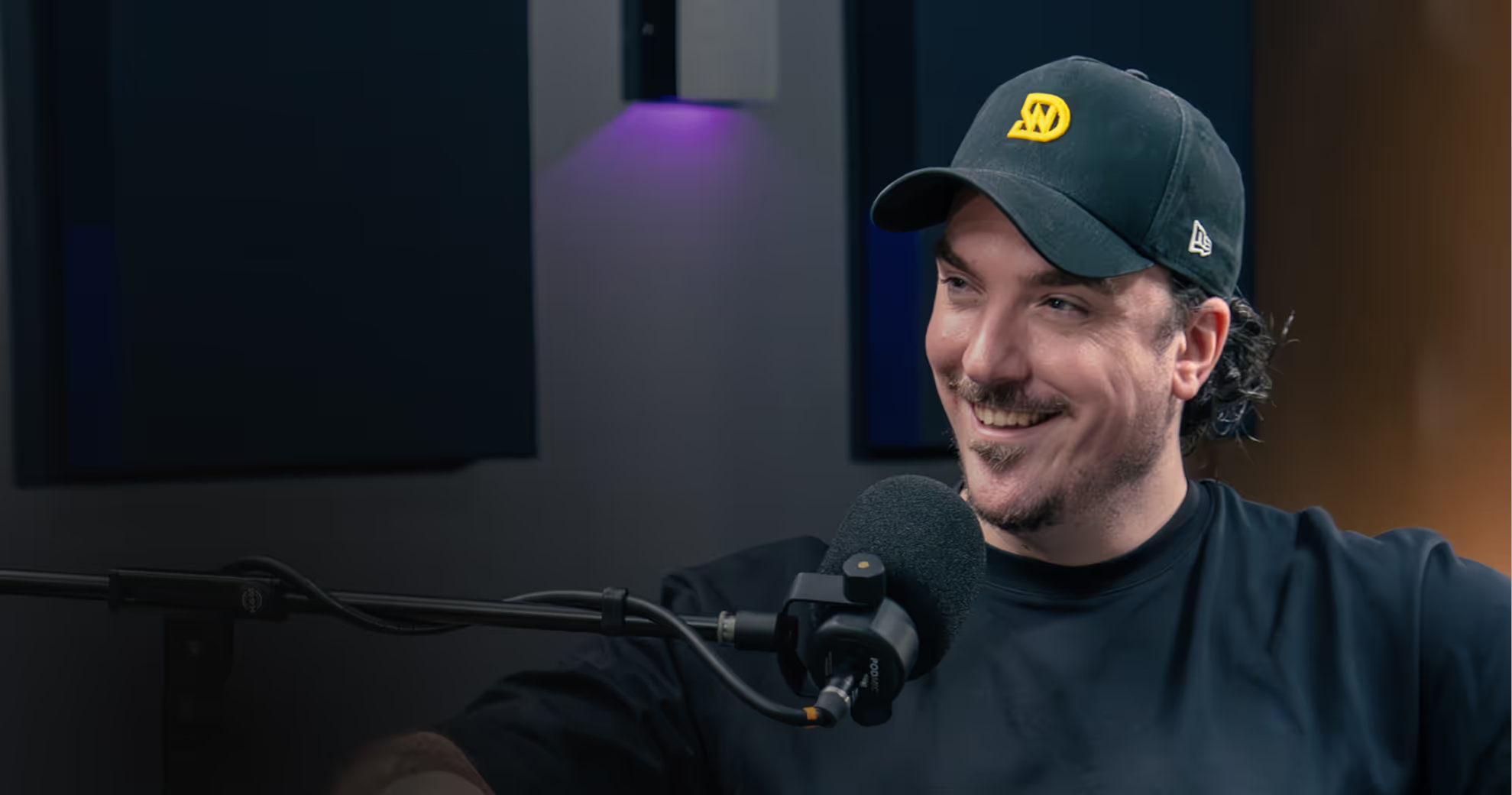
Work With Me
Enquire With Dain’s Team
Enquire For Speaking
Let's Get You Branded
Apply to be a guest
Dive into insights from industry leaders and experts.
Stream now
Dive into expert advice and industry trends.