From Self-Publishing to Netflix: How One Story Sparked a Global Movement | Callie Hart



TLDR
Summary
Callie Hart, a bestselling author and screenwriter, shares her remarkable journey from near burnout after 15 years of self-publishing to achieving global recognition. Facing financial precarity and creative exhaustion, Hart decided to write one final book, the romantic fantasy "Quicksilver," purely for herself, despite her core fanbase explicitly requesting another dark romance. After initially self-publishing the 205,000-word novel to poor sales, Hart made a Hail Mary play on BookTok by directly emailing 30 influential creators, offering them free copies. Within two weeks, "Quicksilver" went viral, skyrocketing from Amazon obscurity to Number One on the New York Times bestsellers list.
The book's success led to a massive publishing auction, where Hart ultimately signed a major deal, and a separate offer from Netflix for a three-part film adaptation. Hart stresses that detaching from the outcome and writing solely to her own vision—a lesson learned from years of trying to appease the market—is the key to creating superior, authentic work. She emphasizes that her biggest pressure now comes from the fans, who are highly invested in the characters and narrative. Hart, who is an Executive Producer on the Netflix project, explains the technical process of plotting a massive multi-book series, focusing on building "3D" worlds with defined geography, laws, and culture, and creating compelling morally gray characters.
Highlights
- Callie Hart (Frankie) was facing burnout and financial strain after 15 years and 43 books as a self-published author.
- Her successful book, "Quicksilver," was a "Hail Mary" passion project in the romantic fantasy genre, which her existing reader base actively rejected in a poll.
- After initially failing to break the top 100 on Amazon, the book went viral after Hart directly contacted 15 BookTok creators and sent them digital and physical "shelf trophy" copies.
- The virality led to the book hitting Number One on the New York Times bestsellers list and receiving a preemptive offer from 10 major publishing houses.
- Hart secured a deal for a three-part Netflix film adaptation and became an Executive Producer (EP) on the show.
- Hart credits her success to detaching from the outcome and writing for herself, stating that "all art suffers when you're trying to sell it."
- She considers the fans to be the biggest burden and source of pressure, as they have high expectations for the narrative and characters.
- Hart broke her rule of being a "pancer" (writing by the seat of her pants) and plotted the three-book series using Q-cards to ensure every scene served a purpose (cause and effect).
- Her greatest fear is the loss of consistency in the narrative, citing the frustration felt by fans over the endings of series like Game of Thrones and Lost.
- She maintains a strict "no one reads it until it's finished" rule for her manuscripts, including for the highly anticipated sequel, "Brimstone," to prevent spoilers.
Transcript
00:00:00 - 00:01:08
[Music] As an independent author, I really believed that I had to go traditionally to reach readers in that marketplace. So, I held my breath and I hit publish and it did not go well. >> No, >> the bestselling author of Quicksilver and soon to be Brimstone as well, Kelly Hart. Hi. >> On December 3rd, when the book came out that week, I announced my movie deal with Netflix. I got my tradal out and I was number one on the New York Times bestsellers list. >> You went from a thousand to number one
00:00:34 - 00:01:46
in >> pinching myself. Pinching myself. My agent called me. My uh publisher was on the line too and she was like, "Guess what? You're number one, baby." And I was just like, >> "What happened with Tik Tok that turned the corner to allow you to get to the position where you had 10 publishers bidding over who got the rights to the book? I made a list of 30 different people. I went and found their email addresses and I contacted them directly outside of the app. And within 48 hours of me sending
00:01:09 - 00:02:10
out those digital copies, people were talking about it online. >> So why does the magic happen when an author detaches from the outcome? Like what is that? >> This episode is brought to you by Wix Studio. Here at the agency podcast, we're building a community and we would love for you guys to be a part of it. So, we would love to hear from you. What are you enjoying the most? What would you like to see more of? And what do you think might be missing? Drop a comment. Make sure you
00:01:41 - 00:02:38
subscribe. And now, on with the show. Cali, welcome to the Agency Podcast. I'm just so fascinated with your story. It's one of those ones where you just see people persevere against all odds and then just something drops. the penny drops, something clicks. After 15 years as a self-published author, you were facing, in your words, burnout. Uh, and you were thinking about quitting. Talk me through it. What happened? And why did you want to quit? >> Yeah, it wasn't even that I was just
00:02:10 - 00:03:10
facing burnout financially as well. You know, there's only so long you can keep kind of >> clinging on by, you know, the skin of your teeth. Um, so I was absolutely at a point where financially I would have to, you know, start thinking about what I would do as another career. And at at my age and after having poured so much energy and, you know, blood, sweat, and tears into this career, that was a really, you know, that was rock bottom at that point. Um, so yeah, I I had been hustling for a very long time. I've had,
00:02:41 - 00:03:52
you know, various degrees of success with the work that I've put out over the years, 43 books. Um, and it got to the point where I was like, okay, I'm going to have to seriously think about, what else can I envisionage myself doing here if this next book doesn't do well? And I was supposed to be writing um another dark romance that uh was, you know, a follow-up to a series that I'd already started. And I was very, very jaded on the content and just like tired of writing the same thing. And I'd been
00:03:16 - 00:04:16
thinking about this particular book for many years. And it had always been one of those passion projects. You know, we have those things that we're like, "Oh, we'll be able to go do that when when we've hit a certain financial goal or when this is, you know, this goal has been met." And we don't often give ourselves the opportunity to go and do the things that kind of feed our passion and our soul. Um, so yeah, I I was kind of like, okay, if I've got one more book in me, if I've got one left, uh, it's
00:03:46 - 00:04:45
going to be this one because I'm I'm going to do it for me. And I I had to roll the dice on it because it was not the genre that my readers were used to reading at all. Um, I I put out a poll in my reader group on Facebook and said, "Hey guys, like you know, do you want this project, The Dark Romance, or do you would you be interested in reading a romanticy from me, a romantic fantasy?" And the resounding answer was no. They did not want this book. So, >> how could you say no? Like, was it just
00:04:16 - 00:05:27
like a blatant >> It was like 100%. Like, absolutely, we want the dark romance and not the romantic. Um, which was kind of disheartening because I kind of turned to my group to be like, "Reassure me that this is going to be okay if I pull the trigger and do something that is outside of what I normally do and what you guys read from me." Um, and I to see that zero was like, you know, really gut-wrenching cuz I had really decided at that point that it had to be this book. So, it really was a Hail Mary. Um,
00:04:51 - 00:05:57
and thank God it worked out. But I wrote I wrote Quicksilver very quickly and I put it out I waited sort of six months after I'd finished to see if I could get it traditionally published because I really felt like I was very proud of what I had done and I had a lot of faith in the story and I really wanted to give it the best chance of success. Uh, and since I didn't have a readership in the romanticy space as an independent author, I I really believed that I had to go traditionally um to reach readers
00:05:24 - 00:06:21
in that in that marketplace. So, I tried I I took it out to an agent that I had worked with many years ago. Uh, I had never given her a project. She was always kind of like hitting me up every couple years and being like, "Have you got something for me?" And I was having a great time self-publishing. Uh, and I was making money at that time. So, I was just like, you know, I'm I'm fine. I'm I'm going to keep doing my thing. Um, and I I sent it out to her and she was like, "Look, fantasy is not my
00:05:53 - 00:06:45
wheelhouse. I'm I'm dark romance or contemporary. Um, but I have a colleague here at the agency who is willing to read it, so I'm going to pass it over to her." And she read it, and she was very, very kind. She came back and she was just like, "It's too long. This this is too long. It's a thick book. >> It is a thick book. >> I'll hold this up just so people can see this. >> It's 200 chunky boy. >> 205,000 words. So >> that's a big book, boyfriend.
00:06:19 - 00:07:17
>> Yeah. >> And the the agent was like, "You need to cut this down at least half. You need to change this to this, this, and this." And I was just like, "This is my story. This is the story. I'm not changing a word." So I very politely said, "Oh, okay. I'm just going to I'll do it myself. I'll self-publish it." because I, you know, I knew how to do that. Um, so I held my breath and I hit publish and it did not go well. >> No. So when you first launched a book
00:06:48 - 00:07:50
yourself, you self-published. >> I didn't know that. >> I did. So I released it in June of 20 last year. It's it's wild to think that I just published this last year because so much has happened and so much has changed like fundamentally changed my entire life. I put it out in June last year and um it it didn't break into the top 100 on Amazon which all of my other books had done. Uh, so it was very demoralizing and to kind of like watch it kind of slowly fade into the ether
00:07:18 - 00:08:18
was like this really awful moment. Like I had this existential crisis where I was like, "Okay, you know, I I pulled the trigger on this and rolled the dice because I wanted to do it for me and I'm so glad and grateful that I did because telling this story was the time of my life. I had the best time and I have this story now and I'm so proud of it." Um, so I I then kind of like just kind of accepted that I wasn't going to be an author anymore and I was going to have to go and do something else. And I six
00:07:49 - 00:08:50
weeks passed and it kind of faded into non-existence online. And I was just like one night, no, I'm not going to let this happen to this book. So I went out and I I got on Tik Tok. I had never really spent a lot of time promoting or or or building a platform on Tik Tok. I'd really struggled with it, but I'd seen other like my peers have very significant success >> cuz there's a big Tik Tok community. There's like a new readership community from what I understand and it's called
00:08:20 - 00:09:28
book talk. >> So book talk is is uh it's a powerful powerful thing. It's there's millions of readers on Tik Tok who have built this community. It's a very very useful marketing tool to get your work out into the world. Like it it's its own animal. It doesn't exist on Instagram or Goodreads or Facebook. It's very specific to Tik Tok. Like it can be rough out there. Honestly, people have very strong opinions uh and a lot of feelings about these books and that's a
00:08:53 - 00:09:53
wonderful thing because as authors, you know, we hope to inspire emotion and to, you know, light fires in people and for good or bad that that that is absolutely what's happening on book talk. >> What happened with Tik Tok that turned the corner to allow you to get to the position where you had 10 publishers bidding over who got the rights to the book? So, I had that epiphany. I woke up. It was one of those moments where you're like laying in bed and can't sleep because your mind is just racing.
00:09:23 - 00:10:33
And I was like, "No, I'm not having this." And I threw back the covers and I got up and I I just sat down on on Tik Tok and I looked up up the book talk hashtag and also romanty and looked at who was posting and talking about books in this genre who had um a lot of engagement and were saying, you know, thoughtful reviews and things like that. and I made a list of 30 different people and I went and found their email addresses and I contacted them directly outside of the app and just said, "Hey,
00:09:58 - 00:10:57
you know, you don't know me. This is my book. It's got this guy on the front. Um, I think you might like it based on what you're posting and talking about. Would you have any interest in receiving a free promotional copy?" And um, even as an independent author, I made sure that it had lots of shiny silver on the cover. They were very pretty to look at and and half of those people, 15 people got back to me and said, "Sounds like it's right up my alley. Please send it over." So I I said I mailed out 15
00:10:28 - 00:11:18
copies, but in the meantime, I said, "Okay, here's the digital version just so you can get started." Because they they call their books shelf trophies, and they don't want to read the physical copy. They read the digital, but they keep the physical for as a trophy for their shelves, you know? They don't they're precious. They they want to keep them in collector's edition like perfect condition. So >> I do the same with my comic books. So I collect uh Walking Dead.
00:10:53 - 00:11:44
>> Amazing. >> And uh Spawn comics >> and I always buy two copies. One for shelfing and one to read. >> And you keep it in the in the plastic. >> Yep. I don't even I don't even open it. I got boxes full of comics at home I've never opened. >> They're probably worth a fortune. >> Yeah. Hope one day. >> I love that. So they they have a trophy option which is in the mail >> and now they're reading the digital format >> and within 48 hours of me sending out
00:11:18 - 00:12:20
those digital copies. People were talking about it online. They they had posted about it. They were like, "Oh my god, I devoured this. Like I read this overnight. The book had maybe hit like a thousand on Amazon." And at that point it's kind of hard to pull it back after after a release. you know, I was not expecting what came next. Uh, which was over the course of about two weeks, it caught a lot of momentum and then suddenly I was number one on Amazon and I was like, >> you went from a thousand to number one
00:11:50 - 00:12:53
in >> pinching myself, pinching myself. It was really wild actually because you know I saw it starting to bu to build and and come I could never decide whether it's up or down the charts to get to number one but it was creeping closer to in the right direction and you know I would get messages at like 4 in the morning and my sister like Frankie it's a sorry Frankie is my real name which I don't mind sharing that's okay um but she'd be like Frankie it's it's at you know 480 and I'd be like oh my
00:12:20 - 00:13:14
god I cannot believe that has happened. Like I am blown away. And then it just kept getting better and better. These like midnight messages I was getting from people all over the world. Two weeks later it had gotten to like number eight and I was like, "Holy smokes, that's the best that best ranking I'd ever had." Then suddenly we're at number four and I was like, "Holy heck, what is going on here?" And then finally 3:00 in the morning, I I can't remember what day
00:12:47 - 00:13:40
it was, but my sister messages me and she's like, "It's number one." And I was just sobbing because, you know, it was such a realization of everything that I had worked for and knowing that it hadn't been for nothing and that the the like pulling the trigger on it had paid off. It was crazy. >> I'm getting goosebumps as you're telling me. I'm like, "Oh my gosh." >> I still get that way thinking about it now. And that was just the beginning of
00:13:14 - 00:14:24
the craziness after that, you know, and I and it's it's hard to re, you know, really maintain like how surreal that is in your head sometimes. Like you feel so with like separated from it and then suddenly you realize you're hitting these goals that just were pipe dreams and and it's constantly like is this real? Is this happening? Am I sick? Like do I have a brain tumor? Am I hallucinating this? This can't be real. this can't be happening to me, you know, and and and being suddenly at um tables with very
00:13:48 - 00:14:44
important people and having very important conversations and just being like, "Holy heck, it happened. It happened." >> Wild. >> What was the first event or moment that happened once it hit number one? Did the emails start rolling in? Phone started ringing. What happens? Yeah, I'd started ordering very large quantities of books to sign at home and ship out and the logistics became terrifying very quickly. My house was a packing and shipping center and every single room
00:14:16 - 00:15:13
was filled with books. There was no room for my for my dog. I was suddenly not writing anymore. I was just shipping and logistics and I was like all day every day and drowning in new orders which I was very grateful for but I was just like I have to stop because this is more than I can manage. And it was around that time I got an email from a very large publishing house who were like, "We want to publish your book. Like, we're gonna we're throwing you an offer right now. We we don't want you to go
00:14:44 - 00:15:43
elsewhere." Um or, you know, we just want to give you this preemptive offer. And it was such a large number that my first response out of panic was to say, "Oh my god, yes." Like, you know, and and panic and say, "Send me the contract. Send me I'll sign it right now in blood. Like, whatever you want." Looking back now, I'm so glad I didn't do that. But um thankfully out of the ether, I was approached by my dream agent who I had already, you know, I I have this book where I write down all
00:15:14 - 00:16:19
the things that I want to manifest. And it was always that I wanted to be represented by either WME or CA. And suddenly Caitlyn Mahoney from WME was reaching out to me and saying, "Hey, like I'd read your book. It was fantastic. I please tell me you don't have an agent. And I'm like, oh my god, yes. Like I I please like let's let's talk. Let's talk. And she she completely changed everything. She is such a powerhouse human being. I am in awe of her. Suddenly, you know, it wasn't just
00:15:46 - 00:16:33
this one publishing house reaching out to me. It was all of them. Um and Caitlyn was, you know, the the the overseer of all of that. and she she's I'm in such awe of her. She's incredible. >> What was the conversation that played out? >> She was like, "Okay, here's what's going to happen. We're going to have this meeting with this publishing house and they're going to make you a big offer and they're going to say, "We want you to take it off the table." Uh, which is
00:16:10 - 00:17:00
exactly what they'd already done. They want to preempt it. We're going to play our cards very close to our chest. We're going to take a lot of meetings and there are going to be some like great offers thrown at you and you're going to have to make some big decisions, but I'm here to help you. And that's exactly what she did. You know, we over a period of a couple weeks. So, I probably had about 45 meetings. >> Wow. >> In total, >> in a period of like a couple weeks.
00:16:34 - 00:17:40
>> Yeah. Going from I'm destitute. I am in debt. I don't know how I'm going to continue this career that I love so much to being in a position where, you know, people are fighting over something that you've created is unbelievable. And what made you pick the current publisher? >> I loved that they were kind of a newer imprint. The initial deal in America was with Forever and my editor and I really got on well in the meetings, you know, and she she promised me the thing that
00:17:08 - 00:18:08
really swung it for me was that she was like, I can have this book out by Christmas. And we were It was August. >> Wow. >> So I was just like, there's no way she did it. We signed a deal in September and by December 3rd we had a quarter of a million >> September last year >> and then by December 3rd you had what? >> Quarter of a million books on shelves throughout the states. >> Wow. >> And they sold out pretty quick too which was amazing. So, I had a book that I I I
00:17:39 - 00:18:46
have. It's uh the high performance planner uh by Brendan Brashard. And at the bottom, it has a section that says uh three things that you are working towards right now, big goals, um that you might not accomplish today, but that you're working towards. And I had for years in this journal written down New York Times bestseller, movie deal, and traded slowly as those things got ticked off that list. And on December 3rd, when the book came out that week, I announced my movie deal with Netflix. I got my TRA
00:18:13 - 00:19:17
deal out and I was number one on the New York Times bestsellers list on a paperback, which is almost impossible. My my agent called me and my my uh publisher was on the line too and she was like, "Hey, Frankie, guess what? You're number one, baby." And I was just like balling balling like a baby. >> Clients want it all. A slick looking website that can run their business and scale with their success. Wix Studio is built for that. Plan out your client's whole site in seconds with AI powered
00:18:45 - 00:19:58
site mapping and wireframing. Then when everyone's on the same page, jump into the creative. Starting off in Figma or in the Wix Studio editor with super precise layouting tools like grid, stack, and flexbox. Go above and beyond the brief with no code animations, custom CSS, and built-in business solutions. And make your whole vision responsive in a click. And there's zero need to break a sweat when clients grow fast. A dynamic CMS with global design settings and reusable assets lets you
00:19:21 - 00:20:29
turn one page into hundreds. Design smoother and deliver sooner. Go to wixstudio.com. >> How did you end up getting a Netflix deal for a three-part movie series? >> Yeah. Um, so that conversation actually started before I'd even signed the book deal. Um, I got a phone call from my agent, Caitlyn, and she was like, I think it was August. Um, was like, "Hey, Frankie, guess what? Netflix are knocking at the door." And I was like, "You're joking." Cuz I just, you know, I
00:19:56 - 00:21:01
never in a million years thought that that was going to be the next thing. And they weren't, you know, the only people like I had a a number of other uh studios and streaming like sites come through after that wanting meetings. Uh I took a lot of meetings for that too. And the reason why I went with Netflix in the end was they were they were there the the exec was very passionate and had a really clear vision for what she wanted to do with the property and who was going to be in it and what it was
00:20:29 - 00:21:23
going to look like. She said, "Okay, well, you know, we we're gonna have a a nice budget for this. Do you want to split that over eight episodes or do you want to do something really impressive and make this a very cool movie?" And I was like, "Done, done." >> So, you're having these meetings with Netflix and they're talking about doing a feature film. Where did your mind go in that moment? Were you like, "Oh my god, this is my baby. I wrote this. Like, I'm losing it." Like, like what
00:20:56 - 00:21:53
were the fears in that in that moment? There's always a lot going on when you start having those conversations, but Netflix were very reassuring. You know, they they have a lot of experience adapting really popular books into movies now. You know, they they've done done it quite a few times and they are very collaborative with the author. They, you know, they know you have skin in the game and that you are part of, you know, what the whole production needs to be shared through the author as
00:21:24 - 00:22:20
well. so that you know we get to share behind the scenes stuff and and involve the community in what's going on because they it really does belong to the readership too. You know what I mean? So they they know how to walk that line. >> And how much say do you get in the you know selection around actors and actresses? >> Yeah, we haven't gotten to that part yet. So >> you thinking already, are you plotting like, "Oh, I heard this episode." Absolutely. I have like my shopping list
00:21:52 - 00:22:45
of actors who I would love to be a part of this project. I am an EP on the show as well, so I'm going to get to learn a lot as this whole thing progresses. >> How how do you make sure you're adapting what you've written in a book to screen? Like does that change the IP? Does it shrink down what you can say? What have what have been some of those challenges? >> I asked them the same question. They said, "We're Netflix. How how long do we want to make the movie? We can choose.
00:22:18 - 00:22:57
>> You know what I mean? So, that was part of it. Um >> they're like, "We are the gods. We can, you know, we can control. >> We can make a three-hour movie if it makes sense to make a three-hour movie." You know what I mean? So, >> it sounds like they were quite collaborative. Like, they were really open to what do you want to do and how do you envision? >> Exactly. They have those questions for >> you have these ideas that Hollywood's like, "No, we'll do it our way. We want
00:22:37 - 00:23:44
to make money." For the property to be successful, they have to be, you know, they have to be thinking about how to be thoughtful and do a a genuinely good job with it. You know what I mean? They can't just come in and cannibalize the entire project and do whatever the hell they want with it. So, they need they need to know what the author wants to do with it uh just to just to do a good job and and give the readers what they want as well. What excites you the most about adapting to the screen?
00:23:12 - 00:24:18
>> There are scenes in this book that I had started like thinking about and envisaging like in 2017. And when I got to write those scenes, it was like a it was like exhaling after holding a really long breath. So, I think seeing those scenes come to life and finally watching them on a will be like another breath that I've been holding for a really long time. Um, finally exhaling. I'm excited for that big time. >> There's some pretty scary stuff in the book, which is really cool. But I I like
00:23:45 - 00:24:39
that there's like, you know, you have Arab deserts and then you have ornate palaces and then you have like ethereal realms. So, so when you're thinking about and you were writing these things, were you thinking about screen adaptation at that time or you were just purely doing it for your own delight in your own mind? >> Yeah, absolutely. That's always been something that I really wanted uh to have happen. So, I when I ride it's definitely a factor and and but also it's just for for funsies cuz it's
00:24:12 - 00:25:17
playing out in my head and I'm like, man, this is cool. like this is exactly how I, you know, imagined, you know, Zilvarin to be the the desert city when when you first step into the world. You know, you're in this desert city and then very quickly you are thrown into a the polar opposite like a winter palace in a very like frozen landscape. Uh, and that was designed to take the character out of her her, you know, known surroundings and completely turn her world upside down. Um, but getting to
00:24:44 - 00:25:54
describe and create both of those places in such short succession was the most fun ever. >> So, what's put more pressure in your life, Netflix, the publishers, or the fans? >> It's definitely the fans. When something gets as big as Quicksilver has gotten now, it doesn't belong to me anymore and it belongs to the readership. You know what I mean? So they they are the ones that I'm worried about pleasing the most for sure. Uh they have expectations and they're very vocal about those
00:25:20 - 00:26:19
expectations and I sometimes get scared. Like there's a certain character in the book if I did anything bad to him I I would honestly be afraid to go outside genuinely. Um they love him more than they love the main characters some in some cases. So I would be very very scared to to do anything to Carrie and Swift that >> okay >> they they would be very upset with me. The pressure definitely comes from the readership. Absolutely. >> Do you feel like there's more pressure
00:25:49 - 00:26:37
to appease your viewership versus hold to your own true vision of the the narrative? >> There's a lot of pressure to do that. Yes. because people have expectations and they want, you know, they they expect certain things to happen, certain tropes to happen even, uh, and they're they're very vocal again about that, you know, and I get emails saying, "This better happen or I'm going to you need to tell me now if this isn't going to happen because I'm not going to read it
00:26:14 - 00:27:09
anymore." >> Really, >> and and I don't I don't play that game. You know, I wrote this book for me and I will write its sequel and the third and maybe fourth, fifth and sixth all for me and you know if people come along for the ride uh then you know I'm stoked and I'm really excited for that. Uh but if they don't like what I'm doing then that's okay and they don't have to read it. That's fine. >> So that's final. It's your vision or
00:26:41 - 00:27:46
nothing. >> Absolutely. Because they wouldn't they wouldn't want me to write to the to the crowd. You know, I I didn't do that with this book and that was fundamental to why it did well. It it worked because I had a vision for what it should be and I gave it everything and I can't do that to a story that I'm writing to meet someone else's expectations. >> So, when you're writing a book, like you said, like you're trying to stay true to your own narrative. Um, how do you make
00:27:12 - 00:28:22
sure that as a writer you're not just appeasing the market in order to be commercially successful, but you're actually then writing something that could that is actually better. >> When you are writing to make money or, you know, create a stir or get a book banned because that's a marketing tactic, too. uh it it it never is as good as it could be because it's serving another purpose. So you I you know I've learned that lesson the hard way and that's why you know I was feeling so
00:27:48 - 00:28:54
disenfranchised and jaded when I was writing those dark romance stories because I was very much listening to you know the voice the overwhelming voices on my social media platform saying we want this, we want this, we need this, give us this. Um, and I and I thought I was doing the right thing by trying to to give them that. Um, but all art suffers when you're trying to sell it. You know what I mean? You have to detach yourself from the fact that what you are creating might make you money. Uh, and
00:28:21 - 00:29:26
which is very hard to do because you know it takes a long long time. You invest money into it to create it. So yeah, it's hard to walk away and say, "Okay, if I don't make money from this, I'll be okay with that." I had to do that with this book. And I really did think that was going to happen with this book. Um, and I think that's why I was able to to make it what it is, uh, without expecting something afterwards. >> So why does the magic happen when an author detaches from the outcome? Like
00:28:53 - 00:29:53
what is that? because you're when you sit down to write I think and you are worried about what a readership is going to think or how much money it's going to make or whether it's going to be a success there are people peering over your shoulder every time you write a word you know what I mean in the back of your head that's what it feels like but for me when I wrote this book I was alone with that story because I knew it probably wasn't going to work and I was just I was being there with the characters in
00:29:23 - 00:30:25
the story and I wasn't worried about, okay, is this scene going to hit? Like, oh, I need to like tweak this, you know, it's not quite what I want to do, but like I know it's going to be more popular if XYZ happens instead. Um, when you remove those like barriers and you write exactly what's in your heart, I think it's a more pure product. But I imagine if you were writing this book at a moment where you weren't sure all the success would happen and now you have all these producers, executives,
00:29:54 - 00:30:50
you know, publicist, all these people are now part of your universe >> and are somewhat depending on the success of this for their own ventures. >> Does that shift how you feel about this when you're writing book two and three? there there is a lot more pressure now obviously because you don't just want to do as well as you did with book one. You you want to do better like that's just human nature. You always want to kind of like outdo yourself and grow or like accomplish more. Um and that's
00:30:22 - 00:31:34
definitely a real thing with me as well. I'm I'm a human being and I have an ego that's telling me those things. Um so that's definitely a thing a factor. However, I'm very lucky because you know from my agent to my film and TV agent to my publisher to Netflix, they are all saying write the story that you want to write. They are not putting any pressure on me to, you know, meet a certain, you know, we we we would love to see more of XYZ in this story. You know, they're they're putting trust into me to write
00:30:58 - 00:31:53
what I want to write and and not and give me free reign. You know what I mean? That must feel liberating to to have that much trust. >> It is because it's always a concern when you you hear horror stories as an author or any creative that that gets picked up and their work is adapted or becomes larger than them. You know, you hear horror stories of their their stories being taken from them or turned into something that they were never designed to be or they're then pressured to, you
00:31:25 - 00:32:21
know, create something that was never meant to be a part of their story. Um and and I'm so grateful and glad that that hasn't happened here because you know this is obviously my first time traditionally publishing. So it could have gone that way. Uh and it would have definitely changed my energy in writing. It would have changed book two. Uh it would have it would have made it impossible to write book two because I wouldn't have been able to do it. I would have just not had the motivation
00:31:53 - 00:32:56
or you know I can't write other people's stories. And I know a lot of authors who do write other people's stories and get paid well to do it, but it's not my I can't I can't. It just doesn't work. It doesn't happen. >> Do you have any rules around your writing? Uh whether being written or unwritten, like certain things that you're like, I must adhere to these rules. >> I have like apparently it's not OCD, but uh it feels like OCD sometimes to me, you know, I have like little rituals
00:32:24 - 00:33:20
that I like to do. Um, but I I do not let anyone read anything I've written till the story is finished. >> Really? >> Never. >> No one. >> No one. >> Just you? >> Yep. In fact, the only person who's read book two, apart from my editorial team, is another author called Jodie Pico. She's very famous and and quite a wonderful, spectacular human being. Uh, but she is the only other person in the world that has read Brimstone yet. And normally we do arcs, advanced review
00:32:53 - 00:33:53
copies of of stories ahead of time to get buzz going for a release and to um give people an idea of what they're going to be reading and and create a bit of hype around the release. But there were so many spoilers and huge twists in Brimstone that I was just like I can't like people love to ruin like they love to be the first to like you know be the one to break the news that X happened. Uh and that would definitely happen with book two. So, no one has read it. There are no arcs for this book. Only Jody
00:33:24 - 00:34:11
Pico. >> Only Jody Pico. >> Now, our producer behind the podcast here, Cam, he's known you for 14 years. >> Correct. >> He's not even seen the book. >> N. >> My sister hasn't read it. >> Not even my sister. I don't think Cam would read my books anyway. They're not his bag. But >> I'm peering in and I'm like, man, I'm like not a romance guy, but I'm like getting sucked into this story. Um, okay. So, so if no one's allowed to read
00:33:47 - 00:34:45
it, what other rules do you have around writing? Do you have >> um a process if you will? Like I know you did something with Qards. Yeah. >> And I understand that you um essentially fleshed out the three books before you wrote the first one. Like can you take me into the technical process of of how this actually come together? >> Yeah. So 43rd book, the first one I ever plotted and I think that made a big difference too, you know. But >> so this is the first time you ever like
00:34:16 - 00:35:07
actually like zoomed out and said I got to I got to create a plot here. >> Yeah. Cuz I you know I we call it pancing or plotting like writing by the seat of your pants or or being a plotter. And I was always a pancer because I I'm I'm impatient and I want to get started. Um and with a lot of my contemporary stuff, you know, that you don't need to do a lot of world building because it's a it's a known entity. You know, when when readers open the book, they know where they are. They're in
00:34:42 - 00:35:48
they're in New Hampshire. they know what that looks like. So you don't need to spend uh you know weeks creating a world where you know you need to figure out the currency and the politics and the the religion and d you know all all of the things that make a world feel fleshed out and real on the page. Um you don't need to do that in contemporary. So I just kind of like tapped away and and got kind of good at doing that. Um but with this it's such a huge entity. the worlds themselves are characters
00:35:13 - 00:36:14
that needed real like definition and um purpose and have all of the minutia sketched in. Another writer who I really admire, Maggie Steve, she was talking about how to make worlds feel real and characters feel real. And she was like, again, it's the the difference between a stick figure and, you know, a photorealistic drawing, you know, you've got to go in and do every single little detail and layer and like all of the little things. >> This is where I'm going to geek out. I'm
00:35:45 - 00:36:38
fascinated by this. So, like just for our viewers and for yourself, like I'm a huge Warhammer 40k fan, huge comic book fan. Like I love world building. It's like I grew up on movies and I I always obsessed over the sets and the costumes. >> When you think about a world, like what what are the ingredients? Like what are the things you must you must include? >> So, you know, you start with the foundation. So, what does the world look like? Like what's the climate like? What
00:36:11 - 00:37:26
is uh the landscape? you know, is it a desert city or is it a winter palace, you know what I mean? And you think about how those like geographical factors affect what happens in that place. So, in Silva, you know, it's a desert city, there's no water, you know, there are a lot of little small tiny little details that are affected by the actual setting. I really look at, you know, how how the world is governed, you know, what are the what are the conflicts and like constrictions that the characters are under
00:36:49 - 00:37:52
>> like the the laws of the world. >> Exactly. That really defines, you know, how the world is run and what restrictions and rules there are for for the characters to follow. Um there like is there religion? Is there like a monetary structure? All of these things are so fun for me to sort of weave together to really give like a telepathic introduction to the world. All of these things kind of like create a little tapestry that >> um give the make the world more 3D. >> Makes it feel real, right? Cuz like when
00:37:20 - 00:38:06
you watch I I used to read the Dune books before the adaptation, the film, and I've watched the old film, which is terrible. Don't watch horrible film, but watch it for a laugh. Watch it for a laugh with your friends. But like when you think about Dune, right, you've got spice >> and and that kind of like governs how the universe >> operates and how they fly through space >> and it's currency. >> And it's currency. >> And it's addiction. >> Yes. And and there's all these different
00:37:43 - 00:38:41
sex and there's all these different governments and then how they interlink. >> Generally, it's it's the driving force of most conflict in stories. It's a story of an underdog who is is like under the boot heel of someone bigger than them who is um you know unstoppable and someone standing up and still trying. You know that's that's almost every story that's ever been written. >> Why are these so universally gripping for us? Because you're right, most books
00:38:12 - 00:39:20
start off with some form of oppression or an oppressor. Yeah. >> And then someone who has against all odds done something about it. I think, you know, we really empathize with those stories because we may not have, for example, you know, Darth Vader like searching the universe for us, but like we h we all have these issues in our lives that we feel crushed by. Um, and reading about someone going, I feel overwhelmed by this. This feels hopeless. I feel vulnerable and I can't do anything about it. But still going,
00:38:46 - 00:39:45
I'm going to try cuz screw this. This is horrible. you know, I I want to protect the people I love or I want to make life better for those around me. Reading those stories where the underdog takes on an overwhelming insurmountable challenge and wins, like that gives us goosebumps. That's like, you know, we're like fist pumping for that because we're like, man, you know, maybe maybe I can do that, too. in a much smaller ways that are relevant to our own lives. You know, like it be that like, you know,
00:39:15 - 00:40:13
advocating for yourself at work or, you know, standing up to your stepfather who's a punk, you know, like these little things. It's they're all kind of applicable and like you can replicate those things in your own life in small ways. When you're thinking about the the technical side of writing and you're thinking about these beats, how do you navigate three massive books and and how do you plot that at the very beginning? Like where do you go first? Do you go to the end and come back to the start? Like how
00:39:45 - 00:40:40
do you write that? >> It was really interesting with this particular story because I have been envisaging it for so so long that there are still scenes that I was thinking about in 2017 that I haven't gotten to write yet. Um, I I've known the the whole arc of the story since I, you know, started thinking about it, breaking it up and going, okay, well, that's like a huge arc moment that definitely needs to go in book three. And then kind of like thinking about, okay, well, this is a really fun scene
00:40:12 - 00:41:10
and a really cool scene that I've been daydreaming about and I'm desperate to write it. So, trying to like cram it into book one somehow and then going, okay, no, I'm gonna have to be patient because this is definitely a book three thing, too. I did get to plot the whole thing in one go and then figure out the beats and the arcs so that you know you're leaving book one on a satisfactory note that ties things up but still hooks people to flow into book two. Book twos are like second books are
00:40:40 - 00:41:36
hard to write because you've you've lost a lot of momentum from book one typically, you know, especially with romance. When you've got romance on the table, book two is very hard to write because you've had a lot of the beats of that the meat cute, which is often not very cute in this kind of like genre. But, you know, you've you've had the excitement of the first kiss and them you know, getting together and telling each other that they love each other and these big swelling emotional moments
00:41:08 - 00:42:08
that are climactic in book one and then you go into book two and you're like, "Okay, so are we dating now?" You know, like you've lost that kind of like. So going into book two, it, you know, that's also the case with, you know, a lot of the story arcs. You've had the moment where they meet. You you're introduced to the conflict of the story and you have to have a resolution to a conflict at the end of book one anyway. You have to have like the big bad like, you know, moment and then they have to
00:41:38 - 00:42:43
recover or not recover, who knows from from that. And then you're going into book two kind of like on the back foot like where do you go from here? Figuring out how to maintain suspense and forward momentum in both the fant fantasy and the romance elements of the story was so fun. I write chronologically as well, which some authors do not do that. Some authors will when they start a project, they will write the end first because they want to know where they're going. Uh, and some people will write the
00:42:11 - 00:43:00
scenes that they've really excited to write because they're like, "Oh my gosh, you know, I'm so pumped that I get to sit down and do this now at last. You know, I've been thinking about this for a long time." But I can't do that because I I would never write the other stuff. You know, I would be like, "Oh, you know, I've had my reward. That's the reward to me, the writing the end. So, I have to write chapter by chapter, page by page as it happens." who you think
00:42:35 - 00:43:27
the characters are when you start writing, like they're going to have evolved and changed and they're not going to quite be who you think they are at the end of the book. So, unless you're very regimented and you have plotted every single beat and every single moment and you know them inside out, then that's going to be irrelevant and you you'd have to start over anyway. You know, I say I plotted this book, but that might be a bit of a generous description for what I actually did.
00:43:02 - 00:44:02
>> Your version of plotting? >> Yes. I you know I I plotted out the beats of it and I wrote them down on Q cards and I had maybe like three bullet points for each chapter and and I wrote on the back why something was happening in that scene the purpose of it so that you know it's very easy to like get carried away and be like oh this is just a cool scene and I I think it sounds cool but what what purpose does it serve? you know, everything has to have a it has to be a vehicle for
00:43:31 - 00:44:30
transferring information or driving the story forward in some way or like you know, foreshadowing for something else in the future. It has to have a purpose. So that made writing each scene much easier for me. But I I put like three three pin points down, probably bullet bullet points. And then every time I sat down at my desk, I had my Q card. I knew why I was writing it. I knew where I was going to end up and then when I finished I got to stab it on a spike. >> Do you mind just touching on some of the
00:44:01 - 00:44:57
worlds you built? >> Yeah. >> Um and then I'd like to talk about how you create characters cuz did you start with the world or did you start with the characters >> with this book? I started with the the main male character, King Fisher. Um he was the first piece of the story that came to me. Absolutely. >> He begins as an antagonist and then turns into a protagonist. >> This is an enemies to lovers story for sure. >> Yeah. So, he is an antagonist at the beginning of the story and one you want
00:44:29 - 00:45:20
to throttle because he's just a bit of a an arrogant >> like he's such a douche at the start. >> Yeah, he's just an arrogant [ __ ] at the beginning. Um, and you're and that's, you know, on purpose like you're meant to not like this man. You're meant to be very dubious of him and not not be sure of his motives or where his like moral compass points. Uh, and you're actively supposed to be very on your guard around him because he is a nefarious character. Uh, and that's very
00:44:55 - 00:45:55
intentional. There is no better character than someone you have made a decision about and you are like 100% all again like could not hate this guy more, you know, like and then just completely [ __ ] with people and by the end be like, "Oh my god, I would die for this man." Like Jamie Lannister, come on. >> Yeah, dude. That got me. And I what is it like season four? And you're like, "Oh, he's a nice guy." He played the long game on that one and he's still imperfect. And I think that's what I
00:45:26 - 00:46:22
love. >> Like, you know, King Fisher by the end of this book is not a perfect character. He's still very flawed. Um, >> and he's he's representative of he's not human, but like a human condition. He's he's there's no such thing as holy good or holy bad. And I'm really fascinated by representing that in characters like and you know, having them be flawed and make mistakes. You know what I mean? He's not perfect. He's never going to be perfect. spoiler. Like, you know, he's
00:45:53 - 00:47:08
there's always going to be an edge of like nefariousness to him where he he will make make complicated hard decisions that other people will judge for a greater good or for, you know, purposes which he he deems, >> you know, more important. So, >> would you say that morally gray characters are more close to human truth? >> Absolutely. Yeah. 100%. And I find them far more interesting to write. Like writing a a holy good like saintly person would be such a boring story because you could you always know what
00:46:31 - 00:47:25
that person is going to do. they they are a very reliable narrator in any story and you want you want to be surprised and you want to be conflicted and you want to have this like tugofwar within yourself when you read a book whether you should you know you're like oh man I don't know if I should be rooting for this guy right now but I am man I hope he wins you know what I mean >> so when you have the main character in this case Saras um and then you have at the beginning of the book the antagonist
00:46:58 - 00:47:53
uh King Fisher how many other characters Should you or should you not have like do you do you have an experience where people write too many characters or they write too few? >> I think if you are going to have multiple POVs you can have as many chap like you know characters as you want. This story in particular is told from one POV. It's Saras's POV and normally I write books from dual. So I I get the female and the male um perspectives point of view. You know I'll go chapter
00:47:26 - 00:48:16
for chapter sometimes you know depending on the flow. >> You're bouncing between two different perspectives. You're giving there like two sides of the story essentially. But with this story, I couldn't do that because King Fisher has so many secrets and there's so many things going on behind the scenes that the moment you step inside his head, the House of Cards comes down and the reader has access to information that they they cannot know until the end of book one. Book two,
00:47:50 - 00:48:50
we're going into two POVs now. So, the reader steps into King Fish's head for the first time, which was really fun for me to write as well. Um, and they get to see exactly what was going on in his head throughout the entire first book, which was really, really fun. Like Game of Thrones, another great example, like George R. Martin had so many characters in that in that story, in that series, but there was multiple POVs. I think like 15 or something crazy like that over the course of the series, probably
00:48:20 - 00:49:22
even more. too many characters is is not a thing unless you're not giving each one attention and giving them purpose. Like if they're just there to like hang out and they're just on the page for no good reason, then then they're erroneous and they shouldn't be there. Um, in Quicksilver, I I was really again trying to screw with the reader because we meet Carrion first before we meet King Fisher. And he was very much designed to throw the reader off because she he and Saras have history, there's a lot of
00:48:52 - 00:49:52
banter and chemistry between them. And typically when you read a book like this, the first male character that you meet is the guy, you know, he's the main character. He's the love interest. And I let him exist in that world for a little while and let the reader believe that before I kind of like pulled the rug because I I was screwing with them. And I knew, you know, Kerrion has a very particular role in this story. He he's the the court jester essentially, but he is designed to bring levity
00:49:21 - 00:50:30
um to very serious moments. So he, you know, is ridiculous. He's just he's just so much fun to write because he's very unpredictable to me as well when I'm writing him. Um but the fact that he can have people laughing in a very tense scene uh was really fun to write and very purposeful. Uh and I I kind of threw him in as a a misdirect red herring at the beginning knowing that he was going to play a very important role in the story and that he was going to come back later. And that was one of the
00:49:56 - 00:50:49
scenes that I had been envvisaging for a very long time that I was like super pumped to write in the middle of the book where he shows back up >> cuz having these additional characters can change how the main character feels, right? Like absolutely >> in Game of Thrones, Lannister, you know, at the beginning just seems like this horrible >> Yeah. >> you know, terrible human being. But then as you go throughout the different series, it his his character metamorphosizes and it changes the other
00:50:23 - 00:51:08
characters around him. And then those that you know don't give them a chance, you're like, "Come on, give him a chance." So like how much of when you're writing these different characters together, are you trying to create different experiences with how the characters collide for the reader >> every single time? Because that that's the beautiful thing about it. Like you know, there are choices that certain characters in this book have made that are like, I could never understand or
00:50:46 - 00:51:46
condone that. And then there are other people who say, I see why he did that. But I understand, you know, I I it was a horrible, terrible thing. But I get it. When that happens in a story, it's asking us what our morals are and what our where our moral compass points and what are we willing to accept to like for the greater good or for altruism or for revenge and retribution and justice, all of these things. You know, Jaime was castigated because he he was a kingiller, but he killed a mad king,
00:51:16 - 00:52:09
though. He saved a realm, but he was still punished morally for it. I love those moral questions where you're asked to sort of look at look at what's happening on the page and go, "Okay, what am I willing to accept here? What is what is okay and what isn't?" You know what I mean? And people have different responses. And that's the beautiful thing about each individual experience when you pick up a book, >> right? It's almost like someone's personal life experience is colliding
00:51:43 - 00:52:48
with your writing, >> albeit their family dynamics or their workplace or like something that's happening in their life and when they're reading the book. Do you see characters as as like creations of your mind or are you transcribing events and things you experienced? >> I think that there's, you know, we have lived experience. We are affected by everything that happens on a day-to-day basis to ourselves. So that inevitably makes its way onto the page. Um, I personally try and not put like personal
00:52:15 - 00:53:03
stuff into books, but it's hard not to like it's hard not to put little pieces of yourself into everything as well. So that's a tricky one. >> You said before when a character does something that you don't understand when you're writing from that character's perspective, do you need to understand the motive? Do you need to understand what what underlies what what their decision is? >> Yeah, absolutely. Even if it's a long game thing, like even if that isn't
00:52:39 - 00:53:22
going to be addressed until book three, it it has to have a purpose >> cuz you got to close a loop. Exactly. >> Cuz I felt like when I watched the final season of Game of Thrones, I was like, man, there's so many loops that didn't close >> or even worse, lost. >> If you ever watched the last one, I was like, >> you didn't close the loop on so many things and I'm frustrated. And then you leave your fan base infuriated. >> Infuriated. Yeah. And that's not my
00:53:00 - 00:53:53
goal. I will. I mean, J.J. Abrams when he speaks about loss, I didn't watch the last season because I knew what was going to happen. Like I knew that I wasn't going to be satisfied. So >> I wanted to punch my screen. >> Yeah. >> So bad. >> Yeah. He says like he I think he was saying he p like perceives his storytelling as like it's never supposed to be a it's it's always supposed to be like an open-ended kind of what if or is this true or and I hate that. It's just
00:53:27 - 00:54:16
not it's not for me, you know. I don't enjoy that as a as a reader or a viewer. Some people do like that spinning top at the end of Inception. >> Oh, that was good though. I felt like that was a nice >> way to kind of leave it hanging. Even like for me, the Matrix. >> Yeah, >> there's so many things. I was reading a a theory about the Matrix the other day that Neo is >> just additional code and the system was troubleshooting itself and I was like, whoa, that explains the architect. So,
00:53:52 - 00:54:52
like even >> even in that case, it was still frustrating. But >> I I do like it when a story allows you to conclude it, but not so loose that you can't make sense of it. >> And you know, there are certain instances where you feel genuinely betrayed by the ending of a a a piece of storytelling. You know, people are devastated at the end of a of a series or a book. They're they're just like, I invested so much emotion and time and energy into this 10 year long journey
00:54:22 - 00:55:20
that I've been on, and I feel like it was for nothing. So, you really have to have consistency or through line or know what where you're going. >> Yeah. I saw I think it was Matt and Trey Parker from South Park. >> Yeah. >> They were teaching a class of writers and they said that when you're writing beats, you can't write >> with the with the mindset of this happened and then this happened. You have to write this happened >> because >> therefore, or because this happened.
00:54:51 - 00:55:38
Yeah, there's everything has to have a linear purpose to it. >> Everything is cause and effect. >> So, when you're writing, like how do you keep track of all this stuff? >> Typically, >> you know, I I've got the loose framework in my head and I'm I'm pretty good at at sticking to it. You've you've always got to have the running like, you know, background in your head like, okay, this is because of this and I'm come I'm I'm circling
00:55:14 - 00:56:12
back around to that and that's in like five chapters, you know, but that's the fun of it for me. It's like a game. It's gified in my brain. I'm like, "Okay, now that I've laid that piece down, I get to go and lay this other piece of foundation that will affect this in book three." Um, I'm I'm doing a a reread with a a podcast right now called Fantasy Fan Girls. They're doing like a a Quicksilver reread for October and they're asking me questions each week
00:55:43 - 00:56:34
and they're they're saying in book one when this happens like what is the meaning behind X, Y, and Z? And I'm like, I can't tell you that. It's, you know, it's not in there by mistake. Like, and I forgot to tell you, like, this is important and it's coming up in in two and three. Um, so unfortunately, I'm not able to answer a lot of their questions because it's all spoilers. But >> yeah, >> laying the groundwork and having those moments like already set up in book one
00:56:09 - 00:57:11
for things that are going to be fundamental in book three is the most fun thing that I get to do as a writer. Yo, my name is Dane Walker and I am disgustingly obsessed with branding. I had to figure out a way to do branding every single day. So, I branded myself. Then I started my agency, Rival. >> And hired a team of branding mavericks hellbent on creating brands so good that they'll make your competition their pants. So here's the thing. You want your brand to go viral and Rival makes
00:56:50 - 00:57:44
brands go viral. That's why we're offering you a free 30inut branding session to get an expert's opinion. If you don't believe me, the proof is in the pudding. Here's what clients have to say about Rival. Rival is trusted by brands like Nutrition Warehouse, Light My Bricks, and Voomie. >> So, if you want to absolutely smite the competition and make your brand go viral, hit the link below and book in your free 30-inut branding session. >> So, when you're writing this stuff, how
00:57:16 - 00:58:16
do you, I guess, help be conscious of where the fans theories might go? I obviously know that fans have theories. They they tag me in them a lot and it kills me not to to look at them. But there's a part of my brain um the ego again that's like what if they figured it out and I don't want to know that. You know what I mean? Um and then there's parts that are like, "Oh man, what if they come up with something that's better than I did?" You know what I mean? Um, but I just don't
00:57:46 - 00:58:50
want to know because I don't want to have what I write colored by what they see coming or what they want to see coming. You know what I mean? Um, so I I I steer clear entirely. >> Now, how do you decide which rules in this space to honor and which ones to break? I love I love breaking the rules, you know, like there's only seven ways to tell a story. And um inevitably whatever you write is going to fall into one of those dynamics. I just love throwing people out of that expectation,
00:58:19 - 00:59:15
giving them something completely different, something that they didn't know that they were going to enjoy. Um, you know, they when they pick up Quicksilver, I'm I've been very kind of guarded about exactly what happens inside the book and the kind of creatures and magic system that we're dealing with. And, you know, spoiler alert, but like you get halfway through the book and suddenly these feral like zombie vampires are introduced and people are like, "What?" You know what I mean? So,
00:58:47 - 00:59:42
>> and they can multiply. >> Exactly. Yeah. So, and and that really, you know, I get a lot of emails about that, like people who have no idea what they're going into and going, I was not expecting like that came out of nowhere. But when they when you do a reread, you're kind of like looking back and you're going, "Oh, that was hinted at throughout the entire book." That that kind of thing was coming. Um, I love those little moments where you kind of foreshadow and hint at something really
00:59:14 - 00:59:53
unexpected that comes to fruition and then people go and do a reread and they're like, "Oh my god, that >> it was here the whole time." >> Yeah. >> Yeah. It's like the the Book of Eli. Spoiler alert if if anyone goes and watches the I won't ruin it, but like >> there's a there's a moment in the movie where you're like, >> "Oh, this changes everything." And then you have to watch it a second time. >> Yeah. I love that. I love it when
00:59:34 - 01:00:22
writers do that when they like leave these little clues >> throughout. So that's what you're doing in the book, the first book. >> Y >> and we're not going to see that till book two >> or three maybe. >> Oh, okay. And book two, Brimstone comes out. Yeah. >> November 18th. Okay. Yeah. Midnight. So >> yeah, >> we're having a big party in New York. It's going to be a good time. >> What are you like finger crossing for this book?
00:59:58 - 01:00:56
>> There's a lot like there's a lot revealed in this book. There's some big plot twists. Um, we have some new characters introduced as well, which I'm very excited about. I hope the readership are going to love them as much as I do. There's some other like side character developments as well, which I know that people are going to be really waiting on, especially with Carrion. Um, there are a couple of other side characters, particularly Lauren, who uh get a lot more story like, you
01:00:27 - 01:01:31
know, screen time essentially. So, I'm hoping that people are as invested in them as I am. I hope that they don't kill me for the ending. That's that's my biggest goal at the moment. That you know, cliffhers are um you know, people either love them or hate them. They're very polarizing and and the cliffhanger at the end of book one was not a very steep cliff. Um book two, you know, people may have some feelings about >> there. There's a satisfactory thing you did, but then you also kind of left it
01:00:59 - 01:01:50
lingering. Was that intentional? >> Very. Why why did you want to end the first book in a way that wasn't too cliffhangery? >> Yeah, in a in a mercenary way. There's an attrition rate to every book series that you write. Um and it's usually around 20%, but when there's a huge cliffhanger at the end of book one, there's a steeper drop off because people are they're annoyed. >> Yeah. >> That they have to wait. Yeah. >> Um so that was businessminded a little
01:01:25 - 01:02:20
bit, but also it was a really natural point to end that first book. Uh so it was kind of like coincidental that it wasn't a huge cliffhanger as well. >> Okay. So when you're when you're writing the second book, how much of you was like, "Yeah, this is going to be on the screen. Like this is going to be a movie." >> That was definitely a a thing because I obviously had my movie deal when I when I was writing that book. I had started writing it already. Um but yeah, it was
01:01:51 - 01:02:59
definitely a thing in my head. Um I don't know. I I I do think about the how grand things could look and you know the the scale of things especially in the fay realm. Um it's just exciting. You know I didn't necessarily change any of the scope of the story. Um it it is what it was meant to be but you know there was a little tingle of anticipation at the same time as well because I was like actually I'm I'm probably going to get to see this which is very very cool. Yeah, especially with
01:02:26 - 01:03:18
like a lot of the magic based stuff that, you know, we didn't get to spend a lot of time exploring in book one. We definitely do in book two. Um, it's a lot of fight cool fight scenes. I'm so excited about the fight scenes. But yeah, >> you're like, write this in slow-mo like, you know, like >> Yeah, I need some J.J. Abrams lens flare here, please. >> Just lens flare everywhere. >> Writing Netflix notes as you're writing in the chapter. That'll be super fun.
01:02:53 - 01:03:45
Yeah. >> Now, when you're um thinking about like the I guess the screen, like are you going to do a cameo? Are you going to are you going to appear in the movie? >> That has not been discussed, but I think I would have a hard day >> like that day doing it. I would I would be dying inside a little bit. >> Um Okay. So, a few more technical things here. When you're writing beats, what are some of the different types of beats you can play with? cuz before you were saying that you don't want to be seen as
01:03:18 - 01:04:09
like this cliche trope where it's like, oh, she's confused and she makes a mistake and then she's just, >> you know, annoying the audience as you're reading it. >> Um, how do you write a book in a way where people aren't getting annoyed by these tropes, but they're actually fully absorbed and sucked into the story? >> Uh, you know, I I never set out to write a trope, you know what I mean? like that's never my intention to go, okay, I know readers really love it when, so I'm
01:03:44 - 01:04:41
going to make sure that that happens. Um, if it's organic to the story and it just happens because that's what happens in the story, then I feel like that's when it's more appropriate and it doesn't annoy people. The slowb burn romance, you know, that is something that I >> always write because the the like other side of that is insta love which I hate reading. >> Yeah. Yeah. >> Twilight where like just you know boom. You're like ah >> yeah they're like madly in love and
01:04:12 - 01:05:07
would die for each other on page 11. You know what I mean? And that just some people love that because they don't like the the yearning and the chemistry but I am like I eat that up. So like every story I ever write is going to have a slow burn. Like they're never going to be um you know hooking up on page three. It's not going to happen. I'm more interested in, you know, the unique flow of a story than, and I would, and there are people that go looking for it because they know they're going to enjoy
01:04:40 - 01:05:46
it. >> Um, and they know that they're going to have a good time, but I want to be surprised. I want to pick up a book and not know what's going to happen and not like have the ending spoiled. Very frequently, I get emails being asked if there's a happy happy ending. And I'm like, I will never ever ever give someone that information because like the whole point of reading a book is to go on a journey and to experience a story outside of yourself. And I just I will never I I just don't understand
01:05:12 - 01:06:32
that mindset. But but I get it. >> So after writing 43 books and self-publishing, what are the things that you used to love that you now hate? >> Ooh. Well, I I used to love graphic design when I when I started writing. I was very poor and I I couldn't afford to hire a cover designer. So, I had to learn how to to make covers and, you know, I I taught myself how to figure out Photoshop. And uh I made this cover and it was very incendiary online. You made this? I made this. Yeah. >> I didn't know that. It's a composite of
01:05:52 - 01:06:54
like 50 images that I blended together in Photoshop. And you know, I I love graphic design. I still do. Um, but people either love or hate this cover. Uh, and I've cpped some flak for it online. You know, inadvertently people don't realize they're like, "This is the most hideous thing I've ever seen." And I'm like, "Oh, thanks, guys." >> So, I didn't realize you designed this. >> Yeah, I did. Um, and I and I still do love it, but I I love the fact now that
01:06:23 - 01:07:21
because I'm working with a team of professionals, everyone is an expert at what they do. So, you know, there's an expert graphic designer who's going to take care of my covers now, and then an expert editor and an expert marketing like person and an ads person and all of, you know, the things that I had to do badly because they weren't my wheelhouse and weren't things that I was, you know, determined to be good at. Now there are people who are very very good at those things. Um I think you
01:06:52 - 01:08:00
know I've lost some some artistic license along the way but that's just how it works with like bigger you know when you you're a part of a team like there's can't do everything by yourself anymore. So you have to let people take the lead on things sometimes. Um which is hard when you've when you've done it yourself for 14 years. Relinquishing that control is tricky. Um, but it is a a step toward me writing full-time and not having to worry about anything else, which has been the goal since I started
01:07:26 - 01:08:18
because I want to write. I'm a writer. >> I want to talk about failure because you've had a lot of them. And like you said, there was a point before you wrote this where you were like, "This is my Hail Mary. Like, I don't know if this is you were like, if this isn't going to make it, I don't know if I could be a writer." Yeah. >> Do you think that you could have wrote Quicksilver the way you wrote it had you not wrote 43 other books? >> No, absolutely not. Because I learned
01:07:52 - 01:08:54
something new. Every single book I write just for, you know, finding my voice as well. Like, you know, establishing who I am as a writer and how I tell a story. Each book gave me something new. So, no, I couldn't have written this book without that those other books. Um, you know, >> what what failures led like what pain and heartache led to the success of this? >> I've had some really like high highs and low lows with with my work. I have had phenomenal releases where I've made
01:08:23 - 01:09:30
like, you know, half a million dollars on a on a book and done really well. And then I've released I released one book called Reququum, which I am so proud of and I love that book. But the week that I released that book, Amazon's algorithm was like something was going on and and there was about 50 other authors at the same time that this happened to. We all didn't get a sales rank, didn't get a ranking, and that's crucial to the algorithm for the first week of any release. So, it completely destroyed the
01:08:57 - 01:09:54
book's release. And I think I made $2,000 on that book, you know, which didn't even cover, >> you know, what I'd spent to have it edited, you know what I mean? So, and I and I poured my heart and soul into that book and I'm very proud of that book. >> Um, but it's very hard to regain like if you don't catch in that algorithm on release week on Amazon, you're dead in the water. So, that that was like a complete bust. That was half a year's worth of work down the drain. And those
01:09:25 - 01:10:29
moments you look back and you're like, "Okay, am I like who's the fool here? Should I just be out like, you know, working a 9 to5 and getting, you know, a a pension together and like having security and stability? Um, or do I keep doing this where, you know, an arbitrary thing, an external force can completely tank something that I've I've spent six months working on." You know, those moments are really demoralizing. um and completely out of your control. Like the book can be excellent, the book
01:09:58 - 01:11:02
can be the best thing you've ever written, but because of some silly thing that happens like on like some platform somewhere, it just gets lost and swallowed. So, there's moments like that for sure. There's moments where you pour financially everything into something and it doesn't hit and you're like, I've just lost $10,000 or I've lost everything I have. You know what I mean? Uh, and I've got now stock sitting in my basement that in five years I will throw away because my basement floods.
01:10:30 - 01:11:47
You know what I mean? There are those moments too. Um, yeah, it has been up and down, up and down, up and down for a solid 12, 13 years. Do you feel like now that there's this success that you've you've officially planted yourself in in a space where you're not necessarily at the whim of the algorithm anymore? >> I I would like to hope so, but the knowledge that I will be okay if I'm not is the most important thing. I think you know what writing that book to taught me was that
01:11:08 - 01:12:08
I have to be proud of the finished product and that has to be enough and anything else is a bonus and that is absolutely how I intend to continue my career at this point with that mindset being the case for everything. You know, I have to be okay with just having the finished product and being proud of that. >> You're a true artist if you feel that way. >> Well, I aspire to be. You know, again, I'm still human, so I still want things to succeed, but you know, it's like my
01:11:37 - 01:12:46
my eternal attempt to be a stoic, to follow in like stoicism and and be detached from the outcome. Um, it's difficult. It's a it's a daily challenge. >> I want to read a quote. Nichi wrote that a tree needs storms and bad weather to grow tall. Do you see your burnout and struggle as the storms that made Quicksilver possible? >> Absolutely. Yeah. >> What do you think led to this that you weren't expecting to? >> I think, you know, it's a culmination of
01:12:12 - 01:13:28
personal life and, you know, it was like a perfect storm in the leadup to this book. Like things were really tough person in my personal life. Um, I was going through it and financially I was certainly going through it and I was very very very demoralized and very like falling out of love with what I thought I was going to be enamored with doing for the rest of my life. I'd lost passion for it and this book was the only thing that I thought would rekindle that for me. And it was very much a Hail Mary to to even figure
01:12:50 - 01:13:57
out if I could find the joy and passion that I used to feel for writing because it had been such a you know an up and down struggle for so long that I was tired. >> Were was there any other lessons in the 43 books that you picked up as an author that you were like actually I've got it all wrong. It's going to be this instead. I think success has been the thing that has has been that for me honestly but success like the burden of success is a real it is a burden um and that I certainly wasn't expecting and
01:13:24 - 01:14:20
has come as a bit of a shock to the system um you know there are there are a lot more problems that I have to face now as well and there's constant imposter syndrome and the fear that it goes away as well like when you aren't successful you're not living under this constant an anxiety that you're going to, you know, write something that isn't going to resonate with people and it's going to go it's all going to go away. >> How does the fear of failing after all the success compared to the fear of
01:13:52 - 01:15:03
failing when you had nothing to lose? At this point, you know, I really have gotten to the stage where I can say with my whole heart that if if it all goes away now, I'll be okay because finishing quicks, I really was, you know, I was faced with what that looked like, what h like not succeeding at this goal and only having the book looked like and having to maneuver and think about what I would do if I wasn't doing this. I've I've faced that down and it it was going to be okay. You know, I
01:14:28 - 01:15:18
I'm healthy. I have my friends and family and life would still be great. You know what I mean? And I would still have that book, which I was very very proud of. >> Um, so I've been there and I faced that and I know moving forward that any book I put out I'm going to feel the same way about because I'm never going to write to a market again. You know what I mean? I'm always going to write for myself. Um, so I will always get to be proud of what I've done and everything else is a
01:14:53 - 01:15:42
bonus. >> And you've said that success feels like a burden. What are some of those burdens that you're faced with now where you're like, I wasn't expecting to deal with this, but like now it's all the success is here and now I got to deal with this stuff. >> I definitely stop and and do like a bit of an assessment and inventory and I go, okay, sometimes I have to go this like what an amazing problem to have. You know what I mean? And I and I write that down nearly every day. I'm blessed to
01:15:17 - 01:16:20
have these problems because, you know, I've dreamed of having these problems for so long. Um, the fact that I'm now on the road and traveling and going to book signings and people, you know, are lining up for me to sign their books. Um, but I'm exhausted. You know, I'm like so run down at certain points that going on tour and doing these public events feels overwhelming to a point where I'm like, you know, I'm I'm very much an introvert. So speaking for, you know, hours and hours and hour, like
01:15:48 - 01:16:42
eight, nine hours, 10 hours sometimes, having to start a new conversation every 5 seconds, you know, and engage and and interact and connect with someone for that time because you want to make sure that they, you know, they've they've taken time out of their day, they've spent money, they've traveled, they've come to see you. So you want to make sure that they're feeling seen and having a good experience is ah like doing that is so exhausting that I get sick nearly every time I go
01:16:15 - 01:17:17
on like a big tour or I do big conventions now because I'm just so rund down and tired and I you know I have to look back sometimes and and go how lucky am I that a thousand people came to see me today >> from all over the place and and like paid money to come and see me. And you know, reminding yourself and having a bit of perspective um in those moments is really important because it's easy to to be like, I'm exhausted. I I've lost my voice. I can't speak. I I haven't
01:16:46 - 01:17:40
slept in my own bed since >> since March. I I recently just got to go home, but there was this period where I I hadn't slept in my own bed for 6 months. >> Whoa. I didn't know you were traveling that much. >> Yeah. I mean, part of that was, you know, my grandmother unfortunately was very sick and passed away, but and I was in the UK helping with that, but but I was I went, you know, all over Europe. I was on tour twice in the UK. I had tour here, uh, sorry, in in America. So, it
01:17:14 - 01:18:05
it was a lot, you know what I mean? And at th those moments, >> you know, I'm like, it gets you get to a boiling point where you're like, I can't do this anymore. You know, people are everyone's pulling at me. Everyone's asking me for something. Like, you know, I've got 10 different publishers in my inbox asking me. They need things from me. You know what I mean? And then I have to go, Frankie, look back, like, go rewind a year or a year and a half and think about how excited you would have
01:17:38 - 01:18:31
been to have 10 publishers in your inbox asking you for things. You know what I mean? Look, think a year and a half ago, how how excited you would have been to have a thousand people travel to see you. And and you know, I'm I'm very cognizant and very grateful of those things. But sometimes you're just so run down and tired that you're like, I'm so beat up. I I can't keep going. Um, yeah. >> Even when you came here, even when you came here, like some of the girls in our
01:18:05 - 01:18:52
team, so we've got, you know, >> writers and designers and they're they all know who you were. And when we told them like, oh, you know, Callie's going to be here. They're like, what? I'm going to bring in my book. And even when you were here, just before we started shooting, we had a lineup of, you know, people signing books and stuff. So, like it must be such a shell shock to to have that much pressure all of the sudden. >> Yeah. >> Years and years of writing and now all
01:18:29 - 01:19:21
of a sudden all this attention. >> Yeah. But I'm so grateful. I am genuinely so deeply grateful for it because, >> you know, the every single individual person who comes up to me with a book that they want their book signed, they're they're letting me live my dream, you know, like it's so powerful and I'm so grateful for it. Um, but it is surreal. It is. Uh now are you building a team around you of people to come in and support you other than you know publicists and things like that?
01:18:55 - 01:20:05
>> At last finally I'm very bad at delegating which has been my problem. I I'm awful at it and I'm I've always been of a mindset like which is incorrect but I'm like it takes me longer to train someone to do something than for me to just do it myself. But that removes me from again wanting to just solely be a writer um and trusting other people to do a good job and to learn how to do things. And um yes, I am now stepping back and also you know the publishing teams have experts at all of these
01:19:30 - 01:20:22
different moving parts. So like letting sitting back and letting them do their jobs is is a big part of it too. in private, we had conversations about potential actors and actresses that may or may not make an appearance. And we're talking about like some pretty >> pretty big names that even you were shocked about like whoa, Netflix is putting some pretty big people in front of me >> in those big in those first initial meetings. Yeah, for sure. >> Yeah. >> Um can't say who obviously, but
01:19:56 - 01:20:56
>> we're talking about big stars that >> I was your characters. That's crazy to think about. >> I know. And and we were talking earlier and I said I was at a a signing recently and I I put it out to the audience. I was like, "Okay, do you guys want like a well-known name or do you want uh an an unknown like a new like for for the for the main characters for King Fisher and Saras and unanimously they said an unknown, which was really surprising to me >> because I have a very clear vision of
01:20:26 - 01:21:30
who this person is and who I want it to be. So, I don't know. We'll see what happens. It's a It's going to be a really fun process. >> Did you have actors in mind when you first wrote the book? >> Yeah, I mean uh this is always like a a polarizing one for sure. Um people either love this or hate this, but obviously from from the guy like you know I he was kind of a cross between Adam Driver and and um Timothy Shalomé in my head. >> Oh, clever. >> You know, I think I did a fairly you
01:20:58 - 01:21:57
know, decent resemblance. We got the Kylo Ren hair for sure, but um yeah, he he wasn't like a a set actor in my head. >> When do you suspect that it will start to go into production? >> Things move so slowly in in Hollywood. Um so it's always a tough one. Who knows? I mean, we're at the script stage now. We're locking that in. Um ideally, they're going to want to start filming by the end of next year. >> Okay. Wow. >> Um I hope. I think, you know, I'm not
01:21:27 - 01:22:25
sure. This is my first rodeo, so I'm learning as I go. >> And when you're writing a script, are you having to take things out of the book and like pick which things you do keep in? >> Yeah, absolutely. Um there's always going to be bits and pieces that you have that you'll lose along the way. Not everything has to be on the screen. Um you can kind of combine certain scenes to still convey the same information. Obviously, there are scenes that are very important to me as the writer that
01:21:57 - 01:22:49
I'm like, I this is really important to me that this is in here. This moment might not seem like a huge deal, but like fans fanwise, like this is very important to the readership. So, you know, they're being mindful of that, which is really nice. >> Now, something we like to ask um everyone that comes on the show is around agency. So, we didn't name the show agency because we have an agency. It was kind of like, hey, I'm a guy who has an agency, but it's all about taking
01:22:23 - 01:23:18
agency over life. You know, doing the things that you're passionate about, that you're driven towards. >> When you think about taking agency, um, what does that mean to you? >> The biggest part of having agency as a writer for me is telling your story and developing your voice and sharing that part of yourself with the world. That's like the ultimate agency. Like, this is who I am. This is what I do. This is what I create. Um, and this is why. Frankie, you're killing it. Um, it's
01:22:51 - 01:23:25
been a pleasure. I know you're very busy and um, you've made time for us today and it's just been fun to just sit down and talk about how you think about character development, building worlds, and um, genuinely like just so excited for how much success you're having. >> Thank you. You definitely deserve it.
Callie Hart
Callie Hart is a bestselling author and screenwriter whose dark romance novels have captivated millions of readers worldwide. After years of self-publishing, she found global recognition when her novel Quicksilver went viral on TikTok, leading to a major publishing deal and a three-part Netflix adaptation. In this conversation, Callie shares her journey from burnout to creative rebirth, exploring the craft of worldbuilding, the evolution of fan-driven storytelling, and how she balances authenticity with commercial success.
Recommended Episodes
Check out our teams most highly recommended episodes.

.avif)

.avif)

%20(1).avif)



.avif)



Let's Keep Connected
Work With Me
Enquire With Dain’s Team
Enquire For Speaking
Let's Get You Branded
Apply to be a guest
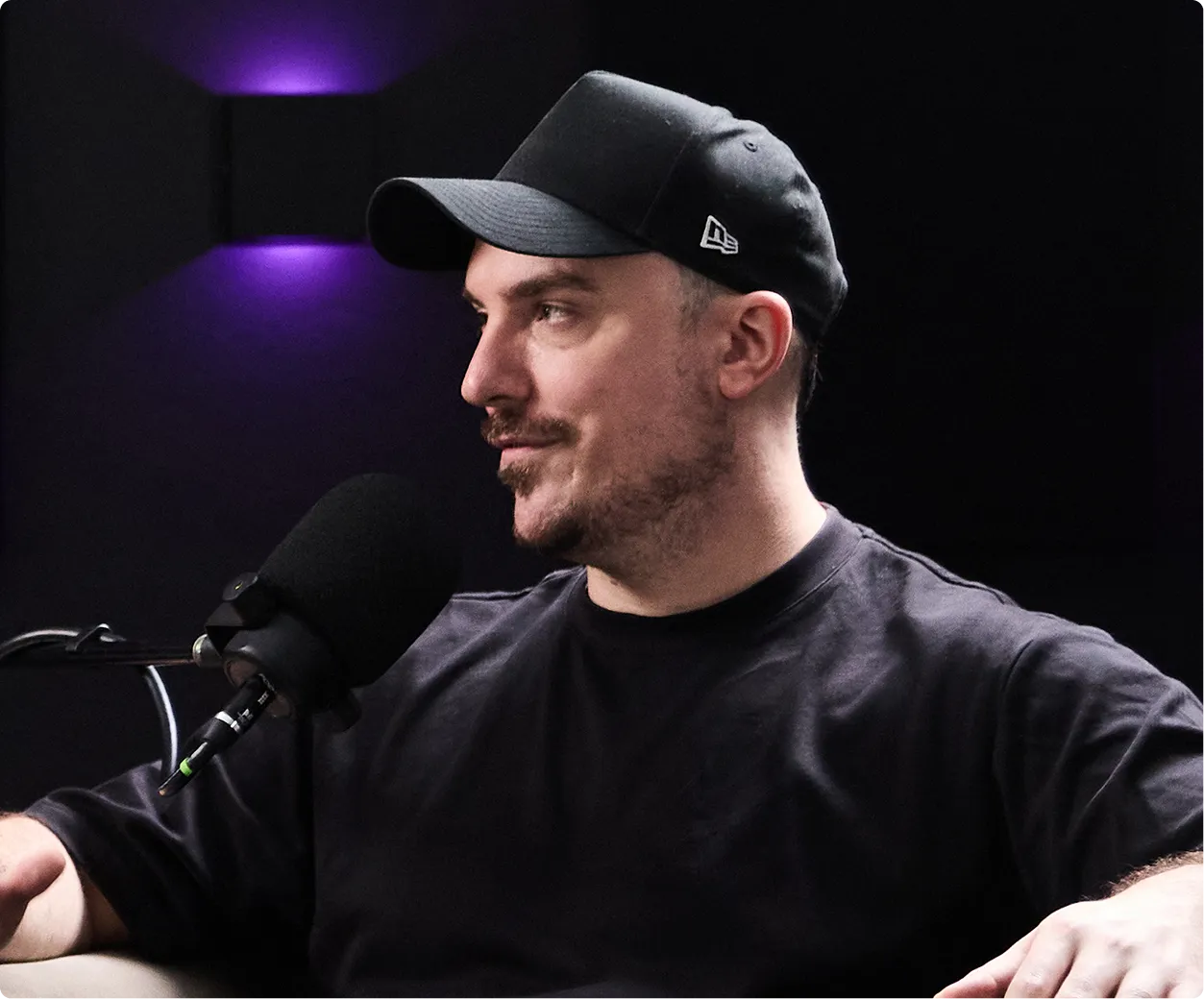
Dive into insights from industry leaders and experts.
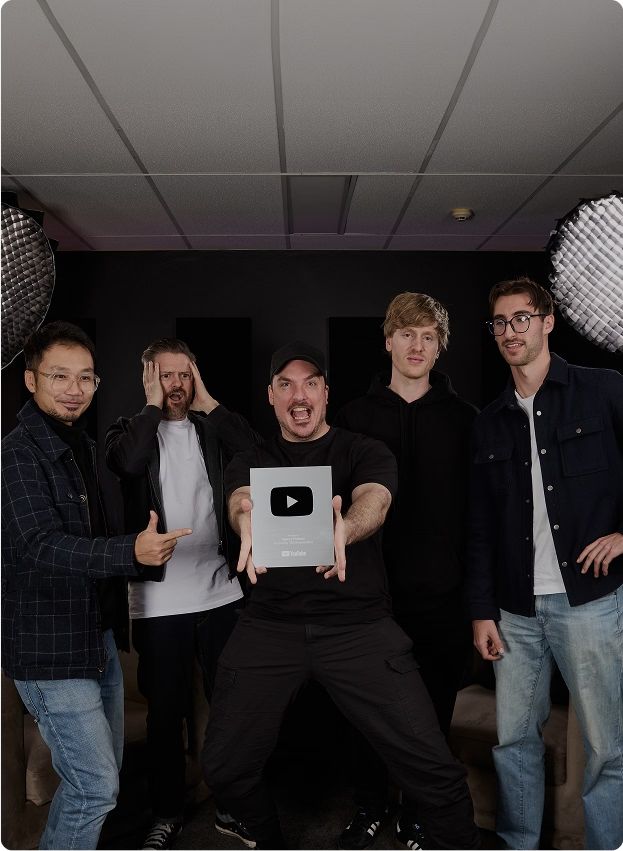
Stream now
Dive into expert advice and industry trends.