

TLDR
Summary
Spencer Frost is a filmmaker who turned a remote surf trip into a global success story. In this episode, he details the production of his award-winning documentary, which involved filming uncharted waves off the Russian coastline during the outbreak of the Russia-Ukraine conflict. Frost explains the logistics of high-stakes documentary filmmaking, from securing "humanitarian visas" and cold-DMing local guides on Instagram to managing a total financial and media blackout while in the field. Beyond the technical challenges of 80 terabytes of data and minus-30-degree temperatures, Frost emphasizes the philosophy of "chasing the uncharted"—arguing that true creative originality requires taking massive risks and documenting every moment, even when the intended "Hollywood ending" fails to materialize.
Highlights
- The Power of Cold Outreach: The entire project was initiated by cold-messaging locals in Kamchatka via Instagram to find surfers and helicopter pilots willing to assist.
- Extreme Logistics: The crew faced significant roadblocks, including frozen bank accounts and closed borders, eventually entering Russia on humanitarian visas intended for a sporting event.
- Filming Under Pressure: The team arrived in Russia the same day the invasion of Ukraine began, forcing them to navigate military escorts, fighter jets, and a national media blackout.
- Creative Resilience: Despite shooting on $50,000 Red cameras, Frost notes that some of the most impactful scenes were captured on iPhones and GoPros, proving that the story matters more than the gear.
- Financial Strategy: To maintain creative control, the filmmakers used a tiered sponsorship model to fund the trip and edit, ensuring they owned the film's profits once they broke even.
- The Reality of the "Edit": Post-production took eight months of "psychological grind," involving the compression of 100 hours of footage into a 90-minute narrative.
- Nature vs. Script: The film ends on a humbling note where nature "won," as the final big-budget helicopter trip failed to produce the perfect waves they had scripted, leading to a more authentic, "feel-good" conclusion centered on friendship.
- Future Ventures: Frost reveals he is currently pitching a new project that is "equally as cold and wild" but features more boat travel and less helicopter reliance.
Transcript
00:00:01
Spencer, you had a wild vision of creating a documentary about surfing uncharted waves off the coast of Russia. You risked everything for this vision. What were you really chasing out there? Oh, >> that's that is a good question. >> We kind of schemed the the perfect plan of how to make this as epic as we could and I reckon we probably captured 25% of what we had in mind. >> Holy crap. Just film everything. Film through the highs and film through the lows and film when you shouldn't be filming. We were
00:00:35
shooting on $50,000 Red cameras and then some of the most impactful scenes in the whole movie are shot on a phone or on a GoPro. [music] >> You plan this trip for 2 years and of all moments you've timed it right down to that particular event. >> We'll go down in history as like the day that Russia invaded Ukraine. It was the same day that we started our project. So, [music] it wasn't planned and it's so unfortunate that it happened, but still it was all about the adventure and
00:01:04
friendship and kind of swung [music] it to a bit more feelood. I felt the whole time we were compressing and compressing and compressing. Like, if I probably had it my way, it would have been like a 3 or 4 hour movie [music] cuz I didn't want to cut anything. >> Planning and preparation is so so key, but most of it's not going to go to plan and that's totally fine. And if you go back in time and kind of revisit [music] this, would would you have changed anything? >> Far out. Yeah, I think
00:01:36
>> this episode is brought to you by Wick Studio. >> Here at the agency podcast, we're building a community and we would love for you guys to be part of it. [music] So, we would love to hear from you. What are you enjoying the most? What would you like to see more of? And what do you think might be missing? Drop a comment. Make sure you subscribe. And now on with the show. So Spencer, you had a wild vision of creating a documentary about surfing uncharted waves off the coast of Russia and it was so remote that you had
00:02:08
to access it by helicopter from a frozen camp with a frozen bank account during a global conflict between Russia and Ukraine. You decided that you were going to risk it all to attempt to build this documentary. Because of this, you won over 30 awards around the globe, raised hundreds of thousands in sponsorship, and streamed on places like Netflix, Apple TV, and Amazon. You risked everything for this vision. What were you really chasing out there? >> That's that is a good question. Well,
00:02:38
what a loaded first question. What was I chasing out there? I think definitely from just a pretty basic perspective, just chasing waves. and chasing just chasing surf. We've we've all grown up, all the four boys that went on the trip, we've grown up together surfing and I don't know, it's every surfer's dream to find a wave that had never been surfed and never been found. And um yeah, but the core of it, we just wanted to go and go surfing. It's just a surf trip. But then I don't know if you want
00:03:08
to get a bit more philosophical or a bit more deep. I don't know. We're chasing chasing our passions, chasing chasing just pushing ourselves and seeing what we what we're capable of. like I don't know just four four guys from Sydney trying to do something bigger than anything anyone had ever done before like any bigger than anything that any of us had done before. Um but yeah, I think just trying to find a new wave, trying to find new experiences. Everything on that trip was a new
00:03:36
experiences for for us. Like growing up in Sydney, we'd barely gone to the snow and then that whole trip we're in the snow the whole time, going in flying in helicopters, seeing volcanoes, like all of these new experiences. So yeah, what we were chasing I think just yeah, experiences, waves, friendship, bit of everything. Great first question. And >> it's Dude, it's such a cinematic documentary. And when when you thought of the idea for this trip, like where did that come from? How did you come up
00:04:05
with the idea of let's go to Russia of all places and then let's try to get out to these remote places that people have never surfed? >> Yeah, so in 2019 we actually went on our first trip to make a kind of featurelength surf film. Uh we went to Iceland, Scotland and Ireland. Um which the film was called A Corner of the Earth. Uh and we basically made a surf trip there. And that was like no funding, no budgets, just three mates going on a surf trip trying to see what we could find. Uh we decided to go to
00:04:38
Iceland in January, which is middle of winter, 4 hours of daylight. Uh same kind of yeah, just wild raw coastline. We had northern lights, we had snow on the beach. Um yeah, basically everything you wouldn't think of when you thought of a surf trip. Um we made a film, A Corner of the Earth that I mentioned. it uh had a lot of international success. Toured all over bunch of film festivals. Um it got a big distribution deal. So yeah, basically off the back of that, we decided that was cool. We did that kind
00:05:11
of just on our own, no funding, no brands, no sponsors. How can we elevate that to make something bigger? Um, so basically, yeah, we just kind of put our heads together and said, "Where else on the planet can we go and surf and do a surf project and make a surf film where basically no one had done before? No one had been before." Um, we really wanted to try and be the pioneers of something new and try and just not repeat something that had been done before. So, yeah, a few different locations came up
00:05:40
like uh Arctic Norway was one of them, but a few people had done projects there in the past. Alaska was another one where people had surf there, but there's kind of more potential. And then yeah, we basically found some photos online that um Camchucka, Russia, this coastline on the east coast of Russia had had good surf. Um so yeah, basically went on this just deep dive of Google documentaries, YouTube, everything that we could find of Cam Chucker and the coastline. Uh we we saw some footage of people surfing there in
00:06:15
summer. Uh but there's basically no swells on that coastline in summer. Um but then once we kind of did a did a bit of research, we saw that there was these huge winter swells that were hitting that coastline uh and offshore winds. So winds coming off the mountains and making the ocean smooth. Uh we could see that from kind of weather charts and doing a bit of planning and uh and yeah, we just basically saw on paper that that coastline was going to have amazing waves all through winter. We actually
00:06:43
contacted a guy called Anton. He um he's since become a really good friend of ours, but we >> he was the pilot, right? >> He was the surfer. >> Oh, he was So Anton was a surfer. And then you also DM' the pilot. >> Yeah. A guy called Max. So first guy Yeah. Back when we were planning and researching, we were just watching every film that we could could have could find that was made in Cam Chucka. Uh there's a professional snowboarder called Travis Rice who made a film in Cam Chucka about
00:07:11
snowboarding. Uh and in his film, we saw like a one little scene of a glimpse of a wave in his snowboard project. >> Yeah. >> And that kind of sparked like a whole huge bunch of inspiration just kind of like, holy crap, there is waves there in winter. they're going to snowboard, but we saw like a kind of perfect 4 foot left-hander in the background of one of his shots. So that like yeah, that gave us so much hope that there actually is swell up there. Um, >> so you were thinking about this like
00:07:41
before you'd seen this and this had validated your idea like what what exactly happened. >> That was like that was part of the research. It was watch that film cuz it was filmed in camp. So, you had the idea. Then you were checking out this film of a snowboarder cuz you're like, "Let's try and suss out the area, what it's like, and then you just see like a glimpse of like there is a wave." >> We saw a glimpse and that was just like, "Holy crap, there's good waves up there
00:08:03
and down that coast." So, >> yeah, basically just I went and just um I wrote like an intro message and said, "My name is Spencer Frost. I'm a filmmaker." >> Anton on Instagram. >> This is just a generic message. >> Yeah. >> And I just said, "Yeah, my name is Spencer Frost. I'm a filmer from Australia. We would like to come to Cam Chucka to make a surf film. Is there anyone up there that can help us? Um, please get back to me. And I got a
00:08:28
Russian friend of mine to translate that. And I basically found just went on Instagram and messaged anybody that I could find that lived in Camchucker that had I don't know that had tagged Cam Chucker. Just kind of messaged everybody. And then one of the main people that got back to me was a guy called Anton uh >> who's in the film. Yeah, he's like the local surfer up there. He's kind of he's made a little surf camp. He's like such a classic character and he basically
00:08:57
said, "We have amazing waves. No one has come up here to do a surf project in winter. If you guys can get up here, I will be your kind of guide translator on the ground helper." Um, so yeah, having him on board was amazing from from like the surf element and like showing us where a few ways were. And then another guy who messaged me, his name was Max, and he had a like a heliboarding operation up there. Uh he had a snow lodge and he said, "If you guys can get up here, same thing. You can stay at my
00:09:28
lodge and I will help you with the helicopters to access the coastline and snowmobiles, guides, everything else." So >> this is crazy, man, cuz it's [laughter] this is like cold DMing some locals like, "Hey, I'm coming from Australia. How do we make this work?" But it seems like they were pretty accommodating and happy to help. >> It was nuts. Yeah, it really like when it kind of just snowballed and like we just we were getting wins every day. It was like, "Oh no, we can't get a visa."
00:09:53
And then someone was like, "Oh, no, no, you can get a visa. This is how you'll get it." And then then we got the helicopters. Then we got the lodge. Like it was all it was like the universe just saying like, "You guys really should do this trip." Because there was also a lot of times where we would run into roadblocks or stuff would get hard or it would just stuff would be too much money and we'd be like, "Oh, maybe we just have to pull the pin." But then we'd get
00:10:16
all these wins and it was Yeah, it really felt I'm not like too spiritual, but it like stuff like that. And on the trip as well, there was just moments where stuff would just weirdly go our way and keep pointing us in the right direction and yeah, felt like they wanted us to do this trip. >> Yeah, definitely. It definitely seems like there was moments in the film where you can tell you and the team were getting pretty emotional and pretty welled up around this whole experience cuz like there's a scene where you guys
00:10:40
are flying across these volcanoes towards a coastline. Uh, and it's it's quite moving because you're out in the middle of like a very foreign place and it seems like almost like you're on the edge of the world where there's no civilization around and it's just you guys and and nature in a pile of waves. Yeah. >> Um, it's pretty moving. I I think when you think about the grand scheme of, you know, film and what people have accomplished in in this space of surfing, it's this did feel like
00:11:09
invigorating and new. It was almost like, oh, there's hope that there's more opportunity for us to go out there and find new and cool things to do when it comes to searching for uncharted waves. Yeah. >> Awesome. Yeah. Thanks, dude. I'm glad you enjoyed it. [laughter] >> No, I enjoyed it, man. I I think I was just like glued to the screen. I was like, "This is crazy, man. You pulled together a pretty pretty remarkable trip." I want to talk a little bit about the tactics and the strategy behind this
00:11:29
because I think putting a trip like this together is quite different from the first documentary which you guys said which wasn't funded. Um going from like a zero budget surf film to one where you're raising hundreds of thousands of dollars to I guess you know hire and put fuel in helicopters and to get you know local support. What mental switch did you had to flip for yourself to get prepared for this type of trip versus the first one? >> Yeah, I think the mental switch was definitely
00:12:02
like how far can we push this and how big can we go? Um, for sure because we wanted to do such a bigger project and yeah, like you said, it was a lot more money and a lot more expensive and a lot more work, a lot more focus, a lot more time away from our partners and yeah, lots of different things. So, I think we just had to yeah, just be mentally prepared like this is going to be huge and it's going to be so good, but also pretty taxing on our on our lives. Um, but yeah, I think we just had to we just
00:12:32
shot for the moon. We were just like, let's just go as big as we can. Let's put together our director's treatment, which is like a pitch document. And we just started approaching brands and basically said, we have this absolutely radical idea. No one's done it. we don't actually know if we're going to get good waves, but we're going to go give it a try. And do you want to support us? And then basically some brands said no chance. Thanks. Thanks for coming. Uh >> why were they why were they saying no
00:13:00
chance? >> Just because of how well at the time we didn't really have much of a rep. Like I I would I I probably wouldn't have given me money looking back at it. Um we we had our first film but it was it's pretty minor compared to the second one. Uh we were just we were just asking for them to fund our dream basically. [laughter] Uh, and we were promising a lot. Like we were promising we were going to get waves and this awesome project, but yeah, it was I think yeah, a lot of brands did see the value in it and like
00:13:33
we're so thankful like we're so thankful that they did support the project. Um, because it wouldn't have been possible without everyone that helped. Um, but yeah, there was definitely a few meetings we had or a few brands that we caught up with and pitched it to and they just kind of just said, "No chance. I'm sorry. like we're not going to pay what all this money is for you guys to just go and fly around in helicopters and hope that there's ways. But I don't know. I think that's the part of doing
00:13:59
something new and exciting now. You have to have a bit of risk and you have to have a lot of risk I guess. Like if it was a sure thing and it was safe and yeah, we're definitely going to get waves and it's definitely going to be a success. Like I think everyone would probably be doing it. >> Yeah. >> Um so yeah, you got to got to take a punt, have some risks and just go for it. There's there's a moment where like you guys are essentially parking a >> not a small helicopter by the way. I
00:14:24
don't know what this thing is like an M18 or something like that. Ex like Soviet Union helicopters >> and you've got one of these guys parked on the beach and then you're sitting there looking out at the ocean. >> Um >> I I want to understand this because I think when you're putting something like this together, like you said, a director's treatment, what exactly is that? And how's that different from a pitch? Because I understand a pitch is kind of like this is what you're buying,
00:14:46
this is what you get. But a director's treatment is a little different. Do you mind just fully unpacking that and exactly what that is? >> Yeah. So, in kind of commercial world, documentary world, when you're trying to get funding and trying to convince brands about a project you put together, you call it a director's treatment. You'd probably call it a pitch document as well, but it's basically a one-stop shop with the idea, like the concept, who is pulling it off, and why you
00:15:13
should trust them about pulling it off. So, I would be selling myself and just saying, "I've worked for X, Y, and Z brands. I've traveled all over the world. Uh, you can trust me to pull off your project project or commercial or documentary." Uh then it's basically where you're going, like what you're doing, the plan, then it's usually a distribution strategy, where the film's going to go, uh theatrical tour, then it's going to be trying to sell to streamers, and then yeah, X, Y, and Zed
00:15:44
for the distribution. Uh and then, yeah, basic. It's basically just a bunch of reference images, a bunch of reference videos if you wanted to kind of sell it on that. And then to finish it off, you'd usually have a budget uh and how much it's going to cost. And then you would also have the way that we've done it is like a tiered system. So tier A is the lead sponsor and they would get logos on everything. They're kind of the presenting sponsor. They get all these custom assets. Uh tier B would be a
00:16:17
little bit less money for them to invest and they would get supporting sponsor still logos, bunch of photos, bunch of content. And then tier C is kind of the last tier which is like a bit less money. Uh and it's kind of just for them to be involved and yeah, not so not so big as tier A and tier C. So yeah, we like to give people the option. Uh, I think it's good to just say this is how much the whole project's going to cost, but if you want to be involved, you can put in 20% or five 5% 10%. Um, yeah,
00:16:48
it's basically just a one-stop shop for >> anyone who potentially wants to invest or support it can see every single detail about the project and then they can make a internal call with their team or whoever they need to if it's right for them. >> Yeah, exactly. And and what was the reaction or the feedback from the sponsors after you guys had come back and won all these awards and you know got this documentary out there and these streaming platforms like what was the what was the outcome? What happened
00:17:15
after that? >> Yeah, I think it was Yeah, pretty cool. I think that the sponsors were all so so pumped on what we did. Especially the sponsors that were ing and aing and they might have put in like 10 grand. It it sounds like a lot of money, but for the project, it wasn't too much money. But like they were so pumped on how big this project went and how cuz they were still involved and their logos were all over it and it went worldwide and had all this success. So yeah, they were they were so so excited. Even the tier A
00:17:49
sponsor, which is a a wet suit wet suit company called Project Blank, they um they it was a huge investment for them to put in the money. Uh we're we're so thankful that they um they jumped on board. It was it was massive for them. But I think they were like so so stoked with it and yeah, bunch of wets suits, bit bunch of street cred. They kind of got their name out all over the world. Um yeah, everyone's everyone's wrapped. Clients want it all. A slick looking website that can run their business and
00:18:17
scale with their [music] success. Wix Studio is built for that. Plan out your client's whole site in seconds with AI powered [music] site mapping and wireframing. Then, when everyone's on the same page, jump into the creative, starting off in Figma or in the Wix Studio editor with super precise layouting tools like grid, stack, and flexbox. [music] Go above and beyond the brief with no code animations, custom CSS, and built-in business solutions. and make your whole vision responsive in a click.
00:18:52
And there's zero need to break a sweat when clients grow fast. A dynamic CMS with global design settings and reusable assets [music] lets you turn one page into hundreds. Design smoother and deliver sooner. Go to wixstudio.com. >> What What doors did this open for you? So like having delivered this effectively for your sponsors, has that created leverage for you to do other projects? >> Yeah. I don't I I don't know if it's like directly or indirectly, but for sure all of our kind of profiles have
00:19:27
been boosted quite a lot just cuz the film to it all over the world and we went to so many different shows and then it had streaming deals and kind of a lot of people got to see our work and then see us and like our social platforms built a lot but then also I was getting approached a lot for work and then I'd be on on like a commercial in Sydney And I would just say, "Oh, how did you find me?" And they said, "Oh, we saw your film." So, there was there was a lot of that. And I've I've still had that like
00:19:57
recently where I've just been like, "Oh, how did you guys get in contact with me?" And they said, "Oh, we saw your film at the Ocean Film Festival a few years ago and we thought it was amazing, so we thought we'd get in contact." So yeah, I don't know if it's some of it's indirect, some of it's direct, but I think it's definitely helped all of our kind of professional profiles and now just our professional um yeah, just us doing working in the world. I do a lot of commercials and Guy
00:20:22
the photographer and co-director is um yeah, commercial photographer and he's just been crazy busy since the project. He's bouncing all over the world taking photos. I've been pretty busy myself. So yeah, it's going going good for us. Now, it wasn't always smooth sailing. Uh it wasn't always, I guess, um so glamorous at at this at the start of the film. There's quite a few challenges that come your way. Yeah. >> Take me into the some of the challenges or obstacles you faced early on. So, you
00:20:49
had this epic director's vision of like what we're going to build your >> like haphazardly kind of reaching out to random sponsors or was there a plan behind that? Like what were some of the challenges between you and getting sponsorship um funding it and and making this all possible? Yeah. So, yeah, there was a lot of challenges early on. I think obviously just not really having much info about the place, which was super challenging. Uh, the language barrier was massive as well. Not many English-
00:21:21
speakaking people in Camp Chucker. Uh, thankfully Anton and Max, who were our two main connections, spoke English, but a lot of other people didn't. Uh it was kind of the tail end of co which basically any tourists were totally shut out of Russia at the time. Uh we didn't know this and we kind of went in to apply for a tourist visa and they basically just said no tourists are allowed to come to Russia because it was still kind of recovering from co. So then we went to Hely Hansen which is
00:21:56
like an outerear company who was sponsoring us and they said they might be able to get us a business visa cuz they have um a division in Russia and we went down that road and tried to get a business visa and they basically just said no foreigners are allowed to come in under a business visa. Um so that was kind of a huge challenge cuz it was kind of two big nos back to back. Uh, and you need a visa to travel to a a foreign country, especially Russia, you want everything pretty sorted. Um, so we kind
00:22:28
of went back to Max and we just said, "Look, we can't get a visa. We probably can't do this project." And then he came back and said, "Hey, we've got this sporting event that's happening in Cam Chucker and we're gonna pretend that you guys are international media and you're gonna come and film." It's like a kind of ski touring event. And he's like, I can talk to the government, our friends at the government, and say that you guys are going to come as our guests and film
00:22:59
this ski touring event, and I'll be able to get you guys a humanitarian visa. And [laughter] um yeah, it was kind of we were like far out. It's not really the place you want to be like just try. Yeah. Doing dodgy [ __ ] basically. But we just we just kind of said, "Is this gnarly?" And he's like, "No, no, it's fine. As long as you have the visa, it's all good. Like, we'll sort it." And then we he basically went to his friends at the government. He said, "We've got
00:23:25
these Australian friends that are going to come and just experience Cam Chucker and document this sporting event." Which wasn't was kind of half true. We were going to come and experience Cam Chucker. And they basically gave him like a official Russian government invitation to the four of us. And it had our names and everything. And yeah, that was our little ticket in to do the project. >> So weird to think about that. Like you needed so many things to line up to make this trip possible.
00:23:51
>> So many. [laughter] Yeah. >> And then how did you go getting the uh the rest of the sponsors? Were you just kind of like cold calling and like cold outreaching to to surf brands? >> Yeah. So a lot of them were surf brands. Um the the two surfers who came on the trip were sponsored surfers. So uh Rusty and Misfit were their two kind of main sponsors. So, they were kind of no-brainers. They were definitely going to jump on and support um to make surfboards and to throw in a bit of
00:24:19
money. Uh Fishbowl, which is like a fast food like healthy fish chain um here, was they're actually friends of ours from when we grew up and they've just since become this massive they're they're kind of killing it and they just said, "We definitely want to sponsor this." So, they actually threw us a bunch of cash as well. Uh, and they all they wanted in return was to give a whole bunch of free fish bowls at the premiieres, which um it's kind of the dream sponsor. Uh, they they just said,
00:24:48
"Here's money to do the project and we want kind of control of all the premieres and all the screenings. We're just going to give free product to everyone." Which it was awesome. They were they're such good guys and yeah, hopefully we can um get on their program in the future. And then apart from that we had Red Digital Cinema and Canon which is two camera companies that gave us camera gear. Um Project Blank was the wets suit company. They we pitched the pro the um kind of tier A to them and
00:25:19
they it was a huge deal as I was saying for them but they they jumped on board and yeah they were basically the headline sponsor of the whole project. I think we had eight eight brands or so that all threw in various amounts of money and uh a few of them a few brands we approached said they couldn't support it uh for various different reasons. Um and then but yeah we we I think we had about 80% of the project funded and then myself and Luke Neller who was the producer uh funded the rest. >> Yeah. Okay.
00:25:50
>> Just out of pocket. And it sounds like you guys were, you know, really trying to build the best case scenario, but you weren't always sure of like, is the weather going to turn out good? Are we going to fully be able to pull this off? And you're trusting these guys you met on Instagram. Yeah. [laughter] >> Which is which is my favorite part of the film. Um, >> now you called your pitch deck like kind of a worldbuing exercise. So to pull all of this together, to get the sponsors,
00:26:11
to get the vision out there, like what exactly did you need to do to build the world? And then how much of this vision did you have planned out before you actually set off on the trip? >> [sighs] >> Yeah, for the vision we we had so many dream shots and dream scenarios and dream scripts and stuff that we were like, "This is best case scenario. These are the best shots you could possibly get on a surf trip." Just running to the helicopter, top of volcanoes. We we kind of schemed the the
00:26:46
perfect plan of how to make this as epic as we could. And I reckon we probably captured 25% of [laughter] what we had in mind. Yeah. Um I think just these projects so much [ __ ] doesn't go your way and then sometimes stuff goes your way and then you kind of just get smacked back to reality. So, I think it's great to have like a wish list and a plan and we had mood boards and shot lists and um yeah, bunch of different uh interviews that we wanted to capture and yeah, I think just the way that these
00:27:16
trips go, we just we couldn't get it all and we tried so hard and kept hustling, but yeah, there's so many so much stuff that we unfortunately had to push to the side. But yeah, I think there was so much planning and preparation. We just got as organized as we could like from a creative perspective and from just like getting our camera gear sorted, getting wets suits, surfboards, everything else like that. Um, I think you could just try as hard as you can to have it all dialed, but yeah, stuff's definitely not
00:27:43
going to go your way. >> What were some of the biggest challenges that you had putting the film together? >> I think access definitely to that coastline. Um, I think we touched on it earlier, but there's no roads in winter. Everything's covered in like meters of snow. So, um, helicopter access or snowmobile access are kind of the two only ways to And you can't always fly either cuz >> Yeah. And the flying flying was like really really expensive. So, it was about $10,000
00:28:12
for a flight to get to the beach. So, it was we had to really make sure we knew the waves are going to be good. We're absolutely blowing the budget. Make sure when the helicopter picks us up, we're going to have surfboards, camera gear, tents, yeah, cooking gear, everything to last us like a week maybe, and it's going to drop us to the beach and leave us there for the week and we'd kind of fend for ourselves. We had to make sure that the swell and the weather and the wind is going to be good because that
00:28:45
was like a huge chunk of the budget just to get to the surf on a surf trip. >> Yeah. So yeah, we um yeah, we definitely did a trip or maybe two that we kind of [ __ ] up and didn't really get any good waves and just Yeah, there was some some tough tough times. It sound It's Yeah, it sound like we're flying in helicopters and it was awesome, but also like when you get there and the waves are flat or it's windy or there's no waves where you thought there was waves. I think yeah, we had some um some tough
00:29:17
conversations between between us and also our producer back at home was kind of managing the budget and we had to keep calling him be like we just kind of spent all the money and didn't get anything. So yeah, access was tough but it kind of made for the story. I think it made for the the journey and the mission and I don't know helicopters are pretty cool. I was pretty [laughter] fun flying in those things. like they had these huge ex-military um they're called MI8 and I think they probably fit 20 people in them. Like at
00:29:45
one point we had like a boat and a snowmobile and yeah, this is huge. They have flames when they start up come out of them. Like it's like Mad Max helicopter spec. Um so yeah, pretty cool to use them. But yeah, definitely access accessing the coastline and just how harsh and cold and miserable uh it was up there in in winter. um yeah to filming and operating and surfing and making a project in environments that cold and gnarly is um yeah it's definitely it probably looks easier on on camera but yeah it's it's pretty hard
00:30:20
when we were actually up there doing it. >> Yeah. And one of I think one of the craziest things that happened was just on the trip there as you guys were in Abu Dhabi. I think you were >> Abu Dhabi. Yeah. And and then as you're on your way or getting ready to go to Moscow, um uh Russia had just invaded Ukraine at this very moment, like 5 hours before you landed, I think, was when it happened. >> What was going through your head? You're sitting at Abu Dhabi. You've raised
00:30:45
$200,000 in sponsors. You've put your own money into this project. You've planned this trip for two years. >> Yeah. >> And of all moments, you've timed it right down to that particular event. What exactly was going through your head when you were sitting at the airport? >> Far out. [sighs and gasps] Yeah. I think what I was saying before, there was so many moments of like the universe being like, you need to do this project and we were getting wins and we were getting
00:31:12
visas and we were getting sponsors and money and it was everything was kind of going our way. And that was the one moment where it was just like stop like really stop and think like so basically everything was happening. We got on the flight in Sydney. We were flying to Abu Dhabi and while we were we were flying on that flight was the same day that Russia invaded Ukraine. Uh and we were flying into Russia to start our project. Uh so totally just unfortunate timing and yeah couldn't have foreseen it. And
00:31:46
it was just crazy weird coincidence. Um, but yeah, basically landed in Abu Dhabi. We went to like a little food court. I think it was like 2:00 in the morning potentially. I could be wrong there, but we went to a food court and all the kind of screens in the food court just kind of changed to CNN and it was Russia invaded Ukraine. Um, it was it was huge. We were kind of getting calls from all of our family cuz they'd obviously seen the news in Australia. It was it was a massive event. It was like a huge
00:32:15
worldwide event and we were kind of getting calls but the internet in the airport was really bad and we couldn't like answer the calls. We could only text so it was like bit of back and forth and I don't know my my girlfriend and my my spoke to my parents my girlfriend they kind of just said oh just do whatever do whatever you think like just kind of go for it. But um but Fraser one of the surfers that came with us his parents were just like do not [ __ ] get on that flight. like you are
00:32:46
you just do not even think about it, do not do it. Uh so that was like it was super tough cuz we had a 2-hour layover uh and basically yeah, we had to decide if we were going to go or just scrap it and come back. And we spoke to Luke who was um we spoke to Luke who was the producer back home and he kind of just said, "No pressure, just if you want to scrap it, it's all good. We can just we'll make it work. We'll give the money back. We'll we might try and do the project another
00:33:18
time." Um but yeah, we kind of just put our heads together and we were just like, what a what's the worst that can happen? Like we get sent home or maybe get locked up, I don't know. or just get stuck in a war zone if it really does kind of pop off. But yeah, we just kind of we were just kind of thinking let's Yeah, we kind of convinced Fraser, not convinced him, he kind of convinced himself he he wants to try and then we all just said, "Hey, let's just get on the plane from Abu Dhabi to Moscow and
00:33:47
just like take it one step at a time." like once we once we're there, I think we'll be okay, but we just kind of got to get there and just reassess the situation. So, yeah, basically just said, "Let's let's do it. Let's go get on the plane." And yeah, got on the plane and yeah, then another kind of stitch up begun. I don't know what's more concerning if it's your uh your girlfriend and and your parents saying don't worry about it [laughter] >> or if it's like
00:34:17
>> or if it's like uh you know we could we could be in a potentially life-threatening situation. What was going through your head? Was there any moment of like wow maybe we shouldn't do this. Did you have any any doubt? I didn't I I didn't like when we were in the airport, we were just like let's let's try and then we went and got on the plane and basically the plane just wasn't moving and then it didn't move for 3 hours on the tarmac. just stayed stayed put and we were kind of talking
00:34:46
to the flight attendants and they were kind of just saying like hey we don't have clearance to fly because we got to fly over kind of over Ukraine or over that area and no flights are allowed to fly at the moment and we're all kind of yeah >> literally like meant to fly over >> over into Moscow. So they basically were like, "We can we're looking at alternate routes, but they they were told that like planes had been like military planes had been shot down pretty recently, like in that flight zone. So
00:35:16
no flights were allowed anywhere near there." So yeah, we were on the plane for 2 or 3 hours and they gave people the opportunity to get off the plane. They said like if you want to get off and people people were getting off. >> Um >> people were getting off the plane. >> People got off the plane. Yeah. How many people? >> We actually only saw probably a handful, but there was people in business class. I remember definitely got up and got off the plane and then Yeah, a handful of
00:35:41
people definitely left. Got off cuz >> man, talk about pressure cuz you're you're sitting at the food court and you're like, do we do it? >> Yeah. get on the flight, >> we're all hyped up like let's do it and like we're in this together and then >> we got stopped again and then >> they basically said hey we've got like a we found a new kind of route that's going to go kind of over the UAE I guess or around that's yeah where we were
00:36:04
basically and around the up um into Moscow. Uh, and yeah, we just kind of were like, let's just lock in. But yeah, it was it was hours. It was probably I think it was 4 hours from memory. Like we were just sitting on the tarmac and all the little screens on the plane, you know, you get like the little news update. It was every single news update was Russia has invaded, there's a war, like it was it was sensor sensory overload everything. It was just like what do you what do you do? But yeah, we
00:36:34
basically committed and then we were were going and yeah, it was a real kind of it was almost like an eerie flight. Like we went and spoke to the flight attendants mid-flight and they were saying like they were they were really scared like they were they flown flown for 20 years and they were saying they were actually really scared being on that that flight. And then um I didn't personally see this but we were told that we were escorted into Moscow by two fighter jets >> which pretty pretty radical. I
00:37:01
[laughter] thought that was that was really cool. But yeah, real scary as well. Uh and then yeah, we basically just touched down. I remember just touching down in Moscow and just be like, let's let's go. What else what else can be thrown at us this day and then yeah, plenty more was thrown at us, but that was that was that was the bulk of getting there. >> Yeah. The eerie thing for me is like you guys set out on this trip. It's very human. It's very much about like chasing
00:37:28
the creative spirit and like doing something good and sharing it with the world and it just seems like the film potentially took a different direction because of the weight of I guess what was happening around you? >> Yeah. >> Yeah, for sure. >> Did you feel did you feel in any way that that had dissuaded from your original vision or had it amplified it in a strange in a strange way? Yeah, in a strange way. Like I would never have wished it to happen or like because it's it's so ser it's still going on like
00:37:55
years later. Like it's there's and plenty of people have died and it's it's it's horrible what's what's happening. But yeah, it's it did definitely weirdly amplify the project to something bigger than a surf film. >> I think it gave it contrast because if you think about it creatively, it was, you know, light and dark. It was it was this weird thing where you guys are pursuing this passion, this lifelong dream of doing something great together with some friends.
00:38:20
>> Yeah. >> Um and then yeah, if you just compare it with what was happening, it it does give it like this weird beautiful contrast. >> Yeah. Yeah. And I think like at the end of the day, >> we would we just had no affiliation with anything. We just wanted to go surf. We're just a bunch of surfers from Sydney. And I think we just wanted to show like we we met Anton and we met like all our friends up there and they just had a love and a passion for surfing and they just like were so happy
00:38:46
to share everything that they had and nature and they just basically yeah opened their doors to us and gave the project everything that we needed. >> And and the weird thing is you can see this in the film as well where you guys you know go to a local ATM you you'd expect to be able to put your card in and be able to immediately get a cash withdrawal. So, like what exactly happened? Cuz I noticed that they'd frozen your bank account or you didn't have access to money. >> Yeah. Yeah. This is actually a pretty
00:39:14
big story in itself, but you're good at going down these little tangents. [laughter] >> Thanks, man. But yeah, take take me on the full journey, man. >> I'm reliving this as we go, so it's cool. Um so so yeah what the the war started and things were getting progressively worse like flights were kind of getting cancelled all over the world and like coming into Russia and then sanctions were coming in like lots of businesses were getting sanctioned like heaps of stuff was happening like the world was
00:39:42
turning against Russia. Uh one of the things that happened is they basically shut down any money. Uh so Visas, bank accounts, PayPal, even like cryptocurrencies, like everything got shut out of Russia. Uh and us being in Russia, we had no access to anything. Even like Facebook, Instagram, WhatsApp, everything was >> Wait, you couldn't? It was like a total media blackout. >> Total media blackout. And >> you couldn't go on to social media. >> Total media blackout and total financial
00:40:12
blackout for the whole country. So we could with a VPN. Pretty simple little way around, but pretty crazy that they blocked their whole country from social media probably to see what was going on. >> Crazy to think about like imagine waking up, you can't access >> anything, >> anything, >> any money or any contact or any socials. It was pretty nuts. Yeah. All in like one day. >> Was that affecting the locals? >> Not too much because they could still get their money. like your Russian bank
00:40:44
accounts were fine. Yeah. But it was >> any Mastercard visa, any >> Yeah. Yeah. Any international transfers or international withdrawals, it was all shut off. Um, which was pretty nuts for us. Like the social media thing, you can survive without social media, but not being able to get money in a foreign country is pretty scary. Um, yeah, we had obviously Max and Anton, so we they would always have our backs. like we weren't going to go hungry, but it was still like, "Wow, like we need money to
00:41:12
do this project." And we none of us being like the four surfers we are, we brought like $100 between us. Like we [laughter] we didn't bring like much cash. Like we just were like, "Oh, we'll get cash out when we're there." Like we didn't really think about bringing heaps of money. So yeah, we were kind of faced with a bit of a it was a tough tough question because nobody knew how to get us money and like we were asking everybody everybody how do we how do we get money into Russia
00:41:40
and there was basically they they were really good at making sure that no money was going in or out. So, I actually came up with this kind of genius idea that one of our mates at the time was living in Bali. Um, and he had a bunch of Russian friends and basically what did I do? So, I said to my mate, "Hey, we can't get any money, but if I transfer you $10,000, can you go to an ATM and withdraw $10,000 in Indonesian rupia?" And then we actually ended up getting one of Anton's Russian mates uh who was living
00:42:19
in Bali and said, "Can you go meet our mate and he's going to give you $10,000 cash in Indonesian Rupia?" So he went and met up with So our two mates went and met up in Bali and he basically got the money and then put it into his bank account and he had a Russian bank account which he could do into Bali. So he had he got $10,000 into his Russian bank account. He transferred it to Anton and then Anton got came and got our $10,000 out in Cam Chucker. >> That's crazy. >> So we pretty much just bounced around
00:42:52
the world and got the money and then that >> big cash drop in Bali. >> Big cash drop especially repair. That's like 20 billion. It's like >> it's like a briefcase of money. >> Yeah. But that was that was like the only way that we thought of doing it and it worked out like we Yeah. I transferred to him, he transferred to the got cash, then he handed over the cash, he transferred to Anton. Anton got the cash for us. >> Were you nervous at all? Like these complete strangers are doing a cash drop
00:43:16
in Bali for you guys? >> We had no chance, no choice. It was basically do that or stop all kind of all activities and the project. So yeah, we just kind of >> dude, how did you even like figure this out? like were you chatting to Anton and then chatting to your friend and going hey like >> I think someone because it was a big it was a big deal for any especially any um Russian international travelers they were really stuffed cuz they couldn't access a lot of their money from inside
00:43:49
Russia and then there was just a lot of there was a lot of talk about how how to move money around um and we were just yeah we just kind of were chatting and we figured that was the easiest way just to just to bounce the money around. And um yeah, Barley was the little safe haven in the middle. >> Barley, man. [snorts] And shout out to the guy who did the the drop for you guys. >> Yeah, thankfully he didn't just run. [laughter] >> It's a lot of money. Um and then talk me
00:44:17
through like I guess like what was the um what was the logistics and the planning like for you know trying to figure out like the helicopter and where to land it and how to like like how do you how do you even plan for something like that? cuz it's not like you'd done that before. >> Yeah. So, we thankfully had Max who owned the heliboarding lodge and had that kind of skiing operation up there and he is just like a logistical weapon. like he's like military spec, how good he is at organizing everything from like
00:44:50
how much food to bring on a day's surf mission to then where the helicopter can fly to, how much weight we can put in the helicopter. Um, so yeah, having him on board was incredible cuz we would come up with these like radical ideas. We just be like, "All right, we want to fly to the We'd like look at a map and be like, "We want to fly to this bay on next Tuesday when the swell and the wind is going to be good." And he would just get on the phone to the pilots and be like, "Have a helicopter here. We'll
00:45:20
load it up. Um, we'll fly there, drop them off. We need Yeah. boat, snowmobile, camping gear, everything in the helicopter." Uh, and he just made [ __ ] happen. No matter what we asked of him, he just basically made it all happen for us. >> Yeah. I would have just felt like Patrick sees out of Point Break at that moment. [laughter] Like I'm just calling in a chopper when I want it. >> No, he was he he was incredible. He he really like there's no way that any of us could have done what he did and like
00:45:46
we would just throw the most radical ideas at him and there was nothing that was ever too hard. He would just have a little think and he'd just be like, "Leave it with me." And he would just make make everything happen. Like yeah, the whole project was thanks to him basically. all the logistics, all the planning. He gave us guides that came with us. Like sometimes we I think one one of the days we did like a a trip to the beach past these volcanoes in the movie and we're on these snowmobiles and
00:46:13
far out if we didn't have professional mountaineer guides for sure. I reckon we all would have died. >> We couldn't even see like 12 ft cuz I remember in the film like >> you're Yeah. You're flying over these volcanoes and it looks like you're in a set of Jurassic Park or something >> and then you're in this lodge. It's freezing. snowed under and you're basically traversing with what looks like a blizzard and you can't even see >> Yeah.
00:46:36
>> 12 feet in front of you guys. >> Yeah. And then the day before was sunny and there was like vertical 30 40 m drops like as we were driving. So when then the next day when it was a blizzard and you're driving snowmobiles, you're just thinking we could just like fall off a cliff here. Like it was Yeah. But thankfully those guys like Fraser had never seen snow before this trip. And then we're driving these huge snowmobiles through like pretty treacherous Yeah. freezing cold
00:47:06
conditions. There's so many things on that trip that we never never would have like we never experienced before and we might not experience again. But yeah, it was so cool to to um to see it. And then yeah, none of us got got too hurt or >> Yeah. >> didn't die. And there's this really majestic scene where like the camera is kind of panning across the top of the sand. It looks like it's a really low shot looking up and there's like a sunrise and then there's just giant
00:47:31
sheets of ice. You guys are just like weaving between them in your uh wets suits and heading out heading out into hitting up some waves. Yeah. >> Like it >> the film is super cinematic, dude. Like I got to give it to you. Like what you've captured in that footage is exceptional. Like the whole time I was watching I was getting goosebumps. >> Oh, thanks mate. appreciate it. >> When you were thinking about like preparing for a film like that, like how much equipment did you have? What was
00:47:55
the preparation behind the logistics and you know the SD cards and the storage? Like you're in these like harsh conditions? Like how do you make sure you're not going to lose footage? How do you make sure that you're prepared for all those shots? >> Yeah. Yeah. So for Yeah. For gear and tech and everything else like that, we had had to be pretty prepared. just definitely going somewhere that remote. You're definitely not going to be able to buy hard drives or backup camera gear
00:48:21
or even SD cards in Camchucker. It's pretty wild and remote place. So, everything that we need for the project and the trip we definitely had to had to um bring with us. Um I think clothing and like outerwear was a pretty big one as well. Like it's some days were so freezing like minus 20 maybe minus 30 kind of thing like dangerously cold. So, we needed world class outerear and snow gear and ski gear. Um, Hely Hansen was one of the sponsors for the for the trip. So, they they just decked us out
00:48:52
in the most like the best kind of outdoor gear you could possibly imagine. Um, and yeah, probably saved saved our life almost. Like it was there was some times where if we didn't have all the gear that we had, it was would have been very dangerous. Um, so yeah, out of out of gear and then wets suits. We had custommade uh six mill wets suits from Project Blank, the the headline sponsor. Um, they were like super thick, just yeah, epic wets suits for the cold water. We definitely needed them. We
00:49:22
were testing them in ice baths and then if stuff wasn't too right, we would be able to send them back and they'd send them back and get we'd get like samples and then we'd try them out and we'd be like, "Oh, the the seams are a bit not so right." And then they'd go back to their warehouse and they'd remake them and um yeah, we did a few little little tests of the wet suits and testing them in like in little ice bus to make sure that they they held up in the cold. Uh
00:49:47
and then camera gear, just every bit of camera gear that we need. Uh I had the red cameras, uh lenses, three, four drones, underwater housings, gimbals, tripods. I just kind of had a bit of a list in my head of every every shot that I wanted to get and the camera gear that I needed to get those specific shots. Um, and yeah, I think we brought over like 150 kilos of camera gear. But yeah, everything served a purpose. And yeah, I was I'm pretty particular with not bringing too much, but also bringing
00:50:18
absolutely everything that I need and not compromising. So yeah, that's what I did. And I know you said you didn't have a lot of equipment, but you had hundreds of kilos of professional [laughter] equipment. Uh did you ever feel like you had the opportunity or the potential to have like conflict with the local authorities with trying to bring so much technology into the country? >> Yeah, it was definitely a big fear especially because we were coming in at a time where Russia really didn't want
00:50:48
anything documented inside Russia. uh cancelling social media like the censorship. There was just a lot of it was a very sensitive time especially for media coming into Russia and we were coming in with like all these cameras and drones and yeah definitely kind of didn't look great. Um, we had a thing called a carne which is like for more for immigration and customs, but it basically says that we are bringing all this gear legally into Russia. We're not going to sell it. Uh, and then you get
00:51:24
it signed and stamped by like official authority and then when you come back to leave, you have to go back and get it kind of signed out and they need to check over everything to make sure you didn't offload any gear. >> Okay. So, it's not like a a traditional airport where you're just loading baggage and it gets scanned. >> You're talking about people actually going through each item and checking it. >> Yeah. Which is actually like it was scary at the time, but it was actually a
00:51:50
lot better just giving them everything and just saying yeah, just kind of nothing hidden and just saying this is what we're doing. And they kind of asked what we were filming and we said we're going to Cam Chaka. And a lot of the time they're like ah Cam Chaka. Like cuz it's so far away. It's just this distant land that they all had never really been to, but they all know about. Um, so yeah, I think whenever I travel to a lot of different parts of the world, I do bring the same form. It's a it's called
00:52:16
a carne, and it basically just it's a bit of a get out of jail free card with bringing heaps of camera gear into a country cuz most of the time they want money or they want to know like what you're filming and why you're doing it. But if you have that document, uh, Australian government signs it, Russian government signs it, then when you leave, Russian government signs it out, and then when you land back in Australia, Australian government signs it out. It's basically just like how you
00:52:43
travel around the world with lots of camera gear. So yeah, that was super helpful. Um, but yeah, it didn't really uh, yeah, it wasn't full foolproof kind of. to just basically let us get the gear into the country. And then once we were there, we kind of we just had to tread lightly. We just what I was saying when we were kind of cruising around the city or anywhere too public, we definitely didn't have cameras out and we weren't filming each other being Laracans or having a laugh. We'd just be
00:53:10
kind of I don't know, keep a low profile, keep our heads down, just just do our thing. And then once we were out on the coastline or in the mountains, we would run wild and film whatever we want. Do you think all these events had an impact on the creative direction of what you did with the film? [sighs] >> I think for sure. Like yeah, we never planned for any of this. Like I was telling you, we we planned and prepared for so much stuff. Like we were we were like scheming and storyboarding and prepping everything,
00:53:42
but we never planned for getting stuck in airports and getting detained and getting stuck on flights. like so it all just kind of came as as it goes basically. >> Yeah. >> Um >> but yeah, I think they just they added to the story. A lot of the stuff I didn't like I didn't I personally didn't really want to put a lot of the stuff in to be honest at the start. Uh and then I was working with our editor. His name's Lucas Vasquez. He's incredible doco editor and he kind of was just like this
00:54:11
is this is the story. He's like you can just go straight to Cam Chuck and go surfing. But he's like this, you could got to tell the journey and tell the story. And like the more he kind of built it built it out and he edited the scenes together, I was like, "Oh, this is actually like really cool." Like recount of everything that happened. And also it's kind of like it's so timestamped for that day. Like that day is pretty we'll go down in history as like the day that Russia invaded Ukraine
00:54:36
and it was the same day that we started our project. So yeah, I think it has such a powerful place in the film. uh what it wasn't planned and it's so unfortunate that it happened but yeah we just decided to document every step and it made its way into the movie. >> How did this entire experience shape the way uh you see yourself as a documentarian? Yeah, I think we just Yeah, I think back back to what I was saying before, just just film everything and like film through the highs and film
00:55:09
through the lows and film when you shouldn't be filming and yeah, just document absolutely everything cuz that was the kind of that's the doco element of this film. Like there's so many pretty pictures and like cinematic moments and that's not so much like the doco world. Well, the Doco world, like half of like the Doco stuff is shot on on an iPhone and a GoPro and we had a little Canon 5D. Like we were shooting on $50,000 Red cameras and then some of the most impactful scenes in the whole
00:55:37
movie are shot on a phone or on a GoPro. So, I don't know. I think it was just film everything. It doesn't matter what you're filming on, just like make sure you get the content and like yeah, document it properly. Um, yeah. Something that I definitely learned a lot of on this trip is just having cameras everywhere. I gave all the boys GoPros, like even the surfers, just to said, "Film whatever you think's cool." Um, yeah, everyone helped out, everyone pitched in, and um, yeah, it was a good
00:56:08
way to do it. >> And looking back at this whole experience, like what did this experience teach you about your limits and the limits of the people around you? Yeah, we've definitely pushed them pushed them further than we probably all thought for sure. Yeah, we all um we all did heaps of stuff on that on this trip that pushed our limits like I don't know physically for sure. There was some days where we were working really hard. Uh getting freezing cold. The boys were surfing gnarly waves in the water. We
00:56:38
were swimming with cameras. Um, a lot of the ski touring and like the hiking in the snow was actually like such a mission with camera gear. Um, yeah, mentally pushing ourselves, just having all the [ __ ] going on, uh, all the sanctions, not getting money, people at home telling us to come home, like that was definitely pretty massive mental toll on everyone. Uh, and just kind of how just so much stuff going on. And also trying to focus on making the film while everything was going on in the background. is kind of mental uh
00:57:10
mentally pushing ourselves. Um yeah. >> And I guess uh you've said you've always wanted to do something that people haven't seen before. So if you're focused on originality, why is that component so important to you? >> Yeah, I think I don't know. No one loves a repeat and I think you just want to kind of Yeah, you want to try to do something new and something like exciting and um yeah, you want to I don't know in this day and age everyone's seen everything. It's so hard
00:57:46
to see something unique. Even when you're scrolling social media, you're so desensitized to something that probably is pretty epic. You're like, "Ah, I've seen that. Like, that's pretty cool." Like, I just saw a video today of someone skiing down Mount Everest, and I was kind of like, "Oh, it's pretty sick. pretty cool. And I like really sat with it and thought about it. I was like, that is the most radical thing. Like imagine being at the top of the world
00:58:10
and having no oxygen and skiing down. But I think I think you've just I just saw it on my phone and I was like, "Oh, cool." Like it was Yeah, it's hard to like hard to do something that kind of blows people away and something that kind of stops people scrolling almost like Yeah. Everything's so diluted now. So I think you want to do something original. you want to do something unique, something that people haven't seen, something people haven't done before. Um, yeah, that's kind of what
00:58:35
we're what we're chasing. And then I think the core of like surfing you to be like a pioneer and find a new wave and to surf a new wave that's never been surfed. I think that's that's pretty awesome because there's thousands and thousands of waves and everyone's discovered everything and it's really really hard to find waves in the world now that haven't been kind of surfed. Uh, so it was pretty epic to go on that trip and find some waves that no one had ever found. And that's kind of we we're
00:59:04
kind of the the weird pioneers of of Cam Chucka. >> And if you could go back in time and kind of revisit this, would would you have changed anything? Saying that you only were able to get 25% of what you imagined. What What do you wish you could go back and change? >> Not too much. Looking back, I would the last surf trip of the film, we went and like went and uh camped on the beach and we surfed the surf this left-hander wave that we found that was like we were kind of the pioneers and it was like a really
00:59:38
good wave, but we didn't really get amazing waves there and then we obviously in the film we sleep, there's a blizzard and we wake up in the morning and it's kind of a bit of a ride-off. I would have loved if the universe gave us pumping amazing waves on that last day >> because it's right at the end of the film. >> There's the end and we kind of like didn't nail it. Like it it's it it is an ending to the film where we're like we didn't score and we didn't we didn't s
01:00:06
like the whole project was a success but the end of the film we actually got kind of like humbled and like we didn't succeed and it wasn't like a yeah we didn't win. basically nature won and we didn't get good waves and we spent so much money making that last trip happen and like basically gave it we gave it everything and we convinced we convinced our producer to free up more money so we could do one more helicopter trip and it was like it was going to be the fairy tale ending like it was like we're
01:00:32
putting everything onto this and then it just didn't happen and [laughter] it was like I was like I remember flying home I remember being in the helicopter being like [ __ ] like [laughter] that was heavy like We like gave it everything, all our energy. We It was the last harrah. It was going to be like the fairy tale Hollywood ending to the film. Like we get there, pumping waves, the guys getting stand up barrels in Russia, just this crazy scene and we just it just didn't happen. But I think like and we
01:01:04
just kind of I remember when we were in the edit, I was like, "How the [ __ ] are we going to finish this?" Because we kind of just like lost and we like kind of failed in it like weirdly. And then we just we just swung it to like it was just the way the way that it was meant to be. And Nature One still it was all about the the adventure and friendship and kind of swung it to a bit more feel good. And it was it was never like was about surfing but it was never really about like just surfing and yeah I think
01:01:33
it was a good way to do it but still stings. That's one that I'm like out. That was like that was when I was like come on universe like we've come this far >> get us amazing waves and it just didn't happen. Yeah. >> Yeah. >> Yeah. It's it's it's a total bummer, but you can you can tell that you guys were still in this state of like, wow, like we're just so grateful to be here and have had that experience together as as a group of friends is is pretty
01:01:57
endearing. Yeah. >> Uh and you did, I think, in many ways, succeed, man. You got tons of awards um and and tons of attention globally. But before we go into that, I want to understand the editing process because this is something that isn't an easy thing by any measure. You got 80 terabytes of data. >> Yeah. >> How do you give someone context if they've never edited video? Like how much data that really is. >> Oh, far out. Heaps. So much. [laughter] >> That's a lot of data.
01:02:29
>> Yeah. Hours and hours and hours and hours. It took me it took me a month just to get through just to brush through all the clips. >> And that's not watching end to end. >> That's watching everything end to end. >> So you watch everything end to end for an entire month. >> I watch everything to make like first round selects. So basically how I would edit or how you would edit a Docker, you'd have basically put everything on a timeline. So, first off, you make things
01:02:56
called proxies, which is like low res copies of all the clips, so your computer can handle 80 terabytes of footage to play. >> Okay? >> So, we we basically make like a for example, a 4 GB clip becomes like a 40meg clip, >> right? So, you're just watching low res >> low res >> of the entire timeline. >> Entire timeline >> like front end >> would have been 100 hours more. There was so much and it took me a month just to get through just the selects just to watch it and be like
01:03:28
that's like awesome. That's like a really good piece of camera. That's like a good sound bite. And then I I went through all of that. That was kind of my first job. And then then I went to our editor Lucas Vasquez and he's such a gun. And he basically took over from there. And then I would just sit with him for it was kind of like eight months of editing. Uh it was a long time. We Yeah, I think about eight months. And I >> Jesus man that's a long time. >> It was a long time. Yeah. He would have
01:03:59
>> constant editing for 9 months. >> But also no cuz we all this this project because it was like we didn't have crazy budgets and he's like a real sought after commercial editor. So he's he's charging top dollar. So I just kind of said we we definitely don't want to compromise on any of his commercial work. So it was kind of the deal was whenever he was quiet, whenever he had days free, he would jump on our project for like a super generous mates rate. Uh and then same with me and Guy and Luke,
01:04:30
our producer, whenever we had commercial work, it was just this project was just put to the side and we'd go and go away. I think I I had like a few week like that year was pretty busy with with work as well. A heap of travel. So, I just make sure I paid the bills, went and still kept working, and then whenever I had like a week free or a few days free or Lucas had a days free, then they would edit the project. Um, but it actually worked really well like that because we could smash out like a week
01:04:58
and then everyone could go away and review and like see what we we just edited and have some thoughts and have some conversations and then we'd all come back into the edit suite and be like, "All right." And just hit the ground running again. Spencer, the edit took eight months, and you said that some days felt like you were sitting there and smashing it, whereas other days you just felt like you were completely overwhelmed. What was the key to staying motivated through that long psychological grind?
01:05:28
>> Far out. Yeah, there was some there was like weeks where I was like, "This is going nowhere." And then we'd have days where like a whole scene would come together in a day and we'd have like these crazy breakthroughs. Like I don't know if you're doing any any big creative projects. I think sometimes you're in flow and stuff's working and other times you're just like kind of just a bit stuck. Um I think a lot of people can relate to that with like a
01:05:53
lot of a lot of things with like I don't know doing something creative or work or pursuing something. But yeah, definitely had had some good days, had some bad weeks. Um, I think it's, yeah, it was so so awesome when you did hit those little milestones and those scenes get tied together or you find that perfect shot that tells the story. Um, or the perfect bit of dialogue that kind of transition between a scene, how to introduce a character. There's so many different little things. Um, but yeah, I think we
01:06:24
just had to to get to keep motivated, we just had to kind of keep just thinking the bigger picture. Um, I don't know, just kind kind of going back to the start and looking at what we'd already made and being like, "Oh, this is actually pretty cool what's coming together. Keep going. Keep pushing. Don't give up." And I think like I don't know, we'd been through so much and it had been like two two years of planning and then two months over there and like by this stage there was no kind of
01:06:53
giving up. It was just like just get it done kind of thing. like it was never we were never going to just stop and not make a film because we'd done 80 90% of the work up until then. We just needed to finish the edit basically which was a huge task. But yeah, I think just we kept each other motivated. Um yeah, we just kept kind of kept watching what we filmed and we just saw like yeah it's a pretty awesome project. And >> so that that first month where you were watching all the footage and you were
01:07:21
watching it in low res which would have been painful I imagine. Yeah. Uh, and you're what selecting moments that you thought were interesting or significant like what exactly were you looking for in that first month? >> Yeah. So, the way that I do it is had everything on a timeline and anything that was like a grade, B-grade, C-grade clip, just basically anything that wasn't total junk, I would pull up and basically like make a new timeline with the selects. you were taking like the
01:07:48
best pieces, like the greatest hits, and then >> pretty much I'd take everything but the bottom 20% I reckon. And then even when we got to the further stages of the edit, I would come back to all the rushes and find little moments in the scraps that actually made the final edit cuz they helped tell the story. Or um yeah, >> you'd go back to the scraps even after you >> I'd go back to the scraps. Yeah, we were getting for some of the stuff we were getting pretty desperate and we
01:08:16
needed >> different scenes and just needed something to tell a story and at the at first glance like I was just like ah just a another shot of a beach or a snowmobile or something but then kind of when push came to shove it really was like the key little moment. Uh it's just the way that way that it works I guess with Dockos like yeah you get so far and then you get bit stuck and you're try it's all a big puzzle. The whole film is just a huge puzzle and you're just trying to
01:08:46
>> from the front to the end or from the back to the start. You're just there's a moment we don't know where it sits. >> So >> there's another moment and you start stitching it back together. >> Yeah. And we had like Yeah. We had like big whiteboards with notes and then we had notepads where we were writing notes and Google Docs and Google Sheets and everything just to kind of craft the story and like craft the different scenes, how they transition to each
01:09:09
other. Uh, one of my kind of primary roles apart from directing and overseeing the edit was doing the surf sections. Uh, just cuz I've done a lot of surf edits. So Lucas, the editor, was the man for just making those doco moments, getting those kind of building out those scenes, um, making it kind of engaging and all the all the interviews, all the talking heads, pieces, the camera, um, just making sure we had the right moments. And then I kind of was doing a lot of the surf scenes on the side. And
01:09:41
then we kind of always wanted to like transition from an impactful moment or an intense moment in the film and then bit of triumph. We found a wave, we got to the beach, we we're going surfing and then play a surf section because at the core it's a surf film. So definitely wanted to have a whole bunch of surfing in it. Um, but yeah, so many different variations of the edit we had to put through and we'd work for a month and then we'd have like a three-hour cut of the whole movie or like we'd have like
01:10:12
an hour hour cut of like just the intro, just this travel section and we'd be like, "All right, how can we make this hour of us flying from Sydney to Moscow 10 minutes?" So we'd all have to be like, "Cut that, cut that, add that, cut." Like it was that I felt the whole time we were compressing and compressing and compressing. Like if I probably had it my way, it would have been like a three or four hour movie because I didn't want to cut anything. But it was really good having other people in the
01:10:39
room espec like Lucas the editor's ruthless but in the best way possible and then the producer Luke he's the same. He was like there's nothing in there that doesn't need to be in there. So yeah, it's good having good having a lot of different opinions. There was some days where we fully clashed. Like I'm I'm not too much of a confrontational person, but there was a few days where we were like, there's not a [ __ ] chance that's getting removed. And then like there was there was
01:11:04
definitely a few arguments. Nothing too bad, but like people wanted things in. And then same with the boys coming in and reviewing the surfing. They wanted surf stuff in, but like we didn't want all the like all the whole film to be surfing. So, we had to probably had to cut like double the amount of clips that they would have liked. Um, they definitely wanted more surfing in it. But, yeah, I think at the end of the day, everyone's everyone's stoked. It was a huge collaboration between a lot
01:11:30
of different people, heaps of cooks in the kitchen, but um, yeah, we are we're all mates at the end of the day. >> That's good, man. I'm glad everyone's still friends. And it's it's a lot of work cuz you're taking a 100 hours of footage and you're cutting it all the way down to like an hour and 32 minutes I think the film is. >> Yeah. >> When you're in those debates and you're trying to figure out what scenes should stay and what shouldn't, like how did
01:11:53
you guys agree on a vision at the end? Like what what was the through line that pulled the final edit through? >> A lot of it was majority rules unfortunately. [laughter] So if you were the odd one out, you just got a bit and it was >> looking back it was always in the best interest, but >> there was some things where people different different people were obsessed with different things and yeah, I think it was just a if it was three people in the room and two people said cut it and
01:12:20
one person wanted it in, they'd have to really fight pretty hard to keep it in. Um, which was tough. like yeah there was some stuff that I also tried to not have the ego of I'm the boss I'm the director but I kind of was the boss but their expertise with editing and producing and everything else is like they know exactly what they're doing as well so yeah it was it was hard work but yeah I think I think it was just a yeah it always had to be a conversation and just about why why is this in here is this
01:12:54
benefiting the story Is it just there because you look good or you think you your something's good or Yeah, there was different things. For an example, in the original edit of the film, we went heliboarding and I got dropped at the top of volcano and snowboarded down the volcano and I thought I was like I was like that's pretty cool cuz I don't really snowboard but I can kind of snowboard but I was like it's pretty sick. And then Luke, the producer, is like an ex-p profofessional skier and he
01:13:24
basically just said, "There's no way that's going in the movie [laughter] just because we're like, we're just a bunch of punters that we kind of know how to snowboard, but we we're going down this like radical volcano." And that was like, we were like, "No, we need that in. That's so cool." He's like, "That's not going in the movie. Just shut it down." Um, so yeah, that's definitely one thing that I was like, "That would have been pretty cool to
01:13:45
keep in." >> Yeah. >> Yeah. But it was more my ego just because I was ripped. [laughter] >> But someone who's like a professional so would would have been like, "Come on, man." Like, [laughter] "Come on." >> Yeah. >> Um, how many versions of the film do you think you could have made? >> Oh, endless. So many. We had so much footage and so much footage got cut and probably will never see the light of day, I reckon. Yeah, as we said, there
01:14:11
was Yeah. Hundreds of hours probably. I kind of I don't know the exact length, but we we cut so much stuff and then just all the things from snowboarding and I I was telling the boys before we we had a day where we went into like the Cam Chucker government building like the Parliament House basically and met the governor and that was a huge scene in the film and it was us talking and him thanking us for coming to do the project and uh we ended up scrapping all of that which I think um just because it was a
01:14:40
bit of a sensitive time and we didn't want to We were just kind of kind of prancing around the government building. It was a bit Yeah, bit of a weird weird one, but it was pretty It was an awesome experience to go and meet them and um yeah, we deleted all that. There was so much other surf footage we deleted. There's few like the snowboarding. Yeah, heaps of stuff got cut. We could have done so many different variations. Um, but yeah, I think what I was saying like the the first proper edit we had was 3
01:15:07
hours long and we all watched that together and I was like, "Wow, that's going to be really hard to cut that down cuz it was it was all pretty good. I'd actually love to go back and watch that edit now and just like see what I thought was good." But yeah, basically from that edit, we just trimmed and trimmed and trimmed and got it down to like two hours and then trimmed and got it down to hour and a half and then yeah, that's the the final one. >> And then if you take hindsight, and I
01:15:34
know hindsight kind of sucks because it's always a [ __ ] to go back and go, I would have done this different. Looking back, how did this postp production experience change the way you'll shoot future projects? Yeah, I learned so much on this trip. Like more than I feel like I did like a university degree with just like planning a project, logistics. Just even learning about like snow camping and camping in the wilderness and filming in the cold and then to editing. I learned so much about the edit process
01:16:08
like from start to finish, doing selects, building scenes, just Yeah. Yeah. And then even on to like distribution and all that side of things like I just learned so many so so much like a wealth of knowledge from and so many people gave me their time to help me learn and um yeah I'm so thankful for that. Um yeah far out. I just it was never ending what I learned on this. >> Yeah. Now you had the final cut and you're stoked with it. The team's stoked with it. uh you said that one of your
01:16:39
strategies was instead of trying to get on a streaming platform that we would tour kind of the the global film festival. What was the strategy behind that? What was the playbook? What what were you trying to accomplish? >> Yeah, so first off, when we were pitching for funding, our goal was to have enough sponsorship funding to pay for the trip and the edit. And then as soon as we had an end product, which was the film and a book, and there was a few other little bits and pieces as well, but basically
01:17:08
the film and the book were the two main products basically that we didn't owe anyone money from any of the profits that came from those. Um, so as soon as the film started getting any revenue, uh, it's pretty hard to make money out of a film. But like as soon as a dollar came in from the film, it was coming back to us not to paying back someone who we borrowed money off. It's how a lot of people fund films. They get a big big loan. So they got like a million dollars, then as soon as they finish the
01:17:39
film, every dollar has to go back to paying back whoever they borrowed the money off. So >> So your objective was to break even. break even >> and make the profit >> as soon as Yeah. as soon as we started. So, a great way to make money is to you can either sell it straight up or you can tour it and sell tickets and cinemas and then sell it afterwards. So, um we thought also because we had a book uh to sell, a great way to sell a book is to be there at every single screening. We'd
01:18:08
have a table and a book and we would be standing outside saying hi to everyone, chatting, trying to sell guy's book. So, um, yeah, we did like hund we would done hundreds of screenings. We did an Australia tour kind of all over all over Australia. Heaps at, um, there's a cinema called the Oreium in Neutral Bay, which is 700 seats. I think we sold that out like eight or 10 times or something. Uh, toured it all through US, all through New Zealand, all through Europe. It did a Russia tour and it's just
01:18:40
starting a Japan tour as well. So, it's still ticking over, which is pretty amazing. So, that's such a good way to build hype, build awareness, uh sell a product like the book, and yeah, make some money basically. >> How do you even open those doors? Like, how do you get a film to then start touring it? >> So, we we had a distributor and then there was Garage and Madman Films. They're like a collab. Um, and they basically handled that side of things. So they um they've got every contact for
01:19:13
every cinema you could imagine pretty much worldwide and they just go they've just got email list and just say we've got this awesome new film. We want to put it on. We'll do a Q&A. The boys will come and speak there. It's usually like a 50/50 split for different different cinemas are different but they take a cut, we get a cut. >> That's basically how they do it and then they just book out a book out a tour. If if a young filmmaker had come to you with a product like this and a finished
01:19:42
film but no plan for distribution, what's the first thing that you would get them to do tomorrow? >> I would make sure that they had like endless assets to market it because >> what do you mean by that? So, we had just like so many photos, posters, reels, social media edits, like short edits, trailers, just like endless content to promote what you're trying to sell because you have to build the hype and build the audience and yeah, I think that's a great first step. And then I think you'd
01:20:19
go and contact depending on what the film is about. like ours was on surfing. So, we just were in contact with every surf media, surf magazine, online publication, and just said, "Hype this up for us." And they were all so on board. They like they they really love projects like this. So, it's a great way to definitely pump our project up. Um, we directed everyone to like our film name and our we had an Instagram and Facebook and everything. Um, that's a good way to do it. And then I would say
01:20:51
either distribute it yourself, so get on the phone and call a cinema and say, "I've got a film, I want to put it on." They will put on films. Um they're not kind of exclusive, which is pretty cool. Or for us, it was just like way too big of a beast, the distribution side of things. So we had our distributor, um, Garage Madman, and they handled everything. >> And then what's what shocked you the most about distribution and touring? like what what surprised you about this
01:21:20
experience? It shouldn't have surprised me because I did it with our first film, but just the amount of money, the amount of money you spend having a distributor is tough when you when you're running your own when you've absolutely given it your all and you've just just been freezing cold in Russia for two months and planned it for two years and to get to this end product and then to give someone like a pretty good chunk of the pie to help tour it. It's It's that was a It's a tough pill
01:21:56
to swallow, but the alternative is you do it yourself. And at the time, I I actually got really busy with work and we were touring the film like all I went kind of all over the world touring it. Like we we went I did a all of Australia tour. I went to New Zealand. I went to America. Uh I didn't go to Europe, but it toured through Europe. Like it went it went all over. And then I was balancing a really busy year of commercial work. So there was no way that we could have distributed it on our
01:22:22
own. But it was looking back it's a big sting giving up that big chunk of cash for what they do. >> What what are your key lessons as a cinema photographer and and a documentarian? Like what are those key lessons that you really want to share from this experience? If someone else is looking at getting into film and they're looking back at you and they're saying, "Yeah, >> hey man, like before I go do this crazy thing, like what are the top things I should be thinking about
01:22:52
>> so much? Hopefully I've shared some wisdom in this, but um >> planning and preparation is so so key, but most of it's not going to go to plan. However, how however much you plan, prepare, storyboard, shot list everything. Just be aware that stuff's not going to work out and that's totally fine. Um, I think film everything. I was saying before just like if you're going to do a project like this, do not see a good moment go by without a camera. You have to have a camera on every single
01:23:25
thing. The highs, the lows, the struggle, the success, um, cinematic moments, travel, doco, everything. You just need to film. absolutely everything. Um, stay motivated to just keep shooting even when it's hard, cold, miserable. Um, wherever you are, you just got to kind of, yeah, keep the ball rolling. Um, and just keep keep hustling. And then just the power of collaboration. Just you need [clears throat] to get so many people on board to help you. You can't be a hero and do it all on your own.
01:23:57
Like we've just we've had so so many people from start to finish to jump on board and help with this project. And it's like, yeah, collaboration is so so powerful. Just having having multiple people on board to help bring one dream to life. >> And with all that being said, I want you to be selfish here for a moment. Like, what what do you get from all of this? >> What do I get from all of this? I get I get a lot of things. Being selfish, I get my name on this project. I get to be
01:24:30
like the director of this project which I think is definitely pretty cool. Uh I get to being kind of less selfish. I get to make something make this adventure and this feelood story and share it with the world which I think's pretty special. I think it um yeah a lot of people kind of really really love this story and um yeah took what they wanted from it. Took a lot of different things from it. I'm sure bit of street cred goes goes a little way. um gets me kind of more commercial work and also definitely helps us pitch.
01:25:04
Now that we've done a project like this, we can move forward and pitch for something bigger and better, which I think is pretty powerful as well. >> When you think about the marketing side of this, like take me into like the tactics. Like what are the conversations that you're having behind closed doors? Are you trying to get reviews? Are you trying to get awards? Like what what is that strategy? >> I think it's a bit of everything. I guess reviews weren't too much for us
01:25:29
because the all the hype we needed for the theatrical tour and like the cinema tour. So, I think it was just contacting anybody that uh that had a voice or a platform or that an audience that could help promote our product or help promote the film and also help promote the tour cuz we'd like have a list of 20 tour stops and say we'd be let's just say Manley in Sydney, Australia and we'd just contact like the local surf club, the local surf shop, anyone that kind of is like a community
01:26:03
of that area and we'd just ask them if they would help help promote us, see if they want to come to the show. We'd give them some free tickets and they would kind of they would help market our film to their community. >> Really? So, you were like, "Okay, let's put a pin on the map. What's around that inside the surf community, shops, surf life saving clubs, etc. >> Let's get the local community invested, pull them together, then they'll bring other people with them and then we'll
01:26:31
get more attention on the film." >> Yeah. Yeah, I think and I think that's the best. It's [clears throat] pretty powerful way to do it. I think you can do you can spend all the money in the world on Facebook ads and targeted ads, but I think if I don't know my my surf club in Avalon, if they kind of promote and say, "Hey, there's this awesome surf film playing. Come to this event." You trust them and you're like, "Oh, yeah. I'm going to go to this event." Like, I
01:26:53
don't know. It's just like word of mouth is pretty powerful, I think. And um if you can get bit of talk in the communities happening, it's a pretty pretty good way to do it. And then once the film's out there in the world, people project their own meaning uh on top of the film like you said uh good or bad. Do you still feel ownership over its interpretation or does it belong to the audience? Now >> I think it belongs to everyone and anyone and however they want to interpret it. I'm I'm happy. I'm sure
01:27:23
people took whatever they whatever they wanted out of it. Um, we tried to kind of create create it and craft it to so people would view it in a certain way, but I think people might watch it and hate it. People might watch it and love it way more than we wanted them to or expected them to. Um, yeah, I think it's just different people, different experiences. Yeah. >> And everything that you've created is is fantastic. I think um when you do a project at scale like this, it does leave like a shadow over like, well,
01:27:53
what's next? Having done a project like this and had so much success and all these awards and all of this attention, has this left you hungrier for the next big project or has it left you with a sense of trepidation around we got to be careful when we do something like this again? [sighs] >> It's definitely a bit of a mix. I think the biggest so disclosure we are planning something big. I think we've touched on a few times, but um yeah, we're planning a new project. Hopefully,
01:28:21
if all goes to plan, next April, we'll be jetting off to >> to do it. We're in the process of pitching brands for funding. Um which is going okay. Yeah. Um similar to last time, few nos, few yeses, few no replies to the emails. Um, but yeah, it's a I think the hardest thing is not doing a repeat, not doing something too similar. And also probably the biggest thing is biggest thing we've been struggling with is how do we make something equally as epic or better because it's it's yeah the last project
01:29:00
was pretty cool and how do we one up that which has been probably the hardest thing to wrap our heads around. >> What's been the hardest challenge about setting up the next project? Getting everyone motivated again has been actually really hard. >> Really? >> Yeah. Really hard. It's been way harder than I probably thought. I've definitely been a bit of a one-man band for a lot of it. Um yeah, everyone's so busy as well. Like I've I've been traveling the last few
01:29:31
months. Guy is in Europe on a job right now. Luke's in America on a job. So, everyone's everyone's like lives are pretty chaotic and like we've we've all had a pretty busy busy year in the kind of commercial world. Um, but yeah, it's getting there. Like it's just hard to get everyone in a in a room and or even anyone to answer a phone call sometimes because everyone's so so flat out. But yeah, slow it's slowly getting there. It's I think we got until the end of the year. It's the
01:29:58
cut off if we're going to commit or not. So, we've got um yeah, what two more months uh to get this project off the ground. So, we'll know by the end of the year if it's happening or not. >> And after the first experience, why do you think it's been so difficult to motivate the team to go for a round two? >> Yeah, I think everyone's just super busy and the last one just took so much out of everyone. Like, it was it was pretty tolling on just the amount of time that
01:30:23
we had to spend on it and then being away from our partners and um and our family and friends. And then like we spent a whole year working on it. So we had to definitely a lot of time and energy that we could have been putting towards relationships and family and everything else we definitely put towards this project. And it did take a bit of a toll on some of the boys uh on some of their relationships. But um and probably my own as well. You have to ask my my girlfriend. I'm sure she was it
01:30:50
did. But yeah, it's a lot. It's just it's hard to do a project like this. You have to >> put a lot of time and energy. Yeah. >> Yeah, man. It's it's just so much to take in. Like, you know, I got two young kids. Every time I travel, even for like half a week, it's just painful. >> Yeah. >> Um you know, you have a an expectation from your partner to be there and then all of a sudden you're away uh chasing waves with helicopters in [laughter] Russia for two months. It's pretty wild,
01:31:16
man. >> Yeah. It's I don't know how they all put up with us far out. But yeah, we're we're all still going strong and all the boys partners. So, >> no one's divorced us. >> No, not yet. If you had to distill like I guess like one key lesson uh from Kimchucker and and I guess if it was around like risk persistence the art of like film making like what what is that key lesson that you really want to drive home here? >> One key lesson I reckon it's just that
01:31:45
you're so much more capable than like than you think. It sounds like bit philosophical and a bit cheese. You've heard it a thousand times before, but you everyone you don't have to go to Russia to do a surf film. Like every single person is so much more capable of doing such bigger things than what their mind thinks. I think this project for sure there's no way if I saw if I saw into the future and saw this project, I would be like there is no way that I could have done that if if I saw that 5
01:32:14
years before before we started doing the project. So yeah, I think you just got to back yourself to back you can do cool things and yeah, just keep pushing until it's done. >> And I I just love how much creativity there is here because it just sounds like there's a lot of spontaneity, a lot of opportunity, a lot of problems of mayhem and chaos, and you've just found a way to kind of really pull it together. And I think that that's the whole notion around film making and creative is is it's part feeling. It's
01:32:42
part planning. It's it's a part of um discovering as as you're doing something. >> Yeah. >> Um yeah, you strike me as someone who's like really obsessed with taking tremendous levels of activity to make something happen. Uh the entire reason we put the show together is because we wanted to interview people that were taking massive agency toward whatever their passion was and how they see things. Um, what does taking agency mean to you? [sighs] >> Taking agency, just Yeah. taking taking
01:33:15
risk, taking accountability, just going for it, I reckon. Just chasing a dream. Yeah. Just having having something bigger than what you can pull off and or what you think you can pull off and just Yeah. hustling and getting the right people on board and trying and trying and trying again and failing and trying once more and yeah, chasing that dream and trying to get to it. >> I I know that that makes sense, but like for someone like yourself, like what do what drives you? Like why are you like
01:33:45
this? [laughter] >> I don't know. I don't actually see myself being like that driven. But then people always said like why do you do so much? I don't know. I think I'm just like I don't know. I'm always just I'm always keen to push myself creatively. Love surfing. I surf every day. Love like trying to be healthy. Yeah. I don't know. >> Where do where do you think that creativity or that like drive or ambition to to try to do stuff like this? Where do you think that comes
01:34:14
from? >> I think I just Yeah. I don't know. I think I just love chasing something. I love always working towards something. I And I hate being I hate sitting still. My girlfriend hates it because I can't just like clock off. It's actually probably a bit of a problem. But I'm always always have to be doing something. Like I'm always planning something like organizing something, getting ready for a job, a shoot, a project. Like there's I'm never just like still. I probably should should
01:34:45
learn to be still, but at the moment I'm just 100 miles an hour and I just I just love love just Yeah. love having my hands full and doing stuff. >> Hell yeah, dude. Can we know anything about the future and what you have planned? >> What do I have? >> You can give us a little teaser here. >> Yeah, it's in somewhere also equally as cold, equally as wild. Um, more boat, less helicopter. >> Okay. >> And we're going to go bigger and better than the last one is the plan. Hopefully.
01:35:15
>> Yeah. Um, Spencer, I I'm just I'm all struck by what you've been able to create. U, it's been a a fun experience watching the film. It's been really fun talking to you. The team here love you cuz they've been a part of your workshops and your programs. Um but yeah, genuinely man, just like super fun to sit down and talk about what you guys created. Very excited for the future and to see what you guys do next. I don't know how you're going to top the last
01:35:37
film, but um I eagerly anticipate, you know, joining one of one of the cinema reels and uh sitting down and experiencing it with other people as well. That's going to be fun. >> Awesome. Yeah, thanks for having me. It's been been a fun day. It's been fun sharing the stories and reliving some of them. >> Thanks, man. And I appreciate you being here. >> [music]
Spencer Frost
Spencer Frost is a filmmaker and creative director known for producing documentary projects in extreme and unconventional environments. In this episode, Spencer unpacks the philosophy behind chasing uncharted ideas, detailing how a remote surf film off the Russian coastline evolved into a globally recognised documentary. The conversation explores creative risk, long-term vision, and the human cost of committing fully to an idea when certainty, safety, and control are all absent.
Recommended Episodes
Check out our teams most highly recommended episodes.
.avif)

.avif)

%20(1).avif)




.avif)



Let's Keep Connected
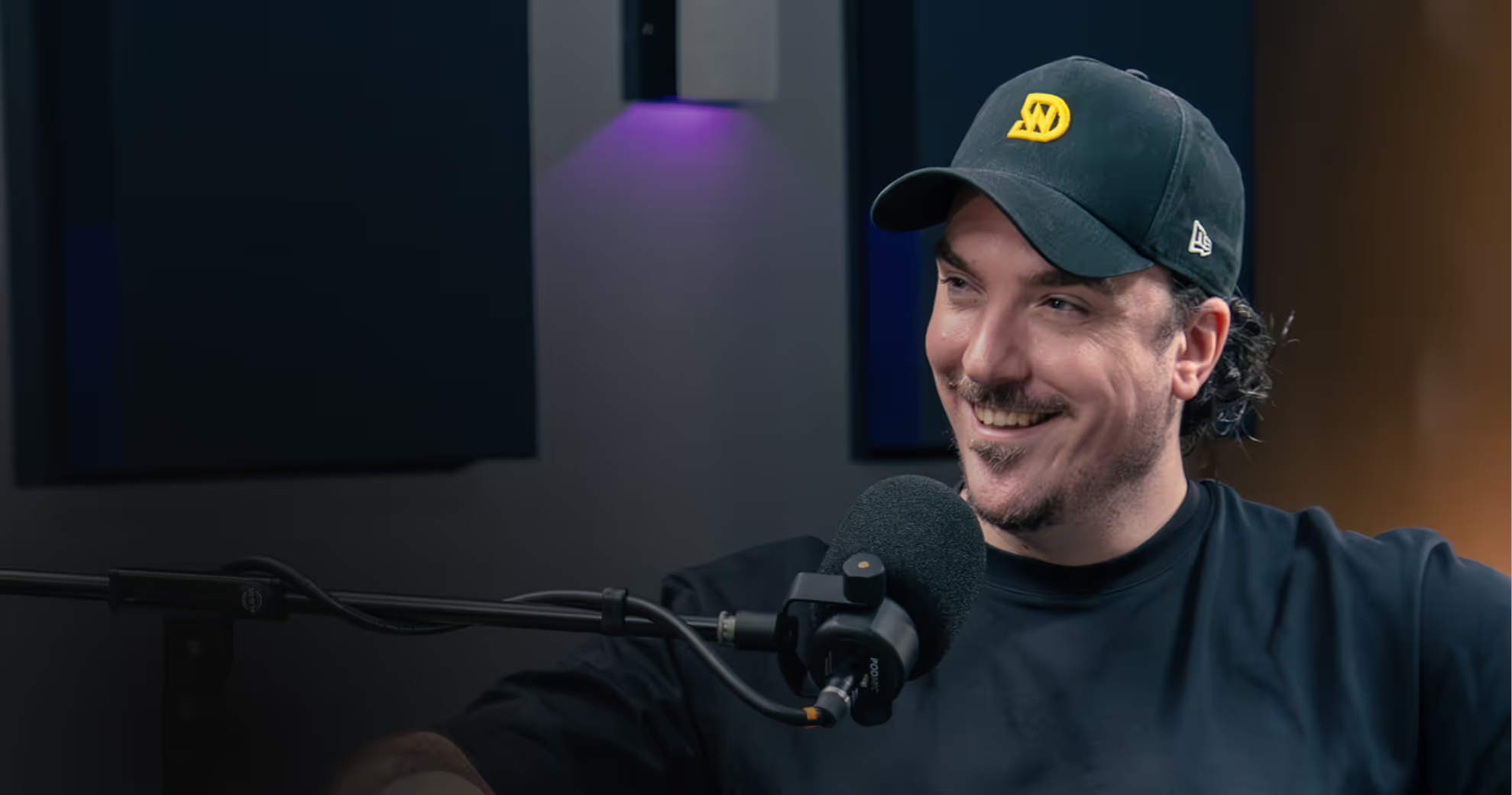
Work With Me
Enquire With Dain’s Team
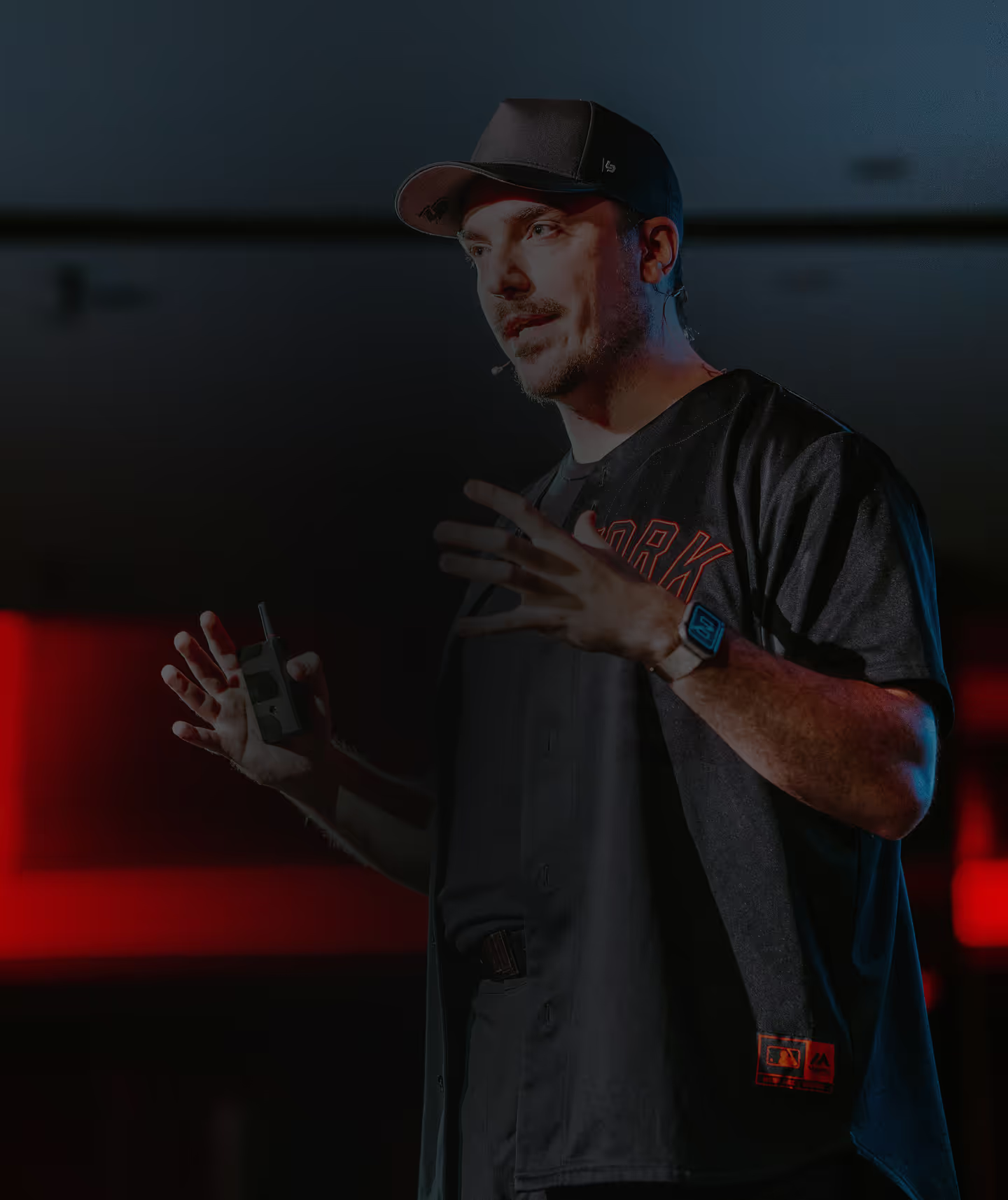
Enquire For Speaking
Let's Get You Branded
Apply to be a guest
Dive into insights from industry leaders and experts.
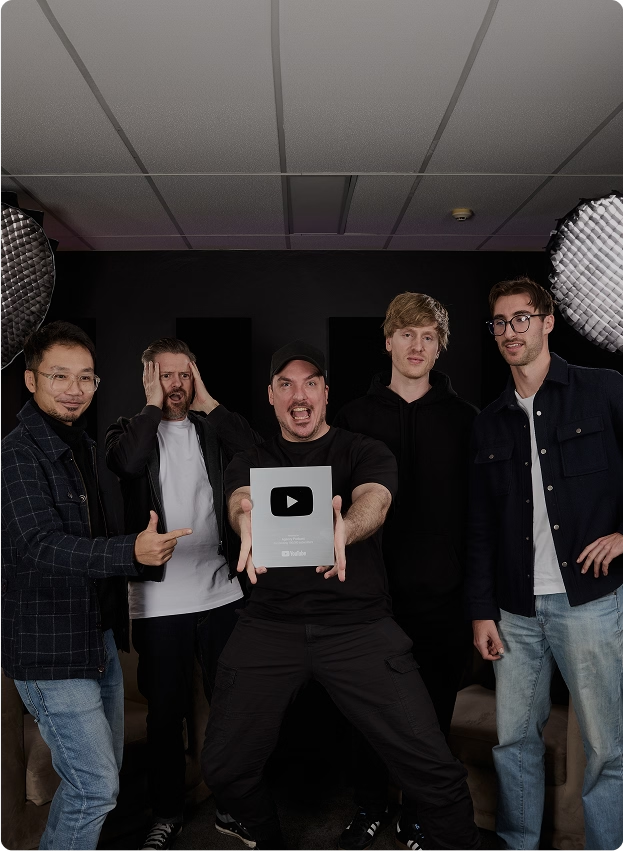
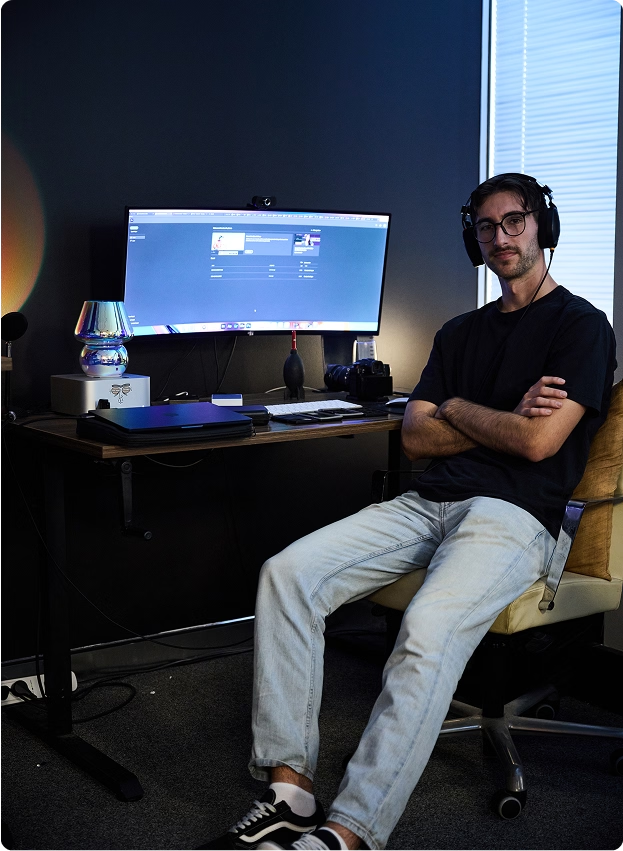
Stream now
Dive into expert advice and industry trends.